Pacific Wings Feder / Contact / Aérotec Feder / Contact

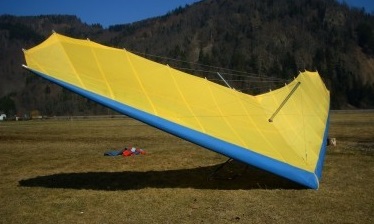
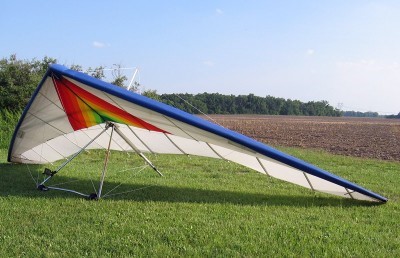
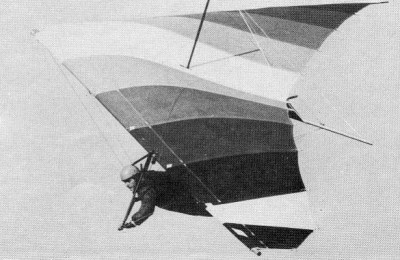
The Feder one-surface wing was created in 1985, just after Mr. Andre Chayrou had left the Oderen site.

Produced by Aérotec for novice pilots, it has had no succes in France.

The German name “Feder” means “plume” in French.

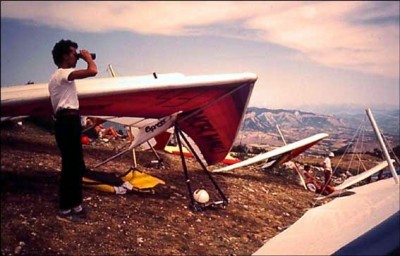
Aérotech who made the Feder (in fact it was the “schuss” of Andre Chayrou with a new name) and then for some commercial reasons, the Feder was re-branded “Contact” shortly after its launch, in 1986.

These are the same 100% identical wings.

Aerotec Contact

This wing had at the level of the transverse a piece of removable nylon, as useless as it was ineffective: which served to bridle the floating transverse. According to the manufacturer, it was for a better grip for the first flights.

Aerotec Contact
Wing area: 15.6 m²
Wing span: 9.9 m
Aspect ratio: 6.3
Hang glider weight: 24 kg
Minimum speed: 25 km/h
Maximum speed: 75 km/h
Max glide ratio (L/H): 7
Max glide ratio speed: 35 km/h
Minimum sink rate: 1.8 m/s
Packed length short: 4.2 m
Nose angle: 120°

Pacific Wings / Aérotec

André Chayrou, starting from plans made by the manufacturer Pacific Kites, was the owner of Pacific Wings until 1985 (purchased by Aérotec).

Pacific Wings produced, the Royal, the Schuss, the Vampire, and the Express.

Pacifics Wings was bought by Germans in 1985 and was named Aérotec who made the Feder (in fact it was the “Schuss” of Andre Chayrou with a new name) and then the Feder was renamed “Contact”. These are the same 100% identical wings. He also made a double-surface: the Raptor.

On his departure from Oderen, Andre Chayrou created in 1985 “Pacific Diffusion” and moved to Kembs Loechle, near Mulhouse to make the “Select”, which was none other than the Express.

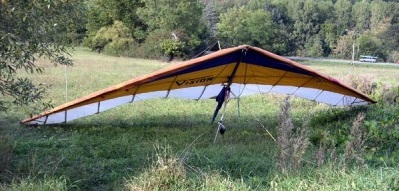
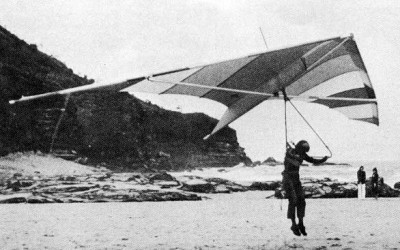
Pacific Windcraft Vision / Airwave Vision / Hiway Hang Gliders Vision

Mk.IV 17

Pacific Windcraft (USA) became part of Airwave circa 1983, from Pacific Airwave to PacAir.

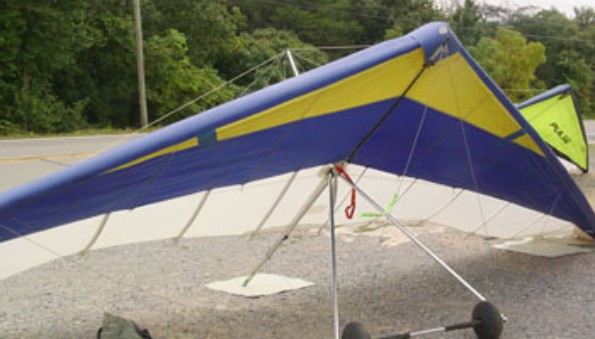
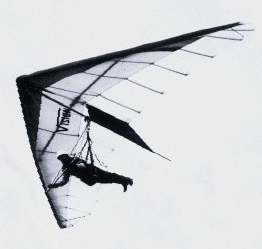
The Pacific Airwave Vision, an intermediate DSTI, was built also by Airwave from 1983 for advanced pilots.

Airwave Vision

The 1987 Hiway Hang Gliders (1983) Vision 5 was been designed in such away that it can be tuned by way of a variable geometry facility so as to be suitable for the beginner to develop his or her flying skills right from initial downhill glides, through first soaring flights to cross country performance all on the same machine. Adjustments are quick and easy.

1987 Hiway Hang Gliders (1983) Vision 5

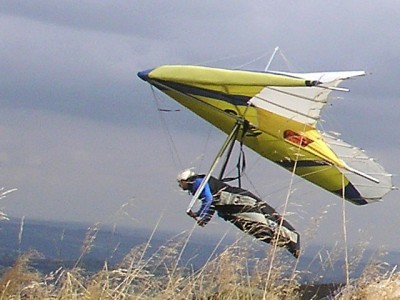
The Airwave Vision 4 1988 Intermediate glider was an excellent all round recreational glider, very maneuverable, with performance somewhat better than single surface models. Its only failing is lack of glide ratio at high speeds, although this can be an advantage when landing in tight fields. Its maneuverability allows it to take advantage of small areas of lift that higher performance “stiffer” wings cannot. It was easy to set up, launch, thermal, and land. It had an elevated king post hang-point for easy roll control. It had great static balance and was a light glider.

Airwave Vision 4

The Vision MkIV has no keel pocket.

There was also a Vision biplace (“Double Vision”).

Hiway Hang Gliders (1983) Ltd has offered the Vision 18, designed by Pacific Windcraft, along with the Excalibur and Explorer2.

Hiway Hang Gliders (1983) Vision

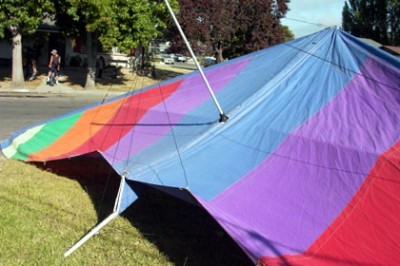
The 1983 Hiway Hang Gliders (1983) Vision was a new Concept to meet the demands of the novice pilot. Designed by Pacific Windcraft in the States and manufactured by Hiway in Europe, the Vision takes the pilot from beginner to expert all on the same glider. In its loosest setting this new design is as docile and predictable as a Super Scorpion. Tighten it up, to get the performance of thoroughbred CFX machine. This glider may be identified by having rigging adjusters on the flying wires (not on the Vision V). The Hiway Vision was priced at £897.00.

Hiway Vision

The great feature of the Hiway Vision 18 wing was the variable geometry which would allow the flight, according to the adjustement, for novice pilots as well as the confirmed ones.

The 1989 Hiway Vision 5 intermediate glider was a well balanced glider having floater style handling and easy take off and landing characteristics.Only downside is that it weighs more than a lot of more modern intermediates and the sink rate goes up as the bar is pulled in more than a modest amount however this characteristic is useful for getting into a small field. A great glider for relaxed flying.

Airwave Vision 4 17
Wing area: 15.33 m²
Wing span: 9.3 m
Aspect ratio: 5.74
Hang glider weight: 27 kg
Minimum pilot weight: 52 kg
Maximum pilot weight: 88 kg
Number of battens: 18
Nose angle: 122°
USHGA rating: 2-4
Stall: 25 mph
VNE: 46 mph
Load limits: positive 53 mph@ 30 degrees / -negitive 36 mph@ -30 degrees

Airwave Vision 4 19
Wing area: 16.9 m²
Wing span: 9.9 m
Aspect ratio: 5.83
Hang glider weight: 29 kg
Minimum pilot weight: 70 kg
Maximum pilot weight: 120 kg
Number of battens: 20
Nose angle: 122°
USHGA rating: 2-4
Stall: 25 mph
VNE: 46 mph
Load limits: positive 53 mph@ 30 degrees / -negitive 36 mph@ -30 degrees

Airwave Vision 4
Wing area: 20 m²
Wing span: 10.9 m
Hang glider weight: 28 kg
Minimum pilot weight: 75 kg
Maximum pilot weight: 190 kg
Packed length: 6.2 m
Packed length short: 4 m
Number of battens: 19
Nose angle: 127°

Hiway Vision 18
Wing area: 15.8 m²
Wing span: 9.4 m
Aspect ratio: 5.7
Hang glider weight: 25 kg
Minimum pilot weight: 55 kg
Maximum pilot weight: 88 kg
Packed length short: 3.65 m
Nose angle: 122°

Hiway Vision 5 145
Packed length: 5.50 m
Number of battens: 18

Hiway Vision 5 172
Packed length: 5.50 m
Number of battens: 18

Hiway Vision 5 188
Packed length: 5.50 m
Number of battens: 18

Sail Area: 165 sq. ft
Glider Weight: 59 lbs
Pilot Hook-in Weight: 115 – 195 lbs
Skill Level: Novice
SS/DS: Double Surface
KP/TL: Kingpost
VG: No

Pacific Windcraft

Pacific Windcraft (USA) became part of Airwave circa 1983, from Pacific Airwave to PacAir. In 1986 PacAir closed the doors.

In 1987, the American Eclipse was replaced in the Pacific Windcraft product line by their Vision Mark IV (a version of which Airwave UK marketed, with Magic hardware, as the “Calypso”). That same year, Pacific Windcraft was absorbed into Pacific Airwave, which in turn was absorbed into its parent company, Airwave Gliders in 1994.

Pacific Kites Super Lancer

It was a very nice glider to foot launch. Sweet handling. The coolest thing was the way the glider set up. There was a slider connecting the crosstube to the keel. You simply pinned the base tube to the down tubes, stood the folded glider on its nose with the leading edges and the keel pointing straight up in the sky. You then just let the wings open up like an umbrella! One ball pin through the keel slider, stab the plastic flexible battens and you were ready for pre-flight.

It was intended to be used as a trainer, for which it was ideal. The Super Lancer was a floating monster.

It was always the highest glider on the ridge in ocean breeze lift. Like pole-sitting…you’d just lumber off the hill in that beast and levitate to the top of the line in no time: one pass, two, and you were looking down on everybody, even in the lightest of lift. Sometimes it was the only glider that could stay up. That was a time when gliders were valued for their ability to stay up in very light conditions, and handling wasn’t as crucial.

Very suitable for static boat-tow launches, but nothing like today’s gliders in performance…except in sink rate, which was remarkable.

The ribs were flat (plastic) that would form an airfoil after you got wind moving accross it so you HAD to run hard and land fast for that matter as it would just drop (if you let it) so you had to keep your speed up and come in fast.

Three models were available: 155, 180, and 200.

Pacific Kites Lancer 4

The Lancer IV was one of the great fun gliders of the 70s. Originally produced in New Zealand from 1979, designed or co-designed by Graeme Bird.

The Lancer was brought to the U.S. by Marty Alameda. Marty started Flight Designs in Salinas, California and began producing the Lancer under license in 1979.

Lancers, even the smaller size, were well known for their wonderful ability to float like a butterfly in the lightest breeze, while still retaining control and having, for the day, decent top end speed without falling out of the sky.

The Lancer was a dream to fly: it had both float and responsiveness. It wasn’t too fast. While still exploring the sport and its wonders, the Lancer was a real step forward in that it was a terrific all-around glider.

It was solid, responsive, thermalled beautifully without any nasty tricks, yet could float really well with gliders that were ten or 20 square feet larger.

Bar pressure in pitch was solid but not stiff. Roll pressures ditto. It came around in a turn with solid feedback but without working your arms to death. There wasn’t any of the yaw you associate today with bigger, higher-aspect gliders. But you could stall the inside tip and spin around for real tight climbing turns, and the planform of the glider would give you a climb rate that would take you up through the middle of thermal stacks like you were on an elevator.

It was a breeze to land: very predictable, again with wonderful feedback from the bar. Flare timing wasn’t an issue in most gliders of those days…you just waited for the right wind noise, the glider started to settle, you shoved the bar out and she dropped you smoothly onto the ground, even in no wind.

It is suitable for both intermediate and high-level pilots, thanks to its ease of handling, pleasant handling and excellent performance.

André Chayrou, Pacific Wings, was responsible for the construction of the Lancer IV in France, with sails made in New Zealand. The Lancer IV made in France were clean and well finished. Fitted with deflectors and flexible slats, an original system allows the umbrella to lock automatically, which avoids the possible forgetfulness of the famous push-pin. It was quick to rig having 7 flexible plastic battens per side.

Takeoffs were easy, but they did require a good committed hard run in light conditions.It was a great glider for ridge soaring but didn’t have great penetration into a strong wind. It went down quickly with the bar pulled right in without a great deal of forward motion. Though this was handy for landing in tight fields as you could quickly get onto the ground and the energy retention wasn’t great so you quickly washed off the speed ending in an easy flare and one or two step landing.

Some pilots experienced their Lancers tip stalling and developing a full spin, some speed being required when going into turns.

Some consider those made by Rithner in Switzerland a dangerous wing.

Lancer 16
Wing area: 15.5 m²
Wing span: 9.8 m
Aspect ratio: 6.2
Hang glider weight: 23 kg
Minimum pilot weight: 60 kg
Maximum pilot weight: 110 kg
Packed length short: 4 m
Nose angle: 120°

Lancer 18
Wing area: 17.6 m²
Wing span: 10.4 m
Aspect ratio: 6.2
Hang glider weight: 25 kg
Packed length short: 4 m
Nose angle: 120°

Lancer 190

Lancer 4S
Wing area: 175 sq.ft
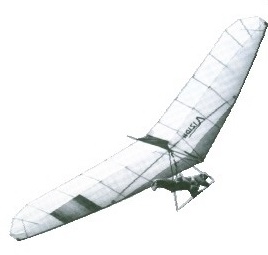
Pacific Kites Express

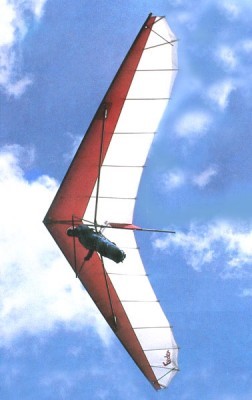
Appearing for the first time at the Coupe du Mont Faucon 1984 were the first models of Express.

Since the Coupe du Mont Faucon where the Express appeared much faster than its competitors, André Chairou has “civilized” his prototype. The profile in the central part was thickened to improve the characteristics at low speed. The trailing edge of the extrados like that of the intrados were no longer scalloped but rectilinear and reinforced by a strip. To increase the roll rate, the surface of the marginal edges had been decreased.

The 28 pounds of the Express was further diminished by the use of a transversal in 62 * 0.9 which no longer required sleeve. When lifting the unit the core lugs will easily skew and bend the cables. 8 slats on the extrados, 5 in the intrados. The fiberglass sticks which form the marginal edges are very easy to assemble. The leading edge is not mylarized. The sail is bathbridge 4.2.

For reasons of stability, the intrados is connected to the extrados by a system of adjustable velcros. On the Express, by inflating the extrados to 80% moves the center of thrust towards the rear. This reduces the recall to neutral. The binding extrados intrados fights against this effect. Care must therefore be taken to ensure that the connecting hooks are always secured and their length is symmetrical for each wing. Those relieving the last lath of intrados to the extrados have an influence on the stability spiral. Too tense, they diminish it, too much, they increase it.

The stall is rarely symmetrical and is often followed by a quarter turn during recovery. This characteristic is found at landing. If the rounding is negotiated at the right time, no problem but if it is made too high, one wing or the other will collapse first. These characteristics almost disappear with a “soft” setting.

The Express “Dacron” was made in France by Pacific Wings.

Express 148
Wing area: 14.8 m²
Wing span: 10.8 m
Aspect ratio: 7.9
Hang glider weight: 27 kg
Number of battens: 26
Nose angle: 130°
Price 2007: 13500F

Express 158
Wing area: 15.8 m²
Wing span: 10.8 m
Aspect ratio: 7.4
Hang glider weight: 28 kg
Number of battens: 26
Nose angle: 130°
Price 2007: 13700F