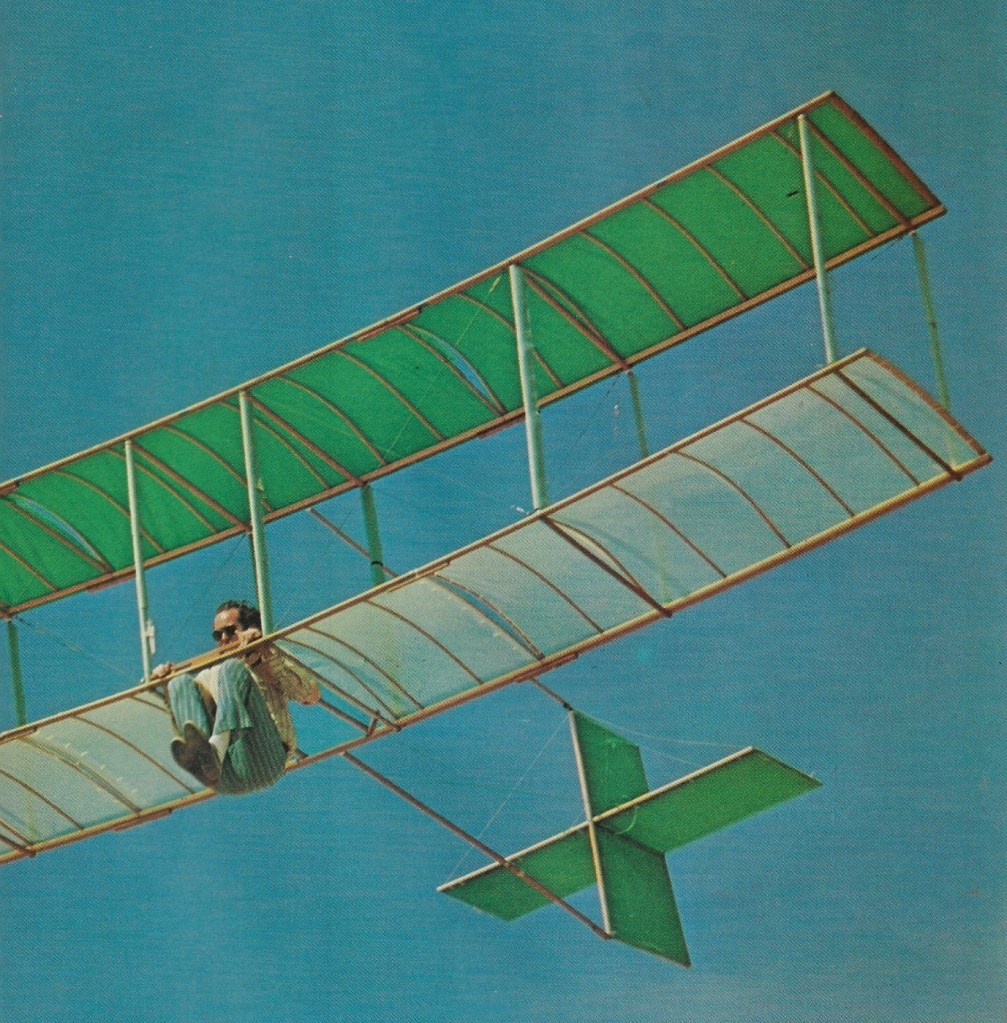
Powell Hang-glider
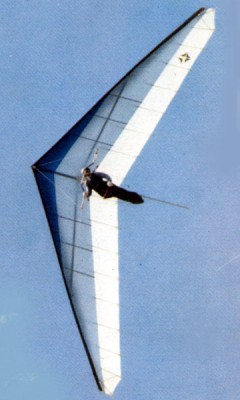
A 1987 hang glider. The Touring is double surface at 60%.
Gz Touring 13
Wing area: 13.5 m²
Wing span: 9.6 m
Aspect ratio: 6.8
Hang glider weight: 23 kg
Minimum pilot weight: 55 kg
Maximum pilot weight: 72 kg
Minimum speed: 28 km/h
Maximum speed: 70 km/h
Max glide ratio (L/H): 9
Max glide ratio speed: 32 km/h
Minimum sink rate: 1.0 m/s
Packed length short: 3.6
Number of battens: 17
Nose angle: 120˚
Gz Touring 15
Wing area: 15 m²
Wing span: 9.6 m
Aspect ratio: 6.1
Hang glider weight: 24 kg
Minimum pilot weight: 68 kg
Maximum pilot weight: 86 kg
Minimum speed: 28 km/h
Maximum speed: 70 km/h
Max glide ratio (L/H): 9
Max glide ratio speed: 32 km/h
Minimum sink rate: 1.0 m/s
Packed length short: 3.6
Number of battens: 17
Nose angle: 120˚
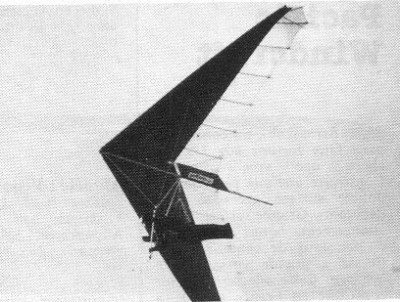
A 1985 hang glider for Intermediate pilots.
Gamma 150
Wing area: 15.5 m²
Wing span: 10.3 m
Aspect ratio: 6.8
Hang glider weight: 32 kg
Gamma 160
Wing area: 16.45 m²
Wing span: 10.6 m
Aspect ratio: 6.8
Hang glider weight: 34 kg
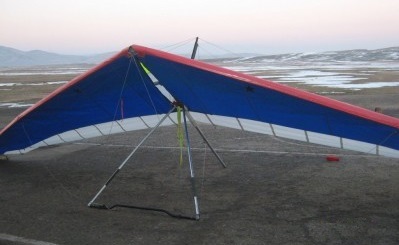
The FRC was a double surface at 74%.
FRC 15
Wing area: 14.7 m²
Wing span: 10.85 m
Aspect ratio: 8
Hang glider weight: 31 kg
Minimum pilot weight: 65 kg
Maximum pilot weight: 85 kg
Number of battens: 29
Nose angle: 132°
FRC 16
Wing area: 15.6 m²
Wing span: 10.85
Aspect ratio: 7.5
Hang glider weight: 32 kg
Minimum pilot weight: 80 kg
Packed length short: 4 m
Number of battens: 29
Nose angle: 132°
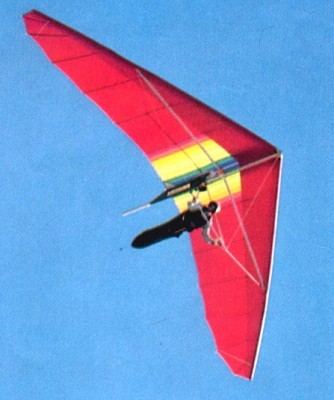
After the Polaris Delta, the copy of the Atlas, Polaris made the Super Delta. The Super one was 5000 francs more expensive than the Delta.
The Super Delta has a crossbar flow, and a better turn, with slow nice landing.
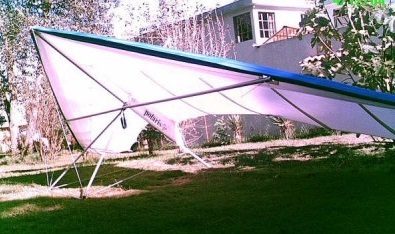
A 1984 hang glider. A copy of the Atlas.
Wing area: 13.5 m²
Wing span: 9.39 m
Aspect ratio: 6.4
Hang glider weight: 24 kg
Nose angle: 120°
Wing area: 15.8 m²
Wing span: 9.9 m
Aspect ratio: 6.2
Hang glider weight: 27 kg
Minimum pilot weight: 55 kg
Maximum pilot weight: 85 kg
Minimum speed: 25 km/h
Maximum speed: 65 km/h
Number of battens: 12
Nose angle: 120°
Wing area: 21 m²
Wing span: 10.5 m
Aspect ratio: 5.25
Hang glider weight: 34 kg
Nose angle: 120°
An Italian hang glider manufacturer circa 1984-7.
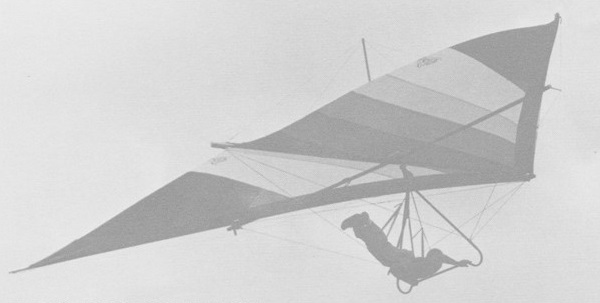
The Thermal Shark is a high performance medium aspect ratio Rogallo. Tip drag has been reduced by the mildly cylindrical leading edge and trailing edge cut.
The knucle-saving control bar has a special shape. Side spar camber, reflex and dihedral can be adjusted to suit flying conditions. The is an adjustable pilot point for quick centre of gravity changes.
The air frame is made fro 1 5/8in and 1 ¾ x .058 aircraft grade aluminium tubing. Tubing is double and triple reinforced at all stress points, hard-wood doweled and solid aluminium bushed. All exposed tubing members are black anodised.
All bolts, nut and turnbuckles are aircraft grade 8 through 11 depending on application. Wrap around nose plat, tangs and shackles are polished stainless steel.
Rigging cable is 3/32in 7 x 7 stainless steel, with lower rigging plastic coated.
The sail is 4.5oz stabilised dacron, double lock stitched. A double reflex airfoil camber is sewn in. The pilot support was either seated or prone harness.
Thermal Shark I
Leading edge: 19.3 ft
Keel length: 15.8 ft
Wing span: 28 ft
Wing area: 210 sq,ft
Aspect ratio: 3.85
Nose angle: 90˚
Sail billow: 3.5˚
Weight: 45 lb
Pilot weight: 125-210 lb
Takeoff speed: 17 mph
Stall speed: 14 mph
Max speed: 45 mph
Best glide ratio (L/D): 6.25-1
Best L/D speed: 26 mph
Min sink: 225 fpm
Thermal Shark II
Leading edge: 21.3 ft
Keel length: 15.8 ft
Wing span: 31 ft
Wing area: 195 sq,ft
Aspect ratio: 5.1
Nose angle: 92˚
Sail billow: 3.35˚
Weight: 47 lb
Pilot weight: 135-210 lb
Takeoff speed: 14 mph
Stall speed: 12 mph
Max speed: 40 mph
Best glide ratio (L/D): 7.25-1
Best L/D speed: 19 mph
Min sink: 180 fpm
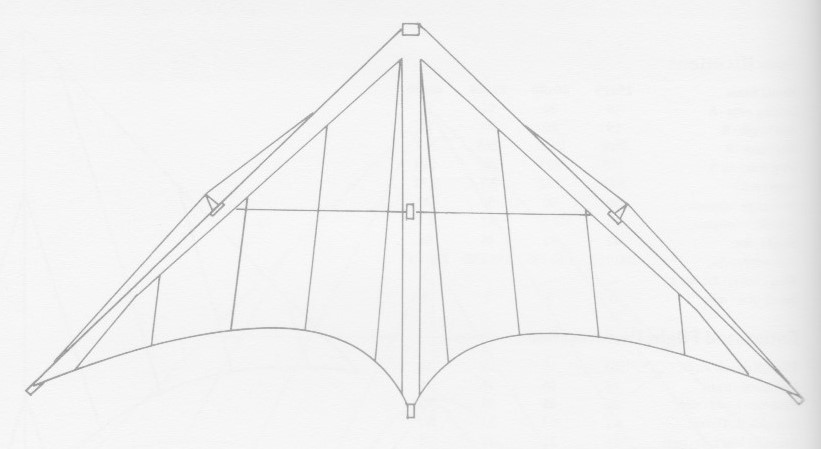

Michael Platzer built a Lilienthal Doppeldecker Replica, and it was flown in front of hundreds of spectators on the Wasserkuppe “Kleiner Westhang”.
Photographed at the 1978 first “Otto Lilienthal Memorial” at the Wasserkuppe.
Wing area: 10 m²
Wing span: 7.6 m
Hang glider weight: 18 kg
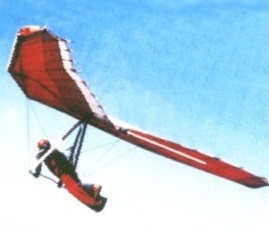
A newcomer to the UK hang gliding community, Pioneer Aviation Ltd, in 1997 produced the Voyager, a new high performance glider with a novel leading edge construction method. The Voyager uses an internal deflexer to brace the Leading edge tube. T was available with sail area of 129, 139, 153, and 149 sq ft.
 All Aero