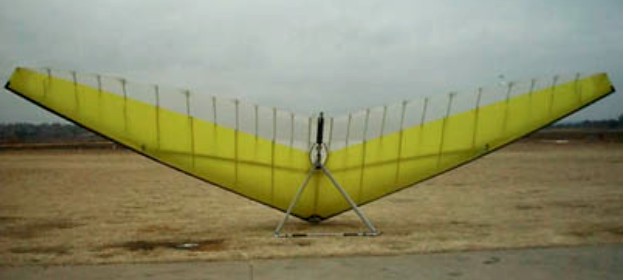
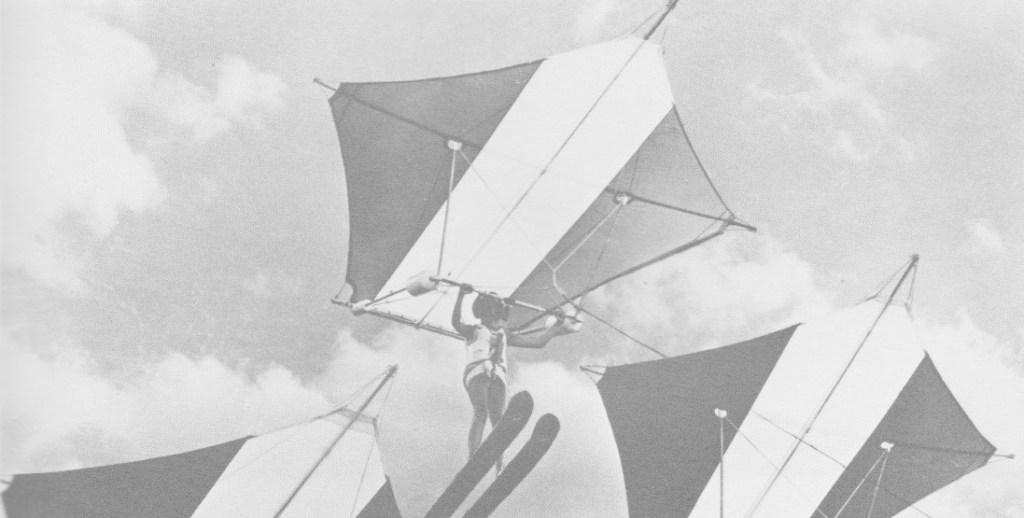
Raven Weyer Aqua Kite

The Aqua Kite featured a harness for support freeing the pilots’ arms for control. A floatation system makes the kite unsinkable and insures deep water starts.

The airframe is made from seamless aluminium alloy tubing, with cast aluminium alloy joints. Provided was a boat safety quick release for fast towline detachment.

The rigid trapeze assembly has an extra wide form fitted (then available in 4 sizes), a double strap was available for tandem flying.

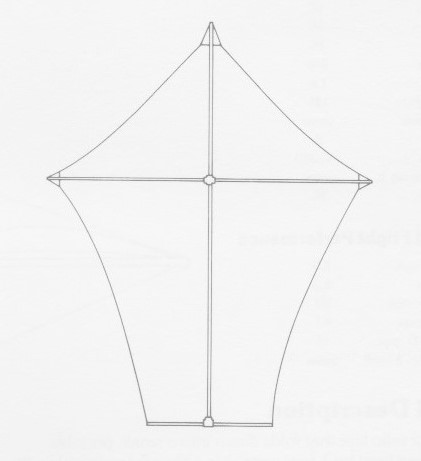
12 x 14
Keel length: 14.5 ft
Wing span: 11.6 ft
Wing area: 86 sq,ft
Nose angle: 90˚
Weight: 40 lb
Pilot weight: 94-170 lb

14 x 16
Keel length: 15.75 ft
Wing span: 13.6 ft
Wing area: 117 sq,ft
Nose angle: 90˚
Weight: 90 lb
Pilot weight: 160-225 lb

Raven Industries

1982: Raven Industries, Box 1007 Sioux Fails, South Dakota 57101, USA.

Hang glider builder

One of the world’s largest balloon manufacturers, Raven offered four models with envelopes ranging from 56,000 to 140,000 cubic feet. Twelve standard colors are offered, or custom designs can be created from Raven’s colour selections. Balloon packages range in price from $8,795 to $15,745 in 1982.

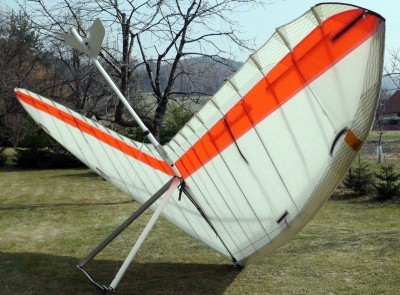
Rainbow Spirit

The Spirit 15 Wing marks Rainbow Aircraft’s return to trike wing development and manufacture. After 2 years in development under Jenya Zozulya, the Spirit 15 Wing went into production in mid-2002.

By late 2002 over 30 wings had been produced and the first Spirit 15 Wings began arriving in the US in November 2002. Rainbow Aircraft, Inc. (through Trike-Wings.com) was the exclusive US importer of the Spirit 15 Wing.

The wing is light-handling in both pitch and roll and yet stable in both axis.

The Spirit 15 Wing incorporates:
Streamlined Downtubes and Kingpost
Batten tips are springloaded resulting in a ‘clean’ trailing edge
The main section of the upper wing sail is clear trilam.

After assembly, each wing is test flown and tuned if necessary before being shipped. All tubing is aluminum 6082-T8 aircraft tube, anodized to 25 microns. All cables are multi-strand stainless steel.

The sail is put together with precision and the finest polyester fabrics available in the world. Top front surface is 6.3 oz Dacron. Top main surface is heavy duty 3 oz trilam (clear) with a 200 kg (440 lb) Dynema cord sewn in. Bottom surface is 4 oz Dacron. Leading edge is 5 oz trilam.

The Spirit 15 wing was static tested to 450 kg (990 lbs) at 6 g’s positive for a total static tested load of 2,450 kg (5,400 lbs). Test was conducted by Spirit Wing Design Engineer Zenya Zozulya, according to the same method used by the German certification authority (DULV).

A full flight test program was also conducted in order to win CAA approval. The Spirit 15 wing is certified by the South African Civil Aviation Authority (CAA).

Wing area: 15.3 sq.m / 164 sq.ft
Wing Weight: 52 kg / 114 lbs
Wingspan: 10.2 m / 33.5′
Dual Surface: 75%
Nose Angel (degrees): 130 deg
Aspect Ratio: 6.9
Folded Length: 6.1 m / 20′
Short Folded Length: 4.6 m / 15.1′
Wing Loading at 450 kg / 992 lbs: +6g -3g
Stall Speed: 42 km/h / 26 MPH
Minimum Flying Speed: 50 km/h / 31 MPH
Cruise Speed Range: 80-110km/h / 50-69 MPH
Maximum Level Speed: 136 km/h / 85 MPH
VNE Never Exceed Speed: 144 km/h / 90 MPH
Sink Rate: 2 m/s / 390 fpm
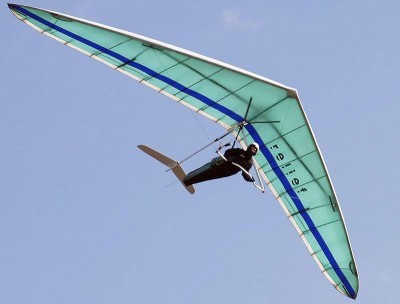
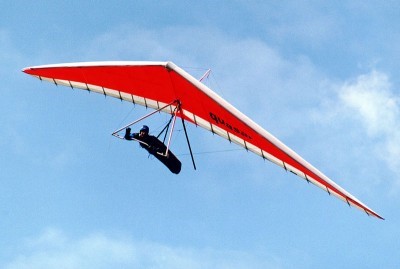
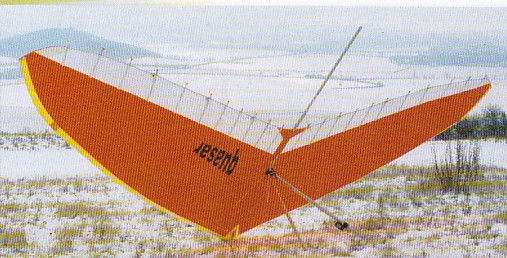
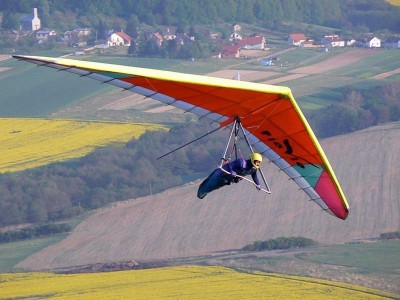
Quasar Relief

Relief Rx

The 2007 Relief R2C is for advanced pilots.

Relief R2C

The 2008 model Relief, the Relief Pro 2008, is for advanced pilots.

Relief Pro 2008

Relief 14
Wing area: 13.6 m²
Wing span: 10.3 m
Aspect ratio: 7.8
Minimum pilot weight: 60 kg
Maximum pilot weight: 100 kg
Nose angle: 127°

Relief 15
Wing area: 14.8 m²
Wing span: 10.5 m
Aspect ratio: 7.4
Minimum pilot weight: 75 kg
Maximum pilot weight: 110 kg
Nose angle: 127°

Relief R2C S13
Wing area: 13 m²
Wing span: 10.4 m
Aspect ratio: 8.3
Minimum pilot weight: 55 kg
Maximum pilot weight: 80 kg
Nose angle: 132°

Relief R2C S14
Wing area: 14 m²
Wing span: 10.6 m
Aspect ratio: 8.0
Minimum pilot weight: 70 kg
Maximum pilot weight: 90 kg
Nose angle: 132°

Relief R2C S15
Wing area: 15 m²
Wing span: 10.6 m
Aspect ratio: 7.5
Minimum pilot weight: 80 kg
Maximum pilot weight: 110 kg
Nose angle: 132°

Relief RX 13
Wing area: 13 m²
Wing span: 10.2 m
Aspect ratio: 8
Minimum pilot weight: 55 kg
Maximum pilot weight: 90 kg
Nose angle: 127°

Relief RX 14
Wing area: 14.2 m²
Wing span: 10.5 m
Aspect ratio: 7.8
Minimum pilot weight: 75 kg
Maximum pilot weight: 110 kg
Nose angle: 127°

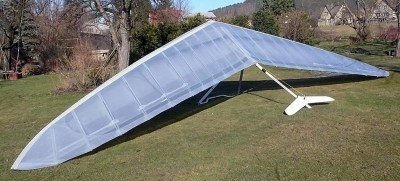
Quasar Quasar

The Quasar 13 was introduced to the Quasar range in 1998.

Quaser

Quasar 13
Wing area: 13 sq.m
Certification: LAA
Pilot weight: 55-75 kg
Wing span: 10 m
Nose Angle: 127 deg
Aspect ratio: 7.7

Quasar 14
Wing area: 14 sq.m
Certification: LAA
Pilot weight: 65-85 kg
Wing span: 10.2 m
Nose Angle: 127 deg
Aspect ratio: 7.4

Quasar 15
Wing area: 15 sq.m
Certification: LAA
Pilot weight: 75-100 kg
Wing span: 10.4 m
Nose Angle: 127 deg
Aspect ratio: 7.2

Quasar 16
Wing area: 16.4 m²
Wing span: 10.6 m
Aspect ratio: 6.9
Minimum pilot weight: 85 kg
Maximum pilot weight: 120 kg
Nose angle: 127°

Quasar 2000
Wing area: 13 m²
Wing span: 10.2 m
Aspect ratio: 8
Minimum pilot weight: 55 kg
Maximum pilot weight: 80 kg
Nose angle: 127°

Quasar 2000
Wing area: 13.6 m²
Wing span: 10.3 m
Aspect ratio: 7.8
Minimum pilot weight: 65 kg
Maximum pilot weight: 90 kg
Nose angle: 127°

Quasar 2000
Wing area: 14.8 m²
Wing span: 10.5 m
Aspect ratio: 7.4
Minimum pilot weight: 75 kg
Maximum pilot weight: 100 kg
Nose angle: 127°