Jim Johns in the Monterey area has or had the only Seagull Atlas ever produced.
Hang-glider
Seagull Aircraft Sierra
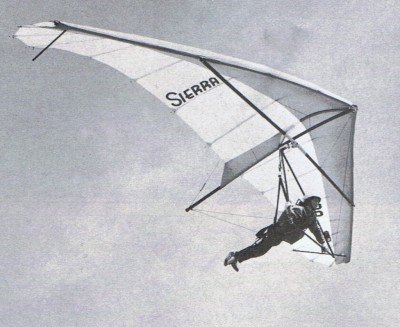
The Seagull Sierra, designed in 1980 by Tom Peghiny, was Seagull’s only double-surface glider. It was never offered for sale, as Seagull went defunct before the glider was HGMA certified. A few prototypes were flying in 1980; these were reported to have good performance but poor handling characteristics.
Seagull Aircraft Sailwing
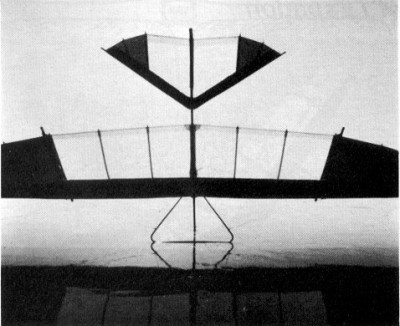
A 1980 hang glider.
Wing area: 16.5 m²
Aspect ratio: 6
Hang glider weight: 25 kg
Nose angle: 127°
Seagull Aircraft Meter 80
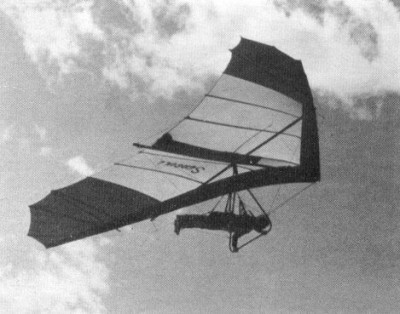
A 1980 hang glider.
Seagull Aircraft
In 1969, Mike Riggs founded and operated for nine years what became one of the largest international manufacturers of hang gliders and accessory equipment. In 1981 Riggs designed, built and flew an aircraft prototype intended to fit the then new FAA Part 103 Ultralight Rules. He is a founding member of the United States Hang Gliding Association, and he has served as a director of that organization. He is also the co-founder of the United States Hang Glider Manufacturers Association (HGMA), responsible for establishing aerodynamic and structural standards for hang glider aircraft.
Michael Riggs holds degrees in Aerospace Engineering and Industrial Design. His experience includes 25 years in consumer product development with annual line responsibilities reaching more than $400 million. He has achieved executive management at the vice president level. He has designed, built and flown several aircraft. He is a highly decorated Army gunship pilot with two Vietnam tours.
The company was taken over by Don Whitemore, later sold and Mike Riggs was no longer running the show and the company lost its innovation and its market. It is sad it owed about $3400 to Hang Gliding magazine and was not able to pay on demand.
The company was sold to a Canadian in 1980.
Mike Riggs went on as President and Founder of Seagull Aerosports.
Scott Champ
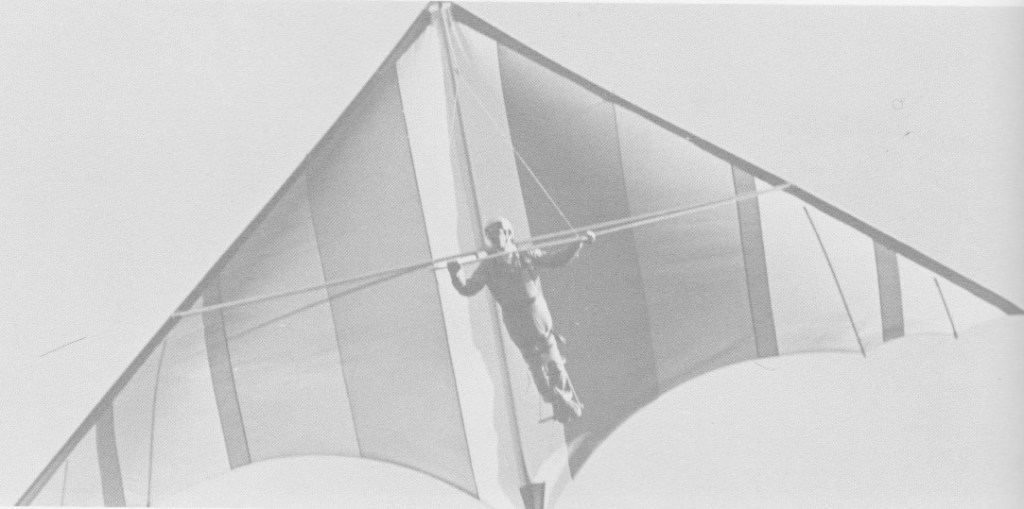
The Champ is designed for intermediate to advanced flying, either free flight or towing. Competition rated, the Champ has a very precise, sensitive control and rapid dive recovery.
Cambered lead spars give a semi-cylindrical edge and this model features a vertical stabiliser for tighter turns. The unique two-piece cross spar hinges in the centre and is held in place by a centre wing nut. This eliminates disassembly of wing bolts and rolling up of cable allowing speedy set-up and take-down. An optional kit converted it for water towing.
The airframe is made from 6061-T6 and 6063-T832 anodised aluminium. All rigging cable is 3/32in 7×7 aircraft type and is double swagged. All bolts, rigging and fittings are aircraft quality. The sail was either 3.0 or 3.8oz dacron, custom designed in colours.
The Champ came with a seat that featured a foot rest, spreader bar, and a wide backrest plus a 6000 lb test pilot support system. The control bar is padded.
Leading edge: 17.5 ft
Keel length: 14 ft
Wing span: 30 ft
Wing area: 190 sq,ft
Aspect ratio: 4.74
Nose angle: 102˚
Sail billow: 6˚
Weight: 40 lb
Pilot weight: 150-200 lb
Takeoff speed: 11 mph
Stall speed: 9 mph
Max speed: 30 mph
Best glide ratio (L/D): 7-1
Best L/D speed: 16 mph
Min sink: 180 fpm
Leading edge: 18.5 ft
Keel length: 15 ft
Wing span: 31 ft
Wing area: 215 sq,ft
Aspect ratio: 4.47
Nose angle: 102˚
Sail billow: 6˚
Weight: 41 lb
Pilot weight: 185-225 lb
Takeoff speed: 11 mph
Stall speed: 9 mph
Max speed: 30 mph
Best glide ratio (L/D): 7-1
Best L/D speed: 16 mph
Min sink: 180 fpm
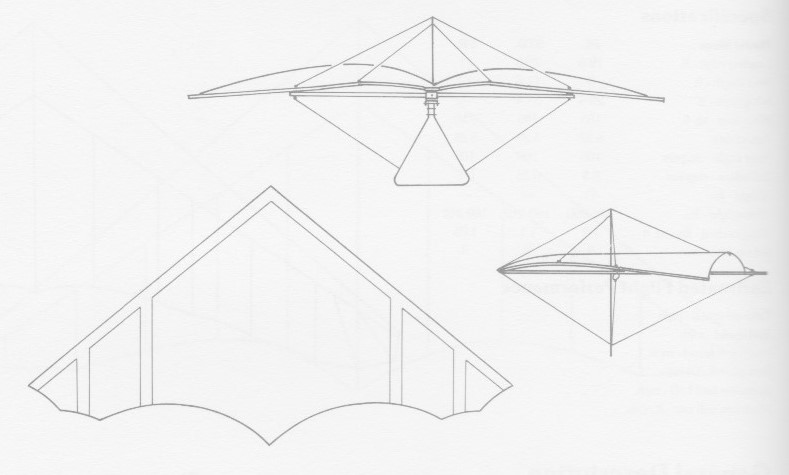
Scott World Cup Standard
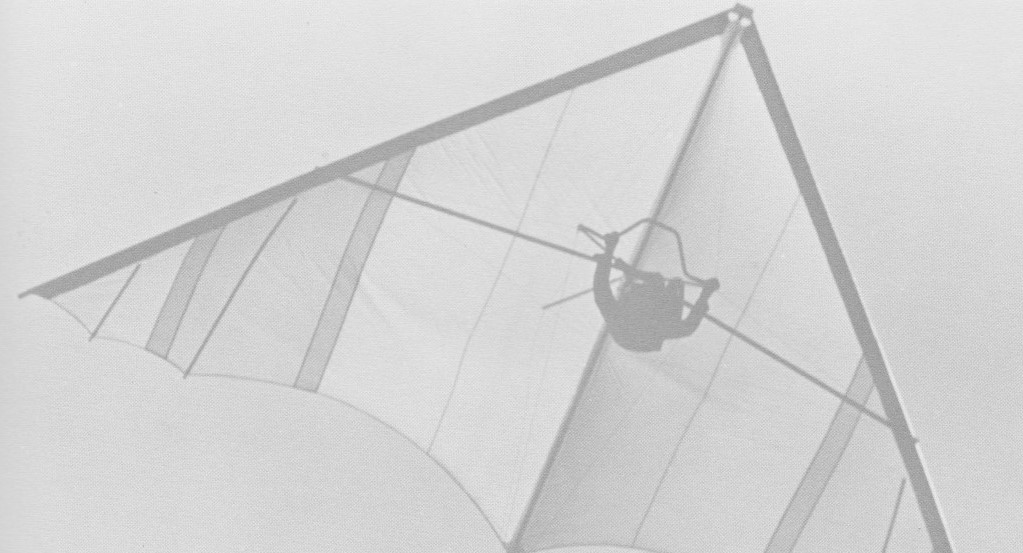
The World Cup Standard features a cambered keel. It also has a curved belly bar that allows for greater body movement, better control and more comfort. A unique twopiece cross spar hinges in the centre and is held in place by a centre wing nut. This eliminated disassembly of wing bolts and rolling up of cables which allows speedy set-up and take-down. An optional kit was available for water towing.
The airframe is made of 6061-T6 and 6063-T832 anodised aluminium. All cables are 3/32in 7×7 aircraft type and is double swaged. All bolts, rigging and fittings are aircraft quality. The sail is either 3.0 or 3.8oz dacron which could be customised in colours.
The pilot support was a seat that features a foot rest, spreade bar and a wide backrest. The control bar is padded.
18×15
Leading edge: 18.5 ft
Keel length: 15 ft
Wing span: 28 ft
Wing area: 190 sq,ft
Aspect ratio: 4.13
Nose angle: 90˚
Sail billow: 7˚
Weight: 39 lb
Pilot weight: 150-200 lb
Takeoff speed: 14 mph
Stall speed: 12 mph
Max speed: 30 mph
Best glide ratio (L/D): 5.5-1
Best L/D speed: 16 mph
Min sink: 250 fpm
19×16
Leading edge: 19.5 ft
Keel length: 16 ft
Wing span: 29 ft
Wing area: 220 sq,ft
Aspect ratio: 3.82
Nose angle: 90˚
Sail billow: 7˚
Weight: 40 lb
Pilot weight: 185-225 lb
Takeoff speed: 14 mph
Stall speed: 12 mph
Max speed: 30 mph
Best glide ratio (L/D): 5.5-1
Best L/D speed: 16 mph
Min sink: 250 fpm
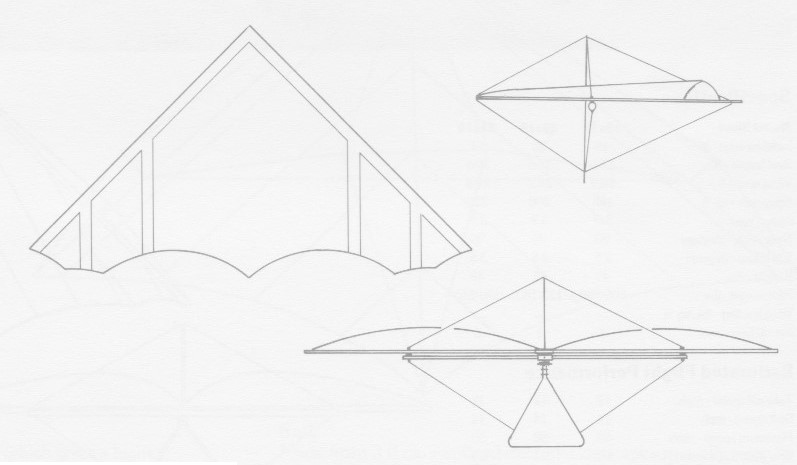
Scott Kite Firefly
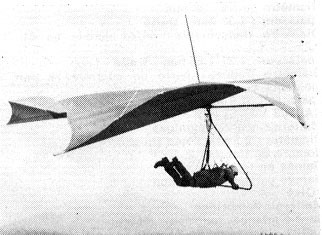
The Scott Firefly was described as a nice machine, very docile, and easy to take off and land.
Firefly 19/16
Wing area: 17 m²
Wing span: 8.33 m
Aspect ratio: 4
Hang glider weight: 19 kg
Minimum pilot weight: 55 kg
Packed length: 5.8 m
Number of battens: 8
Nose angle: 91°
Firefly 20/17
Wing area: 19 m²
Wing span: 9.07 m
Aspect ratio: 4.14
Hang glider weight: 19 kg
Minimum pilot weight: 78 kg
Packed length: 6.1 m
Number of battens: 10
Nose angle: 91°
Schutte Sails MIG / Pacific Kites MIG / GygaxMIG

The Mig was produced by Schutte Sails in New Zealand in 1983 and 1984. It was a 70% double surface floating crosstube glider with curved fibreglass tips rather like the Moyes GT. The usual size was 172 sq.ft but there may have also been a 190 sq.ft version.

Not suitable for a learner pilot.
One hundred of these models were built in Europe by Hans Gygax around 1984. Gygax imported the ready made canvas of New Zealand and Gygax built the aluminum structure.
Schutte Sails Kea
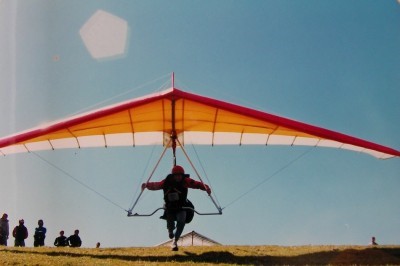
The Kea 160 was produced by Schutte Sails in New Zealand during 1985 to about 1987. It was a high aspect ratio keel pocket less glider with VG and reputably stiff handling. In its day it was a fast glider with a high glide ratio.
 All Aero