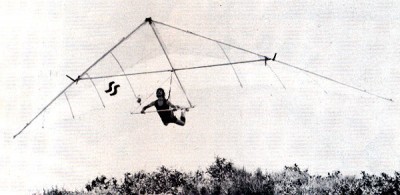
The Merlin was described as a pleasure to fly.
The Smithsonian National Air and Space Museum has a Merlin on display.
The Merlin was described as a pleasure to fly.
The Smithsonian National Air and Space Museum has a Merlin on display.
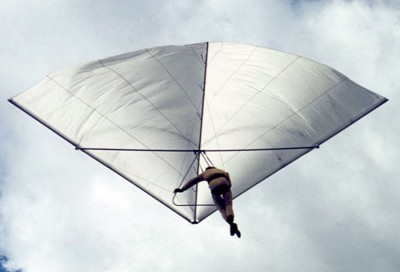
The Skyhook 3a version appeared in 1974.
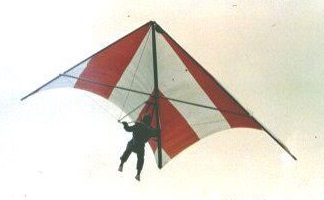
Made in 1973, the Skyhook 3A model became a successful glider and continued to be offered into 1974. The earlier models could be purchased in kit or completed glider form and extra rigging wires, A frames etc. are available to update them to later specifications.
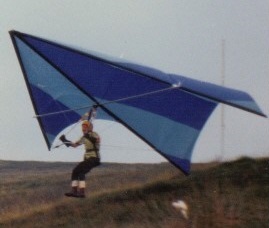
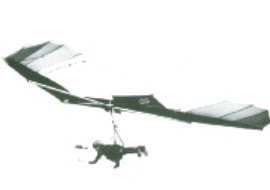
A 1979 hang glider, the Silhouette is a fourth generation machine of which quite a number were sold. Some controversy has arisen concerning the safety of this machine and it was due to be tested on the BHGA test rig.
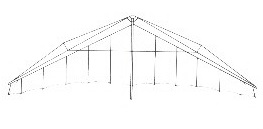
Made in 1978 the Skyhook Sailwings Safari had 18 months of intensive flying before being put in production.
For light winds the medium Safari has an excellent min sink performance. It also has the penetration for strong winds and positive, predictable handling with quick response. The reflexed preformed battens in every seam make the whole wing pitch positive without the need for locked up tips, etc. Vertical dive recovery is positive. The Safari is a real cross country machine which easily makes use of thermals and handles the strong turbulence which often goes with them. This machine is for the experienced pilot who demands the best performance but still wants outstandingly good handling.
Safari (small)
Weight: 52 lb
Leading edge: 20 ft 7 in
Span: 35 ft 8 in
Keel 12 ft 5 in
Root chord: 9 ft 8 in
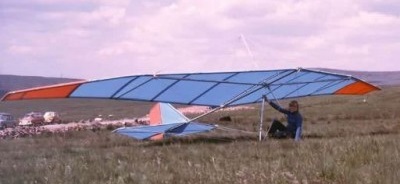
A 1975 hang glider
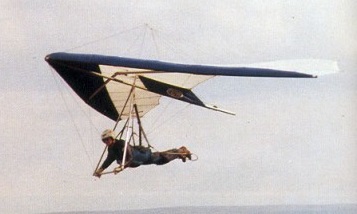
The Gipsy was a 1983 single surface hang glider, described as so easy to rig and fly. The only thing hard was lifting her off the ground to put the nose pin in as it was rather heavy. This glider is easy to self launch without a wire man even in strong winds.
The 1986 Gipsy and Gypsy SS were produced in three sizes to cover most pilot weights. The machine was a fourth generation floating crosstube lightweight intermediate and was an ideal first glider for the new pilot. All sizes gained C of A in 1987.
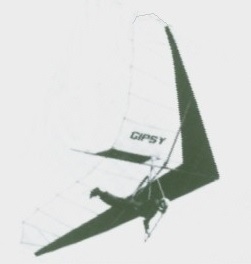
The 1987 Gipsy CFX is a light weight double surface intermediate glider. The handling is quick, light and beautifully co-ordinated with no hidden vices. The machine was supplied in two sizes.
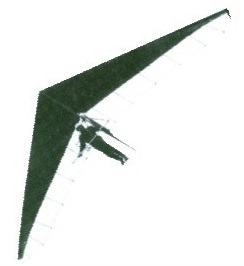
The 1987 Gipsy CFX was described as as sweat as ever to fly. Control is great soaring and at low level sand dunes. They are well put together.
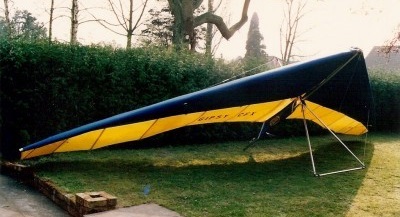
The Gipsy CFX beautiful handling glider but don’t be tempted to tighten sail to much using the outer attachment points as handling degrades dramatically and PIO becomes an issue. Keep the tune soft and the Gipsy is a gem of a glide.
Gipsy CFX
Sail area: 180 sq ft and 160 sq ft.
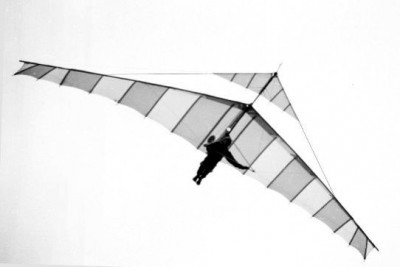
A 1977 hang glider
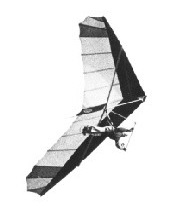
Made in 1979, the sail plan of the Cutlass was a 35 % double surface, with preformed battens. Designed to optimise all round performance, with advanced handling characteristics the Cutlass is quickly carving a name for itself.
The Cutlass was produced between 1979 and 84 priced at £810.00.
Cutlass medium
Weight: 66 lb
Cutlass CD
Hang glider
Dual Striker
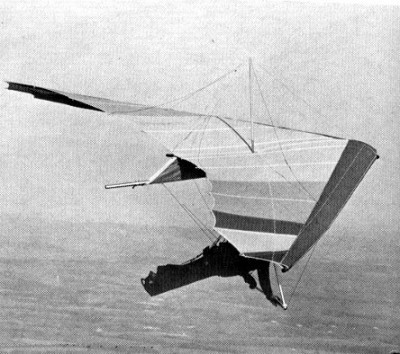
A 1989 hang glider the Sabre was Skyhook’s first double surface machine.
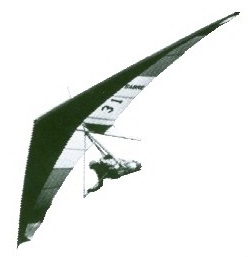
A notable flight has been achieved on the Sabre by by Jim Brown. On the 10th April 81 he flew from Semerwater in the Yorkshire Dales to a landing in Scotland for a distance of 78.1 miles.
The 1980 Sabre large was priced at £943.00
Sabre L
Weight: 77 lb
Sabre C
 All Aero