An Austrian hang glider manufacturer during 1975-87.
Hang-glider
Steger Hornet
The Steger Hornet was a 1982 hang glider.
Steger Concord
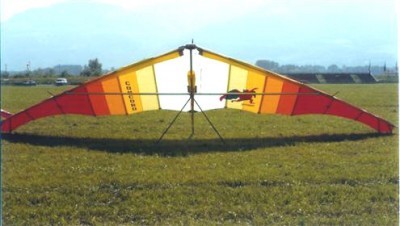
The Concord was followed by the 1981 Concord 2.
Spengeler Dadalus
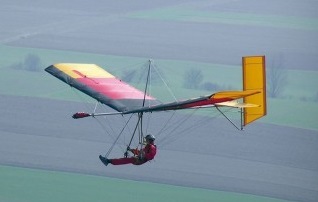
Dädalus 1
Wing area: 10.39 m²
Wing span: 15.5 m
Aspect ratio: 6.9
Hang glider weight: 30 kg
Packed length: 5.5 m
Dädalus 2
Wing area: 12.10 m²
Wing span: 18 m
Aspect ratio: 8
Hang glider weight: 34 kg
Packed length: 6.4 m
Spectra Aircraft Sonic
A double surfaced, internal crossbar hang glider design followed the Aolus, called the Sonic.
Spectra Aircraft Aolus

The 1981 Aolus was the first version of this planform from Spectra Aircraft, by design engineer Carlos Moralles. It had a wide 150 degree nose angle to minimize spanwise flow and maximize span efficiency. The tail was added to provide for pitch stability which would be lost due to the minimal sweep in the wings.
The Aolus was available in three sizes: 150, 170, and 190.
It has been described as “pitch weird and yaw funky. Tests had shown the washout tubes to have no needed pitch effect, but that they were put on for pilot expectations. Assembly was flat on the ground, with tricky ways of getting that high tension sweep cable/bow sprit in place.
In 1981 Carlos Miralles taught flying on the second prototype off Cuesta Ridge in San Luis Obispo, California, and sold it for $500.
It was a superb thermalling machine. In a strong, smooth core, you could push out past stall and flat-spin at 2000 fps. With that reflexed tail, it gave you a very secure feeling that it would recover from going over the falls in violent thermals. And fast landings in high-altitude-density air were helped by that bowsprit. When it dropped, you’d fly through the bars and hit the sail (no crossbar). But the thing that made the Aolus such a great thermalling machine, that huge tail, may have kept it from attaining the best l/d between thermals.
Southdown Sailwings Sigma
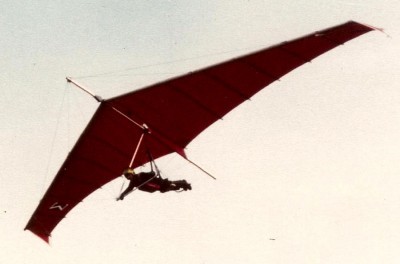
The 1980 Sigma was the first offering from Southdown Sailwings. It follows the basic concept of the Chargus Cyclone by appealing to the more experienced pilot for use in competition and cross country flying.
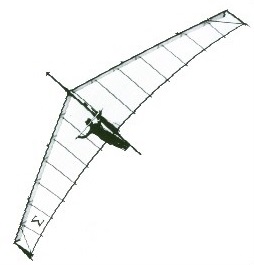
The Sigma is a crosstube-less bowsprit design. The machine has a high aspect ratio with a tight sail and drooped tips which lock up at the minimum desired angle of attack to aid pitch stability. Rigging is straightforward and quick, the longest operation being fitting the flexible battens. The Sigma came in two sizes, 11 sq m and 12 sq m.
The 1979 Southdown Sailwings Sigma had to be flown all the time, and if you did not get the push out right in turns, then don’t bother with light ridge lift. The nose would drop on landing.
In 1979 Southdown Sailwings made the first 12 Sigma 12m. Alan Garard and Rod Stuart from NZ test flew all 12 gliders and loved them. Stuart’s Sigma hangs in the transport museum in Wanaka, New Zealand.
The Sigma was followed by the 1981 Sigma Floater.
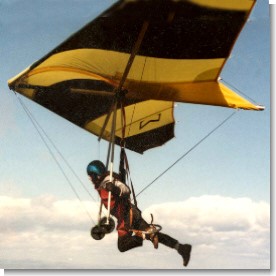
The Sigma Floater is an open cross boom design glider, this is different from the first Sigma which used a bowsprit design. This type of glider was more appealing to novice or intermediate pilots for use in coastal flying. Rigging is straightforward but slower than the Sigma.
The Sigma Floater was priced at £937.00.
Sigma 12 m
Span 38 ft
Sail area 188 sq ft
Aspect ratio 7.5
Nose angle 140 deg
Southdown Sailwings Lightning
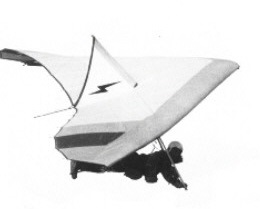
The 1980 Lightning was a new double surface glider from Southdown Sailwings, with superior sink rate, glide and penetration, plus high stability and superb handling. It could be distinguished from other clones of the Comet by its shark fin which stretches from king post to trailing edge. The Lightning came in two sizes, L 170 and L 195 to cover pilot weight ranges from 9-15 st. The recommended change over weight was 11 st.
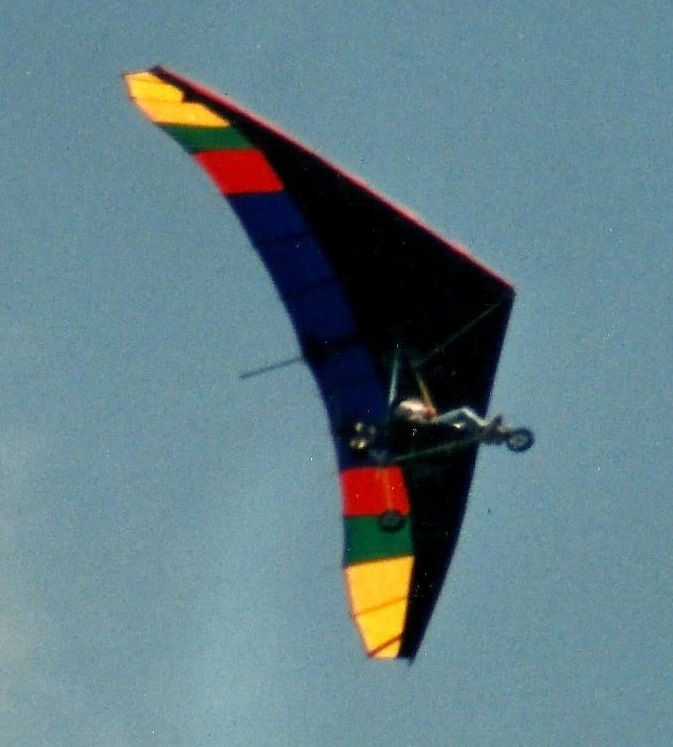
The 1981 Lightning double surface wing hang glider was recognizable for its aileron. The finishing touch not too great and mounting the wing a bit long.
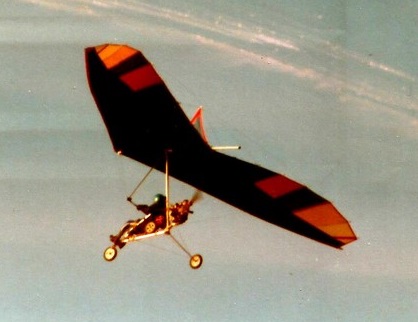
Lightning 195
Sail area: 195 sq ft
Nose angle: 130 deg
Span: 32 ft
Aspect ratio: 6.3
Weight: 60 lb
Lightning DS
Solar Wings Blade
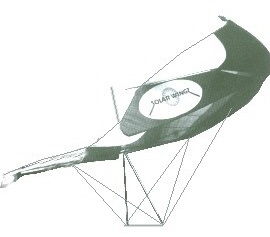
The 1982 Solar Blade was a new project for the Malborough company. Four prototypes were displayed at the Pennine league where it appears they had some teething troubles with the handling.
Solar Wings Whisper
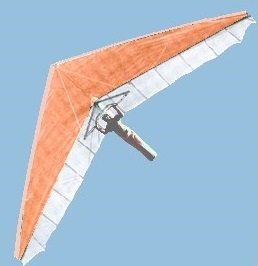
The 1993 Whisper was designed to blend good performance with ease of handling for intermediate pilots. It is distinguished from the Rumour by the lack of double surface at the tips.
The Whisper was priced at £1695 with round uprights, and £1825 with aerofoil uprights.
Whisper
Sail area: 158 sq ft
Nose angle: 124°
 All Aero