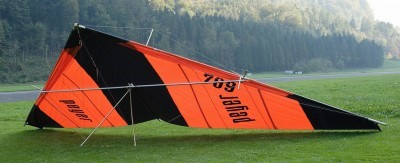
The Thalhofer Flamingo first appeared in 1976.
The Thalhofer Flamingo first appeared in 1976.
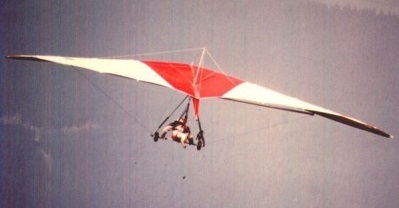
The Thalhofer Cloud first appeared in 1979, followed in the same year by the Cloud 2.
The Cloud 3 appeared in 1982.
The Cloud 4 appeared in 1984.
Cloud 2
Wing area: 16.9 m²
Aspect ratio: 6.08
Hang glider weight: 26 kg
Minimum pilot weight: 68 kg
Maximum pilot weight: 85 kg
Minimum speed: 25 km/h
Maximum speed: 72 km/h
Packed length: 3.8 m
Packed length short: 2.25 m
Nose angle: 125°
LS-ac / HG-hg
1983: Thalhofer, Steinengrabenstrasse 12, D 7440 Nfirtingen, West Germsny.
By 1998 UP Delta had bought out aircraft manufacturer Thalhofer.
In 1998 UP Europe was manufacturing the wings for the rigid wing Pegasus of Jurgen Lutz, having bought out aircraft manufacturer Thalhofer.
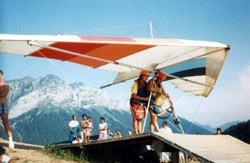
A 1982 hang glider for novice pilots. It is really not suitable for big flights. No floating, no reminder cords. Only for slope school, a few meters above ground.
Wing area: 16.5 m²
Wing span: 9.1 m
Aspect ratio: 5
Minimum pilot weight: 50 kg
Maximum pilot weight: 80 kg
Nose angle: 110°
Wing area: 23 m²
Wing span: 11 m
Hang glider weight: 30 kg
Minimum pilot weight: 80 kg
Maximum pilot weight: 170 kg
Packed length: 6.2 m
Packed length short: 4.7 m
Number of battens: 14
Nose angle: 120°
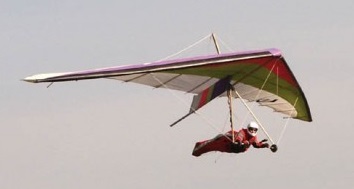
First built in 1987, the Nuage was for intermediate pilots.
A 135 model with smaller A frame (uprights 1.50m) was available.
The manufacturer proposes a modification: move the position of the trapese on the keel + change of the cables + reinforcement on the keel to improve the thrust to the attero. This reduces the tendency to plant the nose with the landing.
Nuage 135
Wing area: 13.5 m²
Wing span: 9.6 m
Aspect ratio: 6.7
Hang glider weight: 24 kg
Minimum pilot weight: 58 kg
Maximum pilot weight: 68 kg
Packed length short: 3.4 m
Nose angle: 124°
Nuage 150
Wing area: 15 m²
Wing span: 10 m
Aspect ratio: 6.7
Hang glider weight: 28 kg
Minimum pilot weight: 65 kg
Maximum pilot weight: 80 kg
Max speed: 80 kph
No of battons: 17
Packed length short: 3.6 m
Nose angle: 124°
Nuage 155
Wing area: 16 m²
Wing span: 10.4 m
Aspect ratio: 6.7
Hang glider weight: 30 kg
Minimum pilot weight: 68 kg
Maximum pilot weight: 90 kg
Packed length short: 4 m
Nose angle: 124°
Nuage 160
Wing area: 16 m²
Wing span: 10.4 m
Aspect ratio: 6.7
Hang glider weight: 32 kg
Minimum pilot weight: 85 kg
Maximum pilot weight: 100 kg
Packed length short: 4.2 m
Nose angle: 124°
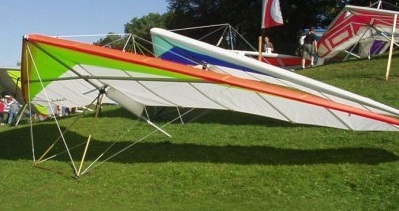
A 2005 hang glider. Reported as a very good wing for learning, it flies all by itself and it forgives (almost) everything! Easy turning and easy exit.
There is also the “max” version of the nimbus which is 5kg and intended as a school exit wing. The sail is made of fabric racing 190 with profiled edge edges rubber and reinforced structure.
The max version can use pulma trolley and motorized harness. The structure is built to 6G for 140 Kg (110 PPE + 30 Wing at the time) or 840 Kg of structural resistance. The given allowable load is 190 Kg of PTV and 4G.
To use the wing, motorized harness and trolley, it is necessary to equip the speed bar reversed for use with a trolley.
Nimbus 165
Wing area: 16.5 m²
Wing span: 10 m
Aspect ratio: 6
Hang glider weight: 22 kg
Minimum pilot weight: 75 kg
Maximum pilot weight: 110 kg
Maximum speed: 60 km/h
Max glide ratio (L/H): 9
Minimum sink rate: 1 m/s
Packed length: 5.6 m
Packed length short: 3.7 m
Number of battens: 12
Nose angle: 124°
Nimbus 18
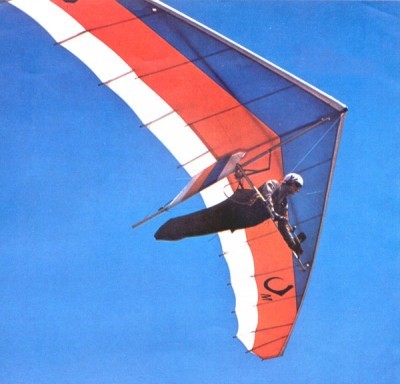
The Mirage was a 1982 hang glider.
The Mirage B appeared in 1984.
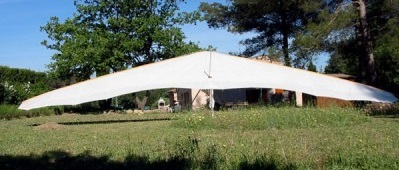
Mirage B 1984
Wingarea: 13.2 sq.m
Wingspan: 9.5 m
Length: 6.8 m
Wing weight: 24 kg
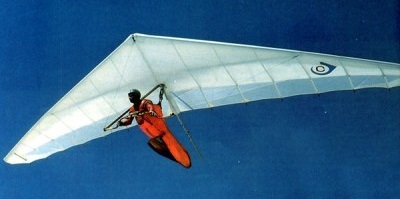
1986
Advanced pilots
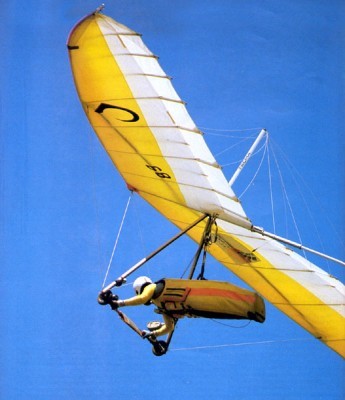
Tecma started building the boomerang, then designed the Boomerang fz (at the time, Walbec had broken the distance record with it) and finally the boomerang XM which had 4 battens less than the others.
The 1989 fz model was available in 2 sizes, 135 and 147.
The early boomerangs had a B sign in the middle of the Tecma logo, not fz.
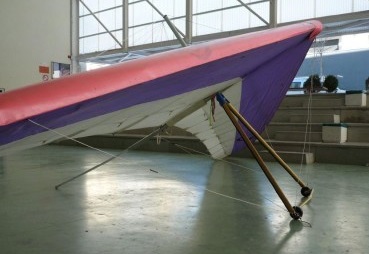
The Boomerang XM is reported as very easy to fly, handy and easy to land. Take-off is no problem, especially with the 126 which is very light and perfectly balanced. In case of overpilot, release the bar, the wing calms down immediately. Very lively, very playful, but not vicious for all that. A good wing, but not really made for long flights because physical in the long run.
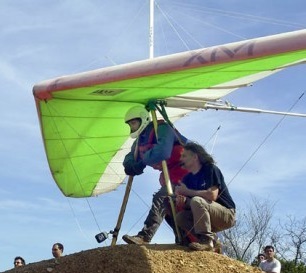
Boomerang
1988
Intermediate
Wing area: 15 m²
Number of battens: 32
Boomerang FZ 135
Wing area: 13.5 m²
Wing span: 10 m
Aspect ratio: 7.4
Hang glider weight: 28 kg
Packed length: 4.9 m
Number of battens: 30
Nose angle: 130°
Boomerang FZ 147
Wing area: 14.7 m²
Wing span: 10.6 m
Aspect ratio: 7.6
Hang glider weight: 33 kg
Minimum speed: 30 km/h
Maximum speed: 90 km/h
Max glide ratio (L/H): 10.6
Max glide ratio speed: 45 km/h
Minimum sink rate: 0.96 m/s
Packed length: 5.2 m
Number of battens: 30
Nose angle: 130°
Boomerang FZR 14.7
1990
Intermediate
Wing area: 14.7 m²
Number of battens: 31
Boomerang XM 126
Wing area: 12.6 m²
Wing span: 9.5 m
Aspect ratio: 7.2
Minimum pilot weight: 45 kg
Maximum pilot weight: 60 kg
Nose angle: 130°
Boomerang XM 135
Wing area: 13.5 m²
Wing span: 10 m
Aspect ratio: 7.4
Minimum pilot weight: 58 kg
Maximum pilot weight: 78 kg
Nose angle: 130°
Boomerang XM 147
Wing area: 14.7 m²
Wing span: 10.6m
Aspect ratio: 7.6
Minimum pilot weight: 75 kg
Maximum pilot weight: 100 kg
Nose angle: 130°

A novice single surface hang glider first built in 1985, through 1998.
Built for beginners with light handling and very forgiving due to its floating crossbar. They have tight turning circles and are easy to land in small fields. Although it can be flown in almost any kind of weather, attention should be paid to the fact that you won’t move ahead much against strong headwind and it also gets bumpy in thermals. When pulling the bar, you move down, not forward.
The finish is ok, but with minimalistic rigging, and the crossbar tensionnig wire wears out very quickly. Also, be careful that the crossbar doesn’t pop out in your face while derigging, a frequent cause of accidents.
Medium 13
Wing area: 13.5 m²
Wing span: 9.1 m
Aspect ratio: 6
Minimum pilot weight: 50 kg
Maximum pilot weight: 65 kg
Nose angle: 124°
Medium 15
Wing area: 15.5 m²
Wing span: 9.6 m
Aspect ratio: 6
Hang glider weight: 21 kg
Minimum pilot weight: 60 kg
Maximum pilot weight: 80 kg
Nose angle: 124°
Medium 17
Wing area: 16.5 m²
Wing span: 10 m
Aspect ratio: 6
Hang glider weight: 23 kg
Minimum pilot weight: 70 kg
Maximum pilot weight: 95 kg
Nose angle: 124°
Medium 21 / Biplace
Wing area: 20.8 sq.m
Certification: DHV
Pilot weight: 100-170 kg
Wing span: 10.8 m
Nose Angle: 124 deg
Aspect ratio: 5.7
Hang glider weight: 32 kg
Packed length short: 4.5 m
Number of battens: 12
Price (1998) 20650 Fr
 All Aero