Air Command Commander Elite Single

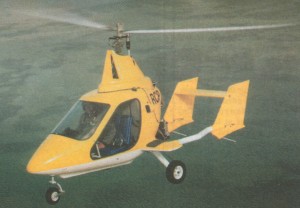
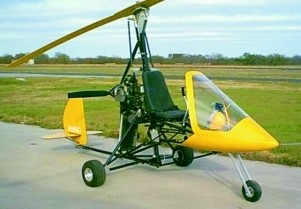
Commander Elite Single Place

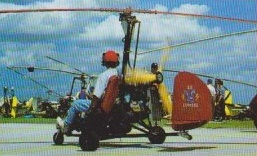
The single-person Commander has center-line thrust to increases pitch stability and decrease drag. It takes up to a 67-hp Rotax 582 engine, but passes as an ultralight when equipped with a 40-hp Rotax 447. Cruising speeds range from 50 to 65 mph, depending on engine choice. All models can be upgraded to larger engines. Engines options include: 40 hp Rotax 447,52 hp Rotax 503,67 hp Rotax 582, and Hirth 3202 and 3203.
The Air Command Sports Elite is a kit-built gyroplane built in the USA since the early 1990s. Powered by a Rotax 532 engine, the aircraft can take off within 600 feet in still air and can land within 10 feet. The cruising speed is 60 – 80 mph.
Around 65 of the kits were imported into Britain but, after a number of fatal accidents, the aircraft type was grounded by the CAA. After several modifications type regained a flying permit and flew successfully for several years until the CAA again grounded the type.
In 2001 the kit prices were:
without engine: $7935
447 (40 hp) legal ultralight: $9875
503 (52 hp): $11,255
582 (67 hp): $12,675
2704: $12,996
2706: $14,995

Engine: Rotax 582
Rotor Blades: 25ft Dragon Wings, Sky Wheels

Engine: Rotax 447
Propeller: Warp drive 60″ or 68″
Rotor Blades: 23 ft Dragon Wings, Sky Wheels
Min Speed: 8 mph
Cruise: 50 mph
Top Speed: 63 mph
Empty Weight: 252 lbs
Useful Load: 300 lbs
Gross Weight: 552 lbs
Width: 5’7″
Height: 7′ or 7’10”
Length: 10’8″

Engine: Hirth 3202
Propeller: Warp drive 60″ or 68″
Rotor Blades: 25′ Dragon Wings, Sky Wheels
Min Speed: 8 mph
Cruise: 55 mph
Top Speed: 75 mph
Empty Weight: 275 lbs
Useful Load: 320 lbs
Gross Weight: 590 lbs
Width: 5’7″
Height: 7′ or 7’10”
Length: 10’8″

Engine: Hirth 3203
Propeller: Warp drive 60″ or 68″
Rotor Blades: 25 ft Dragon Wings, Sky Wheels
Min Speed: 8 mph
Cruise: 65 mph
Top Speed: 95 mph
Empty Weight: 275 lbs
Useful Load: 475 lbs
Gross Weight: 750 lbs
Width: 5’7″
Height: 7′ or 7’10”
Length: 10’8″
Air Command Commander Elite Side-by-Side

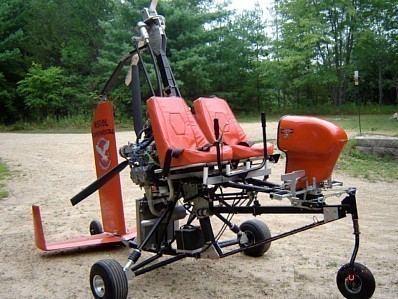
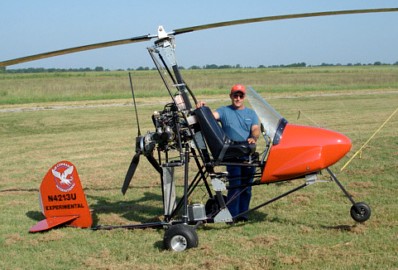
Elite

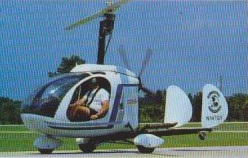
A two-seat, partially enclosed autogyro with options including an enclosure giving 10-15 mph higher cruise speed. Engine options include: 67 hp Rotax 582, 100-120 hp Arrow 1000cc. A Patrol version was available fully equipped with options. Prop: Warp Drive 60” or 68”. Rotor blades: 25’ x 8” Sky Wheels composite.
Similar engines produce different results in the two-seater Commanders. Tandems reach speeds up to 120 mph with a 160-hp engine or 110 mph with a 110-hp Hirth F-30, while the side-by-side can get up to only 85 mph with the F-30.
The kit price in 2001 for the Side-By-Side with the F-30 was $19,292, and without engine: $11,580.

Elite 532
Engine: Rotax 532
Empty weight: 310 lb
Max weight: 750 lb
Rotor dia: 25ft
Max speed: 75 mph
Cruise: 45 mph
Vne: 150 mph
Seats: 2.

Elite 582
Engine: Rotax 582
Width: 5’7”
Height: 7’
Length: 10’8”
Empty weight: 310 lb
Useful load: 440 lb
Gross wt: 750 lb
Min speed: 20 mph
Cruise: 55 mph
Top speed: 75 mph

Side-by-Side
Engines: Hirth F-30 (110 hp), Subaru 130 hp
Propeller: Warp Drive 68″
Rotor Blades: 29′ Dragon Wing, Sky Wheels
Width: 5’7″
Height: 7′
Length: 10’8″
Empty Weight: 310 lb
Useful Load: 440 lb
Gross Weight: 750 lb
Min Speed 20 mph
Cruise 65mph
Top Speed 85 mph

Air Command Commander

Commander 582 Single Place

A single seat, partially enclosed autogyro using 6061-T6 tube, first flown in 1964. Can meet ultralight regs with Rotax 447. Options include enclosure, giving 10-15 mph higher cruise speed, and engine options include the 40 hp Rotax 447, 48 hp Rotax 503, 50 hp Rotax 503 (dual carbs), 65 hp Arrow, 100-120 hp Arrow. A Patrol version fully equipped with options is available. Prop: Warp Drive 60” or 68”. Rotor blades: 23’ x 8” Sky Wheels composite.
Powered by a choice of three Rotax engines, the manufacturer’s claim a reduction in noise levels commonly associated with the rotor craft. Flown solo, the Commander gets off the ground in 100 feet with the pre rotator, has a maximum speed of 90 mph, normal cruise of 65 and can be landed in zero to ten feet. Airborne in less than 100ft. With a top speed of 90 mph. The Commander gyroplane will not stall; it slow flies at 8 mph, climbs at 1200ft per minute, can be flown in winds to 40 mph and will land in 0 to 10 feet.
Converts to two place Commander Elite.

Air Command 582

The forerunner of the 532 model, the 447 is of open cockpit configur¬ation with power coming from a 40hp Rotax 447 engine.

Commander 447
Engine: Rotax 447, 40 hp
Prop: Warp Drive 60” or 68”
Rotor blades: 23’ x 8” Sky Wheels composite
Height: 7 ft
Length: 10.7 ft
Empty weight: 252 lb
Gross weight: 552lb
Fuel capacity: 5 USG
Max speed: 63 mph
Cruise: 50 mph
Vne: 150 mph
Takeoff dist: 200 ft
Landing dist: 0-20 ft
Seats: 1

Commander 503
Engine: Rotax 503, 47 hp
Disk span: 23 ft
Height: 7 ft
Length: 10.5 ft
Weight empty: 265 lb
Gross: 515 lb
Fuel cap: 5 USG
Speed max: 70 mph
Cruise: 50 mph
ROC: 900 fpm
Take-off dist: 100 ft
Landing dist: 0-5 ft
Service ceiling: 10,000 ft
Seats: 1
Landing gear: nose wheel

Commander 532

Commander 582
Engine: Rotax 582, 67 hp
Disk span: 23 ft
Height: 7 ft
Length: 10.5 ft
Weight empty: 275 lb
Gross: 775 lb
Fuel cap: 9 USG
Speed max: 95 mph
Cruise: 65 mph
ROC: 1200 fpm
Take-off dist: 100 ft
Service ceiling: 15,000 ft
Seats: 1-2
Landing gear: nose wheel

Air Command 582
Engine: Rotax 582, 64 hp
Rotor span: 7 m
Blade area: 0.23 sq.m
MAUW: 320 kg
Empty weight: 150 kg
Fuel capacity: 20 lt
Max speed: 160 kph
Cruise speed: 130 kph
Minimum speed: 22 kph
Climb rate: 5.5 m/s
Seats: 1
Fuel consumption: 14 lt/hr
Kit price (1998): $9400

Airbet Girabet

The Airbet Girabet is a family of Spanish autogyros, designed and produced by Airbet of Barcelona. They are all supplied as complete ready-to-fly-aircraft. The Girabet family of designs all feature a single main rotor, tricycle landing gear and Rotax two-stroke and four-stroke engines mounted in pusher configuration. The aircraft fuselage is made from curved steel and aluminum tubing and mounts a cruciform tail. All rotor blades and other dynamic components are built by the company in-house. All models fit pre-rotators to shorten take-off distances.

The Classic model, assembled, sold for €16,500 in 2011.

Variants:

Girabet Classic
Original single seat model, powered by a 50 hp (37 kW) Rotax 503 twin cylinder, air-cooled, two-stroke, dual-ignition powerplant. Its 7.30 m (24.0 ft) diameter rotor has a chord of 21 cm (8.3 in). The aircraft has an empty weight of 118 kg (260 lb) and a gross weight of 230 kg (510 lb), giving a useful load of 112 kg (247 lb). The company also offers a custom-built trailer for ground transportation and home storage.

Girabet 582
More powerful single seat model, powered by a 64 hp (48 kW) Rotax 582 twin cylinder, liquid-cooled, two-stroke, dual-ignition powerplant. Its 7.30 m (24.0 ft) diameter rotor has a chord of 21 cm (8.3 in). The aircraft has an empty weight of 120 kg (260 lb) and a gross weight of 230 kg (510 lb), giving a useful load of 110 kg (240 lb). Take-off roll with the pre-rotator is 20 m (65.6 ft).

Girabet 2
Side-by-side configuration two seat model intended for use as a trainer, powered by a 100 hp (75 kW) Rotax 912S four cylinder, air and liquid-cooled, four-stroke, dual-ignition powerplant. Its 8.40 m (27.6 ft) diameter rotor has a chord of 21 cm (8.3 in). The aircraft has an empty weight of 175 kg (386 lb) and a gross weight of 410 kg (900 lb), giving a useful load of 235 kg (518 lb).

Girabet 2 Sport
Side-by-side configuration two seat model intended for use as a cross country aircraft and equipped with a cockpit fairing and windshield. Powered by a 100 hp (75 kW) Rotax 912S four cylinder, air and liquid-cooled, four-stroke, dual-ignition powerplant, its 8.40 m (27.6 ft) diameter rotor has a chord of 21 cm (8.3 in). The aircraft has an empty weight of 220 kg (490 lb) and a gross weight of 450 kg (990 lb), giving a useful load of 230 kg (510 lb).

Airbet Girabet 582
Engine: 1 × Rotax 582, 48 kW (64 hp)
Propeller: 3-bladed composite
Main rotor diameter: 7.3 m (23 ft 11 in)
Empty weight: 120 kg (265 lb)
Gross weight: 230 kg (507 lb)
Fuel capacity: 42 litres (9.2 imp gal; 11 US gal)
Maximum speed: 140 km/h (87 mph; 76 kn)
Cruise speed: 105 km/h (65 mph; 57 kn)
Rate of climb: 9 m/s (1,800 ft/min)
Crew: one

Aerotecknik CZ Sro

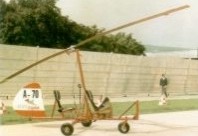
On January 1, 1970 the company Aerotechnik was established. The main scope of business was development and manufacturing of small aircraft. Single-seat and two-seat versions of A-70 gyroplane belonged among the first designs.
Since 1972 Aerotechnik has extended its scope of business on overhauling, maintenance and rebuilding of small GA aircraft (Zlín aircraft series, L-60 Brygadýr). Service activities of Zlin aircraft was terminated in mid 90´s.

After Aerotechnik merged with Evektor – an aircraft and automotive design company in Czech Republic, Aerotechnik was transformed into the share holding company Evektor-Aerotechnik in 1999. Evektor-Aerotechnik is based in Kunovice airport in the Czech Republic.

Production of light sport aircraft and advanced UL aircraft was launched in 1996, starting with P220UL Koala aircraft and followed by EV-97 Eurostar (introcuced in 1997) and SportStar aircraft programes. Evektor SportStar became the very first light sport aircraft in the world approved by FAA in USA in 2004.

Also offers the P 220 UL sports two-seater in kit form in light and ultralight versions, and is marketing the braced high-wing two-seat Fox (a variant of the German Ikarusflug Eurofox, with Evektor of the Czech Republic having undertaken important design work, and Aeropro of Slovakia building airframes for Fox and Eurofox).

In 1997–2004 Evektor-Aerotechnik was participating in subdeliveries of airframe parts in program of single engine turboprop Aero 270 of Aero Vodochody. In 2004 the company introduced single engine four-seater VUT100 Cobra and in 2010 new modern twin engine turboprop Evektor EV-55 Outback made roll-out followed by first flight in 2011.

1998:
Airport
CZ-68604 Kunovice
Czech Republic

Aero-Sport International Kahu

Chris Wade commenced the initial theoretical design and research in 1997 as the sole designer of the aircraft and the highly modified Mazda Ml3B rotary engine. The actual construction for the first prototype started in Au¬gust 1999. A lot of time was spent in the initial design phase and this has allowed ASI to perform trials without any major deviations from the original design. Minor problems with quality and suitability of imported componentry have now been resolved and results of recommendations from the test pilot, CAA and other consultants have seen several modifications during the testing phase. The size of the wheels being a significant change. On 27 July 2001, at Tauranga airport, New Zealand, the prototype underwent its first official flight with Rob Sanders as test pilot. The original configuration allowed prototype testing in the Microlight category.
Nearing the end of the flight testing programs a number of improvements to the original prototype were incorporated. A new mechanical pre rotator replaces the original hydraulic design which was not considered efficient enough. The new version is capable of spinning the rotors to 275rpm. The horizontal stabiliser effectiveness has been improved by raising it into the centre of the prop wash. Yaw stability has been improved by moving the vertical stabilisers into the last one third of the prop wash which also increases airflow over the rudders. This has particularly improved control at low airspeeds of 15 knots and less. The rotor head and mast assembly is now fully adjustable for different weight and balance characteristics. The original reduction drive was a Mazda gearbox which whilst successful, came with a significant weight penalty. A Hirth gearbox has been used to simplify testing of gear ratios, however it is planned to use a geared tooth belt drive in production. New controls have been designed which can easily be changed from dual to single place and back again. The fuel tank has been re located to improve balance and ease of manufacture. Engine cooling problems have been addressed and the modified Mazda 13b rotary powerplant is now producing 157hp at 5500rpm in a detuned state. The engine has been running on 91 unleaded fuel consurn¬ing 18 litres per hour. Weight including gearbox, starter, radiator, alter¬nator and pre rotator drive is 146kgs.

Engine: Mazda 13B rotary, 157 hp