The Cierva C.12 was an experimental autogyro built by Cierva Autogiro Company in England in 1929, in association with Avro. Like most other Cierva designs, it was based on an existing aircraft fuselage – in this case, an Avro Avian. The most significant thing about this aircraft is that after initial tests, the Avian’s second cockpit was removed, and the aircraft’s undercarriage was replaced by the same floats used to equip standard Avian seaplanes. In this configuration, the C.12 (now dubbed the Hydrogiro) flew from Southampton Water in April 1930, becoming the first rotary-wing aircraft to take off from water.
Cierva licensed production to Avro.
Gyrocopter
Cierva C.11
The C.11 autogiro was built under licence by George Parnall & Co.
Cierva C.10
The C.10 autogiro was built under licence by George Parnall & Co.
Cierva C.9 / Avro 576
The C.9 autogiro was built under licence by Avro as the Avro 576.
Cierva C.8 / Avro 586 / Pitcairn-Cierva C-8
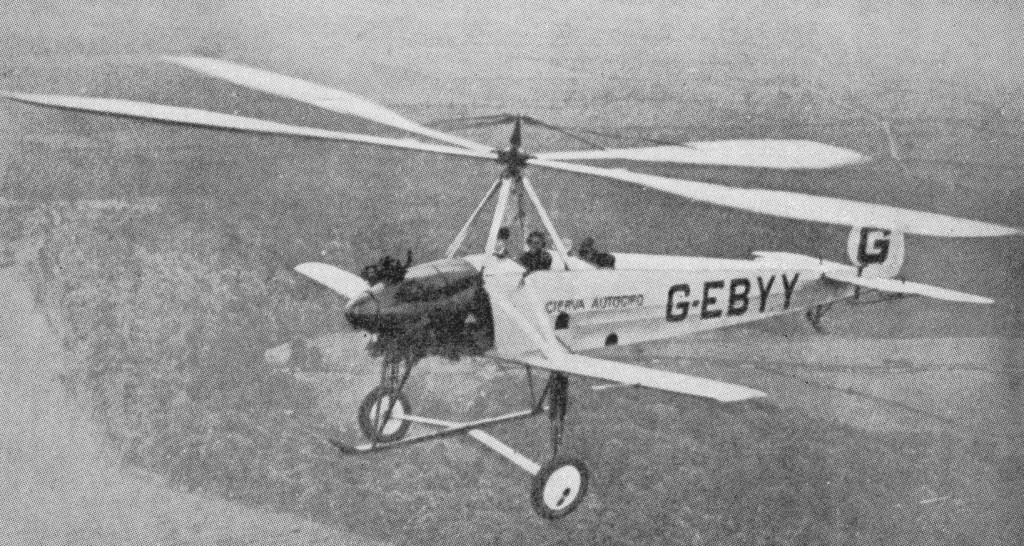
First flew on 17 January 1923.
One Cierva C-8 was purchased by Pitcairn Co for evaluation, it was the first rotary-wing craft to fly in the USA, on 18 December 1928 (p: Harold Pitcairn). It was modified to the Pitcairn-Cierva C-8 registered N418.
On 18 September 1928 a Cierva C8L Mark II was flown by its inventor from London to Paris with a passenger who was the editor of l’Aeronautique. That aircraft, G-EBYY, is preserved in the Musee de l’Air.
Cierva licensed production to Avro as the Avro 586.
Engine: 1 x Armstrong Siddeley Lynx IVC 2-cylinder, 150kW
Main rotor diameter: 12.09m
Fuselage length: 8.69m
Height: 4.50m
Max take-off weight: 1120kg
Max speed: 161km/h
Service ceiling: 1200m
Range: 410km
Pitcairn-Cierva C-8
Engine: 220hp Wright J-5
Wingspan: 28’0″
Length: 28’4″
Rotor diameter: 38’8″
Seats: 2
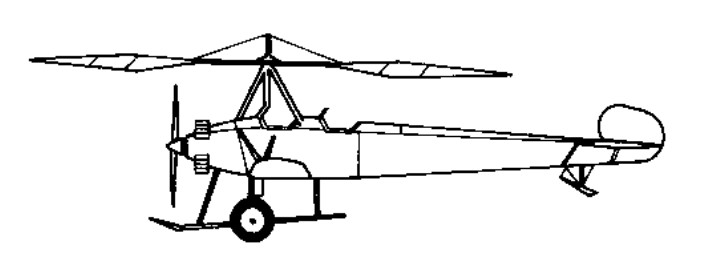
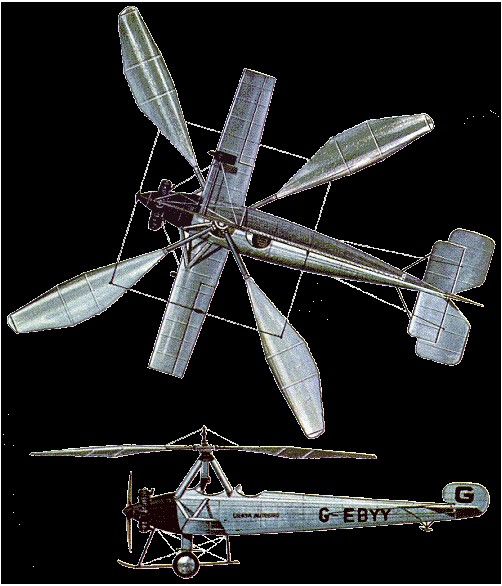
Cierva C.6 / Avro 574
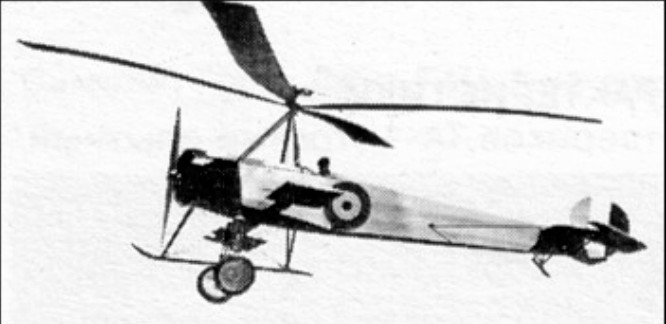
Similar to the C.3 and also equipped with a Le Rhone 9 JA 110hp engine, the C.5 with a three-bladed rotor first flew at Getafe in July 1923.
The C.6, unlike its predecessors financed from private sources, was built with the help of subsidies from the Spanish Government and made its maiden flight in May 1924. It had an Avro 504K fuselage with ailerons on outrigger spars, a rotary Le Rhone 9 JA 110hp engine and a four-bladed rotor with flapping hinges 10.97m in diameter and turning at 140 r.p.m.
The rotor was made to turn at up to 60 r.p.m. By this means, the autogyro’s take-off was shortened by the use of a rope.
On 12th December 1924 the first successful cross-country flight was made over the 12 kilometres between the airports of Cuatro Ventros and Getafe.
In October 1925 the C.6 was brought to England and performed a series of demonstrations at the Royal Aircraft Establishment, Farnborough. These were so convincing that the Air Ministry decided to order several autogyros to be tried out by the Royal Air Force. This gave rise to the Cierva Autogyro Company Ltd, which managed the rights in La Cierva’s inventions. The firm of A.V.Roe was selected to build the British C.6’s. The C.6 autogiro was built under licence by Avro as the Avro 574.
Cierva C.4
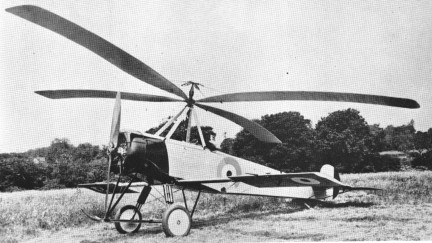
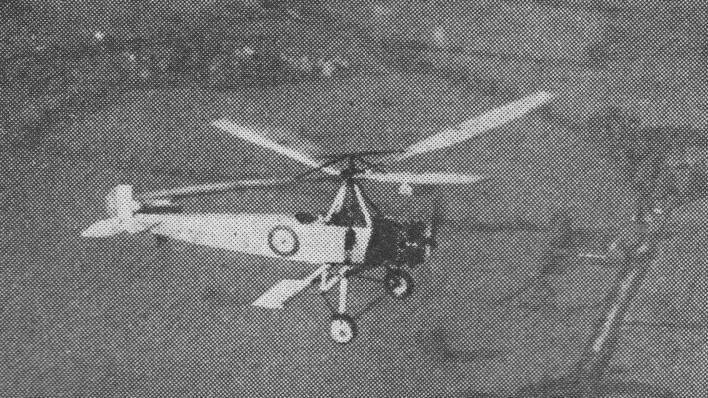
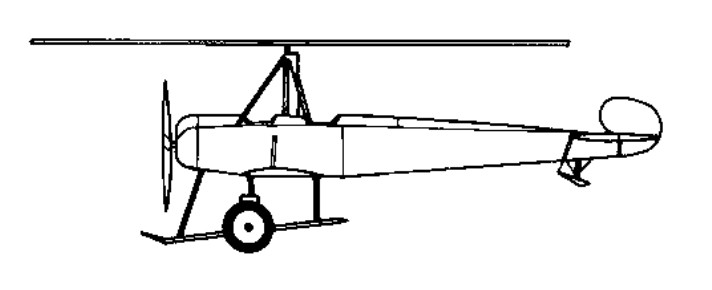
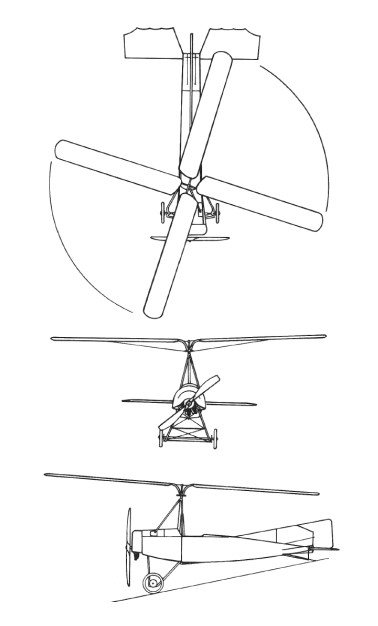
Between 1920 – 23 Cierva progressively developed autorotation in the C.1, C.2 and C.3. The original model did not fly, but after various trials and modifications, such as the addition of ailerons on outriggers, the C.4 flew. Cierva stated that the first flight of his C.4 Autogiro was on January 9, 1923 at Getafe airfield outside Madrid when (Calvary) Lieutenant Alejandro Gomez Spencer guided the craft in taxi tests during which the craft became airborne. But most historians maintain that the first observed (and filmed) flight of C.4 took place on January 17, 1923 when Gomez Spencer flew 600 ft at a steady height of 13 ft across the field. The autogyro was moved to Cuatro Ventros aerodrome, also in the Madrid neighbourhood, and at the end of the same month performed a closed circuit flight of 4 kilometres in 4 minutes at a height of about 30 metres. The four blades of this prototype were articulated at the root and were thus able to flap vertically. Hinged, articulated blades thus proved the answer to the difficulties encountered in the previous types.
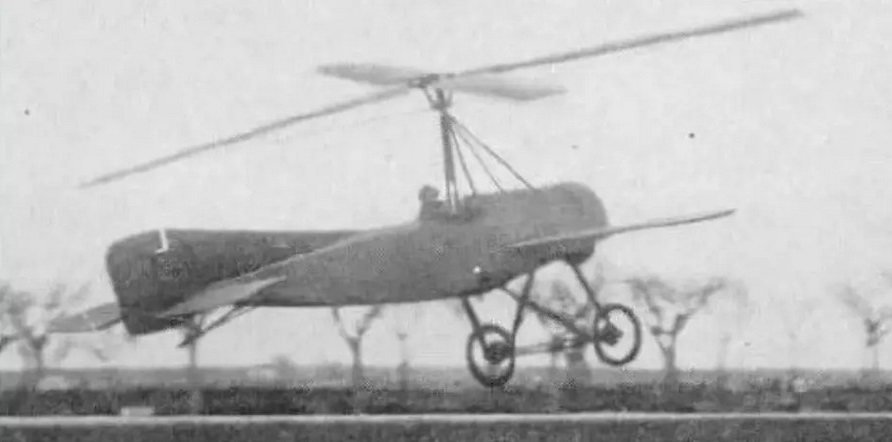
Replica:
Getafe Ultralight Club Cierva C.4
Cierva C.3
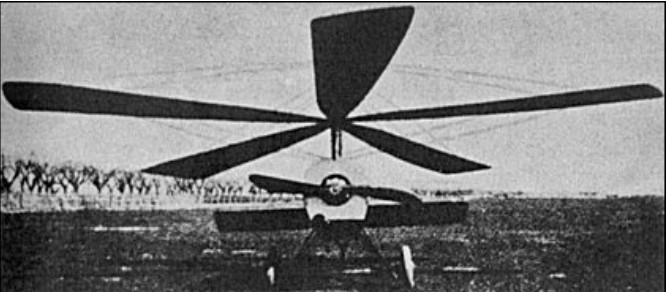
At the beginning of 1922 this prototype with five rigid blades was ready for trial. Though its lateral control was improved, it always showed in the inventor’s own words “a tendency to fall over sideways”. It was damaged on several occasions and rebuilt four times.
An end was put to La Cierva’s failures by a toy autogyro which he had built. Its engine consisted of a twisted rubber band, and its rotary wings of flexible palm wood. Unlike the full-sized machines, it flew properly. On comparing it feature by feature with the C.3, La Cierva discovered that the flexible rotor blades accounted for the toy’s successful flight. This gave La Gierva the idea of articulating the blades so as to overcome the unbalance between the advancing and the retreating blade.
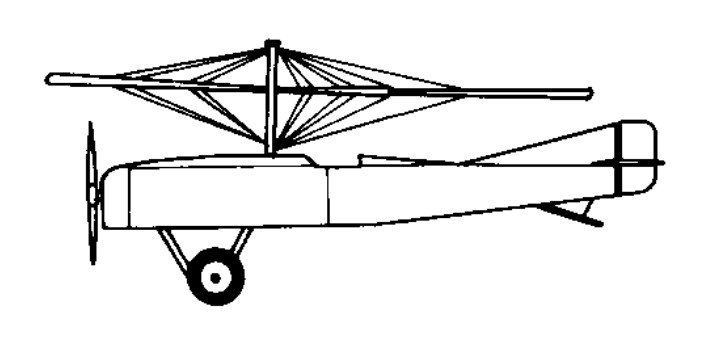
Cierva C.2
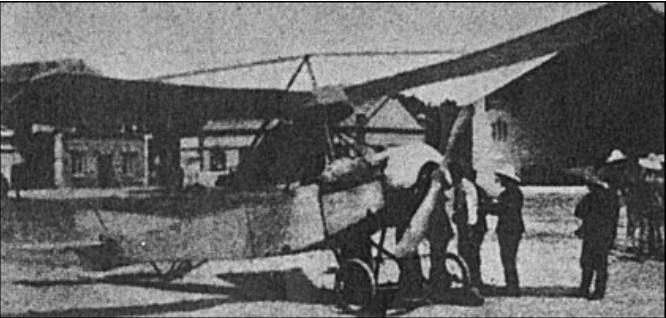
This prototype was completed early in 1921. Above the centre of gravity of a Hanriot fuselage retaining its customary elevators and rudder was fitted a three-bladed rotor, the blades of which incor-porated variation of the angle of incidence.
Of this aircraft, La Cierva himself spoke as follows: “My first experiments with this type were encouraging. But after this model had been damaged and reconstructed nine times, it seemed clear that the solution would not be found in such a design.” Gyroscopic effects in fact proved virtually unsurmountable.
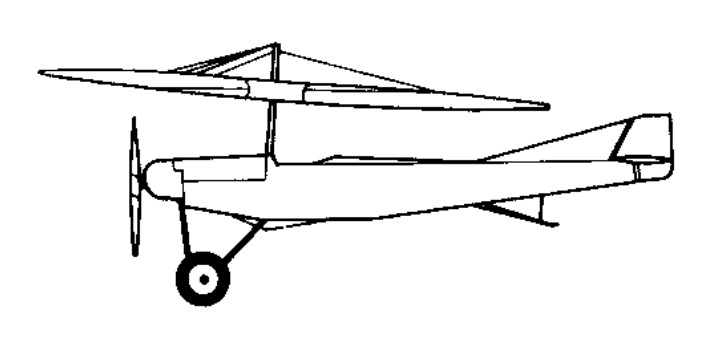
Cierva C.1
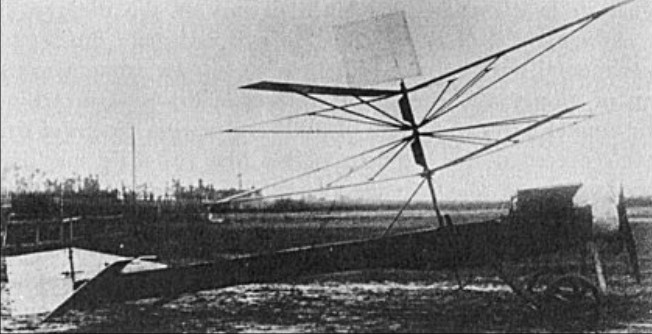
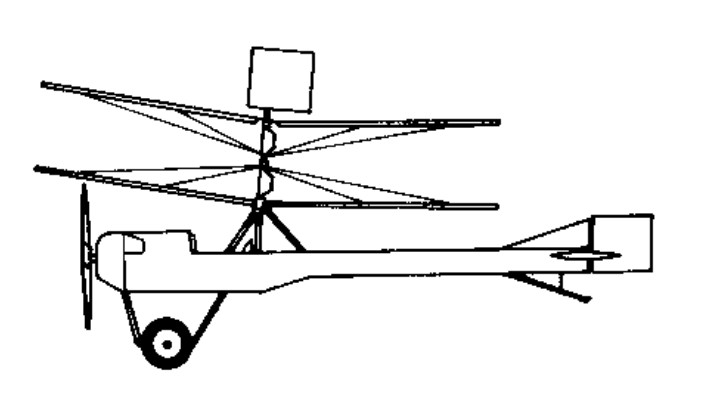
For this prototype built at Madrid in 1920, La Cierva used the fuselage of a Deperdussin, a French monoplane of pre-World War I vintage, on which were mounted two contra-rotating four-bladed rotors. The C.1 had a vertical surface above the rotor to give lateral control. This model never flew, since it proved impossible to control: the lift from the two rotors was unbalanced because of mutual interference.
 All Aero