UK
WHE founded 1969 to produce McCandless Mk IV Gyroplanes. Redesign produced Airbuggy single-seat autogyro, first flown 1973.
Gyrocopter
Westland-Cierva C.29 / Cierva C.29
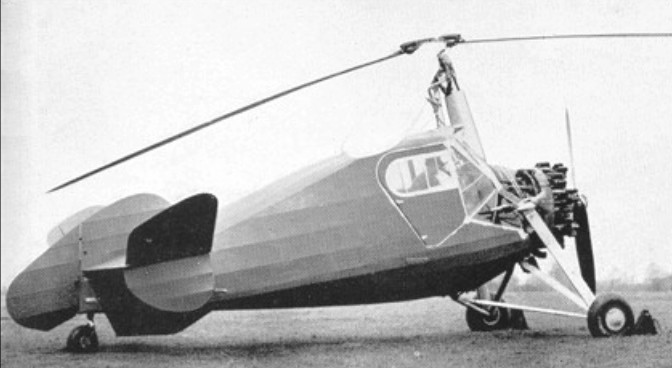
In 1934 the Westland design staff, in co-operation with the Cierva Autogiro Company, produced a large five-seat cabin autogiro in Duralumin tubing, powered with a 600hp Armstrong Siddeley Panther engine.
The fuselage was of square-section steel and duralumin tubing, arranged in the characteristic Westland style, with composite stringers and formers to give a deep oval section. The fabric-covered tailplane and vertical and oblique fins were built up of duralumin tubing and pressings, the aerofoil section of the port half of the tailplane being inverted, to offset airscrew torque effect. The seating in the cabin was arranged in the 2-3 plan.
It was much larger and heavier than anything of its kind previously attempted. The Cierva Company was responsible for the rotors and rotor mechanism, the direct control system being employed, while the airframe was designed and built by Westland.
Test of this machine, which was known as the C.29 Autogiro, disclosed vibration problems with the rotor system, which could not be immediately solved. In the circumstances it was decided to shelve this particular design, until further experience had been gained with other experimental autogiros, but the untimely death of Senor Cierva ultimately prevented development of this work. This aircraft never flew.
Westland-Cierva C.29
Engine: Armstrong Siddeley Panther, 600hp
Rotor diameter: 15.23m
Length: 11.58m
Height: 3.88m
Loaded weight: 2268kg
Empty weight: 1461kg

Westland-Cierva CL-20 / Cierva CL-20
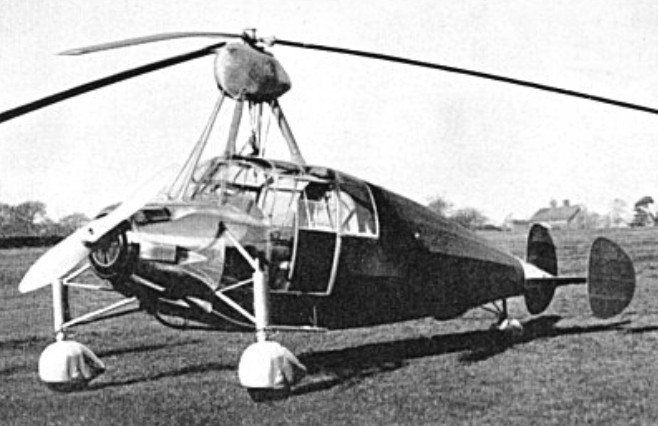
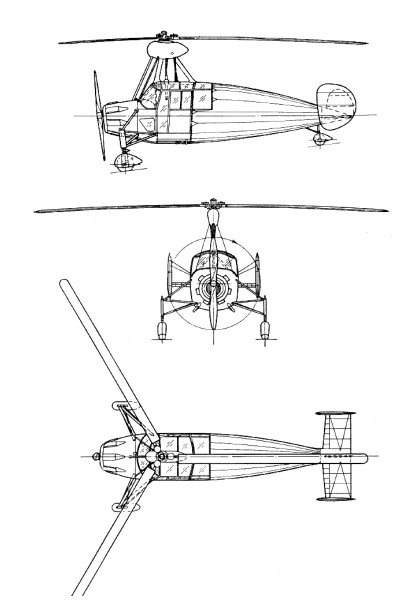
Westland, in conjunction with the Cierva Company and M. Lepere, produced the C.L.20 Autogiro, a two-seat side-by-side cabin machine. Lepere was at that time working with Liore and Olivier, holders of the Cierva licences for France. The fuselage was of welded seamless steel tubing, triangulated and faired to a streamline form by the use of stringers and fabric covering. A large door was fitted on either side of the cockpit and transparent panels, running right down to the bottom longeron, gave a forward and downward range of vision. The three-blade direct control rotor was arranged to fold, to facilitate parking and storage. It had a rotor with a direct-control head consisted of three untapered blades on flapping and drag hinges. Three vertical fins gave directional stability, while the tailplane was designed so that the aerofoil section of one half was inverted, and set at a negative angle of incidence, to counteract airscrew torque.
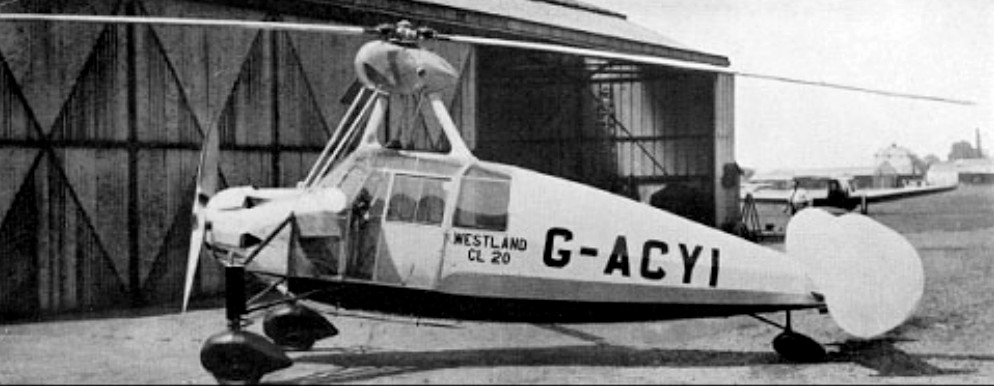
The earliest flights were in 1935.This experimental aircraft was successfully flight-tested by the Cierva Company’s pilot, R. A. C. Brie, but the shadow of impending hostilities prevented its production in quantity and closed Westland interest and activity in autogiros.
Westland CL.20
Engine: One 90hp Pobjoy Niagara S
Rotor diameter: 9.75m
Length: 6.17m
Height: 3.12m
Loaded weight: 635kg
Empty weight: 381kg
Speed: 170km/h
Landing speed: 40km/h
Weir W-4
In 1930s built Autogiros under Cierva license; C.28/W-1 in 1933, W-2 in 1934, W-3 and W-4 in 1936.
Weir W.3
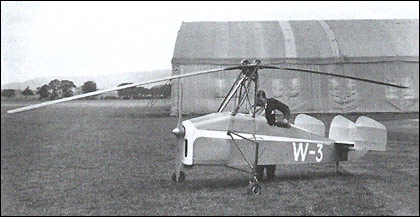
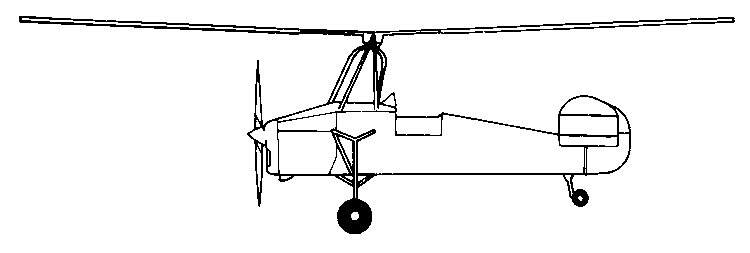
This single-seater was powered by an inverted 4-cylinder in-line engine and fitted with a two-bladed ‘auto-dynamic’ rotor. It could make a ‘jump take-off’: to do this, the rotor was run at overspeed in flat pitch then suddenly given sufficient positive pitch to produce the jump while the engine was declutched. The W.3 was publicly displayed at Hounslow Heath on 23rd July 1936.
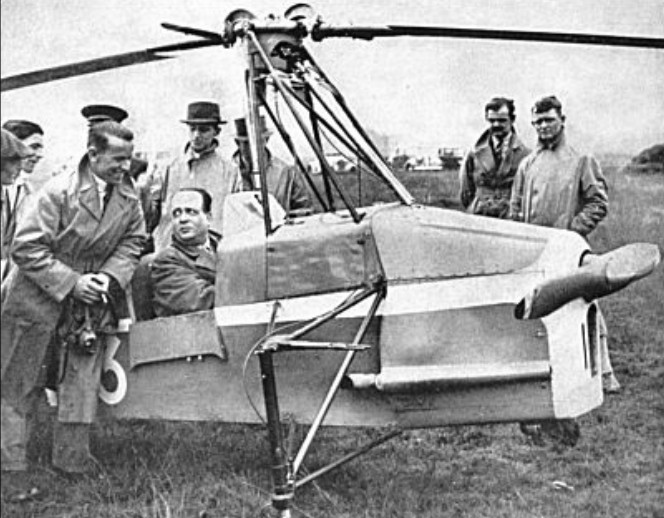
Seats: 1
Engine: 1 x Weir Pixie, 50hp
Rotor diameter: 5.66m
Length: 4.37m
Height: 2.16m
Gross weight: 295kg
Weir W-2
In 1930s built Autogiros under Cierva license; C.28/W-1 in 1933, W-2 in 1934, W-3 and W-4 in 1936.
Weir W-1 / Cierva C.28
In 1930s built Autogiros under Cierva license; C.28/W-1 in 1933, W-2 in 1934, W-3 and W-4 in 1936.
Weir, G. & J. Ltd
UK
This engineering firm of Cathcart, Glasgow, built Airco D.H.9 and RAF B.E.2c, B.E.2e and F.E.2b aircraft under subcontract during First World War. In 1930s built Autogiros under Cierva license; C.28/W-1 in 1933, W-2 in 1934, W-3 and W-4 in 1936. In 1937-1938 built and flew W-5 twin-rotor helicopter under Focke license, followed by W-6 of 1938-1939, world’s first helicopter to carry a passenger. Outbreak of war ended development.
Wallis WA-201
A twin-engined research autogyro.
Wallis WA-122
WA-122/R-R two-seat trainer (first flown 1980)
The Wallis WA-122 can be transported in a container thanks to its folding rotors and landing gear legs.
 All Aero