Autogyro.
Year: 1939.
Seats: 2.
Engine: Jacobs R915-3, 285 hp.
Gross wt: 2400 lbs.
Rotor dia: 40 ft.
No of blades: 3.
Autogyro.
Year: 1939.
Seats: 2.
Engine: Jacobs R915-3, 285 hp.
Gross wt: 2400 lbs.
Rotor dia: 40 ft.
No of blades: 3.
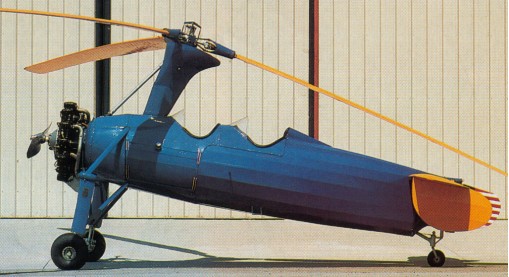
Cierva and Pitcairn licensed the Kellett Autogiro Corporation of Philadelphia to build autogiros and the developed Kellett YG-1 of the late 1930s became the US Army’s first rotary-winged aircraft.
Seven YG-1B autogyro were procured by the US army in 1937 for observation duties.
YG-1A
Year: 1936.
Seats: 2.
Engine: Jacobs L4MA7, 225 hp.
Gross wt: 2205 lbs.
Empty wt: 1586 lbs.
Rotor dia: 40 ft.
No of blades: 3.
YG-1B
Year: 1937.
Seats: 2.
Engine: Jacobs L4MA7, 225 hp.
Gross wt: 2400 lbs.
Empty wt: 1617 lbs.
Rotor dia: 40 ft.
No of blades: 3.
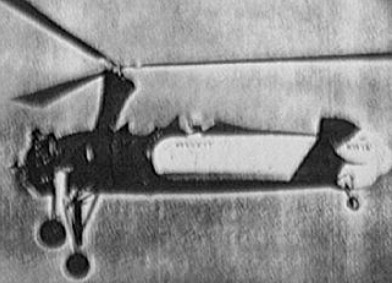
Cierva’s C30 series and Pitcairn’s PA-22 and Luscombe-built aluminum body PA-36, and the KD-1 series constructed by Kellett Autogiro Company of Philadelphia were capable of jump take-offs and direct-control without wings.
KD-1
Year: 1935.
Seats: 2.
Engine: Jacobs L4MA7, 225 hp.
Gross wt: 2050 lbs.
Empty wt: 1345 lbs.
Rotor dia: 40 ft.
No of blades: 3.
KD-1A
Seats: 2.
Engine: Jacobs L4M4 seven-cylinder radial
KD-1B
Year: 1939.
Seats: 1.
Engine: Jacobs L4MA7, 2225 hp.
Gross wt: 2295 lbs.
Empty wt: 1670 lbs.
Rotor dia: 40 ft.
No of blades: 3.
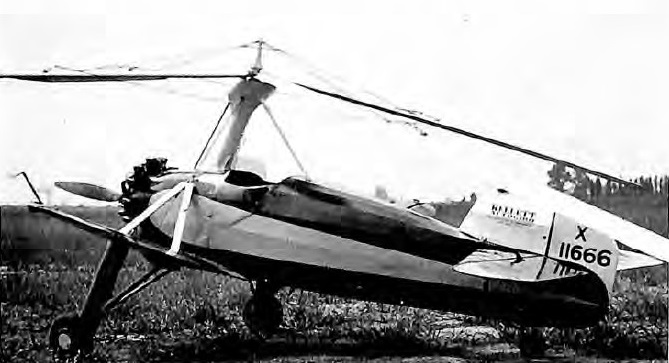
Dr.Wynn Laurence LePage designed the first line of autogiros, K-2, K-3, and K-4, establishing Kellet as manufacturer of good performing autogiros.
The K-4 was developed in 1933.
Year: 1934.
Seats: 2.
Engine: Continental R-670, 210 hp.
Gross wt: 2400 lbs.
Empty wt: 1620 lbs.
Rotor dia: 40 ft 6 in.
No of blades: 4.
Dr.Wynn Laurence LePage designed the first line of autogiros, K-2, K-3, and K-4, establishing Kellet as manufacturer of good performing autogiros.
Year: 1933.
Seats: 2.
Engine: Kinner C-5, 210 hp.
Gross wt: 2300 lbs.
Empty wt: 1647 lbs.
Rotor dia: 40 ft 6 in.
No of blades: 4.
Dr.Wynn Laurence LePage designed the first line of autogiros, K-2, K-3, and K-4, establishing Kellet as manufacturer of good performing autogiros.
Year: 1932.
Seats: 2.
Engine: Continental R-670, 160 hp.
Gross wt: 2200 lbs.
Empty wt: 1556 lbs.
No of blades: 4.
Under Pitcaim-Cierva license developed and built autogiros at Philadelphia from 1929. A K-3 was taken to the Antarctic by Admiral Byrd on his second expedition in 1933, piloted by William S. McCormick. K-4 had two side-byside seats with demountable enclosure but retained wings. KD-1 of 1934 had tandem seats but was wingless and had direct-control rotor. In 1938 U.S. Army Air Corps bought seven Kellett autogiros for experimental use. From 6 July 1939 a Kellett KD-1 B of Eastern Airlines operated the first scheduled mail service by a rotary-wing aircraft, from the roof of the Philadelphia Post Office and the Camden airport. In 1939 Kellett exported an autogiro to Japan (see Kayaba). YG-1 was developed into XR-2 and XR-3 for the U.S. Army. XR-8 and XR-8A of 1943/1945 had twin side – by- side rotors. As Kellett Aircraft Corporation the company later undertook research and development contracts and subcontracting. Built its own KH-15 single-seat research helicopter (1954), the world’s first rocket-driven helicopter. In late 1950s attempted unsuccessfully to resume production of pre-war KD-1 A direct-control autogiro.
Hughes owned Kellett designs.
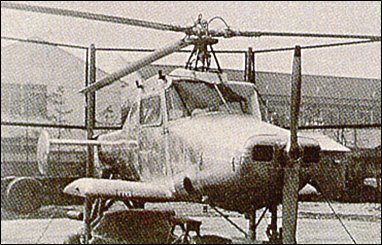
In 1952, Kayaba returned to rotary wing experimentation with the “Heliplane”. This was a compound helicopter fabricated from the fuselage and 180 hp Continental E-180 engine of a Cessna 170 light aircraft, with a rotor mounted above the cabin roof and low-set stub wings to which the undercarriage was attached. The three-blade rotor was fitted with small ramjets which were used for takeoff and landing and the rotor would rotate freely in horizontal flight when the “Heliplane” was being driven by the normal propeller. It first flew in 1954.
Engine: 185 hp Continental E-180
Rotor diameter: 24 ft 3.25 in
Fuselage length: 10 ft 6 in
Height: 9 ft 2.25 in
Seats: 4
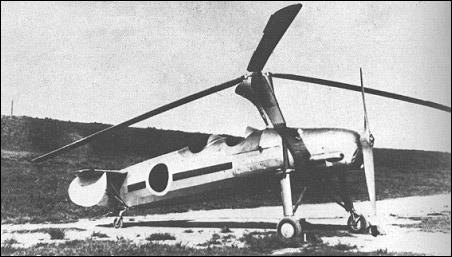
In 1939 the Imperial Japanese Army imported a Kellet KD-1A single-engined two-seat autogyro as an artillery spotter. Powered by a 225hp Jacobs L-4M4 seven-cylinder air-cooled radial, the KD-1A featured an advanced version of the Kellet direct control rotor system. Shortly after its arrival in Japan, the aircraft was seriously damaged during flight trials at low speeds. The Kellet KD-1A had been damaged beyond repair, but the Japanese Army delivered the wreck to K.K. Kayaba Seisakusho (Kayaba Industrial Co Ltd), a small company doing autogyro research, with instructions to develop a similar machine.
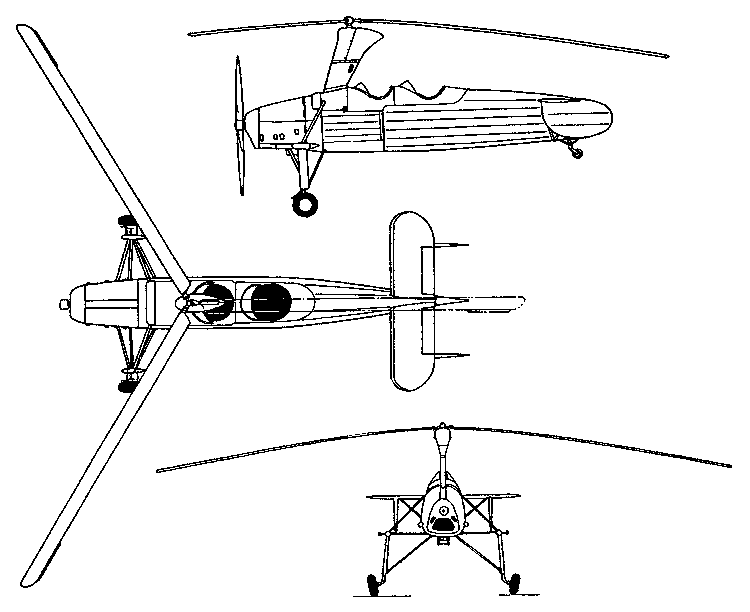
The Kayaba engineering team developed a two-seat observation autogyro based on the Kellet KD-1A but modified to Japanese production standards, designated Ka-1.
The Ka-1 was powered by a 240hp Kobe eight-cylinder inverted-vee air-cooled (licence version of the German Argus Argus As 10c) engine driving a two-blade propeller, and had a three-blade rotor. Completed in May 1941 at the Sendai (Miyagi Prefecture) plant of Kayaba, the first Ka-1 made its maiden flight at Tamagawa on 26 May, 1941.
During its flight test programme the Ka-1 performed remarkably well, demonstrating its ability to take-off after running only 30m in still air. By running the engine at full power and holding the nose 15 deg up, the Ka-1 could hover and could also execute a full 360 deg turn while hovering. As maintenance in the field appeared to present less difficulty than anticipated the aircraft was placed in production for service with artillery units.
Eventually some two hundred and forty aircraft of this type were built.
A small number of Ka-ls were modified for operation from naval craft as anti-submarine patrol aircraft. As the load-carrying capability of the standard two-seat Ka-1 was too limited, the carrier-borne Ka-ls were operated as single-seaters and carried two 60kg bombs or depth-charges. In this role the Ka-ls operated over Japanese coastal waters and particularly over the Tsugara and Korean channels.
The Kayaba Ka-1 autogyro was the first armed autogyro/helicopter to have been used operationally.
At least one of these aircraft, the Ka-1 KAI, was tested with powder rockets on the rotor tips in an attempt to improve its load-carrying capability while another aircraft was fitted with a 240hp Jacobs L-4MA-7 seven-cylinder air-cooled radial. With Jacobs engine the type became the Ka-2.
Kayaba Ka-1
Engine: 1 x Kobe/Argus As 10c, 180kW / 240 hp
Main rotor diameter: 12.2m
Max take-off weight: 1170kg
Empty weight: 775kg
Max speed: 165km/h
Cruising speed: 115km/h
Ceiling: 3500m
Range: 280km
Armament: 2 x 60kg depth charges
Japan
In 1939 a U.S.-built Kellett KD-1A autogiro was exported to Japan. K. K. Kayaba Seisakusho developed Ka-1 along similar lines for Japanese Navy; used for observation, antisubmarine patrol (incl. shipbome), and for testing rocket augmented rotors. Ka-2 was re-engined.
 All Aero