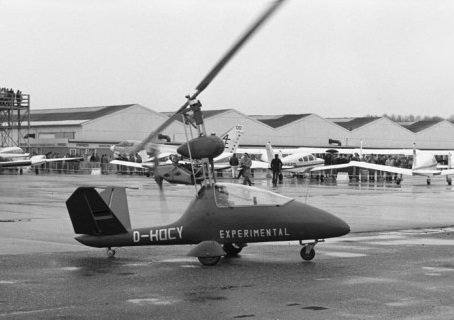
Krauss TSR-1
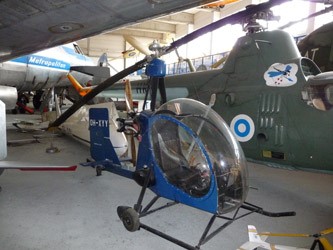
In 1968 the Kokkola Brothers, Kalevi and Seppo, designed the KO-04 Super Upstart autogiro or gyrocopter with rotor-tip thrusters for increased take-off performance. The plane was registered OH-XYY (Serial number 1) during 1969 – 1976, and after that it came in airworthy condition to the Finnish Aviation Museum. The plane was donated to the museum’s collection in the end of the 1990’s.
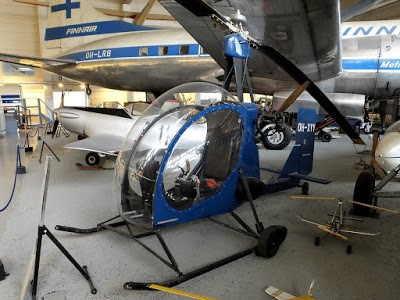
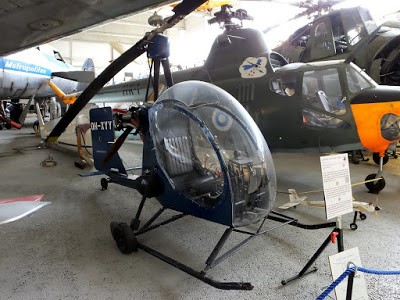
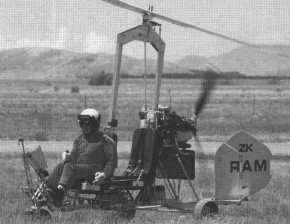
Gyrocopter.
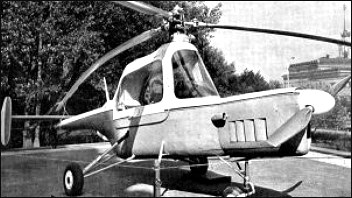
The KhAI-24 autogyro was built by the Kharkov Aviation Institute in the mid-1960s. Its fuselage resembled that of a conventional light aircraft with a tandem two-seat cabin, twin tail fins and a 115hp four-cylinder in-line inverted air-cooled M-332 engine in the nose. It was fitted with a fixed tricycle undercarriage and a three-blade main rotor. There is no indication that more than the single prototype was ever built.
Engine: M-332, 115hp
Top speed: 150km/h
Range: 250km
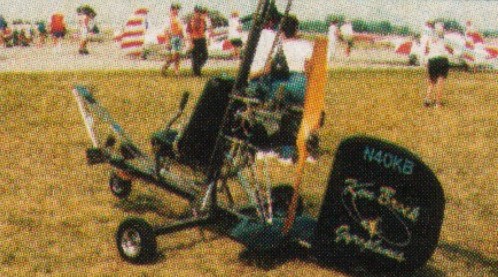
First flown in 1983, the KB-3 conforms to Pt 103 as a homebuilt.
The KB-3 was sold in sub-kits. Price may vary with options, but the average is $12,500 in 2001.
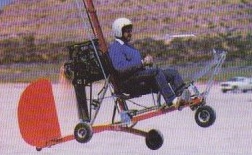
Plans
2001 Plans for the Rotax 582-powered KB-3: $125
Engine: 64 hp Rotax 582cc.
Prop: Ground adjustable 60”.
Empty wt. lbs: 250
Max wt. lbs: 600
Rotor blades: 22’ x 7” Brock riveted aluminium, adjustable hub.
Disk area: 380 sq.ft.
Min speed: 18-20 mph.
Cruise: 60 mph.
Top speed: 63 mph.
Range: 100 sm.
Fuel cap: 5 USG.
ROC: 700 fpm.
Service ceiling: 12,000 ft.
Empty wt: 250 lbs.
Useful load: 350 lbs.
Gross wt: 600 lbs.
Width: 5’.
Height: 7’7”.
Length: 11’3”.
Seats: 1.
Engine: Rotax 532
Max speed mph: 63
Cruise mph: 45 Seats: 1
Engine: Rotax 582, 64 hp
Rotor span: 6.70 m
MAUW: 271 kg
Empty weight: 113 kg
Fuel capacity: 34 lt
Max speed: 150 kph
Cruise speed: 115 kph
Minimum speed: 35 kph
Climb rate: 6 m/s
Seats: 1
Fuel consumption: 18 lt/hr
Plan price (1998): $125
Kit price (1998): $11,000
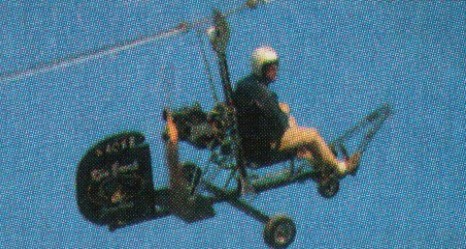
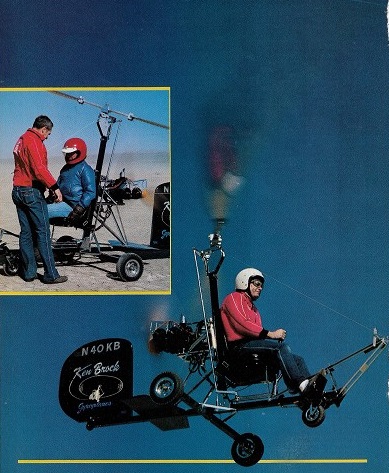
First flown in 1980, the KB-2 Gyroplane has quite a few features that distinguish it from other similar aircraft. These include: an aircraft-type joystick for con¬trol; its fuel tank seat which is molded from polyurethane to save on weight and add to the clean-looking design; its choice of rotor blades and its wheels. Construction has been simplified by packaging into seven separate kits (airframe, landing gear, rotor head, rotor blades, rotor hub, joystick, rudder/horizontal stabilizer and an optional kit for a prefab metal tail). Engine: 72 or 90 hp McCulloch, VW, or similar.
The KB-2 was sold in sub-kits. Price may vary with options, but the average is $12,500 in 2001.
Plans
2001 Plans for the McCulloch-powered KB-2: $125
2001 Plans for the Volkswagon-powered KB-2: $135
Engine: McCulloch, 90 hp.
Rotor blades: 22’ x 7” Brock riveted aluminium, adjustable hub.
Prop: Brock 48” x 18-20” wood fixed pitch.
Speed max: 95 mph.
Cruise: 70 mph.
Range: 150 sm.
ROC: 1200 fpm.
Take-off dist: 200 ft.
Landing dist: 15 ft.
Service ceiling: 12,000 ft.
Fuel cap: 9 USG.
Weight empty: 240 lbs.
Gross: 650 lbs.
Height: 7 ft.
Length: 12 ft.
Disk span: 22 ft.
Disk area: 380 sq.ft.
Seats: 1.
Landing gear: nose wheel.
1995-7: 11852 Western Ave, Stanton, CA 90680, USA.
Ken Brock died in an aircraft accident on 19 October 2001.
Ul, gyrocopter, and para-glider builder

Experimental conversion of a standard Kellett KD-IB Autgiro into a convertiplane, for the U.S. Navy. Chief external changes are addition of wings and two wing-mounied engines. Was due to fly in 1955.
Engine: 1 x 275 hp Jacobs and 2 x 140 hp Lycoming
Rotor diameter: 40 ft
Rotors: 3-blade main; 3 propellers
Length (blades folded): 25 ft 11 in
Loaded weight: 3,400 lb
Seats: 1.
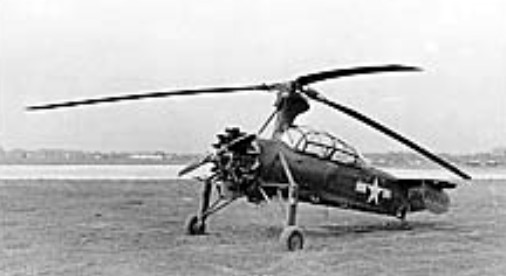
The Kellett O-60 was built and tested as an observation aircraft for the US Army in 1942 while the helicopter was still in development. The aircraft had a free-turning 43 ft 2 in rotor which provided lift in place of a conventional wing. A 285 horsepower radial engine turning a two-blade propeller gave the O-60 its forward thrust.
The two-place YO-60 was designed by Richard O. Prewitt and could do jump take-offs. The rotor was spun up to about 280 rpm (rotations per minute) at a no-lift angle using the power of the radial engine. When ready for take-off, the pilot would release a clutch mechanism which changed the blade angle to 8 degrees. This caused the aircraft to ‘jump’ about 10 feet into the air. The engine and propeller then pulled the YO-60 into forward flight as the rotor angle was decreased to a normal flight pitch of 3 degrees. The engine was only used to spin the rotor up to flight speeds on the ground, while in flight the rotor was free spinning.
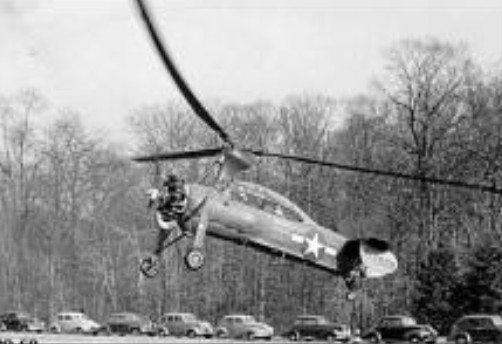
The YO-60 never got past the service test phase. Seven aircraft were built as XO-60 (S/N 42-13604 to 42-13610) with 225 hp radial engines and later re-engined with 285 hp. radials and redesignated YO-60.
YO-60
Engine: Jacobs R-915-3 of 285 hp.
Fuselage length: 20 ft. 9 in.
Fuselage width: 9 ft. 6 in. (at landing gear); 10 ft. at horizontal stabilizer
Height: 10 ft. 3 in.
Rotor diameter: 43 ft. 2 in.
No of blades: 3
Weight: 2,640 lbs. (gross)
Crew: 2
Top speed: 122 mph
Autogyro.
Year: 1939.
Seats: 2.
Engine: Jacobs L4MA7, 225 hp.
Gross wt: 2250 lbs.
Rotor dia: 40 ft.
No of blades: 3.
 All Aero