In 1928 Wilford visited Europe, and while there acquired the patent rights for the United States of a rotary wing aircraft conceived by a German named Rieseler. In 1929 Wilford began building his own gyroplanes.
The idea behind this American/German partnership was a scheme for feathering the pitch of the blades rotating round the hub instead of the blade flapping system which La Cierva employed in his autogyros. The feathering control, operated through a system of cams, affected only the lateral parts of the circle described by the rotor.
Wind-tunnel tests proved the effectiveness of the idea.
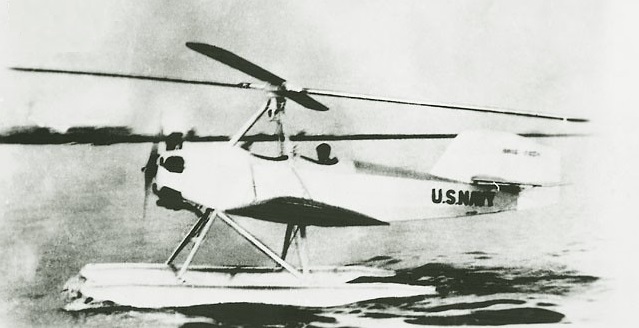
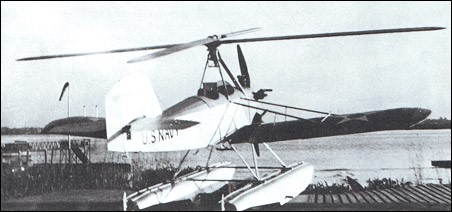
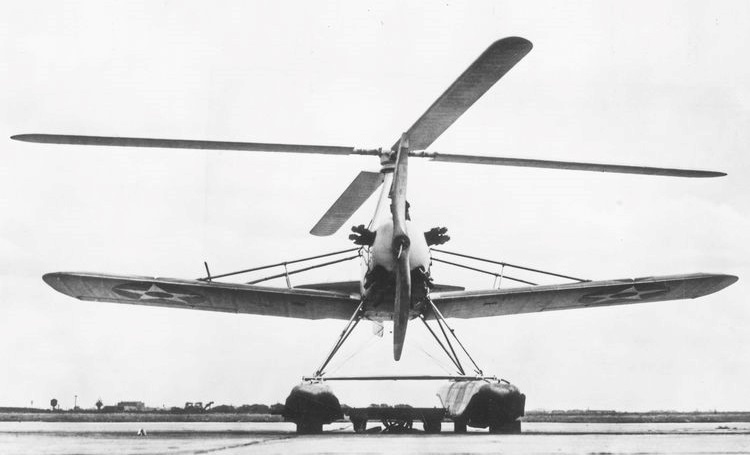
A Fleet XOZ-1 was modified to an autogiro configuration by the Pennsylvania Aircraft Syndicate, with a four-bladed autogiro rotor, held aloft over the forward cockpit by four steel struts, replacing the upper wing. The lower wing was retained and supports added, and the wheeled undercarriage was replaced by twin floats. The two-bladed wooden airscrew was retained, as were the two open, tandem cockpits. Wingspan was 8.33m.
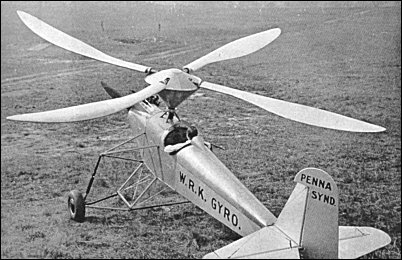
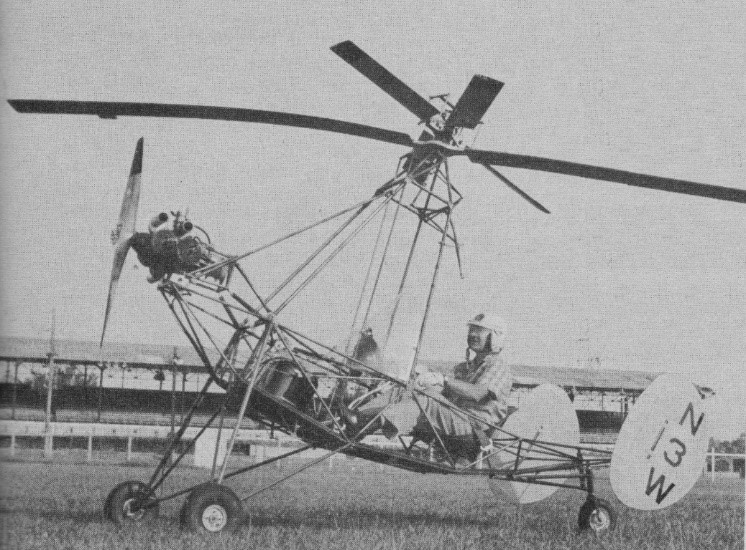
The first Wilford gyroplane (X794W) made successful first flight on August 5, 1931 at Paoli, Pennsylvania, piloted by Frank P. Brown. The original model had an engine of only 85hp.
As a result of these tests, various improvements were later made, such as a much more powerful engine, increase in the size of the rotor, and extension of pitch control to the four quadrants of the circle described by it.
A single-seat open-cockpit autogiro the ship made hundreds of successful flights before its crash in 1935, killing pilot Joseph McCormick. Model designation from initials of Wilford and German aero engineers Walter Reiseler and Walter Kreiser, upon whose patented 1927 designs the ship was based. A second version in 1934, for USN and NACA tests, was built up from a Fleet N2Y-1 fuselage and tail group as Pennsylvania XOZ-1 (8602). It proved very successful, when tested by the National Advisory Committee for Aeronautics, but nothing tangible ever materialized.
WRK Gyroplane
Number of seats: 1
Engine: 1 x ACE Mark III 85hp, repowered with 165hp Jacobs
Wingspan: 7.01m
Rotor diameter: 9.14m
Height: 3.05m
Weight fully loaded: 816kg
Max. speed: 190km/h
Min. speed: 50km/h


 All Aero