Pitcairn-Cierva PA-18

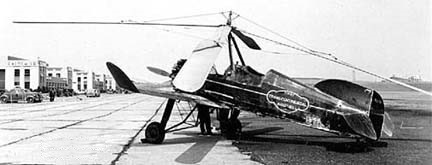
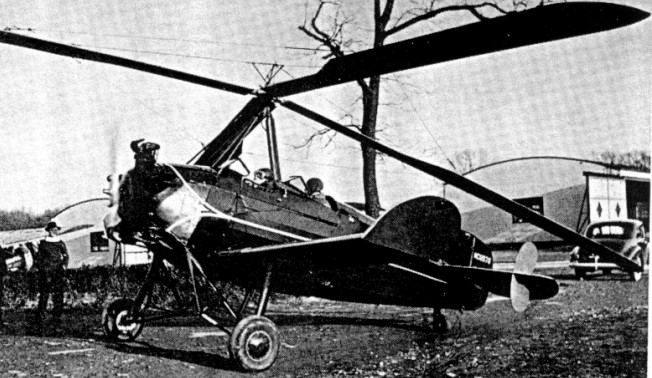
The PA-18 and PAA-1 (PA-20) looked very much alike. It was difficult in fact, unless some¬one was very familiar with each, to recognize the differences. A note to Aviation from Ed Rice, the Director of Public Information of the Pitcairn organization, says the PA-20 was built as a “companion model” to the PA-18. A decision was made to discontinue manufacture of the PA-20 about April 14, 1933 because of the sim-ilarity to the PA-18.

Construction of the fuselage was the same as all preceding Pitcairn Autogiros. An assortment of steel tube diameters and wall thicknesses were gas welded together. The sides and bottom of the fuselage were rounded out with wood fairing strips. The tail group was nearly identical to the PAA-1. The only noticeable difference was the shape of the auxiliary vertical fins. The wing was identical in construction de¬tails to the PAA-1, the span was decreased and the chord increased. The ailerons stopped short on the fuselage end to permit the walkway to extend to the trailing edge. The main landing gear was a scaled-down PCA-2 landing gear. The tail gear was a small wheel with a rubber chord shock absorber. A Kinner R-5, 160 hp engine turned a fixed-pitch Curtiss-Reed metal propeller eight feet, four inches in diameter. A ground adjustable propeller was optional at an increase of five pounds. A “coupe top” was also optional. The rotor was identical to the PAA-1 (PA-20, PA-24) except that it was 40 feet in diameter. The rotor pylon was simplified to one fore and one aft member with wire bracing from the top of the pylon to the upper longerons. They were priced at $6,750 with flight instruction.

The fatal crash of a Pitcairn autogyro in Oct 1935 ended one of aviation’s longest safety records, when pilot Robert Swenson tried to stretch a glide over power lines after an engine failure.

Pitcairn PA-18 built about 1931 for the sportsman and private user (ATC 478). About 19 of these were built and sold seven or eight of these were recalled during WWII and rebuilt as PA-39. All but one of them were lost when their transport was sunk.
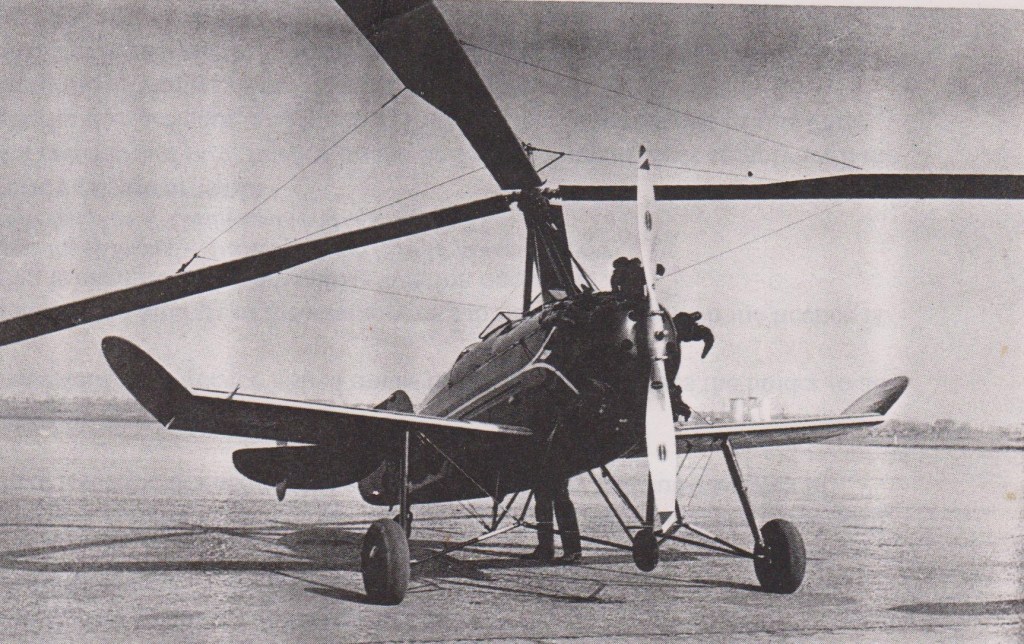
Approved Type Certificate No. 478 applied to serial numbers from G-62 up to those manufactured prior to 30 September 1939, when the Approval expired.
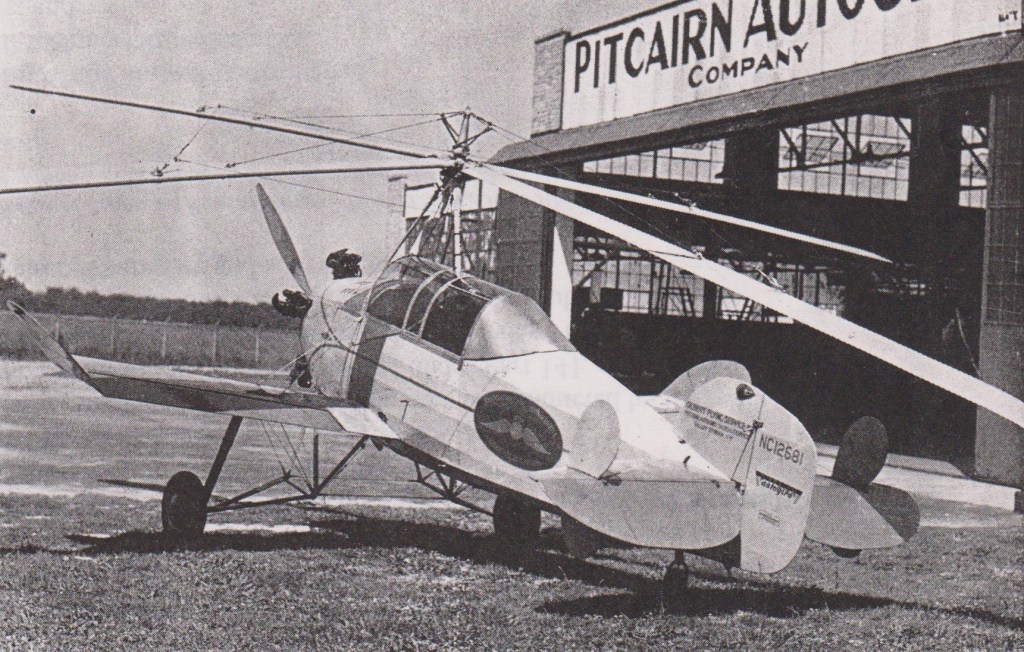
Gallery

Year: 1931
Engine: Kinner R-5, 160 hp
Prop: fixed pitch 2 blade
Rotor dia: 40 ft
No of blades: 4
Span: 21 ft 3 in
Length: 19 ft 5 in
Gross wt: 1900 lbs
Empty wt: 1310 lb
Fuel cap: 30 USG
Max speed: 95 mph
Cruise: 83 mph
Range: 225 mi
Ceiling: 12,000 ft
Seats: 2
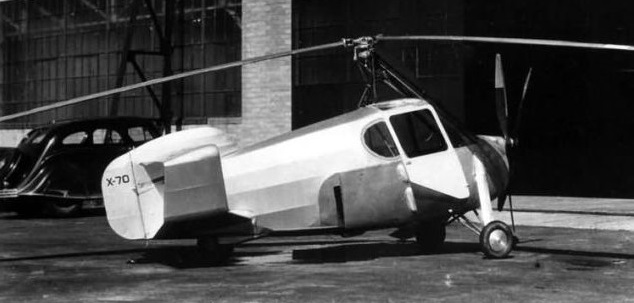
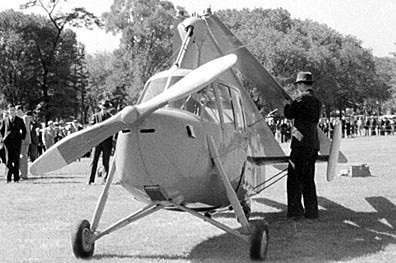
Pitcairn-Cierva AC-35 / Autogyro Corporation of America AC‑35 / Skyway AC-35

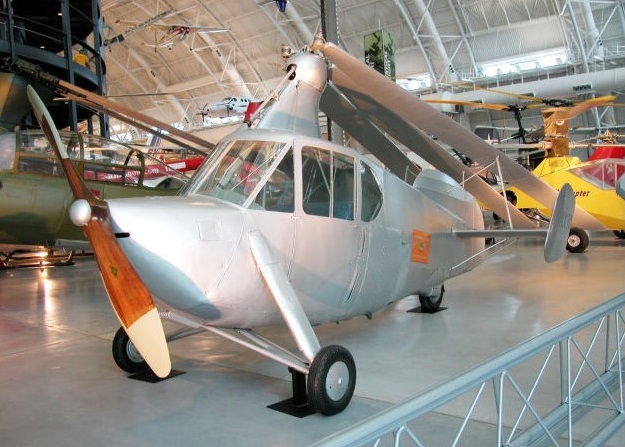
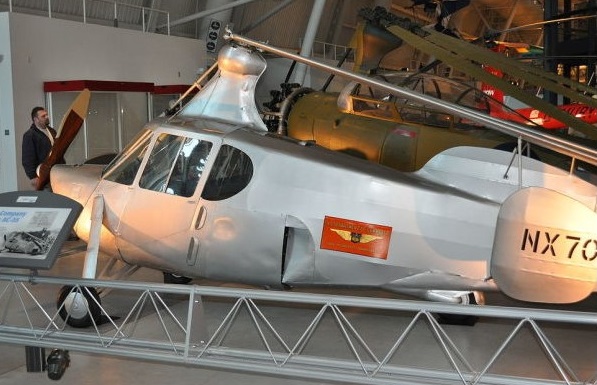
The Philadelphia based Autogyro Corporation of America’s Pitcairn AC 35 became a familiar sight both on and over Pennsylvania highways in the mid 1930s. Extensive road and air testing of the Pitcairn was financed by the US Bureau of Air Commerce, who thought it might be employed on Philadelphia’s autogiro operated air¬borne mail service. The AC 35 was a two-seater with a 135 hp engine mounted behind the cabin driving a pair of propellers on a common shaft up front. That was replaced by a single prop after the noise level proved to be excessive. Motor, driving the propeller by a long shaft, was buried in the fuselage behind the cabin; power was transferred to a large, steerable tail wheel for driving on the ground.

Autogiro AC-35 NX70 1936

Changes to the rear control surfaces are noted in Peter W Brooks’ Cierva Autogiros: The Development of Rotary-Wing Flight (Smithsonian Press 1988) as necessary to improve longitudinal stability when the coaxial props were replaced by a single prop. The engine is also confirmed as a 90hp Pobjoy Cascade, which is corroborated by the NASM webpage article on their AC-35 exhibit. Confusion about the dates occurred because the AC-35 was flown to Washington on 2 Oct 1936, but not actually delivered there until 26 Oct 1936 for a staged handover to DoC.
As for the steering, the NASM webpage says, “For road use the rotor blades could be folded back over the fuselage, the propeller disengaged, and the tailwheel put in gear. The front wheels were used for steering.” In a picture on the Roadable Times website one can see the steering knuckles and the track rods in front of the landing gear cross-bracing.

Autogiro AC-35 NX70

Tested between 1936 and 1942, not only was it ingenious, it actually worked quite well, but the Pitcairn AC 35 never went into production. In 1960 Skyway Engineering announced ambitious plans for mass production of a revamped AC 35, but like its predecessor, the project was still¬born.

The Skyway Engr Co of 1964 produced an update of the Autogiro AC-35 with a 210hp Continental engine.

Year: 1937
Seats: 2
Engine: Pobjoy Niagra, 90 hp
Gross wt: 1350 lb
Rotor dia: 34 ft 3.5 in
No of blades: 3

Skyway AC-35
Engine: 210hp Continental
Projected data
Rotor diameter: 38’0″
Length: 18’11”
Useful load: 576 lb
Max speed: 134 nph
Cruise: 113 mph
Range: 400 mi
Seats: 2

Pitcairn-Cierva PCA-3

The 1931 Pitcairn-Cierva PCA-3 (ATC 446) was a PCA-2 with a 300hp P&W Wasp Jr engine. The one built, NC11612 c/n E-45 was priced at $15,000 (it finally sold for $5,000).

Year: 1931
Engine: P&W R-985, 300 hp
Rotor dia: 48 ft
No of blades: 4
Gross wt: 3063 lb
Empty wt: 2098 lb
Useful load: 942 lb
Max speed: 120 mph
Cruise: 100mph
Range: 300 mi
Ceiling: 15,000′
Seats: 3

Pitcairn-Cierva PCA-2

1928 found Cierva giving demonstrations of the O-19 and selling the manufacturing rights to representatives from around the world. The American rights were purchased by Harold Pitcairn who made a few design changes but retained the basic design principles and features found on Cierva’s machine.

Pitcairn used a more modern fuselage with better aerodynamic qualities for his PCA-2 gyroplane, and offered two engines for use in the aircraft. Both were radial aircraft engines mounted in the usual tractor configuration: the first produced 300 horsepower, the second, 420hp. Pitcarin also utilized a four-bladed rotor system with Civerva’s flapping hinge. It innovated with a clutched gearbox that briefly transmitted power to prerotate the rotor to greatly shorten the takeoff run.

Pitcairn produced and sold 24 of his PCA-2 gyroplanes over the next few years at $15,000, including NC26/NC2624, NR784W, NC799W, NC10761, NC10768, NC10780/19781, NC10785/10791, NC11608/11611, and NC11613. They showed the versatility and practicality they had been designed for by carrying the mail over a federally contracted route, being used to reach the scene of the news and for aerial photography by the “Detroit News” daily newspaper, and by setting new world records. Amelia Earhart flew a PCA-2 to the record altitude of 18,415 feet over Willow Grove, Pennsylvania on April 8, 1931. On 25 September 1932 Lewis Yancey reached 21,500 ft.

The first “non-conventional” aircraft to earn government approval; ATC 410.

Three were used by Earhart for a transcontinental cross-country flight in 1931, including NR10761 and NC10780.

Earhart’s second NC10780

Amelia had two different accidents; the first was at Abilene TX on 12 June 1931. A second PCA-2 was flown to her to continue her transcontinental journey. On 12 September 1931, she dropped it in from 20 feet at Detroit. She was quoted in the New York Times as saying, “Nothing to it, it was all my fault, and I’m not injured at all. I just didn’t level off soon enough.” Then, “Within a few hours after the crash, Mrs Putnam set out for Saginaw in another Autogiro to fulfill an exhibition flying engagement.”

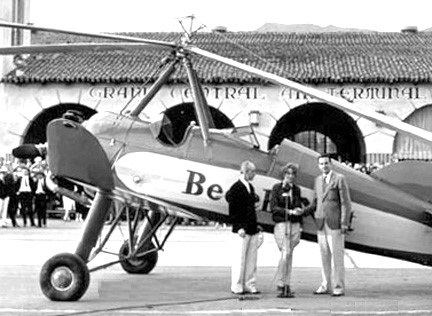
Earhart lands at Grand Central Air Terminal to learn that she had been beaten by only 10 days by Johnny Miller in his PCA-2.
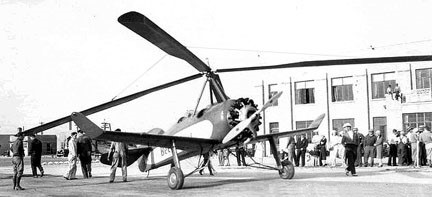
Johnny Miller’s Pitcairn-Cierva PCA-2 first transcontinental autogiro NR10761

Prototype
Year: 1931
Seats: 3
Engine: Wright R-760-4, 240 hp
Gross wt: 3000 lb
Rotor dia: 48 ft
No of blades: 4

Year: 1931
Engine: Wright R-975/E, 300 hp
Rotor dia: 45 ft
No of blades: 4
Wingspan: 30’0″
Length: 23’1″
Gross wt: 3000 lb
Empty wt: 2025 lb
Max speed: 118 mph
Cruise: 98 mph
Range: 290 mi
Seats: 3

Pitcairn-Cierva PCA-1

Pitcairn had refined Autogiro development, first learning from the C8W (which was presented to the Smithsonian on July 22, 1931), then with a series of developmental aircraft, the PCA-I, 1A and lB. (The PCA-1A is currently exhibited at the American Helicopter Museum & Education Center at the Brandywine Airport, West Chester, PA on loan from the Smithsonian).

The three Pitcairn-Cierva built, NX94N/96N, were redesign of Cierva C-8 using PA-5 Sport Mailwing fuselage. The first commercial autogyro in USA.

Year: 1930
Engine: Wright R-760-4, 240 hp
Gross wt: 2750 lb
Rotor dia: 43 ft
No of blades: 4
Span: 32 ft 0 in
Length: 23 ft 0 in
Seats: 3

Piper-Marriott Gyro

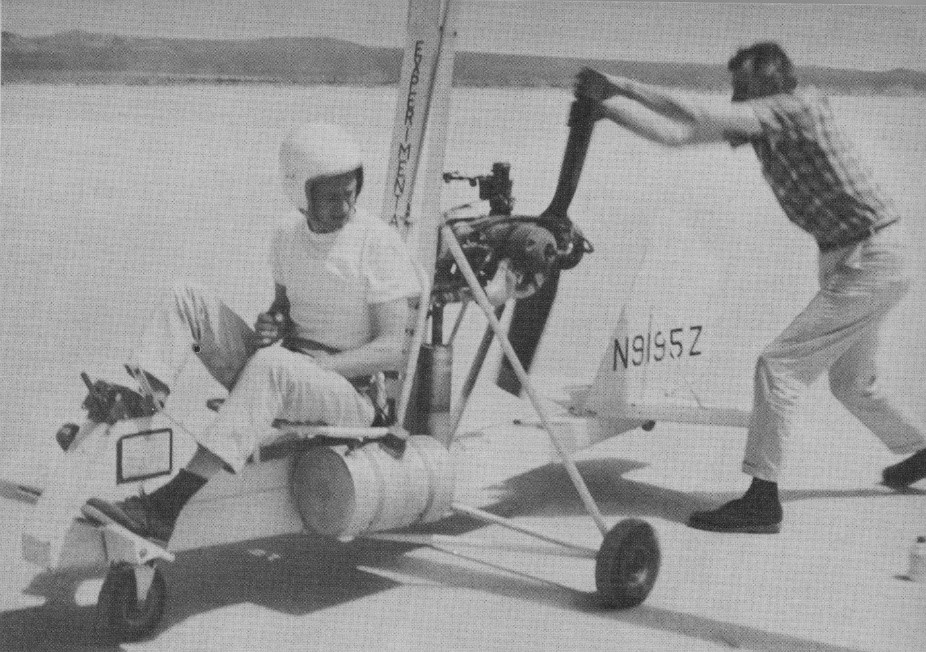
Mechanical engineer Bill Piper, of Los Angeles, California, props the 72 hp McCulloch engine on the Piper-Marriott autogyro as aeronautical engineer Ed Marriott prepares for a flight in early 1964.

The rotor blades have a steel spar and plywood skin.

Engine: 72 hp McCulloch
Rotor diameter: 20 ft
Length: 9 ft 9 in
Empty weight: 225 lb
Gross weight: 450 lb
Top speed: 85 mph
Cruise: 60 mph
Range: 120 mi

Pennsylvania Aircraft Syndicate

pres: E Burke Wilford
Philadelphia PA.
USA

Formed in early 1930s to develop a rotary-wing aircraft, designed in Germany in 1926 by Walter Rieseier and Walter Kreiser, and further developed in the U.S.A. by E. Burke Wilford. The Wilford Gyroplane, powered by a Kinner R-5 engine, accumulated a considerable amount of test flying.

Built the Pennsylvania Aircraft Syndicate XOZ-1 in 1934.

Parsons Tandem

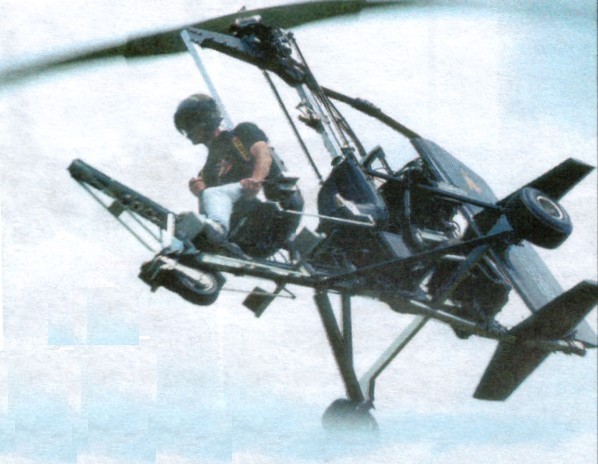
A two seat tandem open frame autogyro. Features full dual controls, built of 2×2 aluminium tube bolted together. Rotor blades: 27’ Sky Wheels.

Gallery

Model 1
Engine: 100 hp Super Mac (McCulloch) or 64 hp Rotax 582.
Prop: Tennessee 52” x 26” wood (Super Mac) or IvoProp 64” (Rotax).

Model 2
Engine: 100 hp Arrow 996cc or 150 hp Mazda Rotary
Prop: IvoProp 64” (Arrow) or other Lycoming prop
Min speed: 20 mph
Cruise: 65 mph
Top speed: 85 mph
Empty wt: 320 lb
Useful load: 800 lb
Gross wt: 1120 lb
Width: 6 ft
Height: 15 ft 11 in
Length: 7 ft 8 in

Parsons Single

A single seat open frame autogyro. Engine: 52 hp Rotax 503, 65 hp Arrow 500, McCulloch, VW. Prop: 60” Warp Drive for Arrow or Rotax, Tennessee 52” for McCulloch. Rotor blades: 23-25’

Arrow 65hp
Min speed: 20 mph
Cruise: 60-65 mph
Top speed: 80-85 mph
Empty wt: 240 lbs
Useful load: 360 lb
Gross wt: 600 lb
Width: 5 ft
Height: 7 ft 6 in
Length: 11 ft 3 in