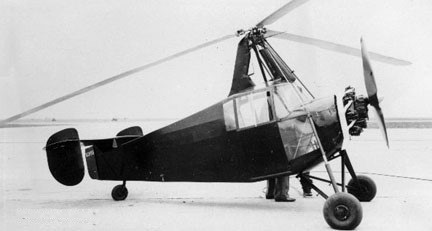
Pitcairn-Cierva PA-39

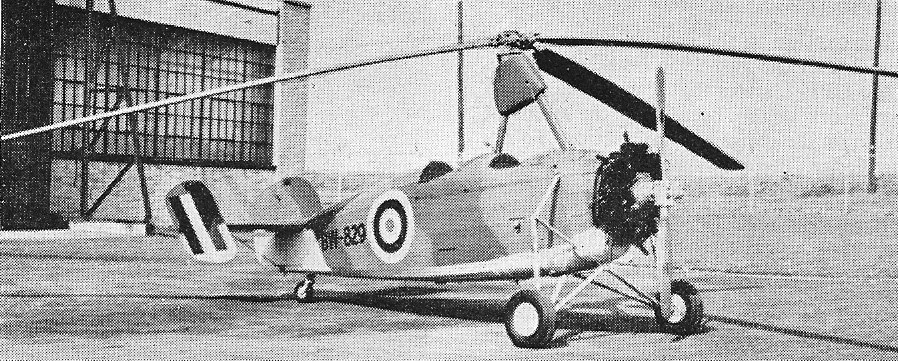
PA-39 BW829

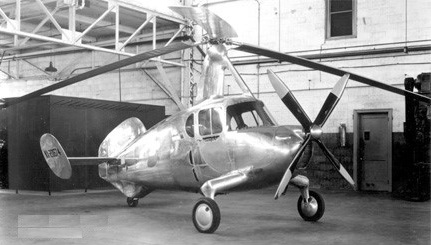
Seven PA-18 Autogyros were recalled during WWII and rebuilt as PA-39 for the British Air Commission in the latter half of 1941. BW829 was the first constructed.

The were used experimentally and for RAF communications duties.

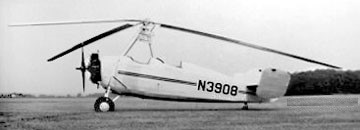
Pitcairn PA-39 N3908

BW829 to BE833 were crated and shipped to England but were lost when their transport was sunk.

BW834 and 835 remained in the USA and were used by the British Air Commission personnel for communications duties.

Year: 1939
Seats: 2
Engine: Warner Super Scarab, 165 hp
Gross wt: 2150 lb
Rotor dia: 42 ft 3 in
No of blades: 3

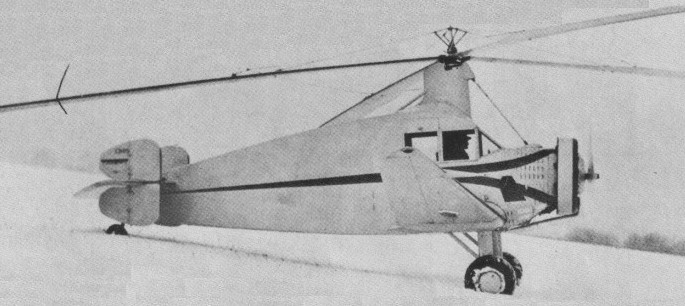
Pitcairn-Cierva PA-36 / Pitcairn-Larsen PA-36

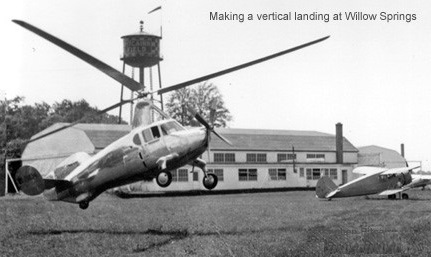
Cierva’s C30 series and Pitcairn’s PA-22 and Luscombe-built aluminum body PA-36, and the KD-1 series constructed by Kellett Autogiro Company of Philadelphia were capable of jump take-offs and direct-control without wings.

Designed by Agnew Larsen, one PA-36 Whirl Wing, o Pitcairn-Larsen PA-36, was built, in 1939, NX20674. An all-metal, roadable version of Autogiro AC-35 for military trials with side-by-side cabin, which proved unsuccessful with the advent of the helicopter and it was cut up for scrap during WW2.

Another was partially constructed as the Pitcairn-Larsen PA-36 in 1941.

Year: 1939
Engine: Warner Super Scarab, 165 hp
Rotor dia: 43 ft
No of blades: 3
Length: 20’5″
Width: 8’3″
Gross wt: 2050 lb
Useful load: 625 lb
Max speed: 122 mph
Cruise: 102 mph
Range: 375 mi
Seats: 2
Pitcairn-Cierva PA-34 / XOP

Pitcairn XOP-1

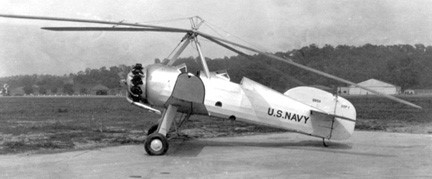
In 1931 the US Navy used three PA-34, with 45’0″ rotor, designated XOP-1, for testing stability in carrier use.

Of the three, A8850, A8976, and A8977, the first was modified as the wingless XOP-2, and the last two were flown by the USMC.

Engine: Wright R-975/E2, 420 hp
Gross wt: 3300 lb
Empty wt: 2300 lb
Rotor dia: 46 ft 2 in
No of blades: 3
Seats: 2

Pitcairn-Cierva PA-24

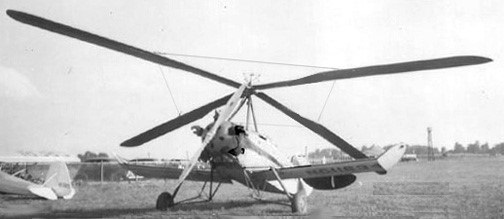
The 1933 PA-24 (ATC 507) was a two-place modified twin-tail version of PA-20 and PAA-1 with changes in powerplant and rotor system.

Two were built, NC11631 and NC11634, plus about 20 modifications of earlier models.

Year: 1932
Engine: Kinner R-5, 160 hp
Rotor dia: 37 ft
No of blades: 4
Wing span: 22’9″
Length: 18’7″
Gross wt: 1800 lb
Fuel cap: 27 USG
Gross wt: 1750 lb
Empty wt: 1178 lb
Useful load: 572 lb
Max speed: 90 mph
Cruise speed: 75 mph
Range: 235 mi
ROC: 550 fpm
Service ceiling: 10,000 ft
Seats: 2

Pitcairn-Cierva PA-22

Pitcairn PA-22 NX13199

Cierva developed progressively more sophisticated designs with a means to tilt the rotor head and altering the pitch (angle) of each individual rotor blade, called collective and cyclic control, and, making use of Pitcairn’s prerotator, achieved a “jump takeoff” capacity with the C19MkIV in 1931-32 The rotor would be spun up at zero pitch and then “snapped” into a positive angle, causing the aircraft to “jump” into air, an ability developed by Pitcairn the next year in the developmental PA-22 Autogiro.

The PA-22 was an experimental wingless with a three-blade, foldable rotor system. Side-by-side cabin.

Only one was built; NX13199. The first roadable autogyro built by Pitcairn.

Year: 1933
Engine: Pobjoy Cataract, 84 hp
No of blades: 3
Rotor dia: 32 ft
Length: 18 ft 0 in
Width: 7’10”
Gross wt: 1140 lb
Empty wt: 600 lb
Max speed: 105 mph
Cruise: 90 mph
Range: 350 mi
Seats: 2