Haufe Dale Hawk 2

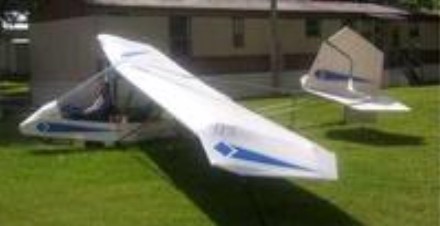
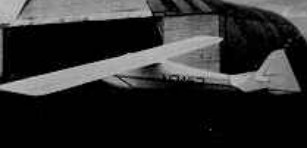
Designed by Leland Hanselman and Walter Haufe, the wood and fabric Hawk first flew in 1939, making a 9:50 hr. flight in 1940. After storage during World War II it was rebuilt and continued to fly until donated in 1969 to the Experimental Aircraft Association Museum. No spoilers.

Wing span: 12.19m / 40ft
Wing area: 13sq.m / 140sq.ft
Empty Weight: 136kg / 300lb
Payload: 86kg / 190lb
Gross Weight: 222kg / 490lb
Wing Load: 17.08kg/sq.m / 3.5lb/sq.ft
MinSink: 0.91 m/s / 3.0 fps / 1.78kt
Airfoil: USA 35A
Aspect ratio: 12.5
Seats: 1
Built: 1

Haufe Buzzer 2

A development of an earlier Nelson powered motor glider, the Buzzer 2’s propeller is driven through a 2:1 reduction chain, running enclosed in oil, which brings propeller rpm down to 3,000. Designed by Walter Haufe for self launching, it features a single centerline fixed wheel and small wing outrigger wheels for taxiing, with a steel tube fuselage and tail, single-spar, single-strut wood wing, and fabric cover.

Engine: Curtiss snowmobile 2-cycle
Wing span: 10.36m / 34ft
Wing area: 11.52sq.m / 124sq.ft
Empty Weight: 177kg / 390lb
Payload: 95kg / 210lb
Gross Weight: 272kg / 600lb
Wing Load: 23.61kg/sq.m / 4.8lb/sq.ft
Water Ballast: 0
Aspect ratio: 8
Seats: 1
Airfoil: NACA 2412 modified
No. Built: 1

Haufe Hawk

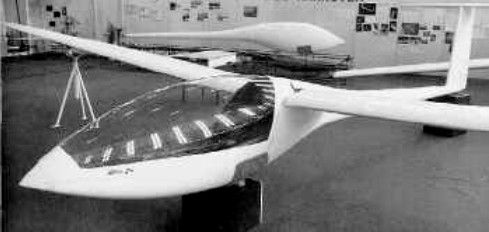
Designed and built by Walter Haufe, of Neenah, Wisconsin, this single-seater high wing motor glider is powered by a 40hp Nelson H-59 four-cylinder horizontally-opposed engine mounted in the nose. The engine, when stopped for soaring flight, swings back through 80° inside its cowling so that the two-blade fixed-pitch propeller, also designed and built by Mr Haufe, is stopped in the vertical position and lies flat along the top of the cowling to minimise drag. The cooling air intakes for the cylinders are open when the engine is running but are closed when the engine is stopped. The cantilever wooden wing is of semi-elliptical planform with upturned tips, the fuselage is a fabric covered steel tube structure and the tail unit is wooden with fabric covering. Landing gear consists of a fixed monowheel and a tailskid, plus an unusual skid with small balancer wheel just behind the engine cowling to prevent the prop from touching the ground. The pilot sits under a removable cockpit canopy set into the wing leading edge. The Hawk prototype, N1051Z, made its first flight in 1962.

Span: 40 ft 6 in
Length: 22 ft 6 in
Empty weight: 462 lb
Max speed: 40 mph
Min sinking speed: 3.0 ft/sec
Rate of climb: 500 ft/min

Harth 1920 glider

Circa 1920, Barvarian architect Freric Harth built a wing-pivoting arrangement into his hang glider and was able to fly for over twenty minutes above a flat plain, using only fluctuating horizontal currents to soar 600 feet above his take-off point. Harth could even turn his glider by using his wing levers in opposition.

Hart Aero Turkey Buzzard Sailplane

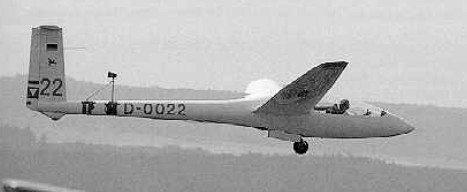
The Hart Aero Turkey Buzzard Sailplane is an FAA legal, three axis, back to basics sailplane. With three axis controls and dual controls with a center mount stick & is covered with the certified poly fiber or ceconite process. This kit comes ready to assemble with all machining & required welding pre-done. Assembly time is normally around 100/200 man hours depending on experience. Price 2009: 4999 US$

Stall: 16 kt / 18 mph / 29 kmh
Cruise: 43 kt / 50 mph / 80 kmh
VNE: 87 kt / 100 mph / 161 kmh
Empty Weight: 93 kg / 205 lbs
MTOW Weight: 352 kg / 775 lbs
Glide Ratio: 25:1+
Landing distance (50ft obstacle): 350 ft / 107 m

Handley Page HP.22 / HP.23

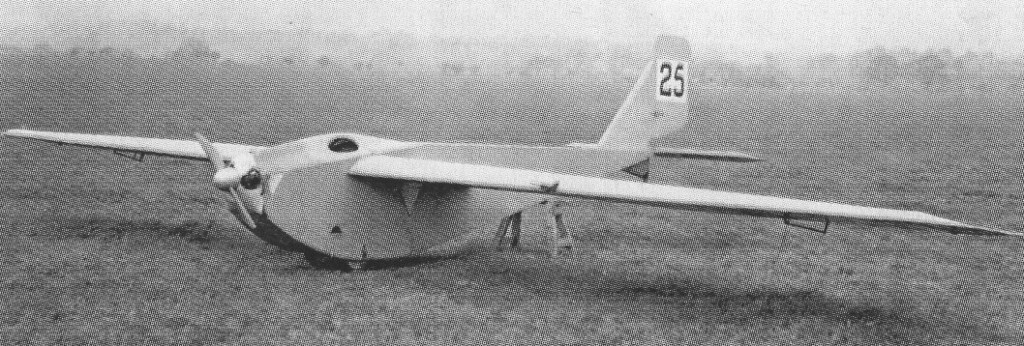
In 1923, the HP.22/23 motor glider was designed by W.H.Sayers, three were entered for the Lympne light aeroplane competitions of that year. In an attempt to improve the HP.22/23 performance, Harold Boultbee lowered the wing to a shoulder position, increased its incidence, faired the 397cc ABC into the nose, moved the wheels forward, and put a hinged lid over the cockpit.
The second machine, No.25, managed to fly nearly three laps of the Lympne course at full throttle on 11 October 1923, piloted by Gordon Olley, but loss of power forced its retirement.
On a second attempt on 13 October, No.25 was blown to the ground after take-off and its wing was smashed. The third machine was not ready in time.