Wolf Hirth GmbH, a prewar manufacturer of sailplanes, made wooden subassemblies for Messerschmitt projects during the Second World War, including a high-speed glider-trainer for Me 163 Komet pilots, and components for the Me 321 and Me 323 Gigants. The re-established company, owned largely by Messerschmitt-Bölkow-Blohm, built Arnold Wagner’s Acrostar competition aerobatic aircraft in small numbers, and supported the Bolkow Bo 107, 207, 208, and 209 lightplanes.
Glider
Hindustan Aeronautics / Aeronautical Services Ltd
1962: 31 Chittaranjan Ave, Calcutta 12, India
Aeronautical Services manufactured 56 Ashvini-II and 35 Rohini-I training sailplanes for the Indian Civil Aviation Department 56. Aeronautical Services also built many IT-G3 single seat intermediate traing gliders based on the Grunau Baby.
Hindustan Aircraft Ltd. (formed in 1940) was amalgamated with Aeronautics India Ltd. (formed 1963) to establish Hindustan Aeronautics Ltd. in October 1964. Hindustan Aircraft designed and built the first indigenous Indian aircraft, the Hindustan HT-2 two-seat trainer, which first flew in 1951 and was produced for the Indian Air Force and civilian flying clubs. The HUL-26 Pushpak high-wing lightplane, based on the American Aeronca Chief, entered production in 1959, the HAOP-27 Krishak derivation being manufactured as a liaison aircraft for the Indian Air Force and Army. Deliveries of the HAL HJT-16 Kiran two-seat jet trainer began in 1966. The HF-24 Marut single-seat fighter was designed by a team led by Kurt Tank, and deliveries of the Ajeet lightweight jet fighter, developed from the Folland/ Hawker Siddeley Gnat which HAL license-produced, began to the Indian Air Force in 1976. HAL also built the HA-31 Basant agricultural aircraft.
Assembly of Soviet MiG-21 fighters began 1966, with full manufacture from 1970 (production ended). Assembly/ production of Soviet MiG-27M began 1984 (production ended 1994). Assembly/production of the SEPECAT Jaguar International as the Shamsher (first flown March 1982) ended 1998. HPT-32 Deepak two-seat ab initio and basic piston-engined trainer first flown 1977; 134 built for Indian Air Force and eight for Navy to replace HT-2s. Licence-manufactured SA-315B Lama and SA-316B Alouette III helicopters as Cheetah and Chetak respectively up to 1998, when production gave way to the indigenously developed Advanced Light Helicopter (first flown August 1992). HAL responsible for manufacture of the ADA Light Combat Aircraft. New HJT-36 turbofan trainer and HTT- 38 turboprop trainer announced for development in 1998. Continuing work on AWACS aircraft. Other work includes overhaul of all Indian Air Force aircraft, together with component manufacture in connection with international aircraft programs and India’s space research program.
Hiller, Stanley
Stanley Hiller (Sr)
Alameda CA.
USA
Stanley Hiller Snr began designing gliders in 1909 and this, his first powered aircraft, flew at Alameda and a 1911 air meet at Tanforan race track in South San Francisco. He also built engines.
Hill Pterodactyl
A series of tailless aircraft was designed by Professor Geoffrey Hill to demonstrate the concept of aircraft that could fly safely at low speed. The first machine was a glider which he built in 1924 and flew from the South Downs, UK. From this a powered version was constructed.
Hill, Geoffrey
A series of tailless aircraft was designed by Professor Geoffrey Hill to demonstrate the concept of aircraft that could fly safely at low speed. The first machine was a glider in 1924, followed by a powered craft.
Hidemasa MXY8 Akikusa
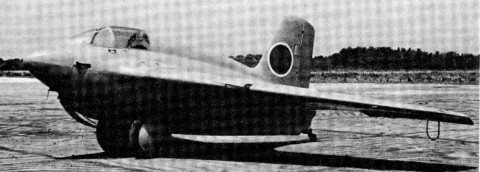
When developing the Mitsubishi J8M1 (Me-163 copy) the Japanese were unfamiliar with the handling characteristics of aircraft lacking a conventional horizontal tail. To provide a means of expediting the training of pilots eventually to be assigned to the rocket-driven fighter, the Scientific Division of the Navy Air Technical Arsenal at Yokosuka had been assigned the task of creating a full-scale wooden glider version of the Shusui. While definitive design work and prototype construction proceeded at Nagoya, Hidemasa Kimura who had been responsible for the Tachikawa-built A-2600 that had created a new international closed-circuit distance record developed the glider which was known as the MXY8 Akikusa (Autumn Grass). This was flown for the first time at the Hyakurigahara airfield, the base of the 312th Naval Air Group which, it had been decided, would be the first recipient of the Shusui. This event took place on 8 December, its pilot being Lt Cdr Toyohiko Inuzuka who had taken the place of Lt Cdr One as the project test pilot after the latter had been taken ill. The Akikusa glider was towed into the air by a Kyushu K10W1 and its handling characteris¬tics received a highly favourable report from Jnuzuka. The second Akikusa was sent to the Army Aerotechnical Research Institute, the Rikugun Kokugijutsu Kenkyujo, at Tachikawa where it was tested by Col Aramaki with similarly successful results.
On 1 December, the completed structural test specimen was inspected and approved by both services, but a week later, on 7 December, the Tokai district, in which Nagoya was situated, was wracked by strong earth tremors and the airframe, which was undergoing loading tests, was overstressed and suffered distortion, On 18 December, the Ohe plant in which the “heavy gliders” were being built suffered a heavy attack from B-29 Superfortresses and it was decided to transfer the salvaged airframes, together with the structural test specimen, to a plant that had been created in a mountain cave at Taura, Yokosuka, although the Ohe plant continued, together with the Nanko plant, to build a number of pre-series Shusui interceptors. Despite these setbacks, the first “heavy glider” Shusui was test flown by Lt Cdr Inuzuka at Hyakürigahara airfield on 8 January 1945, after being towed into the air by a Nakajima B6N1 Tenzan attack bomber.
For the initial flight, the engineless Shusui weighed 2,286 lb (1037 kg) and the Cl was situated at 16.8 per cent of the aerodynamic mean chord, Inuzuka confirming that there was no difference between the handling characteristics of this “heavy glider” and the Akikusa apart from a minor change of trim at take-off. During subsequent flights, some devon vibration was experienced at gliding speeds in excess of 184 mph (296 km/h) but this was eradicated when the gap between the wing and elevon was reduced and the Frise balance near the devon tip shortened. Various problems were encountered in the oil pressure system, but these were quickly resolved and in March all Navy flight testing of the “heavy glider” was to be pronounced satisfactorily completed. The second “heavy glider” was tested by the Navy at the Kashiwa airfield, Chiba, and this was eventually to be tested also by the Army. These tests were not to commence until August, and at an early stage in the trials, the Shusui parted company with its towplane prematurely and crashed in a pine forest, its pilot suffering injuries.
Hicks Kestrel / Merlin
The Hicks Merlin, initially called the Hicks Kestrel, was a single-seat high performance sailplane designed and built by W.E. Hicks at the Newcastle Gliding Club from 1933 to 1936.
A parasol, braced three-piece wing with no air-brakes or flaps. The undercarriage was a main skid and tail skid. It was fitted with an “Automatic Rudder”.
It was first flown on 2 February 1936 at Moat Law, UK.
No B.G.A. CofA was issued. As the fuselage contours were shaped around Eddie Hick’s profile the Merlin was of ‘little use to any other person’.
It was eventually purchased for £1 for the Newcastle Club bonfire and burnt pre-war.
Wingspan: 10.46 m / 34 ft 4 in
Length: 4.50 m / 14 ft 9 in
Wing area: 7.43 sq.m / 80 sq.ft
Aspect ratio: 14.8
Wing section: Gottingen 652
Empty weight: 40.82 kg / 90 lb
AUW: 116.12 kg / 245 lb
Wing loading: 15.63 kg/sq.m / 3.2 lb/sq.ft
Max L/D: 20
Min sink: 0.61 m/sec / 2.0 ft/sec

Hicks RH-3
A glider manufactured by Ross Hicks in 1962. Serial number 1 and registration N69272. This glider crashed in Colorado in 1988.
HFL Stratos
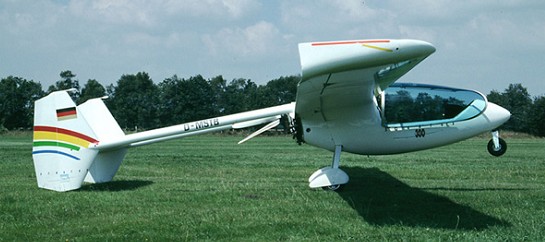
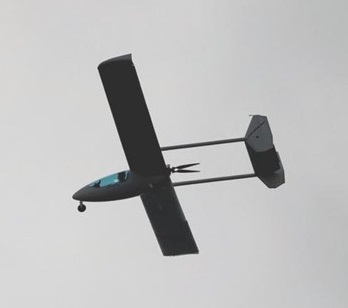
Stratos 300
Length: 6,3 m
Wing-span: 12,60 m
Prop: 3-blade
Engine: König SC-430
Cruise speed: 92 kph
Maximum speed: 120 kph
Stall: 45 km/h
HFL Flugzeugbau GmbH
Lüneburg, Germany
Powered glider builder
 All Aero