Volmer S. Jensen was born in Milwaukee in 1909. He began to design and build sailplanes in 1925 at age 16. using plans published in the Boy Mechanic Magazine. He built a second one the following year from additional plans from the same source, and in 1927 he built his first glider with aerodynamic controls, an enclosed cockpit and a wheeled landing gear. It was based on the MIT glider Eddie Allen had taken to Europe in the mid-20s to compete against the Germans.
Glider
Volmer VJ11 So-Lo

Construction of the VJ-11 was commenced in 1940 and completed in 6 weeks spare time and test flown the following week end. During the war they were not permitted to fly any aircraft within 150 miles from the coast and the hang glider was only going to slide down the hill.
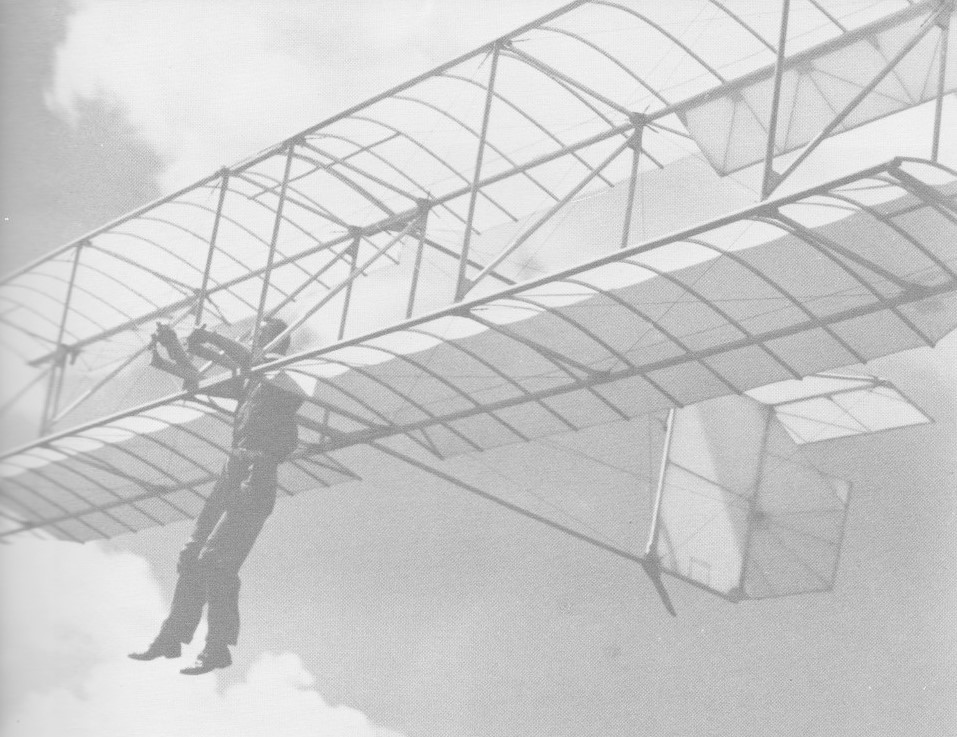
A Chanute type glider, the VJ-11 had three-dimensional controls on it. Jensen installed elevators and ailerons, controlled by the right hand with a device shaped like a + sign and a rudder by the left hand, using a short rudder bar.
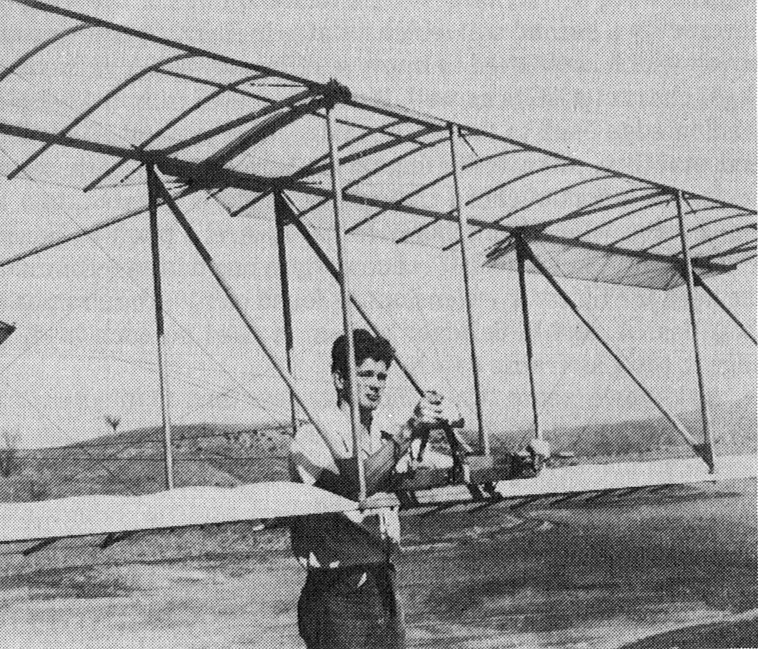
Many glider pilots tried it including John Robinson, National Soaring Champion for 3 years, and Irv Culver, Lockheed aerodynamicist who helped on the stress analysis, and even fellows with no previous flying experience.
It could take off in 3 steps down the hill and sometimes land by just bending knees. On some flights it even gained altitude.
Complete set of blueprints — 8 photographs and full scale rib layout were made available with the cost of materials approximately $400.00. Kits or materials were never supplied.
Wing span: 28 ft
Wing area: 225 sq.ft
Aspect ratio: 6.97
Length: 15 ft 5 in
Height: 5 ft
Dihedral: 0 degrees
Wing: single surface, uncambered
Tail Airfoil: flat
Empty weight: 100 lb
Max flying weight: 280 mph
Useful load: 180 lb
Best L/D: 6-1 at 20 mph
Min sink: 300 fpm
Stall: 15 mph
Cruise: 20 mph

Voisin 1905 Glider / Archdeacon

Gabriel Voisin began his formal aviation career in 1903 when he was engaged by a prominent French aeronautical promoter, Ernest Archdeacon, to build gliders for him.
June 8, 1905, over the Seine, Gabriel Voisin succeeds on a glider built with Ernest Archdeacon to fly 15 meters high and 150 m.
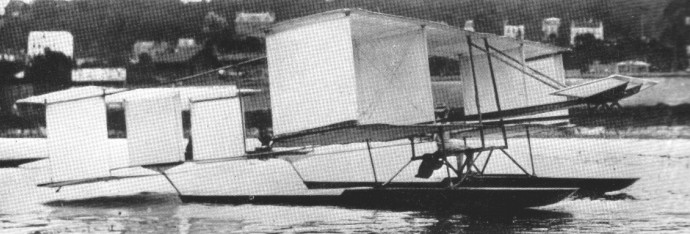
One of the gliders built by Gabriel Voisin in 1905 for towed flights behind a motor boat on the River Seine.
The Voisin-built Archdeacon glider was acquired and motorized as the Bellamy Hydroavion by French inventor Emile Bellamy in 1906.

Voisin Bros

In July 1905 the world’s first company to build aeroplanes, Ateliers d’Aviation Edouard Surcouf, Bleriot et Voisin, was formed by brothers Gabriel and Charles Voisin assisted by Ernest Archdeacon and Louis Bleriot.
On 5 November 1906 the brothers Gabriel (1880-1973) and Charles (1888-1912) formed their own manufacturing firm, Appareils d’Aviation Les Freres Voisin, at the same location in a hanger at Rue de la Ferme, Billancourt, Paris. Dominant partner was Gabriel, one of aviation’s earliest pioneers built gliders (with varying success) for Archdeacon, Bleriot and others from 1904.
When Bleriot formed his own company in February 1907 the AA Les Freres Voisin was formed in new premises at Lyons, and from spring 1907 began building series of boxkite biplanes (Hargrave-based) for Delagrange, Paulhan, Farman, Moore-Brabazon, and others; by end of 1909 had built nearly 20, though by then this type had been separately much improved by Henry Farman.
First “gunbus” biplane appeared 1910, a canard oddity in 1911, and the large Icare seaplane in 1913; but Voisin chiefly known for extensive series of successful military bombers of 1914-1918. Primitive but strong, these Voisin “chickencoops” appeared in many variants, principal being Types 3,4,5,8, and 10 of which, collectively, nearly 3,400 were built. Although reliable, their design had progressed little by 1918, and in 1919 Gabriel Voisin left the aviation industry and subsequently entered the automobile industry.
In 1945 G&R owned a factory of the Aéroplanes Voisin firm, which had gone bankrupt in 1938.
Vogt Lo-170
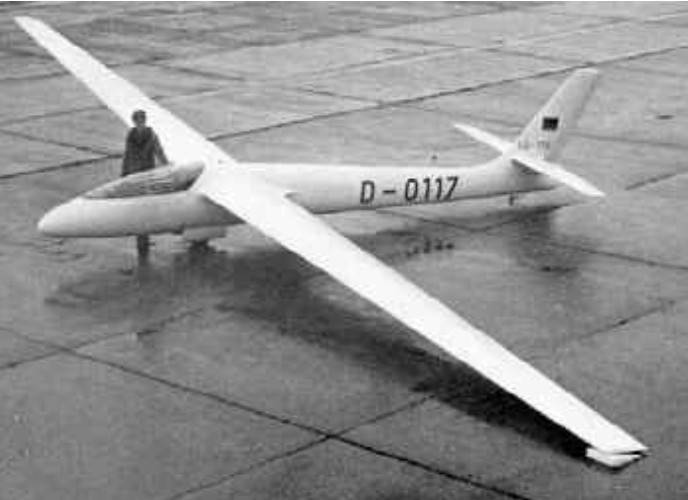
Designed by Alfred Vogt. Only one was built.
Wing span: 17 m
Wing area: 13.15 sq.m
Empty Weight: 326 kg
Gross Weight: 440 kg
Wing Load: 33.5 kg/sq.m
Water Ballast: 0
MinSink: 0.58 m/s 70 kph
L/DMax: 36 92 kph
Seats: 1
Aspect ratio: 21.98
Airfoil: FX 61-184
Vogt Lo-100 Zwergreiher
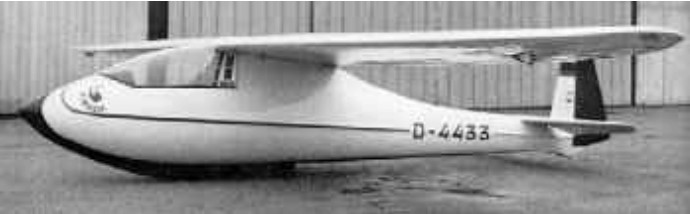
A 1952 aerobatic glider, designed by Alfred Vogt and Wolf Hirth. Forty five were built.
Vogt Lo 100 Zwergreiher
Length: 20.177 ft / 6.15 m
Wingspan: 32.808 ft / 10.0 m
Wing area: 10.9 sq.m
Aspect ratio: 9.17
Airfoil: Clark Y 16%
Empty Weight: 143 kg
Gross Weight: 265 kg
Wing Load: 24.3 kg/sq.m
Water Ballast: 0
Max. speed: 157 kts / 290 km/h
Seats: 1
MinSink: 0.80 m/s 72 kph
L/DMax: 25 85 kph
Vliegtuigbouw V20
Circa 1947
Vliegtuigbouw Sagitta 013
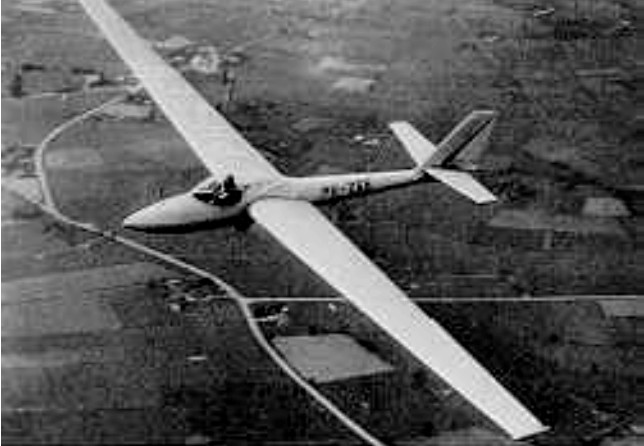
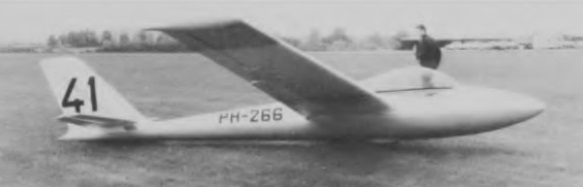
The 15m Standard class Sagitta (Arrow) sailplane was designed and built by Piet Alsema, who formed NV Vliegtuigbouw to put it into production at Teuge airfield, near Apeldoorn, Holland, at a rate of one every two months in 1964. It was issued an airworthiness certificate in the aerobatic and cloud flying category.
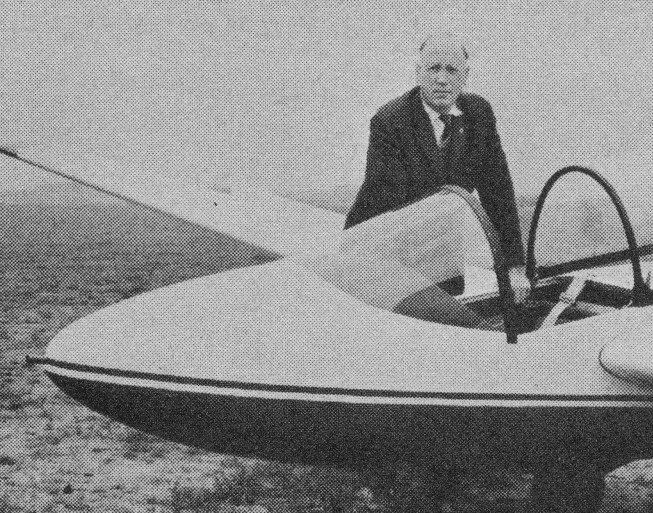
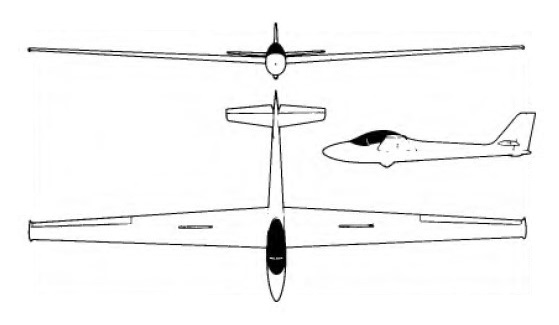
The single-seat Sagitta is of conventional all-wood construction with a large, sliding blown canopy giving the pilot, seated over the wing leading edge, all-round visibility. The canopy slides backward and can be fixed open in flight at several positions. The mid-set wooden wings have a single spar and a plywood leading edge torsion box and the plain ailerons are also of wood; the wing is fabric covered over 25% of its area. Air brakes of a special design operate on both the upper and lower wing surfaces. Aluminium spoilers 20 inch long in the upper and lower wing limit top speed to 168 mph (test craft were dived at 193 mph). Fuselage and tailplane are all-wood; fuselage and tail frames are pine and plywood, fittings are steel. Aerolite glue is employed throughout. The fin and rudder is swept and the cantilever tailplane can be folded when the sailplane is towed in a trailer. All control surfaces connect automatically on assembly. A fixed monowheel with brake comprises the landing gear.
The 1964 price was around US$3212.
A special long-wing model of 58.55 ft span was built for championship meets.
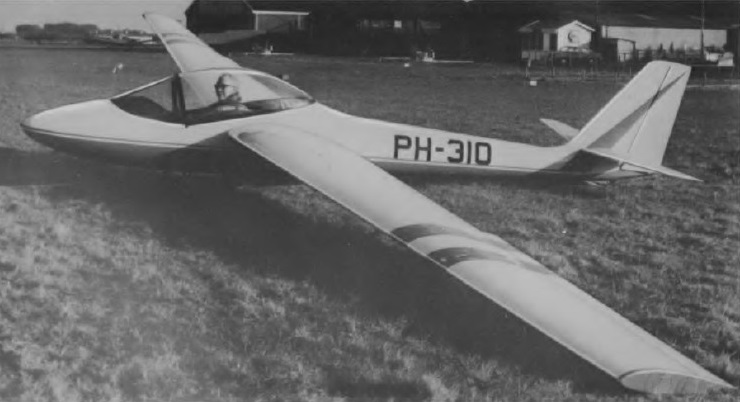
The Sagitta first flew in prototype form on 4 July 1960. It was followed on 24 November 1961 by the first of the production aircraft, designated Sagitta 2; some 20 being produced.
A 17m (55 ft 9 in span) development of the Sagitta, known as the Super Sagitta, was reported in the spring of 1964, this being very similar apart from the increase in wing and tail surface areas, but the Super Sagitta remained a project only.
Sagitta
Span: 48.5 ft
Length: 21 ft 3 in
Empty weight: 463 lb
Useful load: 243 lb
Root chord: 4 ft
Tip chord: 1 ft 8 in
Tail span: 9 ft 10 in
Wing area: 129 sq.ft
Aspect ratio: 18.7
Sagitta 013
Wing span: 15m / 49.2ft
Wing area: 11.98sq.m / 129sq.ft
Aspect ratio: 18.7
Airfoil: NACA 63-618/4412
Length: 6.47 m / 21 ft 2 in
Empty Weight: 215kg / 473lb
Payload: 105kg / 232lb
Gross Weight: 320kg / 705lb
Water ballast: None
Wing Load: 26.71kg/sq.m / 5.46lb/sq.ft
Max speed: 146 kt / 270 km/h
Max rough air speed: 108 kt / 200 km/h
Stalling speed: 35.5 kt / 66 km/h
L/DMax: 34 at 52.3 kt / 97 km/h
MinSink: 0.64 m/s / 2.1 fps / 1.24 kt at 42 kt / 78 km/h
Structure: wood/ fabric wings and tail, wood fuselage
Seats: 1
Sagitta 2
Span: 49 ft 2.5 in
Length: 21 ft 2.75 in
Height: 3 ft 11 in
Wing area: 129.2 sq ft
Aspect ratio: 18.7
Empty weight: 478 lb
Max weight: 705 lb
Max speed: 168 mph
Min sinking speed: 2.1 ft/sec at 48 mph
Best glide ratio: 37:1 at 60 mph
Vliegtuigbouw
The Sagitta (Arrow) glider was designed by Piet Alsema, who formed the company NV Vliegtuigbouw to produce it.
Vidas NV-4

A very light motorglider powered by a Rotax 447.
Stall: 27 kt / 31 mph / 50 kmh
Cruise: 54 kt / 62 mph / 100 kmh
VNE: 92 kt / 106 mph / 170 kmh
Empty Weight: 150 kg / 331 lbs
MTOW Weight: 350 kg / 772 lbs
Climb Ratio: 800 ft/min / 4 m/s
Take-off distance (50ft obstacle): 330 ft / 100 m
Landing distance (50ft obstacle): 330 ft / 100 m
 All Aero