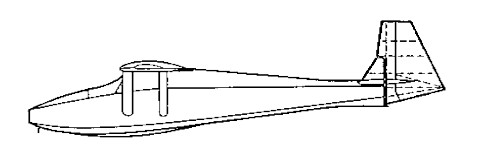
High performance soaring plane, Germany, 1931
Length: 21.096 ft / 6.43 m
Wingspan: 59.055 ft / 18.0 m
Crew: 1
High performance soaring plane, Germany, 1931
Length: 21.096 ft / 6.43 m
Wingspan: 59.055 ft / 18.0 m
Crew: 1
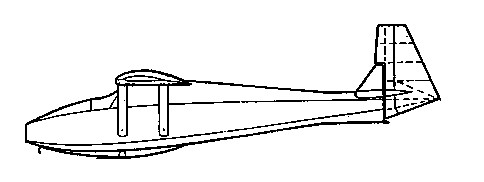
Soaring plane, Germany, 1930
Length: 21.096 ft / 6.43 m
Wingspan: 46.194 ft / 14.08 m
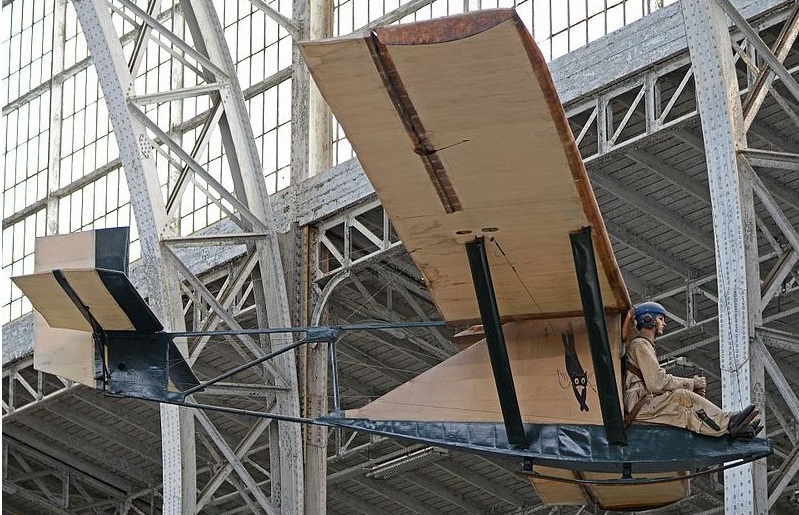
The Segelflugzeugbau Kassel 12 was a German glider used for training, developed in the 1920s. It was a minimalist design with the pilot sitting atop a tapered wooden structure that supported a high wing on a set of struts, and carried a conventional empennage at the rear. A spring skid was provided as undercarriage.
Conscripts from Lentoasema 2 built one Kassel 12A in 1935. The first flight with the aircraft was performed by Lt. Col. Ahonius at Santahamina on 28 March 1935.
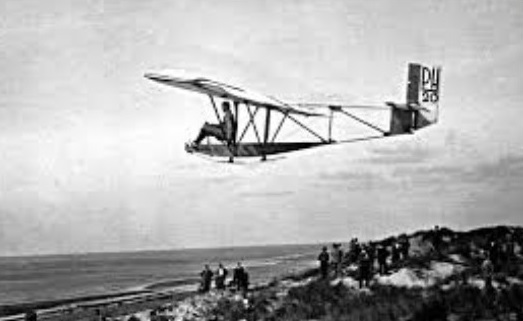
The aircraft was used at the Jämijärvi glider school in the summer of 1936, carrying the designation number “13”. The aircraft is today on display at the Päijänne Tavastia Aviation Museum in Asikkala, near Lahti.
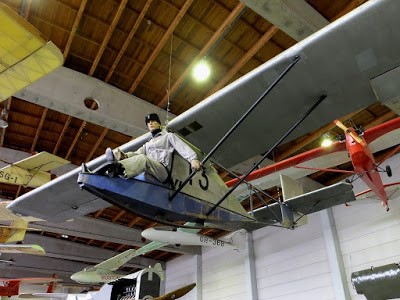
Wingspan: 10.00 m (32 ft 10 in)
Length: 6.50 m (21 ft 4 in)
Height: 2.20 m (7 ft 3 in)
Crew: One pilot
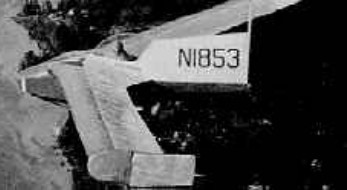
The Bekas, which first flew in 1968, was a development of an earlier, 1959, design of Stefan Brochocki, the BKB-1. The design of the Bekas 1-A had three main aims : a higher L/D (archieved by using a greater span and aspect ratio), easier ground handling and rigging and a flexible wing to study the effect of bending on stability and controllability. It has a fixed gear and trailing- edge control surfaces on the out-board portion of the wing which serve a dual role of elevator and aileron.
Construction was wood and plywood.
Wing span: 15m / 49.2ft
Wing area: 14.67sq.m / 158sq.ft
Empty Weight: 159kg / 350lb
Payload: 91kg / 200lb
Gross Weight: 159kg / 350lb
Wing Load: 17.04kg/sq.m / 3.48lb/sq.ft
Aspect ratio: 15.3
Airfoil: NACA 8-H-12
MinSink: 0.61 m/s / 2.0 fps / 1.18 kt
No. Built: 3
Amongst the machines that Witold Kasper built and flew was a fully aerobatic glider that could do outside loops while in a side slip.
USA
Glider builder in the 1960s.
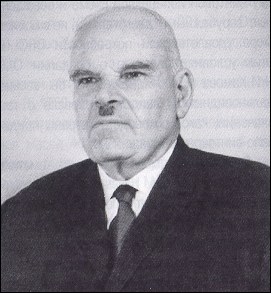
Nikolai Il’yich Kamov was born in 1902. In 1923 he graduated from the Tomsk Technological Institute. From 1923 to 1931 he worked at a number of the USSR’s aircraft factories having various posts, including those of brigade chief and leading designer in the design bureau of D.P.Grigorovich. From 1931 to 1948 (with short pauses) he headed separate brigades and an experimental design group in TsAGI. Between 1928 and 1943 he was engaged in the design and construction of autogyros.
Nicolai Kamov started building his first rotor-winged aircraft in 1929, together with N.K.Skrzhinskij. The first Soviet Autogiro was designed by Kamov and Skrzhinskii based on Cierva models.
In 1945 he started the design work on a co-axial helicopter. Kamov gained distinction for lightweight single-seat helicopters after Second World War, including Ka-8 of 1947.
On October 7, 1948 the Minister of Aviation Industry M.V.Khrunichev issued Directive No.772 ordering the establishment of the Experimental Design Bureau No.2 (OKB No.2) headed by N.I.Kamov. The OKB was to be hosted by the State All-union Experimental Factory No.3 in Sokol’niki, a district of Moscow. In accordance with this directive all the specialists of the group which had been developing the Ka-8 on a voluntary basis were transferred to Kamov’s OKB-2.
The aircraft factory No.3 of the Ministry of Aviation Industry was considered to be, for all practical purposes, the base enterprise of the OKB headed by chief designer I.P.Bratukhin. It comprised several production shops and divisions, including the flight test facility at the Izmaylovo airfield (then a suburb of Moscow). The OKB-2 occupied the rooms allocated to it at the premises of this enterprise. Its staff rendered considerable assistance to the speedily growing brigades of the OKB-2 in establishing themselves and gaining the necessary practical experience in design and calculation work.
This was followed by the single-seat Ka-10 of 1950 appearance as a piston-engined helicopter for shipbome observation duties, with two contrarotating rotors and no anti-torque tail rotor; these rotor design features were to be found in most subsequent Kamov helicopters. The Ka-15 two-seater of the 1950s used for agricultual work in addition to naval anti-submarine and other roles, and the Ka-18 four-seat development was flown in 1957 and widely operated on varied civil tasks. The Ka- 22 Vintokryl was a very large twin-turboprop convertiplane, first seen in 1961, and established many world records. The twin-turboshaft powered Ka-25 was first flown in April 1961 and deployed by the Soviet Navy as a shipborne anti-submarine warfare helicopter, and also for target acquisition, joining the Navy from 1972 and manufactured up to 1977.
The more capable Ka-27 was first flown in August 1973 and joined Soviet Navy from 1981, with the Ka-28 as an export version. The related Ka-29 first flown in July 1976 as a shipborne assault and transport variant plus the Ka-33 export model without weapons. The Ka-31 was flown in October 1987 as a shipborne AEW&C variant, and Ka-32 first flown October 1980 as civil model for transport, flying-crane, rescue, offshore support, patrol, firefighting and other uses, with the Ka-327 as a maritime patrol version of the Ka-32. The piston-engined civil Ka-26 first flew in 1965 (some military use), with the modern Ka-126 (first flown in October 1987) and the Ka-128 turboshaft developments. All having pod-and-boom fuselages to allow attachment of modules aft of cockpit for various cargoes (from passenger carrying to agricultural equipment) or left open for flying-crane duties. A new twin-turbine development is the Ka-226 (first flown September 1997). The Ka-50, was first flown in June 1982 as a single-seat combat helicopter, with the Ka-50N Black Shark night-attack version flying March 1997, while side-by-side two-seat derivative became the Ka-50 Alligator (first flown in June 1997).
1995: 8a March 8th St., Lubertsky, Moscow Region 140007, Russia.
In 1996, Kamov became a member of MIG MAPO-M.
A military multipurpose twin-turboshaft helicopter is the Ka-60 for 10 equipped troops (rolled out July 1998), with a 16-passenger civil version as the Ka-62. A light single-turboshaft Ka-115 was to fly in 1999, carrying pilot and up to four passengers.
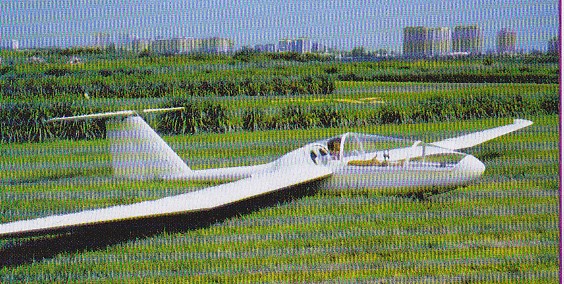
Light sailplane circa 1998. The Skua can be split into three parts for transport on a roof rack or trailer. It came equipped with a BRS.
Weight: 70 kg
Wing span: 12.6 m
Wing area: 12.2 sq.m
Vne: 110 km
Stall: 32km
Glide Ratio: 25
Price (1998) US$15000
1998: Estrada da gavea 655, Apt: 1603 sao Conrado, CEP 22 100000 Rio de Janeiro, BRAZIL
Glider builder
1995 R.Jurkštas developed and produced a training glider RJ-1. It was designed to improve children’s school gliding pilots’ skills.
 All Aero