Lamson Alcor

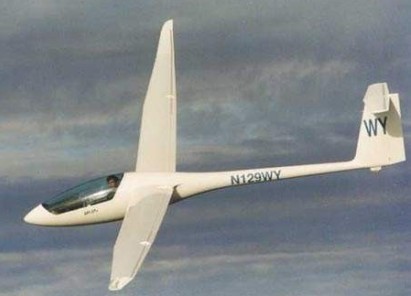
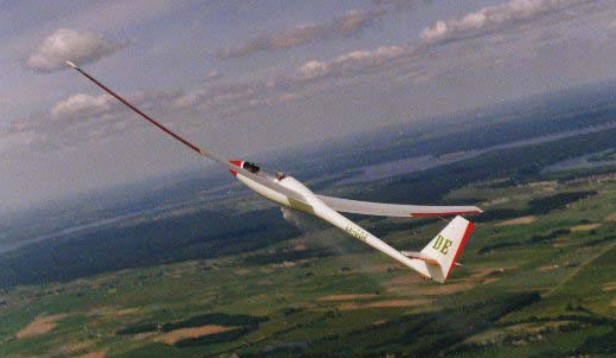
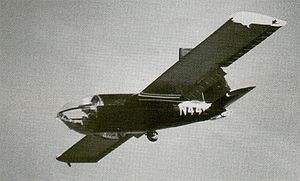
The Alcor, the first pressurized sailplane, was designed by Robert Lamson and first flown in 1973 as a research vehicle able to gain high altitudes while keeping the cockpit environment safe and comfortable. This was achieved by pressurizing the cockpit and building the ship light enough so that it could operate successfully in weak mountain wave conditions. The cockpit pressure differential maintains two to three inches of mercury. The sole Alcor now belongs to the Museum Flight Foundation, Seattle, WA.

Wing span: 20m / 65.6ft
Wing area: 14.31sq.m / 154sq.ft
Empty Weight: 250 kg / 550 lb
Payload: 181 kg / 400 lb
Gross Weight: 431 kg / 950 lb
Wing Load: 30.12 kg/sq.m / 6.16 lb/sq.ft
Aspect ratio: 28
Airfoil: Feifel
L/DMax: 43 89 kph / 48 kt / 55 mph
MinSink: 0.46 m/s / 1.5 fps / 0.89 kt
Seats: 1
No. Built: 1

Lak LAK-14 Strazdas

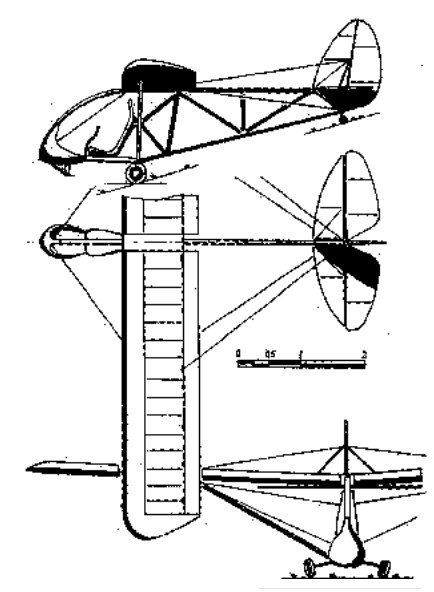
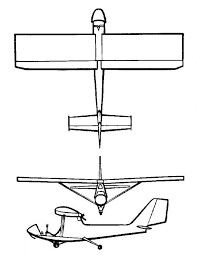
The LAK-14 Strazdas (Thrush) was designed at LAK by Antanas Paknis, one of the organization’s original design team. Like other LAK designs it developed the aeronautical use of glass fibre, foams and other novel materials. It was intended to succeed the Oskinis BRO-11M, also known as the LAK-2. It was therefore in competition with the Oškinis BRO-23KR Garnys.

The Strazdas had an externally more conventional fuselage, though its construction was more advanced. One of LAK’s founding goals was to develop the aeronautical use of plastics and composites, so the forward fuselage of the Strazdas, apart from a wooden nose fairing which held the launch towing hook, was built from three-ply glass fibre with foam filling. The pilot sat in a long, open cockpit with the seat back against a pedestal that supported the wing. This pedestal was part of the enclosed, round-sectioned rear fuselage structure which also included an integral fin. The tailplane, mounted high on the fuselage, had foam ribs and two-ply glass cloth skin.

The two-part, rectangular plan wing of the Strazdas was mounted high on its pedestal with 5° of dihedral. It was built around single spars, each braced to the lower fuselage with a single strut. Early development aircraft had wooden spars and ribs with glass cloth covering. Slotted, broad chord ailerons filled the whole trailing edge.

First flown in 1981, production began early in 1981. The first production aircraft had wooden spars but this was later replaced by integrated glass fibre reinforced polyester resin structures. Production continued until 1985.

Wingspan: 7.34 m (24 ft 1 in)
Wing area: 10.60 m2 (114.1 sq ft)
Aspect ratio: 5.1
Airfoil: TsAGI R-P
Length: 5.25 m (17 ft 3 in)
Height: 2.30 m (7 ft 7 in)
Empty weight: 100 kg (220 lb)
Max takeoff weight: 185 kg (408 lb)
Maximum speed: 100 km/h (62 mph, 54 kn) in rough or smooth air
Stall speed: 45 km/h (28 mph, 24 kn)
g limits: +4.0/-2.0
Maximum glide ratio: 13 at 52 km/h (32 mph; 28 kn)
Rate of sink: 1.10 m/s (217 ft/min) minimum, at 50 km/h (31 mph; 27 kn)
Crew: One
Lak LAK-12 / Sportline Aviacija LAK-12

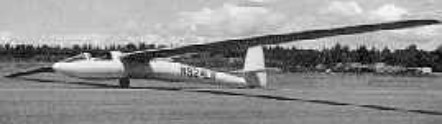
The LAK-12 is a Lithuanian built single-seat FAI Open-class mid-wing sailplane with a one-piece forward-hinged canopy. The retractable main wheel rides on an oil/nitrogen shock absorber and uses a mechanical brake. A skid is used at the tail. The wings are glass-foam-glass construction and taper from a Wortmann FX67-K-170 airfoil inboard to an FX67- K-150 at the tips. Glidepath control is provided by double-panel upper surface airbrakes and by the flaps (-7, -4, 0, +5, +11, +15 deg). The wings are capable of holding a total of 190 liters of water in their leading edges and are filled and emptied through a hole in bottom of the fuselage.

Wing span: 20.42m / 67ft
Wing area: 14.63sq.m / 157.5sq.ft
Empty Weight: 360kg / 793.7lb
Payload: 290kg / 639.3lb
Gross Weight: 650kg / 1433lb
Wing Load: 29.5kg/sq.m / 6.05lb/sq.ft
Water Ballast: 190kg / 418.9lb
L/DMax: 47 at 51.3 kts / 95 km/h
MinSink: 0.48 m/s / 1.7 fps at 40.5 kts / 75 km/h
Aspect ratio: 28.5
Airfoil: Wortmann FX67-K-170 w/ FX67-K-150 tips
Seats: 1
Structure: Fiberglass / carbon fiber

Lak LAK-9 Lietuva / Sportline Aviacija LAK-9

The LAK-9 Lietuva (or Lithuania) single-seater Open Class sailplane was developed by LAK – Litovskaya Aviatsionnaya Konstruktsiya (or Lithuanian Aircraft Construction) from an earlier plastics sailplane, the BK-7, also named Lietuva, designed by Balis Karvyalis which made its first flight in December 1972. At this time the LAK factory was known as the Experimentalnii Zavod Sportivnoi Aviatsii (or Experimental Sports Aviation Factory), and a small experimental production batch of Lietuvas, designated BK-7A, was built and two of these participated in an international contest between Communist countries at Kishinev in April 1976. As a result of this competition a number of modifications were introduced in a developed version, the LAK-9, designed by Kestutis Gechas and which was then under construction; the prototype of this took part in the World Championships in Finland in June 1976 flown by O.Pasetsnik, but this particular aircraft withdrew from the last two days of the competition because of aileron damage.

The LAK-9 was the first Russian sailplane to compete in the World Championships since 1968 and at the time it was reported that the three LAK-9s then built had not, at that time, completed their flight testing. The type is now in production and the fourth series batch, begun in the winter of 1976-77, is reported to be designated LAK-9M (M for Modernised). The LAK-9 is a cantilever shoulder-wing monoplane of glassfibre/epoxy construction, with single-spar wings and provision of up to 397 lb of water ballast, and trailing edge flaps. The landing gear consists of a retractable monowheel and a tailwheel.

Span: 65 ft 8.25 in
Length: 23 ft 10.25 in
Height: 5 ft 0.25 in
Wing area: 161.35 sqft
Aspect ratio: 26.8
Empty weight: 842 lb
Max weight: 1,477 lb
Max speed: 130 mph (in rough air)
Max aero-tow speed: 87 mph
Min sinking speed: 1.67 ft/sec at 46 mph
Best glide ratio: 48:1 at 64 mph

Lak BK-7 Lietuva

The plastics BK-7 single-seater Open Class sailplane was developed by LAK – Litovskaya Aviatsionnaya Konstruktsiya (or Lithuanian Aircraft Construction), named Lietuva, designed by Balis Karvyalis, and made its first flight in December 1972. At this time the LAK factory was known as the Experimentalnii Zavod Sportivnoi Aviatsii (or Experimental Sports Aviation Factory), and a small experimental production batch of Lietuvas, designated BK-7A, was built and two of these participated in an international contest between Communist countries at Kishinev in April 1976. As a result of this competition a number of modifications were introduced in a developed version, the LAK-9.

Lamson PL-1 Quark

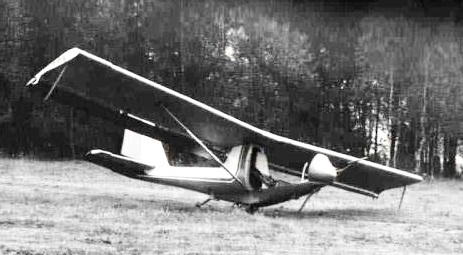
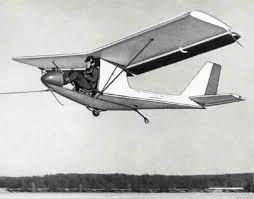
Philip Lamson designed and built the single-seat PL-1 Quark in 1964 as a lighthearted experimental aircraft project to create a prone position-pilot glider. To this end the pilot was accommodated lying down with his head in the nose bubble.

The PL-1 is constructed from fiberglass, with the wings made from a balsa-fiberglass sandwich that was laid up in a female mold. The wing was originally of 20 ft (6.1 m) span, but this was quickly increased to 30 ft (9.1 m) with tip extensions and finally the aircraft received a new 40 ft (12.2 m) three-piece wing. The airfoil was an Irv Culver modification to the NACA 0012. The landing gear was a monowheel, with small wing tip skids.
Soaring Magazine described the aircraft as “purely a lark and a quirky lark at that”. The designer described the performance as “somewhere between a Nimbus and a Rogallo”.

Only one Quark was built and it was registered with the US Federal Aviation Administration in the Experimental – amateur-built category.

The aircraft logged about 300 hours in its 30 ft (9.1 m) wingspan version. The Quark was removed from the FAA registry on 13 August 2002 and the aircraft likely no longer exists.

Length: 10 ft (3.0 m)
Wingspan: 40 ft (12 m)
Wing area: 88.89 sq ft (8.258 sq.m)
Aspect ratio: 18:1
Airfoil: Irv Culver modification to the NACA 0012
Empty weight: 340 lb (154 kg)
Gross weight: 504 lb (229 kg)
Crew: one
Wing loading: 5.67 lb/sq ft (27.7 kg/sq.m)