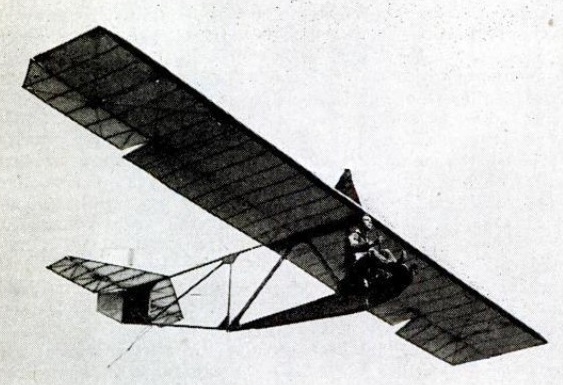
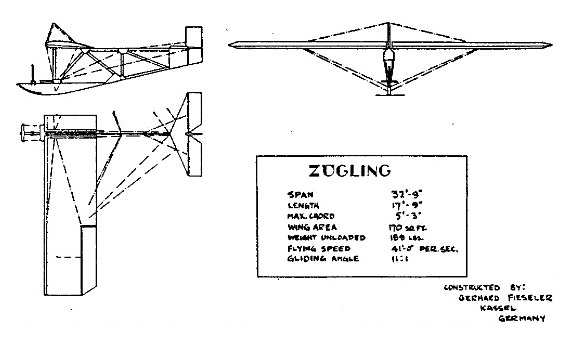
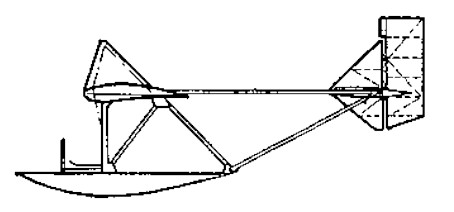
The 1926 Zögling was a simple lightweight glider for basic flight instruction. It was designed to start with rubber ropes, a common way to start a glider in the years short after WWI. It was designed by Alexander Lippisch.
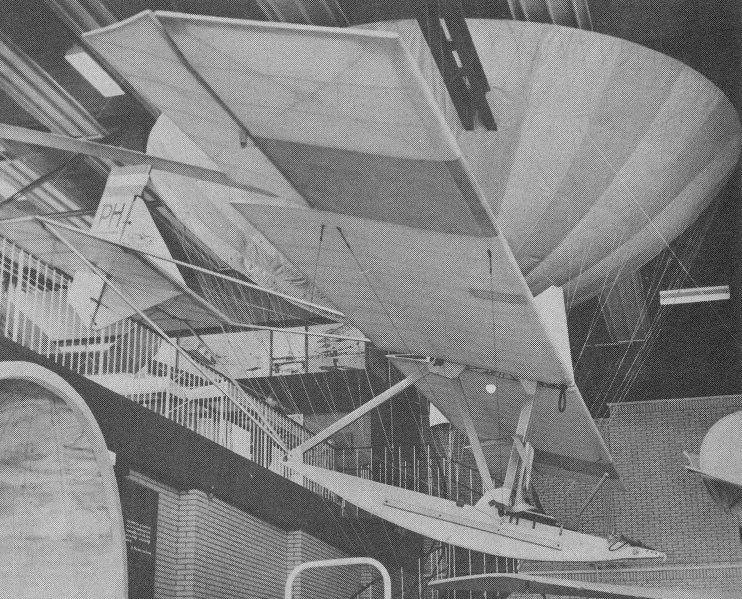
On 27 December 1929 the Dutch Gliding Club was founded. For a few guilders, Theo E. Slot, an aircraft designer at the Pander Aircraft Factory, bought the construction rights to the Zogling glider and on 21 January 1930, the construction of this machine began. By April the PH-1 was completed and flew for the first time in Holland on 6 April, piloted by J. E. van Tijen. A record flight of 43 min 25 sec was made on 4 October with van Tijen at the controls.
Pander PH-1
Zögling 1926 Length : 17.356 ft / 5.29 m Height : 6.594 ft / 2.01 m Wingspan : 32.94 ft / 10.04 m Crew : 1
Zögling 33 1933 Length : 17.356 ft / 5.29 m Height : 6.988 ft / 2.13 m Wingspan : 32.94 ft / 10.04 m Crew : 1
Zögling 35 1935 Length : 17.356 ft / 5.29 m Height : 7.612 ft / 2.32 m Wingspan : 32.94 ft / 10.04 m Crew : 1
In five years between 1891 and 1896 Otto constructed seven gliders (five monoplanes and two biplanes) and made over 2000 ever-improving flights from hill sites at Stieglitz and in the Rhinow Mountains near Stöllen. He flew distances up to 400 m (1312 ft) and reached heights of 25 m (82 ft). He dis¬covered and made use of up-currents of air for soaring flight.
His first means of launching was a spring board, but this he soon abandoned in favour of hill launching. Some of his tests were made from the Rhinower Hills, near Stollen, but he also had constructed an artificial hill near Berlin.
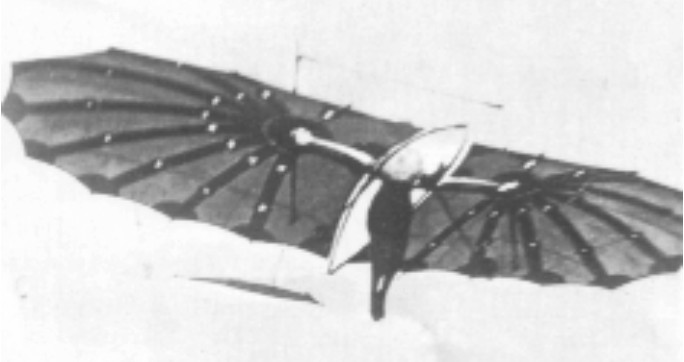
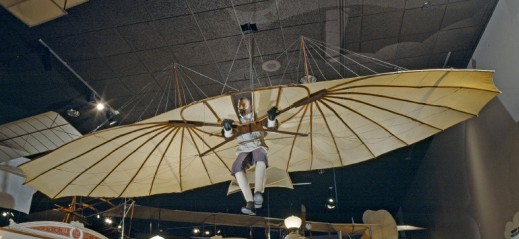
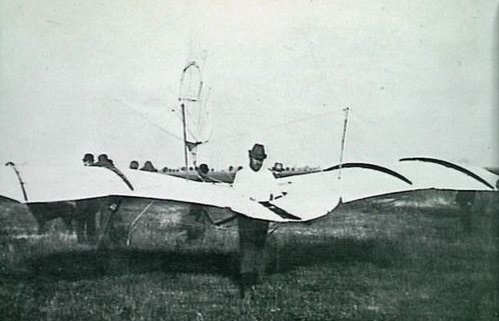
In 1891 Lilienthal completed glider no.3, a monoplane glider constructed from peeled willow wands with a covering of waxed cotton. Its wings spanned 7 m (23 ft), with Lilienthal supporting himself within its centre section on parallel bars — literally a hang-glider — and controlling his flight path by shifting his body mass and thus altering the craft’s centre of gravity.
Otto Lilienthal Segelflugzeug N°3
Lilienthal’s first tentative hops were made with the aid of a springboard launcher, but soon flew from a specially constructed 15-m (49-ft) hill on the outskirts of Berlin.
Between 1891 and 1896 Lilienthal constructed five types of monoplane glider and two biplane types (1891 and 1892).
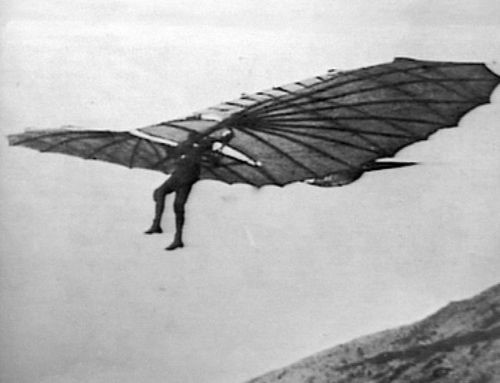
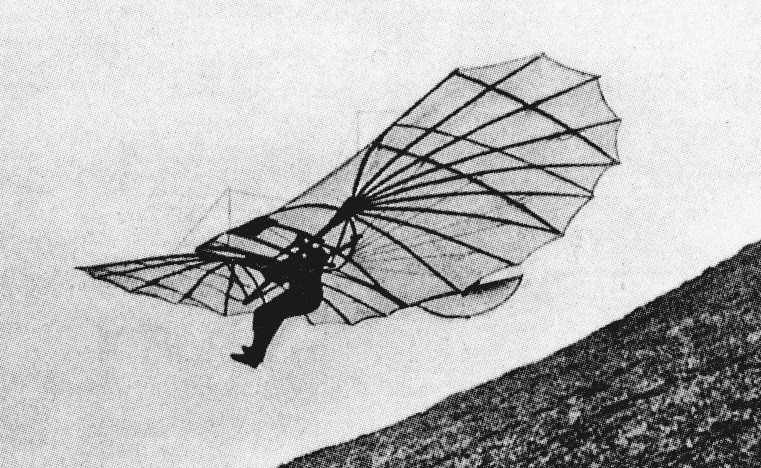
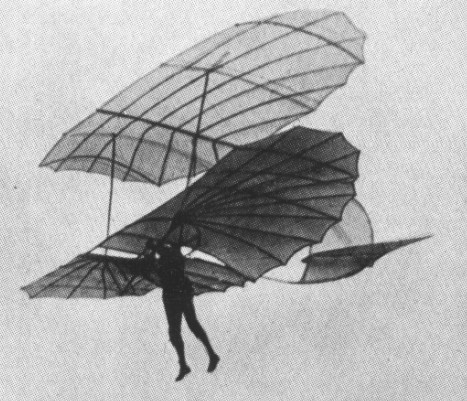
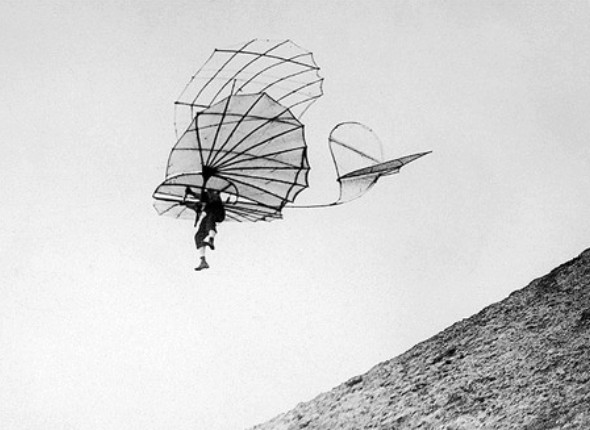
Lilienthal supported himself in his gliders by his arms, so that after a running take off his hips and legs dangled below the aircraft, allowing him to swing his body in any desired direction to achieve stability and control. After 1893 he was achieving glides of 300-750 ft (90-230 m), with remarkable ease of control.
Otto Lilienthal Segelflugzeug N°11 (1894)
The 1894 monoplane hang glider was a single surface fabric covering over exposed framework. Wings fold for storage. Natural fabric finish; no sealant or paint of any kind.
1894 Glider
In 1895 he was developing a type of body harness to work a rear elevator. The purpose of this was to give better control in rising or descending by increasing the effect of the occupant swinging his body forwards or backwards and thus altering the centre of gravity. Lilienthal also tested a glider which had flapping wing tips, driven by a small carbonic acid gas engine. This system could never have equalled in efficiency the new petrol engines and propellers which were soon to come into being; but the great German inventor/ pilot was never to become aware of this, for he crashed in one of his gliders in the Rhinower Hills on 9 August 1896, and died in a Berlin clinic on the following day. His last words were ‘Opfer mussen gebracht werden’ (‘Sacrifices must be made’).
In 1895 produced his thirteenth design, a biplane. On the evening of 9 August 1896, Otto was at Stöllen testing a new kind of head-movement control arrangement when a sudden gust upturned his No. 11 monoplane glider and he crashed heavily from 15 m (49 ft) breaking his spine. He died the next day.
Otto Lilienthal (1848 1896) made approximately 2,500 successful glides in 1893 96, mostly in monoplane ‘hang gliders’ types, in which he flew distances of up to 985 ft (300 m).
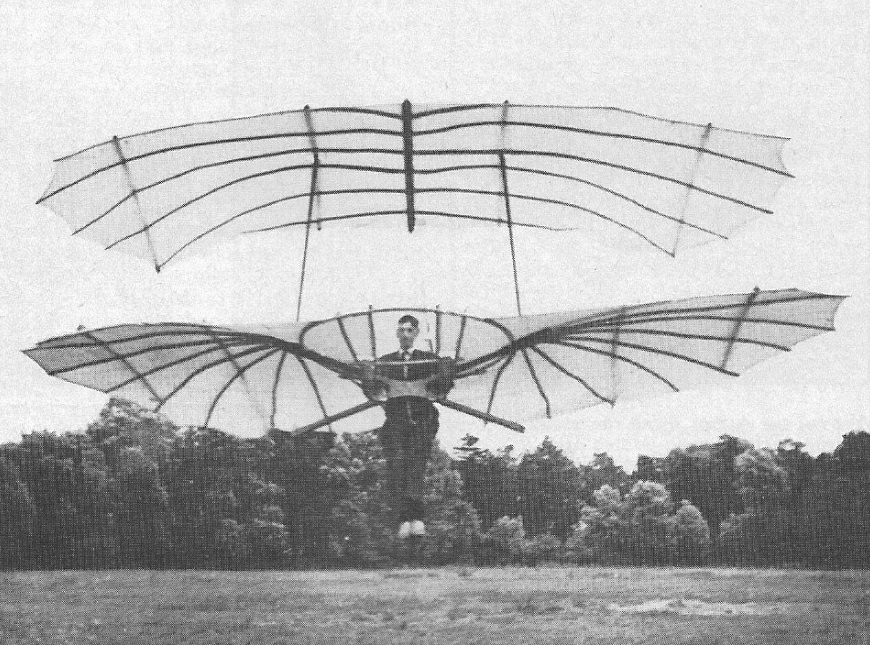
In 1937 Dart Aircraft built for Alexanda Korda’s film production, Conquest of the Air, two Lilienthal biplane glider replicas. They ‘flew’ suspended by piano wire. In the end the film was never completed.
1893 monoplane glider Wing span: 22 ft 11.5 in (7.00 m) Wing area: 150.7 sq ft (14.0 sq.m) Wing chord (max): 8 ft 21 in (2.50 m) Length: 16 ft 4.75 in (5.00 m) Weight without pilot: 44 lb (20 kg) Accommodation: Crew of 1.
1894 Glider Wingspan: 7.9 m (26 ft) Length: 4.2 m (13 ft 9 in) Height: 1.5 m (5 ft) Weight: 20 kg (44 lb) Materials: Airframe: Wood Fabric Covering: Cotton-twill
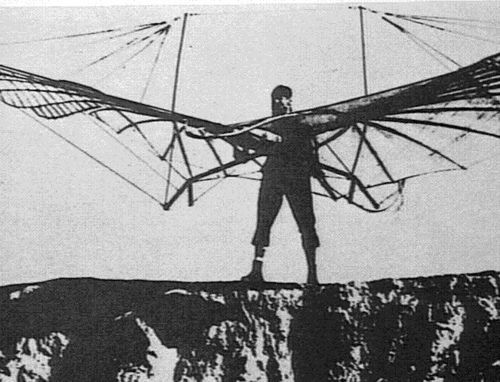
The most significant pre-Wright brothers aeronautical experimenter was the German glider pioneer Otto Lilienthal. In Germany, Otto Lilienthal make an intensive study of bird anatomy and flying characteristics, inspired by the storks which he and his brother Gustav watched wheel¬ing over the rooftops of Potsdam, their home town. He sought to discover precisely how birds flew, altering the dihedral angle of their wings for lateral stability, and varying the camber of the surfaces for lift or drag. Lilienthal was quick to appreciate the importance of curved wing surfaces. In 1889 he published the results of his findings in his book Der Vogelflug als Grundlage der Fliegekunst (Bird Flight as the Basis of the Flying Art), and set about testing his theories.
Between 1891 and 1896, he built and flew a series of highly successful full-size gliders. During this period, Lilienthal made close to 2,000 brief flights in 16 different designs based on aerodynamic research he conducted in the 1870s and 1880s. Most were monoplanes with stabilizing tail surfaces mounted at the rear. Control was achieved by shifting body weight fore-and-aft and from side-to-side.
Lilienthal began testing gliders in his backyard on a one metre platform and made hundreds of flights there before moving to a small hill, two and a half metres high.
By 1893 his gliders had cambred wings with radiated tip, fixed rear fin and tailplane, and could be folded to fit through an ordinary door.
On the evening of 9 August 1896, Otto was at Stöllen in the Rhinower Hills testing a new kind of head-movement control arrangement when a sudden gust upturned his No. 11 monoplane glider and he crashed heavily from 15 m (49 ft) breaking his spine. He died in a Berlin clinic the next day. His last words were ‘Opfer mussen gebracht werden’ (‘Sacrifices must be made’).
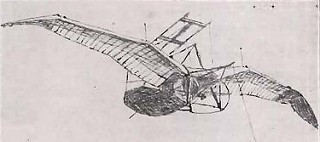
Gustav Lilienthal (1849-1933) was the younger brother of glider pioneer Otto Lilienthal. He spent the last 20 years of his life developing ornithopters, based on his studies of bird flight. The 1914 “Big Bird” spanned 17.5 metres and was tested at the research station of Altwarp, on the Stettiner Haff, but never left the ground. Lilienthal continued working at the Berlin Tempelhof and Adlershof airfields until his death.
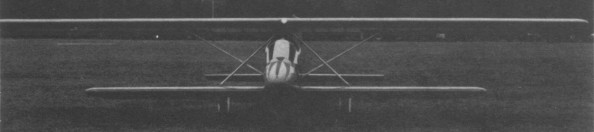
Single seat single engined biplane with con¬ventional three axis control. Wings have un¬swept leading and trailing edges, and constant chord; conventional tail. Pitch control by fully flying tail; yaw control by fin mounted rud¬der; roll control by two thirds span ailerons; control inputs through stick for pitch/roll and pedals for yaw. Wings braced by transverse struts; wing profile 100 % double surface. Undercarriage has two wheels with tailskid and nose-skid; no suspension on either wheel. No ground steering. No brakes. Wood/glass¬fibre fuselage, totally enclosed. Engine mounted between wings driving pusher prop¬eller. Instead of alumi¬nium tube, Dacron and lots of rigging wires, he prefers simple traditional wooden construction, though as a concession to moderni¬ty the Rooster 1 does have a glass fibre nose. The Rooster 1 was conceived in 1977 as a sailplane. As a sailplane it thermalled at 600 ft (185 m), was aero towed three times and made some 300 circuits. It also proved stronger than expected, landing without dam¬age across the furrows of a ploughed field. Right from the start, however, John in¬tended to power the machine, simply because he wanted to go soaring without hordes of assistants. So once he was satisfied with the aircraft’s dynamic qualities, he fitted a Chrys¬ler engine. In 1982 he was replacing this with a Valmet unit. The undercarriage design uses only two wheels but has a skid at either end. The wheel track is large enough that the aircraft does not tip up when the pilot enters, yet narrow enough to permit ground man¬oeuvring using only the rudder. There are no wheel brakes; instead the pilot simply pushes forward the stick and lets the friction gener¬ated by the nose skid slow the aircraft. There are no plans for manufacture, but depending on demand, John may produce plans for the aircraft.
Engine: Valmet, 10 hp at 6000 rpm. Propeller diameter and pitch 52x27inch, 1.32×0.69m. V belt reduction, ratio 4.0/1. Power per unit area 0.07hp/sq.ft, 0.8 hp/sq.m. Fuel capacity 6.6 US gal, 5.5 Imp gal, 25.0 litre. Empty weight 320 lb, 145kg. Max take off weight 570 lb, 259kg. Payload 250 lb, 113kg. Max wing loading: 3.99 lb/sq.ft, 19.5 kg/sq.m. Max power loading 57.0 lb/hp, 25.9kg/hp. Load factors +6.0, 4.0 design. Length overall 17.9 ft, 5.45 m. Height overall 4.9ft, 1.50m. Wing span 30.2ft, 9.20m. Constant chord 3.0ft, 0.91m (top wing). Dihedral 0 deg Sweepback 0 deg Tailplane span 10.5 ft, 3.20 m. Fin height 5.2 ft, 1.58 m. Total wing area 143 sq.ft, 13.3 sq.m. Total aileron area 13.2 sq.ft, 1.23 sq.m. Fin area 4.6 sq.ft, 0.43 sq.m. Rudder area 6.2 sq.ft, 0.58 sq.m. Total elevator area 16.8 sq.ft, 1.56 sq.m. Wing aspect ratio 10/1 (top wing). Wheel track 6.2 ft, 1.88 m. Main wheels diameter overall 11 inch, 28 cm. Max level speed 65 mph, 105 kph. Never exceed speed 75 mph, 121 kph. Max cruising speed 60 mph, 97 kph. Economic cruising speed 40 mph, 64 kph. Stalling speed 30 mph, 48 kph. Best glide ratio with power off 14/1 at 33 mph, 53 kph. Range at average cruising speed 300 mile, 483 km.
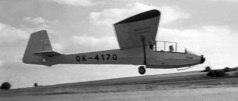
Formerly known as the KB-17, this Yugoslav two seater high performance trainer was designed and built by the Letalski Institut Branko Ivanus, Slovenija – LIBIS at Ljubljana.
Of largely wooden construction, with a fabric covered welded steel tube fuselage, the LIBIS-17 has a cantilever single-spar high-set wooden wing, with a plywood covered leading edge torsion box supported by Styrofoam, the remainder of the wing being fabric covered. The fabric covered wooden Frise ailerons are also filled with Styrofoam, and there are Hiittertype wooden plate spoilers in the wing upper surfaces immediately aft of the spar. The angular tail unit is also a wooden structure filled with Styrofoam, and is made up of an all-moving one-piece fin and tailplane, each with a servo tab. The landing gear consists of a non-retractable unsprung Borovo main wheel and nose sheel in tandem, with a LIBIS mechanical brake. The two pilots are seated in tandem under a forward-hinged one-piece blown canopy; a ventilation system is provided and blind flying instrumentation, radio and oxygen equipment can be fitted if required.
It is cleared for looping, spinning and cloud flying as well as normal flight; it is also suitable for flying solo up to the Silver and Gold C standards.
The prototype LIBIS-17 first flew on October 1961, and the first production aircraft flew in June 1963; by 1972 there were 23 examples of the type on the Yugoslav civil register.
Span: 55 ft 9 in Length: 25 ft 1 in Height: 8 ft 11.5 in Wing area: 237.9 sqft Aspect ratio: 13.0 Empty weight: 739 lb Max weight: 1,135 lb Max speed: 138 mph (in smooth air) Max aero-tow speed: 87 mph Min sinking speed: 2.82 ft/sec at 47 mph Best glide ratio: 27:1 at 58 mph
Designed and patented by Louis-Charles Letur (French brevet dated July 1852); the first pilot-controlled, heavier-than-air machine to be flight-tested in France and Britain. The fateful last flight by Letur at London’s Cremorne Garden on June 27, 1854 resulted in a fatal accident. The story is told in the references differently, nevertheless, the machine was suspended below the balloon of William Adam which was intended to get the “parachute-dirigeable” to the required height, but was almost immediately seized by heavy winds. The balloon did not get much height and bounced the machine over the obstacle-littered ground with Letur fastened by ropes to his seat. Fatally wounded, he lived only a few hours after the balloon and machine came back to earth to a complete stop.
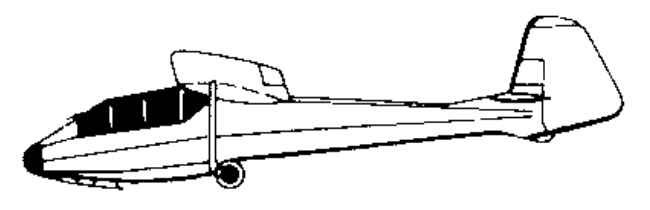
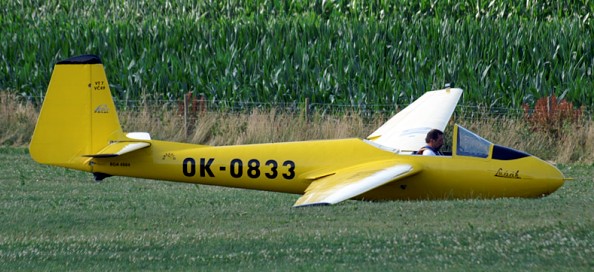
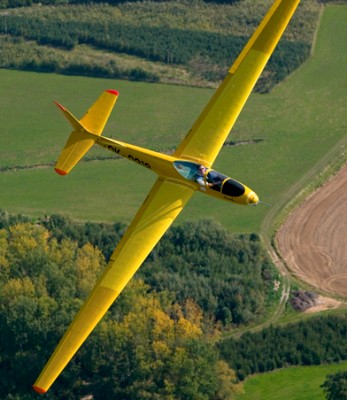
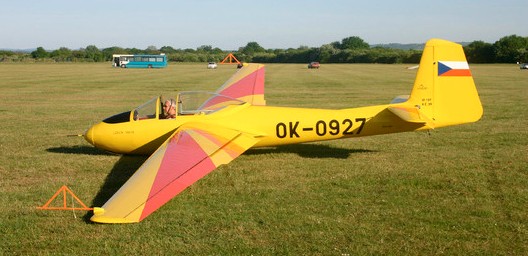
The Czech aerobatic glider LF-107 Lunak was designed by Rudy Letov and further developed by a group of sailplane pilots and aeronautical engineers. The first flight of the prototype took place on June 25, 1948 and a second prototype flew in July. The prototype participated later in the same year in an aerobatic competition in Grenchen, Switzerland, and in Ziar, Poland in 1949, where its good aerobatic and gliding characteristics drew considerable attention.
Designer Ing. K.Dlouhý & Letov LF-107 Luňák
Unfortunately the serial production was disrupted by geopolitical developments, as the factory was charged with production of MiG-15, MiG-19 and MiG-21F aircraft and the access to Western civil export markets was progressively hampered by the emergence of the Iron Curtain. Therefore, only 75 examples of the Luňák were produced in all. Production models were used in local clubs for sailing and aerobatics as well as for training jet pilots.
In 1950, a variant with simpler construction and a revised cockpit, among other changes, was developed. This LF-107 Luňák of wooden construction, designated Letov VT-7 under the military training system, was instrumental in the development of gliding and aerobatics in the Czech Republic. The LF-107 was also used for aerobatic training in the Soviet Union, Bulgaria, Romania and Poland.
The Letov XLF-207 Laminar, a derivative of the Luňák, holds the distinction of being the first glider in the world to have a laminar flow wing. Its maiden flight took place in Praha Letnany in August 1951. Research into laminar flow wings was carried out by the XLF-207 Laminar, a LF-107 fitted with laminar flow wings.
In 1990 there were only nine airworthy Luňák, of which two are in the United Kingdom. A Luňák is displayed in the American Museum of Flight.
LF-107 Luňák Length: 6.78 m Height: 1.47m / 5ft Wingspan: 14.27 m Wing area: 13.38 sq.m Aspect ratio: 15.22 Empty weight: 205 kg Gross weight: 310 kg Maximum speed: 300 km/h Maximum glide ratio: 24 @ 80km/hr (43kts) Rate of sink: @ 65km/hr 0.85 m/s (@ 35kts 167 ft/min) Crew: 1

 All Aero