1982: Marske Aircraft Corporation, 130 Crestwood Drive, Michigan City, Indiana 46360, USA.
1996-7: 975 Loire Valley Dr, Marion, OH 43302, USA.
Builder of hang gliders, gliders and motor gliders
Glider
Marsden Gemini
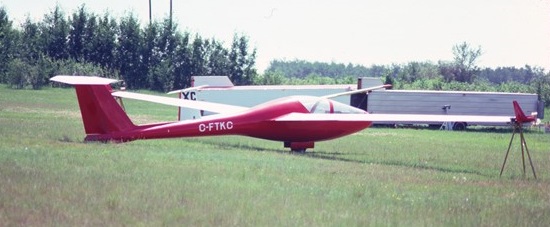
(courtesy Bruce Friesen)
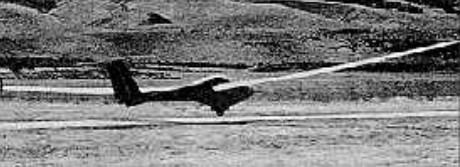
Designed by David Marsden and built by Marsden, E. Dumas and M.D. Jones, the side-by-side two-place Gemini, which flew in 1973, has a genuine variable geometry planform. Marsden, who successfully modified the British Operation Sigma Type C variable geometry glider, used a number of the Sigma features in his design. It has full span 35 % chord Fowler flaps which are extended when climbing and retracted when cruising. When extended, a high maximum coefficient of lift of 2.2 is achieved, giving a good climb performance. The flaps also deflects to 80 degree for approach control. It has slotted ailerons for improved roll control.
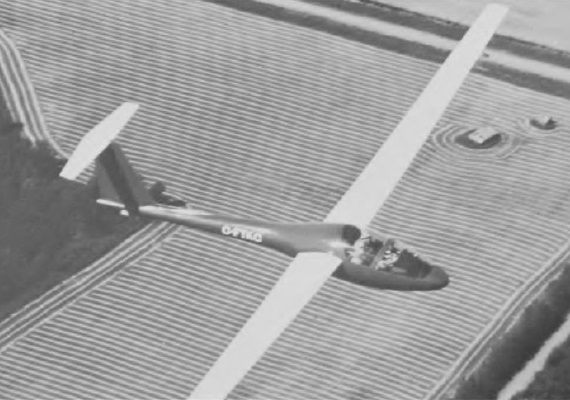
First flying in October 1973, during the 1970’s the Gemini set seven Canadian multi-place records, including the 500 km speed triangle.
The Gemini is all metal except for GFRP forward fuselage; stainless steel ribs, fittings and control system.
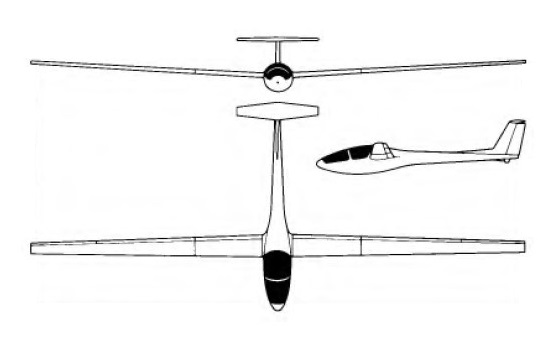
Wing span: 18.5 m / 60.75 ft
Wing area: 11.52 sq.m / 124 sq.ft
Length: 7.77 m / 25 ft 6 in
Height: 1.52 m / 5 ft 0 in
Empty Weight: 356 kg / 785 lb
Payload: 220 kg / 455 lb
Gross Weight: 576 kg / 1240 lb
Wing Load: 50 kg/sq.m / 10 lb/sq.ft
Water Ballast: 0
Stalling speed: 35 kt / 65 km/h
L/D Max: 40 at 119 kph / 64 kt / 74 mph
Best glide ratio: 38 at 60 kt / 110 km/h
Min Sink: 0.63 m/s / 2.08 fps / 1.23 kt
Min sinking: 0.75 m/sec / 2.46 ft/sec at 43 kt / 80 km/h
Aspect ratio: 29.8
Airfoil: Wortmann FX-61-163/35SF mod.
Seats: 2
No. Built: 1
Marsden, David
The senior Marsden taught aeronautical engineering at the University of Alberta, Edmonton, Canada, retiring in 1994.
Aeronautical Engineering Research Inc, 3920 Aspen Drive West, Edmonton, Alberta, Canada T6J 2B3.
Markwalder Elfe PM-3
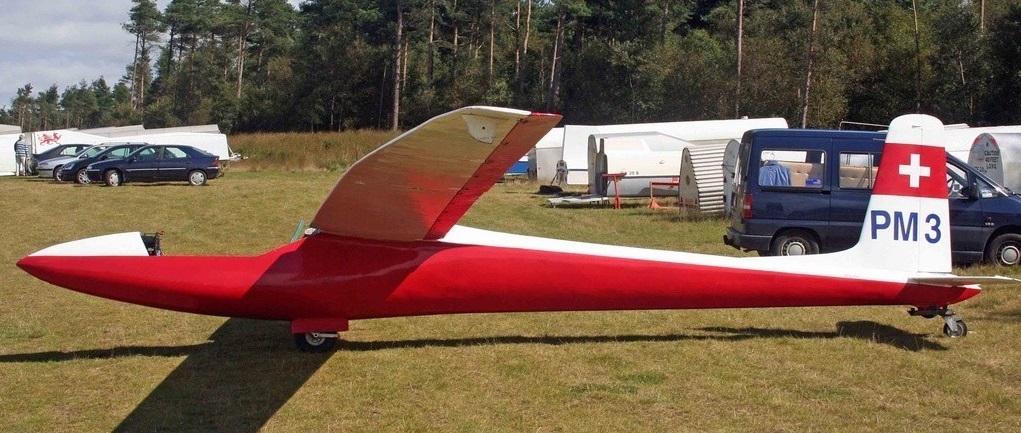
The Elfe series started from a 9 m sailplane designed by W.Pfenninger before World War II. A new design was introduced by him in 1947 to become the Elfe 2, probably the first sailplane with a laminar flow airfoil. Subsequently the series was further developed by Markwalder in 1951 to become the Elfe PM-3 (brought to the US in the sixties).
Markwalder had completed the drawings after Ruedi Sägesser had problems with the construction. Pfenninger came up with the idea of the construction.
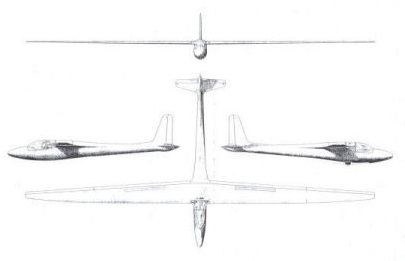
Markwalder, Albert
Subbegüetli
CH-8352
Räterschen
Switzerland
Glider and aircraft builder
Marinavia Farina Srl
Italy
Marinavia Farina Srl was founded in 1946 by industrial designer Domenico Farina with headquarters in Milan. Designed and built several gliders and sailplanes, and prototype QR.14 Levriero four seat touring aircraft, powered by two de Havilland Gipsy Major 10 engines, first flown 1947, in which year it won Coppa dell’Aria at Milan.
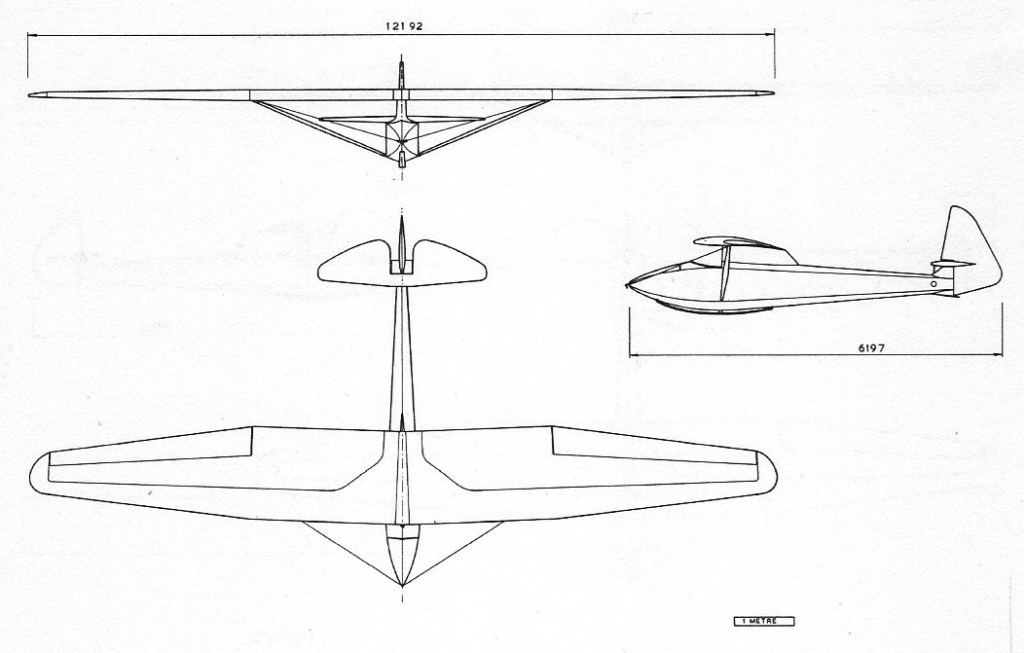
Manuel Willow Wren
Built by W.L. Manuel, the Willow Wren was a development of the Crested Wren.
A single seat sailplane, the cockpit was deeper, placing the pilot within the fuselage, and the elevators and rear fuselage were revised so enclosing the elevator controls within the fuselage.
The brace wing had no airbrakes or flaps.
The prototype. “Yellow Wren”, first flew in December 1932 from Hawkinge. It became BGA.162.
Manual built a second, “Blue Wren”, BGA.201, which was sold in South Africa as ZS-GAW in 1937. It was written off in April 1949.
Several others were built from plans.
Wingspan: 12.2m / 40ft 0in
Length: 6.2m / 20ft 4 in
Wing area: 13.94 sq.m / 150 sq.ft
Aspect ratio: 12
Wing section: Gottingen 549
Empty weight: 95.26 kg / 210 lb
Wing loading: 11.22 kg/sq.m / 2.3 lb/sq.ftt
Manuel Crested Wren
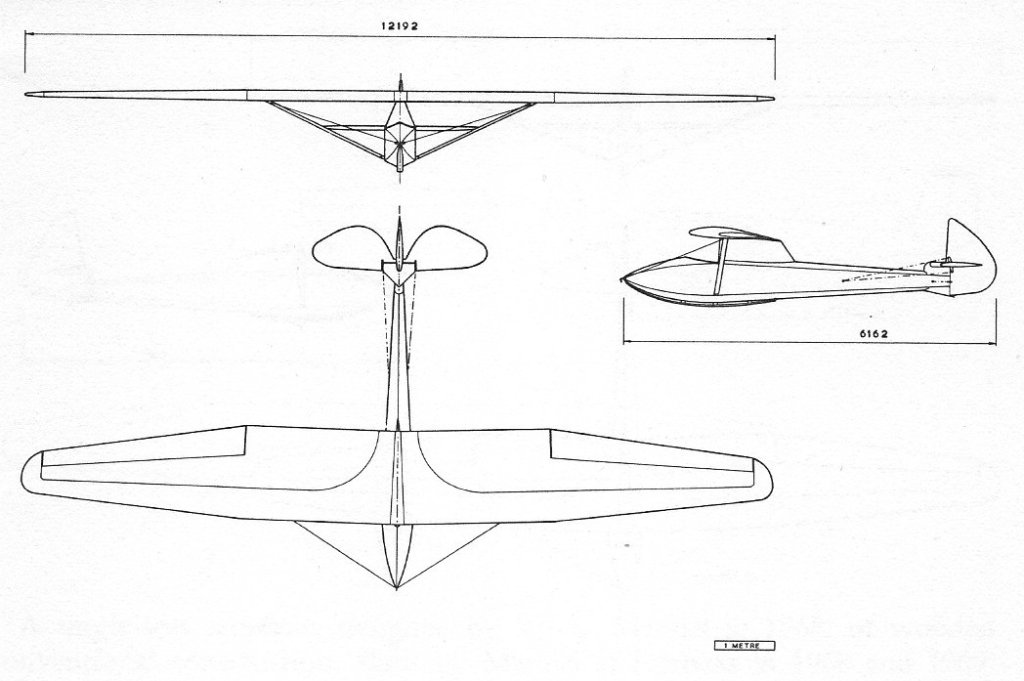
The single-seat Crested Wren was designed and built by W.L. Manuel in 1931. Of conventional wooden construction, it was designed for slope soaring. Strut braced wing, no flaps of air brakes. The undercarriage was a main skid plus tail skid.
It was first flown at Hawking, UK, in July 1931. BGA.178 “Red Wren”.
W.L. Manuel made his first soaring flights in the Crested Wren in November 1931, flying from hills overlooking Folkestone.
The Crested Wren was eventually bought by E. Thomas in 1938.
Wingspan: 12.2 m / 40 ft 0 in
Length: 6.16 m / 20 ft 3 in
Wing area: 13.94 sq.m / 150 sq.ft
Aspect ration: 12
Wing section: Gottingen 549
Empty weight: 86.18 kg / 190 lb
Flying speed: 48 kph / 30 mph
Manuel 1929 Biplane
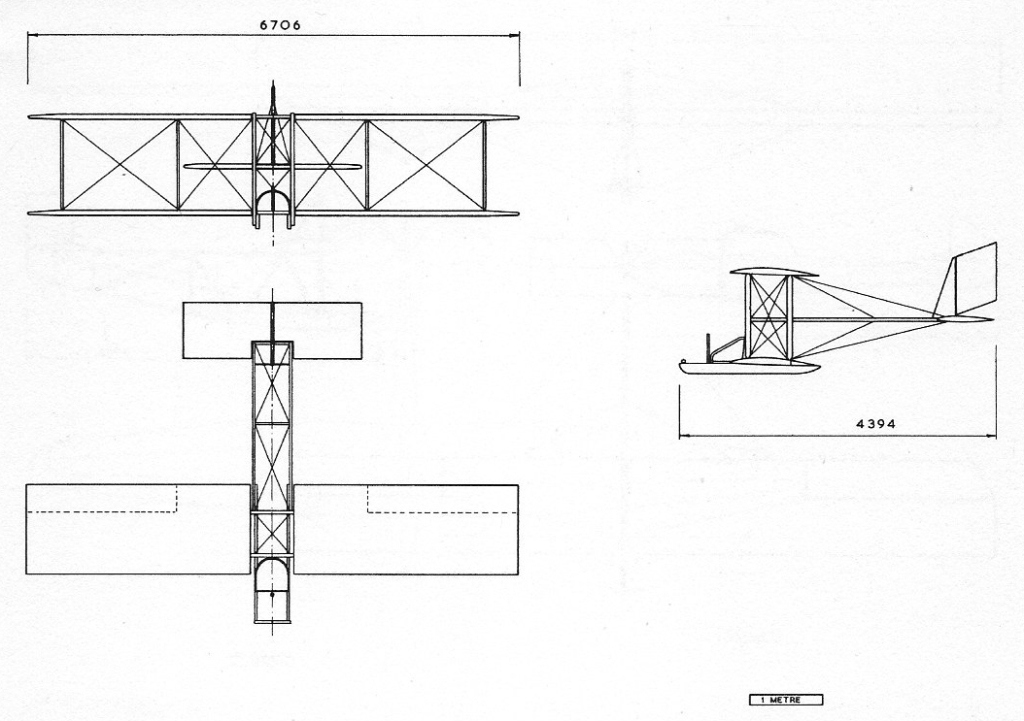
A single-seat Biplane glider was designed and built by W.L. Manuel in 1929. It was of conventional wooden construction.
It was first flown at Hawking, UK, on 18 May 1929. After the first flight, Manuel carried out many flights tethered as a kite. For these flights a twenty foot long tow rope was attached to the tail skid of a Gloster Grebe fighter. The engine of the Grebe was run at full throttle and the glider was flown for about four minutes in the slipstream before the engine of the aircraft overheated. During one of these ‘flights’ a different pilot lost control and it was written off.
Wingspan: 6.70 m / 22 ft 0 in
Length: 4.39 m / 14 ft 5 in
Wing area: 14.86 sq.m / 160 sq.ft
Aspect ratio: 5.5
Manuel VI Primary
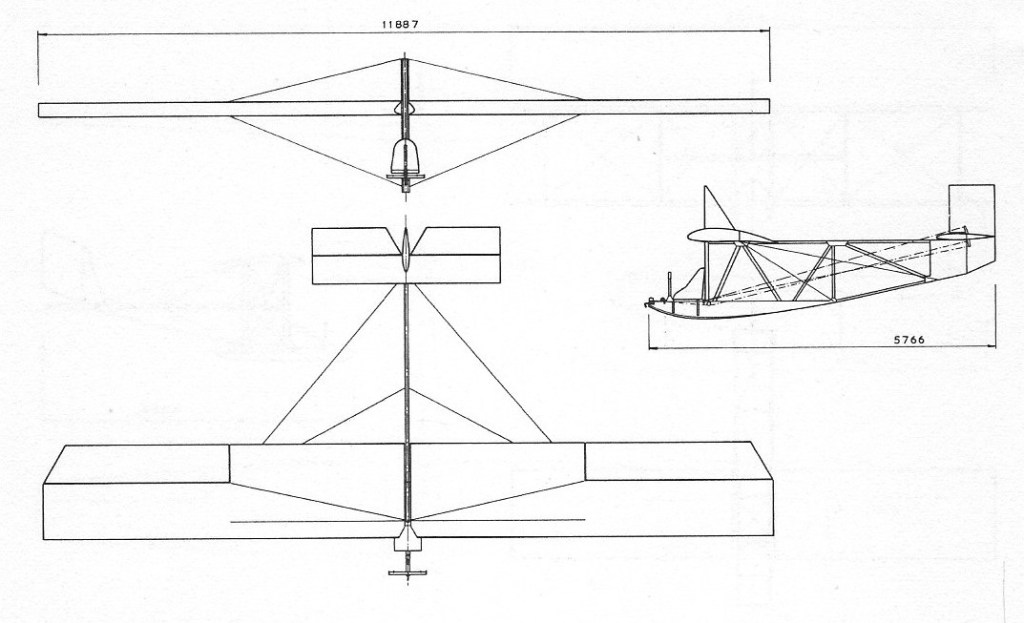
The Manuel VI Primary was a wire-braced monoplane primary glider designed and built by W L. (Bill) Manuel whilst serving in the RAF in 1930.
The Manuel Primary was a wooden aircraft built around an open, vertical, tapered girder with a horizontal upper member and a lower one shaped at the front into a shallow keel. The girder was strengthened with a series of vertical and diagonal cross-pieces. The keel projected forward of the foremost vertical member and carried the pilot’s seat on its upper edge. The thick-profile wing was attached to the upper part of the girder and was straight edged with constant chord apart from the angled tips of the ailerons. Extensions of two of the forward girder cross-pieces formed a triangular structure over the wing which acted as a king post for a pair of landing wires. Flying wires from the keel and the upper member about half way to the rear of the girder carried the lifting loads on the wing. There were also bracing wires from wing to the rear of the aircraft to restrain horizontal bending of the girder. The rectangular tailplane was likewise fixed to the top of the girder and carried elevators with a cut-out in which the all-moving rectangular rudder, which extended to the lower girder, could operate.
The glider flew for the first time on 30 August 1930 at RAF Hawkinge in Kent, where Corporal Manuel was based. He made many more flights in it and other Channel Gliding Club pilots also flew it. It was finally destroyed in a road accident in the way to a meeting near Brighton in October 1930.
It flew successfully but only one was built.
Wingspan: 39 ft 0 in (11.89 m)
Wing area: 192.5 sq ft (17.88 m2)
Aspect ratio: 7.8
Length: 18 ft 11 in (5.77 m)
Crew: 1
 All Aero