First flown in 1968, the FM-1 featured seating and a steel tube and fiberglass front fuselage with steel tubing, plywood aft fuselage and wings. Designed by Frank Melsheimer.
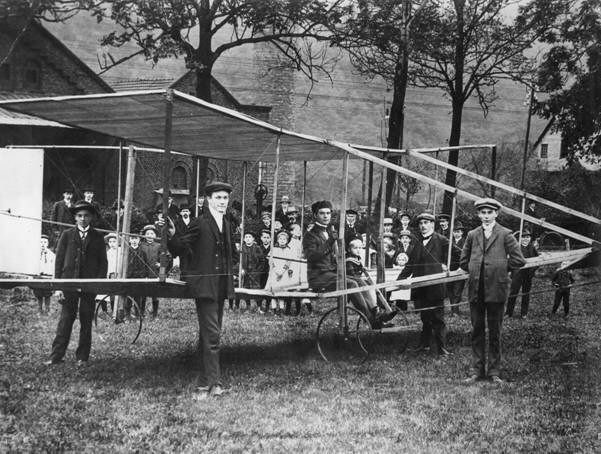
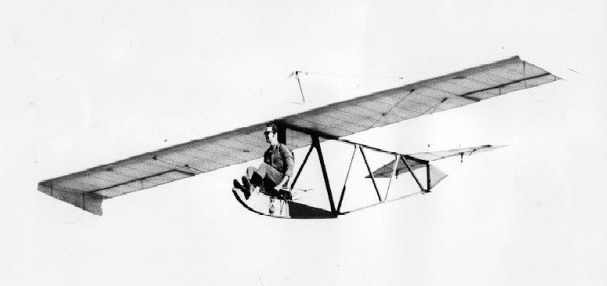
The “Rhon Ranger” is a type of primary glider (or Zogling variant), designed in Europe, for which plans were published in America in the 1930s. In America it is called the “Mead” primary glider after the Chicago firm that marketed Rhon Ranger kits and plans there.
The glider consists of a simple open wooden frame fuselage with doped fabric covered section at rear, fabric covered wooden framed wing of constant cord, fabric covered wooden framed tailplane, elevators and rudder.
The airframe, when assembled, is braced with tubular metal struts. In addition the wing root joint between the wings is covered by plywood panel fairings.
A Rhon Ranger was built by Mr Renaut of South Shiels, UK, in 1932, as the Renaut Primary. It was first flown at Simonside in July 1932.
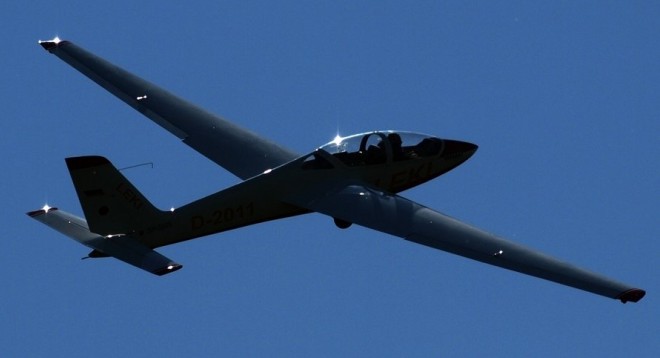
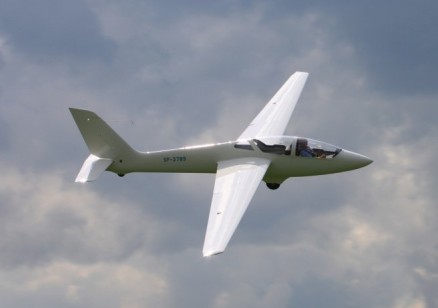
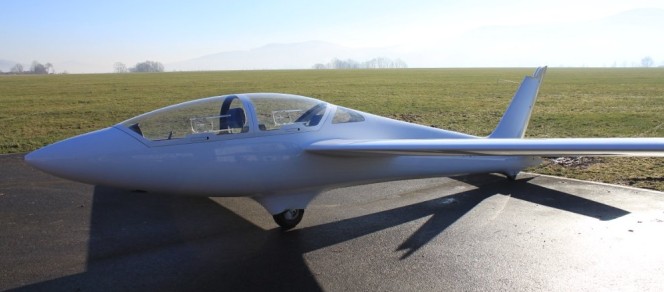
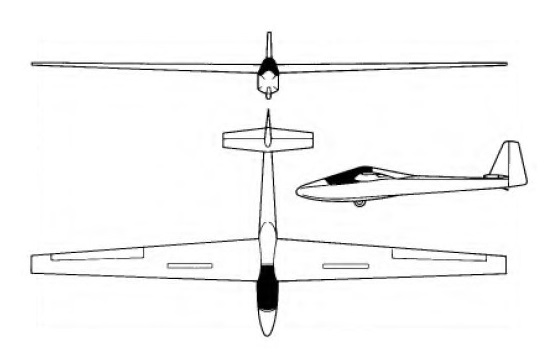
The two-seater MDM-1 FOX glider has been developed on base of design experience acquired during work with KOBUZ, JANTAR and SWIFT S-1 gliders by the team of Edward Marganski M.Sc. (Eng.). Designed by E.Marganski, K. Kapinos, H. Gielbaza, and B Adamski, work started in November 1992 and the first prototype was flown on 9th July 1993.
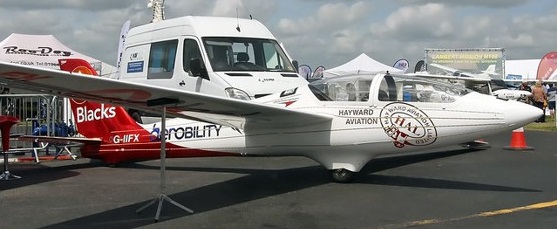
Marganski MDM-1 Fox G-IIFX
Capable of arotowing and winch-launching, the Fox is optimized for aerobatic training with erect and inverted clearance to +9/- 6 g solo, and +7/-5 g with two people. The landing gear is fixed, and approach control is assisted by Schempp-Hirth airbrakes.
Almost immediately after the 1-st presentation at World Glider Aerobatic Championships, Venlo Netherlands 1993 the Fox model has gained a status of monotype at every serious international championships in glider aerobatic.
Certification is EASA TYPE CERTIFICATE No A.039.
The MDM-1 Fox P is a version with redesigned exchangeable wing tips. Depending on the mounted wing tip, the glider can be used in one of two versions:
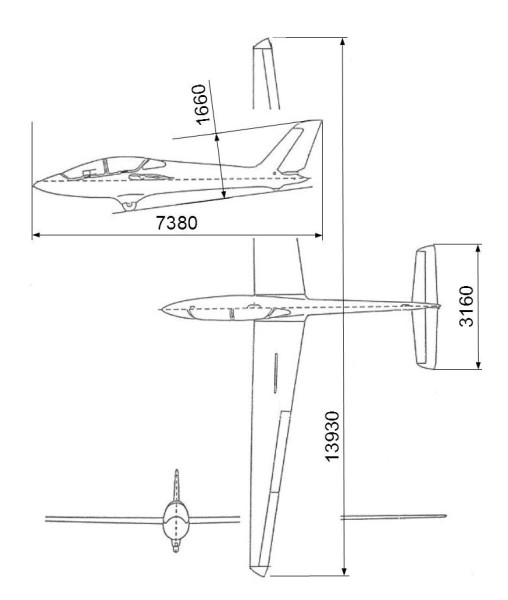
Aerobatic – without wing-tips, wing span of 14,00 m.
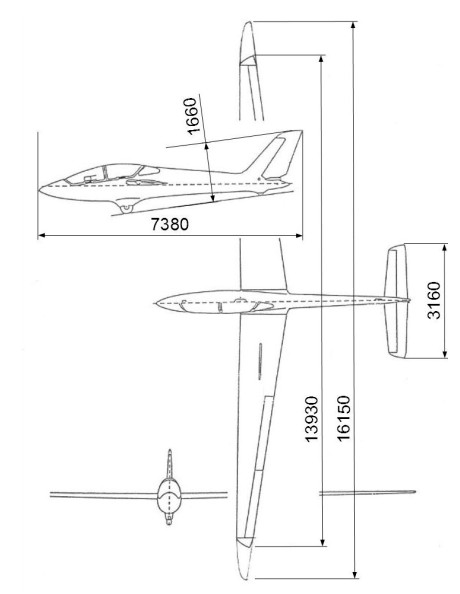
Utility – with wing-tips extending wing span to 16,15 m. Glider in this version can perform only basic aerobatic manoeuvres. Wing-tips with elliptical sweep and dihedral lift based on an arc.
The base price in 2011: 91 850 € TTC EXW (76 800 € HT EXW) As at November 2013 the prices were: MDM-1 Fox glider in basic version: 75 000,00 € MDM-1P Fox glider in aerobatic / utility version: 76 500,00 €
MDM-1 Fox Wing span: 14 m / 45.9 ft Wing area: 12.34 sq.m / 132.8 sq.ft Length: 7,38 m Height: 2,25 m Empty Weight: 345kg / 761lb Payload: 180kg / 396 lb Aspect ratio: 15.88 Gross Weight: 525 kg / 1157 lb Wing Load: 42.54 kg/sq.m / 8.71 lb/sq.ft MinSink: 0.8 m/s / 2.62 fps / 1.55 kt Vne (max never exceeded speed): 285 km/h / 152kts Airfoil: NACA 64(1)412 Structure: GFRP/CFRP Max G-Force: +9 / -6 G Seats: 2
MDM-1 Fox P Aerobatic Wing span: 14,00 m / 45,9 ft Length: 7,38 m / 24,2 ft Height: 2,25 m / 7,4 ft Wings area: 12,34 sq.m / 132,8 sqft Vne(max never exceeded speed): 282 km/h / 152kts Max take-off weight: 530 kg / 1168,0 lb Max empty weight: 350 kg / 772,0 lb Max G-Force (1 person crew): +9 / -6 G Max G-Force (2 person crew): +7 / -5 G
MDM-1 Fox P Utility Wing span: 16,15 m / 53,0 ft Length: 7,38 m / 24,2 ft Height: 2,25 m / 7,4 ft Wings area: 13,09 sq.m / 141,0 sqft Vne(max never exceeded speed): 282 km/h / 152kts Max take-off weight: 535 kg / 1179,0 lb Max empty weight: 355,0 kg / 783,0 lb Max G-Force (1 person crew): +5,3 / -2,65 G Max G-Force (2 person crew): +5,3 / -2,65 G
Margański & Mysłowski ZAKŁADY LOTNICZE dates back to 1986, when Edward Margański, an engineer, established “Aircraft Repair and Equipment Production Plant”. Initially, the company dealt with the inspection and repair of wooden gliders.
In 1990 company’s activity has been extended to glider constructions designing. Within 26 months SWIFT glider has been designed, flight tests have been performed and Type Certificate was obtained.
The successes of the SWIFT led to an order from MDM Ltd. to design an aerobatic two-seater glider. The company has developed MDM-1 Fox glider, which has gained many world’s and European aerobatics championships awards. On 27th July 1994, a Type Certificate was issued.
In 1999, on the basis of previous experience and preliminary preparations carried out in advance, the company began work on a prototype of the Iskra II jet training aircraft, with an engine thrust of 1,300 – 1,500 kg. The airplane was renamed the ‘Bielik’ and underwent test flights in 2003.
In 2001, work commenced on the development of a new aircraft structure; an executive aircraft, the EM-11 Orka, test flights for which took place in 2003. ORKA is a four seater twin-engine aircraft with retractable landing gear, high-wing configuration with push-type propellers and comfortable passenger cabin. On 8th April 2011 EM-11C Orka has achieved EASA Type Certificate.
Concurrent with aircraft production, the company has participated in a number of projects in other areas. – production tools and the first specimens of a 44 m diameter rotor blade made of glass-fibre-reinforced composite for a wind power plant generating 1000 kW of energy. In 2002, an order from ENECO for a prototype rotor for a wind power plant with a 1.2 MW output was built. In cooperation with ROTHENSEER ROTORBLATTFERTIGUNG GmbH, the company has made supporting elements for the construction of wind power plant rotor blades.
In 2010 production of MDM-1 Fox glider series was started again.
Since October 2011 the company has been transformed from limited company to joint-stock company and has been renamed to Zakłady Lotnicze Margański&Mysłowski S.A.
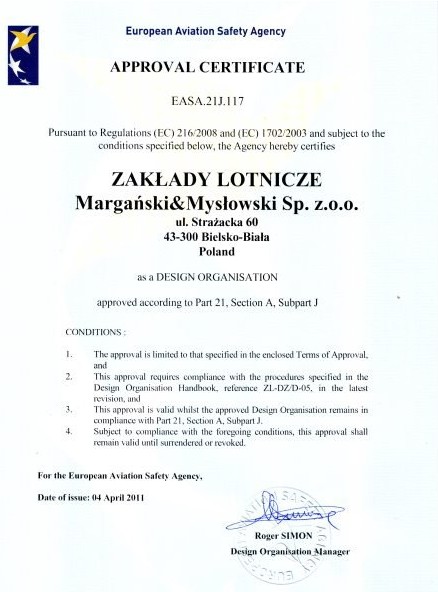
Certificates: Production Organization Approval (POA) no PL.21G.0012 Design Organization Approval (DOA) no EASA.21J.117
Formed 14 May 1969 as merger of Messerschmitt-Bölkow GmbH and Hamburger Flugzeugbau GmbH, headquarters at Ottobrun, Munich. Inherited its forebears’ production programs, including Bolkow’s 208C Junior, 209 Monsun and 223 Flamingo light aircraft and Bo.105 helicopter, also HFB’s Hansa executive jet.
Siebel ATG (SIAT) joined MBB in 1973.
Produced Bo.105 and Tornado, latter by virtue of its 42.5% holding in Panavia, and participated in Airbus, Transall, and Fokker F-28 programs; took over VFW January 1981. Became part of Deutsche Aerospace AG in 1989.
By 1995, Aerospatiale and MBB had merged to form Eurocopter.
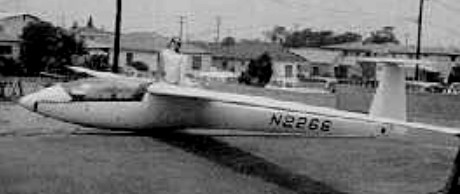
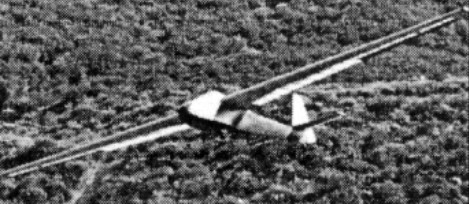
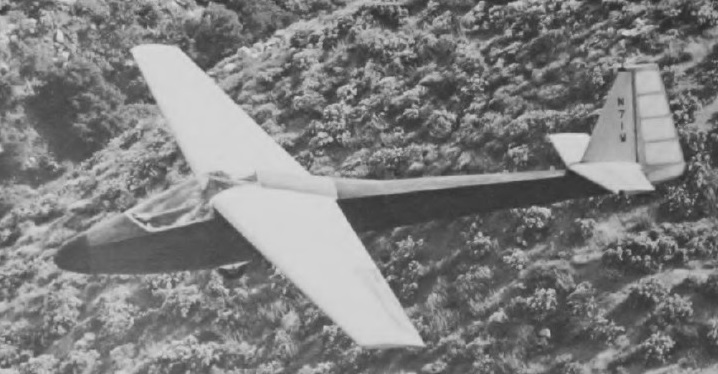
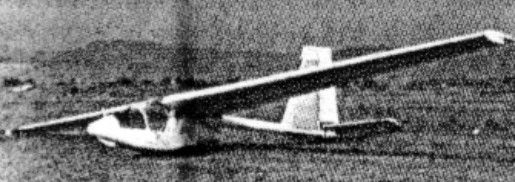
Jim Maupin of San Pedro, CA offered an inexpensive way to get into the action, with his homebuilt sailplane Woodstock, designed with the philosophy, “Build it light, build it small, build it cheap and simple.” Only basic tools are needed. Woodstocks wing, designed by lrv Culver, is built around a single main spar, formed as a hollow box out 8 feet and as a c-section beyond. Ribs are sawn from ¼-inch fir plywood, glued to the spar fore and aft. Spar runs the full length of the wing. Wing forward of the spar is covered with 1/4 -inch birch ply as a D section. Fuselage and tail are equally simple to build. An info kit was $5, plans $105 ($115 overseas).
Woodstock was designed with a wing having an 18 % section for the root, 13 % at the tip and no twis. The principal design objectives were low cost and simplicity of construction. Douglas Air was used for all major structural parts and all tail and wing skins were birch. It first flew in 1978 and won the Sailplane Homebuilders Association design contest in 1984. A tail wheel is an option instead of a skid. The main wheel is fixed. Approach control is by wing top surface spoilers. As an option, wings of 13.1 m./ 43.0 ft.
Woodstock Wing span: 11.89 m / 41.5 ft Wing area: 9.73 sq.m / 104.7 sq.ft Aspect ratio: 14.5 Airfoil: Culver Length 5.43 m / 17 ft 10 in Height: 1.22 m / 4ft 0 in Empty Weight: 111 kg / 245 lb Payload: 95 kg / 210 lb Gross Weight: 206 kg / 455 lb Water ballast: None Wing Load: 20.9 kg/sq.m / 4.29 lb/sq.ft L/DMax: 24 at 72 kph / 39 kt / 45 mph MinSink: 0.79 m/s / 2.6 fps / 1.54 kt Seats: 1
Woodstock 15M Wing span: 15 m / 49.2 ft Wing area: 10.18 sq.m / 109.6 sq.ft Height: 3.5 ft Length: 19 ft Empty Weight: 111 kg / 245 lb Payload: 120 kg / 265 lb Gross Weight: 206 kg / 455 lb Wing Load: 22.69 kg/sq.m / 4.65 lb/sq.ft Aspect ratio: 16.8 Airfoil: Culver Seats: 1 L/DMax: 26.5 72 kph / 39 kt / 45 mph MinSink: 0.79 m/s / 2.6 fps / 1.54 kt Stall: 35 mph Landing gear: single wheel Load limit 5.0 G
Designed by Jim Maupin and Irv Culver to meet SHA Homebuilt Sailplane Design Contest criteria: easy to built, low cost, soarable, self-launching, safe, the definitive powered Windrose first flew in 1984. The structural backbone is a hollow plywood box with corners longerons which carry the engine mounts, landing gear and fiberglass cockpit shell. The wings are shaped foam covered with fiberglass, but without a conventional spar. The spars are bands of unidirectional roving expoxied into recesses in the upper and lower wing skins, and separated by rows of vertical dowels between the bands to take compression loads off the foam. Ailerons are set inboard from the root to approximately two-thirds span operated by pushrods from the fuselage. The wing structure is free of controls, pushrods, cables etc. Glidepath control is by a triangular spoiler which rises above the wing center section. Both tail surfaces are all-moving. The design comes in 12.65 and 15.0 m models. Windrose was offered as partial or complete kit, or plans only. Plans used to cost $175 in the US and Canada, airmail overseas for $195.
The Windrose II motor glider has an optional shorter wing span or Cuyuna UL-II-02 engine.
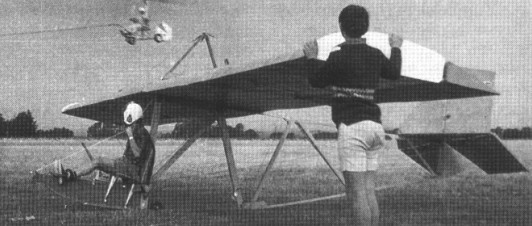
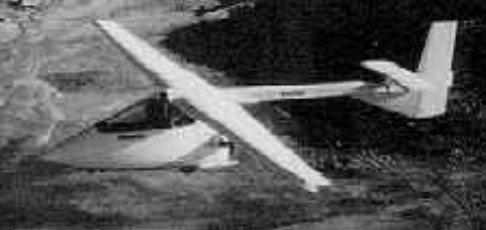
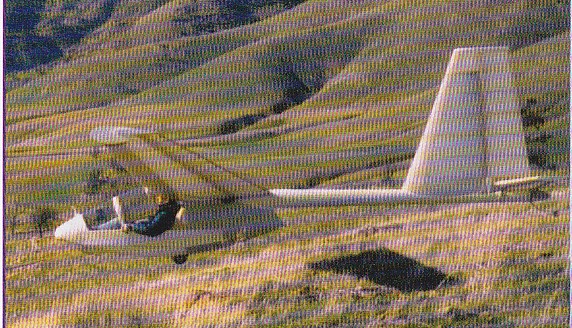
Designed by Jim Maupin & Irv Culver, the Carbon Dragon first flew in 1988. Altrough meeting the FAI definition of a hang glider, the Carbon Dragon can be launched by foot, aerotow, or bungee. Roll control and approach control are by full span 30 % chord flaperons, and at least one has been modified by the addition of a pentagonal shaped spoiler in the wing section, similar to that on the Maupin Windrose. It has a fixed main wheel. It complies with U.S. FAA Part 103 rules. In 1994 it became the first sailplane in that class to win against conventional gliders in a scheduled, non-handicapped cross-country contest. An ultralight sailplane, basic wood construction with use of carbon epoxy to reduce weight and improve stiffness. Was available as plans for $150. Price (1998) $ 170 (Plans) Building time estimated at 1500 hours.
Weight: 65 kg / 145 lb Gross Weight: 151kg / 335lb Payload: 85kg / 190lb Wing span: 13.2 m / 44 feet Wing area: 14.25sq.m / 153.34sq.ft Vne: 112 km / 70 mph L/D: 25:1 at 32 mph Stall: 20 mph Min sink: 0.51 m/s / 100 fpm / 0.99 kt at 26 mph. Seats: 1 Wing Load: 10.61 kg/sq.m / 2.18 lb/sq.ft Aspect ratio: 12.62 Airfoil: Culver CD Landing gear: single wheel


 All Aero