MAI MAI-68 Pushinka

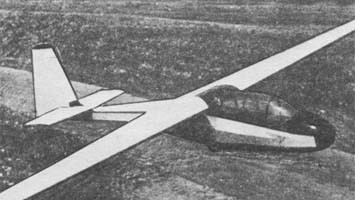
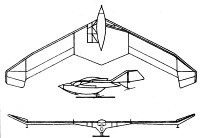
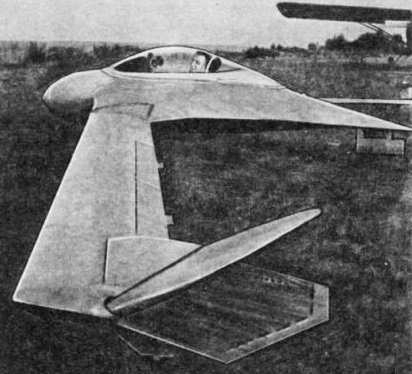
In 1970, following studies carried out by Alexei Ivanovich Pietsuj’s group in relation to tailless gliders, student VP Pushkin carried out a project of a new model with this configuration. It was a development of the concept outlined with the previous MAI-63. Named MAI-68 it was nicknamed “Pushinka” (Russian: МАИ-68 «Пушинка») in honour of its designer.

Professors GS Sadiekov, LA Matvieyev and VI Figurovski participated in the process of creating the new model. The general direction was in charge of AI Pitsuj.

The glider was designed as a single-seater basic training device in order to be able to compare its performance to those of similar models with the classic scheme. It was decided to apply an integral construction in which the fuselage, wings and tail were fused into a single structure.

The construction was metallic with fabric covering. The structure of the glider was built with aluminum profiles.

The aircraft featured a fluted wing with variable thickness and variable line of lights along the wingspan as well as the long arm of the steering and rudders.

The selected wing profile was the R-Sh with a constant thickness of 15.5 throughout the wingspan. The force structure is composed of two spars of similar thickness between which the wing ribs were located. The wing leading edge was coated with 0.5 mm thick duralumin sheets.

The wing shape, in conjunction with the K-shaped structure of the short wing-end stabilizers, ensured the necessary longitudinal and lateral stability as well as good manoeuvrability. The location of the wing-end stabilizers had a positive influence on wing flow, significantly reducing the creation of vortices in this area.

Single-spar ailerons were attached to the wing structure at three points.

The alligator-type wing-end rudders ensured longitudinal control if operated integrally. When operating the pedals, these surfaces were opened independently, acting as aerodynamic brakes. By operating a single pedal, the resistance at this wing end allowed control of the rotation of the apparatus.

The control system was operated by cables.

The landing gear consisted of a main wheel with a front ski and stabilization straps on the wing.

The cabin, for a single crew member, had a well-equipped instrument panel with an airspeed indicator, altimeter, artificial horizon and variometer. The transparent cover had an opening to the right. To improve downward visibility, the lower nose region and forward fuselage were coated with clear acrylic.

The MAI-68 experimental glider was built by V. Pushkin between 1968 and 1970. Ground tests began in July 1970, which were followed by flight tests at the MAI aeroclub aerodrome.

The test flights were developed by club director IG Yermakov. The “Hercules III” series tensioner was used for the launch.

During the ground tests it was possible to verify the effectiveness of the rudders, as well as the good stability and ease of control of the glider. The first short flights showed an acceptable longitudinal and transverse stability, as well as a marked delay in the reaction of the rudders. To eliminate this phenomenon, the opening surface of the elevator shafts was increased, achieving an increase in the effectiveness of these structures and allowing the development of the first flights at heights of 250 – 300 meters.

Tests of the glider at the MAI continued until 1972. In total they comprised 12 jumps at heights of 1 – 2 meters from the ground, 26 flights at 40 – 70 meters and four flights at 250 – 300 meters. A towed flight was made by a Yakovlev Yak-12.

The tests were continued at the TsAGI between 1973 and 1974. The flights, carried out by VN Vladimirov, were carried out at the Glider Station airfield. At this stage it was possible to measure the benefits and develop a series of mathematical models that verified the coincidence with the project calculations.

It was possible to establish a minimum glide speed of 45 km / h and an aerodynamic quality of 21. The effectiveness of the large lower surface of the center plane during takeoffs and landings was highly valued.

After testing the MAI-68, its designer VP Pushkin worked in the aeronautical industry and in this period he designed and built two other devices with this scheme, which showed excellent indicators and performance.

MAI-68 Pushinka
Wingspan: 10.00 m
Wing area: 10.2 m²
Aspect ratio: 8.54
Length: 5.00 m
Empty weight: 86 kg
Normal weight: 170 kg
Wing loading: 16.7 kg / m²
Minimum speed: 45 km / h
Maximum glide ratio: 21
Accommodation: 1
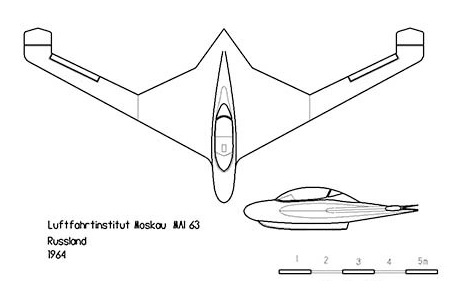
MAI MAI-63

In 1958 a group of students from the faculty of aeronautical construction of the Moscow Aviation Institute (MAI) came together to create a construction bureau to build aircraft in a flying wing configuration. In this group the students A. Krivomlin, M. Alexandrov, Yu stood out. Belov, A. Bielosviet, V. Irinarjov, S. Kurilienko, Ye. Mizinov and V. Novikov among others.

The research carried out and the technical solutions of the LK-MAI would be used as the basis for the development of a new flying wing glider, which was called MAI-63 (Russian: МАИ-63).

The work began in the autumn of 1962 with the participation of members of the MAI sports aviation club under the direction of the head of the scientific-research sector AI Pitsuj. All the construction work was done by the students themselves.

The glider design featured a low elongation centroplane with a rhomboid shape in the plane to which consoles were attached with 30º inflection on their leading edge. The sagging of the centerplane and the consoles was the same. Aerodynamic blades were located where the fuselage was attached to the consoles.

The large swelling of the wings made it possible to locate double-surface elevator rudders (“crocodile” type) on the trailing edge of its extremities. This location guaranteed an adequate balance of the apparatus even with the flaps extended. The ailerons, located on the trailing edge, were of the conventional type.

The glider lacked a horizontal empennage. Longitudinal control was performed by a combination of the elevator rudders. When the left pedal was depressed, the surfaces on the left side opened up, increasing the resistance at that end, and the aircraft turned to the left. By keeping the pedals in a neutral position, both surfaces joined to form a single rudder.

The cockpit was designed to accommodate a semi-reclining pilot and was covered with a bubble-type lantern.
The entire construction was made of metal. The wing design had a laminar profile. The covering of the centroplane and the wing up to the middle of the chord was made of duralumin and from there on in fabric.

The landing gear was unicycle type with the wheel located on the axis of the device and conveniently fairing. In the rear area there was a amortized skate. Stabilization supports with small wheels were placed under the wing tips.

In 1963 the project for the new glider was ready and in that same year construction began in the workshops of the laboratories of the MAI aircraft construction and projection chair. The prototype was ready for 1964.
In the construction of the model stood out V. Rytsariev, G. Bespalov, O. Tischenko, Ye. Volkov, A. Turik, S. Turchkov, V. Fatyanov, V. Vasiliev, and V. Pushkin.

All the turning and milling jobs were developed by students. Many of them had the necessary qualifications and were masters of the sport in model aircraft. This made the job easier.

The 5th year student Yu. Shirokov, who designed the centroplane and the cockpit, was still in his school years champion of Moscow in model aircraft; V. Pushkin had attended various professions.

Structural strength calculations were developed by M. Stolyar, O. Derzhavin, V. Voronin, and V. Kuznietsov. As a consultant, Ye acted. S. Voit.

The MAI-63 tests were developed in Alferiev in 1964 and were in charge of AI Pietsuj. Several towed flights
were made approaching take-off speed, piloted by AI Pietsukh. Structural strength problems led to the decision no flights were done.

After the first tests, several corrections were made to the apparatus: the wing structure was reinforced and modifications were made to the landing gear.

In 1965, MAI-63 was modified to a motor-glider installing on a pole erected over the central part of the glider an air-cooled EP-760 23 HP, five-cylinder, two-stroke radial engine. The engine was designed by Polyakov specifically for motor-gliders and light aircraft. The modified glider got the designation MAI-63M. Tests were conducted at the flying club’s airport. The engine during the trial taxi runs was unstable so the powered version of the glider was never flown.

MAI-63
Wingspan: 12.60 m
Wing area: 9.00 m²
Aspect ratio: 17.5
Wing profile: Laminar
Empty weight: 126 kg
Normal weight: 200 kg
Wing loading: 22.2 kg / m²
Best glide ratio: 35
Descent speed: 0.61 m / s
Accommodation: 1

MAI MAI-56

The glider was designed in response to a request from the DOSAAF Central Committee as a development of the PAI-6 glider, but project manager Alexei Ivanovich Pietsuj proposed an entirely new construction.

The MAI-56 (Russian: МАИ-56) was designed in 1956 as a two-seater training glider and was developed by the collective of the aircraft construction and projection chair at the Moscow Aviation Institute (MAI). The group of designers was made up of IV Kachanov, Ye. S. Voit, AA Liebiedinski and VA Manucharov under the direction of AI Pietsuj. An important group of students also joined this work.

The engineer AA Liebiedinski was assigned to the construction and all the calculations and plans were developed by students.

The MAI-56 featured a high cantilever wing structure and two-seater capacity, but unlike previous models, the fuselage was designed around a skeletal structure built with welded steel tubes with little lateral section covered with fabric.

The landing was made on a central wheel in the lower fuselage, which had a wooden skid at the front.
Stabilization straps were located under the wings.

The wing and tail were constructed entirely of wood with the use of steel fasteners. The wing was equipped with airbrakes.

The wing structure was designed with a single spar: the wings had a trapezoidal shape in the plane with some negative sagging. The wingtips were covered with plywood and worked by twisting. The louvered three-point ailerons featured aerodynamic and weight compensation.

The stabilizer and keel were covered with plywood. All surfaces had cable control.

The cockpit with two-seater capacity in tandem was closed by means of a transparent cover in line with the fuselage, with lateral opening towards the right. The bow fairing was attached to the cockpit deck, facilitating access to the cockpit for the pilot. The second crew member was located above the center of gravity of the model. In order to improve visibility from this second position, the wing leading edge, at the junction point with the fuselage, was made of transparent acrylic.

To improve the operation of the MAI-56, a trailer truck for transport was designed, which could be installed on a light car. The MAI-56 was generally superior to gliders of its Czechoslovakian “Pioner” type or its national “Primoriets” version, which was mass produced in the USSR. The Czechoslovakian glider had an aerodynamic quality of 17.5 against the 21 of the MAI-56, obtained thanks to the absence of wing braces and cleaner aerodynamic shapes.

The construction of the prototype was carried out in the UPM workshops of the MAI.

The first flight of the MAI-56 took place in August 1958 with the main constructor AI Pietsuj at the controls. The test program was carried out between May and September 12, starting the manufacturing tests, which took place at the airfield of the airfield the DOSAAF of Yegorievk having as pilot Pietsuj.

The pilots who participated in the tests gave a very positive evaluation of the model and recommended its series production. The test report was approved by the chairman and aeronautical constructor AS Yakovlev.

In addition to the drag tests from a Yakovlev Yak-52, four flights were made during the tests using drag from a motorcycle and six from a car. The MAI-56 glider passed the tests without difficulty. The piloting technique was considered simple and suitable for athletes of all categories, but the expected series production would never come to fruition.

Many MAI students completed their course and diploma work on topics related to the projection and development of the MAI-56. The consultations with the students were made by Professors Ye. S. Voit, IV Kachanov and AA Liebiadinski.

MAI-56
Wingspan: 15.60 m
Wing area: 18.10 m²
Aspect ratio: 13.1
Length: 7.61 m
Empty weight: 237 kg
Maximum weight: 273 kg
Wing loading: 21.9 kg / m²
Glide ratio: 21
Accommodation: 2

Moscow Aviation Institute / MAI

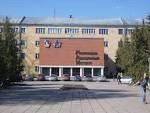
The Moscow Aviation Institute (MAI) was founded in 1930 on the basis of the aeromechanical faculty of the Moscow National Technical University “Bauman” (MGTU), becoming independent from it due to the wide importance that, since then, the aviation in the Soviet Union. It began with two faculties, aircraft construction and engine construction, since then it has been the most important aeronautical academic institution in the entire region, becoming a leader both in the scientific field, being the first to offer science chairs. aeronautics and training its own teachers and doctors who would make up the university boom, as well as technical-industrial, this is confirmed by the fact that it is the only university in the world that has launched its own aircraft on the market, built by its professors and students since 1932, when the MAI set up its own aircraft construction office.

After the Second World War the MAI expanded its academic and scientific interests, a new teaching system was developed, faculties were added in all aeronautical fields, as well as in physical-mathematical sciences, electronics and robotics. The student campus was built with more than 35 buildings, aeronautical infrastructure, workshops and laboratories were acquired, as well as the aerospace faculty, and in this way the MAI obtained the category of technical university. In 1979, artificial satellites ” Radio ” and ” Cosmos ” were launched into space, built with the participation of a large delegation from the MAI.

Although it is true in Soviet times the MAI as a national university maintained a margin of military defense, together with the state and the armed forces, always collaborating with the country, the university has also specialized its engineering in the commercial and experimental field.

The Moscow Aviation Institute (Russian: Московский авиационный институт (МАИ)) is a Russian university located in Moscow dedicated to the study of everything related to the aeronautical and aerospace industry. However, education is currently multidisciplinary and teaching and research programs are offered in multiple scientific and technological fields.

Over the years, the university grew to become the largest aerospace engineering teaching center in Russia, and one of the most prestigious universities in the world. More than 130,000 students, including 1,000 international students from 40 countries, have graduated from MAI after its founding in 1930.

In 1982 by the order of Ministry of Aircraft Industry the Design Bureau was transformed into a branch-wise experimental students aircraft construction design bureau of the MAI. The work was carried out by professional engineers. If necessary the co-workers from among the MAI students and teachers and also from among the workers of the industry were invited. The production facility of the MAI aircraft development plant (EOZ) in the experimental development shop (shop № 3) are manned by qualified technicians. The OSKBES work on the experimental aircraft engineering constantly received high estimations of the industry. Their technical novelty and utility are confirmed by nine Introduction Certificates and more than twenty Invention Certificates. By the end of 1980s six experimental aircraft of different types were designed and built: Kvant, Elf-D UAV, PS-01 small-sized UAV, Elf, Photon and Yunior aircraft.

The basic structure, address and the industrial areas occupied by it in the OSKBES MAI have remained the same. The EOZ MAI (shop № 3) and the MAPO (Moscow aircraft building plant) were used as an industrial base. On July 27, 1992 the application on realization the inspection work in the OKB MA for reception the certificate for the right to develop the civil aircraft engineering was sent to the Aviaregister of the MAK and the Air Industry Department of the Ministry of Industry of Russian Federation. It was made on behalf of the “Aviatika” joint-stock company. According to the inspection results the Aviaregister of the MAK issued Certificate № R-9 to the “Aviatika” joint-stock company with the right to develop light civil aircraft. It was on February 17, 1993.

Aircraft designed and developed at OSKBES include:
A single-seater Aviatika-MAI-890 aircraft — passed certification, had a temporary Certificate of a type of 31 March 1994 № 52В-890, valid till 1 April 1995, is series produced by the RAC “MiG”; A two-seater Aviatika-MAI-890U aircraft is serially produced by the RAC “MiG”; An agricultural Aviatika-MAI-890SKh aircraft is serially produced by the RAC “MiG”; A single-seater Aviatika-MAI-900 aerobatics (“Akrobat”)’ A two-seater Aviatika-MAI-910 with wings, folding on the ground; An Aviatika-MAI-920 glider; A single-seater Aviatika-MAI-890A autogyro, a pre-production model at the stage of flying test. The basis for the “Aviatika” aircraft manufacture at the MAPO plant is the License Agreement concluded by this plant with the “Aviatika” joint-stock company on 10 April 1995 (contract № 4276).

In 1997 Aviatika withdrew from the Design Bureau of Moscow Aviation Institute (Aviatikas) program, after which the manufacturer of Aviatika lightplanes became known as KB MAI.

The personnel of the OSKBES have continued to work in the field of light civil aircraft together with the MAPO MIG.
In April 27, 1998 the Aviaregister of Interstate Aviation Committee issued a Design Organization Certificate R-52 of the developer of light civil aircraft.

29 September 1999 eight members of our design bureau, Moscow Aviation Institute and RAC “MIG” were rewarded by “State Prize of the Russian Federation in science and technology” for designing and development of light multipurpose airplanes in a serial production. They are:
OSKBES MAI Chief Designer K. Zhidovetskiy (posthumously); OSKBES MAI Deputy Chief Designer (after the death of K. Zhidovetskiy — Chief Designer) N. Goryunov; OSKBES MAI Deputy Chief Designer V. Demin; OSKBES MAI Deputy Chief Designer V. Feigenbaum; Rector of MAI A. Matveyenko; Manager of MAI Experimental Plant P. Ogadzhanov; General Manager of RAC “MIG” plant G. Nemov; Deputy Manager of RAC “MIG” O. Chukantsev.
Autogyro MAI-205 made the first flight in 2001, chief designer Andrey Zorin.
In 2002 OSKBES MAI has started designing a new plane MAI-223. This plane made the first flight in 2004.
In 2003 OSKBES MAI started to work on different aircraft, airships and autogyros. It designed and produced gondolas, nacelles, fly-by-wire power plant controls and empennages of NPO “RosAeroSystems” airships Au-30 and Au-12M.
The design and development of Autogyro MAI-208 was started in 2006. The first MAI-208 is undergoing testing. OSKBES MAI presented MAI-208 at the 2nd International exhibition of the helicopter industry “HeliRussia-2009” (21…23 May 2009, Moscow). The new autogyro has caused the big interest of visitors and the press.

July 1, 2008 Vadim Demin was appointed Chief Designer of OSKBES MAI. The same year the design office has started working on a new multi-purpose four-seat twin engine aircraft MAI-407.

In 2009 OSKBES MAI started designing a new training glider MAI-227.

Moscow Aviation Institute (MAI)
Volokolamskoe Shassé,
Building 4,
Moscow,
Russia,
125993

Faculties and Departments of MAI:
High school.
Faculty № 1. Aeronautical Engineering.
Faculty №2. Aircraft Engines
Faculty №3. Computer Science and Navigation System
Faculty №4. Radio and Electronics
Institute of Economic Engineering
Faculty №6. Aerospace
Faculty №7. Robotics and Intellectual Systems
Faculty №8. Applied Physical-Mathematical Sciences
Faculty №9. Applied Mechanics
Faculty №10. Humanities (Social Engineering)
Military Institute

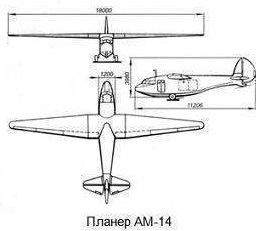
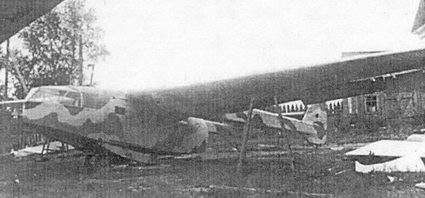
Moscalev AM-14 / Antonov AM-14

In September 1941 the Germans were approaching Voronezh, but even under these circumstances the aviation factory continued to deliver Il-2 assault aircraft to the front. At the beginning of September 1941, the decision was made to evacuate Factory No. 18 and OKB-31 led by Moscalev.

The new production base was established in the Siberian village of Zavodoukovsk, located in the Tyumen Oblast, where a new factory was organized that was numbered 499. AS Moscalevwas selected as director and main constructor.

Some time later the factory began to deliver the Antonov A-7 7-seater landing glider productions and a little later the A-2 training gliders, from the same manufacturer.

At the end of 1942 A. S. Moscalevwas given the task of modernizing the A-7 glider. The task envisaged the development of an enlarged version with capacity increased to 14 people, which was renamed AM-14 (Antonov – Moscalev14 seats, in Russian Антонов / Москалёв АМ-14). The prototype was built in Factory No. 499 in 1943.

Modifications to the base model included lengthening the central region of the fuselage by 670 mm, increasing the wing area and tailplane span, and increasing the diameter of the wheels.

After the tests, which were carried out successfully, Factory No. 499 began serial production of the model.

At the end of May 1943, A. S. Moscalev was tasked with urgently producing 50 AM-14 landing gliders at Factory No. 499, to be used in a supply mission to Belarusian guerrillas in the Minsk region. The gliders had to be prepared to carry fuel, weapons and ammunition, including cannon. The request established a delivery time of only 25 days for the 50 gliders and its fulfilment was personally followed by Stalin.

The glider launch operation over Belarus was kept a great secret, so for the Germans it was totally unexpected. This operation was led by the Air Landing Troop Headquarters and was planned to be carried out at night. Ilyushin DB-3F and Lisunov Li-2 towed gliders Moscalev and Gribovski pairs, releasing about 50 to 60 km from the target. The guerrillas had prepared surfaces for landing and at the agreed time they lit bonfires as signalling. This operation was successful and allowed the Belarusian partisans to achieve significant successes against the fascist groups.

For their contributions to support the partisans, the designers OK Antonov, AS Moscalev and VK Gribovski received the 1st level “Guerrilla of the Great Patriotic War” medal, which was one of the few exceptions for the delivery of this medal to personnel from the deep rear.

AM-14
Wingspan: 18.0 m
Wing area: 29.10 m²
Aspect ratio: 11.2
Length: 11.20 m
Empty weight: 1080 kg
Wing loading: 84 kg / m²
Surface of the horizontal plane: 3.97 m²
Vertical plane surface: 3.24 m²
Spoiler area: 2.7 m²
Glide ratio: 18
Crew: 1
Carrying capacity: 14 soldiers equipped

Moscalev SAM-23

The Moscalev SAM-23 Москалёв САМ-23 (second use of the name) glider designed as transport landing capable of carrying 22 soldiers or light military vehicle and was designed in OKB of Moscaliov, taking into account the experience in the operation of the AM-14.

The SAM-23 featured a monoplane structure with a high cantilever wing with a double tail cone, ending in a double empennage and a short central nacelle.

The cockpit and the cargo cabin were located in the fuselage. The rear cover of the fuselage could be removed to allow loading. The SAM-23 allowed the transport of 22 equipped soldiers, a tank, a light vehicle or a cannon with its crew.

The glider’s landing gear consisted of two skis with shock absorbers and two landing pads on the tail. Take-off was carried out by means of a wheelbarrow that was released when the glider separated from the ground.

Construction of the prototype at Factory No.499 was completed in 1944 and it successfully passed state tests. The serial production of the model was not authorized since the glider with similar tasks Tsybin / Koliesnikov TsK-20 was already being produced in series at that time.

SAM-23
Wingspan: 16.5 m
Wing area: 38.00 m²
Aspect ratio: 7.2
Length: 12.5 m
Carrying capacity: 20 equipped soldiers or a light car
Crew: 1

Moscalev, Aleksandr Sergeyevich

Alexandr Moscaliov was born on 16 of November of 1904 in the city Valuiki, the governor of Voronezh, Russia. In 1913 his family moved to Voronezh where at the age of 10 he started school. Previously his education had been at home.

In 1922 entered the physical-mathematical faculty of the Voronezh University, but it was closed two years later, so Moscaliov was forced to move, first to the Kazan branch and later to Leningrad. In 1928 he finished his studies at the physical-mathematical faculty of the Leningrad State University.

After graduating, he enrolled in a job board from which he was sent to work at Factory No. 23 (formerly “Krasni Liotchik”). His first important work was the development of tests of 12 types of radiators to be located in the I-2bis fighter developed by Grigorovich. Applying his university knowledge Moscaliov managed to make a good selection and propose methods to improve radiators. In this period, externally, he took examinations at the Leningrad Technical Institute, which was soon reflected in his work.

In 1930 Moscaliov entered the competition to develop a fighter-interceptor with the new M-34 engine. His project was selected, but delays in tuning the engine prevented its construction. In 1931 at the “Krasni Liotchik” his first aeronautical design would see the light: the MU-3 training hydrofoil, a development of DP Grigorovich’s MU-2.

Due to health problems, Moscaliov left Leningrad and returned to his native Voronezh where a large aviation factory had begun to be built. From 1932 he began to work as a substitute for the head of the serial construction department (SKO) of the Voronezh Aviation Factory No. 18. From 1933 he began his teaching activity at the Voronezh State University and from 1936 he became a substitute for the director of the Voronezh Aviation Technology.

In 1932 – 1933 Moscaliov led a group of enthusiasts who designed and built one of the first all-metal light aircraft, the SAM-5, in response to a request from the Osoaviajim. This aircraft was the first of the family of aircraft with the acronym SAM designed as high-wing cantilever monoplanes for 5 passengers.

With the help of the facilities of the Voronezh State University, Moscaliov began to develop a research project to achieve a supersonic configuration. As a result of his research, in 1933 he developed a project, not so ambitious, of an interceptor fighter capable of approaching 1000 km / h using two paired tandem engines moving counter-rotating propellers that was called SAM-4 and known as “Sigma”.

The project turned out to be too innovative and received a rather cold reception until a few years later it became known that in the United States experiments were being carried out on a similar configuration and it was urgently requested to create a scale demonstrator, which was launched as SAM-9 “Stelá” in 1937.

By 1936 Moscaliov’s work volume had grown, for which the Main Directorate of the Aviation Industry (GUAP) decided to allow him a bureau of his own design, which became known as OKB-31, in Factory No.18. In 1939 the construction workshop was built and in 1940 the independent building on the airfield was completed. This OKB would be responsible for the creation of a score of new projects.

Moscaliov belongs to that group of enthusiastic designers who stood out for their aeronautical productions despite the absence of regular financial support and their own production base. His aeronautical design and production work included more than 35 models of which 23 were built between 1930 and 1945. Moscaliov’s planes set several records for range and flight duration.

With the start of the war, OKB-31 was evacuated to Siberia, near the city of Yalutorovska, Tyumen Oblast. The decision was made to unify with OKB of P. Grojovski and a small factory Muscovite creating the new factory No.499. Moscaliov was selected as principal director and constructor.

Moscaliov in the 1940s

This factory prepared the serial production of the first Soviet reactive fighter, the Bereznyak / Isayev BI, produced the landing cabins for the Ilyushin DB-3 bombers and built different types of gliders. For his contribution in the construction of the AM-14 aircraft for the support of the guerrilla groups in Belarus, Moscaliov received the 1st level “Guerrilla of the Great Patriotic War” medal.

On his return to Leningrad in 1945 the OKB of Moscaliov designed the project supersonic fighter PM-1 with reactive engines Dushkin. This aircraft was also known as SAM-29 RD-2P-3V and maintained the same general scheme of the Sigma project of 1933.

This time the project was studied in depth at the TsAGI and its construction was proposed, but changes in the direction of the MAP led to the closure of the project, the replacement of Moscaliov and the liquidation of the OKB.

From 1948 Moscaliov began working as a professor at the Leningrad Military Aeronautical-Engineering Academy named after AF Mozhaiski (LKVVIA), sharing his experience with new generations of aeronautical designers and engineers. From 1954 he directed the scientific-research laboratory for the development of perspective military technique.

He died on 3 as January as 1982 and his remains lie the North Cemetery in Leningrad (St Petersburg).

Orders and medals:
Order of the Red Star
Medals
In 1979 he was awarded the Koroliov Academic gold medal for contributions to aviation and on the occasion of his 75th birthday.

Aeronautical production:

First designs
SAM-1 – 1930 fighter project with an M-34 engine. It was not built.
MU-3 – 1931 training floatplane. A single copy built.

OKB-31 works in Voronezh:
RDD – Modernization of Túpolev RD with diesel power plant. A single prototype was produced in 1936.
SAM-4 ‘Sigma’ – High speed aircraft project developed between 1933 and 1934
SAM-5 – 1933 light aircraft built in metal.
SAM-5bis – Development of the SAM-5 but with wood construction.
SAM-5-2bis – Improved development of the SAM-5 from 1937.
SAM-6 – Experimental aircraft to test single-wheel landing gear.
SAM-7 “Sigma” – Tailless escort fighter project. A copy was built in 1936.
SAM-9 “Strela” – Development of the SAM-4 concept in an experimental light aircraft prototype.
SAM-10 – Light passenger aircraft from 1938, development of the SAM-5.
SAM-10bis – Improved version of SAM-10 with new powerplant.
SAM-11 – Amphibious training aircraft from 1939.
SAM-11bis – Improved development of SAM-11 with new powerplant.
SAM-12 – 1939 Training Plane Project.
SAM-13 – Experimental twin-fuselage aircraft similar in conception to the Fokker D-XXIII. A copy produced in 1939.
SAM-14 – Light transport aircraft, development of the SAM-5-2bis for Aeroflot. 1939.
SAM-16 – reconnaissance floatplane from 1940. The prototype was never finished.

Works at Factory No. 499 during evacuation
AM-14 – Landing glider. Enlarged version of the Antonov A-7 built in series since 1942. * SAM-18 – Passenger amphibian project for 12 – 14 people.
SAM-19 – Hydrofoil project with tandem paired engines moving counter-rotating propellers
SAM-22 – Motor glider project developed during the war at Factory No.499
SAM-23 (LT) – Cheap “disposable” ground attack aircraft project, developed in 1942 with a similar objective to that of the Tomashevich Pegas.
SAM-23 – Landing glider from 1945. Not built by the end of the war.
SAM-24 – Project for a passenger plane with two M-11E engines.
SAM-25 – Staff liaison aircraft over SAM-5-2bis with M-11E engine. 1943.
SAM-27 – Project for a passenger plane with capacity for 22 people from 1943.
SAM-28 – Motor glider project developed during the war at Factory No. 499 with M-11E engine and capacity for 21 soldiers.
SAM-29 or RM-1 – Project obtained as supersonic fighter development of the concept of the Sigma in 1933 with reactive power plant.

Morgan Aero Works 10 Cheyenne

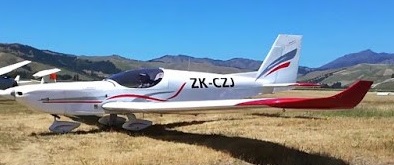
The one-off Morgan 10 Cheyenne aircraft was a 15 metre span motor glider powered by an 80 HP Jabiru 2200 engine. The fibreglass wings were constructed using foam ribs and the cockpit/engine mount/undercarriage mounts were connected by a steel frame.

The aircraft was registered VH-NZJ in Australia on 22/1/14 and its first flight was in May 2016 with an 18 metre 4-piece wing which was later replaced with a 15 metre wing.

Garry Morgan returned back to New Zealand in 2017 with the aircraft being cancelled from the Australian Civil Register on 17/2/17.

ZK-CZJ c/n GFA/AB/150 was registered to Garry Morgan of Renwick, New Zealand, on 7/8/17 as an Amateur Built Aircraft with a MAUW of 698 Kg.

The aircraft didn’t last very long on the New Zealand Register as on 31 December 2017 it suffered a major wing failure when flying over the Blairich Range South of Blenheim. The aircraft spiralled down and impacted on a steep slope with only minor injuries to the two occupants who walked to the top of the range and called for help by cellphone. The aircraft was fitted with a ballistic parachute but it could not be fired because the wing had folded over it.

It was cancelled from the New Zealand Civil Register on 18/1/18.

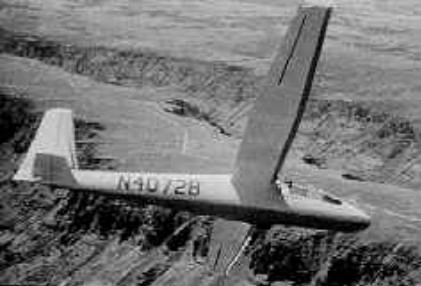
Moore SS-1

Designed by Arien C. Moore, the SS-1 was a Standard Class design completed in 1966. It featured DFS dive brakes and a fixed faired wheel. The structure was metal with some fabric on wing and control surfaces, some fiberglass fairings. All metal surfaces were flush riveted except for the aft section of the fuselage.

Wing span: 14.66m / 48.1 ft
Wing area: 11.24 sq.m / 121 sq.ft
Empty Weight: 220kg / 486 lb
Payload: 93 kg / 204 lb
Gross Weight: 313kg / 690 lb
Wing Load: 27.85 kg/sq.m / 5.7 lb/sq.ft
L/DMax: 30 97 kph / 52 kt / 60 mph
MinSink: 0.67 m/s / 2.2 fps / 1.30 kt
Aspect ratio: 20
Airfoil: NACA 65/3-618
Seats: 1
Number built: 1