Nievdachin Buriviestnik P-5

Between 1919 and 1921 in the young Soviet state the glider began to develop as a type of sport. In the winter of 1921, a group with KK Artseulov founded the first circle of Soviet planners known as “Thermal Flight” (Парящий полет). This group was originally made up of four military pilots, nineteen cadets, and students from the Air Fleet Academy and the Moscow Higher Technical School. Eight of its members: KK Artseulov, VP Nievdachin, VS Pyshnov, SV Ilyushin, SN Lyushin, BI Cheranovski, MK Tijonrarov and IP Tolstix would become the builders of the first Soviet gliders.

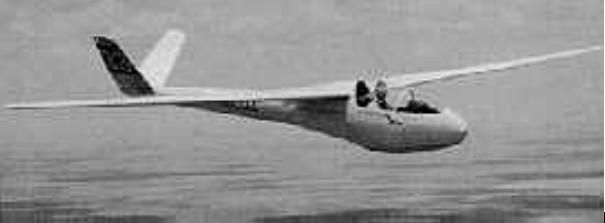
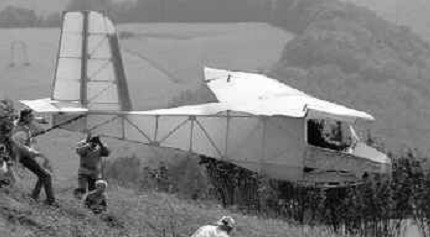
The record-breaking single-seater glider “Buriviestnik”, built by the military pilot VP Nievdachin, was calculated to achieve high flight speeds and was originally designed for the participation of one of the best Soviet pilots in international competitions to be held in the French Rhône.

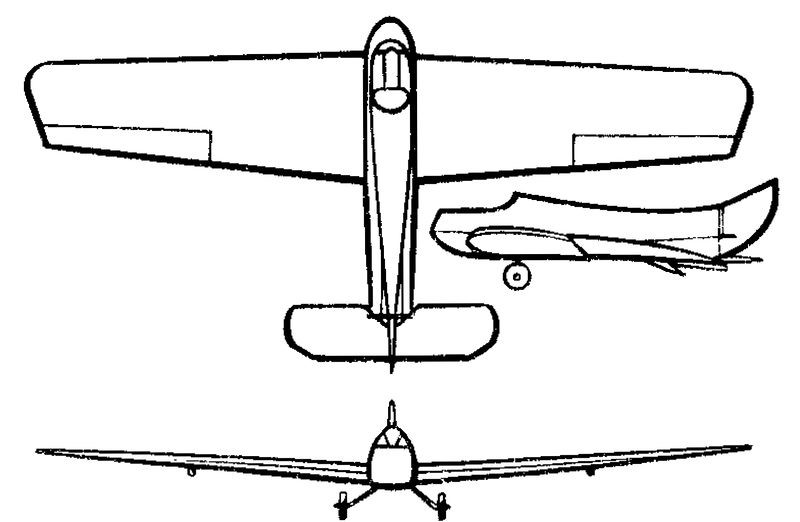
The Buriviestnik or P-5 (Russian: Невдачин “Буревестник” (П-5)) was designed as a cantilever low-wing monoplane with an airplane layout and clean lines. The constructive base of the fuselage was made up of the force knot called by its author the central cell, on which the pilot’s seat was located and to which the wings, landing gear and tail were fixed.

Built at Factory “Promvozdux” of Tversk in 1923, the entire construction was made of wood and covered with calico. The wings, of double spar, could be separated from the fuselage to facilitate the transport. The wing spar was covered with grid-shaped ribs. The wing leading edge consisted of a 2 mm thick curved sheet of plywood attached to a thin frame located in the open part of the cockpit. The wing trailing edge also ended in a frame attached to the exit of the wing nerves. The wing profile used was a variation of Pr-426.

The entire surface of the glider was covered with a layer of enamel and then two layers of enamel with aluminum powder. During the tensioning of the fabric, an unconventional system was used whereby the fabric was “sewn” to each of the ribs of the wing without passing the tension cord through the wing.

The cockpit cover was installed in front of the central cell and the fuselage armor was installed behind it. The tail section consisted of three stringers made up of 20 x 20 mm pieces of wood joined together by pieces of plywood. The cross section of the fuselage in this area was reminiscent of a 5-pointed pyramid with the upper vertex drifting towards the keel. The weight of the fuselage without the rudders and landing gear was only 18 kg.

The landing gear was made up of a bent ash shaft at the end of which and by means of metal fixings, the axles made of steel tubes were supported. The wheels were made of wood with the edges covered in leather. They weighed 5 kg.

In the rear section of the fuselage, offset rudders were located for direction and depth. The control of the glider was carried out as in a conventional airplane. The elevator was linked to the lever by means of a square section wooden bar. For the control of the wing ailerons, a combined system made up of metal turnbuckles and ropes was used. The pedals were used to control the rudder, to which they were linked by ropes.

The “Buriviestnik” glider was built using an unstable scheme. The center of gravity of the empty glider was behind the center of pressure. Because the pilot’s seat was located in front of the center of gravity, the stability of the aircraft was neutral during flight. This was probably the main cause of the accident of the pilot Yungmeister during the competitions in Crimea, which resulted in the destruction of the landing gear and the subsequent overturning of the glider on the back.

The “Buriviestnik” was ready in time to participate in the First National Sailing Competitions, promoted by the ODVF and held between November 1 and 18, 1923 in the mountains. Uzun-Sirt, in the Crimea. Ten gliders appeared in this contest. During the glider construction process, two endurance tests were carried out. After the final assembly of the wings, support points were located at the midpoint of their wingspan and three people were located in the cabin.

On October 28, the planeristas’ camp was set up on the slopes of the Uzun-Sirt mountain, in the region of the Sultanovska village, and the Technical Committee began its work under the direction of Professor VP Vietchinkin of TsAGI. Static resistance tests were carried out between November 1 and 7 and 8 of the models presented were authorized to fly. On the 15th, the flight of the ninth of the aircraft would be authorized.

During the first flight tests the “Buriviestnik” glider achieved the second longest time in the air, reaching 49 seconds, preceded by the Tijonrarov AVF-1 Arap, which flew for 1 minute and 5 seconds.

The first competition flight took place on November 3 with pilot LA Yungmeister at the controls. After taking off from the top of the mountain with a 6.7 m / s wind, the rope used to give the tension in the launch did not come off and throughout the flight it kept dragging on the ground. The second flight of the “Buriviestnik” lasted 2 minutes and 2 seconds, but during the landing, probably due to centering problems, the glider climbed abruptly and ended up hitting the ground and breaking one of the wheels.

The “Buriviestnik” performed brilliantly in the competitions and took second place. Its builder was awarded.

The 26 of February of 1924 at the premises of the Council of the ODVF in Krasnopresnienskaya street in Moscow exhibition opened gliders participants in competitions in Crimea. This exhibition was organized by the circle “Flight in Thermal” under the direction of IN Vinogradov and in it the gliders A-5, Buriviestnik, “Korshun”, “Makaka” and “Maori” were exhibited.

In 1924 in Smolensk the glider “Smoleniets” was built, which basically repeated the scheme of the “Buriviestnik” and in Krasnodar the design was also repeated in the “Berkut”.

The “Buriviestnik” glider scheme was so effective that its author decided to motorize it into a light aircraft, which would serve as the basis for a whole family of airplanes of this type.
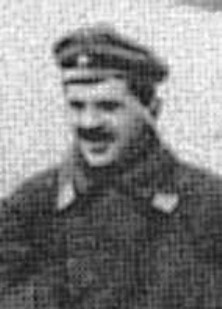
Nievdachin, Viacheslav Pavlovich

Born in 1887, the first references to Viacheslav Pávlovich Nievdachin date back to 1913, when together with the aeronautical manufacturer VN Jioni, he installed his own built floats to a Farman IV biplane. This aircraft was used in Odessa by Jioni and AV Shiukov to carry out propaganda flights with a characteristic decoration, which included chains of small electric lamps powered by batteries, which, starting from the cockpit, ran the entire wing leading edge and the interalar supports. No evidence has been preserved on the later fate of this device.

During World War I he served as a department head at the Kacha Aviation School, Sevastopol. In 1920 he was one of the members of the Commission for Heavy Aviation / KOMTA).

At the beginning of the 1920s, he became a reference figure in the circles of lovers of aviation. Following a request from glider lovers, the Glavvozdujoflot management decided to approve the creation of a circle of gliders subordinate to the Air Fleet Scientific Office. At the organizational meeting held on October to November of 1921, at the request of Professor VP Vietchikin this circle was called “thermal flying” (Парящий полет). Its first president was AA Zhavrov, who would soon be replaced by KK Artseulov. Among its first members was VP Nievdachin.

In 1923 he was one of the 10 participants in the I National Sailing Competitions flying his “Buriviestnik” glider, being awarded and in the second edition he was part of the organizing committee.

Under his direction, between 1922 and 1929, using funding from the Friends of the Air Fleet Society (ODVF), a glider and four light aircraft were built. All his creations bore the name “Buriviestnik”, but with different indices. The glider was named P-5. The S-2, S-3, S-4 and S-5 light aircraft.

Between 1924 and 1925 the ODVF launched a competition for the development of low-power aircraft and aviation engines. The evaluation committee, which met between 5 and 23 June 1925 declared that none of the projects could be recommended for production without modifications. Despite this, the works of VP Nievdachin, SD Chernijovski, VL Alexandrov, brothers II and EI Pogoski and the project “Tri Druga” were valued positively.

In addition to his love for light aviation, Nievdachin dedicated part of his life to large-scale aviation, working in the propeller and engine group of the Aviation Factory No. 1 and since 1927 in No. 25, subordinate to the Department of Land Aircraft (OSS) under the direction of NN Polikarpov.

He was imprisoned during the great purge and worked on the infamous TsKB-29. At this stage he was responsible for the development of the wing center plane in the Myasichev DVB-102 (“102”) model, designed and built in this prison institution.

It is known that he kept working as a technologist in the aeronautical industry until his death in 1953.

Niemi Sisu 1A

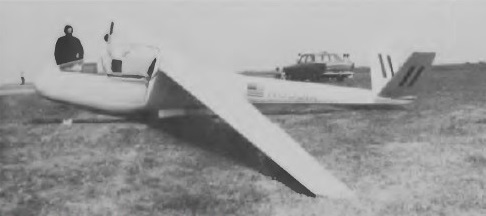
The prototype, designed and built over a period of six years by Convair engineer Leonard Niemi in his garage workshop and known as the Sisu 1, was a cantilever shoulder-wing type of all-metal construction with a laminar flow wing of NACA 65-series section to provide very low drag over a broad speed range, with forward sweep to delay tip stall. The ‘butterfly’-type V-tail has an included angle of 90°. The two-spar wing has an aluminium alloy skin and plate stringers, with glassfibre/foam stiffening in the leading edge and camber-changing flaps. To achieve the smoothness and accuracy necessary for laminar flow, wing contours were filled and sanded, and all control surface hinge lines and joints in the canopy and removable fairings were sealed.

The Sisu 1A was the production version, 10 of which were built by Arlington Aircraft at Arlington, Texas, and later at Greenville, South Carolina, between 1960 and 1965. This version had a lighter wing structure, and featured vented air brakes and large-span slotted flaps. Landing gear consists of a retractable monowheel and a miniature fixed tailwheel; the pilot sits under a flush-fitting two-piece canopy.

Sisu 1A

Flown for the first time on 20 December 1958, this American high performance single seater was noteworthy in being the first sailplane ever to exceed 1,000 km in a soaring flight when flown by Alvin H. Parker, it set up an international straight line distance record of 1,041.52km (647.17 miles) in a flight from Odessa, Texas,.

The Sisu 1 A set three world records for Alvin Parker out of Odessa, Texas: 784 km/ 487.24 miles on 27 August 1963, 1963; free distance 1,041.52 km. /647.17 miles to Kimball, Nebraska, on 31 July 1964; and goal, 930.6 km. / 578.27 miles, 1969. For the free distance flight Parker had an aero-tow to 2000 ft, soared to 14,300 ft and was airborne for more than 10.5 hours.

The Sisu 1A N1100Z, the second 1A to be built, that set the world distance record was donated to the Smithsonian Air & Space Museum and another was donated to the National Soaring Museum.

The type has won the US National Soaring Championships three times, in 1962,1965 and 1967, flown by different pilots (John Ryan, 1962; Dean Svec, 1965; and A.J. Smith 1967). A. J. Smith, winner of the 1967 US Championships, further lightened his ship, and flew his Sisu for a time with wing tip extensions to increase the span from the standard 50ft 0in.

Gallery

Sisu-1A
Span: 15.24 m / 50 ft 0 in
Length: 6.46 m / 21 ft 2.5 in
Wing area: 10.03 sq.m / 108.0 sq.ft
Aspect ratio: 23.1
Airfoil: NACA 65 (3)-418
Empty Weight: 222 kg / 490 lb
Gross Weight: 347 kg / 765 lb
Payload: 125 kg / 275lb
Wing Load: 34.6 kg/sq.m / 7.1 lb/sq.ft
Max speed: 161 mph / 140 kt / 260 km/h (in smooth air)
Stalling speed: 35.5 kt / 68 km/h
Max rough air speed 70 kt (130 km/h)
Min sinking speed: 0.64 m/s / 2.07 ft/sec / 1.24 kt at 55 mph / 47.5 kt / 88 km/h
L/DMax: 37 @ 92 kph / 50 kt / 57 mph
Best glide ratio: 41.4:1 at 62 mph / 54 kt / 100 km/h
No. of Seats: 1
No. Built: 11

Neumann/Reich ULF-1

The ULF-l is a German design of classic wood and fabric by Dieter Reich and Heiner Neumann. It resembles some of the old designs like the Grunau Baby, but has an empty weight of only 100 pounds. It first flew in November 1977 and has made many excellent flights. Approximately 140 plan sets have been sold and about 40 aircraft are under construction. Plans are available from Dieter Reich. Cost of the plans is DM460.00 (about $266 US as of June 22, 1997). The plans are very detailed and have received an airworthiness certificate from the German authorities. The best L/D is 16-18:1 and the minimum sink rate is about 160 fpm. The ULF-1 climbs well and handles well. The structure is every bit as complicated as the Carbon Dragon, but results in a good foot launcher when complete.

Wing span: 10.4m
Wing area: 13.4sq.m
Empty Weight: 45kg
Gross Weight: 120kg
Wing Load: 8.96kg/sq.m
Aspect ratio: 8.07
Airfoil: FX 63-137
L/DMax: 15 50 kph
MinSink: 0.80m/s 40kph
Loading: +6g / -4g
Flying speed: 32 – 70 kph
Seats: 1

Neukom AN-66 Super-Elfe

Neukom AN-66C Super EIfe

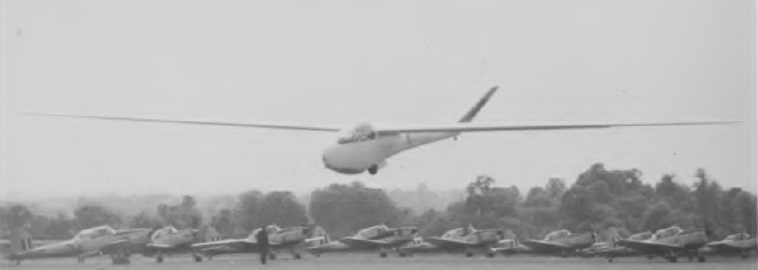
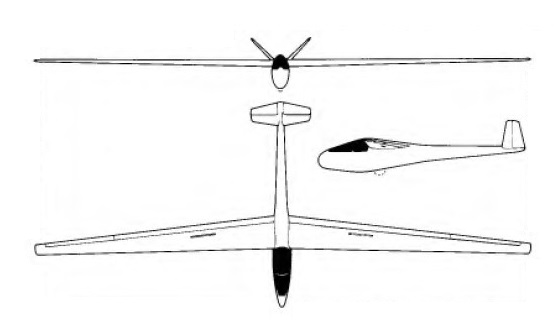
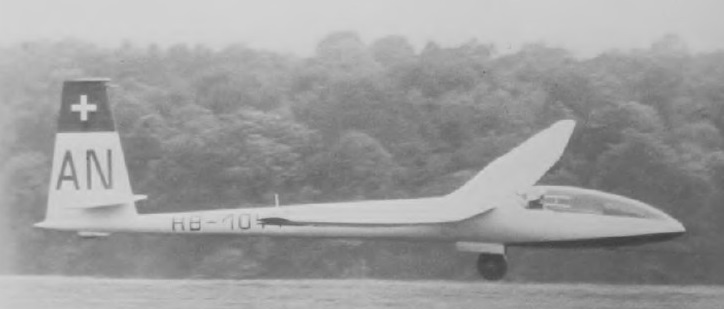
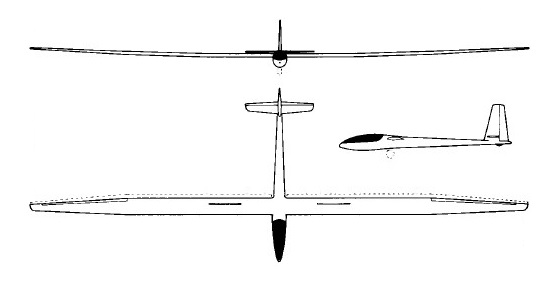
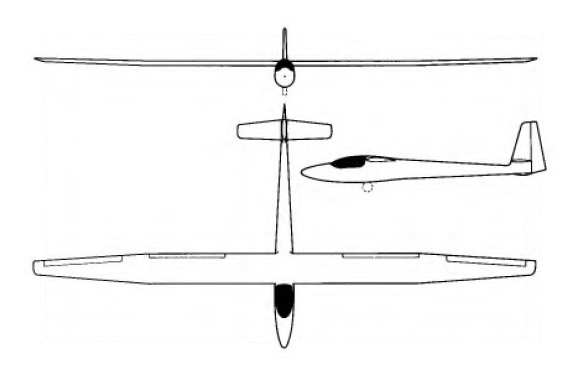
The Neukom AIM-66 high performance single-seater first flew in prototype form in 1966, and was followed by two others, designated AN-66-2, which featured a modified fuselage. These versions have cantilever shoulder-mounted wings of 18m (59ft 0.5in) span and of Eppler 441 aerofoil section, which are of sandwich construction with a metal spar and have plain flaps. The forward fuselage is a glassfibre sandwich structure, while the rear portion is a wooden plywood and balsa sandwich semimonocoque, and a ‘butterfly’-type V-tail is fitted. The landing gear is a rectractable monowheel and the pilot sits under a long flush-fitting transparent canopy.

The AN-66C Super Elfe is a development of the AN-66-2 with the same fuselage but with an entirely new variable-geometry wing with a special aerofoil flap that can be extended to increase the wing area by about 20%; a conventional tail unit with a low-set tailplane, similar to that of the Standard Elfe S-3, replaces the AIM-66-2’s V-tail.

Flight tests of the prototype AN-66C began at Butzweilerhof in Germany on 11 September 1973. The new wing has a longer span of 23m (75 ft 5.5 in) and the aerofoil flaps are chain-operated by a crank in the cockpit and can either be fully extended or fully retracted, no intermediate position being possible; when fully extended or retracted the wing profile is changed so as to result in a continuous Eppler aerofoil section. A tank to contain 132 lb of water ballast is situated in the leading edge of each wing centre section, the latter being 21 ft 4 in in length and the two outer panels 27 ft 0.75 in each. The single-spar wings have riveted duralumin double-T spars, and plywood/balsa/plywood sandwich outer skins formed by vacuum pressing; Schempp-Hirth air brakes are fitted. Landing gear consists, as it did on the AN-66-2, of a retractable monowheel and tailskid. The wing area is increased from 172.2sq ft with the flaps in, to 206.7sq ft with flaps extended, when the aspect ratio is 27.6 compared to 33.1 with the flaps in.

The AN-66D prototype, produced in 1974, has a four-piece wing of 21m (68 ft 11 in) span.

AN-66C Super-EIfe
Span: 75 ft 5.5 in / 23.0 m
Length: 26 ft 6.25 in / 8.1 m
Height: 6 ft 0.75 in / 1.85 m
Wing area: 172.2 sq ft / 16.0 sq.m (flaps in)
Wing section: Eppler 562/569
Aspect ratio: 33.1 (flaps in)
Empty weight: 926 lb / 420 kg
Max weight: 1,433 lb / 650 kg
Water ballast: 60 kg / 132 lb
Max wing loading: 33.1 kg/sq.m / 6.8 lb/sq ft
Max speed: 168 mph / 146 kt / 270 km/h (in smooth air)
Stalling speed: 32.5 kt / 60 km/h
Min sinking speed: 1.64 ft/sec / 0.5 m/sec at 46.5 mph / 40.5 kt / 75 km/h (flaps out)
Best glide ratio: 48:1 at 56 mph / 48.5 kt / 90 km/h (flaps in)

Neukom S-4A EIfe 15 / S-4A EIfe 17

Neukom S-4A EIfe

A developed version of the Standard EIfe S-3, the S-4A EIfe 15 differs from it principally in having a new two-piece wing of the same 15m span, strengthened and fitted with Schempp-Hirth air brakes; the single spar is of aluminium alloy and the wing skin of plywood/foam sandwich. A roomier forward fuselage of improved aerodynamic shape is featured, with the slight step forward of the canopy on the Standard EIfe S-3 completely eliminated. The fuselage and tail unit are of glassfibre and plywood/foam sandwich construction, and the landing gear consists of a retractable rubber-sprung monowheel with brake. The prototype EIfe 15 made its first flight in 1970 and 10 had been built by early 1973; production continues, although at a rather slow rate.

Both the EIfe 15 and EIfe 17 were available in kit form for amateur construction, the latter being a 17m span Open Class version of the S-4A EIfe 15, with the same fuselage but with a wider span two-piece wing, with provision for a tank in each leading edge to house a total of 132lb of water ballast. The EIfe 17 also has a braking parachute fitted, and a total of 10 of this version had been built by the spring of 1973, with production continuing at a relatively slow rate.

The EIfe M17 is a single-seat motor glider version of the Open Class EIfe 17 and first flew in prototype form in mid-March 1978. It is powered by a 45hp Parodi HP 45 four-cylinder four-stroke engine driving a Hoffmann two-bladed propeller; this is pylon-mounted aft of the cockpit and retracts into the fuselage when not in use. Electric starting is provided and the fuel tank capacity is 10 Imp gallons (45 litres). Apart from the engine and its related modifications the EIfe M 17 is the same as the unpowered EIfe 17.

EIfe 17
Span: 55 ft 9.25 in / 17.0 m
Length: 23 ft 3.5 in / 7.1 m
Height: 4 ft 11 in / 1.50 m
Wing area: 142.1 sqft 13.2 sq.m
Wing section: Wortmann FX-61 -163/60-126
Aspect ratio: 21.8
Empty weight: 562 lb / 255 kg
Max weight: 837 lb / 380 kg
Water ballast: 60 kg / 132 lb
Max speed: 130 mph / 113 kt / 210 km/h
Max aero-tow speed: 87 mph
Max rough air speed: 113 kt / 210 km/h
Stalling speed: 35 kt / 65 km/h
Min sinking speed: 1.84 ft/sec / 0.56 m/sec at 46.5 mph / 40.5 kt / 75 km/h
Best glide ratio: 39:1 at 56 mph / 48.5 kt / 90 km/h

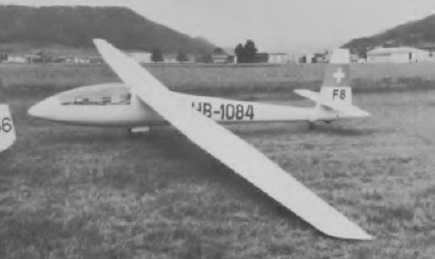
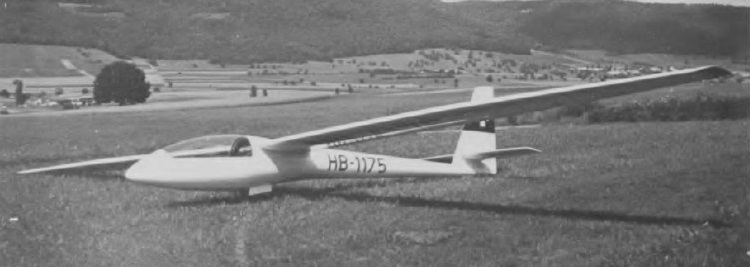
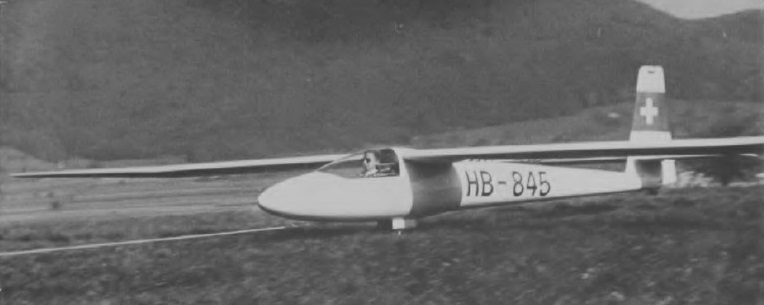
Neukom Elfe M / Elfe S-1 / Elfe S-2 / Elfe S-3

The Elfe series started from a 9 m sailplane designed by W.Pfenninger before World War II. Just after World War 2 Albert Neukom of Switzerland began the creation of a line of sailplanes bearing the name EIfe; the first of these, the EIfe 1, had a wing span of only 9m (29 ft 6.25 in), later increased to 11m (36 ft 1 in).

A new design was introduced in 1947 to become the Elfe 2, probably the first sailplane with a laminar flow airfoil. The EIfe 2, with a span of 50ft 6.25in, had camber-changing flaps.

Subsequently the series was further developed by Albert Neukom with the Elfe M with laminar flow wings, Elfe MN and AN66 before the Standard Elfe S-1 appeared in 1964 with a V-tail. The prototype high performance single-seater Standard EIfe S-1 first flew on 1 May 1964. This was followed by the S-2 with conventional tail with the tailplane at the base of the fin.

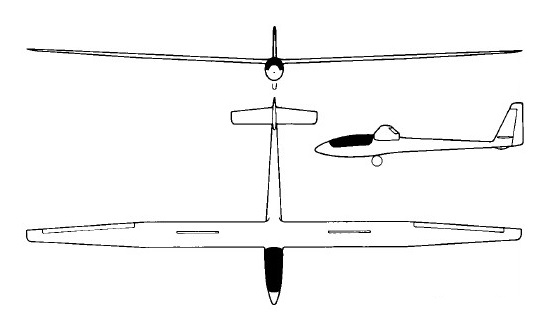
The S-3, the production model of the S-2, first flew in May 1966 with a tailplane fixed part of the way up the fin. It has trailing edge airbrakes and a rubber- sprung retractable main wheel. The EIfe S-3 has a high cantilever wing built in three parts, and of plywood-balsa sandwich construction; it is fitted with trailing edge air brakes. The fuselage and tail unit are of glassfibre and plywood sandwich construction, while the landing gear consists of a retractable rubber-sprung monowheel with brake. The pilot sits upright under a removable transparent canopy.

Flown by the Swiss plot Markus Ritzi, a Standard EIfe took 2nd place in its class at the 1965 World Gliding Championships held at South Cerney, and at the 1968 World Championships at Leszno in Poland a Standard EIfe S-3 flown by Andrew Smith of the USA came 1st out of 57 entries, with other Elfes placed 4th and 6th.

A total of 18 Standard Elfes were flying by April 1970, the year in which the developed S-4A EIfe 15 first flew.

Standard EIfe S-3
Wing span: 15 m / 49 ft 2.5 in
Wing area: 11.9 sq.m / 128.1 sq.ft
Wing section: Wortmann FX Series
Length: 7.30 m / 23 ft 1.5 in
Height: 1.50m / 4 ft 11 in
Empty Weight: 208 kg / 459 lb
Payload: 112 kg / 246 lb
Gross Weight: 320 kg / 705 lb
Water ballast: None
Wing Load: 26.89 kg/sq.m / 6.79 lb/sq.ft
Aspect ratio: 19
L/D Max: 37.5 @ 95 kph / 51 kt / 59 mph
Min Sink: 0.64 m/s / 2.1 fps / 1.24 kt at 47 mph / 40 kt / 74 km/h
Max speed: 150 mph / 129.5 kt / 240 km/h (in smooth air)
Max rough air speed: 108 kt / 200 km/h
Stalling speed: 30 kt / 55 km/h
No. of Seats: 1
Structure: Balsa/ plywood sandwich wing; glass fibre/ plywood sandwich fuselage

Nessler N-2

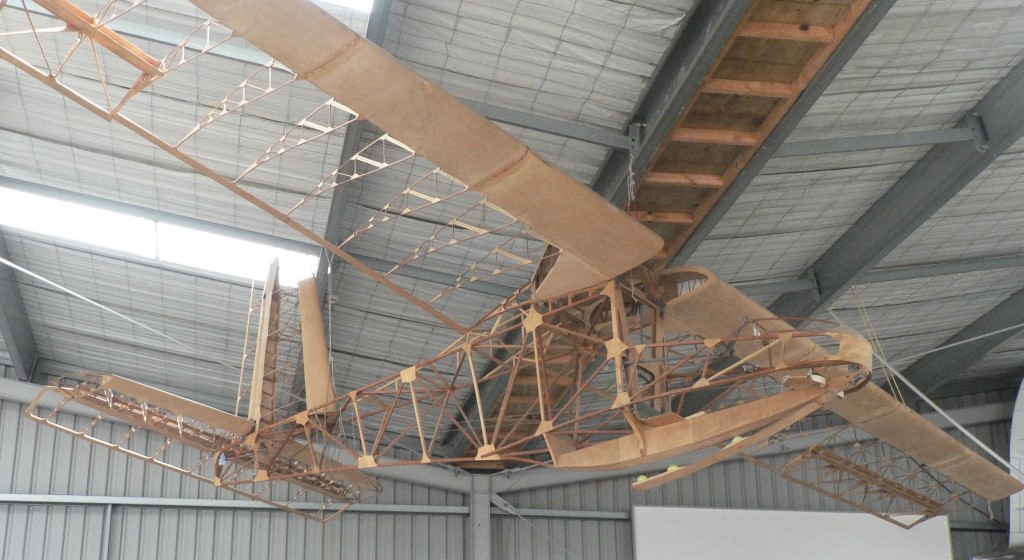
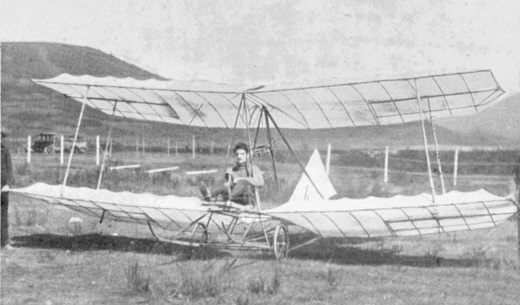
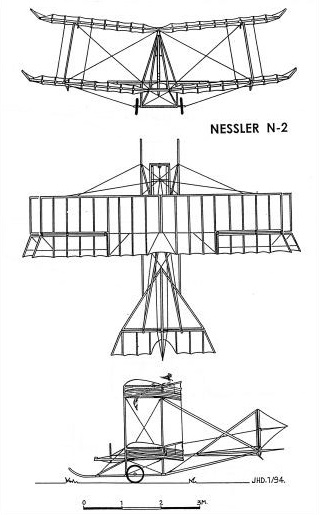
Built in 1922 by Eric Nessler in France, it arrived at Camp Mouillard on August 5, 1922. By August 15, the machine is ready and performs a few small flights on the plain with a maximum duration of 8 seconds. On August 17, it fell on the front, breaking the landing gear, seat and tail. It flew again on August 24 with a flight of 17 seconds over the Toupe plateau but was slightly damaged on landing.

On August 27, departing from the summit of Combegrasse, towards Aydat, in no wind, some jumps on the slope were made before final takeoff but a flight of 1 min 3 sec was made. During this flight, the aircraft succeeded in gaining height.

Span: 6.66 m
Length: 5.6 m
Height: 2.5 m
Aspect: 5
Wing area: 18 m2
Wing profile: R.A.F. 53
Empty weight: 72 kg
Maximum weight: 128 kg
Wing loading: 7.11 kg/m2
No. of seats: 1