Northrop JB-1 Bat / MX-543

JB-1

As a direct result of Great Britain’s experiences with the German V-1 “buzz bombs,” the USAAF considered the development of similar weapons. The MX-543 program was initiated in September 1942 to use US versions of Frank Whittle’s jet engine (US-named General Electric J31). In late 1943, Northrop was awarded an USAAF contract to design and develop a Flying Wing “Power Bomb”. Under secret Project MX-543, two Northrop Model JB-1 air vehicles were built.

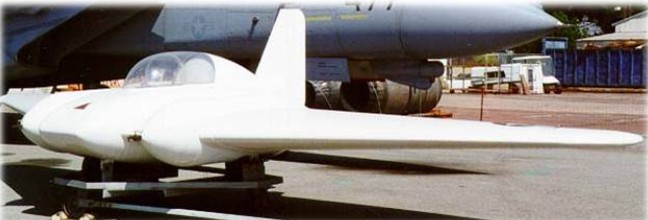
The first airframe built was the Western Museum of Flight’s JB-1 man-carrying glider. Its unusual shape earned it the name “Bat”. Except for the pilot’s cockpit and canopy, the JB-1 glider was the unpowered aerodynamic equivalent of the second version, the jet powered JB-1A. The JB-1 was used to explore the design’s flight characteristics. It was designed to aircraft standards and being made of aluminum and magnesium it was expensive.

The JB-1 piloted version was lifted aloft as a glider by means of a tow aircraft. Tow hitches are at the tips of the two bomb containers. Only one man-carrying JB-1 was built to test the flying qualities of this flying-wing design. The center section of the JB-1 glider version included two stream-lined “torpedo-shaped” bomb containers. The center section was fabricated of formed and welded magnesium alloy plate. The wing panels were made of riveted and spot-welded aluminum alloy sheet with magnesium wingtips. The pilot’s cockpit was located in the space that would be used for the jet engine installations in the unmanned JB-1A powered model.
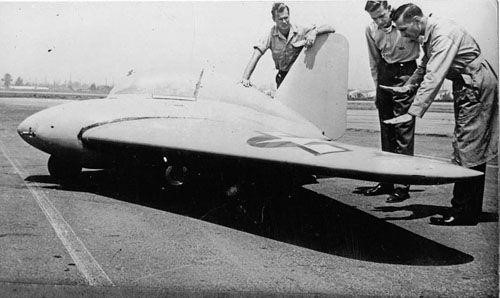
On August 27, 1943, from Rogers Dry Lake, Northrop test pilot Harry Crosby made the initial glider flight, using airplane tows to get airborne. The machine flew satisfactorily on tow, and very nicely after cast off, but the trouble began when the pilot tried to land. It had a tricycle gear with low pressure tyres which projected just below the nose and the two side excrescences. The ground cushion was so powerful that, no matter what the pilot did, the thing would rise to about 10 feet and then stall ungraciously. The only answer any¬one could discover was to fly it firmly on at high speed.

Following the successful glider flights, the second model JB-1A was equipped with a pair of General Electric Type B1 turbojet engines replacing the pilot.
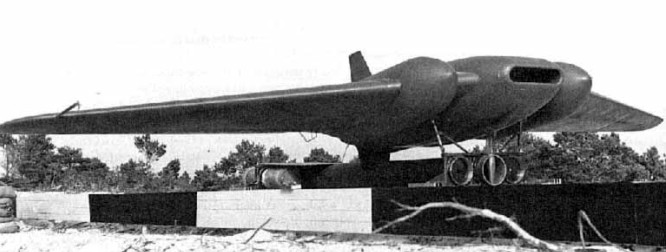
JB-1A

The JB-1A Power Bomb was designed as a ground-launched, pilotless airplane with a pre-programmed guidance system. This onboard system was to guide the Power Bomb with reasonable accuracy to a target approximately 200 miles away, at which point it was to make a terminal dive into the target zone with its bomb load. The design ordnance consisted of two 2,000-pound demolition bombs, one in each wing root container.

An unmanned JB-1 powered by an improvised General Electric B-1 turbojet with a wing span of 28 feet 4 inches (8.64 m) made its 1st flight from Eglin Field’s Santa Rosa Island, Florida, on December 7, 1944, and crashed 400 yards from the rail launcher.

Later the definitive buzz bomb was built, with a single body housing the propulsive duct and 3,7001b warhead. The 30ft span missile worked very well, but the Pentagon did not put it into the inventory.

Only 10 JB-1 airframes were built. With the successful USAAF flights of JB-2 pulsejet-powered copies of the V-1 flying bomb, the older JB-1 program was “reoriented towards pulsejet propulsion, and the remaining JB-1s were modified or completed as JB-10 missiles. Ford Motor Company provided the copy of the German V-1 pulsejet engine. Only one of the JB-10 variants was completed by the end of the war (with Ford PJ-31-1 pulsejet engine), and 1945 sled launches using 4 Tiny Tim rockets were at Muroc Field and Eglin. Finishing in June 1996, the Western Museum of Flight restored the only remaining airframe as a manned Northrop JB-1 Bat. The Western Museum of Flight’s JB-1 restoration team consisted of Rick Hilton, Alex Von Tol, and Fred Erb.

JB-10

Specifications:

JB-1 Bat
Powerplant: None
Wing Span: 28 ft 4 in
Overall Length: 10 ft 6 in
Overall Height: 4 ft 6 in
Range: 670 miles
Armament: None
Crew: Pilot
Number Built: One

JB-1A Bat
Powerplants: 2 x General Electric Type B1 Turbojet, 400-lb thrust
Wing Span: 28 ft 4 in
Overall Length: 10 ft 6 in
Overall Height: 4 ft 6 in
Launch Weight: 7,080 lb
Launch Speed: 160 mph
Cruising Speed: 427 mph at 5,000 ft
Range: 670 miles
Armament: 2 x 2,000 lb bombs
Crew: None
Number Built: One

JB-10
Engine: 1x Ford PJ-31-1 Pulse Jet, 800 lb thrust
Wing Span: 29 ft (8.8 m)
Length: 12 ft (3.7 m)
Height: 4′ 8”
Weight: 7,080 lb
Maximum Speed: 426 mph
Armament: 1,826 lb War Head of high explosive
Crew: None
Northrop MX-324 / MX-334

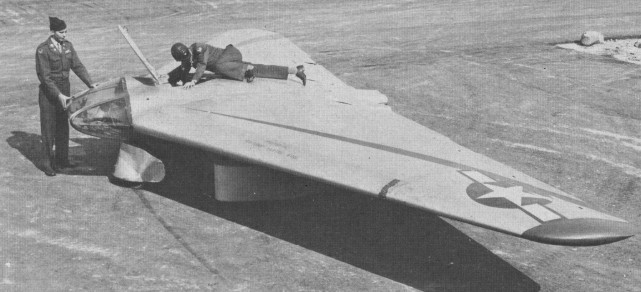
Northrop’s next flying wing project was the MX 324, planned as a research aircraft to pave the way for future flying wing fighters having jet propulsion. It was virtually a low speed glider at first, because no suitable jet power plant existed. It was also remarkably conventional, having ailerons, flaps /elevators, a minimal body and, later, a large wire braced fin. The first example had skids, and the towcar could not pull it off the ground. The second had a jettisonable trolley, which “was not a success.” The third had its own fixed tricycle landing gear, the main wheels having trousers and the nosewheel a spat. The nose leg was offset far to the left. This was because the centreline was occupied by the prone pilot, who had an interesting panel and control arrangement and rested his head in a cushioned sling inside the glass “bubble” nose. The span was about 28 feet.

Northrop went ahead with the project, under Don B Smith, in September 1942. An Army Air Force contract was awarded in January 1943 and John Myers flew the MX 324 as a glider on October 2, 1943.

By this time Northrop was talking with the infant Aerojet Engineering Corporation of Azusa, which had been formed to advance American rocketry. Their first engine planned for a manned aircraft was the XCAL 200. Though the single thrust chamber had but one thrust level, a mere 200 lb, the whole installation weighed 427 lb. This included a tank of monoethylaniline fuel, a tank of red fuming nitric acid oxidant, four gas bottles to feed the propellants, the thrust chamber and a lot of hydraulic and electric control systems. Most of it was still in bits during the first half of 1944. Early in June, the aircraft was trucked to Harper Dry Lake and static-fired on June 20. On June 22 the staked down machine was fired for the full burn time of five minutes. The next day company pilot Harry Crosby taxied under the thrust of the rocket, bringing out the need for “mods”. Finally, at dawn on July 5 Crosby smoothly rose into the cool sky on tow behind a P 38 Lightning. He cast off at 8,000 feet, paused for the tug to clear and then pressed the fire trigger on his miniature control column. It went perfectly.

The MX-334 flew under power for 3 minutes 30 seconds on 22 June 1944. On July 11 Crosby dived under power at about 350 mph to very low level before zooming up almost vertically to 6,000 feet. But the MX 324 was a bit of a dead end until new propulsion systems emerged.

Northrop

In 1916, while working for the Loughead Aircraft Company (later Lockheed), he co-invented a process for making monoplane fuselages and helped design the F-1 flying boat. He became chief engineer at Lockheed in 1927 and built the Vega monoplane. With the help of designer Jack Northrop, Lockheed built the F1, but it was turned down by the Navy. In 1923 Northrop left to take a job with Donald Douglas, and later founded his own corporation.

Jack Northrop (1895-1981) was employed by United Aircraft and Transport Corporation. All went well until United decided Northrop should leave Burbank and join another United division. He remained in California to form a new company. In July 1929 Jack Northrop formed Northrop Aircraft Corp, as a division of United Aircraft and Transport Corporation and built the Alpha (first flown 1930), first all-metal stressed skin airplane, followed by the Beta 300 hp aircraft of 1931, first to exceed 200mph (322kmh).

New Northrop Corporation founded after split with United Aircraft and Transport Corporation, with Douglas Aircraft holding a majority shareholding.

Producing the Gamma high-speed mailplane in 1933 and other types. Northrop Corporation absorbed into Douglas 1937, and new independent Northrop Aircraft Inc established 1939 to concentrate on military projects, including the A-17 attack-bomber and P-61 Black Widow three-seat, twin-boom night fighter, first aircraft in this category to be ordered by USAAF. Northrop experiments with the tailless XP-56 interceptor led to a number of postwar flying-wing projects, culminating in eight jet engined YB-49 flying-wing bomber of 1947. The F-89 Scorpion all-weather fighter entered production two years later, serving USAF and Air National Guard Units until 1963.

Extending its activities into other fields, the company changed its name to Northrop Corporation in the year 1959. In May 1994 Grumman and Northrop merged to form Northrop Grumman Corporation.
Northrop’s final pre-merger production aircraft included the F-5E/F Tiger II lightweight tactical jet fighter/fighter trainer, developed with U.S. Government funding mainly for export as International Fighter Aircraft (first F-5E flown August 1972), derived from the 1959 N-156 prototype and early production F-5A/B Freedom Fighters built for supply under Military Assistance Programs. The T-38 Talon two-seat advanced trainer variant of N-156 for the USAF (first flown April 1959) went out of production in 1972 after 1,187 had been built, but these are being modernized to T-38C standard for redelivery from 1999 by Northrop Grumman. Northrop developed the YF-17 Cobra for competition against the Lockheed YF-16 for the USAF’s Lightweight Fighter Program, but lost and became principal subcontractor to McDonnell Douglas on a proposed carrier borne naval fighter derivative. This eventually entered production as the carrier- and land-based F/A-18 Hornet. Finally developed the B-2 Spirit subsonic strategic stealth bomber (first flown July 1989) for the USAF.
Two of the five main divisions of Northrop Grumman Corporation were Commercial Aircraft, to construct aerostructures and components for the commercial aircraft of other companies and engines, and Military Aircraft Systems, working on B-2 and all other Northrop Grumman aircraft production and modernization programs, and principal subcontractor to Boeing on Hornet. Delivered 21 B-2A Spirit stealth bombers, achieving initial operational capability with the USAF in April 1997 and full capability with the 715th Bomb Squadron in 1999. Undertakes F-5/T-38 modernization, F-14 work, EA-6B Prowler remanufacturing, production of E-2C Hawkeye in latest Hawkeye 2000 form (first flown April 1998; see Grumman entry for earlier development and production of E-2), and production of E-8C Joint STARS as joint USAF and U.S. Army co-operation program for an airborne surveillance and target acquisition system (first flown August 1995 for first production E-8C).

In 2000, Northrop Grumman is to sell its commercial aerostructures arm to the Carlyle Group for $1.2bn. NG was planning to specialise in the defence electronics and IT industries and its aerostructures business, which manufactures subassemblies for Boeing commercial aircraft, the C-17 and Gulfstream V, no longer fits the bill. Carlyle will rename the Dallas, Texas-based company Vought Aircraft and NG will reorganise its Integrated Systems and Aerostructures sector into the Integrated Systems Sector. NG, which recently acquired Comptek Reseach, has also cited expected decline in Boeing production schedules as one of the reasons for the sale. The Carlyle Group, however, has been active in the aero-manufacturing sector having purchased Textron’s aerostructures unit four years previous and buying out Gemini Air Cargo in 1999.

Nippon Teradako-ken TK-3 / Ki-59 / Ku-8-I / Kokusai Ki-59 / Teradakoken TK-3

Ki-59

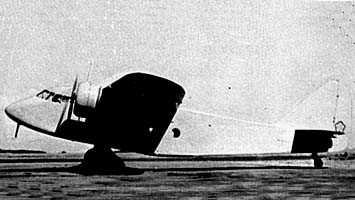
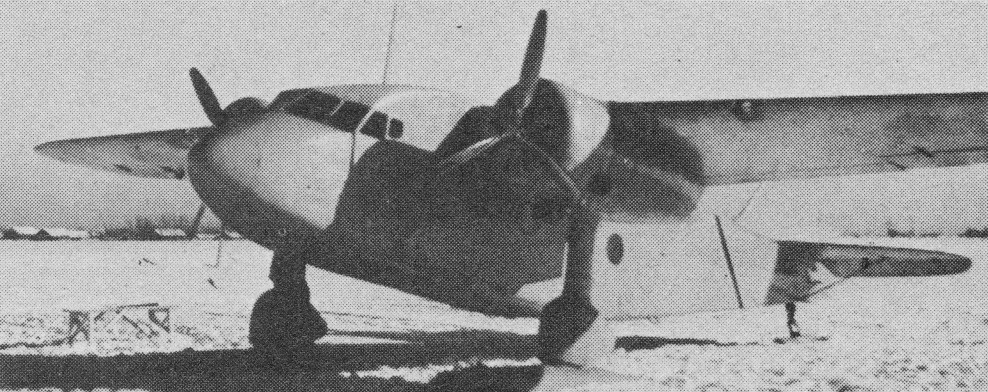
The Teradako-ken TK-3 was a prototype eight-to-ten passenger light transport monoplane built by Nippon Koku Kogyo Kabushiki Kaisha as a short-range transport for civil use at the request of Imperial Japanese Airways to replace its aging fleet of Airspeed Envoys and Fokker Super Universals. The first of two prototypes flew in June 1938, but was unable to meet the required performance requirements and the project was cancelled. In 1939, the Imperial Japanese Army revived the project to meet its urgent requirement for a light transport and liaison aircraft and instructed Nippon to develop the design as the Kokusai Ki-59 (一式輸送機, Isshiki-yusōki).

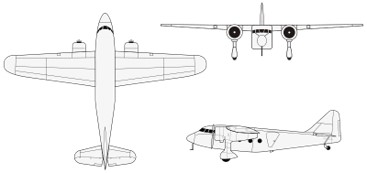
The Ki-59 was a high-wing cantilever monoplane with a fixed tailwheel landing gear and conventional single vertical tail surfaces. It was powered by two 450 hp (336 kW) Hitachi Ha-13a radial engines and other modifications to the design were made to meet Army requirements. The Ki-59 was ordered into production in 1941 with the designation Army Type 1 Transport, and an additional 59 units were produced. After the start of World War II, the aircraft was given the Allied reporting name Theresa. Despite the more powerful engines and modifications sponsored by the Japanese Army, the Ki-59 remained a poor performer and saw little service before being replaced by the more capable Tachikawa Ki-54. A small number were transferred to Manchukuo National Airways.

Near the end of 1941 one Ki-59 was modified into a glider with the removal of the engines and the landing gear replaced by underfuselage skids. It was designated the Ku-8-I or Army Experimental Glider.

Variant:
Nippon Kokusai Ku-8

TK-3
Engines: 2 x 640 hp (477 kW) Nakajima Kotobuki 3
two built.

Ki-59 (Army Type 1 Transport) / Theresa
Engines: 2 x 450 hp (336 kW) Hitachi Ha-13a
Wingspan: 17 m (55 ft 9¼ in)
Wing area: 38.4 m2 (413 ft2)
Length: 12.5 m (41 ft 0⅛ in)
Height: 3.05 m (10 ft 0 in)
Empty weight: 2,880 kg (6,349 lb)
Gross weight: 4,120 kg (9,083 lb)
Cruising speed: 300 km/h (186 mph)
Range: 800 km (497 miles)
Crew: 3
Capacity: Eight passengers
59 built.

Nippi NP-100A Albatross / Nihon NP-100A Albatross

Nippi NP-100A Albatross

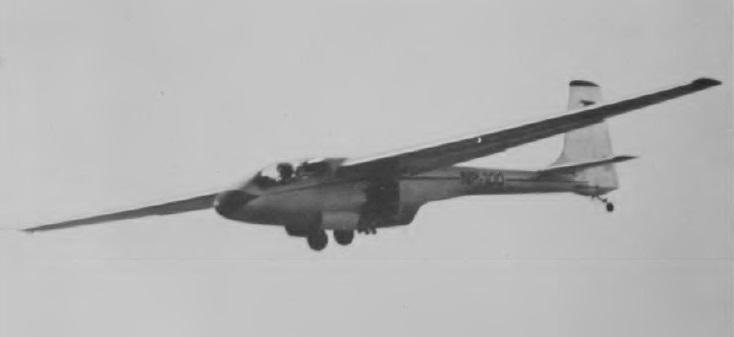
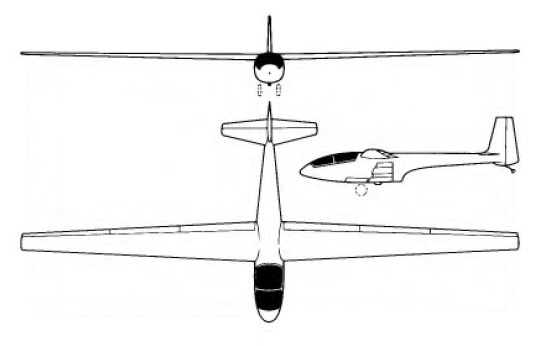
This Japanese side-by-side two-seater motor glider, designed and built by the Nihon Hikoki Kabushiki Kaisha (Japan Aircraft Manufacturing Co Ltd). Of all-metal construction, Nippi began the design of the Albatross late in 1973. The Albatross has cantilever shoulder wings with a single spar and two-section metal skinned flaps on each side that move upwards or downwards; the inner ones can be lowered to 80° for use as air brakes, and there are no spoilers. The fuselage is a semi-monocoque structure, with the forward-retracting twin-wheel main landing gear operated mechanically with spring assistance, and positioned just ahead of the ‘Venetian blind’ air intake doors. There is also a steerable fixed tailwheel linked to the rudder movement. The two pilots are provided with dual controls and sit under a rearward-hinged flush-fitting framed cockpit canopy. The unswept tail unit has conventional elevators and rudder. Powered by a motorcycle engine ‘buried’ in the centre of the fuselage aft of the main landing gear and driving a ducted fan.

The prototype NP-100 made its first flight on 25 December 1975; several modifications were made as a result of the first flight test programme, and a second such programme was to take place during January-March 1978 so as to finalise details of the production version.

The prototype’s powerplant is a modified 60hp Kawasaki H2 three-cylinder two stroke air-cooled in-line motorcycle engine of 748cc driving a four-bladed wooden ducted fan of 23.5in diameter, the fan duct being under the tail boom. There are triple ‘Venetian blind’-type air intake doors on each side of the fuselage, which are interconnected with the engine starting circuit so as to prevent the engine running when the doors are closed. There is a single fuel tank in the fuselage of 8.8 Imp gallons capacity. It was expected that production aircraft would have a 68hp Nippi ‘flat four’ engine. Planned production is now awaiting the final choice of a type-certificated powerplant.

Prototype
Engine: Kawasaki HZI 748 cc, 44.7 kW (60 hp)
Span: 18.0 m / 59 ft 0.25 in
Wing area: 18.0 sq.m / 193.75 sq.ft
Aspect ratio: 18.0
Wing section: Wortmann FX-67-K-170
Length: 8.0 m / 26 ft 3 in
Height: 2.23 m / 6 ft 7.5 in
Empty weight: 420 kg / 926 lb
Max weight: 600 kg / 1,322 lb
Fuel capacity: 40 litre / 8.8 Imp gall.
Water ballast: None
Max wing loading: 33.3 kg/sq.m / 6.82 /b/sq.ft
Max level speed at sea level: 99 mph / 86 kt / 160 km/h
Max cruising speed: 74 mph
Stalling speed: 35 kt / 65 km/h
Min sinking speed: 0.8 m/sec / 2.62 ft/sec at 51.5 mph / 44.5 kt / 83 km/h
Best glide ratio: 30:1 at 56 mph / 48.5 kt / 90 km/h
ROC: 120m/min / 394 ft/min
Take-off run: 365 m / 1,200 ft
Range with max fuel: 124 miles / 200 km / 108 nm

Nikitin PSN-2 / Yefimov PSN-2

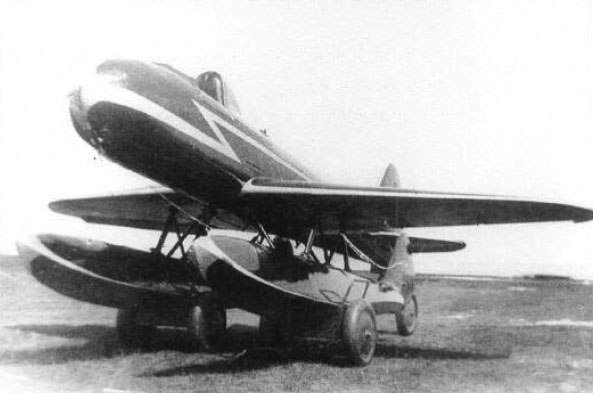
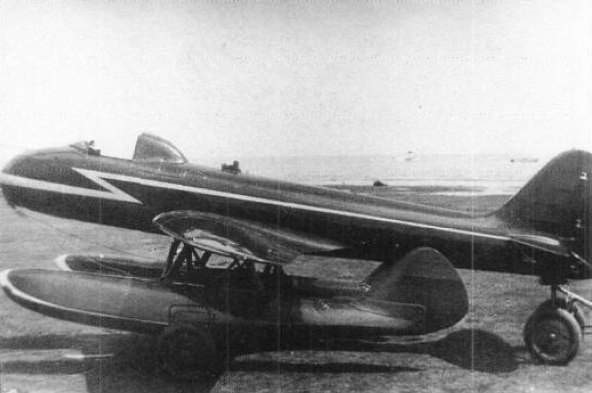
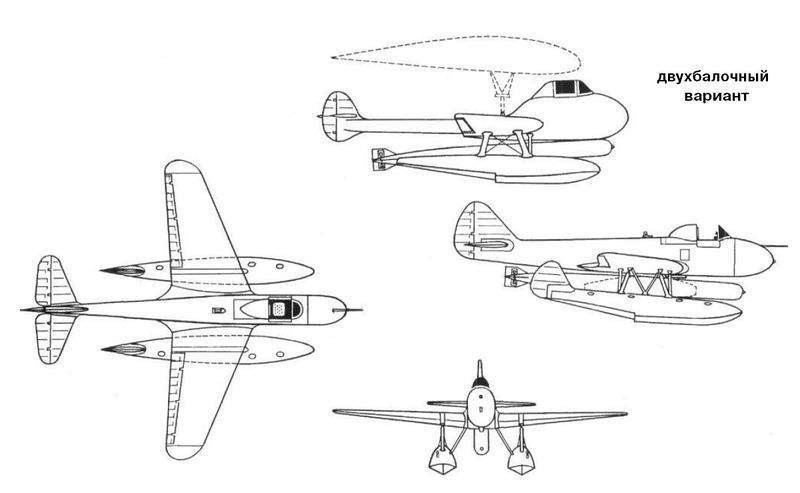
The PSN-2 was a single seat glider floatplane designed to test the concept and guidance equipment for a range of guided glider bombs proposed by S.F. Valk in 1933. Designed by M.M. Yefimo the Nikitin PSN-2, (Planer Spetsial’nogo Naznachenaya – glider for special purpose) was designed by MM Yefimov and produced in the USSR from 1934 by V.V. Nikitin.

Constructed of wood, the PSN-2 was a sleek monoplane aircraft with two floats attached to the wing with struts, an open cockpit in the extreme nose of the fuselage and extra fins at the aft end of each float. The PSN-2 could be carried aloft under a mother-ship or aero-towed off water. Beaching gear was available for manoeuvring the aircraft when not on the water.

A prototype was built at factories No. 23 and No. 379. First flown in June 1940, the planned mission of the pilotless production version of PSN-2 included a 40 km (25.85 mile) range flown at 700 km/h (435 mph), guided to the target with the KVANT Infra-red guidance system. Flight testing was carried out in 1940, but work was discontinued on 19 July 1940 after an order from the commissioner of the naval forces. Between July 1 and 23, 1940, three tows were carried out over the water and 10 take-offs with flight heights of up to 275 meters. A Beriev MBR-2 was used as a tug.

Only the one was built.

PSN-2
Wingspan: 7m
Wing area: 9.47 sq.m
Length: 7.7m
Height with floats: 2.7 m
Empty weight: 830 kg
Loaded weight: 1,800 kg
Maximum speed: 168 km / h
Seats: 1

Nikitin PSN-1

From 1933 a series of special projects was initiated under the PSN banner (Planer Spetsial’nogo Naznachenaya – Glider for Special Purposes). A proposal was made by S.F. Valk for a glider anti-shipping bomb with Infra-Red guidance, which was expanded to include DPT (long-range glider torpedo), LTDD (Long-range flying torpedo) and BMP (towed mine glider). To evaluate the Kvant Infra-Red guidance a piloted anti-shipping missile version was produced as the Nikitin PSN-1. Vasilii Vasilyevich Nikitin and N.G. Mikhelson designed a small single-seat monoplane flying boat glider with floats at approx 1/2 span, carrying a torpedo underneath. The PSN-1 was carried aloft by either Tupolev TB-3 or Tupolev TB-7 motherships and released at the appropriate height.

At least 10 were built in the USSR from 1937 and many of these were flown during trials of the autopilot and the Kvant (Quantum) guidance system.

PSN-1
Powerplant: 1 × MG-11F
Wingspan: 18 m (26 ft 3 in)
Empty weight: 970 kg (2,138 lb)
Gross weight: 2,000 kg (4,409 lb)
Maximum speed: 168 km/h (104 mph, 90 kn)
Crew: 1

Nikitin, Vasili Vasilievich

Born in 1901, Vasili Vasilievich Nikitin (In Russian: Василий Васильевич Никитин) came to aircraft construction in an unconventional way. An architect by training, he began working in 1922 at DP Grigorovich’s construction bureau. He soon stood out as an organizer and designer, for which he was appointed as responsible for the general composition.

Between 1925 and 1929 he went to work with NN Polikarpov and between 1930 and 1936 at the TsKB.

From 1933 Nikitin designed several airplanes of his own conception and participated in the development of other models in collaboration with several designers.

In 1933 he designed his first own design, the NV-1 single – seater trainer which was soon upgraded into the NV-2 version. The NV-4 of 1936 appeared as a central float plane and Nikitin developed a military version, which competed unsuccessfully in the competition for the KOR-2.

The NV-5 of 1937 was the forerunner of an entire family of biplane training aircraft that was never produced due to the preference given to single-seater trainers.

From the arrest of Mijelson in 1937 Nikitin went on to head the Experimental Department of Factory No.23 in Leningrad, which was responsible for the continuation of his designs. In this period include flying boat MP from 1937 and training floatplanes MU-4 and MU-5.

In addition to his own designs during this period, Nikitin worked on modifications of aircraft from other manufacturers. The R-5T torpedo boat, developed in 1933 on the basis of the Polikarpov R-5 reconnaissance aircraft, vame to light; the R-5 Jumo from 1935, with a German engine and the special RZ to set records from 1937.

In 1937 the PSN models (special mission gliders) were built, flying bombs without motor. The first model was PSN, developed by NG Mijelson and 10 copies of it were built. The second model, called PSN-2, was conceived by MM Yefimov and had already been towed through the air when it was decided to cancel development.

Between 1939 and 1940 VV Nikitin went on to direct the OKB-30 based on the Moscow Tech and later transferred to Factory No.156. Test pilot Vladimir Shevchenko was appointed lead constructor. Between 1939 and 1941 the OKB-30 would build 3 prototypes (IS-1 , IS-2 and NV-6) and would be responsible for the development of 18 aircraft projects. OKB-30 ceased to exist as a result of NKAP order No. 459ss issued on May 20, 1941.

From 1941 on, he held various management positions in aeronautical repair shops and at TsAGI. In 1942 he converted a captured Junkers Ju-52 from the Germans into a test bed for experimental applications at the TsAGI and later took charge of the design and construction of the wind tunnels and the work of the Scientific-Technical Bureau of the institute.

In 1945 he was in charge of transforming a Douglas Douglas A-20 “Boston” attack aircraft into a liaison plane and staff transport with capacity for several passengers.

After the war he went to work at the NI Kamov bureau, dedicated to the development of helicopters, and was soon selected as its reserve.

Overall VV Nikitin was responsible for the creation of 15 original and successful aircraft. This aeronautical constructor managed to pass the piloting courses and generally tested his designs in the air.

Vasili Vasilievich Nikitin died in 1955.

Nihon Hikoki Kabushiki Kaisha / Japan Aircraft Manufacturing Co Ltd

1962:
No 32,
3-Chome,
Choja-Machi,
Naka-Ku,
Yokohama

This company was engaged mainly on overhaul of US Navy aircraft and of the 60 Grumman Tracker anti-submarine aircraft of the JMSDF.
It built the mock-up of the NAMC YS-11 and was responsible for the design and production of components for this transport.
Under JASDF contract, Japan Aircraft Manufacturing Co carried out a lengthy high-lift research programme with a much-modified Saab-91B Safir.
With the designation Z1G3, this aircraft has a 260 h.p. Continental IO-470-D engine, reduced span of 31ft 6in, blown flaps, large trailing-edge fillets, slotted tailplane and other changes to give it STOL performance.