Windward Performance is an aircraft design house and manufacturer located in Bend, Oregon. The company is owned and led by Greg Cole. Windward Performance has helped numerous companies with technical expertise and in house they designed and developed the SparrowHawk ultralight sailplane and the DuckHawk high strength, high performance 15m sailplane.
The company also designed and built the Perlan II stratospheric glider which now holds the sailplane world altitude record at 52,172 ft.
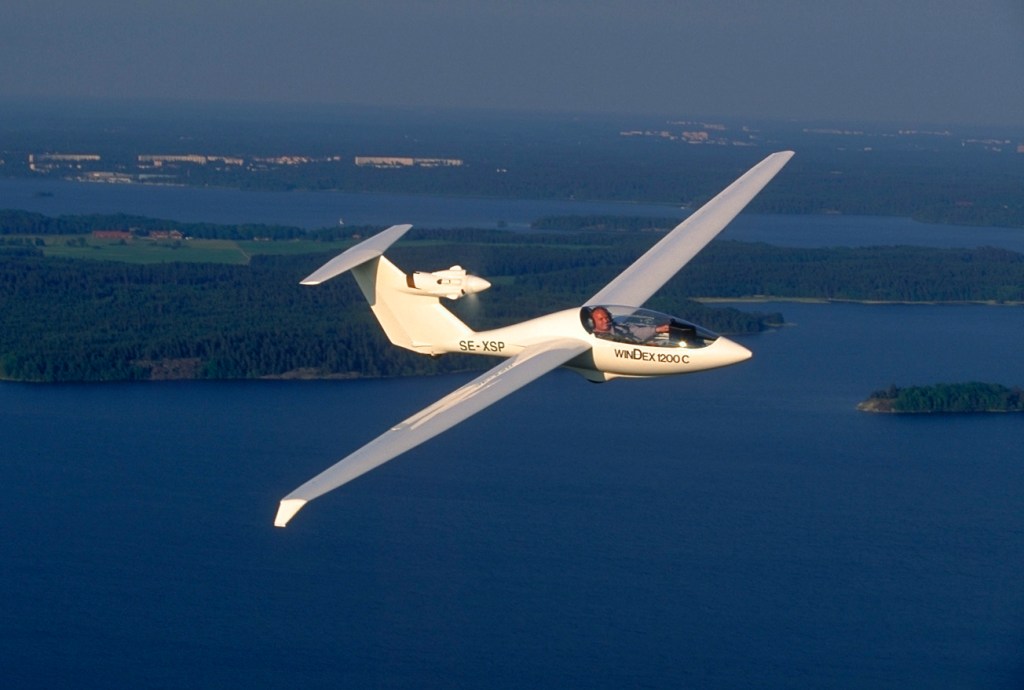
In 1980 Sven-Olof Ridder and Harald Undén start a hobby project which was intended to become a very light self-launching glider. During 1983 the Windex wing section developed and tested in wind tunnel. During 1985 Windex 1100 (unpowered) flies and work have started on moulds for powered version with 12 m. span, Windex 1200 C. In 1986 all Windex 1200 C moulds burn in a factory fire after only 2 sets of laminates have been produced but during 1987 the Windex 1200 C prototype was shown at the Paris Air show. During 1990 new moulds were being produced for kit production model, Windex 1200 C, fully aerobatic, with carbon fibre spars. The Windex 1200 C prototype took part in Aerobatic World Championships 1991 for Gliders in Poland. Bronze medal in 2 categories. 10 “pilot-builders” in Sweden and abroad tested kit parts, drawing, manual etc during 1993. During 1992-1995, intensive kit development work, product testing took place with 2 factory prototypes under construction. The first amateur-constructed kit Windex 1200C flew in 1996. In 1999 Windexair AB took over the Windex 1200C project from RADAB.
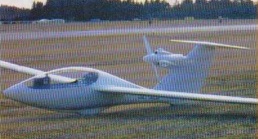
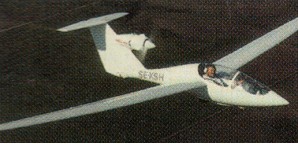
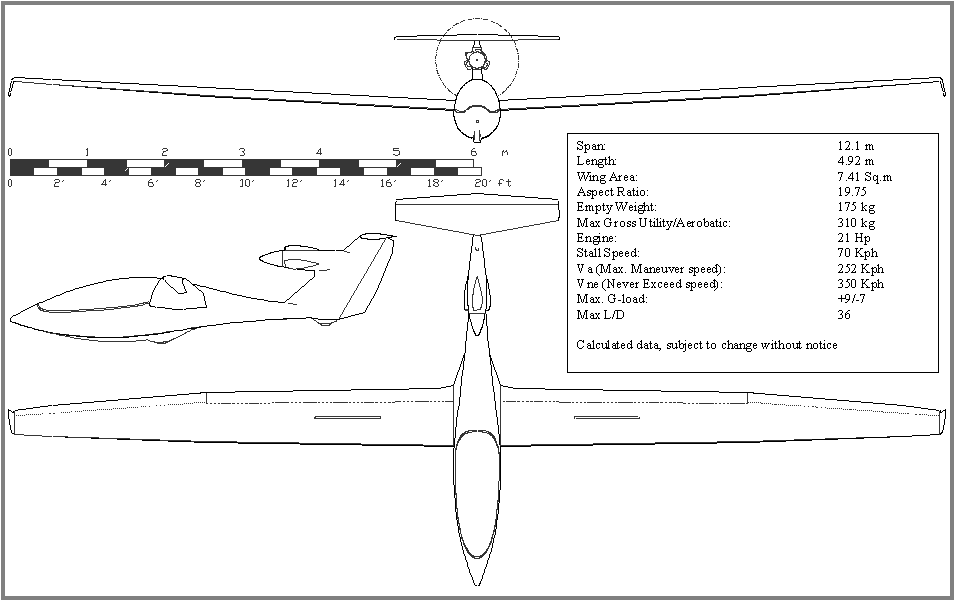
Windex 1200 C is primarily a high-performance sailplane, but has a low-drag fin-mounted engine installation and a variable-pitch propeller turning it into an efficient touring aircraft with a cruising speed of 210 km/h (130 mph) and self-launching capability. The airframe of Windex 1200 C is stressed for aerobatic manoeuvres and designed to JAR 22 (A). It’s a powered high-performance sailplane that can be easily handled on the ground by one person. Even with engine nacelle, propeller and a 20% smaller span it has a soaring performance equal to or better then a 15-metre Standard Cirrus glider. It also has a climb rate of approximately 2.5 metre/sec (685 fpm), under power. The specially designed 17% thick airfoil section has comparatively low drag and a wide low drag bucket that is further expanded by a 22.5% chord trailing edge flap. The basic airfoil has very docile stall characteristics in both smooth and rough condition. The carbon fibre spar has been successfully proof tested at 2175 kgs each side. That gives a useable load factor of +9 g and -7 g (with added safety factor of x 1.725). The König SC-430 3-cylinder engine, used in the Windex 1200C is manufactured in Canada. A displacement of 430 cc gives a take off power of 20 hp at 4200 rpm. Weight of the König engine is 13.8 kg (30.4 lbs). Starting is electric and it uses gasoline of types 100LL, 80UL and mogas98. The variable-pitch propeller unit for the König engine has been built and successfully tested to JAR 22 standards. The pilot control pitch from the cockpit, fine pitch to fully feathered. The JAR tests include 50 hours running and 500 control movements with engine running. After that the propeller unit is dismantled, searched for damage, tolerances checked and finally function checked again. The unit has come through bench testing without problems.
The Windex 1200 C Fuselage kit consist the following: Laminate parts: Upper and lower fuselage shells, vertical tail with engine nacelle, left and right, spar for vertical tail, upper and lower stabiliser shells, including spar caps moulded-in, spar web stabiliser, reinforcement module including seat and backrest, cockpit frame left and right, wheel housings for main- and tail wheel fairings, housing, ventilation channel with mechanism mounted, stick mechanism cover, fwd push rod cover aft rudder line covers and rudder pedal assembly. Plexiglas canopy cut to size with ventilation window (Mecaplex). Main wheel with tire. Tail wheel, complete. Miscellaneous tubing, electrical wiring, switches, fuel lines, etc. All metal parts are pre made. All hardware, bolts etc., is AN-quality. (With a few stainless steel exceptions) 5-Point (aerobatic) harness. Tow hook. Full scale templates for bulkheads, etc. All necessary drawings. Building manual (English language) Epoxy, fibreglass, adhesives. NOT INCLUDED: Instrument, paint, abrasive paper and similar materials. Wood, chipboard etc. for building cradle and jigs. Wing kit All internal wing fittings, hinges, spoilers, push rods, fuel tanks and wing spars are fitted. Wing is closed to eliminate wing jig and to considerably save building time Metal parts: All metal parts are pre-made. Wing spar pin bolts, bolts for rear and fwd attachment. AN aircraft hardware. Push rods for ailerons and spoiler. 2 x aluminium fuel tanks each 17 litres. Associated couplings and hardware. All necessary drawings and templates. Building manual. Epoxy, fibreglass, adhesives, NOT INCLUDED: Paint. Abrasive paper and similar materials. Wood, chipboard etc. for jigs.
The span is 39′ 8″ and best L/D is 38:1. They also offered a fast build kit version for $5l,890 that saves approximately 300 hours from the normal 1000 hour build time. The glider is stressed for aerobatics and has enough fuel capacity and a variable pitch propeller for efficient powered cruising up to 3 hours. The Windex uses preimpregnated composite materials and an autoclave cure process for high strength to weight ratio in the structures. No other current sailplane uses this fairly expensive process. The prize of the kit was US$39,000 in 1997. Windex also offered a building assistance program in Sarasota, Florida for $870 per month and will provide qualified helpers for $40 per hour.
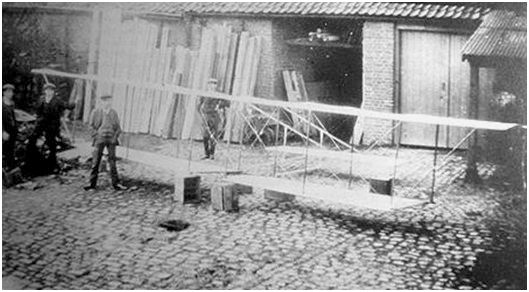
Sydney Camm, one of Britains most distinguished aircraft designers and father of the Hawker Hurricane, was born in 1893. From his schooldays he had shown a keen interest in aviation, founding the Windsor Model Aeroplane Club and constructing many successful model aircraft. Camm and his friends built a full sized Chanute-type glider 1912-1913 with plans to put an engine on it. It is seen with wing extensions that were added after the first experiments. It was used for almost a year, before being wrecked by a hurricane.
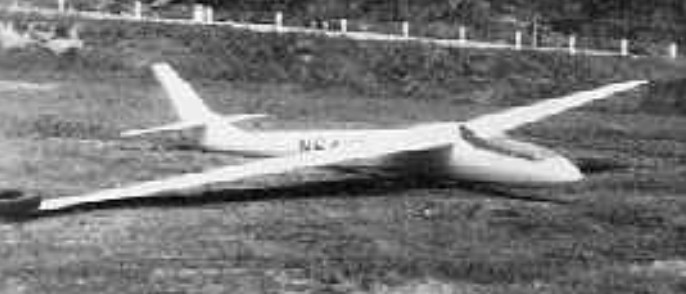
Designed by George Wiederkehr, the Cu-Climber first flew in 1968. The wing has a large (12 x 6 in/ 30 x 15 cm) spruce/ plywood/ fiberglass box-spar stressed to +9/ -6.3 g. The remainder of the wing is a fiberglass/ balsa sandwich, with the bottom of the wing aft of the spar covered with fabric. The fuselage is a fiberglass semi-monocoque structure with foam bulkheads. The ship also has an all-moving conventional horizontal tail with an anti-servo tab. Full span ailerons/ flaps are used for approach control.
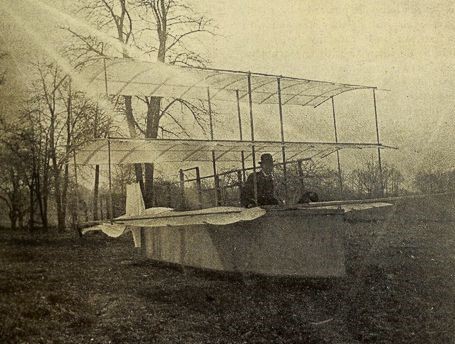
Whitehead’s airplanes are notoriously undocumented. There seems to have been a development from a triplane glider to a powered version either with a single tractor propeller or two tractor propellers running in opposite directions. The triplane could be flown without or with the body. The triplane glider with body attached, was later flown without the body. The proposed twin-propeller tractor version of the triplane with body may or may not have been built or flown.
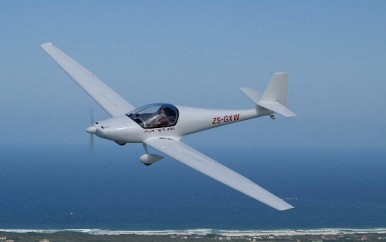
The Whisper motorglider is equally at home soaring in rising air as a glider, or motoring long distances as a roomy, yet fast touring aircraft.
The Whisper was designed for the homebuilder. Every component has been optimized to ease the task of the homebuilder. The aircraft can be built from a “basic package” or from a “fast build package” depending on how many hours the builder wishes to spend on the project. Components not supplied in these packages can be manufactured by the builder or ordered from the factory. All hardware is ordered directly from Aircraft Spruce & Specialty by the builder.
The Whisper can be built with a wingspan of 16m (52.5′) or 12m (39.4′) to suit individual requirements. With the longer wing the aircraft has a glide ratio of 28:1 and a minimum sink rate of 200fpm which makes it a very capable glider. The 21USG fuel tank and the 115MPG cruise speed also make the aircraft capable of very long powered flights. The 4’2″ wide cabin allows for very comfortable side by side seating. The aircraft can be built with conventional or nose wheel undercarriage.
The aircraft structure is fiberglass and the wing has been tested to an ultimate load of 10.6g. Engine options are VW2100, Jabiru 2200/3300, Rotax 912/S
Whisper Motorglider Engine: Limbach L2000 or similar VW based conversion Wing span 16m Wing area 15sq.m Aspect ratio 16 Length 7.16m Empty weight 500 kg Max all up weight 775 kg Fuel capacity 85 litres Prop Hoffman 3 position or fixed pitch wooden. Rate of Climb (gross weight at sea level) 3.6m/s (700ft/min) Max level speed 210km/h (113kts) Cruise speed (75% power) 180km/h (95kts) Vne 250km/h (132kts) Stall speed 72km/h (38kts) Va 160km/h (85kts) Cruise fuel consumption 12litres/hr (3.2USG/hr) Range 1200km (no reserves) Take off roll 180m Min sink speed 0.9m/s at 80km/h Glide ratio 1:28 at 105km/h
Whisper Xpress Engine Limbach L2000 or similar VW based conversion Wing span 12m Wing area 12.5sq.m Aspect ratio 11 Length 7.16m Empty weight 450 kg Max all up weight 720 kg Fuel capacity 85 litres Prop Fixed Pitch – wooden Rate of Climb (gross weight at sea level) 2.54m/s (500ft/min) Max level speed 210km/h (113kts) Cruise speed (75% power) 180km/h (95kts) Vne 250km/h (132kts) Stall speed 74km/h (38kts) Va 160km/h (85kts) Cruise fuel consumption 12litres/hr (3.2USG/hr) Range 1200km (no reserves) Take off roll 250m (470m to clear 50 ft obstacle)

 All Aero