The Reynard Glider Construction Co of Aylestone, Leicester, UK, built a few primary gliders, of an original design, in 1930. The company last advertised in the “Sailplane and Glider” dated 6 February 1931.
Glider
Rensselaer Polytechnic Institute RP-2
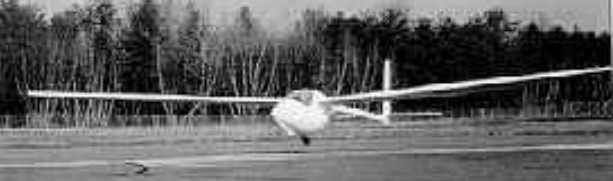
The RP-2, which first flew in 1985, was designed by Steven J. Winckler as a part of the Composite Aircraft Program, Glider of the Rensselaer Polytechnic Institute of Rensselaer, NY. The wing is equipped with split flaps for approach control.
Wing span: 13.5m / 44.25ft
Wing area: 11.1sq.m / 120sq.ft
Empty Weight: 124kg / 273 lb
Payload: 74kg / 164lb
Gross Weight: 198kg / 437lb
Wing Load: 17.83kg/sq.m / 3.64lb/sq.ft
Seats: 1
Aspect ratio: 16.4
L/D max: 29 at 72 kph/39kt/45mph
Min sink: 0.69m/s / 2.25 fps / 1.33 kt
Airfoil: Boeing 80-163
Construction: GFRP/CFRP/ Kevlar
Rensselaer Polytechnic Institute RP-1
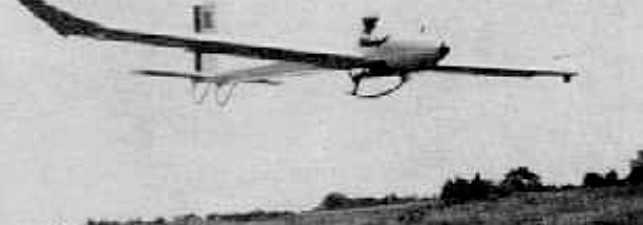
The RP-1 which first product of the Composite Aircraft Program, Glider of the Rensselaer Polytechnic Institute, a project partly supported by NASA. The RP-1, although operated with an FAA airworthiness certificate, was also designed to permit foot launching.
Span: 11.5m / 37.5 ft
Wing area: 12 sq.m / 129 sq.ft
Empty Weight: 53 kg / 116 lb
Payload: 67 Kg /149lb
Gross Weight: 120 kg/ 265 lb
Wing Load: 10 kg/sq.m / 2.05 lb/sq.ft
Aspect ratio: 11
Seats: 1
L/D max: 20 52 kph / 29 kt / 33 mph
Min sink: 0.61 m/s / 2.0 fps / 1.18 kt
Airfoil: Wortmann FX-63-137
Structure: composite/ Kevlar/ PVC foam
Renard 1873 Decaplan
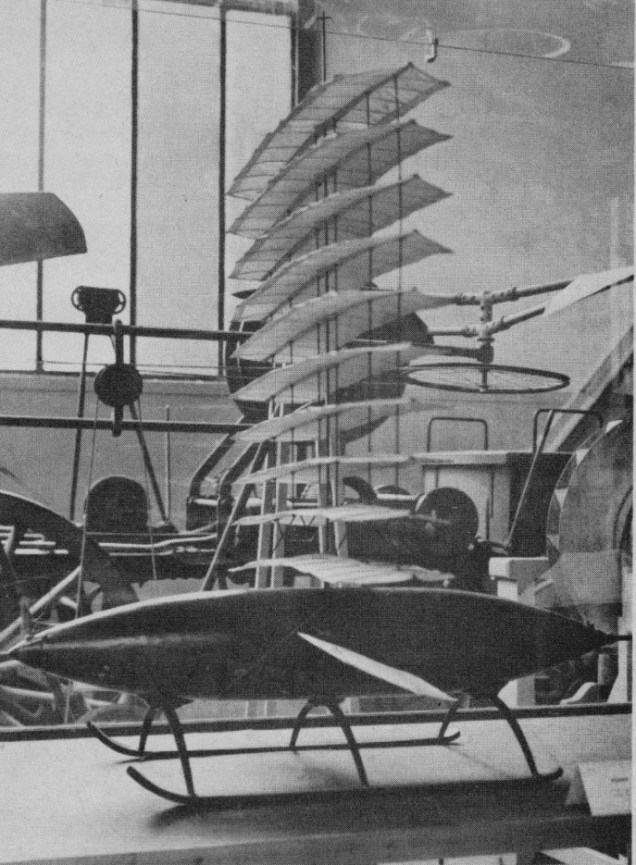
The 1873 Renard Decaplan 10-wing glider had twin skid gear and an aileron at the centre point on each side of the fuselage.
Gliding was reportedly “suitable: but only in a spiral.
Reinhard Cumulus
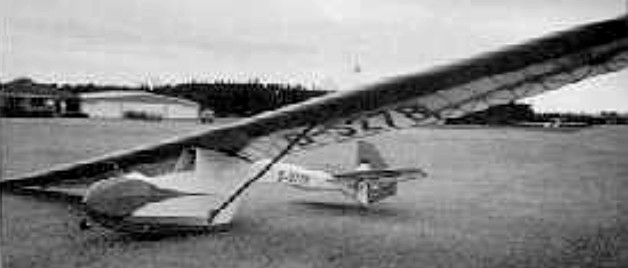
The Cumulus, which first flew in 1951, incorporated a wing very similar to that of the pre-World War II Schneider Grunau Baby with a new fuselage design reminiscent of the pod and boom Bowlus Baby Albatross. It was designed by Gerharf Reinhard with homebuilders in mind. Early models used a skid for takeoff and landing, while later models incorporated a small main wheel. The glider is constructed with wood wings and steel tube fuselage; both fabric covered.
Wing span: 13.57 m / 44.5 ft
Empty Weight: 159 kg / 350 lb.
Seats: 1
L/D max: 19
No. built: approx. 10
Reineck Patriot
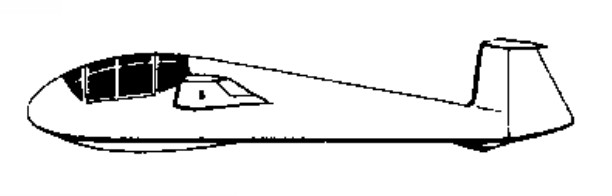
Soaring plane / ProtoEngine, Germany, 1952
Length : 25.919 ft / 7.9 m
Wingspan : 59.055 ft / 18.0 m
Landing speed : 27 kt / 50 km/h
Crew : 2
Rehberg / Schneider / Hofmann Schulgleiter SG-38
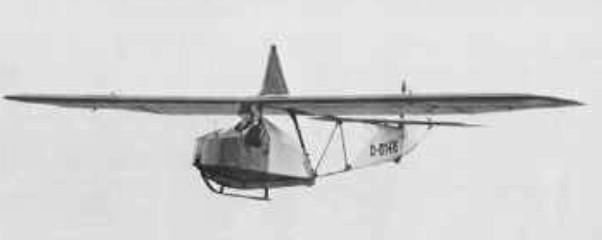
Wing span: 10.41 m
Wing area: 16 sq.m
Empty Weight: 125 kg
Gross Weight: 210 kg
Wing Load: 13.1 kg/sq.m
Aspect ratio: 6.77
L/D max: 10
Min Sink: 1.5m/s
Reghin RG-9 Albatros
The second of Ing Vladimir Novitchi’s sailplanes to go into service with Romanian clubs was the RG-9 Albatros tandem two-seater trainer, which first flew in prototype form on 1 June 1958, and of which 25 were built. It is of conventional wooden construction, characterised by a cantilever mid wing and a long cockpit canopy with two separate sideways opening sections for pilot exit and entry. The wooden wings each have a plywood leading edge
torsion box and fabric covering aft of the spar; air brakes are fitted and the wooden ailerons are fabric covered. The fuselage is a plywood monocoque, and the landing gear consists of twin wheels under the centre fuselage plus a skid under the nose. The cantilever tail unit is of wooden construction.
Span: 54 ft 0 in
Length: 26 ft 2 in
Wing area: 215 sqft
Aspect ratio: 13.5
Empty weight: 639 lb
Max weight: 1,036 lb
Min sinking speed: 2.79 ft/sec at 38.5 mph
Best glide ratio: 25:1 at 49 mph
Reghin RG-5 Pescarus
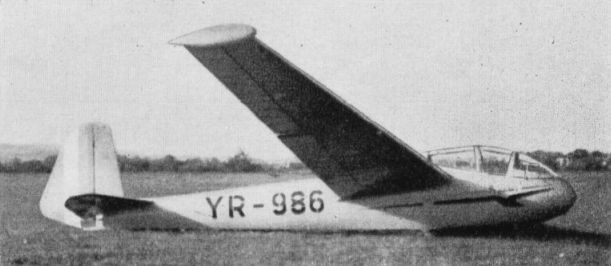
The IFIL-Reghin RG-5 Pescăruș (English: Herring gull) or CIL Reghin RG-5 Pescăruș was a Romanian single seat glider designed by Vladimir Novitchi and built in Romania in the 1950s, intended for club use. It was a mid-wing cantilever monoplane. Like the rest of the aircraft, the wing was wooden, built around a single spar and mounted with 1.66° of dihedral. Plywood skinning from the spar forward and around the leading edge formed a torsion box; the rest of the wing was covered with a mixture of ply and fabric. In plan the wing was symmetrically straight tapered, with squared tips, where there were small tip bodies or plates. It had wood-framed, fabric-covered, balanced ailerons which reached out to the wing tips. DFS (Schempp-Hirth) type airbrakes were mounted at mid-chord, just inboard of the ailerons. There were no flaps.
The RG-5 had a ply monocoque fuselage with its single cockpit ahead of the wing, enclosed by a multipart, sideways-opening canopy which reached to the nose. It landed on a fixed monowheel under mid-wing, with a skid that reached from the nose to under the leading edge, assisted by a small tail bumper. The fuselage tapered markedly from the cockpit aft to a conventional wooden-framed, fabric-covered empennage. Both tailplane and fin were straight edged, with the former mounted forward of the fin at shoulder position and carrying rounded elevators. Together the fin and rudder were flat topped. The rudder hinge was at the trailing edge of the elevators, leaving the rudder, broad and straight edged to its rounded heel, clear to extend down to the keel.
The RG-5 Pescăruș was first flown on 8 September 1957.
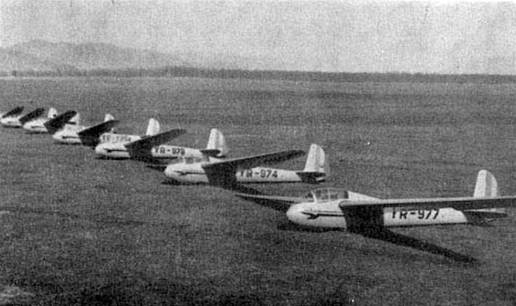
Twenty-six were constructed by Intreprinderea Forestierǎ di Industrializare a Lemnului (FILI) from 1958, going to Romanian gliding clubs.
Wingspan: 15.10 m (49 ft 6 in)
Wing area: 15.40 m2 (165.8 sq ft)
Aspect ratio: 14.60
Airfoil: Göttingen 549 (modified)
Length: 7.38 m (24 ft 3 in)
Empty weight: 210 kg (463 lb)
Gross weight: 300 kg (661 lb)
Stall speed: 50 km/h (31 mph, 27 kn)
Aertowing speed: 120 km/h (75 mph; 65 kn)
Maximum glide ratio: best 27 at 76 km/h (47 mph; 41 kn)
Rate of sink: 0.76 m/s (150 ft/min) minimum, at 60 km/h (37 mph; 32 kn)
Wing loading: 19.5 kg/m2 (4.0 lb/sq ft)
Crew: One
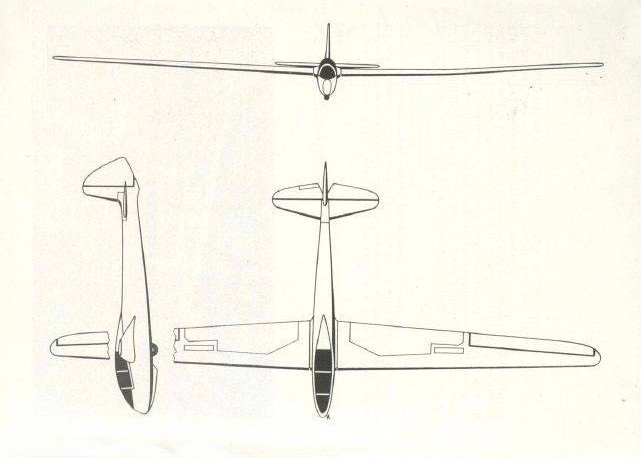
Reghin RG-4 Pionier
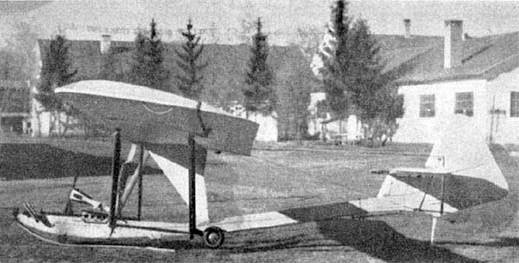
The Romanian organisation of Cil Reghin began developing gliders to the design of Ing Vladimir Novitcni in 1953, starting with the RG-4 Pionier primary trainer.
The RG-4 Pionier was a single seat primary glider built in Romania in the 1950s. Designed by Vladimir Novitchi and very much in the 1930s Zögling tradition with the pilot exposed on a simple beam fuselage under the leading edge of a high wing. This wing was supported over the fuselage beam on a set of N-form, cross braced struts and by a pair of parallel lift struts on each side to the wing at about one third span. The wing, which was wood framed, was mounted with 2.8° of dihedral, had parallel chord and was unswept. There were plain, fabric covered ailerons out to the wing tips.
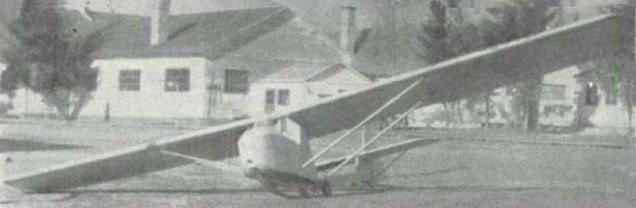
The RG-4 landed on a fixed monowheel under the wing trailing edge, with a skid that reached from the nose to under mid chord, assisted by a small tailskid. It had a conventional empennage with a parallel chord tailplane and elevators, similar in plan to the wing, mounted in front of the narrow fin, held above the fuselage on a short step and braced from below with a single strut on each side. Despite its forward position the elevators still required an elevator cut-out for rudder movement. As well as carrying the broad, near triangular rudder, the fin also anchored a pair of bracing wires on each side to reduce horizontal flexing of the fuselage beam. One of these ran to the wing underside, the other to the fuselage under the wing.
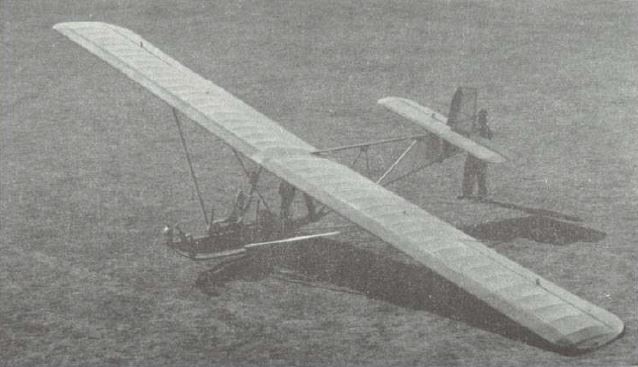
The RG-4 Pionier was first flown on 1 May 1954. A batch of fifty was produced by Intreprinderea Forestierǎ di Industrializare a Lemnului (FILI).
Wingspan: 10.45 m (34 ft 3 in)
Wing area: 14.8 sq.m (159 sq ft)
Aspect ratio: 7.0
Airfoil: NACA 60 modified
Length: 5.75 m (18 ft 10 in)
Height: 1.2 m (3 ft 11 in)
Empty weight: 100 kg (220 lb)
Gross weight: 188 kg (414 lb)
Stall speed: 40 km/h (25 mph, 22 kn)
Never exceed speed: 165 km/h (103 mph, 89 kn) placard, in smooth air
Rough air speed max: 100 km/h (62 mph; 54 kn)
Winch launch speed: 90 km/h (56 mph; 49 kn)
Maximum glide ratio: best 14.5 at 58 km/h (36 mph; 31 kn)
Rate of sink: 0.90 m/s (177 ft/min) minimum, at 52 km/h (32 mph; 28 kn)
Wing loading: 12.7 kg/sq.m (2.6 lb/sq ft)
Crew: One
 All Aero