Rolladen-Schneider LS 4

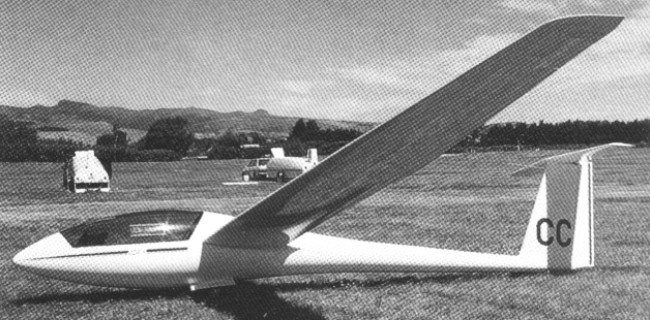
LS4-B

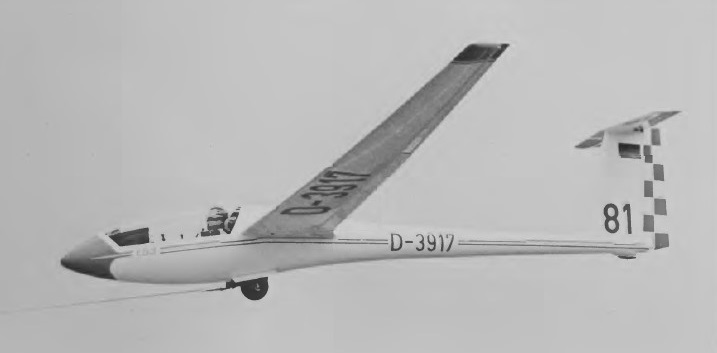
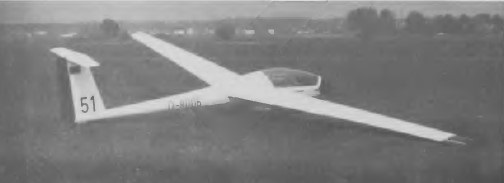
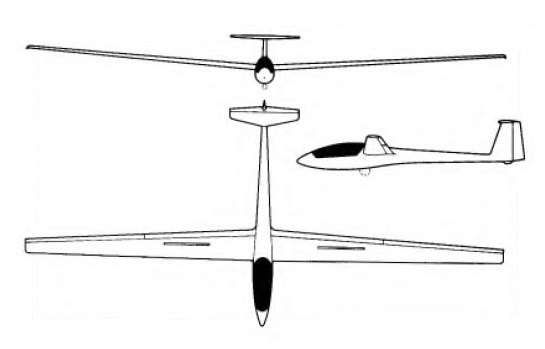
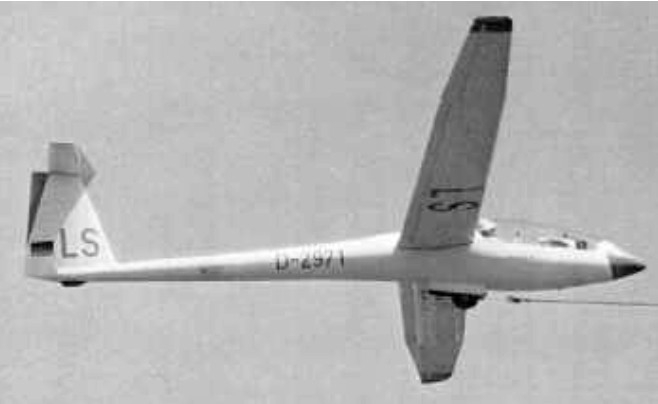
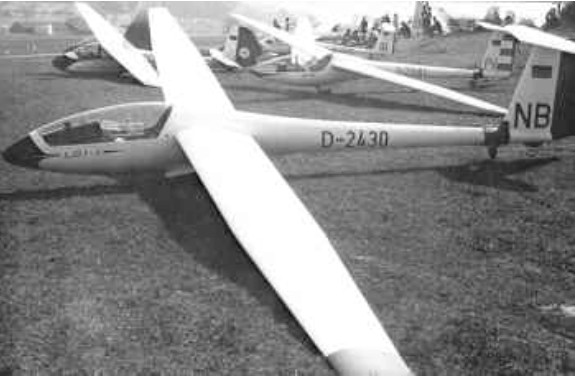
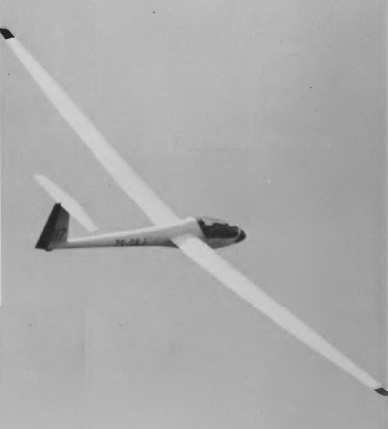
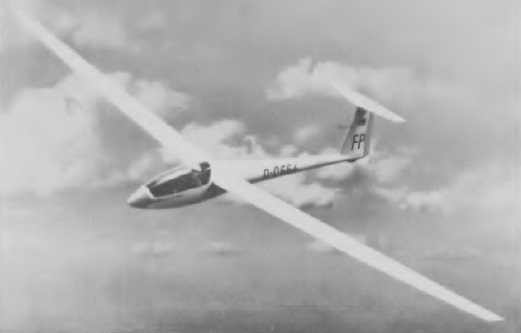
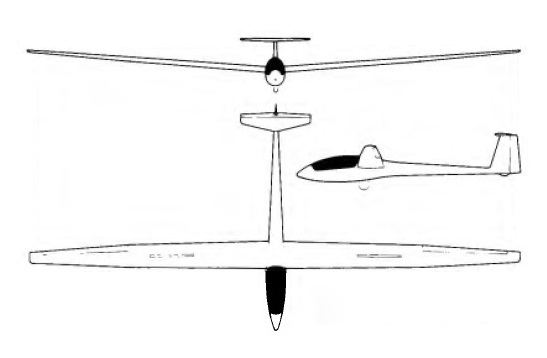
Design work on this Standard Class sailplane began by Wolf Lemke in the winter of 1978 as the successor to the LS-1. The LS4 has a modified LS3-a GFRP/foam sandwich fuselage married to a new thin-section Wortmann mod. wing mounted in the mid position, and with a double taper planform, and a variety of rigging improvements. It has larger upper-surface double segment Schempp-Hirth type air brakes in the upper surfaces, but flaps are not fitted. The cantilever T-tail has separate elevators rather than an all-moving tailplane,and the retractable monowheel has rubber suspension and a cable-operated brake. There is a rubber bumper type tailskid with a semi-recessed tailwheel offered as an alternative. The pilot sits under a canopy that hinges upward and forward to open, and up to 140 litres of water ballast can be carried. The same glassfibre/foam sandwich construction as the LS3’s is employed.

The prototype LS- 4, registered D-6680, first flew 28 March 1980. Production began in the autumn of that year and by the spring of 1981 50 LS4s had been built out of 160 on order.

The type took the first seven places in the Standard Class at the 1981 World (Gliding Championships at Paderborn, West Germany.

The improved LS-4a has an increased gross weight and ballast capacity and strengtened landing gear. LS-4s took the first 6 places (and 21 out of the first 25) in the Standard Class at the 1983 World Championships at Hobbs, NM.

Over 600 were built.

Span: 49 ft 2.5 in
Length: 22 ft 1 in
Area: 10.5 sq.m / 113 sq.ft
Aspect ratio: 21.4
Airfoil: Wortmann mod
Empty Weight: 238 kg / 525 lb
Payload: 234 kg / 515 lb
Gross Weight: 472 kg / 1040 lb
Wing Load: 44.9 kg/sq.m / 9.21 lb/sq.ft
Water Ballast: 140 kg / 308 lb
L/DMax: 40.2 102 kph / 55 kt / 63 mph
MinSink: 0.60 m/s / 1.97 fps / 1.17 kt at 51.5 mph
Seats: 1
Rolladen-Schneider LS 3

Developed by Wolf Lemke and Walter Schneider from the LS1-f via the LS2, which never went into production, the LS3’s design and construction began in 1975.

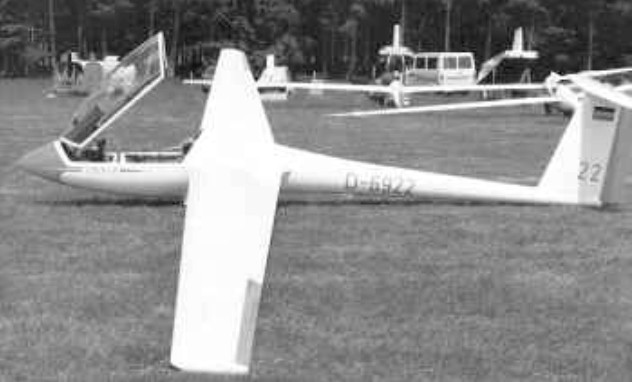
Like the LS1 -f, the LS3 is a cantilever mid-wing monoplane with a T-tail; the wings are of glassfibre/foam sandwich construction as are the one-piece ‘flaperons’, or combined ailerons and flaps, which form the entire trailing edge; from 1979 the ‘flaperons’ have been replaced by conventional flaps and ailerons. There are air brakes in the upper wing surfaces and there is provision for up to 309lb of water ballast. The semi-monocoque fuselage, very similar to the LS1-f’s, has a hinged one-piece flush-fitting canopy under which the pilot sits in a semi-reclining position. There is a retractable rubber-sprung monowheel with a drumbrake, and a tailskid. The fin and rudder, and the tailplane and elevators mounted on top of them, are all of glassfibre/foam construction. There is a mechanism to prevent the air brakes from opening at an incorrect flap setting, and the one-piece ‘flaperons’ enabled shorter, steeper landing approaches to be made than with conventional ailerons drooping in conjunction with the flaps. The flaperons are coupled with dive brakes to reduce approach and landing speeds. The prototype first flew on 4 February 1976 at Egels bach in Germany.

All LS-3 series use a fuselage similar to that developed for the Standard Class LS-1f, which features a front- hinged canopy and a fixed stabilizer on a T- tail.

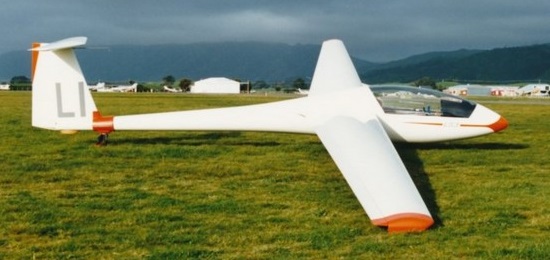
Rolladen-Schneider LS3 ZK-GLI

The LS3-a, which first flew in prototype form in the spring of 1978, differs from the LS3 chiefly in having horizontal and vertical tail surfaces of greater area and different aerofoil sections, and the empty weight reduced to 551 Ib; the maximum weight and performance remain the same. The LS-3a version has separate flaps and ailerons.

A 17m span version, designated LSS-a-17, was developed with detachable wing tips which can be removed to restore the span to 15m with no change in gross weight, the LS3 itself conforming to the Standard Class 15m span.

More than 200 LS3s had been ordered by mid-January 1978; by the beginning of 1980 a total of 358 of all versions had been built.

Span: 15m / 49 ft 2.5 in
Length: 22 ft 3.75 in
Height: 3 ft 11.25 in
Aspect ratio: 21.4
Airfoil: Wortmann mod
Wing area: 109.8 sqft
Empty Weight: 263kg / 580lb
Payload: 208kg / 458lb
Gross Weight: 471kg / 1038lb
Wing Load: 44.86 kg/sq.m / 9.17 lb/sq.ft
Water Ballast: 0
Max speed: 168 mph (in smooth air)
Max aero-tow speed: 118 mph
MinSink: 0.61 m/s / 1.97 fps / 1.18 kt at 43.5 mph
L/DMax: 40:1 at 68.5 mph
Seats: 1
Structure: fiberglass

LS3A
Wing span: 15.0 m / 49 ft 2 in
Length: 6.8 m / 22 ft 3 in
Height: 1.2m / 3ft 11.25 in
Wing area: 10.2 sq.m / 109.8 sq ft
Wing section: Wortmann
Aspect ratio: 22.0
Empty weight: 246 kg / 542 lb
Max weight: 470 kg / 1,036 lb
Water ballast: 120 kg / 265 lb
Max wing loading: 46.0 kg/sq,m / 8.19 lb/sq ft
Max speed: 135 kt / 250 km/h
Stalling speed: 35 kt / 65 km/h
Min sinking speed: 0.55 m/sec / 1.8 ft/sec at 38 kt / 70 km/h
Max rough air speed: 135 kt / 250 km/h
Best glide ratio: 40 at 59 kt / 110 km/h

Rolladen-Schneider LS 2

Designed by Wolf Lemke, the LS2 was developed from the LS1-f but never went into production even though in prototype form, flown by Helmut Reichmann, it won the Standard Class section of the 1974 World Championships in Australia. Further developed, the LS3’s design and construction began in 1975.

Span: 15 m
Area: 10.29 sq.m
Aspect ratio: 21.87
Airfoil: FX 67-K-170
Empty Weight: 240 kg
Gross Weight: 360 kg
Wing Loading: 34.99 kg/sq.m
Water Ballast: 0
MinSink: 0.65 m/s 80 kph
L/DMax: 40 100 kph
Seats: 1

Rolladen-Schneider LS 1 / Segelflugzeugbau Schneider OHG LS1

Walter Schneider and Wolf Lemke commenced glider production in 1968 with the LS1 in the standard class. The LS-1 Standard Class design resulted from the collaboration of Wolf Lemke and Walter Schneider after they had worked together on the Akaflieg Darmstadt D-36 project. The LS1 was produced by Walter Schneider, at first under the name Segelflugzeugbau Schneider OHG, but later as Rolladen-Schneider Flugzeugbau GmbH.

Two prototypes of the LS1 competed in the German National Championships of 1968, taking first and second places out of 44 competitors, and the prototypes were fitted with a novel form of air brake consisting of a portion of the trailing edge hinging upwards inboard of the ailerons, and hinged close to its midchord line so that the air brake’s leading edge moved down while its trailing edge moved upwards. These brakes were found to be effective only at certain speeds, however, and so production LSls featured conventional Schempp-Hirth air brakes.

Characterised by a cantilever mid wing and a T-tail, the LS1 is of glassfibre and PVC foam construction, with the pilot seated in a semi-reclining position under a large one-piece flush-fitting canopy. The LS1-C featured an all-moving tailplane instead of the tailplane and elevators of earlier versions, and the LS1-d introduced provision for water ballast, over 200 of these two versions being built. The LS1-f has a redesigned rudder and reverts to a fixed tailplane and elevator; there is provision for up to 198 lb of water ballast and the monowheel is now retractable instead of fixed as on earlier versions, and has rubber shock absorbers. Some improvements have been made to the cockpit interior and the tow release mounted on the landing gear strut has been modified; this can also be fitted in the nose, as required.

The LS1-f first flew in 1972 and made its competition debut in that year’s World Championships at Vrsac, Yugoslavia; an LS1 flown by Helmut Reichmann of Germany had taken first place in the Standard Class at the 1970 World Championships at Marfa, Texas. The LS1 -f went on to take 8th, 10th and 14th places at the 1976 World Championships at Rayskala in Finland. By January 1977 a total of 240 LSI-fs had been built, and a club version of the LS1-f, designated LS1-C Club, was announced.

Span: 15 m / 49.2 ft
Area: 9.74 sq.m / 104.8 sq.ft
Aspect ratio: 23.1
Airfoil: Wortmann FX-66-S-196
Empty Weight: 230 kg / 507 lb
Payload: 160 kg / 353 lb
Gross Weight: 390 kg / 860 lb
Wing Load: 40.04 kg/sq.m / 8.19 lb/sq.ft
Water Ballast: 0
L/DMax: 38
MinSink: 0.64 m/s / 2.1 fps / 1.24 kt
Seats: 1

LS1-f
First flight: 1972
Span: 15.0 m / 49 ft 2.5 in
Length: 6.7 m / 21 ft 11.75 in
Height: 1.2m / 3 ft 11.5 in
Wing area: 9.75 sq.m / 105 sq ft
Wing section: Wortmann FX-66-S-196 mod
Aspect ratio: 23.0
Empty weight: 200 kg / 507 lb
Max weight: 390 kg / 860 lb
Water ballast: 90 kg / 198 lb
Max wing loading: 40 kg/sq,m / 8.2 lb/sq ft
Max speed: 155 mph (in smooth air)
Max rough air speed: 135 kt / 220 km/h
Stalling speed: 33.5 kt / 62 km/h
Min sinking speed: 0.65 m/sec / 2.1 ft/sec at 43.5 mph / 38 kt / 70 km/h
Best glide ratio: 38:1 at 56 mph / 48.5 kt / 90 km/h

Rolladen-Schneider

Walter Schneider and Wolf Lemke commenced glider production in 1968 with the LS1 in the standard class; with the LS3 in 1977 the entrance into the racing class followed.

In 1980 evolved in co-operation of Lemke and Hans Jörg Streifeneder in the LS4 as a successor of the LS1.

1984 the racing class glider LS6, which replaced the LS3, was introduced.

By adding winglets and removing flaps 10 Years later the LS8 developed and first places at the European Championships 1994 and the World Championships 1995 soon proved the successful concept of the LS8.

In 2003 Rolladen-Schneider Flugzeugbau GmbH was taken over by DG Flugzeugbau GmbH (formerly Glaser-Dirks). Rolladen-Schneider had gone into receivership, and DG Flugzeugbau did not take over the liabilities but only the rights to build the gliders and use the brand name.

Roche Aviation

France
Company formed after Second World War, with M. Guerchais as chief engineer; connection with prewar Avions Guerchais not known. Guerchais Roche produced several two-seat light aircraft from about 1946, the Types 35 with Renault engine, the 39 with Mathis radial engine, and the 30 with Ford V-8 engine, as well as the type 107 single-seat glider.