Yeremeyev Staliniets-3

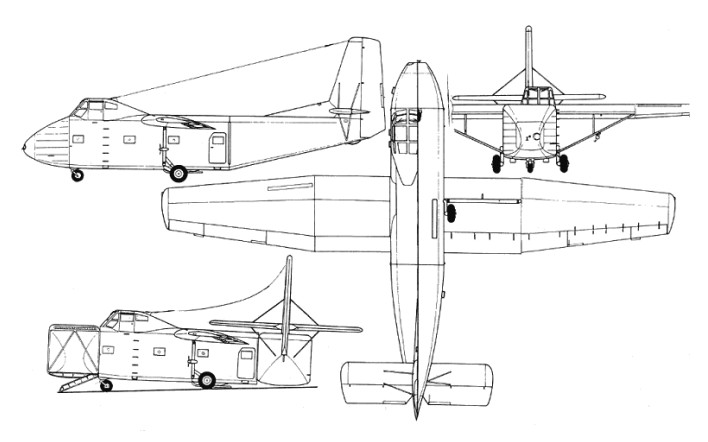
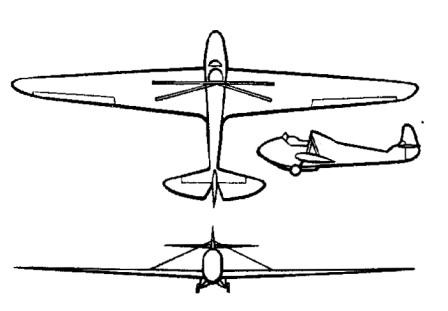
Designed by Pavel Yeyemeyev as a single-seater aerobatic trainer, the Yeremeyev Staliniets-3 (Russian: Еремеев “Сталинец-3”) was built between March and May 1935 by enthusiasts in Yeisk.

The Staliniets-3 was an all-wood single-seater glider, unlike its previous model, the “Staliniets-3” was conceived as a high-low-wing monoplane using inverted V-uprights. The wing design used the TsAGI R-II profile proposed by the engineer PP Krasilschikov and had a trapezoidal shape in the plane, with rounded ends.

The fuselage, with an oval section and covered in plywood, made the transition in the tail area towards a small keel to which the offset and elliptical rudder was attached. The stabilizers were located in the middle of the empennage, braced by uprights to the rear fuselage structure.

The pilot was located in an open cockpit in the forward region of the fuselage. The landing gear was of the conventional type and featured small wheels located on the sides of the fuselage.

Built in Yeisk by Yeremeyev in 1935, the Staliniets-3 glider was entered in the XI National Sailing Competitions held in Koktebel between September 6 and October 6, 1935. In these competitions its performance was good.

The pilots who flew it highlighted that it presented good control and was able to respond without problems to the controls during the execution of school piloting figures. Its landing speed was considered high, but the glider handled the manoeuvre meekly.

The only problem pointed out by the pilots was that the pedals in the cockpit were very close to each other, which brought confusion and fatigue on long flights.

Staliniets-3
Wingspan: 10.09 m
Wing area: 9.25 m²
Aspect ratio: 12.8
Length: 4.60 m
Height: 1.20 m
Empty weight: 131 kg
Ailerons area: 0.90 m²
Wing loading: 22.8 kg / m²
Accommodation: 1
Yeremeyev Staliniets-1

From a visit to the IX National Competition gliding in the town of Koktebel in Crimea between 12 August and 20 September of 1933, a group of students and instructors Pilot School Navales of the RKKA VVS named Stalin decided to develop self-built gliders to participate in these competitions. The apparatuses carried the denomination Staliniets (Сталинец), which can be translated as Staliniano, in relation to the name of the school.

Designed by Pavel Avkcientievich Yeremeyev, the Staliniets-1 (Russian: Еремеев “Сталинец-1”) was designed as an aerobatics training glider made entirely of wood and designed for towed flight.

Structurally, it was conceived as a monoplane with a high wing braced by V-uprights. The wing, with R-165 profile, had a single spar structure.

The fuselage, with an oval section and covered in plywood, made the transition in the tail area towards a small keel to which the offset rudder was fixed and elliptical in shape. The stabilizers were located in the middle of the empennage, braced by uprights to the rear fuselage structure.

The pilot was located in an open cockpit in the forward region of the fuselage. The landing gear was of the conventional type and featured small wheels located on the sides of the fuselage.

Built in 1934 in Yeisk, Staliniets-1 was registered to participate in the 10th edition of the national glider competitions, held from September 1 to October 6, 1934. The glider arrived at Koktebel towed by air from Yeisk. However, after evaluation, he was denied the possibility of participating in the competition.

Staliniets-1
Wingspan: 10.10 m
Wing area: 12.20 m²
Aspect ratio: 8.4
Length: 4.80 m
Height: 1.60 m
Empty weight: 130 kg
Wing loading: 17.2 kg / m²
Glide ratio: 12.3
Minimum descent speed: 0.95 m / s
Surface of the horizontal planes: 1.52 m²
Vertical plane surface: 0.76 m²
Ailerons surface: 1.00 m²
Accommodation: 1
XC Aviation KR 010 Elf

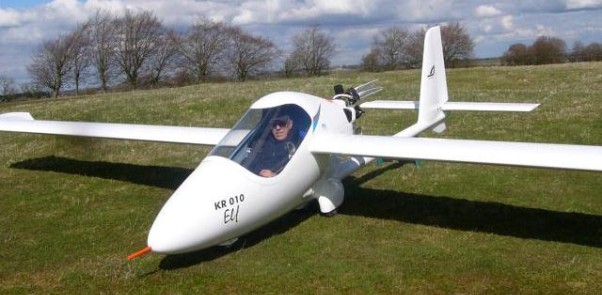
Elf self launch Ultralight sailplane.

Jerzy Krawczyk, in addition to Ekolot’s Junior and Topaz, has several light aircraft, crop sprayer, and sailplane designs to his credit. In creating the self launching Elf sailplane, he employed composite sandwich and carbon structures to achieve the exceptional strength and durability required to pass UK BCAR Section ‘S’ airworthiness certification.

The Elf prototype used the JPX 330 engine which, unfortunately, was withdrawn from production in 2006 after over 20 years in the market. Fortunately, Compact Radial Engines in Canada has produced a very similar unit. This is 20% more powerful than the JPX and also employs a clutch which eliminates folding prop ‘chatter’ on start-up and allows the prop to fold whilst the engine is on idle. This engine has displayed instant re-start capability.

The Elf employs full span flapperons, and airbrakes, and has excellent rudder/stick co-ordination. The NN17-18 aerofoil possesses mild stall characteristics and overall, the handling conveys a strong sense of stability and security to the pilot.

Production aircraft will have the more powerful Compact Radial engine and a 126cms prop with a projected climb rate of 500 ft/min.

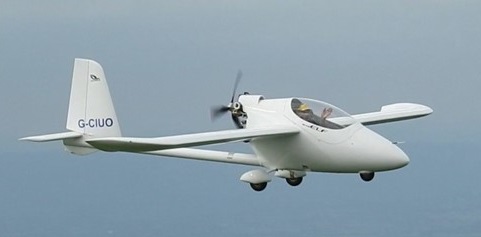
KR-010 “Elf” G-CIUO over Scotland

Engine off, the Elf with it’s 120 ft/min sink rate is capable of slowing down to exploit the slightest lift and core the smallest thermal. This is where the fun and skill challenge begins and where, if the pilot falls out of lift into sink, he can be confident of a quick engine restart and climb back to the area of lift.

Prototype
Engine: JPX 330, 24 hp
Prop dia: 116cms , folding
Weight: 145 kg (with BRS)
Gross Weight: 260 kg
Area: 10.8 sq/m
Span: 11.2 m
Length: 5.7m
Aerofoil: NN18-17
Fuel Capacity: 15 litres (3 hours + reserve)
Proof Load: +6 / -3
Max Pilot Height: 1.9m (6’3”)
Max Pilot Weight: 100kg (220lbs)
Cruise: 50 mph at 5,100rpm
Max Climb: 400ft/min at 30mph
Stall: 27mph
Best L/D: 26.4:1, 150ft/min at 45mph
Min Sink: 120ft/min at 39 mph
Airbrake: 300ft/min at 45mph (13:1)
Fuel burn: 4.5 litres/hour

Wright 1911 glider

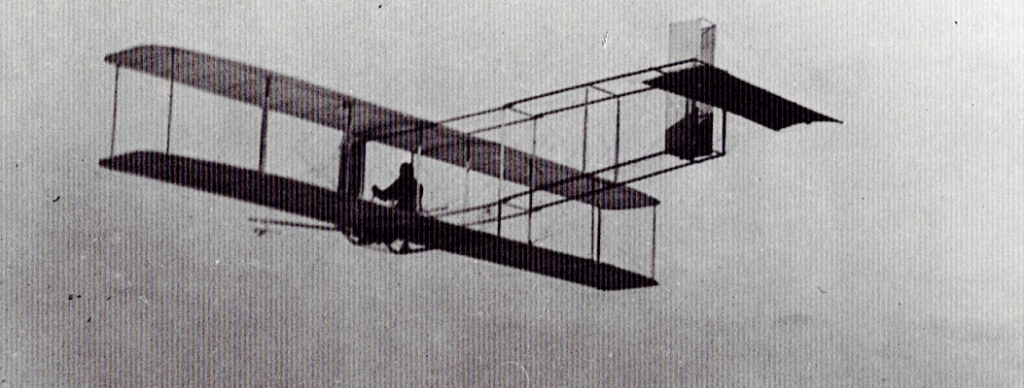
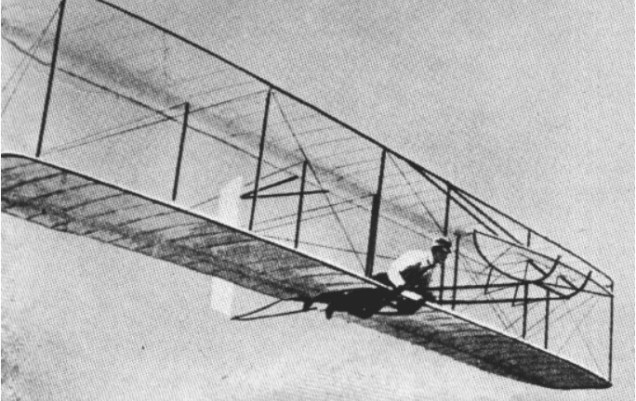
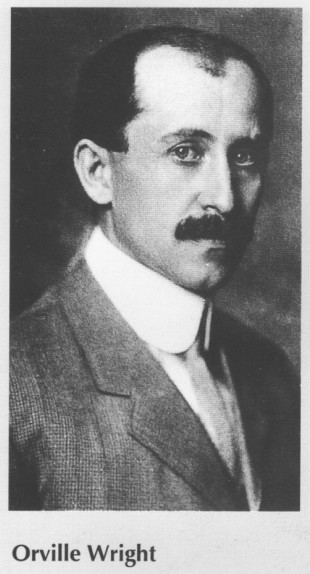
Though the Wrights were now producing advanced models of their powered Flyers, Orville wanted to test a new unpowered machine and try his hand at gliding once more. Orville made a trip to Kitty Hawk while Wilbur stayed behind to attend to business.

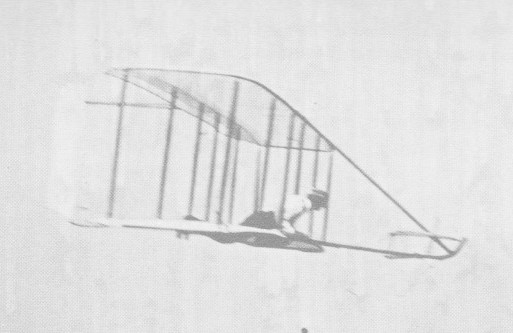
Orville was accompanied by his brother, Lorin, Lorin’s ten-year-old son Horace, and the British pioneer Alexander Ogilvie. They stayed at the old campgrounds at Kill Devil Hills for three weeks in October 1911, and made nearly one hundred successful glides.

The new glider, a biplane with a 32 ft wingspan, performed beautifully. On October 24, Orville remained aloft for 9 minutes 45 seconds – a world record for soaring flight that would stand unbeaten for a decade.

Wright 1902 Glider 3 / Dart Aircraft Wright 1902 Glider

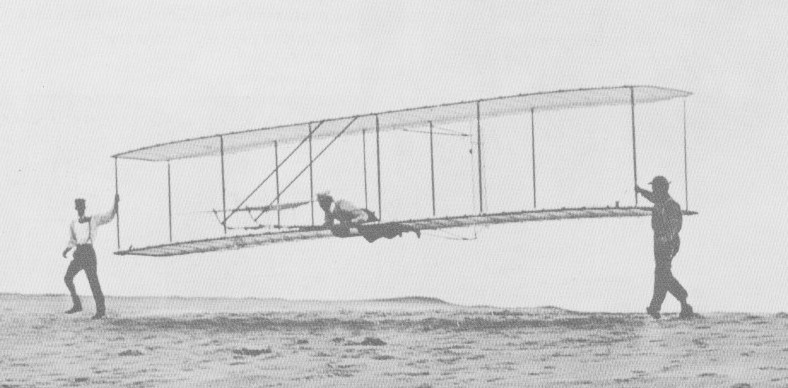
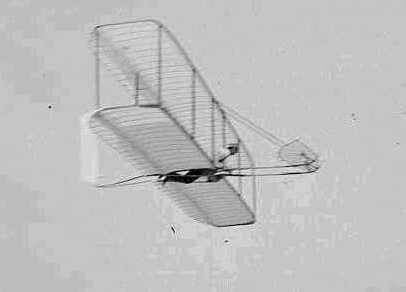
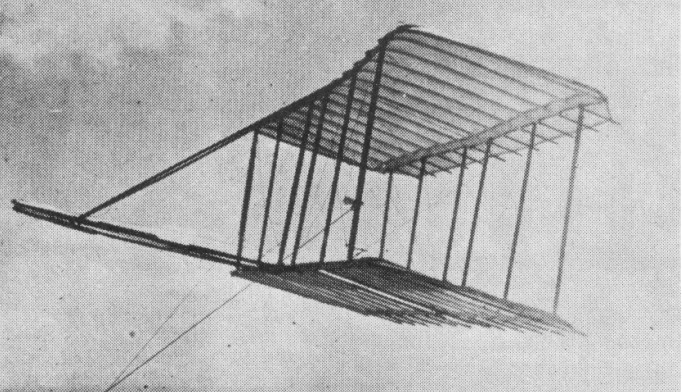
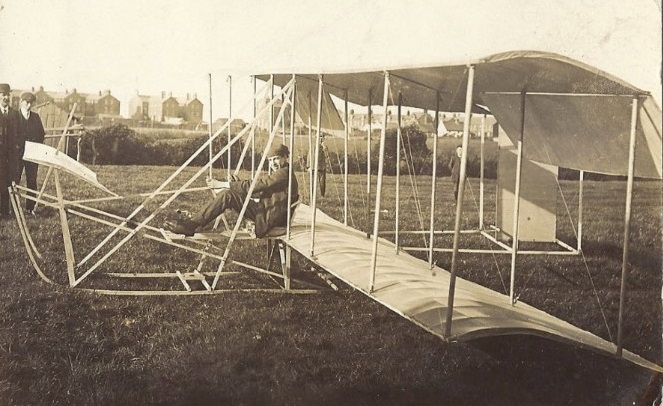
In the summer of 1902 the Wright brothers journeyed back to Kitty Hawk, this time with a huge machine that measured 32 feet in span and 303 square feet in wing area. Besides the warp and the front elevator, the new glider also sported fixed rear fins. Now they made good glides – some of over 500 feet – but were plagued by an odd tendency: about one time in 50, the airplane would turn up sideways and slide to the ground, despite full warp to lift the dropped wing. The Wrights called this “well-digging”; they had discovered the incipient spin. The solution was to install a movable tail fin, linked to work in opposition to the warp mechanism to correct the warp drag that corresponds to aileron drag in our modern airplanes. Thus they had achieved three-axis aerodynamic control. By the time of their return to Dayton that winter, they had made several hundred glides, at least one of more than 600 feet and nearly half a minute’s endurance.

The initial twin fixed fins were later replaced with a single rudder linked to the wing warping – the Glider 3B.
The Wrights made almost a thousand glides with this third biplane. They flew for up to 26 seconds and for distances of up to 622 feet-for a total airborne gliding time for that year of nearly five hours. They had begun to solve the problems of control in the air and to establish a definitive design.

While making preparations to test the 1903 powered aircraft, they continued to practice piloting with their 1902 glider and to establish new endurance records of more than one minute.

And from that 1902 glider came the first powered “Flyer” of 1903.

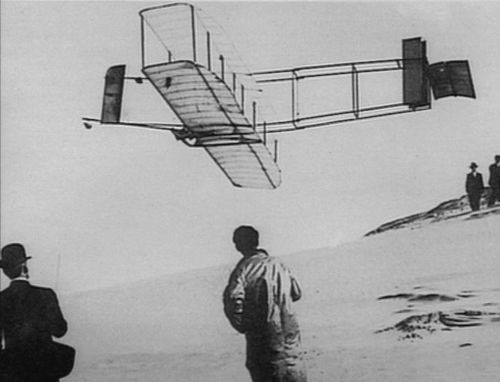
For Alexanda Korda’s film production, Conquest of the Air, Dart Aircraft produced a replica Wright 1902 biplane glider in 1935. The first tests were at Denham during that summer. Weyl flew the aircraft and reported that the controls worked well, though they lacked feel. It was only possible to fly the glide in a straight line owing to the interconnection between the wing warping and the rudder. The rudder was not a control but was used to counteract the yawing moment due to wing warping. Wingtip skids were fitted during the trials and normal turnbuckles were later adopted. In the end the film was never completed.

Glider 3
Wing span: 32 ft 1 in
Wing area: 305 sq.ft
Flying wt approx: 260 lb
No. of flights approx: 1000+
Total flying time approx: 4 hr

Glider 3B
Wing span: 32 ft 1 in
Wing area: 305 sq.ft
Flying wt approx: 280 lb
No. of flights approx: 60
Total flying time approx: 34 min

Wright 1901 Glider 2

In 1901, the Wright brothers began a program of research, testing wing forms by mounting them on a spar projecting ahead of a bicycle; they also assessed them in homemade wind tunnels, their first was constructed from an old starch box. Soon it became obvious that almost all the published information on aerodynamics, and particularly the tables of force measurements, were simply wrong. They re-turned to Kitty Hawk with a still-bigger glider, its wing-warping controlled by the prone pilot rocking his hips in a body cradle, and achieved a glide they measured at 389 feet.
The second manned glider, of 1901, larger and heavier was rather less successful, chiefly because it was “less manageable than our smaller machine of last year … the trouble seems in the travel of the centre of pressure”. It had no tail surfaces. But the 1901 machine was generally un-manageable, and the lift of its wing less than the previous glider’s.

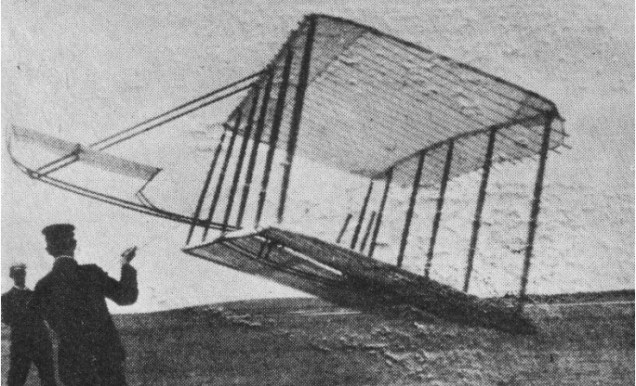
Wilbur just after landing the 1901 glider. Kitty Hawk, North Carolina.

Wing span: 22 ft 0 in
Wing area: 290 sq.ft
Flying wt approx: 243 lb
No of flights approx: 60
Total flying time approx: 2 min

Wright 1900 Glider 1

The first model was flown as a kite and led to the development from it of their first full-scale glider of October 1900, with a span of 17ft 5in. It, too, was first flown as a kite at Kitty Hawk in October 1900, and, then, for twelve manned glides for a total duration of two minutes.

The glider embodyed wing-warping and a movable front elevator but with no vertical stabilizer. They chose the Carolina coastal sandhills, far indeed from Dayton, as a testing ground, thinking that the strong prevailing winds, even slopes and soft sand in which to fall might make an ideal place to learn about flying. Kill Devil Hills was the spot selected, near the Kitty Hawk telegraph station.

Like all their early machines, their first glider was unstable – a fundamentally different approach from that of earlier experimenters. They flew it mostly as a kite but also made a handful of free glides, some with one of them aboard, lying on the lower wing.

Wing span: 15 ft 5 in
Wing area: 165 sq.ft
Flying wt approx: 197 lb
Total flying time approx: 2 min

Wright Bros / Wright Aeronautical

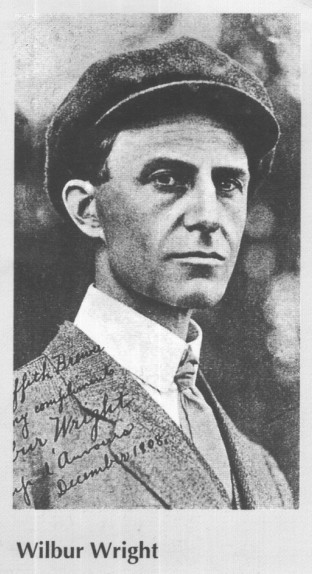
In 1899, the Wright brothers wrote to Dr. Samuel P. Langley that they were about to begin aviation experiments and they wanted to know how to build and fly gliders. Langley replied that they should read Progress in Flying Machines and contact Chanute in Chicago.

The Wright brothers received their copy of Chanute’s book personally from the author, who became both their friend and advisor. At their invitation, Chanute visited the Wrights at Dayton, Ohio and Kitty Hawk, North Carolina. It was Octave Chanute who, at a meeting in December, 1903, of the American Association for the Advancement of Science announced to the world that the Wright Brothers had flown in a heavier than air machine.

Wright Brothers Article

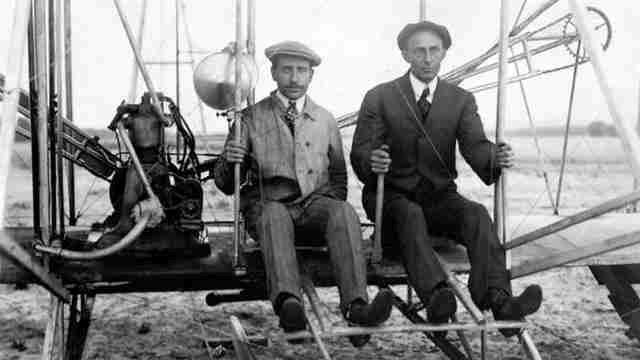
The Wright brothers built first successful aircraft in the world, 1903; first practical model 1905. The invention was patented in 1906 and the Wrights sold first military aircraft in world to U.S. Army Signal Corps 1908.

There were countless personal modifications of the Wright machines in the US, such as Beckworth-Wright, J S Berger-Wright, Lemp-Wright, Parmelee-Wright, with owners often claiming hyphenated name credits, as in similar cases with many Curtiss and Burgess planes. Most were essentially A and B Fliers.

1909: Wright Co; Wright Aeronautical Co Inc.

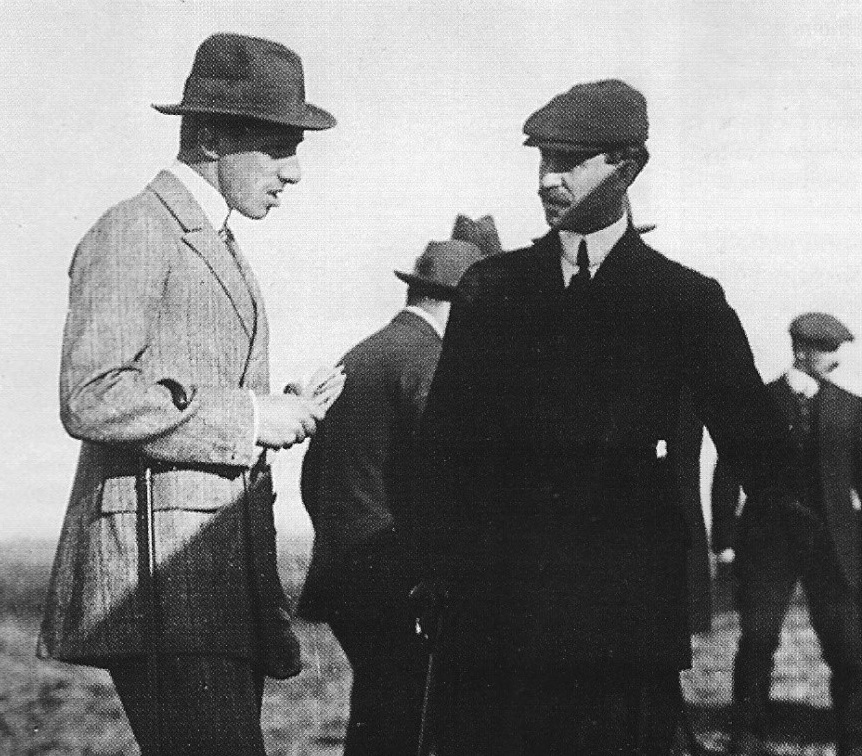
King Alfonso XIII and Orville Wright at Pau airfield, 1909

Continued producing same basic and outdated type though later, from Model I tractor biplane, aircraft were more conventional. Sold a few aircraft to U.S. Navy 1914.

Mainly an engine manufacturing company. After Wilbur’s death, 1912, Orville continued at Dayton plant as independent experimenter. Built to official designs and produced Hispano-Suiza engines during the First World War. Giuseppe Bellanca joined 1924 and Wright-Bellanca monoplane and Apache shipboard fighter produced in 1925. Bellanca left 1927 to re-form his own company (see Bellanca Aircraft Corporation).

Although the 1915 Model L was a commercial failure, the Wright Company refocused on the development of high-powered engines for airplanes and automobiles. In 1916, they acquired the Crane-Simplex Automobile Company and the Glenn L. Martin Aircraft Company. All three companies merged to become the Wright-Martin Aircraft Corporation.

In 1916 the company was sold to a NYC investment group. Became Wright-Martin Aircraft Corporation of California in 1916 when merged with Glenn L Martin Co and Simplex Automobile Co to build Hispano-Suiza motors under license from France.

In 1920 reorganized as Wright Aeronautical Corp.

In 1929 Wright Aeronautical Corp and Curtiss Aeroplane and Motor Company combined to form Curtiss-Wright Corp and in 1931 the engine divisions of Curtiss and Wright merged.

1946: Woodbridge NJ.