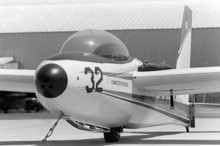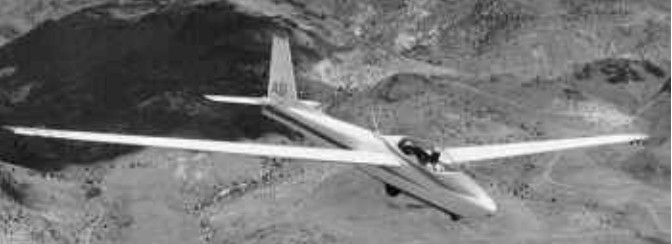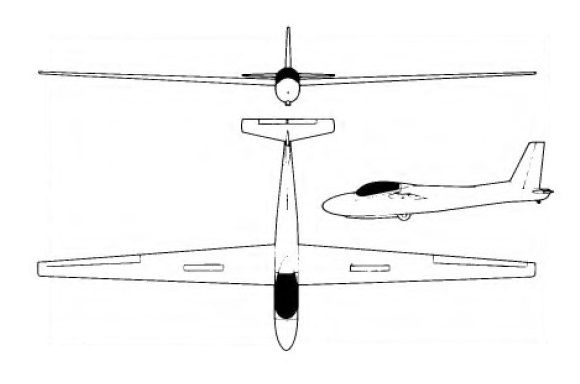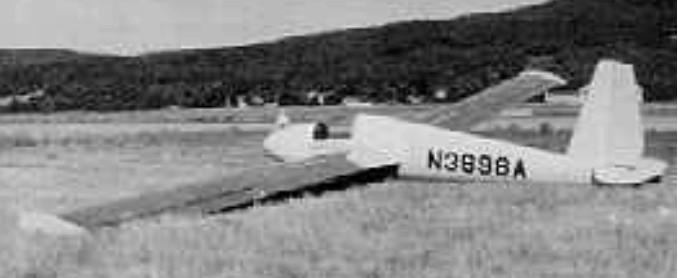
Schweizer SGM 2-37 / TG-7A / RG-8A

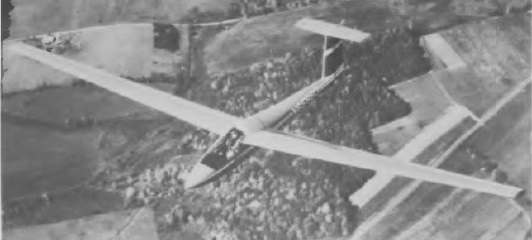
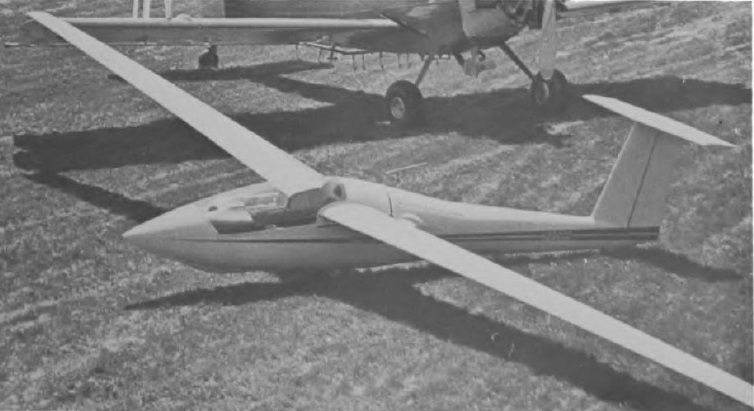
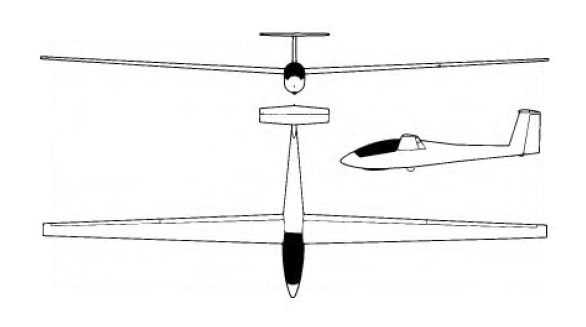
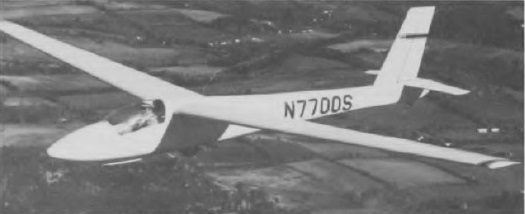
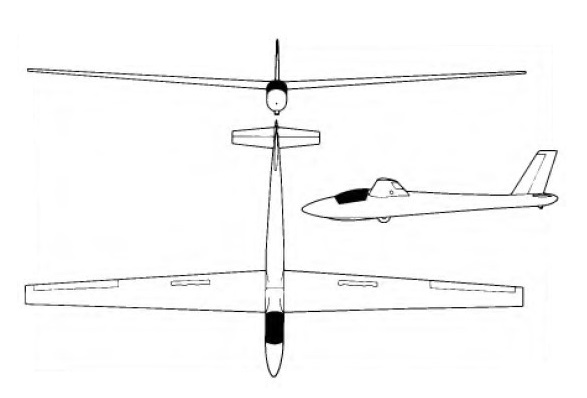
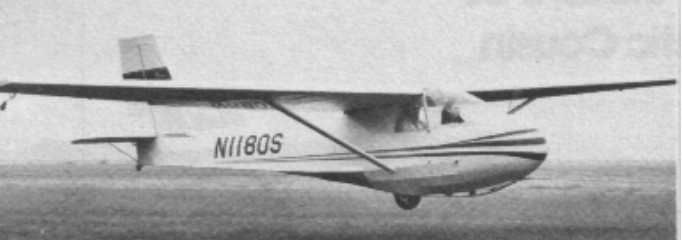
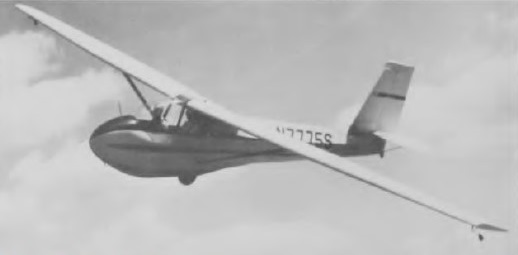
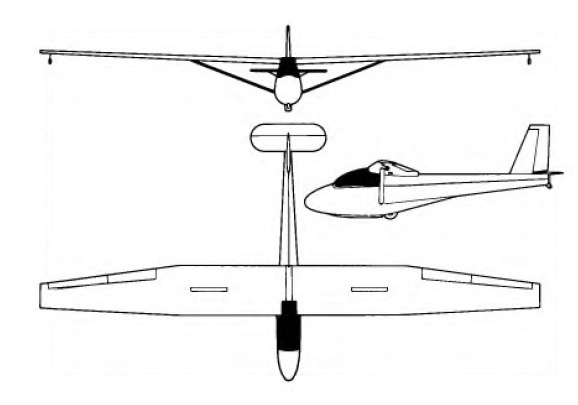
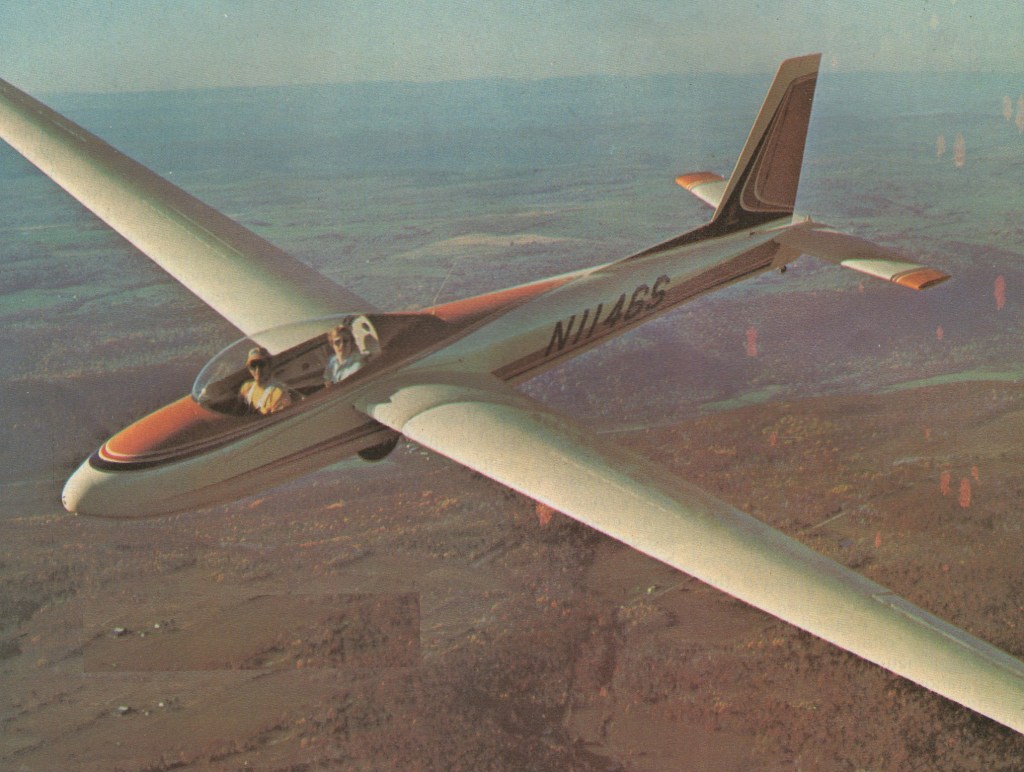
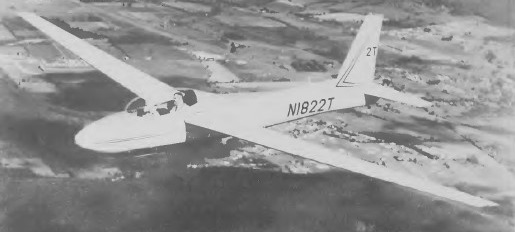
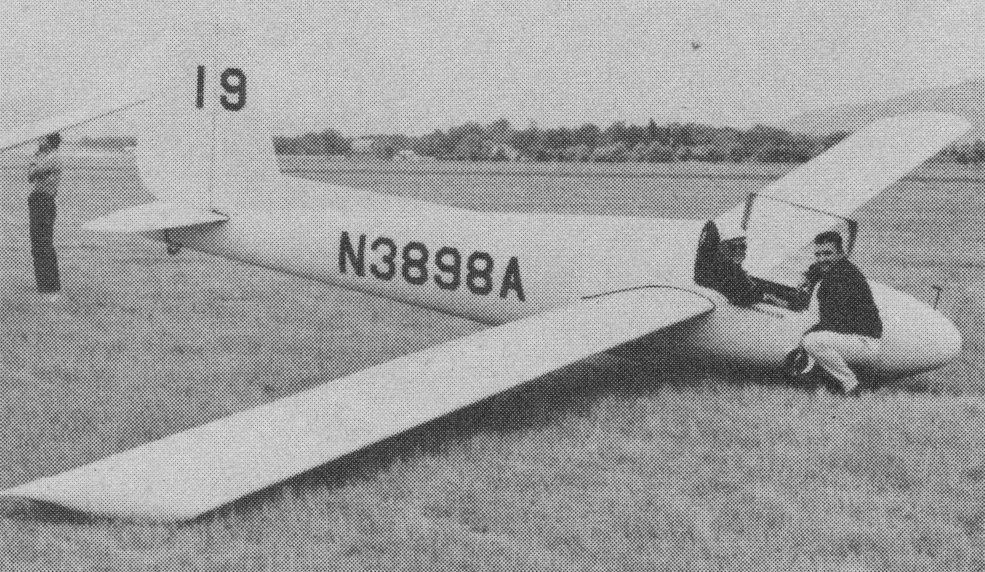
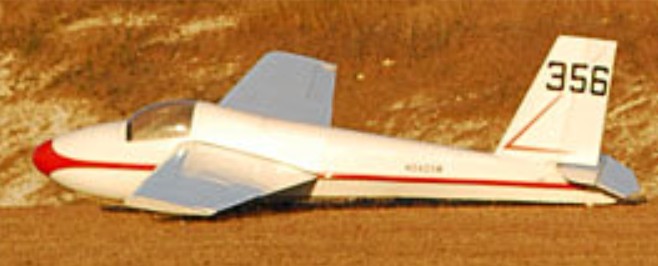
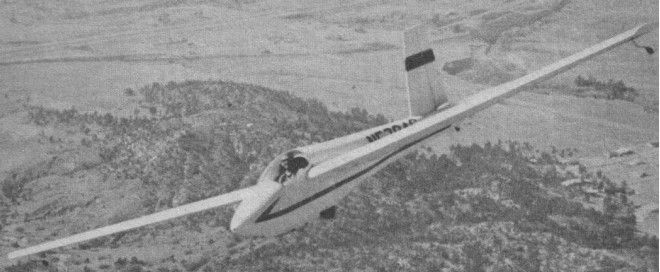
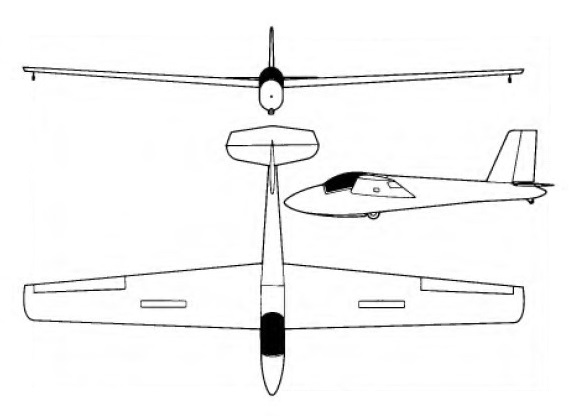
The SGM 2-37 self-launching two-place, side-by-side, fixed gear, motorglider designed by Leslie Schweizer at the request of the USAF for use at USAFA.

To save both money and development time the aircraft used a number of existing aircraft components:
Nose, cowling and engine installation adapted from the Piper PA-38 Tomahawk
Wings adapted from the Schweizer SGS 1-36 Sprite, including extensions to bring it from the Sprite’s 46.2 feet (14.1 m) to 59.5 feet (18.1 m) and leading edge cuffs to improve stall characteristics
Tail from the Schweizer SGS 2-32
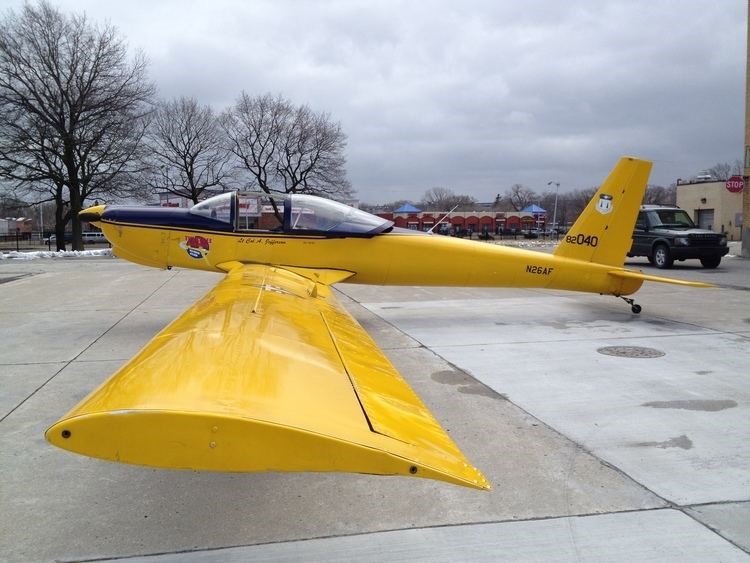
The design was intended to be available as a civil aircraft as well as a military aircraft. The USAF version was delivered with a Lycoming O-235-L2C 4-cylinder aircraft engine of 112 hp (84 kW). The civil version offered the same engine or an option of a Lycoming O-320 of 150 hp (112 kW) or a Lycoming O-360 of 180 hp (134 kW).

The aircraft is of all-metal aluminum monocoque construction. The engine cowling is made from fiberglass and plastics are employed in some of the nonstructural components.

The 2–37 features a 27 cu ft (760 L) baggage compartment behind the side-by-side seating. The aircraft does not have flaps, but instead has top-and-bottom wing-mounted balanced divebrakes, similar to other Schweizer glider designs, and has the capacity to operate as a towplane for other gliders.

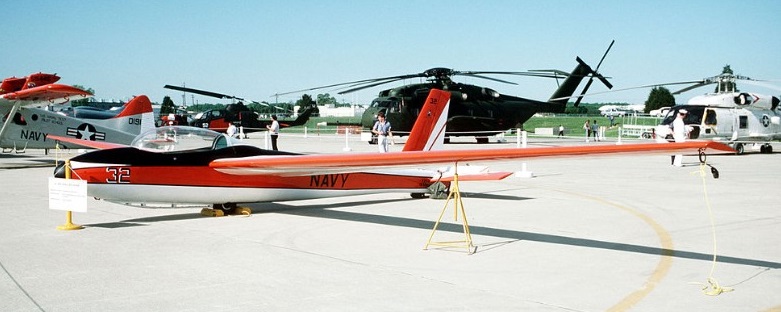
First flying in 1982, a total of twelve were produced between 1982 and 1988, including nine for the United States Air Force Academy, which designated it the TG-7A. The TG-7A was retired from USAFA service in April 2003.

USAFA TG-7A

The SGM 2–37 was certified by the Federal Aviation Administration under type certificate G1NE on 22 March 1983. The 2–37 type certificate was later held by K & L Soaring of Cayuta, New York. K & L Soaring provided all parts and support for the Schweizer line of sailplanes.

Soaring, the journal of the Soaring Society of America, described the SGM 2–37 as: “Very versatile, very promising, very expensive”. The publication’s review noted that the $70,000 base price did not include a feathering propeller, gyro instruments, wheel fairings, long range fuel tanks or other optional extras.

Examples of the TG-7 were used by the US Army from 1985 on covert surveillance duties under the Grisly Hunter project. The two aircraft were then transferred to the US Coast Guard by mid 1989, were modified and were re-designated RG-8A. The aircraft were used on coastal patrols from the US Coast Guard base at Miami wearing a grey low visibility color scheme in 1989.

RG-8A surveillance aircraft of the US Coast Guard at Opa Locka, Miami, in 1989.

There were nine aircraft still registered in the US in April 2008. Current owners include the Tuskegee Airmen National Historical Museum and designer Leslie E. Schweizer.

The SA 2-37A is a two-seat special-mission surveillance aircraft built for the Central Intelligence Agency and US Army and equipped with a Lycoming O-540-B powerplant of 235 hp (175kW) and first flown in 1982 and eight. The US aircraft register records six SA-2-37As, including four belonging to Vantage Aircraft Leasing with serial numbers as high as 8. All are in the experimental exhibition category.

The SA 2-37B is a development of the 2-37A equipped with a Lycoming TIO-540-AB1AD powerplant of 250 hp. The aircraft is optimized for covert surveillance missions and carries FLIR and electronic sensors. It has a 500 lb (231 kg) sensor payload in a 70-cubic-foot (2,000 L) fuselage bay. With a fuel capacity of 99 US gallons (370 L) it can remain on station for up to 12 hours. Gross weight is 4300 lb (1950 kg). The US aircraft registry records four SA 2-37Bs, all owned by Schweizer Aircraft. All are in the experimental Research and Development category.

Operators also included the Colombian Air Force and Mexican Air Force.

SA2-37B of the Aerial Surveillance Squadron, 3rd Air Group, Mexican Air Force at Santa Lucia Air Force Base

The 2–37 was later developed into the SA 3–38, known in military service as the Schweizer RU-38 Twin Condor.

SGM 2–37 / TG-7A
Engine: 1 × Lycoming O-235-L2C, 112 hp (84 kW)
Prop: aluminum fixed pitch
Wingspan: 59 ft 6 in (18.14 m)
Wing area: 195.7 ft2 (18.18 m2)
Airfoil: Wortmann Fx 61–163
Aspect ratio: 17.9
Length: 27 ft 6 in (8.5 m)
Height: 7 ft 8 in (2.4 m)
Empty weight: 1200 lb (544 kg)
Useful load: 650 lb (295 kg)
Loaded weight: 1850 lb (839 kg)
Max. takeoff weight: 1850 lb (839 kg)
Never exceed speed: 135 mph (219 km/h)
Maximum speed: 135 mph (181 km/h)
Cruise speed: 112 mph (181 km/h)
Stall speed: 48 mph with divebrakes closed (78 km/h)
Range: 230 mi (372 km)
Service ceiling: 14,000 ft (4300 m)
L/DMax: 28
MinSink: 0.96 m/s / 3.16 fps / 1.87 kt
Glide ratio: 19.3:1 – 19.7:1
Wing loading: 9.45 lb/ft2 (46.15 kg/m2)
Power/mass: 16.51 lb/hp (0.100 kW/kg)
Baggage compartment: 27 cu.ft / 760 lt
Crew: two side-by-side

SA 2-37A
Engine: 1 × Lycoming TIO-540-B, 235 hp (175kW)
Crew: two side-by-side

SA 2-37B
Engine: 1 × Lycoming TIO-540-AB1AD, 250 hp
Gross weight: 4300 lb (1950 kg)
Fuselage bay: 70-cubic-foot (2,000 L)
Sensor payload: 500 lb (231 kg)
Fuel capacity: 99 US gallons (370 lt)
Time on station: 12 hr
Schweizer SGS-1-36 Sprite

Designed by Leslie Schweizer, the all-metal 1-36 Sprite, the final glider model produced by the Schweizer Aircraft Corporation, was conceived as a replacement for the 1-26 one class design The SGS 1-36 Sprite single-seater is intended to be an all-round sailplane, which can be flown and soared by an inexperienced pilot shortly after his first solo, but is also easily capable of Diamond distance flights, and able to offer modern performance, handling and appearance whether as a personal, club or school aircraft. It will serve as a replacement for the veteran SGS 1-26 series, and a one-design competition class was planned.

With a cantilever mid-wing 46-foot wingspan, it has an all-aluminum structure with standard effective dive brakes, T-tail, a large cockpit, and good visibility. Two landing gear positions were offered: a forward-wheel position, which makes the ship a “taildragger,” or an aft-wheel position with a nonspring tailwheel and an aluminum nose skid. The latter is recommended for school and club operation. It has balanced top and bottom surface DFS type airbrakes with the upper surface segment set well back forwards the trailing edge of the wing. The structure is all metal, with fabric cover on rudder and elevator. Standard equipment includes tip wheels, deluxe seat cushions, headrest, and rudder pedal adjusters.

The prototype SGS 1-36 Sprite first flew on 2 August 1979.

First year built 1980.

1982 Standard price US$17,950.

SGS 1-36 Sprite
Wing span: 14m / 46 ft 2 in
Wing area: 13.07sq.m / 140.7sq.ft
Wing Load: 24.63kg/sq.m / 5.05lb/sq.ft
Aspect ratio: 15.15
Airfoil: Wortmann FX 61-163
Length: 20 ft 6 in
Height: 4 ft 7.5 in
Empty Weight: 215kg / 475lb
Payload: 107kg / 235lb
Gross Weight: 322kg / 710lb
Max speed: 109 kt / 123 mph
Stall speed: 31 kt
Rough air airspeed: 93 kt
Max aero-tow speed: 123 mph
L/DMax: 31 77 kph / 42 kt / 48 mph
MinSink: 0.67 m/s / 2.2 fps / 1.30 kt / 135 fpm at 36 kt / 46 mph
Seats: 1
No. Built: 43

Schweizer SGS 1-35

The SGS 1-35 was designed by Leslie Schweizer to 15 m racing class rules.The 1-35 is a high performance single seater which first flew in prototype form in April 1973, and completed its FAA certification programme in the spring of 1974. It was offered in two versions in addition to the standard 1-35, the SGS 1-35A Unrestricted 15m Class variant, and the SGS 1-35C, or Club-35, a simplified and cheaper version for club or syndicate ownership.

The 1 35 has removable wingtip training wheels, a skid under the nose, and an external radio antenna -features. In lieu of spoilers or air brakes, the 1 35 uses a trailing edge flap. All models use flaps for performance and approach control with -8 to +32 degrees that can be deflected beyond its normal landing setting to increase sink, with a maximum de¬flection of 80 degrees.

The structure is all-metal monocoque fuselage and single-spar, multi-stringer stressed skin wing; elevator and rudder fabric covered.

The 1-35A has a retractable monowheel forward of the cg, with a hydraulic brake, a large tailwheel and no nose skid. Interconnected flaps and ailerons are standard, and the flaps can be lowered to 80° for use as air brakes; there is provision for up to 145 kg/ 320 lb of water ballast with an empty weight of 490 pounds. The 1-35A is claimed to have the widest range of wing loadings in the FAI 15m Class, from 5.78 to 8.96lb per sq ft, enabling it to compete effectively in both weak and strong soaring conditions. Later production 1-35As have a more painted nose and improved wing root fairings.

The 1-35C less expensive has a non-retractable unsprung Cleveland monowheel aft of the eg, with a hydraulic brake, and a nose skid plus a tailskid. There is no provision for water ballast, and the maximum wing loading is 6.59lb/sq ft. The C has a 425-pound empty weight. Low profile rivets are used on the 1-35C’s rear fuselage, and its best glide ratio is 36:1 compared to 41:1 for the 1-34A. Altogether 96 1-35s of all versions had been built by January 1980. The type has cantilever shoulder wings with aluminium stressed skin and stringers, the ailerons and flaps being of aluminium torque cell construction; air brakes or spoilers are not fitted. The monocoque fuselage is entirely of aluminium, and incorporates an integral fin; the T-tail is likewise of aluminium with a fixed-incidence tailplane and fabric-covered elevator. The pilot sits in a semi-reclining position under a one-piece detachable canopy.

By 1977 72 1 35s have been built, and they were coming off the line at the rate of one per week.

Part of the price was due to the costs of FAA certification, but most competition pilots modify their ships back into the experimental category anyway.

The first 1-35 serial 001, belongs to the National Soaring Museum.

SGS 1-35A
Wing span: 49 ft 2 in / 15.0 m
Wing area: 9.64 sq.m / 103.8 sq ft
Aspect ratio: 23.29
Wing section: Wortmann FX-67-K-170/150
Length: 19 ft 2 in / 5.84 m
Height: 1.35m / 4ft 5in
Max TO wt: 422 kg / 930 lb
Empty wt: 199 kg / 440 lb
Useful load: 510 lb
Water ballast: 147 kg / 320 lb
Wing loading: 5.78 lb/sq.ft
Max speed: 121 kt / 223 km/h
Rough air speed: 121 kt / 223 km/h
Stall: 35.5 kt / 66 km/h
Lift to drag: 40 @ 48 kt
Min sinking: 0.54 m/sec / 1.77 ft/sec at 40 kt / 74 km/h
Best glide ratio: 39 at 54.5 kt / 105 km/h
Seats: 1

SGS 1-35C
Wing span: 15m / 49 ft 2 in
Wing area: 9.64sq.m / 103.8sq.ft
Aspect ratio: 23.29
Airfoil: Wortmann FX 67-K-170/150
Length: 19 ft 2 in
Height: 4 ft 5 in
Empty Weight: 181kg / 400lb
Payload: 118kg / 260lb
Gross Weight: 299kg / 660lb
Wing loading: 5.58 lb/sq.ft
Max speed: 121 kt / 139 mph
Rough air speed: 121 kt
Max aero-tow speed: 139 mph
Stall: 28 kt
L/DMax: 39 88 kph / 48 kt / 55 mph
MinSink: 0.61 m/s / 2.0 fps / 1.18 kt @ 40 kt
Seats: 1
No. Built: 101

Schweizer SGS 1-34

The SGS 1-34 high-performance single-seat sailplane was designed by Ernest Schweizer to meet Standard Class specifications and is stressed to +8.33Gs and -5.33 Gs. Design work started in 1967 and construction of the prototype began the following year.

The all-metal aluminum cantilever shoulder wings were the shoulder type with a Wortmarm FX-61-163 at the root and Wortmann FX-60-126 at the tip. The 1-34 has differential ailerons and no flaps are fitted. The SGS 1-34B features double flap speed-limiting airbrakes and an optional retractable nosewheel. The fuselage is an aluminium alloy semi-monocoque structure, and the cantilever aluminium alloy tail unit has a swept back fin and rudder, and a fixed incidence tailplane with no trim tabs. The standard nonretractable nosewheel is fitted with a Cleveland brake and is balanced by a forward skid and tailwheel.

Suitable for the low time pilot. It featured in-flight adjustable rudder pedals and a two-way adjustable seat. The pilot sits under a large one-piece canopy.Originally offered only with a fixed gear, a retractable version was added.

First flying in April 1969, the 1-34 receiving FAA Type Certification in September of that year.

By January 1978 a total of 93 production 1-34s had been completed, the 51st and subsequent aircraft being the 1-34A variant with a smoother wing upper surface through the use of bonded corrugations on the underside of the top skin. This was followed by the SGS 1-34B.

At least one example has been substantially modified when a storm damaged 1-34 was rebuilt by Bob Park with a V-tail and provision for 105 kg / 230 lb of water ballast in the wings.

SGS-1-34
Wing span: 15m / 42 ft 2 in
Wing area: 14.03sq.m / 151sq.ft
Aspect ratio: 16
Airfoil: Wortmann FX 61-163
Length: 25 ft 9 in.
Empty Weight: 250kg / 550lb
Payload: 131kg / 290lb
Gross Weight: 381kg / 840lb
Wing Load: 27.15kg/sq.m / 5.56lb/sq.ft
Max speed: 123 kt
Rough air speed: 115 kt
Stall: 31 kt
L/DMax: 34 @ 88 kph / 48 kt / 55 mph
MinSink: 0.64 m/s / 2.1 fps / 1.24 kt @ 43 kt
Seats: 1
No. Built: 93

SGS 1-34B
Span: 49 ft 2.5 in / 15.0 m
Length: 25 ft 9 in / 7.85 m
Height: 7 ft 6 in / 2.29 m
Wing area: 151.0 sq.ft / 14.03 sq.m
Aspect ratio: 16.04
Wing section: Wortmann FX-61 -163/60-126
Empty weight: 550 lb / 250 kg
Max weight: 800 lb / 363 kg
Water ballast: None
Max wing loading 25.88 kg/sq.m / 5.3 lb/sq ft
Max speed: 135 mph / 117 kt / 217 km/h (in smooth air)
Max aero-tow speed: 115 mph
Min sinking speed: 2.1 ft/sec / 0.64 m/sec at 46 mph / 41 kt / 76 km/h
Best glide ratio: 34:1 at 52 mph / 45 kt / 84 km/h

Schweizer SGS 2-33 / TG-4A

Designed by Ernest Schweizer the SGS 2-33 two-seater is a slightly larger version of the SGS 2-22, of improved performance, developed to meet the need for a medium-priced sailplane for general soaring and training.

Of the same all-metal construction as the 2-22, the 2-33 has strut-braced aluminium alloy high-set wings of slightly greater span than its predecessor, with metal skinning and all-metal ailerons; there are aerodynamically balanced spoilers in both upper and lower wing surfaces. The fuselage is of welded chrome-molybdenum steel tubing and is covered with Ceconite fabric except for the nose, which is covered with glassfibre. Landing gear is a non-retractable Cleveland monowheel mounted just aft of the nose skid, which is mounted on rubber blocks for shock absorption; there is also a small wheel mounted under each wing tip. The tail unit is a steel tube structure covered with Ceconite fabric, the tailplane being braced. The two pilots sit in tandem, with dual controls, under a one-piece cockpit canopy hinged to port, and there is a door to starboard for the rear pilot’s exit; he also has windows at the side and a transparent panel above him.

It first flew in prototype form in in 1965 and the SGS 2-33A flew for the first time in 1966, and received FAA Type Approval in February 1967. The A model, introduced in 1968, has a larger rudder, subsequently offered as an FAA-approved homebuilders kit.

Production began in January 1967 and a total of 570 had been built by January 1980; the type is also available in kit form for amateur constructors, and a production version is the SGS 2-33A.

The U.S. Air Force Academy operates 13 as the TG-4A.

1982 Standard price: US$24,450

SGS 3-33
Seats: 2
Length: 25.8’
Height: 9.3’
Wingspan: 51’
Wing area: 219 sq.ft
Wing aspect ration: 11.8
Max wt: 1040 lb
Standard empty wt: 600 lb
Max useful load: 440 lb
Wing loading: 4.7 lbs/sq.ft
Min sink: 186 fpm @ 37 kt
Max speed: 85 kt
Stall speed: 30 kt
Glide ratio: 23-1 @ 44 kt
Rough air airspeed: 85 kt

SGS 2 33A
Length: 25 ft 9 in
Height: 9 ft 3.5 in
Wing span: 15.54 m / 51 ft 0 in
Wing area: 20.39 sq.m / 219.48 sq.ft
Wing aspect ratio: 11.85
Airfoil: NACA 4301 2A
Empty Weight: 272 kg / 600 lb
Payload: 200 kg / 440 lb
Gross Weight: 472 kg / 1040 lb
Water ballast: None
Wing Load: 23.15 kg/sq.m / 4.73 lb/sq.ft
Minimum sink: 0.85 m/s / 2.8 fps / 1.66 kt / 186 fpm at 37 kt
Max speed: 85 kt / 98 mph (in smooth air)
Max aero-tow speed: 98 mph
Stall speed: 30 kt / 57 km/h
Glide ratio (L/D): 23:1 at 44 kt
Rough air airspeed: 85 kt
Seats: 2

Schweizer SGS 2-32

1971 Schweizer SGS 2-32 C/N 76

Designed by Ernest Schweizer for training, the 2-33 was to succeed the 2-22 as something a little plusher and better performing, thereby making it easier to attract new students into soaring. One of the very few sailplanes designed to carry passengers as distinct from a second pilot under training, the high performance SGS 2-32 accommodates a pilot and one very large or two average sized passengers under a long jet fighter-type blown Perspex cockpit canopy that opens sideways; dual controls are provided, and the rear control column can be removed for the passenger’s comfort. The cockpit is of a size more usually associated with powered aircraft than gliders, and among the optional ‘extras’ are radio, special instrumentation, electrical and oxygen systems, canopy locks, map cases, cushions and small wheels mounted at the wing tips.

Of traditional Schweizer all-metal construction, the 2-32 has cantilever single-spar mid-set wings with metal covering and fabric-covered ailerons; there are air brakes in the upper and lower surfaces. The fuselage is an all-metal monocoque, and there is a non-retractable unsprung monowheel, with a hydraulic brake, and a tailskid. The cantilever tail unit has an all-moving tailplane with an adjustable trim tab in it, the fin being metal-skinned and the control surfaces fabric-covered. A special SGS 2-32 with a new wing of 67ft span with integral water ballast tanks was built in 1970 for Joe Lincoln.

The prototype SGS 2-32 first flew on 3 July 1962 and FAA Type Approval was granted in June 1964, whereupon production started at once, a total of 89 having been built by January 1978. The 2-32 has set up a number of world and national records, including womens multi-place world and national records for absolute altitude and altitude gain (10,809 m / 35,463 ft and 7,848 m / 24,545 ft), in Class D2, of 35,462ft set by Babs (Mary L.) Nott and Hannah F. Duncan of the United States at Black Forest, CO on 5 March 1975.

The SGS 2-32 was chosen by the Lockheed Missiles & Space Co as the basic airframe of their YO-3A quiet observation and reconnaissance aircraft developed for service in Vietnam through the earlier QT-2 and Q-Star, likewise based on the 2-32. The Q-Star, developed by Lockheed as a private venture, first flew in June 1968 and was powered by a 185hp dorsally-mounted Curtiss Wright RC 2-60 rotary combustion Wankel engine driving a special low speed propeller through a long prop shaft passing over the top of the cockpit.

The SGS 2-32 also formed the basis of another quiet observation aircraft, the LTV Electrosystems L450F, which first flew in prototype form in February 1970 and was powered by a Pratt & Whitney PT6A-29 turboprop derated to 680shp.

The X-26A was a Schweizer SGS 2-32 sailplane that was used by the Navy to expose novice pilots to the phenomenon of yaw/roll coupling. Conventional jet trainers reacted much too quickly and dangerously for effective instruction – an aircraft that had unusually slow roll rates and excellent recovery characteristics was needed instead. Four of the gliders were originally delivered, but accidents soon claimed three of them. U.S. Navy 157932 crashed March 1971, pilot killed. U.S. Navy 157933 crashed May 18, 1972, pilot killed. In each case the aircraft was replaced with a new one, and the training program continued, making the X-26 the longest-lived X-vehicle. USN serial were 157932-157933, 158818, 159260, and 161571.

Two Schweizer 2-32s (67-15345 and 67-15346) from the U.S. Naval Test Pilot School X-26 Program (USNTPS) were modified to QT-2 configuration (QT for Quiet Thruster) by the Lockheed Missiles & Space Co. The original X-26 glider version was then designated X-26A.

The program included the X-26A Frigate sailplane and the motorized X-26B Quiet Thruster versions: QT-2, QT-2PC, and QT-2PCII. All were based on the Schweizer SGS 2-32 sailplane.

The first 2-32, serial 001, belongs to the National Soaring Museum.

Variations:
Schweizer X-26
LTV Electrosystems L450F
Lockheed YO-3A

Wing span: 17.37 m / 57 ft 1 in
Length: 8.15 m / 27 ft 9 in
Wing area: 16.72 sq.m / 180 sq.ft
Aspect ratio: 18.05
Airfoil: NACA 63(3)-618, 4301 2A
Empty Weight: 377 kg / 831 lb
Payload: 231 kg / 509 lb
Gross Weight: 608 kg / 1340 lb
Water ballast: None
Wing Load: 36.36 kg/sq.m / 7.44 lb/sq.ft
Max airspeed: 130 kt / 140 mph (in smooth air)
Rough air speed 130 kt
Max aero-tow speed: 110mph
Stall 44 kt / 81 km/h
L/DMax: 33 84 kph / 45 kt / 52 mph
Best glide ratio: 34:1 at 59 mph / 51 kt / 95 km/h
MinSink: 0.61 m/s / 2.38 fps / 1.18 kt at 43 kt / 50 mph
Seats: 3
No. Built: 87

X-26A Frigate
Wingspan: 57 ft 1.5 in (17.37 m)
Length: 26 ft 9 in (7.92 m)
Height: 9 ft 3 in (2.74 m)
Wing area: 180 ft² (16.7 m²)
Wing aspect ratio: 18
Empty weight: 857 lb (389 kg)
Loaded weight: 1,430 lb (650 kg)
Max. takeoff weight: lb (kg)
Maximum speed: 158 mph (254 km/h)
Wing loading: 39 kg/m² (7.9 lb/ft²)
Power/mass: 0.07 hp/lb (0.12 kW/kg)
Rate of sink: 0.6 m/s (120 ft/min)
Crew: two

Schweizer SGS 1-29

Only one 1-29 was built by Ernest Schweizer. It consists of a modified 1-23G fuselage and tail with the addition of a constant chord, laminar-flow airfoil wing and balanced dive brakes. The wing ribs are identical, made from one master die to help ensure laminar flow. It has flush, counter-sunk rivets, and the heavy, deep spar helps to reduce elastic wing deflections and minimize skin oil-canning.

1964

It was subsequently presented to the National Soaring Museum

Wing span: 15 m / 49.2 ft
Wing area: 14.29 sq.m / 153.8 sq.ft
Aspect ratio: 15.75
Airfoil: NACA 63-618
Empty Weight: 224 kg / 465 lb
Payload: 116 kg / 255 lb
Gross Weight: 340 kg / 750 lb
Wing Load: 23.79 kg/sq.m / 4.87 lb/sq.ft
L/DMax: 34 84 kph / 45 kt / 52 mph
MinSink: 0.62 m/s / 2.05 fps / 1.21 kt
Seats: 1

Schweizer SGS 1-26 / TG-3

Ernest Schweizer’s medium performance single-seat SGS 1-26 was originally designed to be marketed in kit form to homebuilders, with a wing span of 40ft 0in.

It first flew in prototype form in January 1954 and following FAA Type Certification production began in November that year of 1-26s both complete and in kit form.

To help the amateur constructor, all the complicated alignments, welding and assemblies requiring specialised tooling are undertaken by the manufacturer; included in the kit is a basic welded fuselage assembly, and parts such as a pre-formed aluminium nose cap and the moulded Plexiglas canopy. The 1-26 was reckoned to require from 300 to 600 man-hours for assembly, depending on the homebuilder’s skill and experience and, unlike the earlier SGS 1-23, it had fabric covering of the control surfaces, fuselage and tail unit.

The 1-26 once held the National Feminine Distance and Goal records at 439.8 km./ 273.28 miles and 153.1 km./ 96.5 miles set by Rose Marie Licher and Jean Arnold, respectively. A significant number of pilots have earned all three Diamond badges in 1-26’s. A significant number of 1-26’s were sold outside the U.S. notably in Canada and Indonesia.

The original (‘standard’) model was factory completed (22 built); the A was a standard kit (114 built). They were of metal/ fabric wings and tail, steel-tube/ fabric fuselage.

The prototype 1-26 had fabric-covered wings, whereas the B, which first flew in June 1956, was factory completed with all-metal covered wings increasing both empty and gross weight by 11 kg/ 25 lb. The C was the kit version of the B.

The 1-26D, which first flew in June 1968, offered a new low-profile fuselage featuring a monocoque metal nose and new one-piece canopy for better visibility, plus air-balanced double dive brakes, a new cockpit interior and an increased allowable load, with a welded chrome-molybdenum steel tube fuselage with Ceconite fabric covering, and a new fin and rudder with squared-off top and straight trailing edge, replacing the curved top and rudder trailing edge of earlier versions.

The SGS 1-26E first flew in March 1971, with an all-metal semi-monocoque fuselage. The all-metal mid-wing has fabric-covered horizontal tail surfaces, ailerons and airbrakes.

SGS 1-26E

The E model superseded the 1-26D in 1971, being the last refinement in the 1-26 series with an all metal monocoque fuselage which appreciably increased the empty weight. The 1-26E has cantilever all-metal mid-set wings of aluminium alloy, with metal skinning and fabric covered ailerons, and balanced air brakes immediately aft of the spar. The cantilever tail unit is of aluminium alloy, with fabric covering on all versions. Landing gear consists of a non-retractable unsprung monowheel with a brake, with a nose skid mounted on solid rubber blocks just ahead of it; there is also a small solid rubber tailwheel, although the early versions had a tailskid, and there is a small wheel mounted under each wing tip. The pilot sits under a one-piece moulded Plexiglas canopy, and there is provision for radio to be carried. Dick Johnson’s flight test show little difference between the earlier models and the E. The U.S. Air Force Academy operates 3 as the TG-3.

The original Standard 1-26, serial 001, was donated to the National Soaring Museum.

More than 700 1-26s of all variants had been produced by January 1980, of which about 200 were in kit form.
An SGS 1-26E was to be a prototype for an electrically-powered light aircraft being studied by NASA’s Dryden
Flight Research Center and the Jet Propulsion Laboratory.

Gallery

SGS 1-26A
Wing span: 12.19m / 40ft
Wing area: 14.86sq.m / 160sq.ft
Aspect ratio: 10
Airfoil: NACA 4301 2A
Empty Weight: 161kg / 355lb
Payload: 100kg / 220lb
Gross Weight: 261kg / 575lb
Wing Load: 17.56kg/sq.m / 3.59lb/sq.ft
L/DMax: 23 79 kph / 43 kt / 49 mph
MinSink: 0.82 m/s / 2.7 fps / 1.60 kt
Seats: 1
No. Built: 480

SGS 1-26B

SGS 1-26C

SGS 1-26D

SGS 1-26E
Wing span: 12.19 m / 40 ft 0 in
Wing area: 14.86 sq.m / 160 sq.ft
Aspect ratio: 10
Airfoil: NACA 430/2A
Length: 21 ft 6 in / 6.57 m
Height: 7 ft 2.5 in / 2.21 m
Max TO wt: 318 kg / 700 lb
Empty wt: 202 kg / 445 lb
Useful load: 116 kg / 255 lb
Water ballast: None
Wing loading: 21.4 kg/sq.m / 4.38 lb/sq.ft
Max speed: 99 kt / 114 mph
Max aero-tow speed: 99 kt / 114mph
Rough air speed: 99 kt / 114mph / 183 km/h
Stall: 29 kt / 53 km/h
Lift to drag: 23 @ 46 kt / 53 mph / 85 kph
Sink: 0.88 m/s / 2.9 fps / 1.72 kt @ 35 kt / 64 km/h
Seats: 1
No. Built: 210

Schweizer SGS 2-25

Only one all metal 2-25 was built by Ernest Schweizer and was flown in the 1954 World Championships at Champhill, England and 1956 World Championships at St. Yan, France in the multiplace category. Stan Smith and R.Kidder fininished 3rd in 1954, and Kempes Trager and Gene Miller were 4th in 1956. It has triple spoilers (2 on top, 1 on bottom of each wing). The sole example was donated to the soaring program at the U.S. Air Force Academy and later presented to the National Soaring Museum. It is presently on loan to the U.S. Air Force Museum at Wright Patterson FB, Dayton, OH.

Wing span: 18.29 m / 60 ft
Wing area: 21.49 sq.m / 231 sq.ft
Aspect ratio: 12.88
Airfoil: NACA 4301 2A
Empty Weight: 476 kg / 1050 lb
Payload: 181 kg / 400 lb
Gross Weight: 657 kg / 1450 lb
Wing Load: 30.61 kg/sq.m / 4.85 lb/sq.ft
L/DMax: 32 105 kph / 56 kt /65 mph
MinSink: 0.59 m/s / 1.95 fps / 1.16 kt
Seats: 2

Schweizer SGS 1-24         

The all metal 1-24 was a spare-time cooperative project between Ernest Schweizer and Howard Burr when he worked for the company. It features a shoulder wing and an internal traveling balance weight for trimming hands-off at 80 kph/ 43 kt/ 50 mph through 129 kph/ 70 kt/ 80 mph.

Wing span: 16.9 m / 55.5 ft
Wing area: 14.81 sq.m / 180 sq.ft
Aspect ratio: 17.1
Airfoil: NACA 4301 2A, 23009
Empty Weight: 265 kg / 585 lb
Payload: 91 kg / 200 lb
Gross Weight: 356 kg / 785 lb
Wing Load: 21.29 kg/sq.m / 4.32 lb/sq.ft
L/DMax: 30 80 kph / 43 kt / 50 mph
MinSink: 0.61 m/s / 2.0 fps / 1.18 kt
Seats: 1
No. Built: 1