Texas-Temple built a glider c/n G-1 and registration NC-63W.
Glider
TeST TST-13 Junior
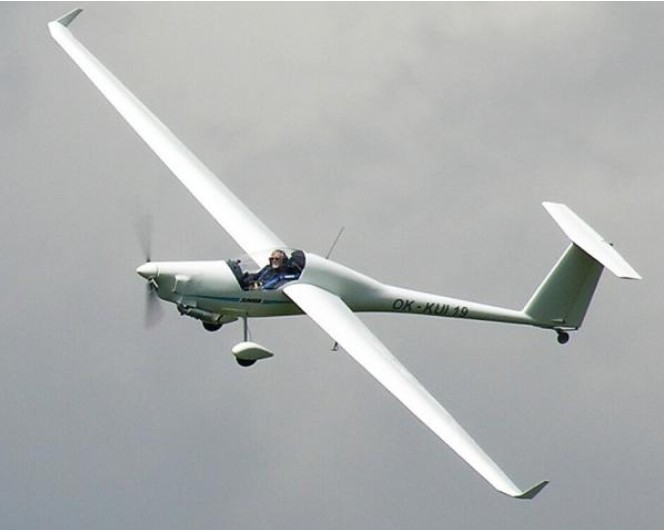
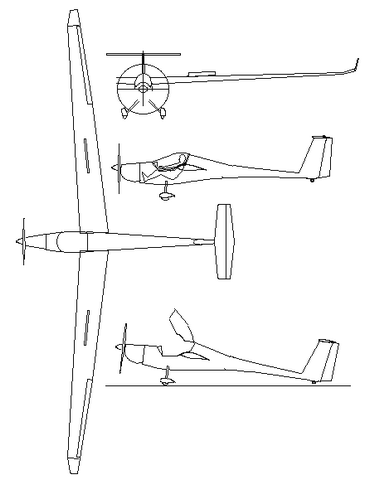
TST-13 Junior 2005is a single-seat ultralight composite glider with an engine installed in the front part of the fuselage and all-composite successor to the TST-9. The aircraft is suitable for tourist flights and leisure thermal flying. The goal of the development work on the TST-13 was to design an ultralight aircraft for pleasurable flying and to feature aerodynamics to allow utilization of thermal conditions for gliding and motorless flights. The concept of the TST-13 is based on the high-performance TST-10 Atlas glider. We used the same wing span of 15m and the fuselage of the TST-10 was modified to enable the installation of the propulsion unit with a thrust propeller in the front part of the fuselage. The fuselage of the TST-13 features an instrumentation panel and design conforming to the category of ultralight motorless aircraft. The landing gear is fitted with two wheels with a controlled tailwheel.
To improve the aerodynamic performance, the aircraft can be equipped with a propeller that is adjustable during flight, including flag positioning. Instrumentation for the TST-13 Junior glider is fully optional – the customer can either choose instruments from our list of avionics manufacturers or he/she can supply the instrumentation himself/herself during the production of the ordered aircraft.
The power unit cab be either Rotax 447 or 503, fitted with a wooden, two-bladed, ground adjustable propeller, dia 1600 mm. Alternatively, propeller SPORTPROP adjustable to a flag position for soaring.Fuel tanks provide for powered flights longer then 6 hours
TST-13 is a one-seated, mid-winged monoplane with a cantilever wing, T-shaped tail and two-wheel undercarriage. Its composite structure is made in negative moulds. The wings with sandwich structure are equipped with ailerons and air brakes on the upper surface. The strength system of the wing is formed by the main spar, by the aileron spar and by the root rib. All the wing profile of the sandwich structure forms the torsion box. The wings are interconnected by fittings and two horizontal pins. The connection wing-fuselage is made by means of pins and fittings placed in the fuselage and the wing root rib. The composite ailerons are hung by four hinges with the turning axis on the upper side. Air brakes on the upper side of the wing are made of aluminium and are retracted into pits.
The fuselage with a shell structure is made in the negative mould together with the fin. The tail is a T-shaped sandwich structure. The controls, enabling pitch, roll, air brake and trim controlling, are of the lever design, with a push-pull rods system. The relevant backstops are placed on the stick. The yaw control with adjustable pedals is transmitted by cables. The airplane can be trimmed by a torsional member in the elevator drive that is controlled by a lever. The main landing gear with two wheels (300 x 100 mm) is housed in a flexible dural leg. The lever placed on the stick controls the brake. The tail landing gear is provided with turnable tail wheel (120 x 30 mm).
The TST-10 ATLAS, TST-13 JUNIOR and TST-14 BONUS – formed the core of the 2009 production program and have brought a great deal of commercial success.
TST-13
Wing span: 15 m
Wing area: 10.03 sq.m
Aspect ratio: 22.8
Length: 7.45 m
Seats: 1
MTOW without BRS: 300 kg
MTOW with BRS: 322.5 kg
Weight of pilot and fuel: 65 – 122.5 kg
Vne: 200 km/h
Max. maneuvering speed: 140 km/h
Max. speed with extended air brakes: 140 km/h
Max. speed in aerotow: 140 km/h
Stall speed: 65 km/h
Cruise speed: 120-160 km/h
Max. glide ratio: 24-32 at 93 km/h
Max. permitted load factor: +4 / -2
Max. calculated load factor: +4.8 / -2.8
Engine: Rotax 447 or Rotax 503
Reducer: 1:2
Propeller: Wooden, 1600mm
Fuel tank capacity: 40 liters
Fuel consumption when climbing: 11 liters / h
Fuel consumption at cruise speed: 9 liters / h
Seats: 1
TeST TST-10 Atlas

TST-10 Atlas is a single-seat motorless composite ultralight glider with optional engine installation, designed mainly for performance thermal flights and wave and ridge flying. Its performance parameters are comparable to common gliders within the standard class. Its weight allows for very easy handling when landed during assembly or disassembly.
The major advantage of the TST-10 is the possible and easy installation of the power unit in order to upgrade to the TST-10M. TST-10 Atlas M is a self-launching UL glider with electric retractable power plant controlled by electronic system. 2009 Price: 22900 EURO
Instruments of the TST-10 Atlas glider are fully optional – the customer can either choose instruments from our list of avionics manufacturers or he/she can supply the instrumentation himself/herself during the production of the ordered aircraft. The Atlas can be delivered with an entire range of accessories and a trailer.
The flight characteristics, the quality of design, the wide range of instrumentation offered as well as the reliable power unit are key reasons for the popularity and commercial success of the glider. Since the completion and testing of the first prototype in 2004, 10 Atlas gliders have sold to pilots in seven countries. There is greater demand for the TST-10M model.
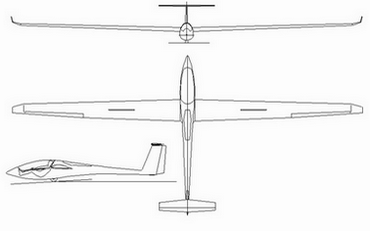
The TST-10 Atlas has a 15 meter wing span, all-composite structure, aerotow capable, and Club class conformant. The TST-10 is a single-seat, mid-winged monoplane with a cantilever wing, T-shaped sandwich structure tail and a classical one-wheel undercarriage. Its composite structure is made in negative molds together with the fin.
The wings with sandwich structure are equipped with ailerons and air brakes on the upper surface. There are no ribs in the wing. The strength system of the wing is formed by the main spar, by the aileron spar and by the root rib. All the wing profile of the sandwich structure forms the torsion box.
The wings are interconnected by fittings and two horizontal pins. The connection wing-fuselage is made by means of pins and fittings placed in the fuselage and the wing root rib. The composite ailerons are hung by four hinges with the turning axis on the upper side. Air brakes on the upper side of the wing are made of aluminium and are retracted into pits.
The controls, enabling pitch, roll, air brake and trim controlling, are of the lever design, with a push-pull rods system. The relevant backstops are placed on the stick. The yaw control with adjustable pedals is transmitted by cables. The airplane can be trimmed by a torsional member in the elevator drive that is controlled by a lever in the left of the cockpit.
The undercarriage consists of one unsprung wheel 300×100 mm mounted in a flexible fork. The brake handle is on the control stick. The wingtip wheels serve for independent taxiing and take-off. The turnable tail wheel 80×30 mm enables easy manipulation on ground.
TST-10M Atlas is a single-seat self-launcher with a retractable Rotax 447 power unit, suitable for thermal flights and long wave or ridge flights. The TST-10M can extract and retract the engine anytime during flight. The aircraft also offers easy handling and the capability of independent take off. TST-10M Atlas offers comparable performance to other gliders in the standard class and is equipped with a retractable power unit allowing for independent take off and reach of an airfield without thermal support. Engine extraction and retraction is fully automatic and it is controlled by two electronic servo motors. The power unit is operated by the pilot with two push buttons on the instrument panel. The handling of a landed Atlas is very easy thanks to its weight. The wheels on wing ends allow for independent rolling and take off.
Instrumentation of the TST-10M Atlas glider is fully optional – the customer can either choose instruments from our list of avionics manufacturers or he/she can supply the instrumentation himself/herself during the production of the ordered aircraft. The Atlas can be delivered with an entire range of accessories and a trailer. Aerotow capable and Club class conformant, up to 150 km range is available with the engine engaged.
Since the completion and testing of the first prototype in 2004, Test have sold 25 Atlas gliders to pilots in seven countries.
The Rotax 447 has two separate membrane carburetors and belt reducer, ratio 1:2. Electric starter and the propeller is wooden, two-bladed with fixed adjustment; diameter 1200 mm. The power plant is extracted by a 12V DC servo motor. The servo motor also ensures automatic opening and closing of the engine door in the aircraft fuselage and controls the locking pin, which balances the propeller into a horizontal position prior to engine retraction. The retractable mechanism is handled inside the cockpit through the instrument panel. The pilot controls the extracting and retracting of the power unit with two push buttons on the instrument panel. The very movement is ensured by an electronic unit controlled by a microprocessor, which takes care of the automatic opening of the engine door, monitors the limit position of the power unit, signals the pilot about the exact situation and activity and connects the starter only in the fully extracted position. This electronic system also prevents any retraction of a running engine. Entire engine extraction/retraction lasts approximately 20 seconds. The retractable mechanism of the power unit enables self-launching and restart during flight.
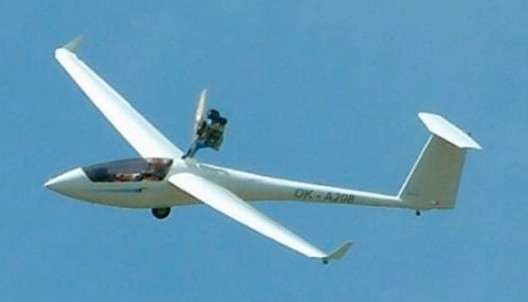
In 2007 a development of TST 10 MB has started. The first prototype of this modified version was finished in the spring of 2008 and after series of functionality tests a regular production has begin. Five of these motorized gliders are flying in the Czech Republic and France.
TST-10MB was developed from its predecessor, the TST-10M. As a standard the MB version is equipped with electronic servo motor, which is operated by two ways switch for retracting and extracting. This switch is equipped with safety lock for protection against accidental activation. The extracted position of undercarriage is signalized by green light and retracted position is signalized by red light on instrument panel. For higher level of safety, the unit is equipped with acoustic signal, which informs pilot about retracted undercarriage if air brakes are operated.
In case of electricity problems or empty battery, the pilot has also the possibility to extract the undercarriage by hand operated lever for safe landing. Thanks to retractable undercarriage the glide ratio was increased by one point.
Automatic connection of controls for wing to fuselage assembly simplifies the assembling of aircraft, abbreviates time of preparing before fly and it is contributing to the comfort of operation. Wings are simply joined with fuselage through root pins and controls of air brakes and ailerons are connected simultaneously and automatically, without any further adjustment. Assembling person has to install and secure only two main pins of wings.
A new seat base shape has achieved larger space above a pilot´s head, more comfortable sitting in cockpit and usability for taller people. New design of controls paths enabled an increase of fuel tank capacity up to 20 liters / usable, and reshaping of winglets, an experimentally verified position of zig-zag tapes and eddy generators, have contributed to the increasing of glide ratio by one point.
Up to 250 km range with the engine engaged is possible. The undercarriage consists of one unsprung wheel 300×100 mm, which is fully automatically retracted with the use of electric motor. The brake handle is on the control stick. The wingtip wheels serve for independent taxiing and take-off. The turnable tail wheel 80×30 mm enables easy manipulation on ground.
The retractable mechanism is handled inside the cockpit through the instrument panel. The pilot controls the extracting and retracting of the power unit with two push buttons on the instrument panel. The very movement is ensured by an electronic unit controlled by a microprocessor, which takes care of the automatic opening of the engine door, monitors the limit position of the power unit, signals the pilot about the exact situation and activity and connects the starter only in the fully extracted position. This electronic system also prevents any retraction of a running engine. Entire engine extraction/retraction lasts approximately 20 seconds. The retractable mechanism of the power unit enables self-launching and restart during flight.
The TST-10 ATLAS, TST-13 JUNIOR and TST-14 BONUS – formed the core of the 2009 production program and have brought a great deal of commercial success.
TST-10
Wing span: 15 m
Wing area: 9.85 sq.m
Aspect ratio: 22.8
Length: 6.87 m
Seats: 1
MTOW without BRS: 300 kg
MTOW with BRS: 322.5 kg
Weight of the pilot: 65 – 115.5 kg
Vne: 180 km/h
Max. maneuvering speed: 140 km/h
Max. speed with extended air brakes: 140 km/h
Max. speed in aerotow: 140 km/h
Stall speed: 60 km/h
Max. theor. glide ratio without winglets: 38 at 88 km/h
Max. glide ratio with winglets: 40 at 88 km/h
Min sink rate: 0,62 m/s at 72 km/h
Max permitted load factor: +4 / -2
Max calculated load factor: +5.26 / -3.26
TST-10M Atlas
Wing Span: 15m
Wing Area: 9.85sq.m
Empty Weight: 322.5kg
Aspect ratio: 22.8
Structure: all-composite
Engine: Rotax 447
L/DMax: 40 at 88 km/h
MinSink: 0,62 m/s at 72 km/h
Seats: 1
Length: 6.87 m
MTOW without BRS: 300 kg
MTOW with BRS: 322.5 kg
Weight of the pilot and fuel: 65 – 115.5 kg
Vne: 180 km/h
Max. maneuvering speed: 140 km/h
Max. speed with extended air brakes: 140 km/h
Max. speed in aerotow: 140 km/h
Stall speed: 60 km/h
Max. theor. glide ratio without winglets: 38 at 88 km/h
Max permitted load factor: +4 / -2
Max calculated load factor: +5.26 / -3.26
Engine: Rotax 447, 29.5 kW (40 HP)
Reducer: Belt 1:2
Propeller: Wooden, 1200mm
Fuel tank capacity: 14 liters
Fuel consumption when climbing: 11 liters / h
Fuel consumption at cruise speed: 9 liters / h
TST-10MB Atlas
Wing span: 15 m
Wing area: 9.85 sq.m
Aspect ratio: 22.8
Length: 6.87 m
Seats: 1
MTOW without BRS: 300 kg
MTOW with BRS: 322.5 kg
Weight of the pilot and fuel: 65 – 115.5 kg
Vne: 180 km/h
Max. maneuvering speed: 140 km/h
Max. speed with extended air brakes: 140 km/h
Max. speed in aerotow: 140 km/h
Stall speed: 60 km/h
Max. theor. glide ratio without winglets: 38 at 88 km/h
Max. glide ratio with winglets: 42 at 88 km/h
Min sink rate: 0,62 m/s at 72 km/h
Max permitted load factor: +4 / -2
Max calculated load factor: +5.26 / -3.26
Engine: Rotax 447, 29.5 kW (40 HP)
Reducer: Belt 1:2
Propeller: Wooden, 1200mm
Fuel tank capacity: 20 liters
Fuel consumption when climbing: 11 liters / h
Fuel consumption at cruise speed: 9 liters / h
TeST TST-9 Junior
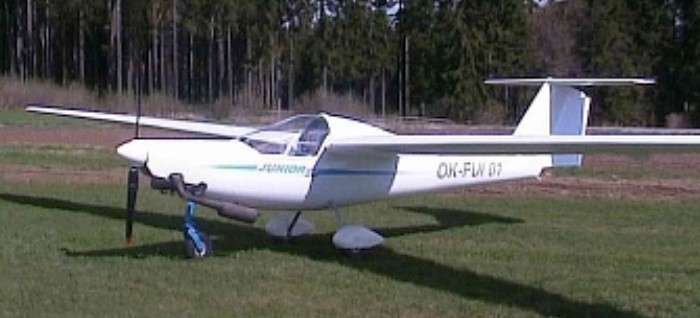
The TST-9 Junior is a modernized TST-7 with an elliptical fuselage and T-shaped tailplanes, first flown in 2000.
A motorglider / microlight aircraft, with Rotax 447 engine at front and nose wheel undercarriage the TST-9 Junior is JAR 22 certified.
TeST TST-8 Alpin D DM
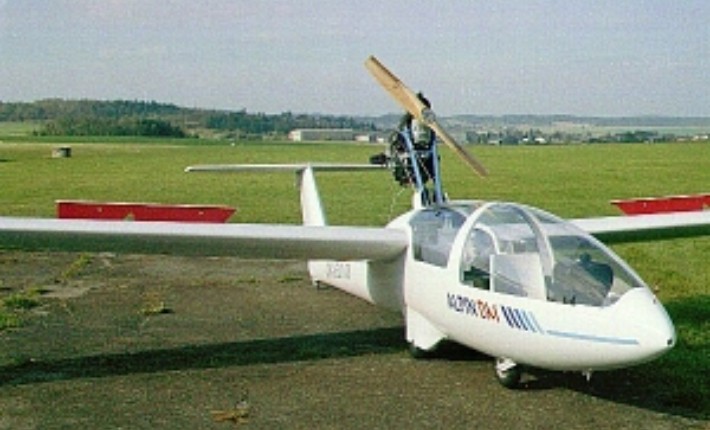
The TST-8 ALPIN DM, new tandem two seater with a retractable engine first flew in 1999 and was introduced in 2000. JAR 22 certified.
TeST TST-7 Junior
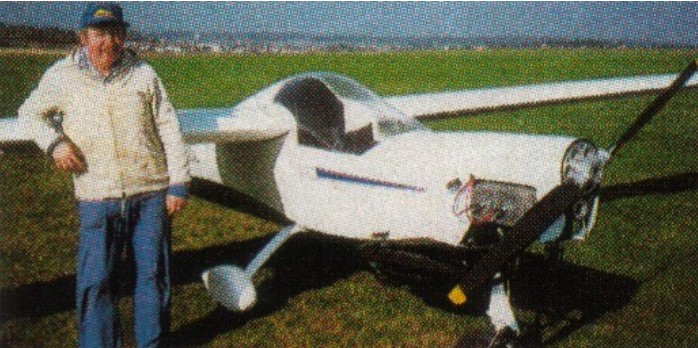
Czech Republic design imported to Canada and sold by Boohemican International. This motorglider is a modified version of the TST-1Alpin. More or less an ALPIN with the engine mounted in the front and a fixed three-wheel undercarraige, first flown in 1995. Ready to fly $16,250. Two to three month delivery date on kits. Plans $325.
Engine used: Czech M-215
Hp/Hp range: 40/40-55
Length: 19.1 ft
Wing span: 40.4 ft
Wing area: 107.6 sq ft
Fuel Capicty: 6 gal
Empty weight: 561 lbs
Gross weight: 990 lbs
Top Speed: 110 mph
Cruise: 70 mph
Stall: 41 mph
Range: 250 s.m
Rate of climb: 900 fpm
Takeoff distance: 600 ft
Landing distance: 400 ft
Service ceiling: 10,000 ft
No. seats: 1
Landing gear: trigear
Bldg materials: CWF
Bldg man hours: 600
No completed and flown: 3
Info package: $10
Kit cost: $9,840
TeST TST-6 Duo
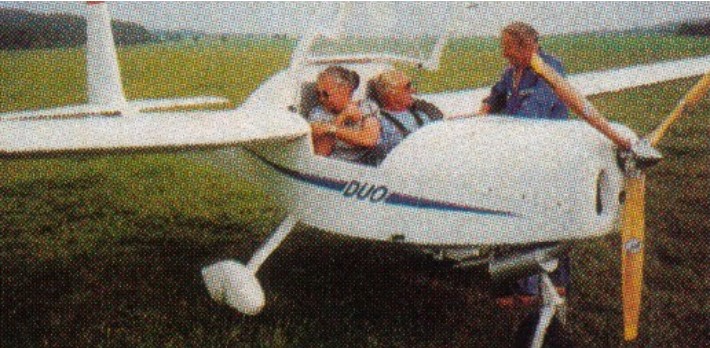
Czech Republic design imported to Canada and sold by Boohemican International. Engine, propeller and instruments are included in kit price. Ready to fly price in 2009 $21,925. Two to three month delivery date on kits. Plans $325.
Two seat motorglider, side-by-side, with Rotax 582 engine in tractor configuration and nose wheel undercarriage. JAR 22 certified, and first flown in 1996.
Engine used: M-215
Hp/Hp range: 43/43-65
Length: 21.1 ft
Wing span: 48 ft
Wing area: 140 sq ft
Fuel Capacity: 10 gal
Empty weight: 561 lbs
Gross weight: 990 lbs
Top Speed: 112 mph
Cruise: 70 mph
Stall: 41 mph
Range: 26 s.m
Rate of climb: 500 fpm
Takeoff distance: 650 ft
Landing distance: 600 ft
Service ceiling: 10,000 ft
No. seats: 2
Landing gear: trigear
Bldg materials: CWF
Bldg man hours: 700
No completed and flown: 4
Info package: $10
Kit cost 2009: $14,875
TeST TST-3 Alpin T
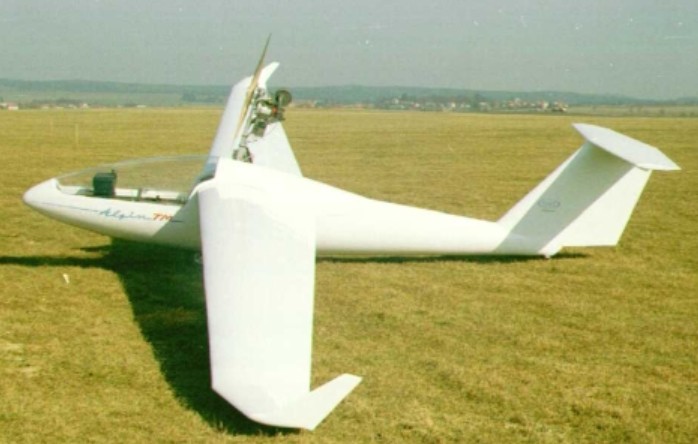
Originally a single seater, World Class performance glider, with “T” tail, nose type tow hook and one wheel undercarriage significant upgraded Alpin, the TST-3 Alpin T kit sailplane has tandem seating for two, with an option for a retractable engine (TST-3 Alpin TM), and with a 44 ft wingspan This aircraft flew several 500 km FAI triangles – in gliding mode (1998).
The TST-3 TL, is a lighter version of the TST-3 T; its pilot broke a series of records in cross-country flights in the 220 kg flying weight category (2001).
JAR 22 certified.
Air Est Services of Marley in France would supply either plans or kits for the TST-1 and would even build a completed sailplane.
TeST TST-1 Alpin
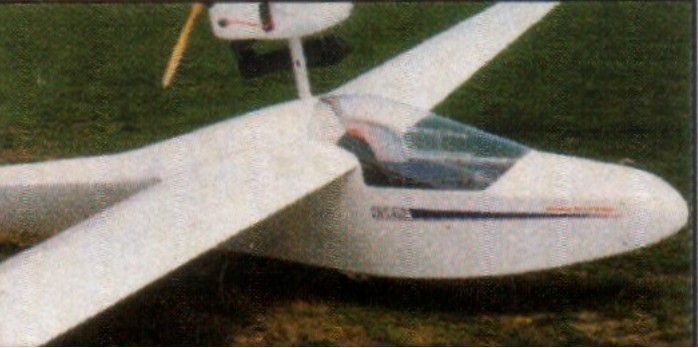
The firm designed its first wooden ultralight glider, the TST-1 Alpin, and tested the prototype in 1993. Despite gliding parameters that could bring smiles today, the glider demonstrated a couple of interesting performance feats – e.g. several 300 km FAI triangles and even a 500 km FAI triangle.
The Aplin is a standard club type with a 40.7 ft wingspan for the novice and average skill pilot.
Air Est Services of Marley in France would supply either plans or kits for the TST-1 and would even build a completed sailplane.
Initial engine options were the Czech built UVMV of 28 hp or a 24 hp Koneig.
The design was imported to Canda and sold by Boohemican International. Certified as European ultralight. In 1997, Ready to fly price $15,250, and a two to three month delivery date on kits. Plans cost $325.
The JAR 22 certified single seater glider / motorglider version has a detachable auxiliary Rotax 447 engine in pusher configuration.
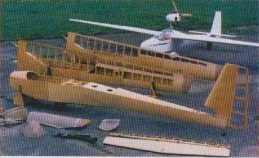
There is a tractor version called the TST 1 Junior.
TeST spol sro
The company TeST was established in 1992 by three enthusiastic, experienced glider pilots. Their initial goal was to design and manufacture ultralight motor gliders and ultralight aircraft.
During the few first years, production was carried out in a hangar in Křižanov. The firm designed its first wooden ultralight glider, the TST-1 Alpin, and tested the prototype in 1993. Despite gliding parameters that could bring smiles today, the glider demonstrated a couple of interesting performance feats – e.g. several 300 km FAI triangles and even a 500 km FAI triangle.
The company rented new production facilities in Velké Meziříčí in 1995 and production capacity grew to 10 aircraft a year. The development and production of new aircraft then continued, featuring mostly wooden construction:
- TST-7 JUNIOR more or less an ALPIN with the engine mounted in the front and a fixed three-wheel undercarraige (1995)
- TST-6 DUO, two seat motor glider similar to the JUNIOR (1996)
- TST-5 VARIANT, an alternative to the DUO with shorter wings (1996)
- TST-3 ALPIN T, a significantly upgraded ALPIN, also supplied with a retractable engine (TST-3 ALPIN TM). This aircraft flew several 500 km FAI triangles – in gliding mode (1998).
1998:
Zahradni ul.
CZ-59401 Velke Mzirici
Czech Republic
In September 1998, TeST moved to larger facilities in Velká Bíteš allowing production to increase to 25 aircraft a year. The development of new types continued:
- TST-8 ALPIN DM, a new tandem two seater with a retractable engine (1999)
- TST-9 JUNIOR, a modernized TST-7 with an elliptical fuselage and T-shaped tailplanes (2000)
- TST-3 TL, a new lighter version of the TST-3 T; its pilot broke a series of records in cross-country flights in the 220 kg flying weight category (2001).
In order to satisfy increased demand, the company moved again in November 2002, this time to its new facilities in Velké Meziříčí. Development activity began to focus mainly on composite technology. The following aircraft were designed:
- TST-10 ATLAS M, the first two seater made of composites with a retractable engine opened the new era of technologies based on carbon fiber – also supplied as the motorless TST-10 ATLAS (2002).
- TST-12, a tandem low-wing plane combining modern features and traditional wooden construction (flown in summer of 2004; built as a prototype only)
- TST-13 JUNIOR 2005, an all-composite successor to the TST-9; span of 15 m
- TST-14 BONUS M, a tandem all-composite two seater; production commenced in 2004 TST-14 BONUS.
The newly designed aircraft – the TST-10 ATLAS, TST-13 JUNIOR and TST-14 BONUS – formed the core of the 2009 production program and have brought a great deal of commercial success.
The original wooden construction was replaced by composite technology in 2002. Detraction and retraction of the engine is fully automatic and controlled by an electronic device.
The development and design of the new aircraft is in cooperation with experts from the Faculty of Mechanical Engineering at the VUT University of Technology in Brno and the Light Aircraft Association (LAA ČR), which helps to increase the quality and safety of newly designed aircraft.
The aircraft are designed to meet existing and anticipated standards and regulations in the overall UL category – maximum flying weight of 300 kg (or 322 kg during BRS use) for single seaters or 450 kg (or 472 kg during BRS use) for two seaters. The minimum speed is always under the 65 km/h limit, often conforming to even stricter standards (JAR-22).
2009: K Libusi 4/24
Praque 4 148 00
Czech Republic
In 2009 TeST Aircraft were marketed in North America by Bohemican International, 36 Buchanan Road, St. Cathatires, Ontario L2M 4R6, Canada.
 All Aero