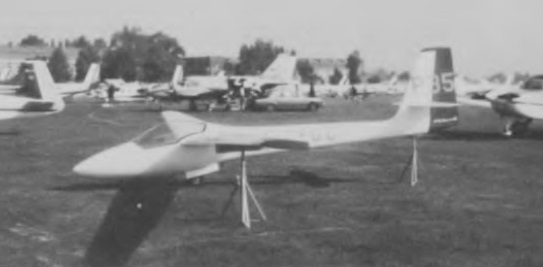
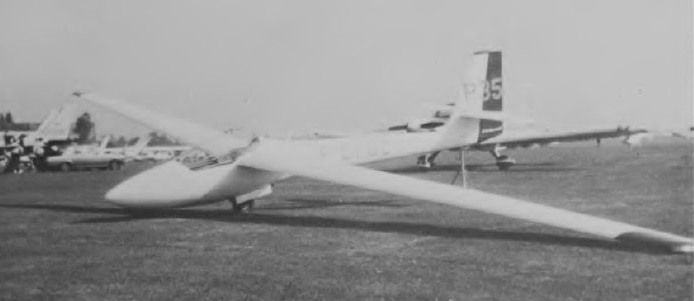
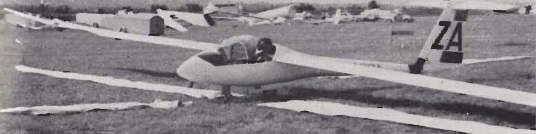
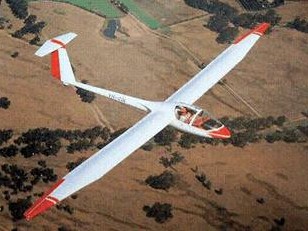
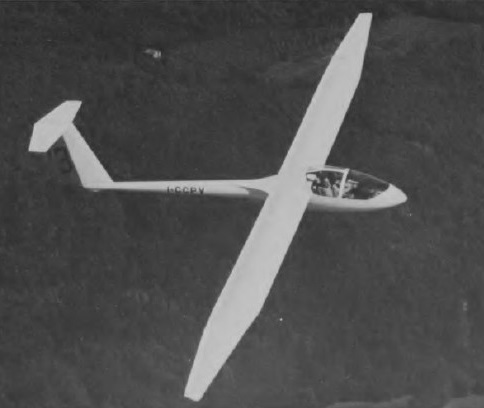
The Aiglon (Eaglet) was a private venture design by CARMAM’s technical directors Robert Jacquet and Jean Pettier, and is a restricted Standard Class sailplane; design work began in September 1971, and the prototype made its first flight on 14 June 1974.
Series production began in 1976, the first production JP15-36A making its first flight on 16 October that year; a version with a retractable monowheel and provision for up to 121 lb of water ballast is designated JP 15-36AR.
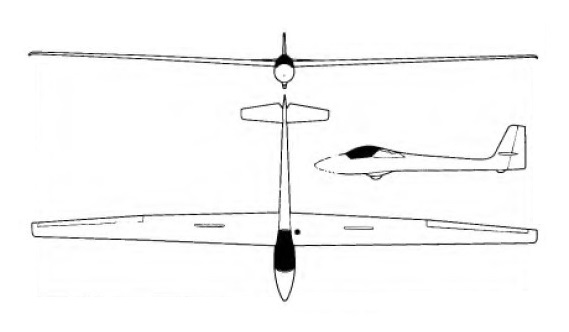
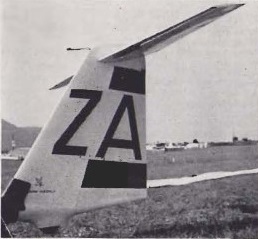
The single-seater Aiglon is intended for intensive club use and so special attention has been paid to good flying qualities and safe landing characteristics for not-so-experienced pilots. Construction is of glassfibre, the cantilever mid wing having a single glassfibre spar and a glassfibre/Rohacell/epoxy sandwich skin and steel-tipped wing tip ‘salmon’ fairings. The ailerons are of plastic and can be operated either differentially or in unison, and there are Schempp-Hirth airbrakes on the upper and lower surfaces; for ease of wing rigging the aileron and air brake controls are designed to connect automatically. The semimonocoque glassfibre fuselage is moulded in two halves and joined at the centreline, a single bulkhead forming the cockpit backrest and a shock-absorbing structure for the monowheel. A large one-piece canopy gives excellent visibility, while both seat and rudder pedals are adjustable in flight: on the JP 15-36A the monowheel s fixed and has a cable brake, and there is also a tail bumper. The swept back fin is integral with the fuselage, and the wooden rudder is fabric-covered, the all-moving tailplane is of plastics construction.
JP.15-36 Aiglon
The Pettier PA 15-34 Kit-Club homebuilt version is essentially the same as the JP 15-36A but with some structural simplification and redesign to make it more suitable for amateur builders; the glassfibre wings are factory-made. Plywood-covered spruce construction of the fuselage and tail unit replaces the Aiglon’s more sophisticated glassfibre structure, although the Kit-Club’s nose-cone is of glassfibre. The tail boom, rudder and rear part of the tailplane are fabric-covered, and there is a fixed unsprung monowheel, with a cable-operated drum brake on production aircraft. The change to wood construction results in only a slight weight penalty, the maximum weight going up to 926lb, and performance is very similar to the JP15-36A’s. The prototype Kit-Club made its first flight on 6 November 1976, and 12 had been built by December 1979. The Kit-Club is also available in factory-built form from CARMAM.
By January 1980 a total of 39 JP 15-36Aand JP 15-36AR Aiglons had been sold
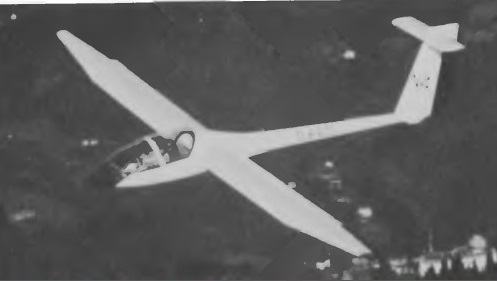
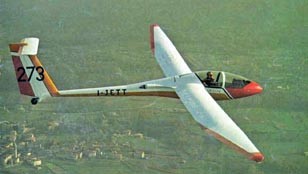
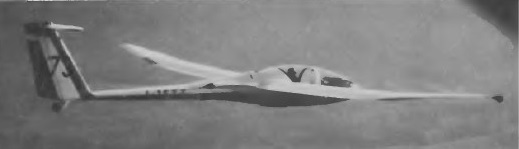
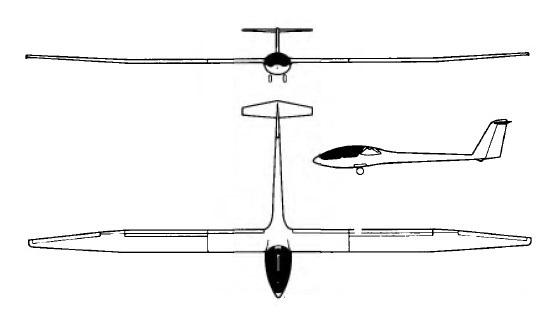
The CARMAN JP 15-38 Standard Class single seater utilises the same wings as the JP 15-36A Aiglon with provision for 220lb of water ballast; these are married to a new fuselage of similar construction to the JP 15-36A, which has a mechanically retractable unsprung monowheel. Instead of the Aiglon’s low-set tailplane the 15-38 has a T-tail, with elevator and spring trim.
15-38
Construction of the 15-38 began in February 1977 and the prototype made its first flight on 17 June 1979.
JP. 15-36 Aiglon Wing span: 15.0 m / 49 ft 2.5 in Length: 6.4 m / 21 ft 0 in Height: 1.4 m / 4 ft 7 in Wing area: 11.0 sq.m / 118.4 sq.ft Wing section: Wortmann FX-67-K-170/67-126 Aspect ratio: 20.4 Empty weight: 200 kg / 441 lb Max weight: 390 kg / 860 lb Water ballast: None Max wing loading: 35.5 kg/sq.m / 7.27 lb/sq ft Max speed: 130 kt / 240 km/h Stalling speed: 33.5 kt / 62 km/h Min sink: 0.6 m/sec / 2 ft/sec at 40.5 kt / 75 km/h Max rough air speed: 108 kt / 200 km/h Best glide ratio: 36 at 49.5 kt / 92 km/h
CARMAM JP15-36A Span: 49ft 2.5 in Length: 20ft 3 in Height: 4ft 7 in Wing area: 114.7 sqft Aspect ratio: 20.4 Empty weight: 505 lb Max weight: 860 lb Max speed: 136mph (in smooth air) Max aero-tow speed: 103 mph Min sinking speed: 2.03ft/sec at 45 mph Best glide ratio: 36.9:1 at 50 mph
CARMAM 15-38 Span: 49ft 2.5 in Length: 21 ft 11.75 in Height: 4ft 8 in Wing area: 118.4 sqft Aspect ratio: 20.6 Empty weight: 507 1b Max weight: 970 lb Max speed: 136 mph (in smooth air) Max area-tow speed: 136 mph Min sinking speed: 1.97ft/sec at 46.5 mph Best glide ratio: 38:1 at 62 mph
Cooperative d’Approvisionnement et de Reparation de Material Aeronautique de Moulins Moulins, Allier, France.
Societe Anonyme CARMAM was previously known as the Cooperative d’Approvisionnement et de Reparation de Material Aeronautiques de Moulins, and built the Aer-Pegaso M-100S and its two-seater version the M-200 under licence, as well as manufacturing certain sailplane components for the West German firm of Glasflugel.
In 1969, the Caproni Vizzola began producing a series of gliders baptized Calif, the names of their designers Carlo Ferrarin and Livio Sonzio: A- 10 (one unit), A-12 (two units), A- 14 (one unit). A-15 (one unit), A- 20, A-21 and their derivatives were produced in series from 1972-73.
The A-15 high performance single-seater was metal with a 23m span. The wing had a long parallel centre-section with short tapered tips.
Span: 23.1m Wing area: 18.48 sq.m Aspect ratio: 28.9 Empty weight: 475 kg AUW: 702 kg Wing loading: 38.1 kg/sq.m Min sink: 0.45 m/sec at 75 kph Stall: 64 kph Mac speed: 252 kph Glide ratio: 50-1 at 92 kph
Designed by G. Ferrarin and L. Sonzio, the original A-21, the prototype of which made its first flight on 23 November 1970, was a high performance two-seat version of the A-14, from which it differed in having a slightly longer fuselage widened to accommodate two in luxurious side-by-side seating.
This version was succeeded by the A-21S, which held four world records for two-seaters; among these is the Class D2 speed record for women over a 300km closed circuit, set up on 18 August 1974 by Adele Orsi and Franca Bellingeri in an A-21S at a speed of 60.73mph.
Caproni Vizzola Calif A-21 S
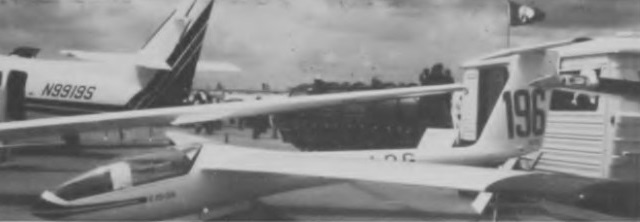
The cantilever mid wings have a wide constant chord centre section and tapered trapezoid outer panels, and are all-metal; the three-piece all-metal main spar is supplemented by two auxiliary spars in the centre section and one in each outer panel, the downturned wing tips being of glassfibre. The trailing edge flaps/spoilers can act as air brakes when deflected to 89 downwards, and as camber-changing surfaces between ±8°; the plain ailerons are differentially-operated. The forward fuselage is a glassfibre/foam plastics semimonocoque structure with a load-carrying light alloy frame, and the rear fuselage is a thin boom of all metal stressed skin construction. The distinctive high aspect ratio fin and rudder is all-metal, and has the all-moving metal tailplane and elevator, which both have glassfibre tips, mounted on top; the tailplane trim is spring-adjusted. The mechanically retractable twin main wheels have rubber-incompression shock absorbers and a brake, and there is a fixed steerable tailwheel, as well as a small wheel in each downturned wing tip. The two pilots have dual controls under a rearward-sliding two piece canopy, and sit in luxury seating equivalent to the best light plane standards.
Over 100 A-21S Califs had been built, production of a third batch of 54 being ordered by January 1980.
With 66.9 feet of wingspan, the A-21SJ is the only production turbojet-powered sailplane in the world. It offers side-by-side seating and all-metal construction. The engine retracts into the fuselage just aft of the cockpit. Cruise speed is 124 mph and climb is 945 fpm. On 36 gallons of fuel, range is about 217 miles, with a ceiling of 43,300 feet. Takeoff run requires only 1,181 feet. Up to 90 percent of the parts between the sailplane and the motorglider are common to both, so the glider can be transformed easily into a jet glider, even in retrofit. The landing gear for both aircraft features dual main gear that retract into the undercarriage. Two small wheels are built into the wingtips. The wing is all-metal with a single spar, stressed skin, and fiberglass tips; the wing is fitted with top-hinged, differentially operated ailerons plus lower-hinged, aerodynamically balanced flaps/spoilers. The fuselage has a monocoque forward section of fiberglass with a load-carrying lightweight alloy structure. The tailboom is an all-metal stressed-skin unit ending in an all-metal single-spar tailplane. Caproni (which built its first glider in 1908 at Vizzola Ticino, Italy) produced the first A-21 (designed by Carlo Ferrarin and Livio Sonzio) in 1970, and within two years had collected four world multi-place sailplane speed and distance records with it. A 2-place all-metal ship with a fiberglass forward fuselage, the A-21 was followed into production by the slightly improved S model. The ship features a roomy side-by-side cockpit and widely spaced retractable twin landing wheels. Aft-hinged brakes on the lower surface, and these, with large flaps (which deflect to +89 degrees) limit speed in a vertical five to 188 kph / 102 kt / 117 mph. The T-tail is all moving. A steerable tail wheel and water ballast were optional. The Calif A-21S was produced im a small-series produced (6 aircraft) at the Gomolzig Flugzeug- und Maschinenbau. The Italian construction offers good performance (comparable to Janus C) and good flying characteristics, giving the aircraft a broad range of applications reaching from advanced training and guest flights up to performance flights. Only for competition flights in the double-seater class, it is exceeding the 20-meter definition by a few centimeters. The A- 21S cost approximately 20000 Marks less than a Duo Discus and features a fixed tailplane. The A-21JA self launch jet model is a 2 place, side by side all metal sailplane. Forward fuselage is glass fibre. Dual, manually retracting undercarriage. Fixed tail wheel. Rudder pedals adjustable. Both seats adjustable. Extremely powerful trailing edge flap / brakes. Flaps have a thermal setting, cruise setting and fully variable down for landing. Automatic control hook up. No manufacturers fatigue life limit. A very high quality structure, built by an aircraft manufacturer not a glider manufacturer. It was well and truly “state of the art” in 1974.
First flying in late January 1972, the A21 J jet version added a SERMEL TR18 100 kp thrust (220 lb) jet engine. The span was reduced from 22.87 to 20 m, and overall length increased from 7.27 to 8m. The tare weight (equipped) is reduced from 484 to 434 kg. The engine is mounted in the lower part of the fuselage, behind the seat, the ejection of gas under the fuselage. The volume of wing and fuselage tanks hold 160 litres of kerosene. The engine is started with a compressed air bottle.
A21 J
In 1976 the first prototype of the A- 21J was purchased by Lockheed to be used in a research program conducted in cooperation with the Mississippi State University. The experiments concerned inter alia the effects of wind, dust, insects and rain on some wing sections, as well as measures and vortex noise rappport the fuselage. In the initial test phase, the A- 21J was towed to the appropriate altitudes.
The J was succeeded by the A-21SJ, which first flew in May 1977 and was based on the production A-21S sailplane. The main difference between the A 21A and A 21 SJ is the positioning of the 198 lb st Microturbo TRS 18-046 turbojet engine. In remains in the fuselage behind the pilot, but now in the top position. Its air intake is by a removable NACA inlet located on the back of the fuselage. The ejection of the exhaust is by a nozzle opening on each side of the fuselage. The A-21SJ has a metal fuselage with fiberglass monocoque forward section surrounding aluminum load-carrying structure; all metal wings and tail with minor fiberglass fairing.
Caproni Vizzola Calif A-21SJ
Up to 242.5 lb of fuel is carried in fuselage and wing tanks, and there is a starter/generator and batteries for in-flight and ground starting. Apart from the engine the A-21 SJ is very similar to the A-21S, but has larger mainwheels and tailwheel. Two A-21SJs had been completed by May 1979 and five more were being built. One A-21SJ was being tested with a more powerful Microturbo TRS 18 jet of 242.5 lb st.
Prototype A21J Span: 20 36 m Length: 7 84 m Height: 1.919 m Wing area: 16,19 m² Wing loading: 39.8 kg / m² Maximum weight: 644 kg Max speed: 255 km / h Climb speed: 63 km / h
A 21J Engine: Sermel TRS 18, 220 lb. Seats: 2. Wing loading: 8.91 lbs/sq ft. Wing aspect ratio: 25. Gross: 1,543 lbs. Empty: 957 lbs. Useful: 586 lbs. Max airspeed: 162 kts. Rough air speed: 162 kts. Stall: 41 kts. Lift / drag: 43 at 63 kts. Sink: 1.97 fps at 49 kts. Fuel: 236 lbs. Length: 26 ft 3 in. Wing span: 65 ft 7.5 in
A-21JA Glide ratio: 1:43 at 58 kt / 1:42 at 60 kt. Never Exceed Smooth Air: 138 knots Max Rough Air: 91 kts Stall: 34 /38 knots Climb rate: 650 ft/min Ceiling: 30,000 ft Power Cruise: 115 kts
A-21S Span: 66ft 10.5 in Length: 25ft 4.5 in Height: 5ft 8.5 in Wing area: 174.3 sqft Aspect ratio: 25.65 Empty weight: 961 1b Max weight: 1,419 lb Max speed: 156 mph Max aero-tow speed: 87 mph Min sinking speed: 1.97 ft/sec at 53 mph Best glide ratio: 43:1 at 65 mph
A-21 SJ Span: 66 ft 10.25 in Length: 25 ft 4.5 in Height: 5 ft 3.5 in Wing area: 174.3 sqft Aspect ratio: 25.65 Empty weight: 1,164 lb Max weight: 1,781 lb Max level speed: 143 mph (power on) Max rate of climb: 787 ft/min (sea level, power on) Take-off run: 985 ft (power on)
In 1969, the Caproni Vizzola began producing a series of gliders baptized Calif, the names of their designers Carlo Ferrarin and Livio Sonzio: A- 10 (one unit), A-12 (two units), A- 14 (one unit). A-15 (one unit), A- 20, A-21 and their derivatives were produced in series from 1972-73.
Seats 1 Wing loading 7.92 lbs/sq ft. Wing aspect ratio 28.3. Gross weight 1,574 lbs Max airspeed 135 kt. Empty weight 1,067 lbs Rough air speed 135 kts. Useful load 507 lbs Stall 34 kt. Lift to drag 51 at 60 kts. Sink 1.57 fps at 43 kts. Length 23 ft 10.25 in. Wingspan 75 ft 0.5 in.
Californian brothers Walter Bissell Cannon and John Arthur Cannon built two machines in 1911. The first was a biplane that was flown very successfully as a towed glider and later with a Ford automobile engine. The second, a monoplane, was tested on Eaton Field in June 1911.
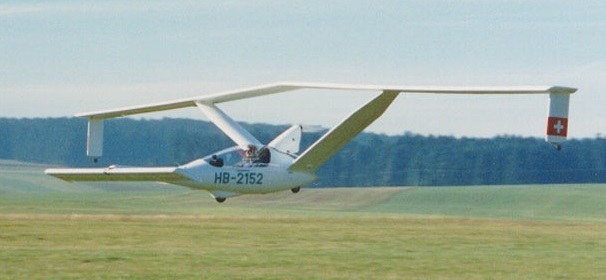
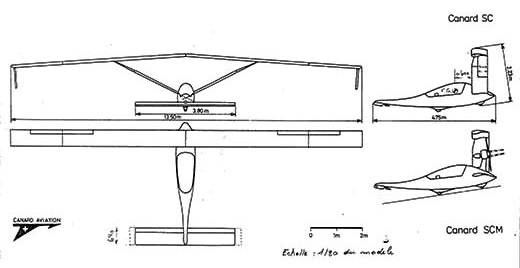
The Canard SC was the 1983 production version of the Farner Canard 2FL by Canard Aviation. designed by Ernst Ruppert with ETH Zurich.
During flight tests of the SC, from 23 July 1983, progress was accelerated by the use of an auxiliary 15 kW (20 hp) König SC 430 3-cyl. two-stroke radial engine mounted on a pylon between the v-struts and main-plane, driving a folding propeller, as the SCM.
Two were built (HB-2152 V-01 & HB-3004).
Two motorized versions (Canard SCM and Colibri) flew in 1983 and 1984. The development was suspended in 1993 following the accidental death of the designer, Hans Farner, during a test flight. The Company immediately bought the sold aircraft and ceased production.
They are stored in an attic, and two trailers are located at Ruppert Composites in Wald (Switzerland)
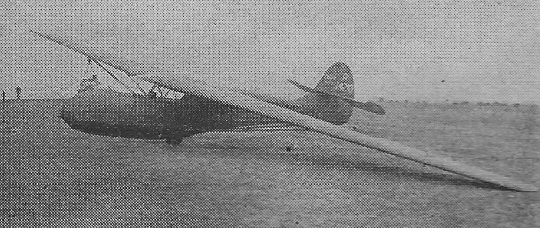
In 1942 Dawydoff obtained the plans and the rights to produce the Slingsby Cadet under licence from Fred Slingsby. Dawydoff had the plans redrawn to US measurements, the structural strength increased, plus a new tow hook and wing rigging design. The wing is assembled using just one 4 ft (1.2 m) long pin per wing.
The UT-1 is built predominantly from wood, with the fuselage wooden framed and covered in plywood. The wing and tail are also wooden-framed and covered in doped aircraft fabric covering. The two-spar wing is supported by dual struts.
Dawydoff’s plan was to gain government support to provide the UT-1 in kit form for assembly by schools and clubs. The government money was not forthcoming and the post-war period saw a large number of surplus military training gliders saturate the market. As a result, only one UT-1 was completed, first flying in 1943. It is now located in the National Soaring Museum.
Wingspan: 38 ft 5 in (11.71 m) Wing area: 172.5 sq ft (16.03 m2) Aspect ratio: 8.5:1 Airfoil: Go 426 Empty weight: 276 lb (125 kg) Gross weight: 450 lb (204 kg) Maximum glide ratio: 14.7:1 at 30 mph (48 km/h) Rate of sink: 210 ft/min (1.1 m/s) at 28 mph (45 km/h) Wing loading: 2.6 lb/sq ft (13 kg/m2) Crew: one
Cooperative des Ateliers Aeronautiques de la Region Parisienne initially specialized in modification and repairs. Began manufacture of components for sailplanes under license, and in 1965 contracted from Scintex-Aviation to produce Super Emeraude light aircraft. Prototype only of C.P.100 two-seat version of Emeraude was built. CAARP became associated with Avions Mudry et Cie in manufacture of CAP 10 and 20 aerobatic aircraft in the early 1970s, being responsible for building of CAP 20 and fuselages for CAP 10. Final assembly of the CAP 10 was undertaken by Mudry at Berney, the companies being merged in 1978.
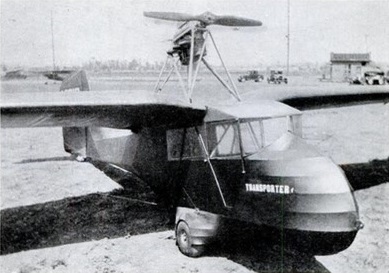
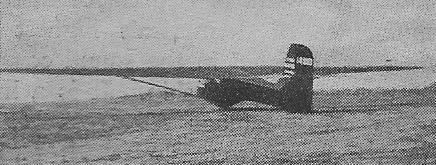
In 1935 Jay Buxton of Hawthorne, California, completed his Transporter powered glider. The engine is a 2 stroke inline, inverted type of unique design. It is a three cylinder, three port engine that weighs 115 lb and develops 35 hp at 2100 rpm.
The motor cabane is completely removed and replaced by a plain cabane when used for gliding.
 All Aero