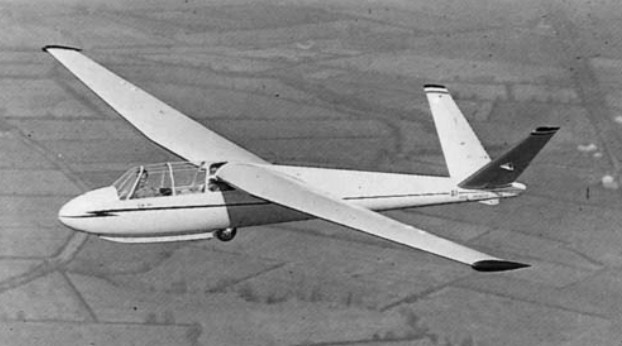
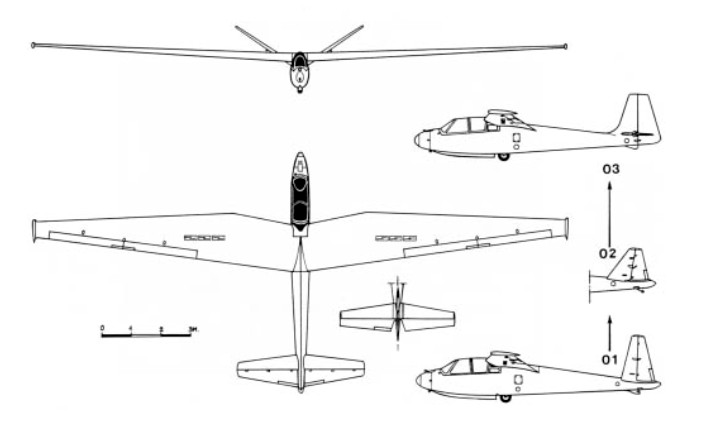
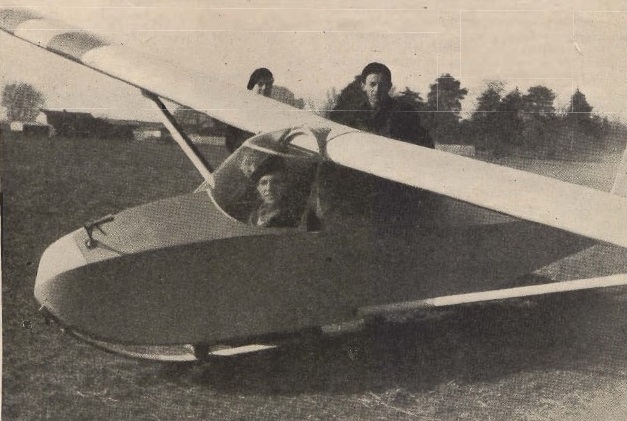
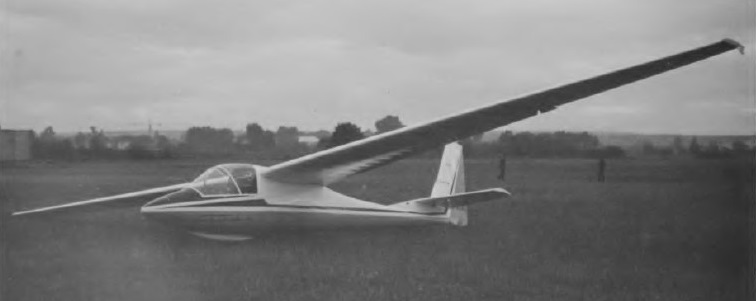
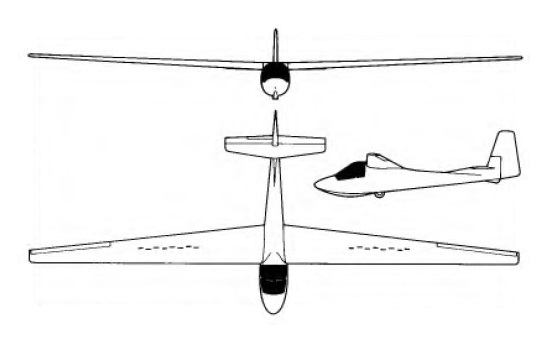
The CM.71 was a 1952 2-seat CM-7 replacement sailplane, originally with a V tail. Three were built CM.71 n° 1 & n° 2 with V tails, CM.71 n° 3 with cruciform empennage.
Wingspan: 18 m Length: 8.26 m Height: 2.26 m Aspect ratio: 14.6 Wing area: 22.27 sq.m Empty weight: 385 kg MAUW: 551 kg Best glide: 26 at 90 km/h Min sink: 0.85 m/s at 75 km/h Seats: 2
A 1948 2-seat wooden gull-winged sailplane, 18 m span
CM.7 Adour: [Project] 1941, for Commissariat général aux Sports Intended for sports flying, blind flying, and acrobatics instruction CM.7: Fouga-built model (Fouga CM.7 Adour), 2 built
Pierre Mauboussin joined forces with glider designer Robert Castello in 1942, their designs being known under the Castel-Mauboussin name and assigned CM designations. Fouga had been producing designs by Mauboussin since 1936 and, in 1944, made Mauboussin their Director of Aviation Services working alongside Robert Castello.
Fouga retained the CM designation sequence (which was distinct from their earlier Castel C- numbers). In May 1958, Fouga was bought by Potez which also retained CM designations for Castello-Mauboussin designs and their derivatives.
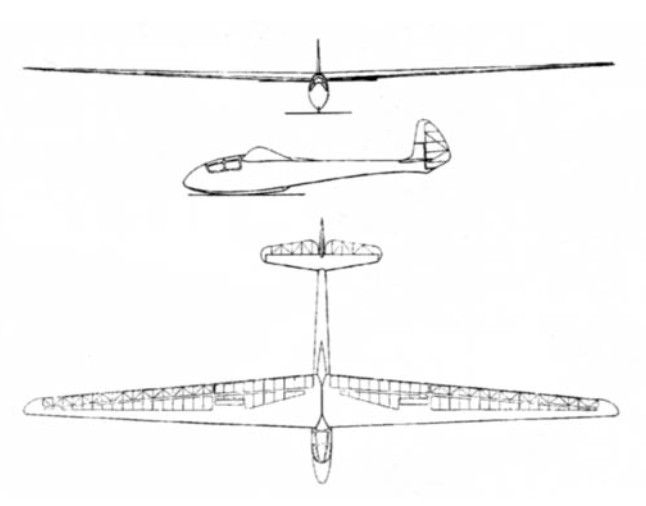
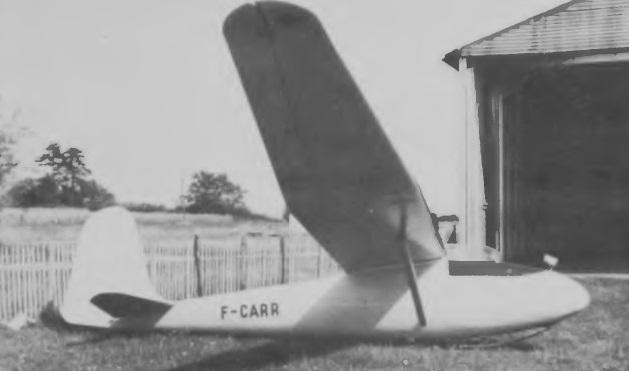
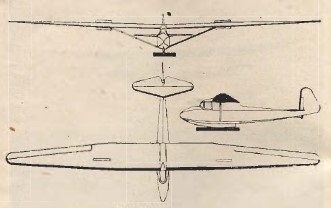
This single-seater first flew in 1950 and was intended for training in performance and distance flying, and for pilots who aimed to qualify for the French ‘D’ licence.
It is a semi-cantilever high wing monoplane with a small bracing strut each side for the singlespar wooden wing, which is covered partly with plywood and partly with fabric. The air brakes consist of two staggered rows of three semi-circular metal plates on each side of the wing just outboard of the bracing strut; these rotate on their axes to protrude above and below the wing surface or to be withdrawn into the wing section. No flaps are fitted, And the oval-section fuselage is of all-wood construction with the pilot sitting under a small canopy. The landing gear consists of a fixed monowheel with a sprung nose-skid and a tailskid, and the tail unit is also of wooden construction.
There were still about seven examples of the C 311P on the French register in 1979.
Castel C311P Span: 45 ft 11 in Wing area: 158 sq ft Aspect ratio: 13.3 Empty weight: 345 lb Max weight: 537 lb Speed at best gliding angle: 40.3 mph Min sinking speed: 2.1 ft/sec
Since 1936 the French firm of Etablissements Fouga et Cie operated an Aircraft Department which built aircraft to the designs of its Director, Pierre Mauboussin, and the Technical Director, Robert Castello, as Castel-Mauboussin or just Castel and later as Fouga designs. These included a number of sailplanes culminating in the postwar CM 10 military glider which could carry up to 35 fully armed troops or two jeeps, and the V-tailed CM 8R-13 and CM 8R-15 Sylphe each powered by a dorsally-mounted Turbomeca Pimene jet for flight testing and research; the two latter types led directly to the Fouga CM 170R Magister jet trainer.
Designed by Alberto and Piero Morelli, the M-200 is a two-seater high performance version of their Standard Class M-100S which was built under licence both in Italy and by CARMAM at Moulins-Avernes as the M-100S Mesange (Tomtit). The prototype M-200 was built under contract for the Aero Club of Italy by the CVT (Centra di Volo a Vela del Politecnico di Torino) at Turin, and made its first flight in May 1964.
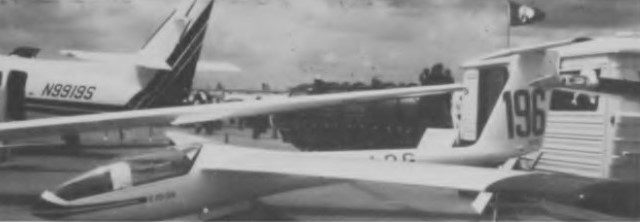
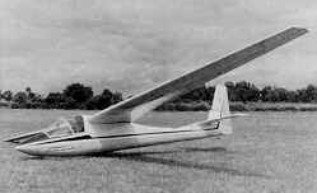
Production was undertaken under an exclusive licence by CARMAM, who built it as the M-200 Foehn, completing one more prototype and five pre-production aircraft before starting the definitive production batch. Main difference between the M-200 and the M-100S is the former’s widened fuselage to accommodate two staggered side-by-side seats, the one-piece canopy opening sideways to port; this seating arrangement obviates the need for ballast when the aircraft is flown solo, and gives good visibility to both pilots. The M-200 is designed to be easy to fly for first solos and, like the M-100S, is fully aerobatic; it is also suitable for flying in cloud. Wing span of the M-200 has been increased from the 15m of the M-100S to 18.15m (59ft 6.5 in) and it is slightly longer; the wing structure is very similar to that of the M-100S, with a leading edge torsion box and air brakes consisting of four instead of three pairs of light alloy rotating plates above and below each wing. The fuselage is of plywood construction with frames and stringers and the landing gear consists of a non-retractable monowheel with a drum brake and a rubber-sprung nose-skid; there is also a tailskid.
M-200 Span: 18.14m / 59 ft 6.5 in Length: 7.6 m / 24 ft 1.25 in Height: 6 ft 5 in Wing area: 17.46 sq.m / 188.4 sqft Aspect ratio: 19.0 Empty Weight: 345kg / 760lb Gross Weight: 570kg / 1255lb Payload: 225kg / 495lb Water ballast: None Wing Load: 32.65kg/sq.m / 6.7lb/sq.ft Max speed: 121 kt / 225 km/h / 140 mph (in smooth air) Max rough air speed: 81 kt / 150 km/h Stalling speed: 38 kt / 70 km/h MinSink: 0.64 m/s / 2.1 fps / 1.24 kt Best glide ratio / L/DMax: 32:1 at 98 kph/ 54 kt/ 61 mph No. of Seats: 2 Airfoil: NACA 63-619/15
 All Aero