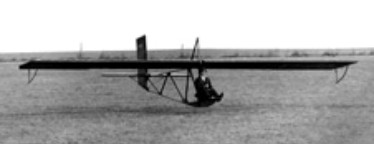
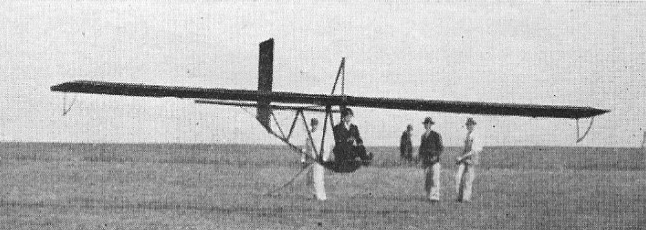
Designed by Eldon Cessna, Clyde’s son, the company produced and sold 300 Cessna CG-2 single-seat primary gliders that helped the company through the hard times of the Depression. The company produced 300 CG-2 but finally, at the insistence of the stockholders, the factory was closed although the company still existed. This situation continued through 1931 until 1934.
Italy Centra Volo a Vela, Politecnico di Mario, fundamentally a research and development center attached to Milan Polytechnic after Second World War to study soaring flight. Production included gliders and sailplanes, but in the late 1940s/early 1950s the Centra Volo a Vela also produced prototypes of the P.110 three/four-seat cabin monoplane and P.M. 280Tartuca single-seat low-wing monoplane.
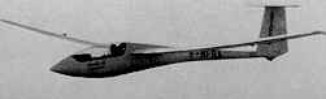
Centrair developed the Marc Ranjon designed standard class Pegase after manufacturing the 15m racing class Schleicher AS-W 20 under license. The fuselage is similar to the AS-W, and the wing is all new, with a new profile. The Pegase has a larger diameter tail boom for strength, and there is considerable modification in the wing-to-fuselage fairing. Three Pegase models were produced, the A with glass fiber and the B with carbon fiber mainspar. The B was superseded by the improved D model. The B and D have a slightly different wing airfoil, and significantly higher gross weight and greater provision for water ballast. The D has a claimed best L/D of 42 at 105 kph/ 57 kt/ 65 mph. All versions can be flown with or without winglets. The 101 Club is a simplified variant of the Standard Class Pegase designed for club use with a non- retractable main wheel and no provision for water ballast.
Pegase 101 A, B & D and Club Wing span: 15m / 49.2ft Wing area: 10.5sq.m / 113sq.ft Empty Weight: 251kg / 553lb Payload: 204kg / 450lb Gross Weight: 455kg / 1003lb Wing Load: 43.33kg/sq.m / 8.87lb/sq.ft Water Ballast: 160kg / 353lb Aspect ratio: 21.4 Airfoil: COAP 1-2 Structure: fiberglass and carbon fiber L/DMax: 41 MinSink: 0.60 m/s / 1.96 fps / 1.16 kt No. of Seats: 1
Produce gliders in Alliance, Marianne, 101 Club and Pegase series. In 1980s developed Parafan powered parawing microlight, and was developing Sup’aero as single-seat canard monoplane powered by two Microturbo jet engines and Sup’Air as six-seat composites lightplane with tail-mounted propeller for piston engine.
2008: Societe Nouvelle Centrair B.P. 44 Aerodrome Le Blanc 36300 France
Designed by South African power aerobatics champion Peter Celliers and first flown in 1989, is a new composite aerobatic glider, the Celair Celstar GA 1, designed to JAR 22 specifications (10 g) for competition flying. The machine is stressed to +10g and 10g, with a best glide angle of 23:1. It has full span mass balanced ailerons. Airbrakes are used for approach control. The main wheel is retractable.
South Africa Developed Eagle 300 six-seat STOL cabin lightplane (first flown 1990); program later offered for sale. Also developed Celstar CG-1 composites aerobatic glider.
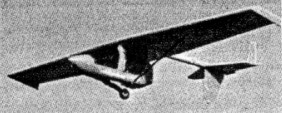
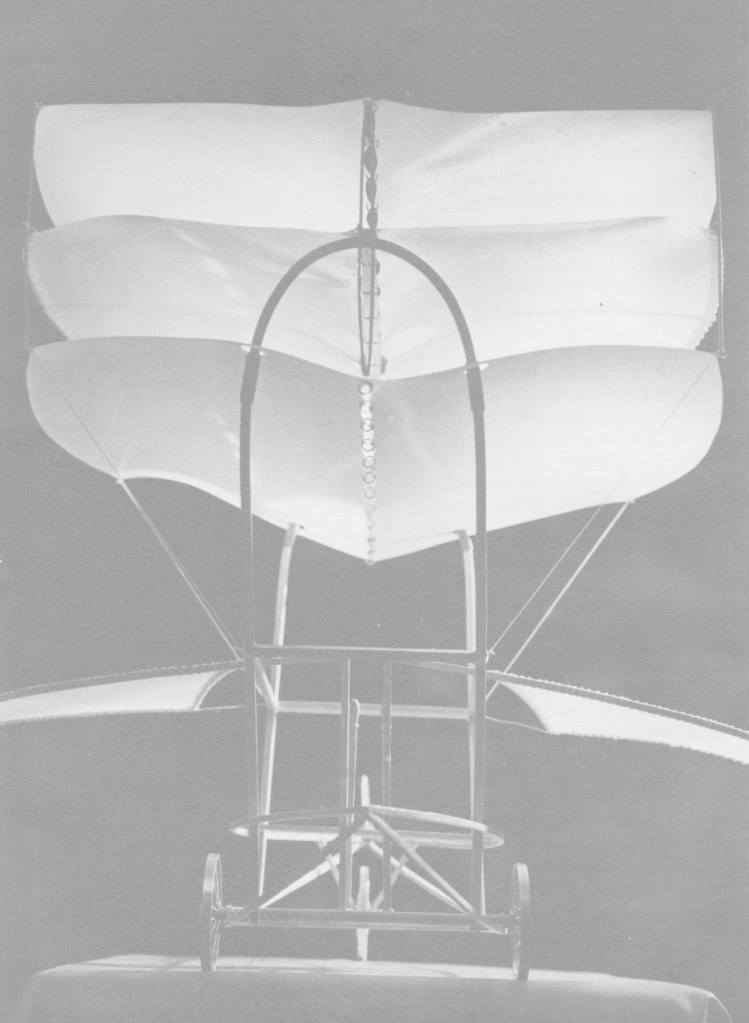
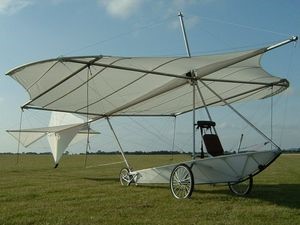
The first Cayley glider was a triplane hang glider designed with an open section in the centre for self-propelled starts. A young boy is reported to have been gently lifted and carried a few yards.
Replica
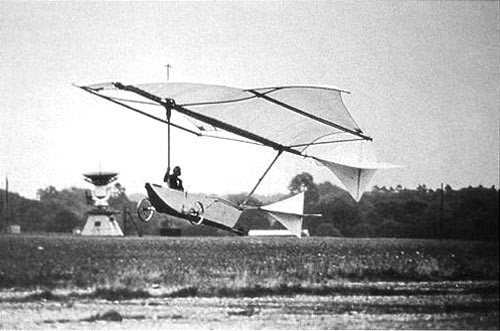
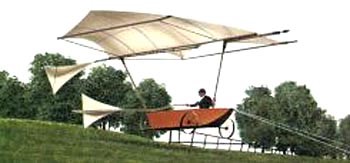
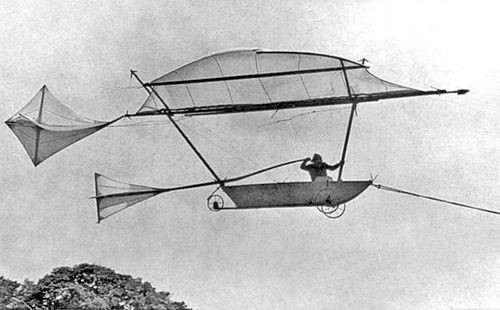
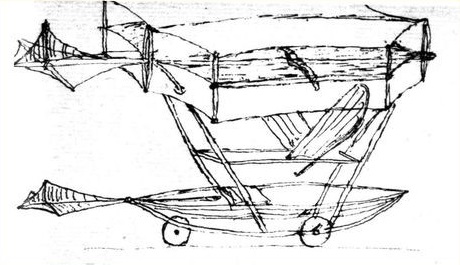
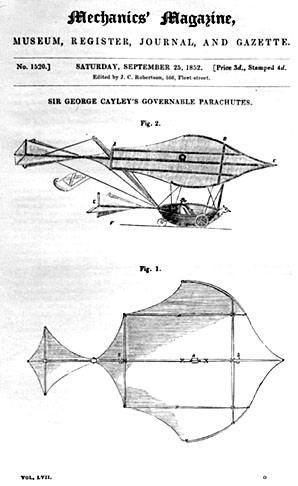
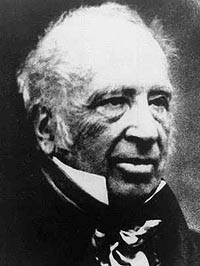
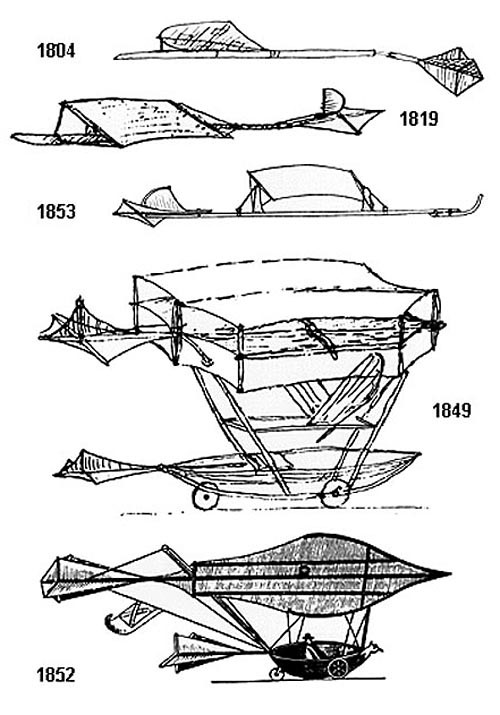
Sir George Cayley (1773-1857) was first to design an aerofoil and one of his flying machines made the world’s first manned heavier-than-air flight at Brompton Dale, near Scarborough, in 1849. This was more than 54 years before the Wright brothers made the first powered flight from Kitty Hawk Sands in the USA on 17 December 1903. Another machine, which Cayley called a ‘governable parachute’, was flown in 1853 at Brompton Dale, carrying Sir George’s coachman, who on coming back to earth said, “I wish to give notice, I was hired to drive not to fly”.
A young girl who was there wrote later: “the wings acted rather on the principle of the parachute, merely flating the experimentor, who started from a moderate elevation, by a gradual descent towards the earth”.
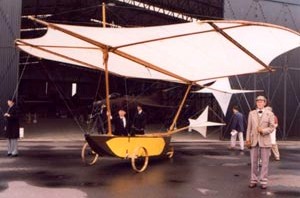
George Cayley, “Governable Parachute”, “Man Carrier” 1852, Replica
It was the world’s first aeroplane with inherent stability.
Sir George Cayley, 6th Baronet (27 December 1773 – 15 December 1857) was a prolific English engineer and one of the most important people in the history of aeronautics. Many consider him the first true scientific aerial investigator and the first person to understand the underlying principles and forces of flight. Sometimes called the “Father of Aviation”, in 1799 he set forth the concept of the modern aeroplane as a fixed-wing flying machine with separate systems for lift, propulsion, and control. Often known as “the father of Aerodynamics”, he was a pioneer of aeronautical engineering. Designer of the first successful glider to carry a human being aloft, he discovered and identified the four aerodynamic forces of flight—weight, lift, drag, and thrust—which are in effect on any flight vehicle. Modern aeroplane design is based on those discoveries including cambered wings. He is credited with the first major breakthrough in heavier-than-air flight and he worked over half a century before the development of powered flight, being acknowledged by the Wright brothers. He designed the first actual model of an aeroplane and also diagrammed the elements of vertical flight.
George Cayley, Gliders, 1804 -1852
Cayley served for the Whig party as Member of Parliament for Scarborough from 1832 to 1835, and helped found the Royal Polytechnic Institution (now University of Westminster), serving as its chairman for many years. He was a founding member of the British Association for the Advancement of Science and was a distant cousin of the mathematician Arthur Cayley.
In the immediate postwar period, the French aerospace industry launched several campaigns to reactivate the activities of aircraft manufacturers. This gave rise, among other things to the exceptionally competative “Air 100” glider allowing the French to later participate in the International Competition Soaring. Meanwhile, other French companies also studied various kinds of gliders during the war years including Guerchais Roche.
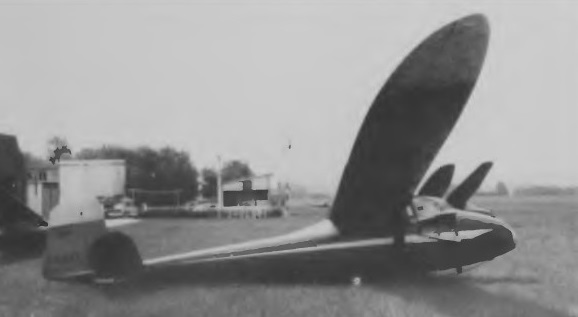
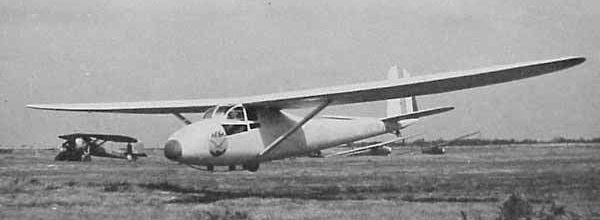
Caudron was also one of these and at the request of the Ministry of Youth and Sport, which was looking for a twin seat trainer glider for all the French gliding clubs, designed the C800 in 1941 for just that purpose.
The first prototype flew in the free zone in 1942, before the German invasion. The training glider has always been known as the Caudron C-800 although its production was undertaken by SNCA du Nord at Meaulte (Somme) after SNCAN had absorbed the Societe Anonyme des Avions Caudron-Renault at the end of 1945 and taken over its designs.
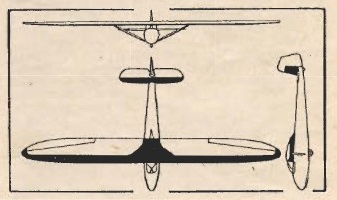
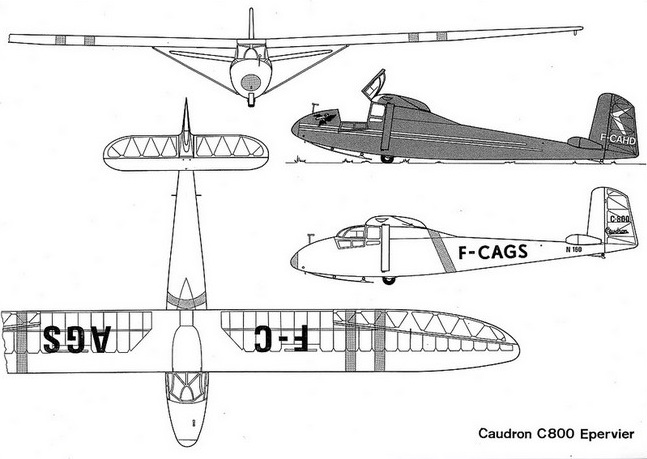
The C-800 is of conventional all-wood construction with mixed plywood and fabric covering; the high wing is braced and there is dihedral on the tailplane. The wing, with a wingspan of 16 m, was linen covered, as were the elevators and rudder. The landing gear consists of a fixed monowheel with brake with a sprung wooden skid under the forward fuselage and a tailskid. The two pilots have dual controls and there is an extra transparent panel below the cockpit canopy on each side that hinges downwards. The canopies complex appearance had numerous vertically opening sections and the whole was hinged at the top to allow the canopy to fall backward over the wing root. The seats were side by side and slightly offset, giving it an impressive fuselage width for a glider. Equipment includes spoilers, elevator trimmer, and complete panel of instruments.
In 1946 the French Government ordered no less than 300 C-800s for use at clubs and elementary flying training schools. Repeat orders were also placed, and the type was at first known as the Epervier (or Sparrowhawk), although this name did not catch on and was later applied to the Morane-Saulnier MS 1500 light COIN aircraft of 1957.
By November 1947, 250 had been built. About two dozen C-800s were still on the French civil register in 1979.
Performance flights have included: Climb to 17,000 ft at St.Auban, 11 November 1945 – unofficial French record French duration record, 17 hr 10 min, at Avignon French goal record, Beynes-Chateaudun, 63 miles
From 1944 following the end of WW II, more than 300 were built, particularly in the Aire sur Adour factory of the Fouga company and for more than 20 years the C 800 has been the French standard trainer glider, being inexpensive to fly, forgiving of trainee pilots, well known for its robustness and ease of servicing. It was able to achieve a high performance level in the hands of a good pilot e.g.: ceiling height of 5300 m, 17 hours duration, 180 km distance. It was also used by the French Air Force and Naval Aviation.
Span: 52 ft 5in Length: 27 ft 4 in Wing area: 237.3 sq ft Aspect ratio: 11.6 Empty weight: 530 lb MAUW: 930 lb Normal gliding speed: 45mph Max glide ratio: 19 @ 4 mph Min sink: 3.1 # 40 mph Vne: 100 mph
 All Aero