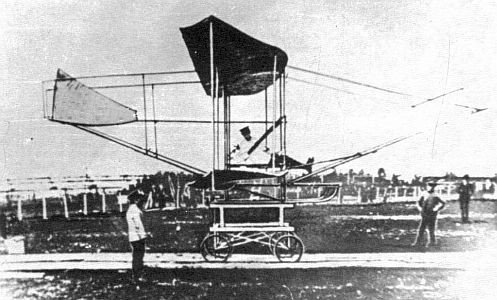
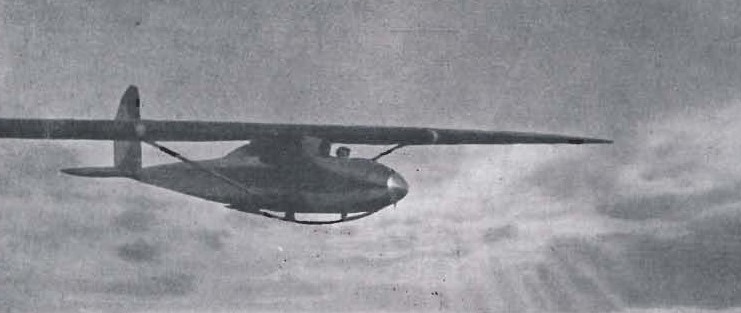
A biplane glider with identical unstaggered wings and relatively short tailbooms. The machine had a skid landing gear where the start was done on a four-wheel trolley. Coandă designed the machine, Joachim built it in his workshops and Caproni was named as a “mate” of Coandă [he himself stated that he did not contribute to the machine).
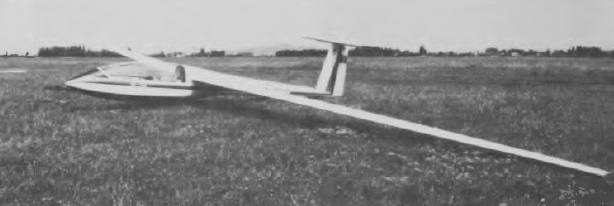
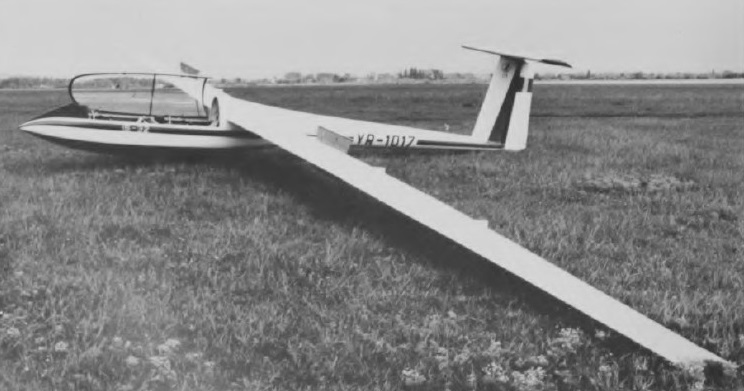
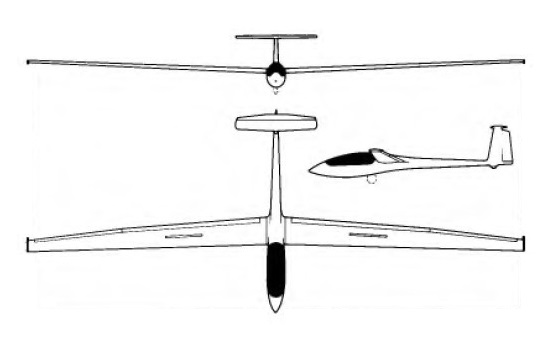
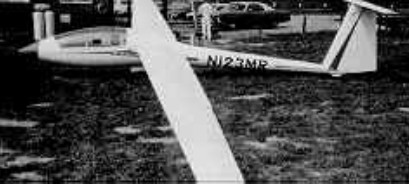
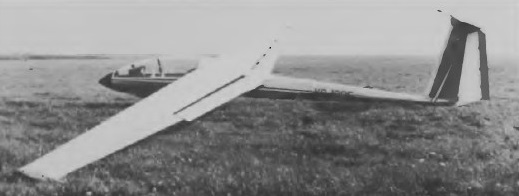
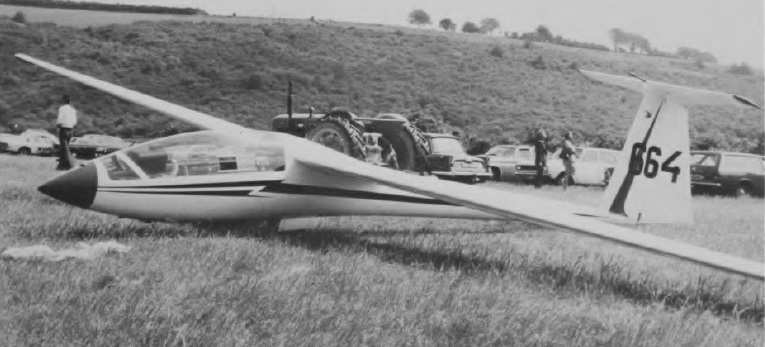
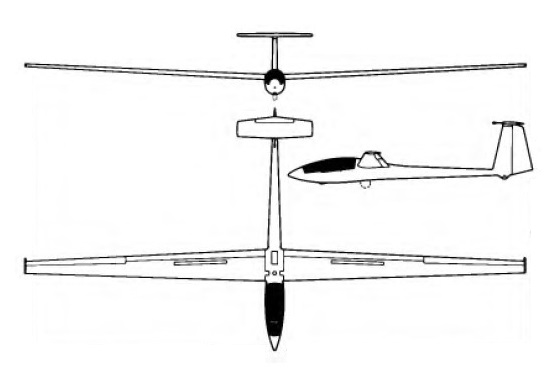
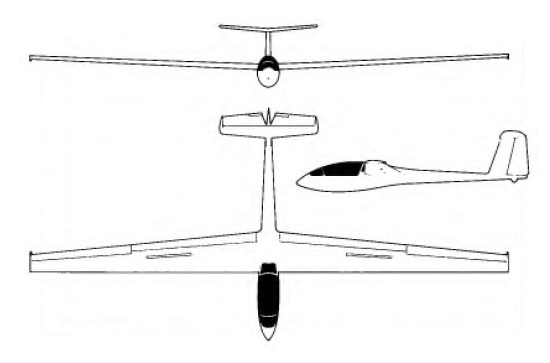
First shown publicly at the Paris Air Show in June 1977, and making its first flight that same month, the IS-32 Open Class tandem two-seater is developed by Iosif Silimon from the IS-28B2, having the same all metal fuselage as the latter married to an entirely new wing of 20m (65 ft 7.5 in) span with an improved aerofoil section, and a redesigned tail unit.
The new wing design employed double taper and externally hinged camber-changing flaps. The interconnected flaps and ailerons are also known as ‘flaperons’, the flaps working in conjunction with the ailerons in negative position for high speed cruising, and in the positive position for soaring in thermals, being disconnected for landing. A flap-aileron interconnect system is one of the features of the Lark I.S.32.A2. This is a 20-meter model.
Like the IS-28B2, Schempp-Hirth metal air brakes are fitted above and below each wing and there are water ballast tanks. A new landing gear is fitted, the main monowheel now being fully retractable instead of semi-retractable as on the IS-28B2. The one-piece tailplane has a new thinner section aerofoil. The IS-32 is of the same all-metal construction as the IS-28B2, and deliveries were due to commence late in 1978.
Despite reasonable performance, the IS-32 was not competitive with its large span composite two-place contemporaries. No. of aircraft built to 6/30/81 15. 1982 Standard price US$32,950.
Wing span: 20m / 65 ft 7.5 in Wing area: 14.68 sq.m / 158 sq.ft Length: 8.36 m / 27 ft 5.25 in Height: 6 ft 0.75 in Empty Weight: 400kg / 882 lb Payload: 190kg / 419 lb Gross Weight: 590kg / 1301 lb Water ballast: 416 lb. Wing Load: 40.2 kg/sq.m / 8.23lb/sq.ft Max speed: 144 mph / 125 kts / 232 km/h Stalling speed: 40 kts / 74 km/h L/D Max: 44 at 110 kph / 59 kt / 68 mph Best glide ratio: 46:1 at 61 mph / 46 kt MinSink: 0.62 m/s / 2.03 fps / 1.20 kt at 46 kt Min sinking speed: 1.74 ft/sec at 53 mph No. of Seats: 2 Aspect ratio: 27.25 Airfoil: Wortmann FX 67-K-170/1 50 Structure: all metal No. Built: 15
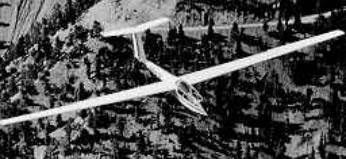
The IS-29, designed by a team under Dipl Ing losif Silimon, is an attempt to create a multi-role high performance single-seater suited to a variety of requirements and soaring conditions, and is offered in Standard Class (IS-29B and IS-29D) versions with 15m span wings, in Open Class form as the IS-29E with increased span wings and the IS-29G for club use with 16.5m span wings.
All versions have an identical fuselage and tail unit, differing mainly in the wing fitted, and are basically similar to the IS-28B2 with the same all-metal construction and a similar T-tail. The IS-29B Standard Class version with 15m span all-wooden wings was the first to fly, in April 1970, and was certificated in September that year; the prototype has a three-piece wing with constant chord centre section and tapered outer panels, and ‘salmon’ fairings on the wing tips.
The IS-29B was succeeded by the Standard Class IS-29D which had all-metal wings of the same span and first flew in November 1970. About 30 had been built by 1974 and from 1976 the production version was the IS-29D2, which features an improved cockpit and controls, Hutter air brakes, a separate tailplane and elevator instead of the earlier all-moving tailplane, and an improved rigging system.
More than 60 of this variant had been sold in Australia and the USA and the IS-29D4, which appeared in 1977, had provision for water ballast.
ICA-Brasov IS-29D
The Open Class IS-29E first flew in August 1971 with wings increased in span to 17.60m (57ft 9in), and fitted with flaps and Schempp-Hirth- air brakes as well as integral water ballast tanks.
The production version of the E is the IS-29E3, also known as the IS-31,with 20m (65ft 7.5in) span wings, and a 19m span (62ft 4in) version, the IS-29E2, was under development in 1977, while the IS-29E4 is a 24m span version. The club version is the IS-29G, also known as the IS-29D3, which has all metal 16.5m span (54ft 1.5 in) wings; this first flew in 1972, and the E2 and E3 variants have slightly different Wortmann wing sections to those of the IS-29D2.
All versions except the IS-29B have all metal shoulder wings with a main spar, false rear spar and riveted dural skin. The full-span flaps and ailerons are coupled to operate in unison but the flaps can be disconnected for separate operation during landing. The D2’s Hutter air brakes are in the upper surface of the wings only, those of the other models being in the upper and lower surfaces. The all-metal semi-monocoque fuselage is the same for all versions except for local variations at the wing attachment points, and there is a detachable glassfibre nosecap. The retractable monowheel has a brake and there is a fixed tailwheel. The cockpit canopy hinges side-ways to starboard and can be jettisoned in flight. The IS-29D3 Club version has a fixed undercarriage and unpainted (all-chrome) finish. The IS-29D4 15m Class version has a maximum flap setting of 80° and air brakes, and will later be offered with 26.4 Imp gallons of water ballast.
The IS-29E2 19m span version has interconnected flaps and ailerons, and will be offered with 22 Imp gallons of water ballast. The IS-29E4 has a wing of 24m span made in four sections, with interconnected flaps and ailerons, and carries water ballast.
The IS-29DM and IS-29EM are motorised versions of the IS-29D2 and IS-29E3 respectively. The IS-29DM and IS-29EM each have a 39hp Rectimo 4AR-1200 engine driving a Hoffman HOV42 propeller; the fuel capacity is 6 Imp gallons. A retractable tubular-sprung Tost monowheel is fitted to these versions, plus a Tost tailwheel. Production IS-29DMs and IS-29EMs were due to become available from mid-1980.
The IS-33 racing version has interconnected flaps and ailerons on its 15m span wings, and was to be offered with 33 Imp gallons of water ballast.
The IS-31(E3) is a version of the IS-29 with 20m span wings and interconnected flaps and ailerons; it was to be offered with 33 Imp gallons of water ballast. The prototype has flown but had not been certificated by mid-1979.
To 6/30/81, 300 had been built. 1982 Standard price US$17,500.
IS-29D2 Span: 15.0 m / 49 ft 2.5 in Length: 7.38 m / 24 ft 2.5 in Height: 1.68 m / 5 ft 6.25 in Wing area: 10.4 sq.m / 111.9 sq ft Wing section: Wortmann FX-61-165/124 Empty weight: 235 kg / 518 lb Max weight: 360 kg / 794 lb Water ballast: None Min sinking speed: 0.43 m/sec / 1.41 ft/sec / 114 fpm at 42 kts / 50 mph / 80 km/h Max speed: 120 kts. Wing aspect ratio: 21.5. Stalling speed: 37 kts. Glide ratio (L/D): 37:1 at 50 kts / 93 km/h Best glide ratio: 48:1 at 58 mph Stalling speed: 37 kts / 67 km/h Rough-air airspeed: 120 kts. Max speed: 155 mph / 135 kt / 250 km/h (in smooth air) Max wing loading: 34.62 kg/sq.m / 7.09 lb/sq ft Seats: 1.
The IS-28 two-seater high performance training sailplane first flew in August 1970.
The 17-meter IS 28B, which first flew in 1976, was manufactured by Intreprinderea de Constructii Aeronautice (Aircraft Construction Company) (ICA), the Romanian state aircraft company at its plant in the city of Brasov. ICA subsequently changed its name to Intreprinderea Aeronautici Romanesc (Romanian Aircraft Company) (IAR). The IS-28B was developed from the 15 m. IS-28 which appeared in 1970. The all metal structure IS-28B has performance flaps, with upper and lower surface (or optionally, upper surface only) Hutter type airbrakes for approach control, a partially retractable gear and fabric cover on all conrol surfaces. The 28B2 model incorporates detailed improvements. The IS-30 is metal skinned througout and in standard configuration has a fixed gear and no flaps, although these were available as factory options. Top surface only airbrakes are standard on the 30. The tail surface on the 28 fold, but the smaller, more aerodynamically refined, tail of the 30 does not.
Design work on the IS-28B began in the autumn of 1971 and the prototype made its first flight on 26 April 1973. The first production version was the IS-28B1 which did not have wing flaps, but this was succeeded by the IS-28B2 which has trailing edge split flaps and Schempp-Hirth air brakes instead of the DFS-type ones of the B1.
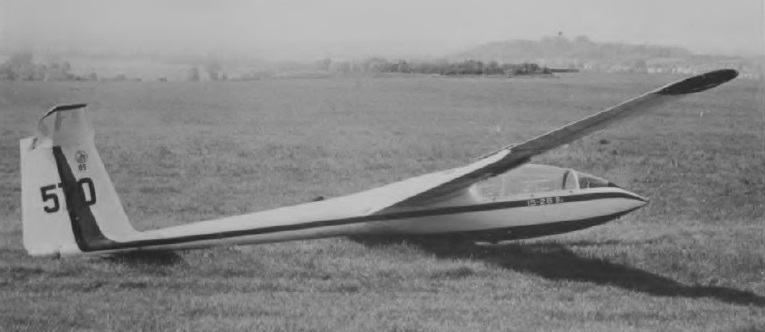
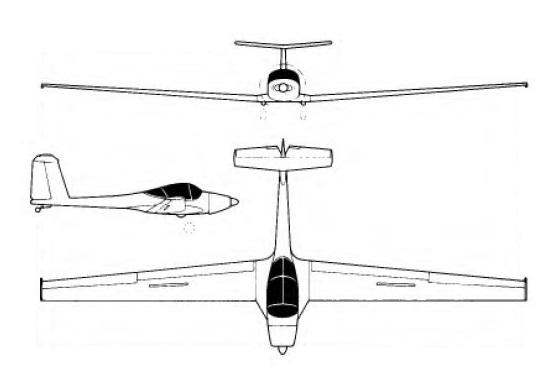
Developed from the IS-28, the IS-28B2 has a number of important differences from the earlier design which include 17m span all-metal mid wings of Wortmann section instead of the IS-28’s 15m span shoulder wings of NACA section, a longer and more slender fuselage and reduced wing and tailplane dihedral.
ICA-Brasov IS-28B2
About 100 IS-28B2s had been sold, and a high proportion of this total have gone to customers in Australia and the USA. Both versions are of all-metal construction, as was the earlier IS-28, and the forward-swept wings have L-section main spar booms and dural spar webs, a dural auxiliary spar and dural ribs. The Schempp-Hirth air brakes above and below the wings are metal, whereas the ailerons and flaps are fabric covered except for their leading edges. The wings are attached to the fuselage by two adjustable tapered bolts at the leading edge and two fixed tapered bolts at the trailing edge. The forward and centre fuselage is an all-metal semi-monocoque structure, while the rear fuselage is a duralumin monocoque. The two pilots are seated in tandem under a one-piece Plexiglas canopy which opens sideways to starboard and can be jettisoned in flight. A nose towing hook with Tost cable release is standard, but a towing hook mounted on the eg is an optional choice for the customer. The folding cantilever all-metal T-tail is similar to the IS-28’s but has a single-spar fin; the elevator trailing edges and rudder are fabric covered and there is a trim tab in each elevator. The landing gear consists of a semi-retractable monowheel with a disc brake and oleopneumatic shock absorber, and there is a sprung tailskid.
Designed by Iosif Silimon, two motor glider versions of the IS-28B2 were developed, the IS-28M1 tandem two-seater with a monowheel undercarriage, and the IS-28M2 (redesignated IAR-34) seating two side-by-side and with a conventional retractable undercarriage; both of these differed from the B2 chiefly in having the wings moved to the low-set position, and the forward fuselage, cockpit canopies and main landing gear redesigned. The M2 has two main wheels retracting backwards into the wing roots to lie semi-exposed in the centre-section, and incorporating shock absorbers and brakes; there is also a steerable tailwheel. The rear fuselage, tail unit and main wing structure were virtually unchanged from those of the IS-28B2; in both versions the wings can be folded from a point just inboard of the ailerons. Wing span is 17m (55ft 9.25n) instead of the 18m (59ft 0.75in) of the IS-28M1, which has a slightly greater length and less height. Approach control is by upper and lower surface Hutter type airbrakes.
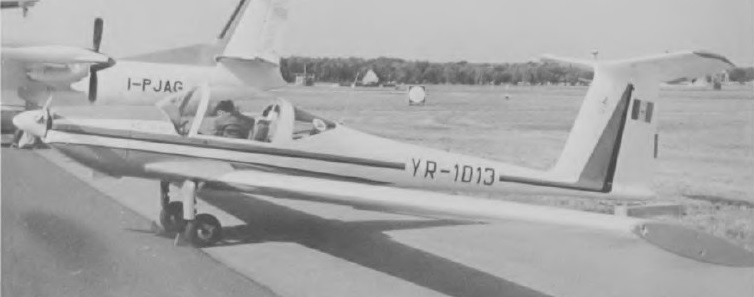
ICA-Brasov IS-28M2
The IS-28M2 was the first to take to the air, the prototype, registered YR-1013, making its first flight on 26 June 1976 and making its public debut at that year’s Farnborough air show; the first 10 M2s were allocated to the UK, where they are distributed by Morisonics Ltd, and this version has also been exported to Canada and the USA.
Deliveries of the M1 were due to begin in 1979, and both versions are powered by a 68hp Limbach SL 1700E1 ‘flat four’ engine, driving a Hoffman HOV-62R two-blade variable-pitch and fully-feathering propeller; there is a single fuel tank aft of the cockpit holding 7.9 Imp gallons.
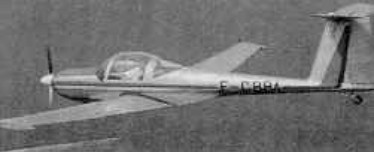
Motor Lark IS-28M2
Top-surface airbrakes and camber-changing flaps (+15 to -11) are provided, as are full dual controls. The 28M2A model has strengthened wings. The IS 28M2 has been developed into the Rotax powered 11.58 m. /38.0 ft. span IAR-46 light aircraft, which has a 17 m. extended wing sailplane variant.
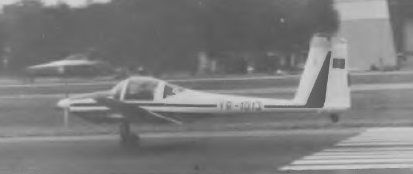
IS28M2 Brasov
Both versions, like the IS-28B2, are of mainly metal construction, the single-spar wings having 2° dihedral and 2° 30′ forward sweep at the quarter-chord line. The wing, ribs and skin are of aluminium, the metal ailerons are fabric-covered and the trailing edge split flaps, which can be set to a negative position, are now an optional feature, instead of standard as on the B2; there are all-metal two section Mutter air brakes in the upper surfaces. Wing folding is also optional, the outer panels folding inwards. The fuselage is built in three parts; a metal front portion, built up on two longerons and cross-frames and with glassfibre fairings and engine cowling panels; a centre portion which is an aluminium alloy monocoque; and a rear portion made up of aluminium alloy frames and skin. Like the B2, the cantilever T-tail is of aluminium alloy with slight dihedral on the tailplane; the rudder and the elevator trailing edges are fabric-covered, and there is a trim tab in each elevator. Both versions have full dual controls and a rearward-sliding main portion of the canopy.
An Open Class development of the IS-28B2 known as the IS-30 was undergoing flight tests in the spring of 1978; this has 18m (59ft 0.75 in) span wings without provision for water ballast, and the redesigned tail unit of the IS-32.
In 1925 was established in Brason the first large Romanian aircraft named “Societate Anonima Industria Aeronautica Romana” (IAR) to build aircraft and aero engines. Between 1925 and 1945 this company built around 1000 aircraft of 25 different types of which eight were under foreign licence including the Potez 25, Morane-Saulnier 35, Fleet 10-G, PZL11 c and XXIV. Indigenous designs included the IAR.15 single-seat fighter monoplane. The most known aircraft entirely conceived and built by this company was the IAR-80 combat plane, ranked the fourth in the world at the time of its appearance in 1939. Renamed Regia Autonoma Industria Aeronautica Romana in 1940, but still using IAR for types. Came under joint Soviet/Romanian control as Sovromtractor from 1946, with Brasov works known as URMV-3 between 1950 and 1959. Only a team of enthusiastic specialists led by Iosef Silimon continued to design, build, and repair light aircraft. Aircraft development at Brasov by mid-1956 included IAR 811 piston trainer (first flown 1949), IAR 813 two-seat lightplane, IAR 814 twin-engined transport of 1953 and IAR 817 single-engined general-purpose light transport of 1955. Aircraft from LFIL factory at Reghin included RG-6 tandem two-seat sports and training monoplane. The ICA-Brasov or Intreprinderea de Constructii Aeronautice Brasov (Aircraft Construction Factory Brasov) is responsible for all sailplane development and production in Romania, and their principal designer is Professor losif Silimon, who has created a long series of sailplanes that are widely used in the national clubs; these are prefixed by the letters ‘IS’ which form the Professor’s initials.
In 1968 it was decided to restore the the aircraft factory under the new name “ICA Brasov”. Undertook repair and overhaul of light aircraft; built aircraft of its own design, such as the IAR-824 six seat general-purpose light aircraft and IS-28/IS-29 sailplanes, manufactured Aerospatiale SA 316B Alouette III helicopters under license, participated in license-construction of the Britten-Norman BN-2A Islander and carried out series production of nationally designed aircraft. In 1976 the IS28M2 motor glider began manufacture, and in 1977 the tandem two-seat IS28M1 motor glider prototype had been completed, from which the IAR-34 was derived. Name changed to IAR-SA Brasov in 1991. Has built Aerospatiale Alouette helicopter as IAR 316B (280), Russian Ka-126 helicopter, and French Puma helicopter (as IAR 330L Puma) under license, with Puma 2000 upgraded IAR 330L model offered with more engine power, Hellfire antiarmor missiles and advanced avionics among changes. Has agreement with Eurocopter to construct up to 80 AS 350BA and AS 355N helicopters. Made agreement with Bell Helicopter Textron of U.S.A. to license build 96 AH-1W SuperCobra attack helicopters for the Romanian armed forces as AH-1RO Draculas, with Bell taking a majority shareholding in the privatizing company as part of the agreement. Kraiova works to license-manufacture Russian Beriev Be-32K. Own products include IAR 46 two-seat lightplane (first flown 1993), IAR-35 glider, and IS-28 series of gliders/motorgliders. 2008: IAR Brasov No. 1, Aeroportului Street P.O. Box 198 Brasov 2200 Romania
A small sailplane, known as the Junior, was being developed by Mr Dickson in 1931 but it, presumably, remained as a project only due to the Cloudcraft company closing down towards the end of 1931.
A single-seat high performance sailplane designed by Roger Dickson, the Phantom featured conventional wooden construction, all-moving tailplane.
The wing section was the R.A.F.34 modified, semi-cantilever wing, with one strut on each side. No flaps or airbrakes were fitted. The undercarriage was a main skid and tail skid.
The prototype first flew on 11 June 1931, at Dunstable. The 1931 price was £300, ex-works.
The Phantom sailplane was designed and built by the company but this just about exhausted all the financial resources, and after the last advertisement had appeared in the 17 July 1931 issue of ‘Sailplane and Glider’ magazine the Cloudcraft Glider Co was declarad bankrupt.
Wingspan: 15.54 m / 51 ft 0 in Length: 7.62 m / 25 ft 0 in Wing area: 18.58 sq.m / 200 sq.ft Aspect ratio: 13 Empty weight: 112.03 kg / 247 lb AUW: 184.61 kg / 407 lb Wing loading: 9.95 kg/sq.m / 2.04 lb/sq.ft Max L/D: 26 Seats: 1
Roger S. Dickson, who was a member of the design staff of the Supermarine Aviation Works Ltd, Woolston, Southampton, founded the Cloudcraft Glider Co as a spare time interest.
The Cloudcraft company was at Osborne Road, Southampton and produced in 1930 and 1931 a primary glider designed by Dickson. The Dickson Primaries were also built in great numbers by individuals and gliding clubs, although they were also offered for salt through the aviation department of Selfridges of Oxford Street, London.
The Phantom sailplane was designed and built by the company but this just about exhausted all the financial resources, and after the last advertisement had appeared in the 17 July 1931 issue of ‘Sailplane and Glider’ magazine the Cloudcraft Glider Co was declarad bankrupt.
The Cloudcraft company closed down towards the end of 1931.
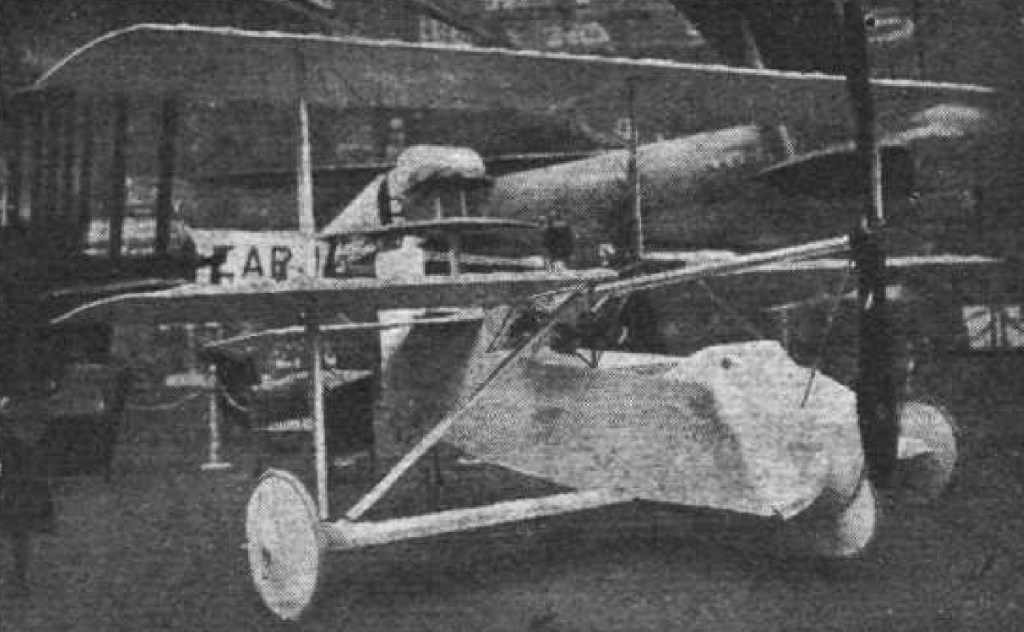
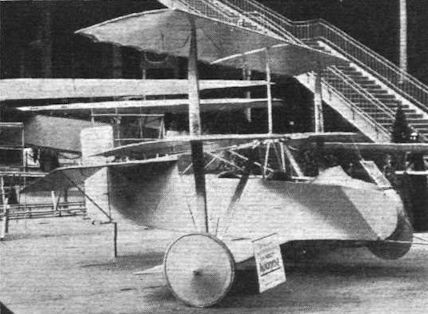
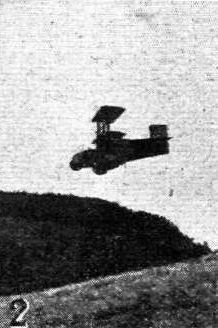
Louis Clement built a small triplane in 1919. It had a span of 18 ft, and the lower wing was shorter than the others. The landing wheels were mounted at the tips. Power was a 35 hp Anzani engine.
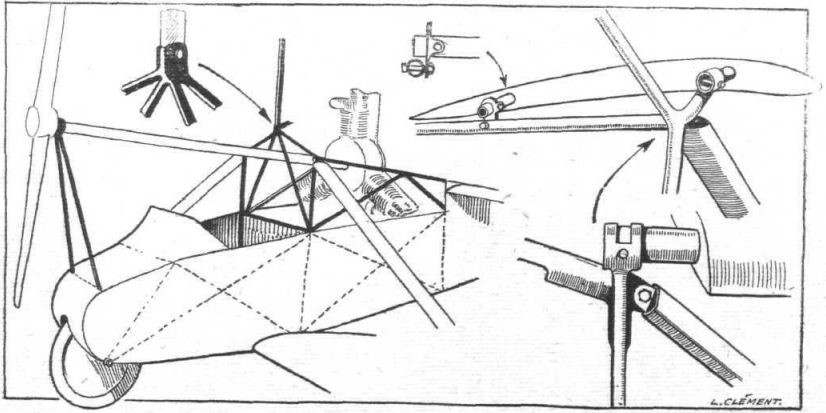
It was first presented at the Paris Aero Salon in 1919 with an Anzani engine behind the pilot on top of the aft fuselage, transmitting power through an extension shaft to the propeller on the normal front position. One could say it was the ultra-light of the time.
The Clement triplane was made of a rather complex tubular metal construction it was also braced outside with a number of wires.
It reappeared in the Salon in 1921 without the engine.
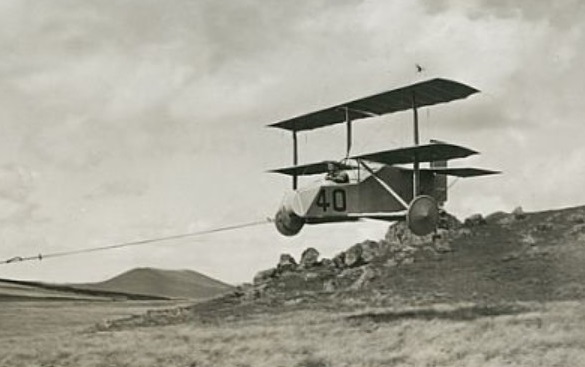
At a gliding contest near Clermont Ferrand, France, Sardier is towed into the air in his Clement triplane 1922
 All Aero