Henri Fabre (born in Marseille (Bouches-du-Rhône) on 29 November 1882 and died on 29 June 1984 in Touvet (Isère), at the age of 101) is a French engineer and aviator. He was the inventor in 1910 of the hydroplane (first named hydro-airplane, until 1913).
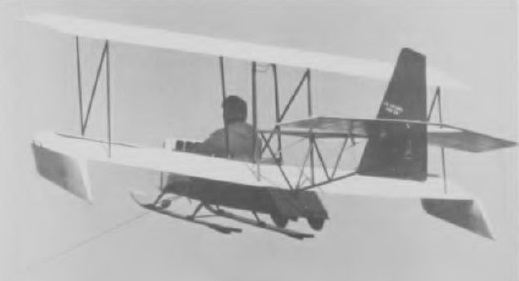
One of the very few waterborne gliders, the Aqua Glider single-seater is also unusual in being a biplane; it is intended for tethered gliding by unlicensed pilots, and is towed behind any speedboat that can attain a speed of 30kt (35mph). The pilot can also cast off from the speedboat when airborne and make a free flight before landing back on the water, but to do this he must have a licence. The Aqua Glider was designed by Col William L. Skliar, USAF (Ret’d), who began design work on it in September 1958, the prototype making its first flight in July 1959. After making about 1,000 flights and being flown by about 60 pilots, the prototype was donated to the Experimental Aircraft Association Museum in Milwaukee. Approximately 1,000 sets of plans have now been sold to amateur constructors in more than 20 countries all over the world, and about 200 Aqua Gliders were under construction; about 12 are known to have flown, in the Bahamas, Brazil and Japan as well as in the USA. The forward staggered single bay biplane wings are conventional single-spar wooden structures with fabric covering, and there are spoiler-type light alloy ailerons on the lower wing only, immediately behind the main spar. Balance floats – basically just plate-type fairings – are carried at the extremities of the lower wing tips. The pilot sits in an open cockpit in the unstopped watertight wooden hull and, instead of a conventional planing bottom, take-offs are made on a pair of standard jumper skis, 6 ft in length, attached to small wire-braced struts below the hull. The latter is of spruce with a mahogany plywood bow, bottom skins and sides, the plywood being glass fibre covered below the waterline. There is a towing hook on the nose. The wire-braced tail unit is of spruce with plywood and fabric covering, and is carried on a boom of welded steel tube or wire-braced wooden construction. The rudder is conventional and the tailplane an all-moving one-piece surface.
Span: 4.87m / 16 ft Wing Area: 14.28 sq.m / 95 sq.ft Aspect ratio: 5.0 Airfoil: NACA 4412 Length: 13 ft 8 in Height: 5 ft 0 in Empty Weight: 83 kg / 180 lb Payload: 100 kg / 220 lb Gross Weight: 182 kg / 400 lb Wing Load: 20.61 kg/sq.m / 4.5 lb/sq.ft Max speed: 65 mph (in smooth air) Stalling speed: 35mph L/DMax: 6.5 at 72 kph / 39 kt / 45 mph Seats: 1
The BRO-11 Zile (or Acorn) single-seat basic training glider is a rather smaller Russian version of the EoN Primary/Dagling/SG 38 formula, and first flew in 1954; it has since been built in large numbers for use by the DOSAAF as an elementary training glider. It was designed by B. Oshkinis and among the factories building it was the Experimentalnii Zavod Sportivnoi Aviatsii (or Experimental Sports Aviation Factory) where B. Oshkinis was one of the designers and which started production of the type in 1969; this later became the LAK organisation, which created the LAK-9 Lietuva and continues to produce the BRO-11. A modified version known as the BRO- 11-M was later produced, and a biplane seaplane version, the BRO-16, made its first flight in August 1973. Another, shorter-span version, which may be experimental, is the BRO-17U Utochka. The BRO-11 is a strut-braced high wing monoplane of fabric and ply-covered wooden construction, with the pilot sitting on an elongated beam which forms the fuselage and which has a semi-recessed monowheel for landing; there is a towing hook under the nose and a bumper at the end of the boom to act as a tailskid. The tail unit is carried on a framework of metal tubing and wire bracing, and the flaps are similar in appearance to the Miles high-lift auxiliary flaps fitted to the Aerovan and Gemini.
BRO-11 Span: 23 ft 10.5 in Length: 16 ft 11.5 in Wing area: 113.0 sqft Aspect ratio: 5.05 Empty weight: 128 lb Max weight : 260 lb Stalling speed: 19 mph Min sinking speed: 3.28 ft/sec
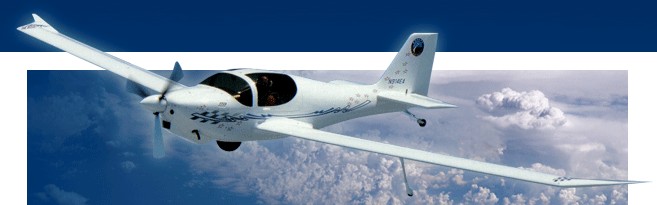
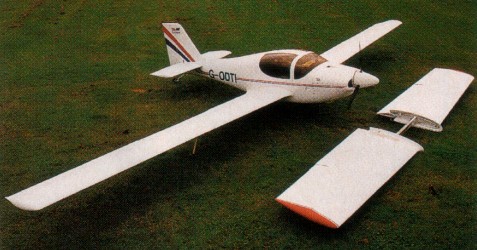
Europa Aircraft, maker of the Europa XS homebuilt kit, has come out with the Europa Motor Glider. The development aircraft first flew in February 1992. The key is a new 42 foot span wing that can be mated with the existing Europa kitplane fuselage or built as part of an all new airplane. Designed by Airbus Industrie aerodynamicist Don Dykins. The 43 foot span wings give a glide ratio of 26:1 and a stall of 45 kts at mauw. The aerobatic Europa features an easily removable wing, so one for cruising and one for soaring. The 13:1 aspect ratio wing has trailing edge airbrakes to steepen descents. The Europa XS Motorglider is available both as a Monowheel or Trigear with comparable performance and specifications.
The advantage of the Motorglider is that in most countries it can be flown without the need for a full aviation Class II medical. The Motorglider can be supplied with a number of different engines, although recommended are those from Rotax. The Rotax engines currently range from 80HP through to 115HP. The latter unit being turbocharged.
Europa Classic XS Motorglider Wing span: 47.25 ft / 14.401 m Wing area: 141.14 sq.ft / 13.111 sq.m Aspect ratio: 15.818 Overall length: 19.17 ft / 5.843 m Overall height (Monowheel): 4.33 ft / 1.320 m Overall height (Trigear): 7.00 ft / 2.133 m Baggage space: 22.50 cu.ft / 0.637 cu.m Maximum take-off weight: 1370 lb / 621.4 kg Empty weight (Monowheel – Rotax 912 UL): 883.0 lb / 400.5 kg Useful load (Monowheel – Rotax 912 UL): 487.0 lb / 220.9 kg Empty weight (Trigear – Rotax 912 UL): 921.9 lb / 418.2 kg Useful load (Trigear – Rotax 912 UL): 448.1 lb / 203.2 kg Maximum baggage capacity: 80.0 lb / 36.3 kgs Wing loading at max take-off weight: 9.71 lb/sq.ft / 47.40 kg/sq.m Design Load: +5.30g / -2.65g Ultimate Load: +7.95g / -3.98g Stall speed clean: 42 kts: 48 mph / 78 kph / Cruise speed 8000 ft 75% pwr (Rotax 912 ULS) (TAS): 110 kts / 126 mph / 203 kph Max cruise speed 10000 ft (Rotax 914 UL Turbo) (TAS): 151 kts / 174 mph / 280 kph Rate of climb 1370lb gross weight (Rotax 912 ULS): 1000 fpm / 5.08 m/s Rate of climb 1370lb gross weight (Rotax 914 UL Turbo): 1300 fpm / 6.60 m/s Minimum sink rate at minimum sink speed: 200 fpm / 1.02 m/s Maximum Fuel (Standard Tank): 15 Imp gal / 18 US gal / 68 Litres Fuel burn 55% power 95-100 kts @ SL (Rotax 912 UL): 2.20 Imp Gal/hr / 2.65 US Gal/hr / 10.02 Litres/hr Fuel burn 55% power 103-108 kts @ SL (Rotax 912 ULS): 3.14 Imp Gal/hr / 3.77 US Gal/hr / 14.28 Litres/hr Take off roll: 600 ft / 183 m Landing roll: 600 ft / 183 m Glide Ratio (with propeller feathered): 27:1 @ 53 knots Minimum sink speed: 47 kts / 54 mph / 87 kph
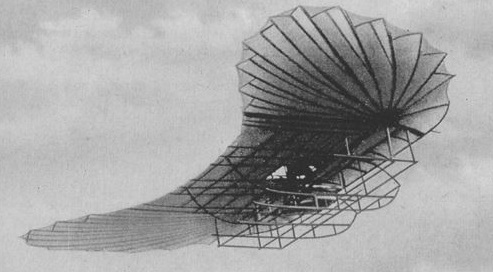
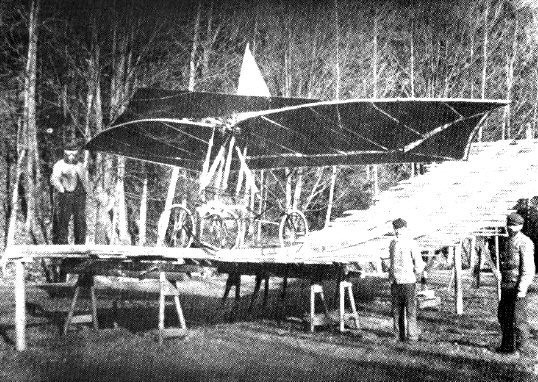
A 1907 Austrian glider with wing shape inspired by the Zanonia seed. The seed’s natural stability in flight inspired several pioneers of early aviation including Handley Page, Igo Etrich, John William Dunne and José Weiss.
The first glider of Ignaz (father) and Igo Etrich (son) Etrich. They performed several short flights to learn and study the principles of the aircraft. The glider sat on the tricycle undercarriage and started from a sloping ramp.
It was built at Oberaltstadt (Horní Staré Mesto), near Trautenau (Trutnov) in the kingdom of Bohemia, then part of the Austro-Hungarian Empire, and now in the Czech Republic. The glider was not successful and Igo Etrich soon started working on another of his designs, this one based around the Zanonia seed-leaf, which eventually matured into the Taube monoplane design.
A single-seat glide designed by W.H. Etheridge, a schoolmaster at Pirton School, Hertfordshire, UK, and built by three scholars attending evening classes, S. Day, C. Etheridge and P. Etheridge, in 1933.
The glider had a fuselage similar to an Abbott-Baynes Scud, and was fitted with ‘Primary Type’ wings parasol mounted.
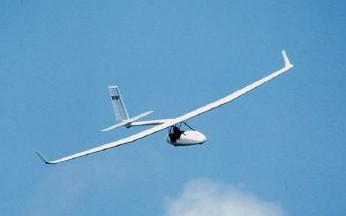
Designed at the Zurich University School of Engineering, the project started in 1998 with the concept prototype, stage P1, first flying in September 2001. The concept prototype, stage P2, modified from the P1, first flew in May 2002. Concept prototype, stage P2 E P2 with detail evolutions first flew in March 2003. The result was a successfully tested prototype Archaeopteryx P2E. For flight testing many successful flights were accomplished AND since then, by foot start and bungee cord, from the level by auto, winding, trike and UL-tows were achieved. The flight behaviour was of a completely new, safe airplane, which fulfils all requirements of its product requirement specifications and for the pilot new possibilities in the super-light sail flight opens.
Span: 13.6 m Length: 5.7 m Height: 2.9 m Wing area: 12.8 sq.m Wing loading: 9.0-12.5 kg/sq.m Take-off weight: 115-160 kg Pilot size: 1.65-1.95 m Pilot weight: 55-100 kg Load factor: +5.3/-2.65 g Stall: 30-35 km/h Vne: 130 km/h Min sink: 0.44-0.51 m/s Glide ratio: 28 Min turn radius 45 deg bank: 15 m

 All Aero