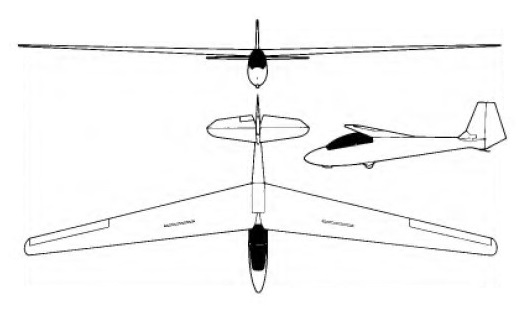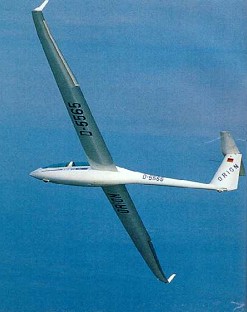
Glaser-Dirks DG-500

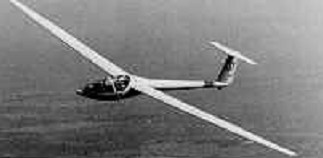
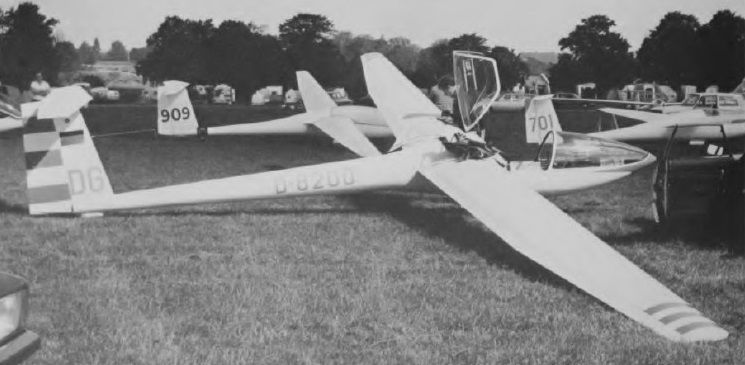
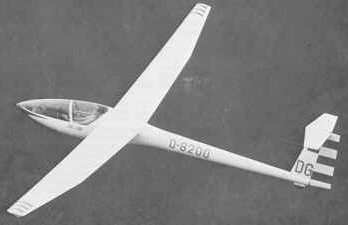
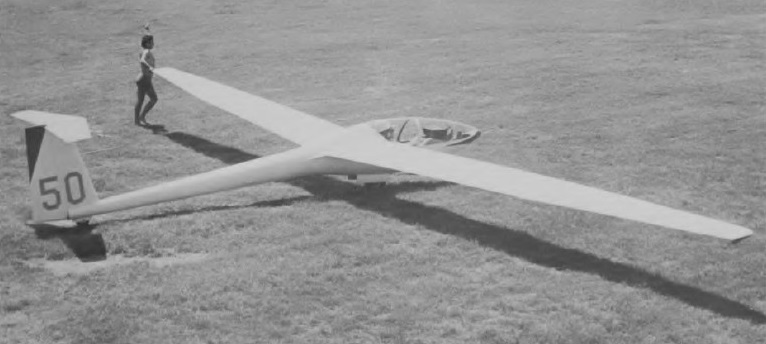
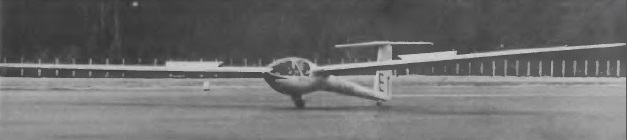
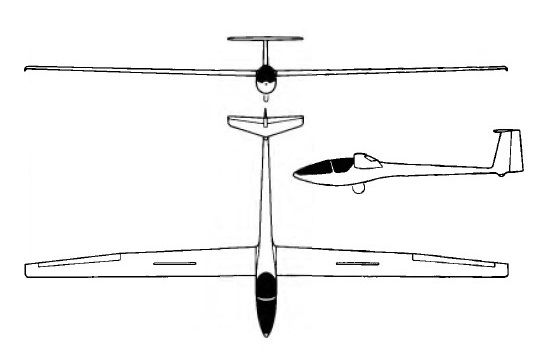
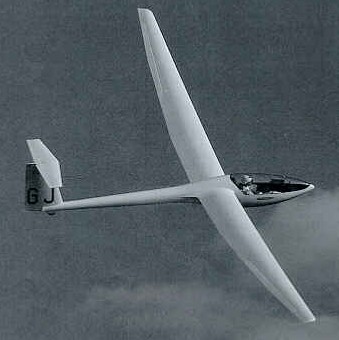
The DG-500 comes in a number of sizes which all share the same basic fuselage. The 500T Elan Trainer, which first flew in 1989 has an unflapped 18 m. wing without provision for water ballast; retractable gear is an option. The front cockpit design has been purposely made similar to that of the DG-300 Club. The higher performance versions (DG-500-22 Elan and DG-500 M) have a 22 m flapped wing and are, respectively, unpowered and self-launch models. The powered model (DG- 500M) has been liquid cooled Rotax powerplant on an electrically retracting pylon, digital engine instrumentation (DEI) and water ballast reduced to 100 kg 220 lb, and comes with an optional steerable nosewheel. The DEI, which has instrumentation in both cockpits, shows rpm, temperatures, pressures and fuel quantity as well as controlling the amount of fuel injected by the electronic fuel system. Engine retraction is automatic once the propeller has been stopped and centred. All 22m ships, which have a four piece wing, have retractable gear as standard. Performance of the 500M is similar to the 500/22 Elan, but empty and gross weights are 565 kg/ 1,246 lb and 825/1,819 lb respectively. All developed with 3 different sets of wingtips; 17.2 m for aerobatics, 18 m and (with winglets) 20 m. A flapped unpowered development of the DG-500/22 Elan. Known as the DG-500/20 Elan Winglets, has been designed for the German 20 m two-place contest class. This has the 750 kg/ 1,653 lb gross weight of the DG-500/22, and a wing loading of 45.0 kg/sq.m./ 9.22 lb/sq. ft. Manufacture of the DG-500 is partly by Elan in Slovenia.

Wing span: 18m / 59.1ft
Wing area: 16.6sq.m / 178.6sq.ft
Empty Weight: 390kg/ 860lb
Payload: 225kg / 496lb
Gross Weight: 615kg / 1356lb
Wing Load: 37.05kg/sq.m / 7.59lb/sq.ft
Water Ballast: 160kg / 353lb
Aspect ratio: 19.52
No. of Seats: 2
Structure: CFRP/GFRP
Airfoil: Wortmann FX-73-K-170/20 root; -170/22 tip

DG-500/22
Wing span: 15m / 49.2ft
Wing area: 10.95sq.m / 117.9sq.ft
Empty Weight: 255kg / 562lb
Payload: 270kg / 595lb
Gross Weight: 525kg / 1157lb
Wing Load: 47.94kg/sq.m / 9.82lb/sq.ft
Water Ballast: 180kg / 397lb
L/DMax: 40 @ 109 kph / 59 kt / 68 mph
No. of Seats: 2
MinSink: 80 kph / 43 kt /49 mph
Aspect ratio: 20.5
Airfoil: HQ-35; HQ 37 on tips extensions
Structure: CFRP/ aramid
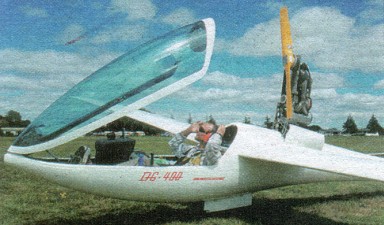
Glaser-Dirks DG-400

The DG400 is a single-seater motor glider version of the DG202, with a dorsally-mounted 43hp Rotax engine driving a tractor airscrew and electrically retractable backwards into the fuselage.

Fuel capacity is 4.5 Imp gallons, with optional extra fuel tanks in each wing. Detachable wing tips can be fitted to the DG400/15 to increase the span to 17m for Open Class competition, in which form it becomes the DG400/17. Without the tip extensions, the 15 m version carries 20 kg / 43 lb more payload, but with higher sink rate (0.60 m/s / 1.97 fps / 1.17 kt ) and lower L/D (41).

The DG400 prototype first flew in May 1981 in the hands of Walter Binder, and first production deliveries were planned for December 1981.

B. Brunzil of Switzerland raised the world 500 km speed triangle record to 170.06 kph/ 91.8 kt/ 105,7 mph flying a DG-400.

DG-400/15
Span: 49 ft 2.5 in
Length: 23 ft 0 in
Empty weight: 595 lb
Max take-off weight: 1,058 lb
Sink rate: 0.60 m/s / 1.97 fps / 1.17 kt
L/D: 41

DG-400/17
Span: 55 ft 9 in
Length: 23 ft 0 in
Empty weight: 610 lb
Max take-off weight: 992 lb

DG-400/17 M
Wing span: 17m / 55.8ft
Wing area: 10.57sq.m / 113.8sq.ft
Empty Weight: 310kg / 683lb
Payload: 155kg / 342lb
Gross Weight: 460kg / 1014lb
Wing Load: 43.52kg/sq.m / 8.91lb/sq.ft
Aspect ratio: 27.3
MinSink: 0.50 m/s / 1.64 fps / 0.97 kt
No. of Seats: 1
L/DMax: 45 @109 kph / 59 kt / 69 mph
Airfoil: Wortmann FX67-K-170-17 root, FX-60-K-126 tip
Structure: carbon wing, fiberglass fuselage/tail
Engine: Rotax 503, 32 kW/ 43 bhp

Glaser-Dirks DG-300

The Standard Class successor to the DG-101 features an HQ airfoil with blow-holes to inject high-energy air into the boundary layer to delay laminar separation. It has fin ballast for centre of gravity control. Approach control is by top surface Schemmpp-Hirth type airbrakes. Like other DG ships, the DG-300 features a parallelogram stick to avoid turbulence-included control inputs. Some were manufactured by Elan in Slovenia. The DG-300 Club is a simplified version with a fixed main wheel suitable for club use. Both the DG-300 and the DG-300 Club are produced in Acro models stressed for +7/-5 g. The improved DG-303 Elan model (which also comes in standard, standard Acro, Club and Club Acro variants) has a modified wing section and winglets, and a claimed L/D max of 44 and a minimum sink rate of 0.53 m/s / 1,73 fps/ 1,93 kt. Water ballast is an option for the DG-303 Club Elan.

Wing span: 15m / 49.2ft
Wing area: 10.27sq.m / 110.5sq.ft
Empty Weight: 240kg / 529lb
Payload: 285kg / 628lb
Gross Weight: 525kg / 1157lb
Wing Load: 51.1kg/sq.m / 10.47lb/sq.ft
Water Ballast: 216kg / 477lb
Airfoil: Horstmann Quast
Aspect ratio: 21.9
L/DMax: 42 @89 kph / 48 kt / 55 mph
No. of Seats: 1
MinSink: 0.59 m/s / 1.97 fps / 1.15 kt
Structure: fibreglass

Glaser-Dirks DG-200 / DG-202

To meet the demand for a sailplane with flaps for the Unrestricted Class 15m International competitions the DG-200 was developed from the Standard Class DG-100 series using the same fuselage and tail, but with flaps and a reduced wing area.

The tailplane on the prototype DG-100 was all-moving, incorporating a large anti-servo tab, but this was altered to a conventional fixed tailplane and elevator on both the DG-100 and DG-200. The trimmer is fitted on the control column, which is of the parallelogram linkage type, enabling high speed flight with reduced risk of pilot-induced oscillation. The prototype made its first flight on 22 April 1977. This has the same 15m span wing with glassfibre flaps added, the Schempp-Hirth air brakes being retained; and the water ballast capacity was increased to 120 kg / 265 lb. The tailplane is a glassfibre/foam sandwich, with an all-glassfibre elevator, and the ailerons are also of glassfibre; construction is otherwise the same as the DG-100.

The pilot is accommodated in semi-reclining position in the slim cockpit, covered by a two-piece canopy, the rear section of which is hinged to open upwards and back. The adjustable head rest is attached to the canopy hinge. The landing gear includes a retractable main wheel and a fixed tail wheel.

In 1978 two other versions were developed: the 17m DG-200-17 and the 13.1 m Acroracer.

The DG-200/17 is a 17m span version of the DG-200 created by adding special insertable wing tips to the DG-200. The DG-200 Acroracer is an aerobatic version of the DG-200 with detachable wing tips that reduce the span to 13.1m (42 ft 11.25 in); these can be replaced to bring the span up to 15m.

The prototype Acroracer first flew on 28 November 1978, but was the only one of this variant built. The DG200 Acroracer’s wingtips are removable to convert the aircraft from a 15m sailplane to a 13.3m, fully aerobatic glider.

The DG-200C is similar to the DG-200 but has carbon-fibre spar booms, wing skin and flaps. The DG-200/17C is the same as the DG-200/17 but has the DG-200C’s carbon-fibre wing structure.

DG200

A total of 20 DG-200s had been delivered by early 1978. Altogether 89 DG-200s had been built by April 1980.

DG subsequently produced add- on wing tips for the DG-202 (known as the DG-202/17) increasing the span to 17m.

After more than 100 DG-200’s had been produced the improved DG-202 was introduced. The 15m span DG-202, which first flew in prototype form on 30 April 1980, is very similar to the DG-200 but has an improved cockpit and controls, modified airfoil, a large one-piece forward-opening canopy, automatic tailplane connection and an improved water ballast system.

DG subsequently produced add-on wing tips for the DG-202 (known as the DG-202/17) increasing the span to 17m.

The DG-202/17 has detachable wing tips to bring the span up to 17m and the DG-202/17C has carbon-fibre in the wing structure and a carbon-fibre spar.

DG200
Wing span: 15 m / 49 ft 2.5 in
Wing area: 10 sq.m / 107.6 sq.ft
Aspect ratio: 22.5
Max speed: 168 mph (smooth air)
Length: 22 ft 11.25 in / 7.0 m
Height: 4 ft 7 in / 1.4 m
Empty Weight: 248 kg / 546 lb
Payload: 232kg / 512lb
Gross Weight: 480 kg / 1058 lb
Water ballast: 120 kg / 265 lb
Wing Load: 48 kg/sq.m / 9.8 lb/sq.ft
Stalling speed: 33.5 kt / 62 km/h
Max rough air speed: 146 kt / 270 km/h
Max aero-tow speed: 118 mph
L/DMax: 42 @106 kph / 57 kt / 66 mph
No. of Seats: 1
MinSink: 0.59 m/s / 1.70 fps / 1.01 kt at 45 mph
Airfoil: Wortmann FX-61-184/60-126
Structure: fibreglass

Acroracer
Seats: 1
Length: 22.9ft
Height: 2.7ft
Wing aspect ratio: 20.3.
Max wt: 794 lbs
Standard empty wt: 522 lbs.
Max useful load: 272 lbs.
Water ballast: 350 lbs.
Wing loading: 7 lbs/sq.ft.
Min sink: 138 fpm @ 46 kts.
Max speed: 157 kts.
Stall speed: 35 kts.
Glide ratio: 37-1 @ 57 kts.

DG-202
Wing span: 17m / 55.8ft
Wing area: 10.57sq.m / 113.7sq.ft
Empty Weight: 251kg / 553lb
Payload: 199kg / 439lb
Gross Weight: 450kg / 992lb
Wing Load: 48kg/sq.m / 9.8lb/sq.ft
No. of Seats: 1
L/DMax: 45 @ 126 kph/ 68 kt/ 78 mph
Aspect ratio: 27.3
MinSink: 0.59 m/s / 1.70 fps/ 1.01 kt
Airfoil: Wortmann
Structure: fibreglass

Glaser-Dirks DG-100 / DG 101 / Elan DG 100 / DG 101

The DG-100 Standard Class single-seater is a modified and lighter weight development of the Akaflieg Darmstadt D-38 glass-reinforced plastic sailplane, which first flew in February 1973. The Akaflieg Darmstadt D-38 was designed by Wilhelm Dirks before forming Glaser-Dirks Flugzeugbau GmbH.

The DG-100 has Schemmpp-Hirth type top-surface airbrakes, an all-flying T-tail and water ballast. Options offered included both retractable and fixed landing gear, and a fixed stabilizer. It displayed better performance and handling qualities than expected and so its designer, Dipl-lng Wilhelm Dirks, sought the necessary backing to develop a production version. With Gerhard Glaser he founded the Glaser-Dirks Flugzeugbau GmbH and the DG-100, design of which had begun in August 1973, first flew in prototype form on 10 May 1974.

The DG-100 itself is basically very similar to the D-38 but with a lighter plastic foam supporting the glassfibre skin instead of the balsa wood used in the D-38, and the letter’s rounded nose has been replaced by a more pointed nose of better aerodynamic shape. The DG-100 Club version for club flying is available with either an all-moving tailplane or conventional tailplane like the DG-100G’s and a fixed monowheel. The DG-100G, first flown on 11 June 1976, is generally similar to the DG-100 except that its tailplane and elevators are similar to those of the later DG-200. The cantilever shoulder wings each have a glassfibre roving main spar and are of glassfibre/Conticell/foam sandwich construction, as are the ailerons and the tailplane. Instead of flaps, there are Schempp-Hirth duralumin air brakes on the upper wing surfaces; these are considered to be cheaper to make and lighter than flaps, as well as being simpler to operate for landing. Up to 220lb of water ballast can be carried in two wing tanks, and this can be jettisoned in flight. The semi-monocoque fuselage is an all glassfibre structure, as are the fin and rudder.

The prototype DG-100 had an all moving tailplane with a large anti-servo tab, and production aircraft have a similar tailplane with a full-span trimmable anti-Flettner tab. The manually-retractable monowheel has a drum brake, and there is a tailwheel. The pilot sits in a semi-reclining position under a two-piece cockpit canopy, the rear section of which is hinged to open upwards and backwards, the adjustable headrest being attached to the canopy hinge.

Production of the DG-100 series was transferred to the Yugoslav firm Elan, who have been building the DG-100 under licence since the autumn of 1978. A total of 102 DG-100s had been delivered by the beginning of 1978, plus a further 15 examples of the DG-100G.

After more than 100 were built it was succeeded by the DG-101, offering a front-hinged canopy, automatic trim and a cockpit of improved impact-resistant design. The DG-100 Club is an unballasted, fixed gear version with a gross weight of 385 kg / 849 lb.

Production versions were the DG-101, DG-101G and DG-101G Club, which have the forward opening
one-piece canopy of the DG-202.

DG-100
Wing span: 15m / 49 ft 2.5 in
Wing area: 11 sq.m / 118.4 sq.ft
Length: 7.0 m / 22 ft 11.25 in
Height: 1.4m / 4 ft 7 in
Empty Weight: 230 kg / 507 lb
Payload: 188 kg / 415 lb
Gross Weight: 418 kg / 922 lb
Wing Load: 38.0 kg/sq.m / 8.78 lb/sq ft
Water Ballast: 100kg / 220lb
Airfoil: Wortmann FX-61-184/60-126
Aspect ratio: 20.5
MinSink: 0.58 m/s / 1.94 fps / 1.13 kt @ 40kt / 46 mph / 74 km/h
No. of Seats: 1
L/DMax: 36 @ 91 kph / 49 kt / 56 mph
Max speed: 140 kts / 161 mph / 260 km/h (smooth air)
Max speed: 140 kt / 260 km/h (rough air)
Stall speed: 32 kts / 60 km/h
Max aero-tow speed: 102.5 mph
Glide ratio: 39-1 @ 57 kts / 65 mph / 105 km/h
Structure: fibreglass

Glaser-Dirks / DG Flugzeugbau

Glaser-Dirks Flugzeugbau GmbH
DG Flugzeugbau

Gerhard Glaser, owner of a civil engineering business, and Diplom Ingenieur Wilhelm Dirks, founded the Glaser-Dirks Flugzeugbau GmbH company. In 1972, they built their first glider, the DG-100. Glaser-Dirks produced 105 DG-100 and another 222 units have been produced later at the Elan factory. In 1977 the 15-meter class sailplane DG-200 entered the market. In 1978 the DG-200 was updated with 17-meter wingtip extensions. The DG-200/17 is one of the most sought-after gliders on the secondhand market. By 1980 Glaser-Dirks pushed into carbon fiber construction with the DG-200/17C motorglider. The DG-400 followed the next year and quickly became one of the best-selling motorgliders of all time. In 1983, version DG-300 Club Elan was designed to replace the DG-100 in the production line, and the fully aerobatic version DG-300 Elan Acro contributed to its popularity. The DG-300 is still in production; up until today 484 DG-300s have been delivered. In 1987 the two-seat DG-500 made its first flight, and the motorized DG-500M followed only 4 weeks later. Next came the 15m class sailplane DG-600. In 1989 a motorized self-launching version, the DG-600M followed. The latest product family is the DG-800, which was optimized for 18m span with wing flaps and equipped with modern wing sections designed by L.M. Boermans from the TU Delft. In May 1993, the self-launching version DG-800A and the pure sailplane DG-800S made their maiden flights.
In 2003 Glaser-Dirks Flugzeubau changed their name to DG Flugzeubau GmbH.
March 96 brought news of the company’s crash. Wolff and Glaser sold the remaining company capital, in a completely empty and deserted production hall. Gerhard Wolff joined the company as a partner.
Rolladen-Schneider has had to go into receivership, and DG Flugzeugbau did not take over the liabilities in 2003, but only the rights to build the gliders and use the brand name.
The Wolfgang Dallach Company collapsed and on 1 August 2008 DG Aircraft GmbH took over support of the Dallach “Fascination”, “Evolution”, “Sunwheel” and all derivatives.
Wolfgang Dallach was working for DG Aircraft as a freelancer since 2006.

Ginn-Lesnlak Kestrel

This two-seater semi aerobatic sailplane with its distinctive forward wing sweep was designed in 1956 by Mr Lesniak, who began construction of a prototype with Mr Vie Ginn at the Dunstable Gliding Club’s workshops at Dunstable, UK.

After a time the project was abandoned and after several years the uncompleted Kestrel prototype was saved
from destruction by Mr Ron Dodd, a chartered engineer who had worked at the RAE Farnborough, and Mr Jeff Butt. They reactivated the project, with Mr Dodd recalculating, modifying and improving the design, and they completed the Kestrel prototype, which eventually made its first flight on 19 July 1969 at Enstone as c/n 1 BGA.1571.

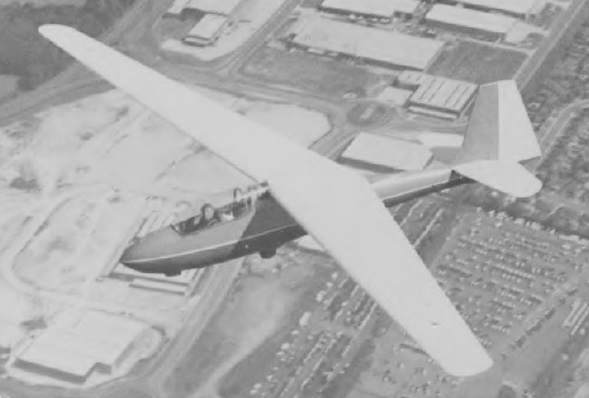
It is of conventional wood and fabric construction, the two-part wings incorporating large Schempp-Hirth air brakes and Frise ailerons, and there are metal-bonded reinforcements at the wing roots. The all-wood fuselage has plywood/balsa sandwich reinforcement from the tip of the nose to just aft of the cockpit. Landing gear consists of a fixed monowheel and a tailskid, with a skid block mounted under the nose to protect it. The pilots sit in tandem in a roomy cockpit under a two-piece canopy, the sideways-hinged forward section being a complete Skylark 4 canopy which also secures the transparent detachable rear half.

Span: 59 ft 0.5 in / 18.0 m
Length: 24 ft 8.25 in / 7.54 m
Wing area: 243 sq ft / 22.57 sq.m
Aspect ratio: 14.3
Wing section: Gottingen 549/M12
Empty weight: 680 lb / 308 kg
Max weight: 1,100 lb / 499 kg
Water ballast: None
Max wing loading: 4.55 lb/sq ft / 22.21 kg/sq.m
Max speed: 98 mph / 85 kt / 158 km/h
Stalling speed: 32.5 kt / 60 km/h
Max rough air speed: 71.5 kt / 133 km/h
Min sinking speed: 2.2 ft/sec / 0.67 m/sec at 50 mph / 43 kt / 80 km/h
Best glide ratio: 28:1

Gilmore Glider

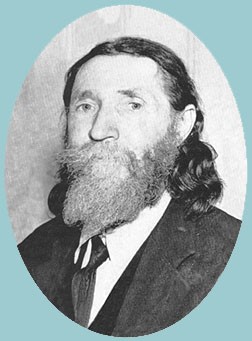
Lyman Wiswell Gilmore’s first attempt at flight apparently occurred at Red Bluff, California, during July of 1894, when he reportedly built a glider (whether biplane or monoplane is not known) with a wing span of 18 feet and went aloft under tow by a horse. The source of this story, as with many of the assertions surrounding Lyman’s efforts, seems to have been Lyman Wiswell Gilmore, Jr., himself.

Gilmore, Lyman Wiswell, Jr.

1874 – 1951

Lyman Wiswell Gilmore, Jr., was born on June 11, 1874, at Beaver Creek, Thurston County, in Washington, USA. He had three sisters and seven brothers. Gilmore’s first attempt at flight apparently occurred at Red Bluff, California, during July of 1894, when he reportedly built a glider (whether biplane or monoplane is not known) with a wing span of 18 feet and went aloft under tow by a horse. The source of this story, as with many of the assertions surrounding Lyman’s efforts, seems to have been Lyman Wiswell Gilmore, Jr., himself.

In addition to aeronautics, Gilmore had an active interest in gold mining, an aspect of his story which runs parallel to his aviation experiments. He wrote in 1898 that he was an “aerial Fulton,” someone who would open up the skies in the same way that Robert Fulton’s steam-powered ship had opened the waters. He also foresaw, in 1898, the use of dynamite dropped from aerial machines to sink enemy ships.

Copies exist of patent drawings of an aeroplane designed by Gilmore, although the April 27, 1898, date ascribed to them (and written on them in a hand other than the patent artist’s) is unsubstantiated, as far as can be determined.

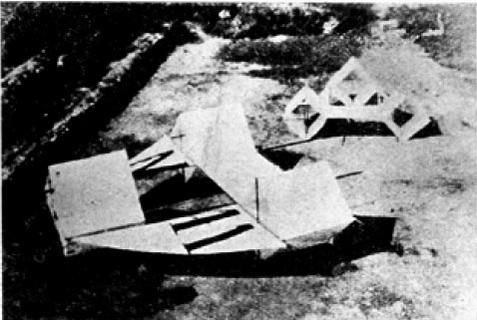
The design is of a pusher/tractor monoplane, featuring an enclosed fuselage, with supplementary surfaces above the main planes. A vertical rudder surface is attached much as on a boat hull. The design also features a tricycle landing gear. If the design actually dates from 1898, it is a rather forward-looking conception. One of a number of significant impediments to flight would have been the fact that the lifting surfaces were flat and were not set at a positive angle of inclination.

During 1902, while living at Red Bluff, California, Gilmore was apparently awarded a U. S. patent for a steam engine meant for use in aerial vehicles. At a much later time, Gilmore claimed that he had built and flown a monoplane with a 32 foot wing span during May of 1902 powered by his patented steam engine, although no supporting evidence has come forth.

In 1903, Gilmore wrote to Samuel P. Langley with an offer to “balance” the Large Aerodrome which had recently plunged into the Potomac River. Langley declined Gilmore’s offer. During the 1910’s Gilmore’s efforts picked up ‘steam’ and he built a large monoplane, apparently patterned to a degree after Louis Bleriot’s Bleriot XII (not Bleriot XI) monoplane of 1909. Gilmore seems to have claimed that he built that machine in 1908, but that assertion, as with so much of Gilmore’s story, seems to be lacking corroboration. During August and September of 1909, Gilmore was experimenting with what seems to have been a clockwork-powered large model aeroplane, which was apparently successfully demonstrated to a small number of people.

Like three other of his brothers, Lyman never married. Late in his life he was set upon in his small cold cabin by murderous thieves who had come to relieve him of his supposed cache of gold. He was very ill at the time and managed to convince them that he was, in fact, without any funds of any sort, gold or currency. In much of his aeronautical work, Gilmore was ably assisted by his brother, Charles. He continued to work on drawing of aeroplanes until his death in the Nevada County (California) Hospital on February 18, 1951.

According to his grandniece, Caroline Boudreaux Sullivan, and his niece, Lyman Gilmore, Jr., thought of himself as an engineer rather than an aviator. Caroline Boudreaux Sullivan’s Mother (Lyman Gilmore, Jr.’s, niece) recalls that he neither shaved nor cut his hair nor bathed, for he believed if he did so, he would “diminish his strength and vitality.”