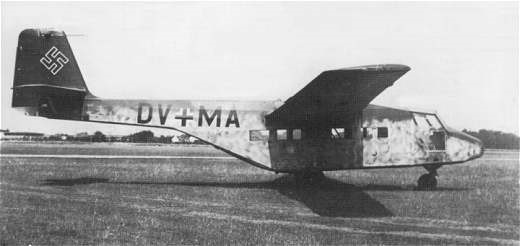
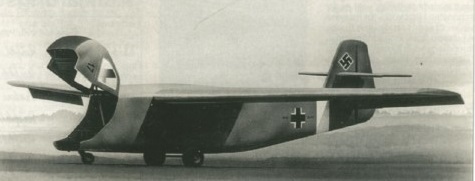
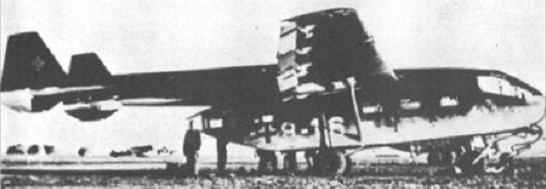
The Gotha Ka 430 was a military transport glider, first built in 1944. The glider was designed by Albert Kalkert. Twelve had been produced by the end of World War II, but none of them was used operationally.
The glider could carry twelve men, and tests were being conducted towards the end of the war to see if it could carry a cargo of 1,400 kg (3,100 lb). A single 13 mm (.51 in) MG 131 machine gun was fitted for self defence.
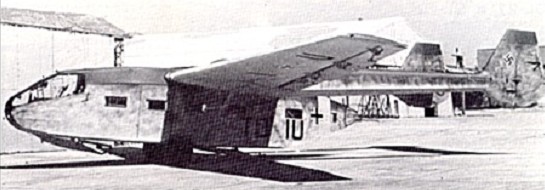
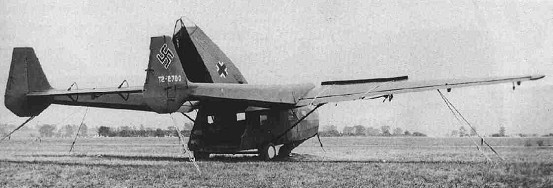
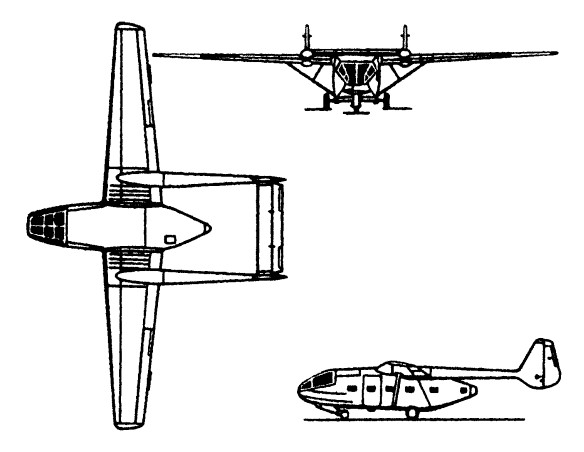
The work of Dipl. Ing Albert Kalkert, the Gotha Go 242 assault glider was developed with the approval of the Reichs-luftfahrtministerium since it offered almost three times the troop-carrying capacity of the DFS 230 then in use. The fuselage pod was of steel tubular construction with fabric covering, and carried jettisonable landing gear and two retractable skids. The wings were made of wood with fabric and plywood covering.
The aircraft could carry 21 fully-equipped troops, or equivalent weight in military loads, such as a Kubelwagen utility vehicle, loaded through the hinged rear fuselage. Two prototypes were flown in 1941 and production followed permitting entry into service in 1942. The type’s operational debut was made in the Mediterranean and Aegean theatres, Go 242 units being based in Greece, Sicily and North Africa. Heinkel He 111 tugs were usually employed and rocket-assisted take-off equipment could be fitted, the variety of propulsion units including four 500kg Rheinmetall-Borsig RI-502 solid fuel rockets. Production totalled 1,528 aircraft. 133 were modified into Go-244.
Go-242 Max take-off weight: 6800-7300 kg / 14992 – 16094 lb Empty weight: 3200 kg / 7055 lb Wingspan: 24.5 m / 80 ft 5 in Length: 15.8 m / 51 ft 10 in Height: 4.25 m / 13 ft 11 in Wing area: 62.4 sq.m / 671.67 sq ft Armament: 4 x 7.9mm machine-guns
Operated aircraft works and flying school at Gotha and seaplane school at Warnemunde in First World War. Manufactured large quantities of aircraft during the war, including seaplanes and twin-engine bombers. Closed by Versailles Peace Treaty. Reopened in mid-1930s with two-seat training biplane, Go 145. In Second World War built Bf 109 fighter and Do 17Z bomber, also Go 242 glider and a powered version designated Go 244.
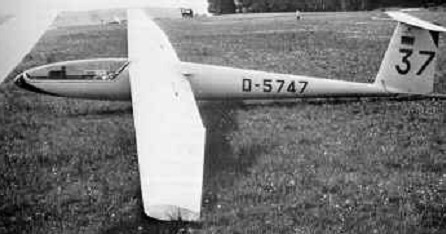
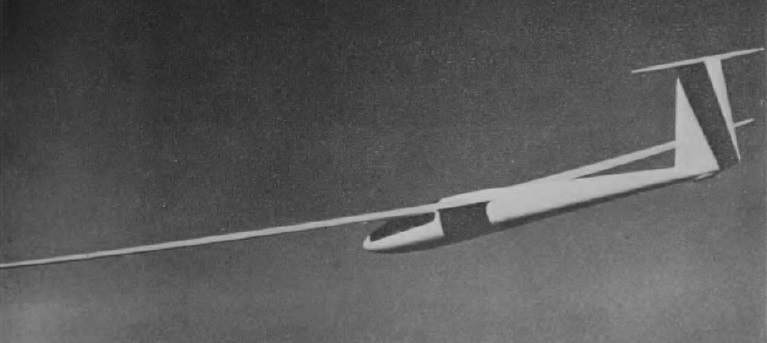
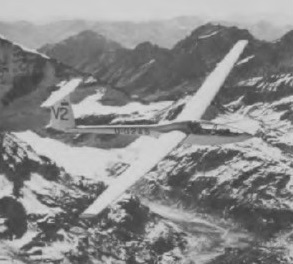
Regarded as having one of the highest performances of any sailplane when it was first rolled out at the end of 1962, the BS 1 had a prone position for the pilot to keep the fuselage cross section as small as possible, as well as a braking parachute housed in the T-tail.
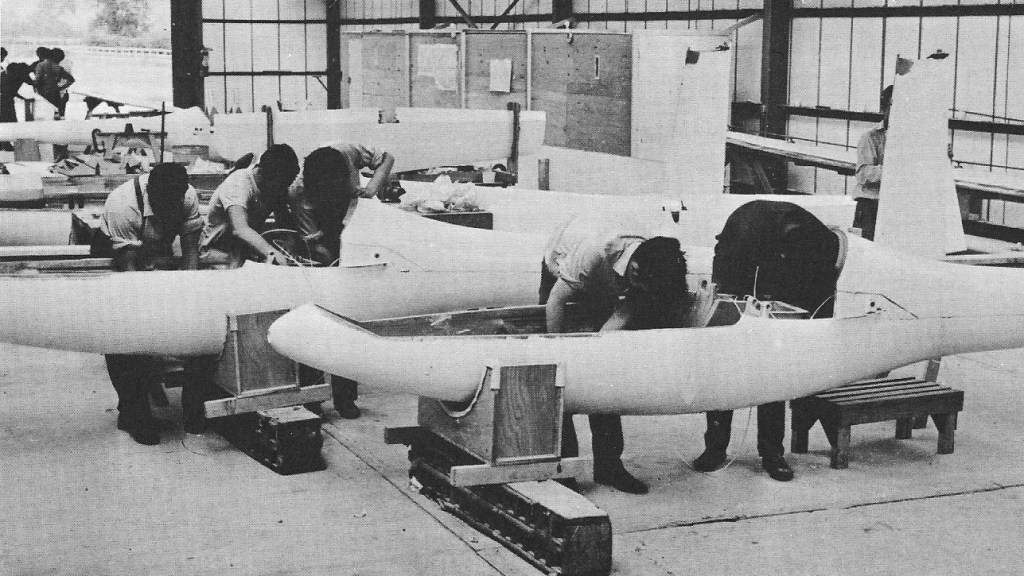
It was designed by Bjorn Stender, who had worked on the SB-6 when a student at Akaflieg Braunschweig and who in 1962 had been asked to design and build a high performance sailplane by the South African pilot and industrialist Helli Lasch. He set to work with only three other helpers and in spite of the BS 1’s advanced nature they succeeded in finishing it by the end of 1962; it was of glassfibre construction – still a comparative novelty at that time – and also had camber changing flaps. The BS-1 has airbrakes, retractable wheel and a tail chute.
After completing its flight tests the BS 1 broke the 300km (186 mile) international triangular speed record during the spring of 1963 and also had a number of competition successes. The BS-1 won the world 300 km speed record (135.3 kph / 85.94 mph) set by Alfred Rohm of West Germany in 1967. In 1970 Terry Thys of San Leandero, Ca made a 917 km / 570 mile flight; which was then the third longest in soaring history.
But following the death of Bjorn Stender on a test flight in October 1963 the type was taken over by the Glasflugel company, who produced the modified BS 1B, which first flew on 24 May 1966. This featured a redesigned fuselage to provide a roomier cockpit, and a modified wing of increased span and a new Eppler 348 aerofoil section to give improved soaring capabilities in weak thermals. Glasflugel built a total of 18 BS 1Bs, one of these being supplied to the naturalist and sailplane pilot Sir Peter Scott.
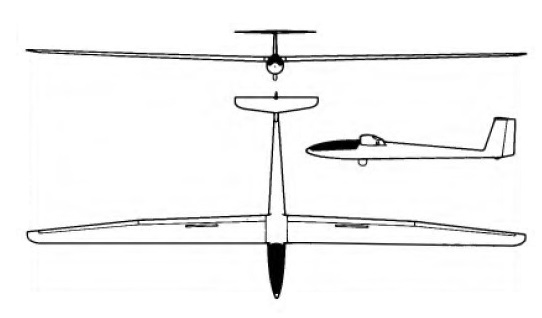
BS 1B Wing span: 18m / 59ft Aspect ratio: 23 Wing area: 14.1 sq.m / 151.7 sq.ft Wing section: Eppler 348 Length: 7.5 m / 24 ft 7.5 in Height: 1.54 m / 5 ft 0.5 in Empty Weight: 335 kg / 739 lb Payload: 125 kg / 275 lb Gross Weight: 460 kg / 1014 lb Water ballast: None Wing Load: 32.62 kg/sq.m / 6.68 lb/sq.ft Max speed: 155 mph / 135 kt / 250 km/h Stalling speed: 35 kt / 65 km/h Max rough air speed: 135 kt / 250 km/h L/DMax: 44 at 95 kph / 51 kt / 59 mph MinSink: 0.54 m/s / 1.78 fps / 1.05 kt at 53 mph / 46 kt / 85 km/h Water Ballast: 0kg / 0lb Seats: 1 No. Built: 18
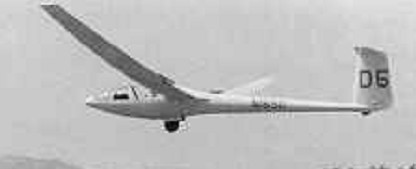
The 604 high performance single-seater by Hanle and Prosser is a 22m span version of the Kestrel 17, and in fact originated as a design study for a similar two-seater sailplane.
Originally intended as a development vehicle for a two-seat high performance sailplane, the 604 has a three-piece wing weighting more than 272 kg/ 600 lb.; just the center section weights 160 kg/ 353 lb. The wing has six flaps, the outer pair of which move at a 2:1 differential with the ailerons. Large spoilers deploy from the upper wing surface only, and there is a tail chute for added approach control.
The 604’s wing consists of a centre section incorporating the fuselage top, and two outer panels joined to the centre section by the Hutter-Hanle method. The fuselage is 5ft 5in longer than the Kestrel 17’s to give improved directional control with the longer span wing; the cockpit canopy, which is slightly shorter than the Kestrel’s, is hinged to open upward and aft. There is a manuallly retractable monowheel with a brake, and a fixed tailwheel. Structurally the 604 is very similar to the Kestrel 17, and can carry up to 220lb of water ballast.
The prototype made its first flight in April 1970, only four months after construction began, and took part in the 1970 World Gliding Championships at Marfa, Texas, taking sixth place; it later took second place in the 1974 World Championships at Waikerie, Australia.
Only 10 604s were built but the type gained a number of competition successes and has set several world and national records, including one for speed over a 300km triangle, set by W. Neubert of West Germany in Kenya in March 1972 with a speed of 95.3mph, and the ladies’ 100km triangular speed record of 79.1mph set by Adele Orsi of Italy in August 1975.
Wing span: 22m / 72 ft 2 in Wing area: 16.26 sq.m / 174.7 sq.ft Length: 7.6 m / 24 ft 11.25 in Height: 1.67 m / 5 ft 5.75 in Empty Weight: 420 kg / 926lb Payload: 180 kg / 397 lb Gross Weight: 600 kg / 1230 lb Wing Load: 36.9 kg/sq.m / 7.57 lb/sq.ft Water Ballast: 0 kg / 0 lb Max speed: 135 kt / 250 km/h / 155mph (smooth air) Stalling speed: 34.5 kt / 64 km/h L/DMax: 49 at 98 kph / 53 kt / 61 mph MinSink: 0.50 m/s / 1.64 fps / 0.97 kt at 45mph / 39 kt / 72 km/h Aspect ratio: 29.8 Airfoil: Wortmann FX-67-K-170/150 Seats 1 No. Built 10
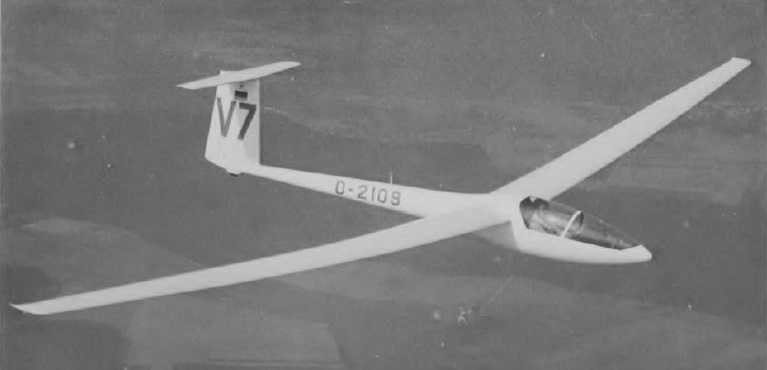
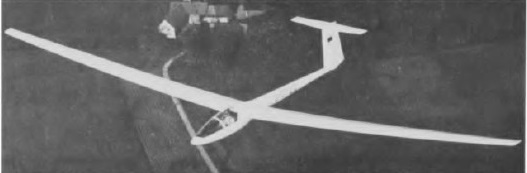
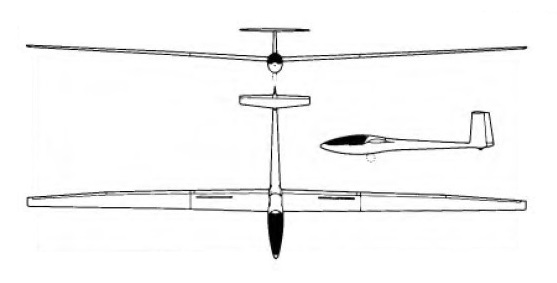
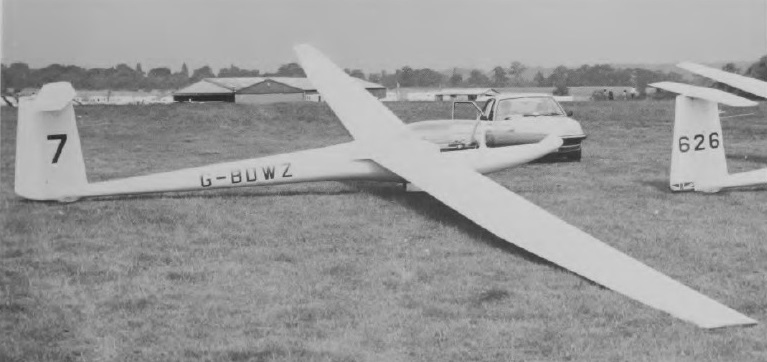
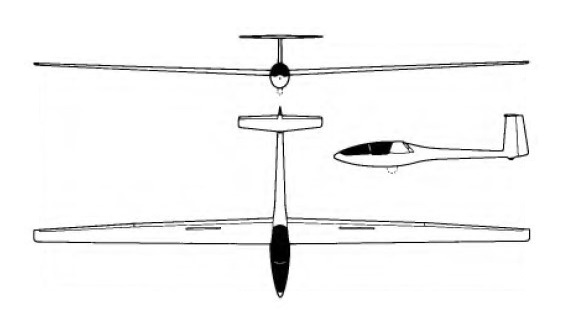
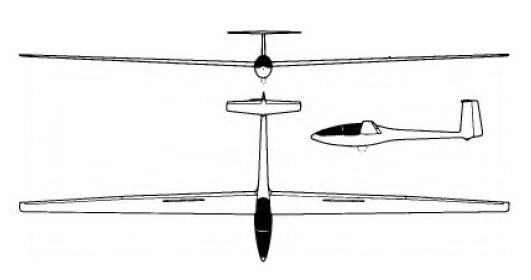
Designed by Hanle and Prasser, the 17m Kestrel high performance Open Class single-seater was designed to meet the demand for a successor to the Libelle variants with a longer wing span and roomier cockpit; it was known originally as the 17m Libelle and has a new fuselage and wing profile and a T-tail. The fuselage is a fiberglass monocoque (not sandwich) for greater resilience and pilot protection. The cockpit has room enough for a 198 cm / 6 ft pilot and features a control stick that slides fore and aft (rather than rotating) to reduce likelihood of pilot induced oscillations and which has a press-to- trim-push-button trimmer. It has a nose and a center of gravity release.
The cantilever two piece shoulder wings are of glassfibre and balsa and/or foam sandwich construction, with unidirectional glassfibre spar caps and glassfibre and balsa shear webs. To cure a small airflow separation problem at the wing root fuselage junction at low speeds large wing root fillets were added to production aircraft; these were actually developed by Vickers-Slingsby, who built the Kestrel 17 under licence. High lift camber-changing flaps are featured which operate in conjunction with the ailerons between 8° and +12°, and can be lowered to 35° for a landing; both ailerons and flaps are partially mass-balanced. It features airbrakes, drogue chute, water ballast and retractable gear. Up to 99lb of water ballast can be carried. There are flush fitting air brakes on the wing upper surfaces, and also a tail braking parachute which can be streamed for short-field landings.
The Kestrel 17 tail unit is similar in construction to the wings, the fixed T-tail being secured by three attachments. Both the elevator and rudder are mass balanced. The monowheel is retractable, with an internally expanding brake, and there is an interchangable tailwheel or tailskid.
The prototype Kestrel first flew at Karlsruhe-Forchheim on 9 August 1968 and production deliveries began the following year, reaching a total of 129 by January 1978.
Kestrel 17m
The Kestrel 17 has several records to its credit. Goran Ax won the second Smirnoff Transcontinental Sailplane Race in a Kestrel in 1973. Sue Martin of Australia gained both the womens world 100 km speed record (113.2 kph / 70.36 mph ) and 300 km triangle speed record (114.4 kph/ 71.11 mph). The 100km closed circuit speed record of 102.74mph was set by K. B.Briegleb of the USA on 18 July 1974 (since broken by an AS-W 17), and the ladies’ 300km closed circuit speed record of 71.1mph set up by Susan Martin of Australia on 11 February 1972.
Glasflugel 401 Kestral 17
The Italian firm of Glasfaser Italiana SrL has also built 25 Kestrel 17s, as well as 130 complete fuselage assemblies for the Kestrel.
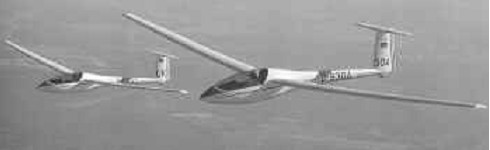
After Slingsby Aircraft Company Ltd had gone into liquidation in July 1969 the firm was reorganised as part of the Vickers Group, at first as Slingsby Sailplanes, later trading as Vickers-Slingsby and then as Slingsby Engineering Ltd. It was decided in September 1969 to produce a modern glassfibre design, and a licence to build the Kestrel was negotiated with Glasflugel. Construction of the first Slingsby-built T 59 Kestrel 17 began in March 1970, and it first flew on 15 August that year at Rufforth, Yorkshire.
Slingsby Glasflugel Kestrel
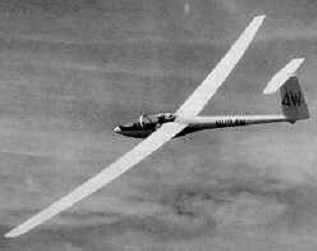
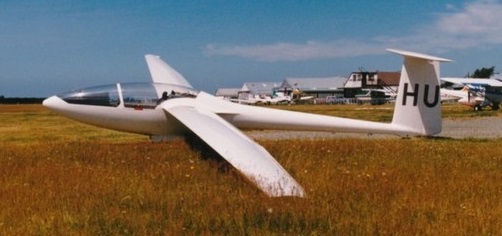
After putting the Glasflugel Kestrel 17 into production, Vickers-Slingsby (later Slingsby Engineering Ltd) began to pursue its own line of development of this Open Class single-seater, which resulted in the 19m span T59B, T59C and T59D. The first 19m span Kestrel, the T 59B, being flown by Mr G Burton in the 1970 World Championships in Texas. The 19m T 59C, which had a carbon-fibre main spar, first flew on 7 May 1971. This was followed by the T 59D of the same span, which first flew in July 1971, the extra span being in the form of 0.5m at each wing root and 0.5m at each wing tip. The T 59D also featured a larger fabric-covered rudder and an antibalance tab in the elevator.
Slingsby T59D ZK-GHU
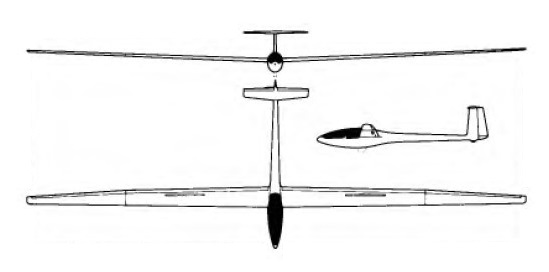
The D model was still further developed into the T59H of 22m (72ft 2.25in) span, the extra span consisting of two 1.5m stub wings inserted into the exisiting wing at the roots. The fuselage is similar to the Kestrel 17 up to just aft of the canopy, beyond which an additional section 29 1/2 in long is inserted which considerably reduced the ‘waisting’ of the earlier version. The fin and rudder area are increased by about 25%, although the tailplane is the same size as the Kestrel 17’s; the rudder is lightened to prevent flutter by fabric-covered cut-out sections.
The T.59H Kestrel 22 is a special version of the single-seat high performance Kestrel 19 and the prototype was built by using a Kestrel 19 with two 1.5 metre stub wings, complete with flaps, inserted at the wing roots and an extra fin extension mounted above the tailplane. The idea was to make these modifications available to any owner of the Kestrel 19 who wanted to increase the performance of his sailplane.
Two prototype T59Hs were built, the first of these flying in 1974, but the new variant was found to suffer from a wing flutter at 140kts (161mph); Vickers-Slingsby had to recover the prototype T59H from the original customer who had bought it, while the flutter problem was investigated by the College of Aeronautics, where it was still being studied early in 1978.
T.59H Kestrel 22
Like the T59C, the H has a carbon-fibre main spar and, apart from the longer fuselage and long-span four-piece wing, joined at the flap/aileron junction, incorporate carbon-fibre spars and large Schempp-Hirth airbrakes on both upper and lower surfaces, it is structurally similar to the Kestrel 17 with the same cantilever T-tail, up to 220lb of water ballast can be carried. There are Schempp-Hirth air brakes in the upper and lower wing surfaces, and there is a monowheel. The two T59H prototypes are known as the Kestrel 22 Series 1 and Series 2.
The fuselage has been lengthened by 750 mm (2 ft 4½ in) by adding a section to the 19m Kestrel just aft of the wing trailing edge. The tail unit is like that of the Kestrel 19 with the weight of the rudder reduced to prevent flutter by cutting panels out of the glassfibre skin and covering with fabric. Landing gear comprises a large retractable unsprung Gerdes monowheel with a disc brake, plus a fixed tailwheel. The disc brake is operated by a hydraulic unit coupled to the airbrake system.
The T59H was abandoned in favour of a new aircraft, the Kestrel 22.
A total of 101 Kestrels had been built by Vickers-Slingsby by the end of 1974, plus two 22m span T 59H Kestrel 22s. Most of these have been 17m span versions.
Slingsby T-59H Span: 22.0 m / 72 ft 2.25 in Length: 7.55 m / 24 ft 9.25 in Height: 1.94 m / 6 ft 4.25 in Wing area: 15.44 sq.m / 166.2 sq.ft Aspect ratio: 31.35 Wing section: Wortmann FX-67-K-170/150 Empty weight: 390 kg / 860 lb Max weight: 659 kg / 1,453 lb Water ballast: 100 kg / 220 lb Max wing loading: 42.68 kg/sq.m / 8.74 lb/sq.ft Max speed: 155 mph / 110 kt / 204 km/h (in smooth air) Max aero-tow speed: 93 mph / 105 kt / 194.6 km/h Min sinking speed: 0.48m/sec / 1.57 ft/sec at 53 mph / 46 kt / 85 km/h Best glide ratio: 51.5:1 at 64.5 mph / 56 kt / 104 km/h
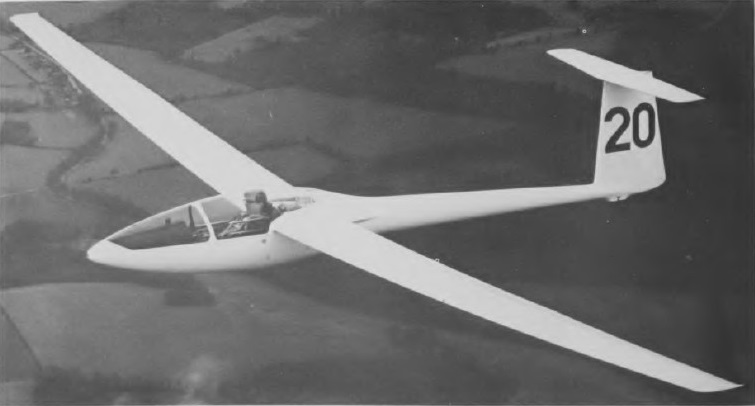
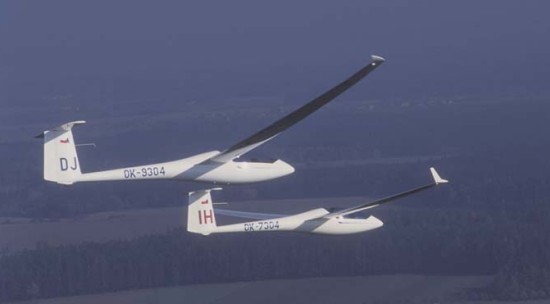
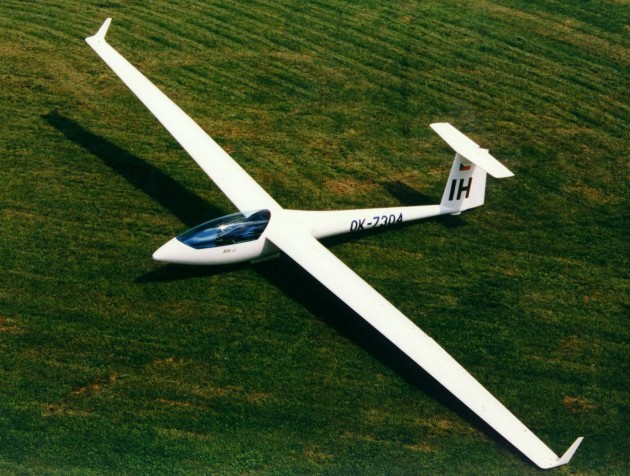
Intended to succeed the Mosquito B, the 15m span Glasfliigel 304 single-seater is a new design very similar to the Mosquito, work on which began in the autumn of 1979 by a team under Martin Hansen.
Construction is of glassfibre, with no carbon-fibre employed, although the 304/17 (now known as the Glasflugel 402), which has detachable wing tips to give a span of 17m, has largely carbon-fibre wing tips. It employs a new 16.4% thickness/chord ratio wing profile developed by Akaflieg Braunschweig and extensively tested and refined on a Mosquito. It features Glasflugel trailing edge dice brakes and interconnected variable camber flaps, a parrallogram control stick, T-tail with fixed stabilizer and elevator, and automatic connection on assembly of all flight control. The fuselage is similar to the Mosquito’s but with a more pointed nose; the monowheel is retractable. The instrument panel can be tipped up, together with the front-hinged upwards opening canopy, with which it is integral, to allow the pilot more unobstructed entry. Up to 253lb of water ballast can be carried.
The prototype, D-9304, first flew on 10 May 1980. Production of the 304 started in the spring of 1981.
Glasflugel 304 CZ
HPH Ltd. took over the original molds and drawings for glider Glasflugel 304 from Mr. George Brauchle in 1998.
402 Span: 55 ft 9.25 in Length: 21 ft 2in Height: 4 ft 5.5 in Wing area: 114 sq ft Aspect ratio: 27.3 Empty weight: 518lb Max take-off weight: 992lb Max speed: 156mph (smooth air) Min sinking speed: 2.26ft/sec at 58mph Best glide ratio: 43:1 at 72mph
 All Aero