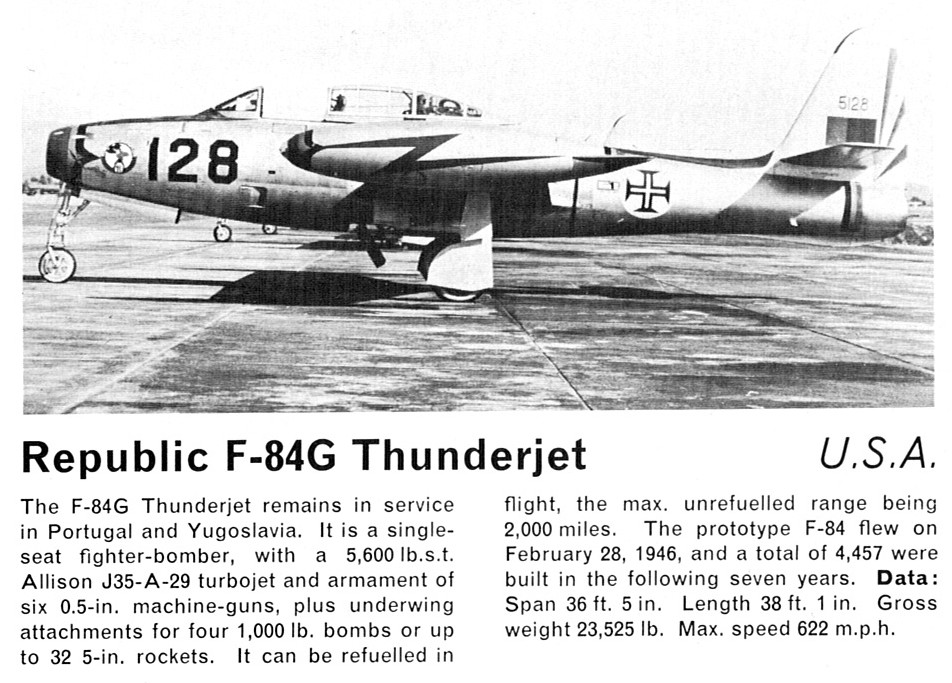
Back to Rihn One Design
Back to Republic F-105 Thunderchief
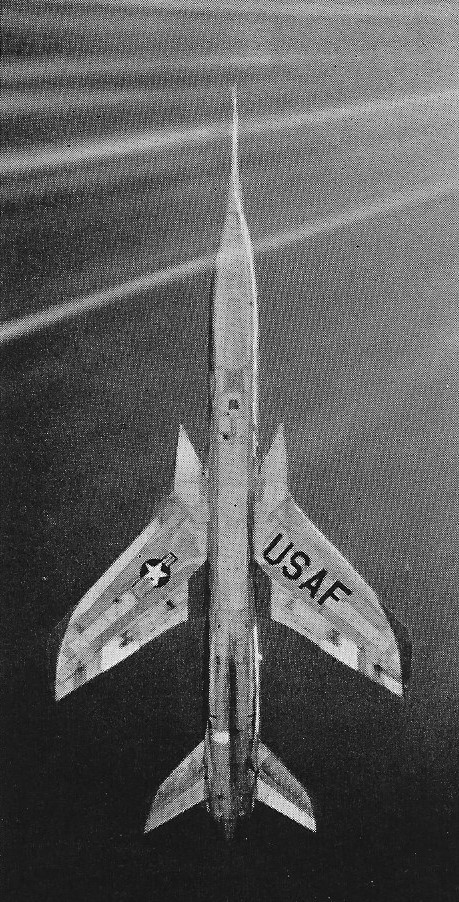
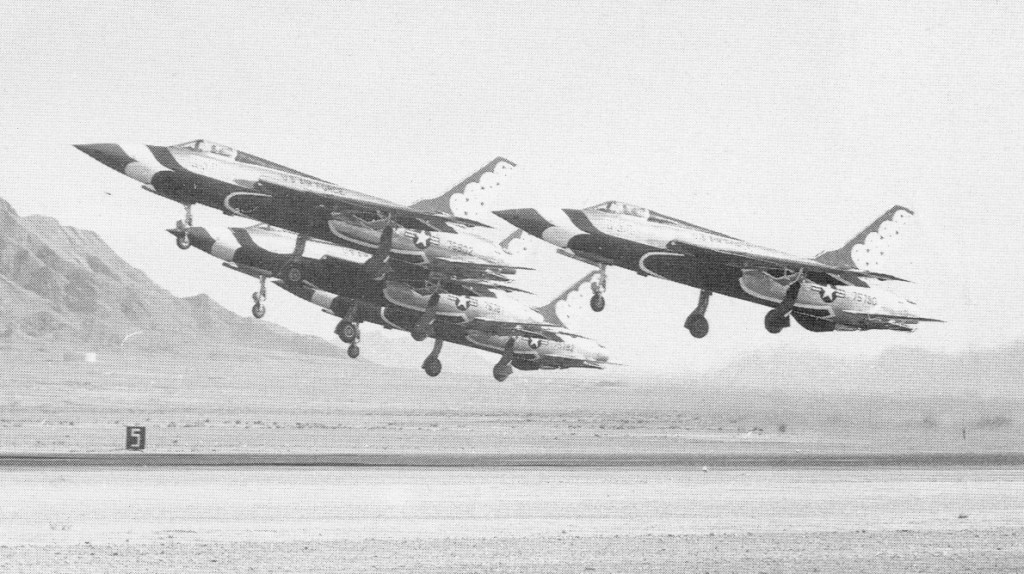
Back to Republic F-105
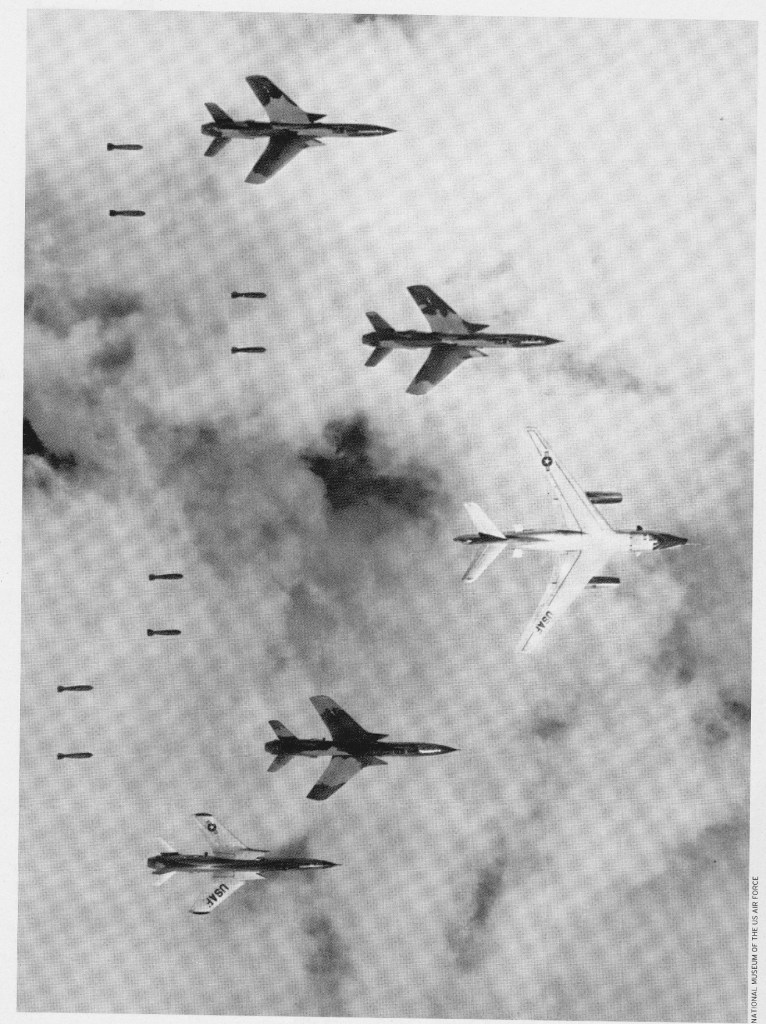
Vietnam Experience
“As I came into gun range the 37mm gun site opened up and red ‘golf balls’ began to float up at me. 1 broke right and simultaneously felt a thump as a 37min shell struck home. 1 called ‘Two’s off and I’m hit,’ jettisoned my fuel tanks and ordnance and lit the afterburner. As 1 started a left climbing turn a fire warning light came on. It was well known at the time that a fire in the aft fuselage would almost always end tip in a catastrophic explosion. My selecting the afterburner aspirated the tail area and kept the fire from going forward under the aft fuel cell and causing an explosion. The Thud was later modified with an air scoop that kept the airflow going from the front to the rear along the outside of the engine.”
Vietnam Experience
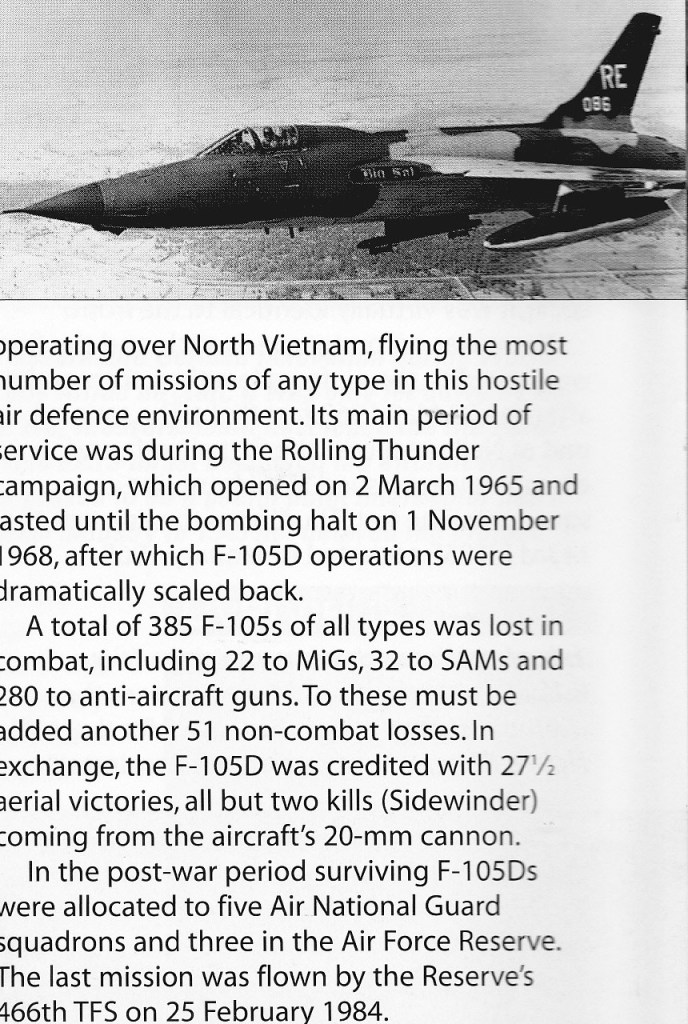
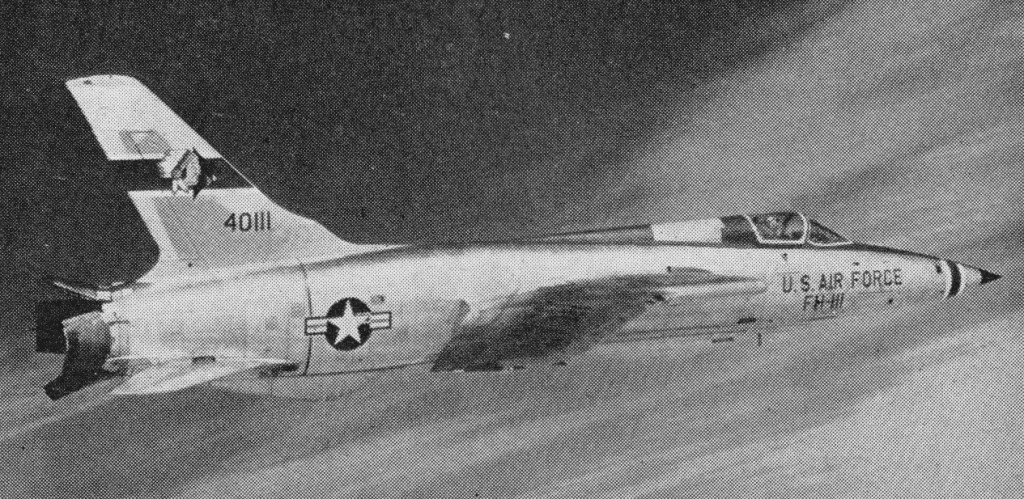
Between 1964 and 1972 a total of 334 F-105s were lost in combat, and further 63 were lost for operational reasons. ‘Combat losses’ were aircraft shot down by MiGs, SAMs or anti-aircraft fire; ‘operational losses’ included aircraft running out of fuel on the way home and mid-air collisions. With such a reputation, it was no wonder that Robert B. Piper was a little apprehensive when he was notified of his posting to Vietnam to fly the Thud.
“I was a student at Air Force Command and Staff College when I first received word that I had been volunteered for a tour in Thuds in Vietnam. The week before I received this news, Rand Corporation gave a briefing to the class on their analysis of the Thud missions to date. Their conclusions were that, during a 100-mission tour, one should expect to be shot down twice and picked up once! They were trying to convince HQ Air Force that the tour should be shortened to 75 missions over the North. Needless to say, this did not give one a great deal of enthusiasm for the assignment. A standard Thud joke defined an optimist as a Thud pilot who gives up smoking …
Fortunately the Rand Corporation were working with an incomplete data package when they did their study. By the time I arrived in Vietnam, the Thuds had improved their survivability by a combination of a change of tactics and the use of a jamming pod to make the SAMs essentially ineffective.
The ‘Catch-22’ atmosphere continued . . . When I arrived at the squadron in Thailand, I was greeted by the old-heads (pilots with 20 or more missions over the North) with the expression, ‘If I had to fly 100 missions over the North, I’d shoot myself. This turned out to be the standard greeting for the new guy.
I was assigned a hootch, and when I walked in I found my roommate asleep on one bed and a large box (six feet by, three feet by three feet) occupying most of the rest of the room. My new roommate woke up long enough to say hello and explain that the box contained his ex-roommate’s stuff. His roommate had been shot down and they were collecting up his stuff to send home. I felt like Yossarian and wondered if I was going to have ‘the missing man in Yossarian’s tent’ experience.
Flying combat was not anything like I expected. We are spoiled by the movies and TV. In the real world there is no background music, the flak does not make loud noises (unless it hits you) and, particularly in Vietnam, the missions did not accomplish much. The first missions were the scariest. One was worried about making a mistake and thereby getting oneself killed or captured.
After a few missions, one realizes that it is a big crap-shoot.”
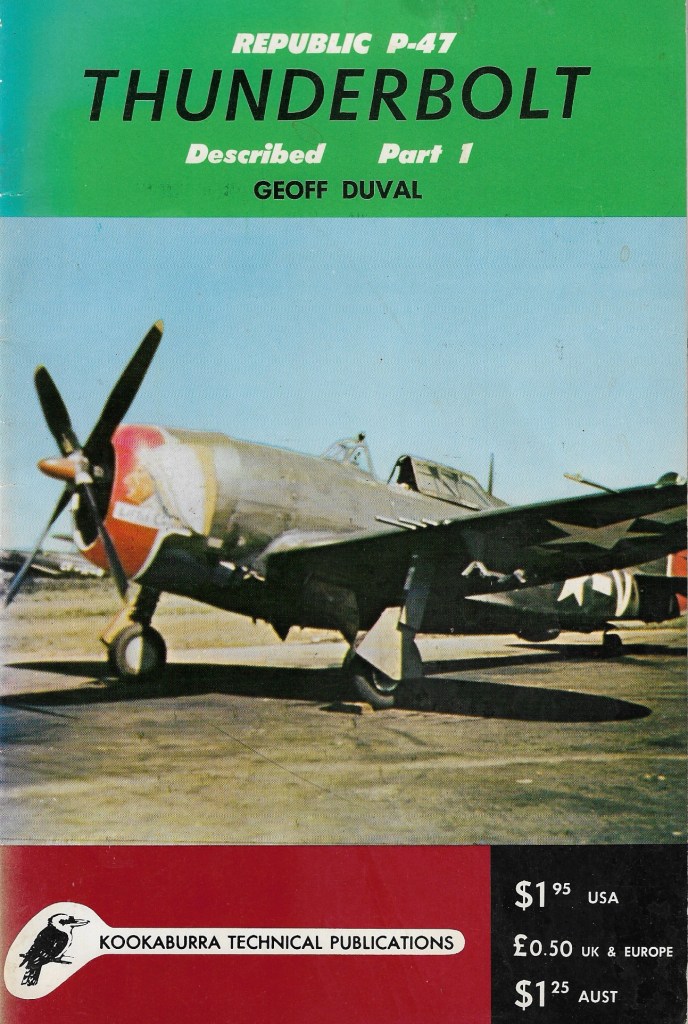
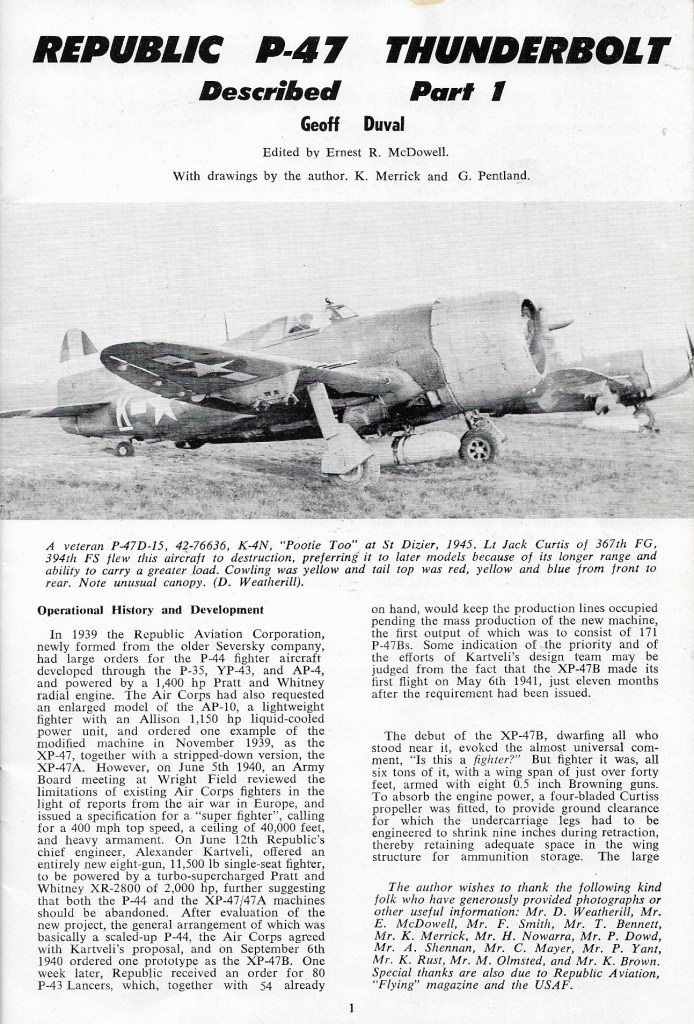
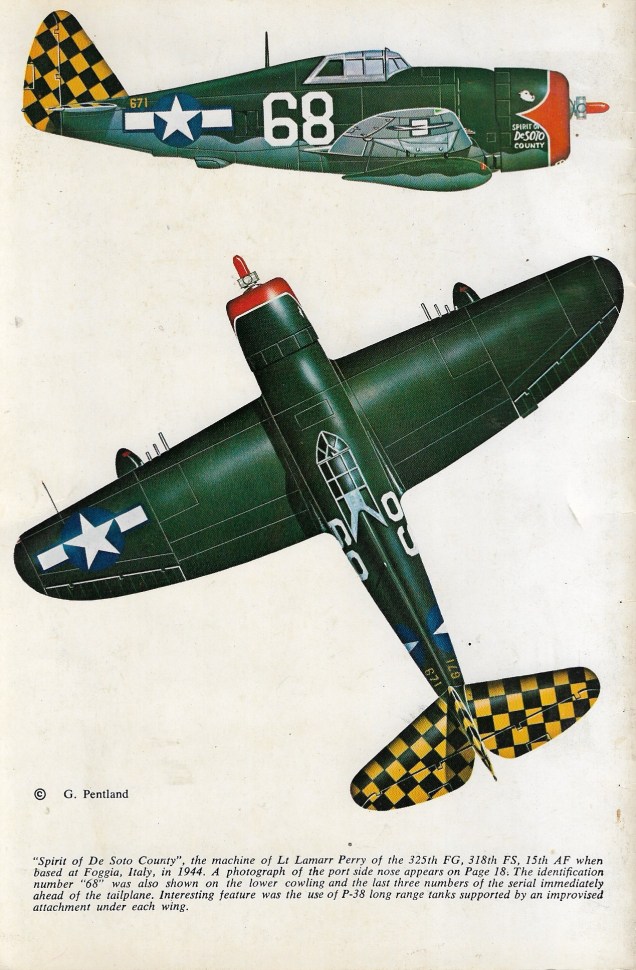
Back to Republic P-47 Thunderbolt

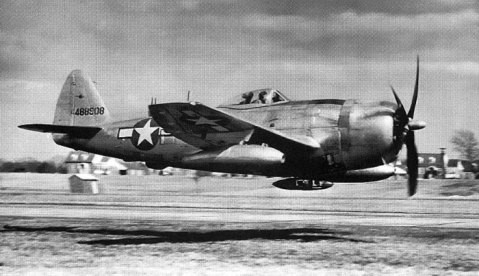

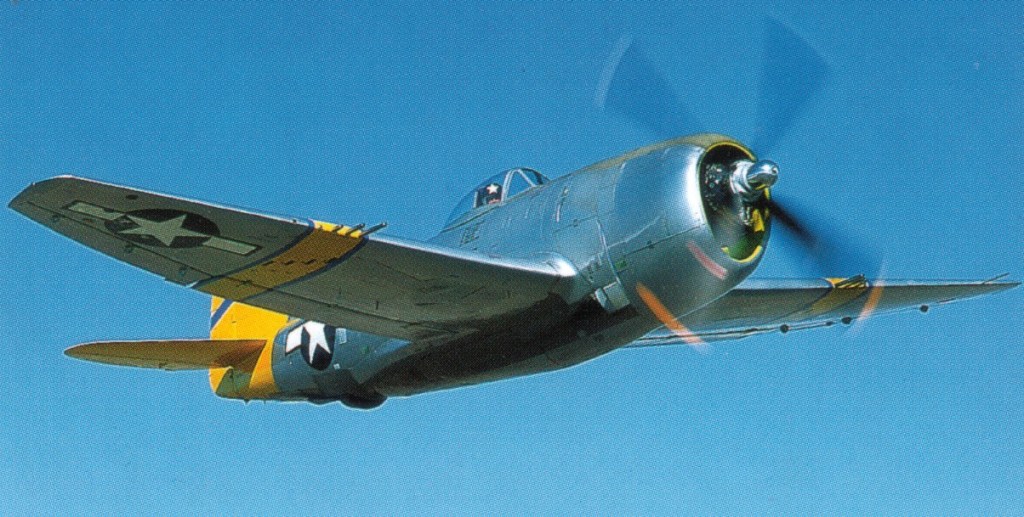







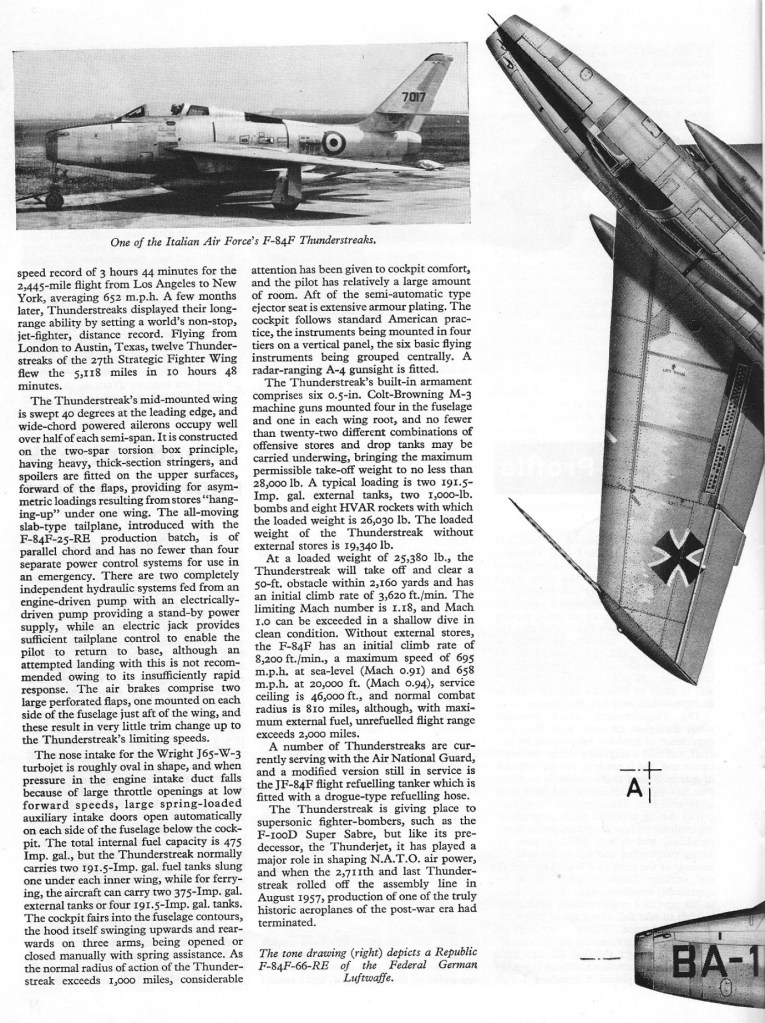
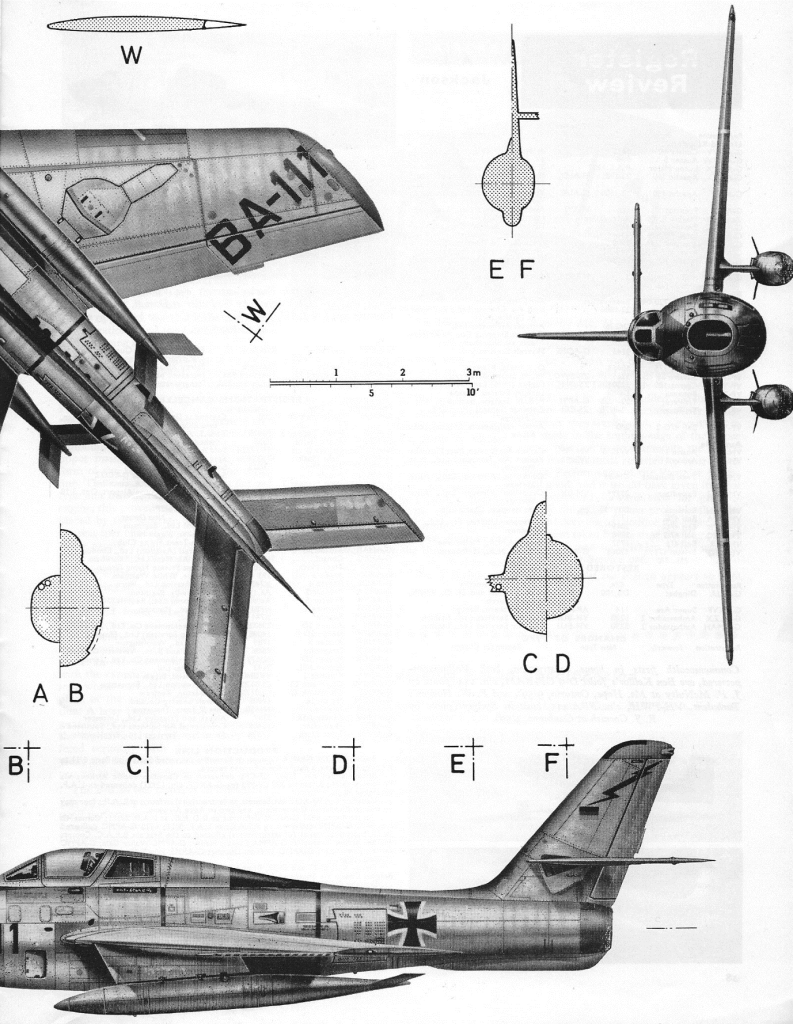
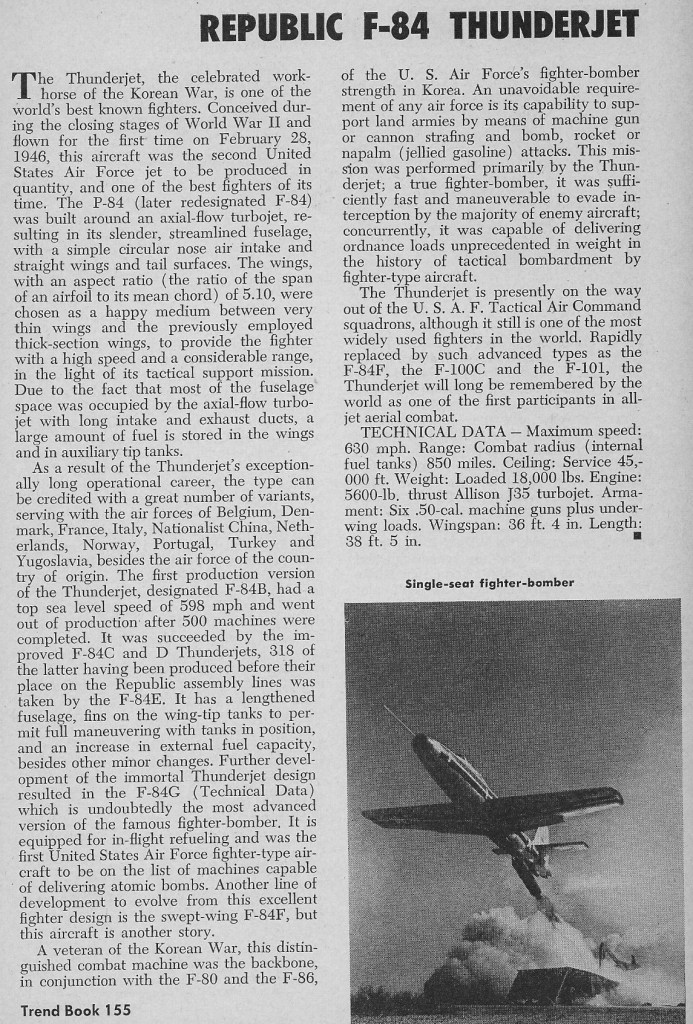
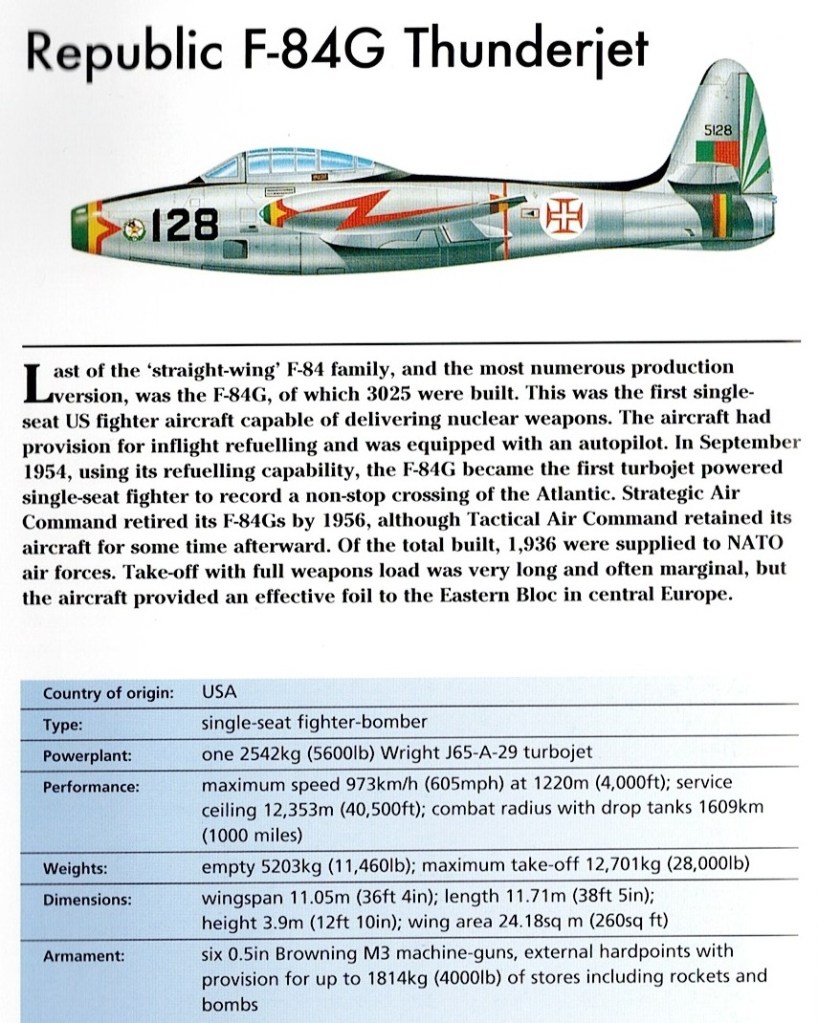
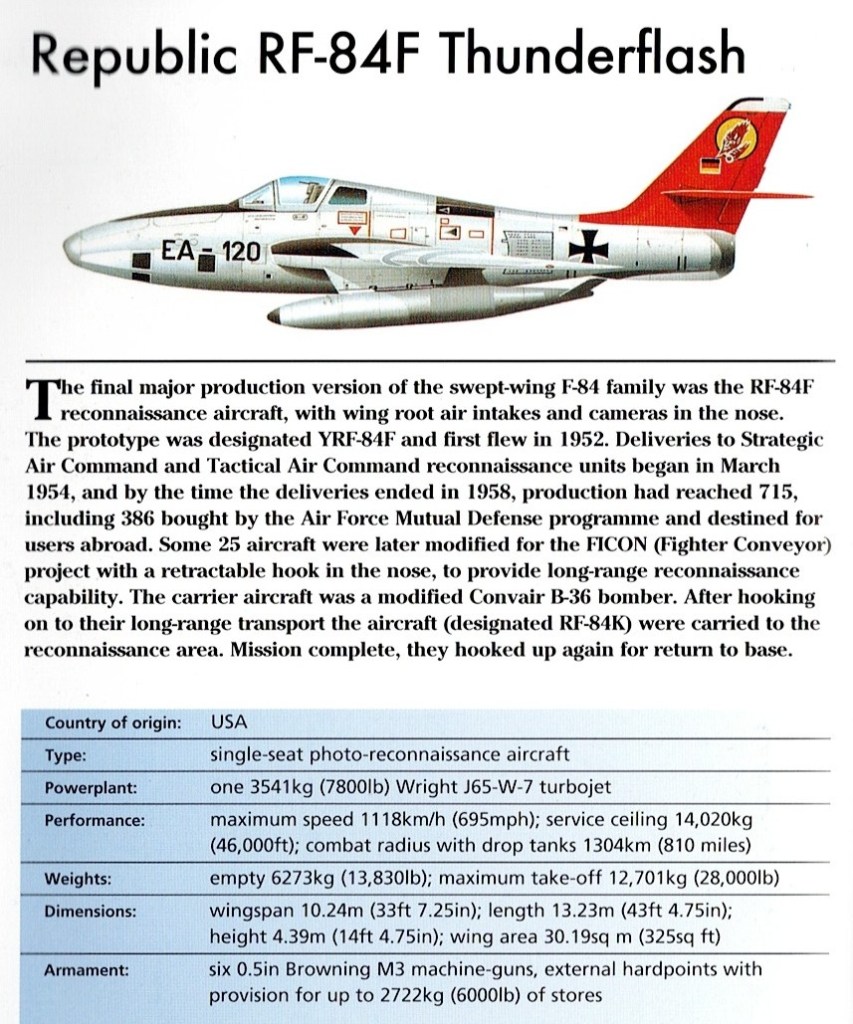
Back to Republic F-84 Thunderjet / Thunderstreak / RF-84 Thunderflash