Sumthin’ Else / Miss Foxy Lady

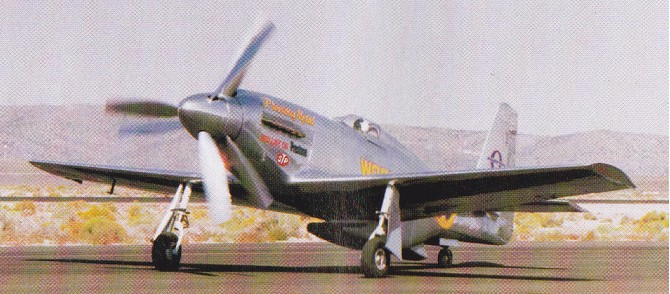
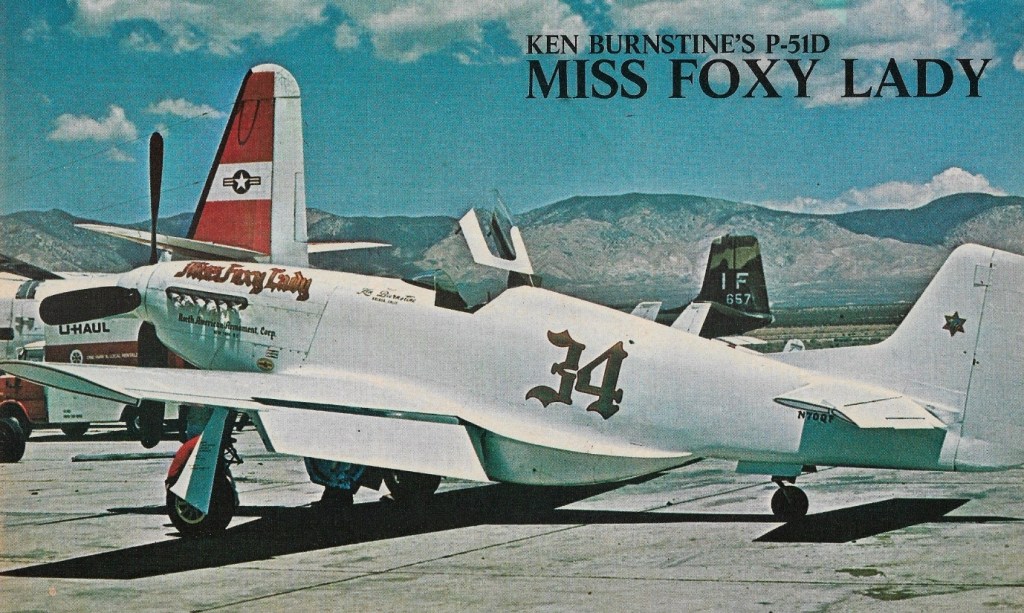
A P-51 Mustang-based racer, Surnthin’ Else belonged to World Airlines chief pilot John Crocker. Equipped with clipped wings and Hoerner wing tips, faired low-profile canopy and a Hovey machine products racing Merlin, this was one of the first Mustangs so modified. It was built up by Ken Burnstine, who was killed in another Mustang) and previously raced as Miss Foxy Lady.

Carrying the racing number six, Sumthin’ Else sports a colour scheme of white with a black spinner and nose that becomes a black fuselage stripe, and a black tail unit.
It took first place in the Unlimited Gold Championship race at Reno in 1979, with John Crocker at the controls, but has not been very competitive since.

Sumthin’Else
Span: clipped from 11.89 m (37 ft 0.75 in)
Length: 9.83 m (32 ft 3 in)
Powerplant: 1 x Packard V-1650 Merlin, 2088 kW (2,800 hp)
Max TO weight: about 3175 kg (7,000 lb)
Max speed: about 460 mph at low altitude

Super Corsair

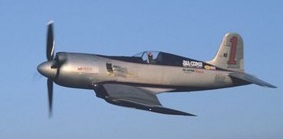
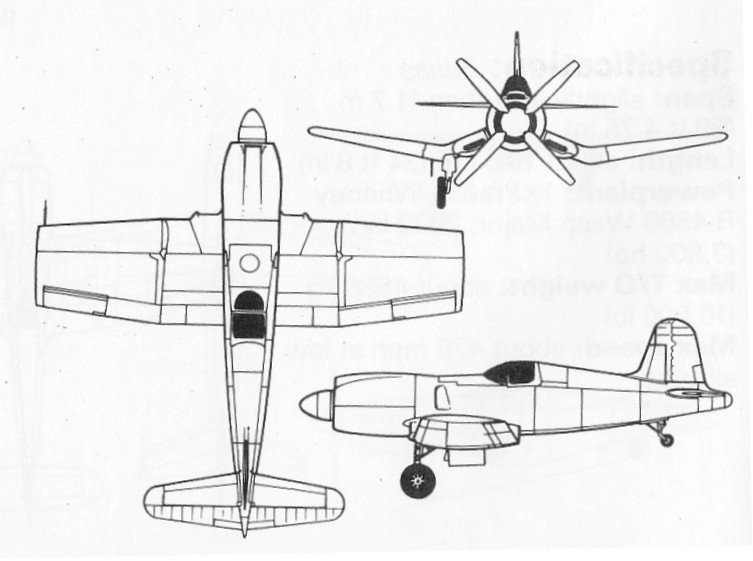
The airframe started life as an F4U-4 Corsair but was transformed into an F2G variant with the John Sandberg-built Pratt & Whitney engine. Reminiscent of the specially modified Corsairs flown by Cook Cleland at the post-war races at Cleveland, the Super Corsair is powered by an R-4360 engine. The clipped wings have square-cut tips just outboard of the ailerons and an airframe extensively cleaned up to reduce drag. Built at Chino, California, by Fighter Rebuilders, the Super Corsair first appeared at Reno in 1982. This was the first time an R-4360 engine had been heard on a race course since Cleveland in 1949.

Gallery

Super Corsair
Span: clipped from 12.48 m (40 ft 11.75 in)
Length: 10.17 m (33 ft 4.5 in)
Powerplant: 1 x Pratt & Whitney R-4360 Wasp Major, 2833 kW (3,800 hp)
Max TO weight: about 3946 kg (8,700 lb)
Max speed: about 490 mph at low Altitude

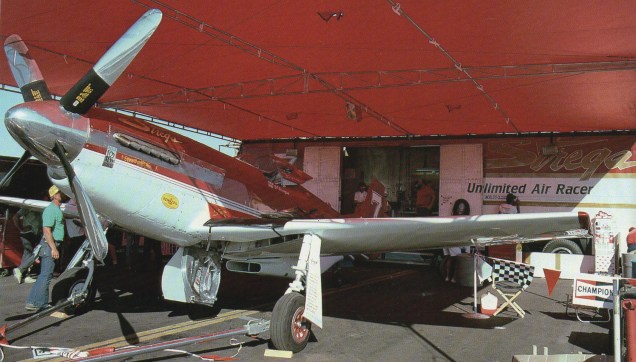
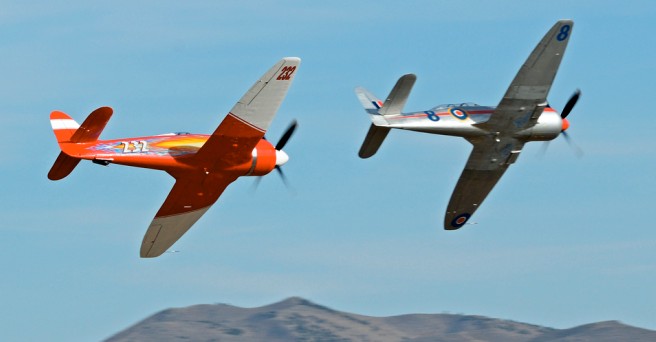
Strega

After five days of qualifying, heats, and semi-finals, the 2013 Reno Air Races came to a finish on Sunday with Steve Hinton, Jr., flying the modified P-51 Mustang known as “Voodoo,” winning the Unlimited Class Breitling Gold Race, with a time of 7:59.313 and an average speed of 482.074 MPH.

Hinton beat the second place finisher, Matt Jackson flying “Strega,” by more than seven seconds. Sherman Smoot, flying the Yak 11 “Czech Mate,” finished third.

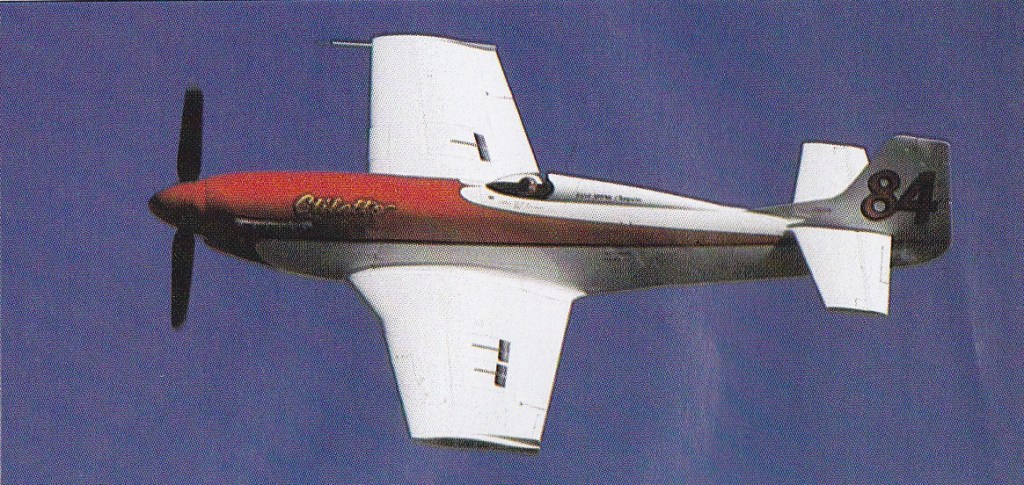
Stiletto

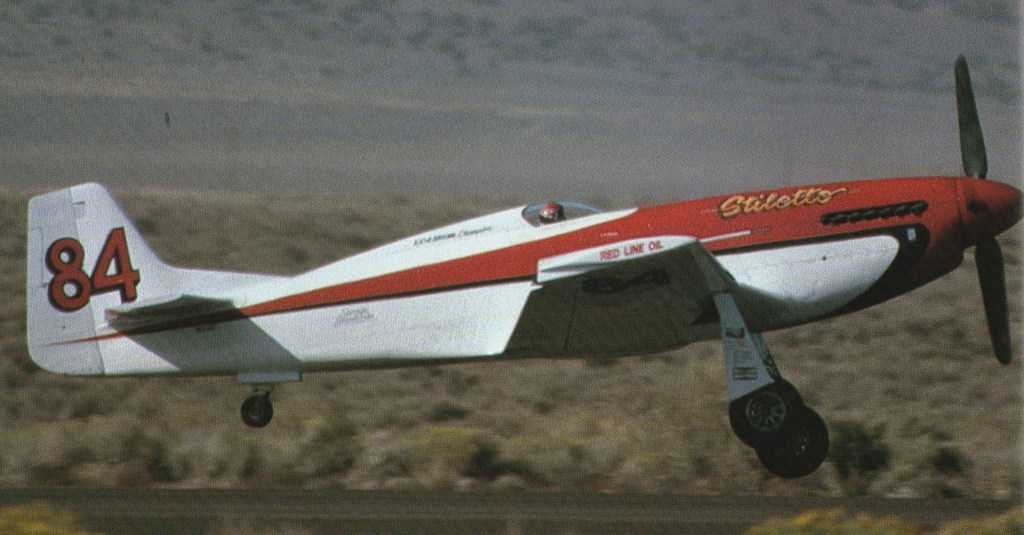
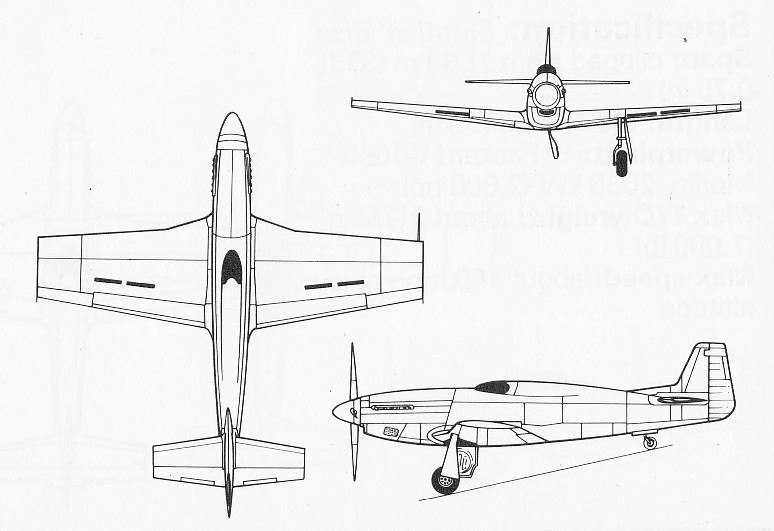
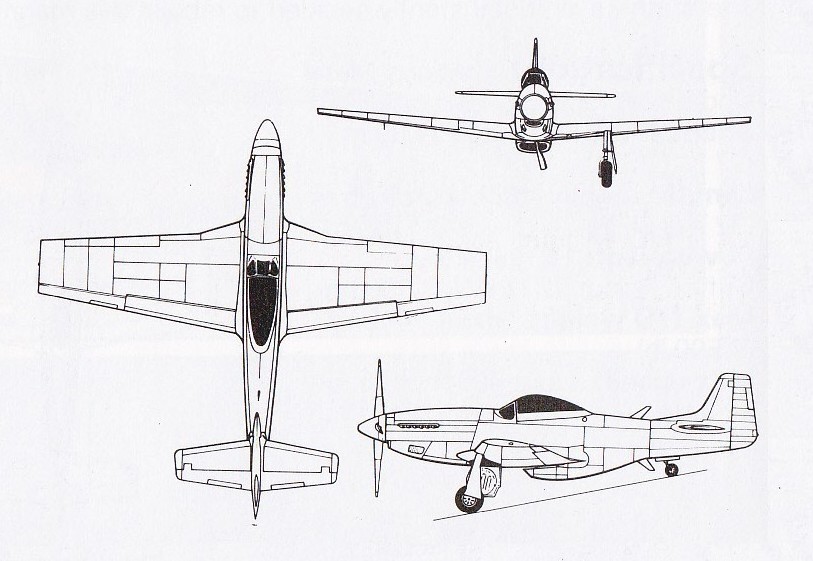
In January 1984 a team of specialists, led by the late Dave Zeuschel of Zeuschel Racing Engines, was set up to build a new racing aircraft from scratch based on a North American Mustang airframe but with the underbelly scoop deleted. Using information and data from an earlier Mustang – a 1940s racer – it was decided to install slimmer radiators in the now-redundant gun bays, with air drawn through three flush inlets in the wing leading edges (one starboard and two port). The Zeuschel team set a target of 2268 kg (5,000 lb) for Stiletto, and achieved this target. With its clipped wings, wing-encompassed radiators, low profile cockpit canopy, low-drag airframe and custom-built Merlin engine, the bare-metal Stiletto was a racer.

Stiletto
Span: clipped from 11.89 m (37 ft 0.25 in)
Length: 9.83 m (32 ft 3 in)
Powerplant: 1 x Packard V-1650 Merlin, about 2535 kW (3,400 hp)
Max TO weight: about 2608 kg (5,750 lb)
Max speed: 375+ mph at low altitude

Red Baron

Several North American Mustangs raced in the Unlimited Class races at the Reno Air Races have been fitted with Griffons. These include the RB51 Red Baron (NL7715C), “Precious Metal” (N6WJ) and a Mustang/Learjet hybrid “Miss Ashley II” (N57LR). In all cases, Griffons with contra-rotating propellers, taken from Avro Shackleton patrol bombers were used in these aircraft. The RB51 Red Baron is noteworthy for holding the FAI piston-engine 3-kilometer world speed record from 1979 to 1989.

In 1979, Steve Hinton, the well known race pilot, took the heavily modified Griffon-powered Mustang RB-51 Red Baron out and broke the existing record with an average 499.018 mph. With further engine development and ideal conditions, the RB-51 could have exceeded 525 mph, but was lost at that year’s Reno races.

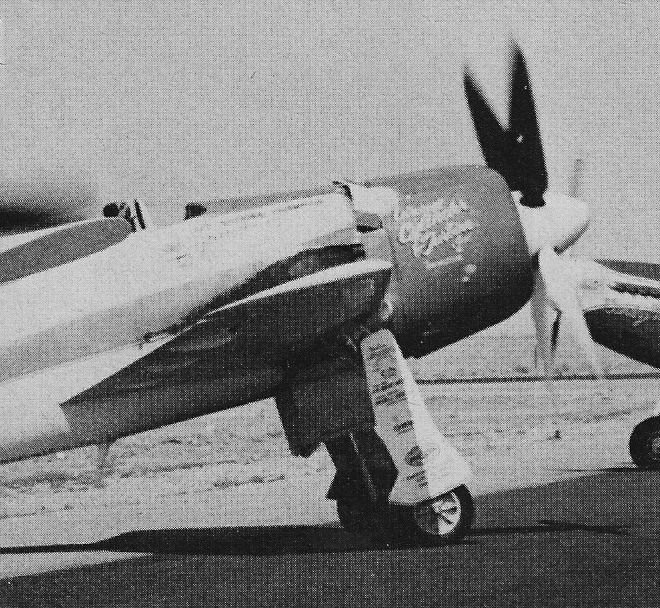
Rare Bear

Lyle Shelton began racing the Grumman F8F-2 Bearcat ‘Rare Bear’ in 1969 after attending Reno the previous years in borrowed aircraft. The aircraft came fifth in 1969, coming at just over 356 mph powered by an R-3350 radial.

Modifications to the Wright R-3350 on Rare Bear, include a nose case designed for a slow-turning prop, taken from a R-3350 used on the Lockheed L-1649 Starliner, mated to the power section (crankcase, crank, pistons, and cylinders) taken from a R-3350 used on the Douglas DC-7. The supercharger is taken from a R-3350 used on the Lockheed EC-121 and the engine is fitted with Nitrous Oxide injection. Normal rated power of a stock R-3350 is 2,800 horsepower (2,100 kW) at 2,600 rpm and 45 inHg (150 kPa) of manifold pressure. With these modifications, Rare Bear’s engine produces 4,000 horsepower (3,000 kW) at 3,200 rpm and 80 inHg (270 kPa) of manifold pressure and 4,500 horsepower (3,400 kW) with Nitrous Oxide injection.

Wins include:
Cape May (1971) at 360 mph
Miami (1971) at 373 mph
Reno (1973) at 428 mph
Mojave (1973) at 396 mph
Reno (1975) at 429 mph
Hamilton (1988) at 412 mph
Reno (1988) at 456 mph
Reno (1989) at 474 mph

In August 1989 Rare Bear pushed the world piston aircraft 3-km (1.86mile) speed record to 528.329 mph, flown by Lyle Shelton at Las Vagas, New Mexico. Further attempts to extend this record were planned.

Externally the aeroplane looks stock type, apart from its clipped wings. Its colour is basically white with an ochre or purple cowling/fuselage stripe. On the vertical tail is an appropriate Mustang-crushing bear cartoon.

Rare Bear
Span: clipped from 10.92 m (35 ft 10 in)
Length: 8.61 m (28 ft 3 in)
Powerplant: 1 x Wright R-3350 Cyclone 18, 2610 kW (3,800 hp)
Max TO weight: about 3175 kg (7,000 lb)
Max speed: 528.329 mph at low altitude

Precious Metal

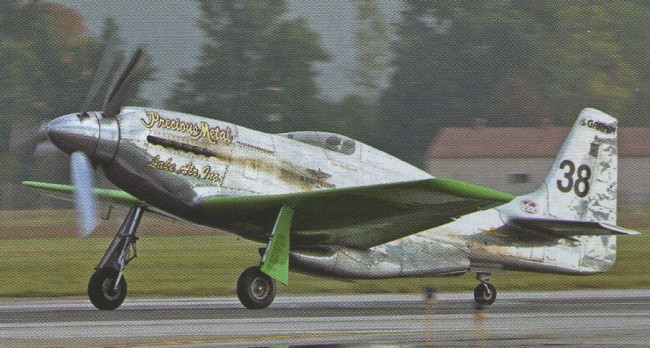
A P-51 Mustang development, it took the Whitting brothers of Fort Lauderdale, Florida, five years to create Precious Metal, with its squarer-cut wingtips, revised low-drag cockpit with a sloped windscreen faired into the upward-hinging canopy and aft aerodynamic turtleback.

Several North American Mustangs raced in the Unlimited Class races at the Reno Air Races have been fitted with Griffons. These include the RB51 Red Baron (NL7715C), “Precious Metal” (N6WJ) and a Mustang/Learjet hybrid “Miss Ashley II” (N57LR). In all cases, Griffons with contra-rotating propellers, taken from Avro Shackleton patrol bombers were used in these aircraft.

Precious Metal flies in a polished natural metal finish and sports the racing number 09 and made its debut at the 1988 National Air Races at Reno, Nevada, and qualified for the Unlimited class final, only to suffer the failure of the propeller governor.

Ron Buccarelli’s Rolls-Royce Griffon powered N6WJ.

Precious Metal
Span: slightly less than 11.89 m (37 ft 0.25 in)
Length: slightly more than 9.85 m (32 ft 3.25 in)
Powerplant: 1 x Rolls-Royce Griffon, about 2237 kW (3,000 hp)
Max TO weight: about 3402 kg (7,500 lb)
Max speed: about 480 mph at low altitude

Mr Awesome

This former Egyptian Air Force Yak-11 was acquired by Joe Kasperoff of California and handed to Ascher Ward of Van Nuys to be modified into a Reno Unlimited Racer. Extensively modified and stretched, the aeroplane has a metal-skinned fuselage in which the cockpit was moved back at least 0.91 m (3 ft). In place of the Soviet powerplant, a Pratt & Whitney R-4360 was installed.

On the aeroplane’s first outing at Reno in 1988 test pilot Skip Holm, after several flights, declared the aeroplane unsafe. In the lead-up to Reno 1989 the aeroplane was further modified, including the fitting of the fin from a Lockheed T-33 jet.

Darryl Greenamyer purchased the aeroplane before the Reno Unlimiteds but 1989 ended in disaster for MrAwesome when it crashed and was severely damaged during the heats at Reno. It was planned to rebuild the aeroplane.

Mr Awesome
Span: 8.5 m (30 ft 10 in)
Length: about 8.5 m (27 ft 10.75 in)
Powerplant: 1 x Wright R-3350 Cyclone 18, about 2796 kW (3,750 hp)
Max T/0 weight: about 2540 kg (5,600 lb)
Max speed: about 440 mph

Miss America

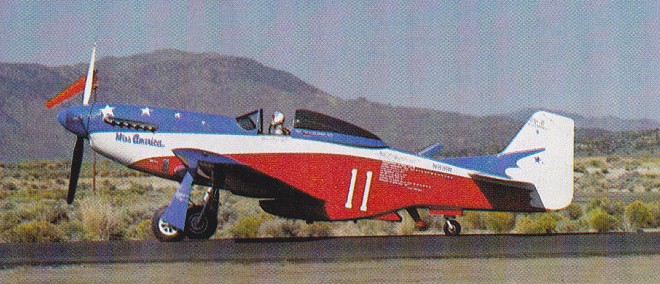
Race numbered 11 in red, white and blue markings, P-51D Miss America has been racing for many years in a basically externally stock condition. Though the aeroplane sports clipped wings, it is otherwise generally unmodified but has a highly tuned race Merlin engine.

When owned by Howie Keefe and raced in its original form, Miss America was generally flown by Chuck ‘Always Second’ Hall and Bud Granley, a Canadian pilot.

It was acquired by a new race team organiser and extensively revised for a higher level of ‘competitivity’ in the 1990 season.

Miss America
Span: clipped from 11.89 m (37 ft 0.75 in)
Length: 9.83 m (32 ft 3 in)
Powerplant: 1 x Packard V-1 650 Merlin, about 1864 kW (2,500 hp)
Max T/0 weight: about 3175 kg (7,000 llb)
Max speed: about 460 mph at low altitude