Commonwealth Aircraft Corp / CAC CA-2 / CA-6 Wackett Warrigal

When Japan entered World War II in December 1941, the RAAF did not possess a single fighter aircraft for home defence and, consequently, a decision was hurriedly made to produce a local fighter as a stop-gap measure to meet the threatened Japanese onslaught. Fortunately, the Commonwealth Aircraft Corporation already had plans in hand for an interceptor aircraft, and this promising design was ordered into production on 2 February 1942. Thus, Australia’s first single-seat fighter came from an organisation headed by Lawrence Wackett, who was also responsible for the country’s first indigenous fighter, the two-seat Wackett Warrigal Mk II of 1930.

CAC Wackett Article

The Wackett was designed specifically for Australian climate conditions, and has a welded chrome-molybdenum steel-tube framework with fabric covering.

The first of two prototypes powered by the DH Gipsy Six engine was flown early in 1940. Owing to the difficulty of obtaining these engines for production aircraft, the design was modified to take the 165 hp Warner Super Scarab 165D radial engine.

The Wackett designed prototype CA-2 Wackett two-seat prototype went into production designated CA-6.
Two hundred were then produced for the RAAF.

CA-6 Wackett
Engine: 165 hp Warner Super Scarab 165D
Wingspan: 37.01ft (11.28m)
Length: 25.98ft (7.92m)
Height: 9.84ft (3.00m)
Empty Weight: 1,909lbs (866kg)
Maximum Take-Off Weight: 2,590lbs (1,175kg)
Maximum Speed: 115 mph (185kmh; 100kts)
Maximum Range: 425 miles (684km)
Accommodation: 2

Commonwealth Aircraft Corp / CAC / Aerospace Technologies of Australia

In 1935 the Chief General Manager of Broken Hill Proprietary (BHP), Essington Lewis, visited Europe and formed the view that war was probable. On his return to Australia, concerned at the lack of manufacturing capabilities there and at the possibility of aircraft not being available from ‘traditional’ (i.e. British) sources during wartime, he commenced a lobbying campaign to convince the Australian Government to establish a modern aircraft industry. The government required little persuasion and encouraged negotiations between a number of Australian companies. The outcome of these negotiations, begun in August 1935, was the formation of CAC the following year. Initially the companies involved were BHP, General Motors-Holden Ltd., and Broken Hill Associated Smelter Pty. Ltd. These were joined by Imperial Chemical Industries of Australia and New Zealand Ltd., the Orient Steam Navigation Company Ltd. and the Electrolytic Zinc Company of Australasia Ltd. at the time of CAC’s formation (the company was incorporated in Melbourne on 17 October 1936). By September 1937 a factory had been completed at Port Melbourne.
Shortly after the establishment of CAC, Mascot-based Tugan Aircraft was purchased. This led to Lawrence Wackett joining the company; he immediately became the General Manager. In 1935 Wackett had led a technical mission to Europe and the USA to evaluate modern aircraft types and select a type suitable to Australia’s needs and within Australia’s capabitities to build. The mission’s selection was the North American NA-16; with CAC’s modifications this became the Wirraway. CAC also undertook production of the Pratt & Whitney R-1340 engine used in the Wirraway and also built some propellers when supplies from alternative sources became problematic. The North American NA-33, built under license as CA-1 to CA-16 Wirraway for RAAF, starting in July 1939.

Followed by Wackett-designed prototype CA-2 Wackett two-seat trainer, production version designated CA-6.

Company also produced the only Australian-designed fighter to serve in Second World War, the CA-12,13, 14, 19 Boomerang.

CAC Melbourne Sept 1940 – Dec 1945 Gallery

Later designs during World War II were the sophisticated Woomera and CA-15, however these types were destined to fly only in prototype form. Postwar products included the prototype CA-22 and production CA-25 Winjeel trainer for the RAAF, the CA-28 Ceres agricultural aircraft, and over 200 North American Mustangs built as CA-17 and 18.

Other, jet-powered aircraft designs in the 1950s and 1960s did not even leave the drawing board, however in 1951 CAC was given the go-ahead to design and manufacture a version of the F-86 Sabre with a Rolls-Royce Avon turbojet and armament. The Sabre was developed and produced concurrently with the indigenous Winjeel trainer, with Sabre manufacture coming to an end in 1961.

In 1964 after a large amount of political lobbying CAC began producing components for the Sabre’s replacement, a version of the Dassault Mirage III, as a subcontractor to the Government Aircraft Factory (GAF). In 1967 CAC commenced licence production of a version of the Aermacchi MB-326 optimised for Australian conditions as Aermacchi M.B. 326H, this programme ended in 1972.

In 1971 CAC joined the small number of aircraft manufacturers which have built both fixed- and rotary-winged aircraft, when it began production of a variant of the Bell Kiowa for the Australian Army and Royal Australian Navy, the last of these was delivered in 1977. The same year CAC embarked on a Life Of Type Extension (LOTEX) programme for the Macchi, which was suffering fatigue problems. The LOTEX programme lasted until 1984. Other contracts included workfor Boeing, Sikorsky, Pratt & Whitney and Hawker Siddeley. Finally specialized in the manufacture and repair of gas turbine engines.

Became a public company in 1975 and CAC became a fully owned subsidiary of Hawker de Havilland in 1985 and was renamed Hawker de Havilland Victoria Limited in 1986. The Commonwealth Aircraft Corporation was renamed AsTA (Aerospace Technologies of Australia) in 1986. This company was purchased by Boeing Australia in 2000.

The Kiowa was the last type built by CAC. The company was part of the Australian Aircraft Consortium which designed the A10 Wamira, but this programme was cancelled in 1985 shortly after the prototype was completed. At the time of purchase by Hawker de Havilland, CAC had begun delivering components for the GAF-built version of the F/A-18 Hornet.

During its existence the Commonwealth Aircraft Corporation produced over 1700 aircraft of all types, including prototypes and aircraft assembled locally from imported components. Of these, almost 550 were examples of aircraft types wholly designed by the company. The designations used by CAC reflected production or design work in fulfillment of different in-house projects or government contracts rather than different types produced (for instance the different designations for the Wackett and Winjeel prototypes compared to their production versions). Early types were given consecutive manufacturer’s construction numbers (c/nos.), while later types (beginning with the production version of the Winjeel) were given c/nos. with the model number as a prefix. Construction numbers 1210 to 1224 appear not to have been assigned. The list of company designations and construction numbers is:

CA-1 First Wirraway production contract; 40 built (c/nos. 1-40).
CA-2 Wackett prototypes; two built (c/nos. 101, 102).
CA-3 Second Wirraway production contract; 60 built (c/nos. 41-100).
CA-4 Woomera prototype; one built (c/no. 435).
CA-5 Third Wirraway production contract; 32 built (c/nos. 103-134).
CA-6 Wackett production contract; 200 built (c/nos. 235-434).
CA-7 Fourth Wirraway production contract; 100 built (c/nos. 135-234).
CA-8 Fifth Wirraway production contract; 200 built (c/nos. 436-635).
CA-9 Sixth Wirraway production contract; 188 built (c/nos. 636-823).
CA-10 Proposed Wirraway variant not built
CA-11 Woomera production contract for 105 aircraft. Contract cancelled, only one aircraft flew (101 c/nos. assigned, 1225-1325).
CA-12 First Boomerang production contract; 105 built (c/nos. 824-928).
CA-13 Second Boomerang production contract; 95 built (c/nos. 929-1023).
CA-14 Experimental Boomerang fitted with turbocharger; one built (c/no. 1074).
CA-15 Single-seat fighter; one built (c/n 1073).
CA-16 Seventh (and final) Wirraway production contract; 135 built (c/nos. 1075-1209).
CA-17 First Mustang production contract; 80 assembled from imported components (c/nos. 1326-1405, 1326-1345 also assigned North American c/nos. NA110-34366 to -34385).
CA-18 Second Mustang production contract; 120 built, production of a further 50 cancelled (c/nos. 1406-1525).
CA-19 Third (and final) Boomerang production contract; 49 built (c/nos. 1024-1072).
CA-20 Contract to modify Wirraways for use by the RAN (see CAC Wirraway); 17 modified.
CA-21 Third (and final) Mustang production contract for 100 aircraft; contract cancelled, none built.
CA-22 Winjeel prototypes; two built (c/nos. 1526, 1527).
CA-23 Designation of a two-seat twin-engined supersonic jet fighter design. None built.
CA-24 Contract for production of 72 of variant of the Hawker P.1081; none built.
CA-25 Winjeel production contract; 62 built (c/nos. CA25-1 to -62).
CA-26 Sabre prototype; one built (c/no. 1528).
CA-27 Sabre production contract; 111 built (c/nos. CA27-1 to -111).
CA-28 Ceres production, built as private venture; 21 built (c/nos. CA28-1 to -21).
CA-29 Production sub-contract for wings, fins, rudders, tailcones and engines of GAF-built variant of Mirage IIIE; 101 airframe shipsets and 140 engines built.
CA-30 Macchi production contract; 20 assembled from imported components plus 77 built (c/nos. CA30-1 to -97, CA30-1 to -13 and -15 to -21 also assigned non-consecutive Aermacchi c/nos. between 6351 and 6395)
CA-31 Jet trainer design; none built (Macchi built instead).
CA-32 Kiowa production contract; 12 assembled from imported components plus 44 built (c/nos. CA32-13 to -56, all 56 aircraft also assigned Bell c/nos. 44501-44556).
CA-33 Contract for modifications to the RAAF fleet of Lockheed P-3C Orions; installing the Barra Sonobuoy system (developed for the RAAF and Royal Air Force by the Defence Science and Technology Organisation (DSTO)) and associated systems after delivery of each aircraft from the USA; 20 aircraft modified (contract completed as HdHV).
CA-34 Designation used for CAC’s participation in the A10 Wamira project.
CA-35 Contract for modifications to a Fokker F27 Friendship (registration VH-EWP) to install the LADS system developed by the DSTO (contract completed as HdHV).
CA-36 Production sub-contract for the wing pylons, engine access panels, aft nozzle fairings, aircraft-mounted accessory drive gearboxes and engines for the GAF-built version of the F/A-18 Hornet; 73 airframe shipsets and 158 complete engines built, plus parts of another 17 engines (contract completed as HdHV).

Engine types produced by CAC include the:

Pratt & Whitney R-1340 built for the Wirraway.
Pratt & Whitney R-1830 built for the Boomerang, Woomera and DAP Beaufort.
Rolls-Royce Merlin built for the GAF Lincoln.
Rolls-Royce Nene built for versions of the de Havilland Vampire manufactured by de Havilland Australia.
Rolls-Royce Avon built for the Sabre and GAF Canberra.
SNECMA Atar built for the Mirage.
Bristol Siddeley Viper built for the Macchi.
General Electric F404 built for versions of the F/A-18 Hornet manufactured by the Government Aircraft Factory/Aerospace Technologies of Australia.

Columbia XJL-1 / JL / Grumman G-42

Grumman began designing the G-42 in mid-1939 as a successor to the J2F Duck but as a consequence of wartime priorities this was transferred to Columbia as the Columbia JL.

A total of three were produced.

XJL-1
Type: 6 place military utility amphibian
Engine: 1 x Wright R-1820-56 Cyclone, 1200 hp
Prop: 3 blade CS metal
Max speed: 174 mph
Cruise speed: 119 mph
Range: 2070 miles
MTOW; 13,000 lb
Wing span: 50 ft 0 in
Length: 45 ft 11 in

Columbia Aircraft Corp / Columbia Airliners Inc

USA
During 1928-1929 produced the Triad high-wing wheel/float amphibian at Valley Stream, Long Island, NY, at which time the company was known as Columbia Airliners Inc. Name changed to Columbia Aircraft Corp and later built 330 Grumman J2F-6 Ducks for the USN. Two Grumman designed XJL-1 (Duck replacement) prototypes were built. The company was taken over in early 1946 as part of the Commonwealth Aircraft Corporation; it went into liquidation in 1948.

Colombes, Ateliers Aeronautiques / AAC

France
Amiot (SECM) company after nationalization; AAC came under control of Junkers during the occupation of France in Second World War and began producing Junkers Ju 52/3m transports for the Luftwaffe. After the war continued building these aircraft under French government contract, designated AAC-1 Toucan. More than 400 produced; when order was completed, factory taken over by Aerocentre-SNCA du Centre.

Colgate-Larsen CL-15 / SL-15 / Spencer-Larsen SL-12C

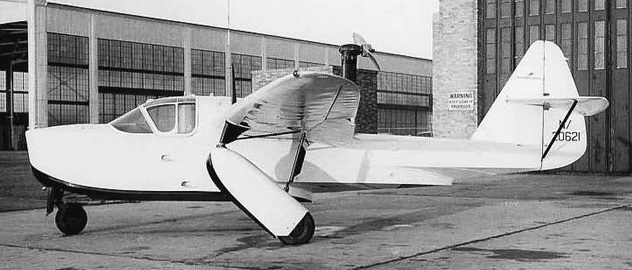
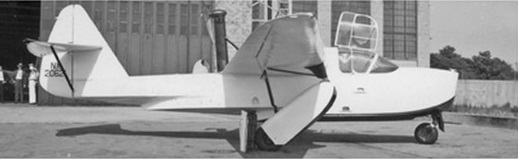
Spencer-Larsen SL-12C NX20621

Spencer and ex Sikorsky engineer Vincent A. Larsen designed the single engine SL-12C amphibian in 1969. It was a two-place, high wing monoplane. The main wheels located in rearward-retracting wing floats; motor in hull drove the prop on a shaft above the fuselage.

First flying in May 1939 registered NX20621, piloted by Percy Spencer, flight tests exposed so many problems with the design and construction that the plane was dismantled after logging 10 hours, and the company reorganized as Colgate-Larsen.

Colgate-Larsen Aircraft Corporation succeeded Spencer-Larsen Aircraft Corporation around 1940, continuing its work at Amityville, Long Island, NY, on novel-design small four-seat amphibian flying-boat, the CL-15 (formerly SL-15).

Spencer leaves Spencer-Larsen in September 1940 and starts the work on his own S-12 Air Car amphibian design.

Engine: Menasco D-4, 150 hp
Wingspan: 40 ft
Length: 27 ft 10 in

Colgate-Larsen Aircraft

USA
Colgate-Larsen Aircraft Corporation succeeded Spencer-Larsen Aircraft Corporation around 1940, continuing its work at Amityville, Long Island, NY, on novel-design small four-seat amphibian flying-boat, the CL-15 (formerly SL-15). From 1941 engaged on subcontract work for other military aircraft building programs, especially after U.S. entry into Second World War.

Colditz Cock

The town of Colditz in eastern Germany is the home of Oflag IV-C, the most secure prison camp in the Third Reich. Housed in an 11th Century castle, 500 Allied officers – including Sir Douglas Bader and SAS founder David Stirling – had little chance of escape.

The castle walls were more than 6ft thick and prisoners’ cells were built around a central courtyard, its only exit blocked by three sets of heavily guarded gates. There was one guard for every prisoner.

Tunnelling seemed impossible because the castle sat on an outcrop of volcanic rock. Even so, Allied prisoners made 186 escape attempts before the camp was liberated on April 16, 1945. The first of 11 Britons to make a ‘home run’ was former Northern Ireland Secretary Airey Neave, who disguised himself as a German officer and walked out of the camp during a theatrical production through a trap door prisoners built under the stage.

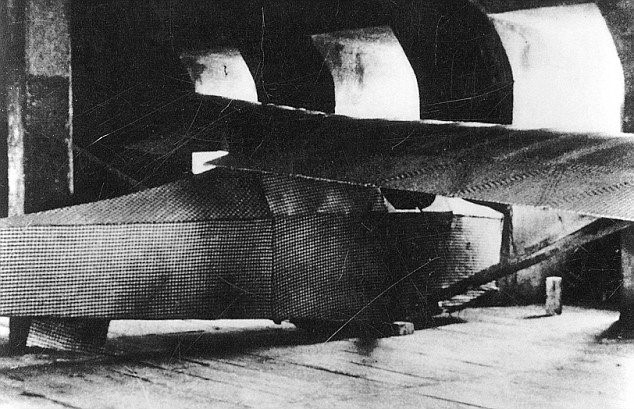
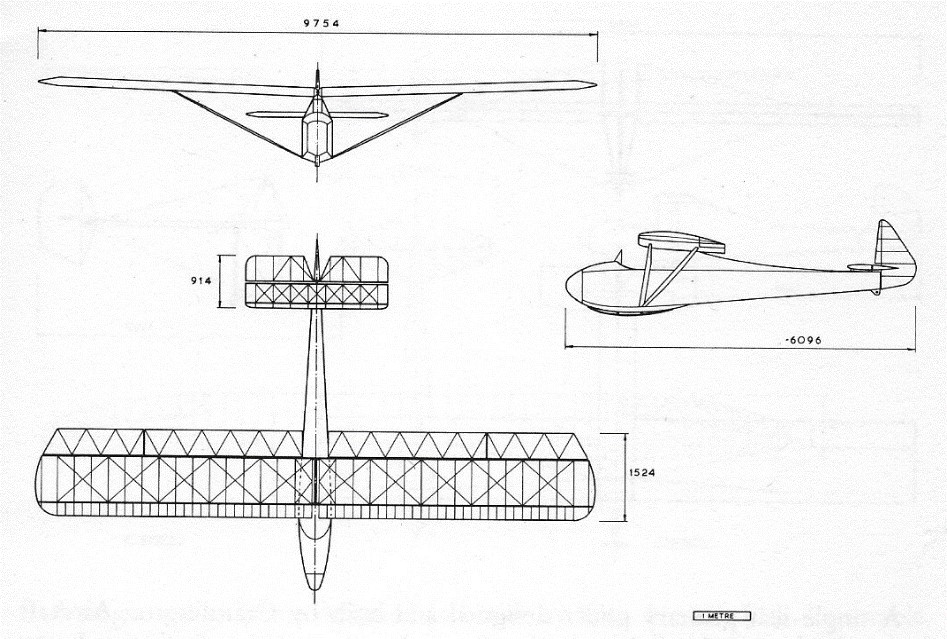
They managed to construct a glider designed by W.Goldfinch, from materials including bedsteads, floorboards, cotton sheets and porridge. Sixteen British prisoners had built the two-man glider behind a false wall in the prison attic, in a space just 20ft by 7ft. Forty more acted as lookouts. ‘Forty guys collected their rations during the period of the project to glue the glider together,’ said Tony Hoskins, the engineer in charge of the reconstruction.

They fashioned tools from bedsteads and iron window bars and made the wing spars from floorboards, the glider skin from cotton sheets and the control wires from electric cable. The finished glider spanned 33ft 9in and was 19ft 7in long.

The prisoners planned to construct a runway on the castle’s sloping roof. The idea was to knock a hole through the roof from their workshop under cover of darkness. They were then going to haul the glider out and attach its wings before launching from the runway by catapulting it with the aid of a bathtub, weighted down with concrete.

The glider, though, was never tested because the castle was liberated by the Americans before the prisoners had a chance to try.

Only one photograph and one crude A4 sketch exists of the glider, which townspeople believe was burnt as firewood.

But engineers and historians have long questioned whether their two-man machine would actually fly. It left the question of could British prisoners have succeeded in their attempt to fly off the roof of the Colditz Castle and make their escape in a glider?

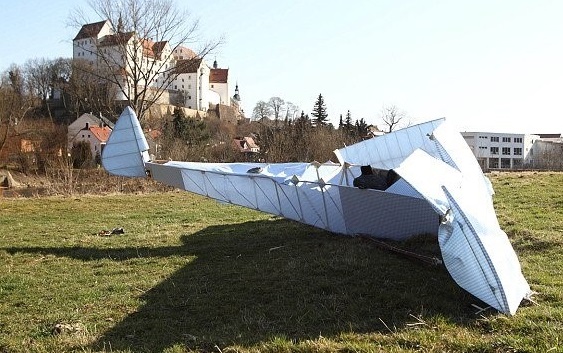
In 2012, a Channel 4 crew created a replica in the attic where it was originally conceived – from similar materials with modern tools. They were able to complete it in two weeks, compared with the ten months it took the prisoners.

The replica glider cost £3,500 in materials, including 27 sheets of pine wood, ten 16ft lengths of beech and 525ft of gingham. It was assembled with 700 panel pins, 300 wooden screws and door and window hinges. The ‘skin’ of the original glider had been starched with a ‘porridge’ made from the prisoners’ rations. The engineers copied the original mixture, which was made from millet seed. The hardest thing for us was that there was no formula for the porridge. They started with 22lb of millet in a big pot and tried every method and consistency until they got it right.

The original glider was built to carry two prisoners, but in 2012 a polystyrene dummy, nicknamed Alex, sat in the cockpit while the aircraft was steered by remote control.

D-Day for the replica Colditz glider came on March 17 2012. The team gathered at 5.45am to assemble the glider on the platform on the apex of the castle roof. The fuselage, tail, rudder and wings, wrapped in a fabric sling for protection, were all lifted individually round the clock tower and on to the roof using a system of ropes.

Amid the sound of chapel bells and rousing cheers from spectators, including the Mayor of Colditz, Matthias Schmiedel, and the German aviation official who signed off the flight, the glider finally rose into the sky at 2.30pm and achieved its first goal – it flew, crossing the River Mulde.

Travelling at 36mph, it then swooped down along the river before turning steeply and crash landing – wing tip first – in the middle of a field after flying 984ft.

‘She came off there like a treat,’ said Pat Willis, 53, who controlled the military-standard radio transmitter. ‘The crash landing was deliberate. I was running out of space so I dumped the glider about 50ft short. There was no way I was going to go through people’s property.’

The flight was monitored on a live video link from the cockpit. ‘We’ve proved that the concept worked,’ said Mr Hoskins. ‘We launched it and it had ample speed as it left the roof. The problem was on arrival. The rudder was fairly ineffective, so when it went to instigate a right-hand turn it was very slow in coming round.

Alexander, the polystyrene dummy, was decapitated.

Wingspan: 9.75 m / 32 ft 0 in
Length: 6.10 m / 20 ft 0 in
Wing areaL 15.05 sq.m / 162 sq.ft
Aspect ratio: 6.4
Wing section: Clark Y-H
Empty weight: 108.86 kg / 240 lb
AUW: 254.02 kg / 560 lb
Wing loading: 16.84 kg/sq.m / 3.45 lb/sq.ft
Max L/D: 12
Stall: 50 kph / 31 mph
Undercarriage: main skid

IAR IAR.81

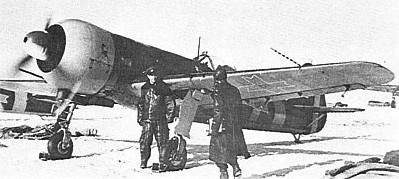
Expansion of the operational versatility of the basic IAR.80 design to embrace the fighter-bomber and dive bomber tasks resulted in the I.A.R.81, which was to fly its first operational sorties in the Ukraine on 15 October 1941. The 25th production I. A.R.80A was taken from the line to serve as a prototype, fitted with two wing racks for 50kg bombs and a ventral crutch for a 225kg bomb. Introduction of the crutch dictated modifications to the main undercarriage members and an automatic flap actuating device was introduced. The dual fighter-bomber and dive bomber version became known as the BoPi, an acronym for Bombardier in Picaj, or dive bomber. The I.A.R.81 retained the six 7.92mm FN-Browning guns and could carry three 100kg bombs, or one 225kg and two 50kg bombs. Fifty I.A.R.81s were followed by a batch of 10 I.A.R.81As, which, like the final 10 I.A.R.81s, were armed with two 13.2mm and four 7.92mm guns, and these proved to be the last of the BoPi aircraft. The next production version, the I.A.R.81C, was a pure fighter and was to be built in larger numbers than any I.A.R. 80 variant. Essentially similar to the I.A.R.80C apart from having the Ikaria cannon replaced by the Mauser MG 151 and retaining only two 7.92mm guns, the I.A.R.81C was, like other versions of the I.A.R.81, powered by the I.A.R.-K 14-1000A engine. A total of 161 I.A.R.81Cs was built by late 1943 when licence manufacture of the Bf 109G-6 took over.
The maiden flight of the first IAR 81C, No 301, was performed on April 6, 1943. Until June 1, 26 sub versions of the IAR.80/81 had already been finished and test flown.

IAR-81
fighter-bomber equiv. to IAR-80A
Wingspan: 10m
Armament: 6 x FN-Browning 7.92mm mg
initial production: belly-rack (1 x 225kg bomb), 40 built
late production: belly-rack + 2 x wing rack (50kg bomb), 10 built

IAR-81A
BoPi equiv. to IAR-80B
Wingspan: 10m
Armament: 4 x 7.92mm mg + 2 x 13.2mm mg
10 built
Orig. 20 IAR-81s ordered deliv. w/o bomb racks as IAR-80B fighters

IAR-81B
Project
Range: 695 km
Ikaria cannon-armed vers., deliv. as IAR-80C fighters

IAR-81C
as ’81B
Wingspan: 11m
Range: 730 km
Armament: 4 x 7.92mm mg + 2 x 20mm MG151
150 built (up to 165)

IAR-81M
1944-45
conv. program to uprate earlier IAR-81 models to IAR-81C
Wingspan: 11m
Armament: 4 x 7.92mm mg + 2 x MG151/20

Take-off weight: 3070 kg / 6768 lb
Empty weight: 2125 kg / 4685 lb
Wingspan: 10.52 m / 34 ft 6 in
Length: 8.97 m / 29 ft 5 in
Height: 3.60 m / 11 ft 10 in
Wing area: 16.00 sq.m / 172.22 sq ft
Max. speed: 542 km/h / 337 mph
Range: 1030 km / 640 miles