The Rigid Midget glider, designed in 1941, was the direct devolopment of the Culver / Crown Screaming Wiener with span increased by two feet and a different airfoil. Ray Parker finished third in it at the 1947 U.S. Nationals at Wichita Falls, TX where he made one 375 km/ 235 mile flight. One belongs to the National Soaring Museum. John Hess Auction Service Inc, Manheim, PA 17545, United States, consigned a Nelson-Bowlus BB-1 Dragonfly N33687 Glider and Culver Rigid Midge N215 jr. Racing Glider in May 2015.
The Culver NR-D radio-controlled target aircraft was designed to simulate enemy attacks. It featured an orthodox single-seat cockpit and could be controlled manually.
It was produced in quantity for both the US Navy and the USAF.
The Navy version was powered by a 150 hp Franklin 6ACT-298-J5 and designated TD2C-1, a total of 1198 being delivered.
The USAF versions were the PQ-14A and PQ-14B, and powered by the 150 hp Franklin O-300-11, 150 and 594 of the respective models were delivered.
There are civilian conversions of all three models.
Wingspan: 30 ft Length: 19 ft 5.75 in Height: 8 ft 4.5 in Wing area: 103 sq.ft Loaded weight: 1830 lb Max speed: 175 mph at SL / 160 mph at 17,000 ft ROC: 800 fpm Range: 512 mi at 160 mph
Culver was formed at Columbus, Ohio, in 1939 by K. K. Culver. Took over manufacturing and sales rights of Dart Model G two-seat low-wing cabin monoplane from Dart Manufacturing Corporation same year. First own product, the Cadet, was a two-seat light cabin monoplane (Continental flat four engine). In 1940-1941 developed two-seat Models LFA and LCA tourer, based on the Cadet, but with retractable landing-gear. Production ceased when America entered Second World War, company then doing subcontract work for U.S. aircraft industry. Moved to Wichita, Kansas, 1941, and concentrated entirely on producing radio-controlled pilotless aircraft based on LFA (nearly 2,400 produced) for use as PQ-8/TDC and PQ-14/TD2C gunnery target drones with USAAF and USN. When this ended in 1946, Culver began developing the Model V civil lightplane, first flown September 1945. Four built as drones designated XPQ-15. Company went bankrupt in late 1946; remaining assets acquired mid-1956 by Superior Aircraft Company.
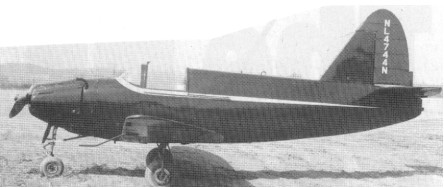
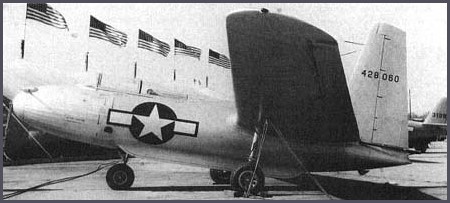
The 677 gal (2,563 l) experimental fuelling glider XFG-1 incorporated Cornelius’ experience with swept-forward wings and was intended to be towed (by a Douglas C 47) pilotless with the controls locked. After the fuel was transferred to the towplane, it was to be cast off and abandoned. An alternative use was as a piloted fuel carrier, jettisoning its undercarriage after take-off, and landing at its destination on two skids at the bottom of the fuselage.
Basically a flying fuel tank, the forward swept wings were mounted behind the cylindrical fuel tank forming the fuselage centre section. The incidence of the XFG-1 wing was adjustable on the ground at 3°, 5° and 7°. With a swept-forward wing, an increase in incidence raises the wingtips and produces dihedral, which may explain why some accounts describe the adjustment as variable-dihedral.
Two were produced for the USAAF in 1945 by the Spartan Aircraft Corporation at Tulsa, Oklahoma, under the serials 44-28059, 44-28060. Thirteen flights were made in prototype 44-28059 by Reitherman, on the last of which he was killed after failing to recover from a spin. The second machine, 44-28060, made 19 flights, but work was discontinued with the end of WW II.
In 1941, Consolidated Aircraft and Vultee merged to form Convair, and Stinson Aircraft became a division of Convair. In July 1948 the Stinson factory was closed and five month later Convair sold Stinson Aircraft to Piper Aircraft. The company that Eddie Stinson had founded 22 years earlier had built over 12,000 aircraft. Convair Division of General Dynamics Corporation; title adopted from April 30,1954 by Consolidated Vultee following acquisition in 1953 of major shareholdings by General Dynamics. Major products have been the Convair F-102 Delta Dagger and F-106 Delta Dart interceptors, B-58 Hustler supersonic bomber and Convair 880, and 990 four-jet commercial transports. Developed subsequently F-111/FB-111 variable-geometry combat aircraft, now the responsibility of GD’s Fort Worth Division. Convair was grouped with GD’s Fort Worth and Pomona Divisions in September 1970 to form the single Convair Aerospace Division, but Fort Worth was again made a separate division in June 1974. Convair Division at San Diego became responsible for commercial aircraft and space exploration systems, product support for Convair 240/340/440 and derivatives and the Convair 880/990. It also built major components for McDonnell Douglas DC- 10, Space Shuttle Orbiter vehicle and Tomahawk cruise missile.
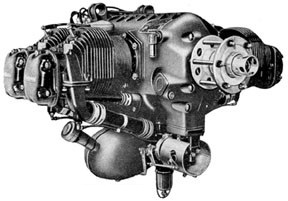
The Continental O-190 (Company designations C75 and C85) is a series of engines made by Continental Motors beginning in the 1940s. Of flat-4 configuration, the engines produced 75 hp (56 kW) or 85 hp (63 kW) respectively.
The two variants shared the same bore, stroke and compression ratio. The C85 produced ten extra horsepower by virtue of having a maximum permissible rpm of 2575 versus the 2275 of the C75. The C75 was in production from 1943 to 1952 and the C85 from 1944 to 1970.
Variants:
C75
C85 85 hp 177 ci 4 cylinder Weight: 170 lb
C-85-8 A-65 but 188ci tapered propshaft Weight: 188 lb
C-85-8F C-85-8 with flanged propshaft.
C-85-12 C-85-8 with starter.
C-85-12F C-85-12 with flanged propshaft.
O-190 Military designation for the C75, C85 family of engines. 85 hp 177 ci 4 cylinder Weight: 170 lb
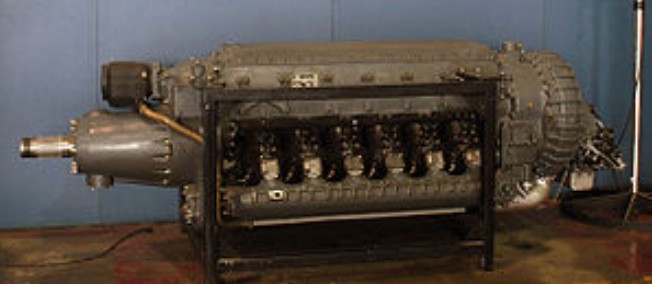
The Continental XI-1430 Hyper engine (often identified as the IV-1430) was a liquid-cooled aircraft engine developed in the United States by a partnership between the US Army Air Corps and Continental Motors. It was the “official” result of the USAAC’s hyper engine efforts that started in 1932, but never entered widespread production as it was not better than other available engines when it finally matured. In 1939, the I-1430-3 was designated as the engine to power the Curtiss XP-55, an extremely radical (for the time) pusher-engine fighter design that would not reach production.
In the late 1920s Harry Ricardo wrote a paper on the sleeve valve design that led to the USAAC’s hyper engine efforts. He claimed that the 1 hp/in³ goal was impossible to achieve with poppet valve type engines. The USAAC engineering team at Wright Field decided to test this claim by beating it. The I-1430 was the result of an experimental effort at Wright Field to build a high-power cylinder using conventional poppet valves. The engineers, led by Sam Heron, used a variety of techniques to raise the allowable RPM, which was the key to increased power without requiring a larger engine.
The USAAC was interested in very large bomber designs, and were most interested in engines that could be buried in the wings in order to improve streamlining. From this requirement they designed a 12-cylinder horizontally opposed engine using twelve separate “hyper” cylinders. Although this sort of arrangement, with entirely separate cylinders from each other and the crankcase, was common for liquid-cooled Central Powers World War I-era inline-6 aviation engines, as in the German Mercedes D.III of nearly two decades earlier – and had been used for the 1918-era Allied Liberty L-12 liquid-cooled aviation engine with significant success – it had fallen from use in favor of engines featuring a monobloc engine design philosophy, with a cylinder block that combined the cylinders and the crankcase, leading to much stiffer engines, that were better able to handle increased power.
The USAAC proposed an engine of about 1200 cubic inches (20 L), hoping the engine’s smaller size would lead to reduced drag and hence improved range. By 1932, the USAAC’s encouraging efforts led the Army to sign a development contract with Continental Motors Company for the continued development of the engine design. The contract limited Continental’s role to construction and testing, leaving the actual engineering development to the Army.
A second cylinder was added to Hyper No. 1 to make a horizontal-opposed engine for evaluation of an opposed-piston 12-cylinder engine. After running the modified engine with different combinations of cylinder bore and stroke, it was found that the high coolant temperatures required to maintain the required output was impractical. A third high-performance single-cylinder engine was then constructed with lower operating parameters. This one-cylinder engine was designated “Hyper No. 2”, and became the test bed for developing the cylinders that would become the Continental O-1430 (“O” for “opposed”) engine. It would require a ten year development period which changed the layout to first an upright V-12 engine and later, an inverted V-12 engine, before becoming reliable enough to consider for full production as the Continental I-1430 in 1943.
During development, interest in the “buried engine” concept faded. Improvements in conventional streamlining, notably the NACA cowling, eliminated the need for a buried engine for improved performance. Additionally, with bomber designs like the B-17, using radial engines for power, starting to enter production, the need for new bomber designs became less pressing and the Army turned its attention to new pursuit models. For this role the O-1430 was not terribly useful, so Continental modified the basic design into a V-12, and then into an inverted-V-12, the I-1430, in the same basic format that the German Luftwaffe of World War II would use.
The I-1430 featured cylinders with “hemispherical” combustion chambers and two sodium cooled exhaust valves. Although it retained the separate cylinders, the change to a V-layout allowed the individual cylinder heads to be cast as a single piece. Mounted at either end, a Y-shaped plate provided stiffness, while containing the camshaft drives. Continental built the first I-1430 engine in 1938 and successfully tested it in 1939.[1] At the time it was an extremely competitive design, offering at least 1,300 hp (970 kW) from a 23 liter displacement; the contemporary Rolls-Royce Merlin offered about 1,000 hp (700 kW) from 27 l displacement, while the Daimler-Benz DB 601 offered slightly more power at 1,100 hp (820 kW), but was much larger, at 33 l displacement.
While the engine was producing exceptional power for its displacement, the reason it was not put into production may have had to do with it’s weight. Both the Rolls Royce/Packard Merlin V-1650 and the Allison V-1710 were in production, with similar power and better Power/Weight Ratios. The V-1710 was 1395 lbs, 385 pounds lighter than I-1430 with a power-to-weight ratio of 1.05. The Merlin V-1650 weighed in at 1640, 25 pounds more than the smaller and unproven Continental with about the same power/weight ratio of about 1.00. It did not seem the XI-1430 would be the solution to any important problem. It was not until 1943 that the 1,600 hp (1,190 kW) IV-1430 was tested extensively in the Lockheed XP-49, a modified version of the P-38 Lightning. It was also to be used in the production version of the Bell XP-76, which was canceled before production began. In 1944 it was also tested in the McDonnell XP-67.
Interest in the design had largely disappeared by then; piston engines with the same power or greater ratings were widely available, the Merlin for example had improved tremendously and was offering at least 1,500 hp (1,120 kW), and the military and aircraft builders were already starting to focus on jet engines.
Only twenty-three I-1430 series engines were delivered, later redesignated the XI-1430 to indicate the purely experimental use.
A 24 cylinder H-style engine, the XH-2860, based on the XI-1430 was designed but probably not built.
Specifications:
I-1430-1 Type: 12-cylinder, liquid-cooled, inverted Vee Bore: 5.5 in (139.7 mm) Stroke: 5 in (127.0 mm) Displacement: 1,425 cu in (23.35 l) Length: 5.8 in (147.3 mm) Width: 5.8 in (147.3 mm) Height: 5.8 in (147.3 mm) Dry weight: 1,615 lb (732.6 kg) Valvetrain: Overhead cam with 4 valves per cylinder Supercharger: Gear driven centrifugal 5.97:1 gear ratio Turbocharger: 1 x General Electric turbo-charger with intercooler Fuel system: 1 x Bendix-Stromberg PD-12P2 updraught injection type carburettor with automatic mixture control Fuel type: 100/130 grade aviation gasoline Oil system: Pressure feed at 100 psi (689,475.73 Pa) with dry sump, 100-120 S.U. (20.5-25.1 cs) grade oil Cooling system: liquid, 50% Glycol, 50% water Reduction gear: 0.385:1 spur reduction gear Eclipse V-27 or Jack& Heinz JH-3L direct cranking electric starter Power output: (take-off) 1,600 hp (1,193.1 kW) at 3,300 rpm at 61 in (1,549.4 mm) Hg / +15.5 lb (7.0 kg) boost (emergency) 2,100 hp (1,566.0 kW) at 3,400 rpm at 25,000 ft (7,620 m) (military) 1,600 hp (1,193.1 kW) at 3,300 rpm at 25,000 ft (7,620 m) (normal) 1,150 hp (857.6 kW) at 3,000 rpm at 25,000 ft (7,620 m) (cruising) 920 hp (686.0 kW) at 2,780 rpm at 25,000 ft (7,620 m) Specific power: 1.47 hp/cu in {67.18 kW/l) Compression ratio: 6.5:1 Specific fuel consumption: 0.47 lb/hp/hr (0.286 kg/kW/hr) Oil consumption: 0.025 lb/hp/hr (0.015 kg/kW/hr) Power-to-weight ratio: 1.45 hp/lb (2.384 kW/kg) B.m.e.p. (max) 3.42 psi (23,580.07 Pa) (Brake mean effective pressure)
Founded in 1929, Continental Motors, Inc. is an aircraft engine manufacturer located at the Brookley Aeroplex in Mobile, Alabama. Although Continental is most well known for its engines for light aircraft, it was also contracted to produce the air-cooled V-12 AV-1790-5B gasoline engine for the U.S. Army’s M47 Patton tank and the diesel AVDS-1790-2A and its derivatives for the M48, M60 Patton and Merkava main battle tanks. The company also produced engines for various independent manufacturers of automobiles, tractors, and stationary equipment (pumps, generators and machinery drives) from the 1920s to the 1960s.
In 1929, Continental introduced its first aircraft engine, a seven-cylinder radial designated as the A-70, with a displacement of 543.91 cu in (8.91L) that produced 170 hp (127 kW). In August 1929, the Continental Motors Company formed the Continental Aircraft Engine Company as a subsidiary to develop and produce its aircraft engines.
During the late 1930s, early 1940s the Gray Marine Motor Company adapted Continental engines for maritime use. On 14 June 1944 the company was purchased by Continental for US$2.6 million. John W. Mulford, the son of one of Gray’s founders was appointed general manager of Gray by Continental. Gray’s continued to make marine engines in the post-war period until its closure by Continental in about 1967.
As the Great Depression unwound, 1930 saw the company introduce the 37 hp (28 kW) A-40 four-cylinder engine. A follow-on design, the 50 hp (37 kW) A-50 was introduced in 1938 and was used to power the Taylor Cub and derivative Piper Cub. As the Second World War started in 1939 Continental commenced building aircraft engines for use in British and American tanks. Continental formed Continental Aviation and Engineering (CAE) in 1940 to develop and produce aircraft engines of over 500 hp (373 kW) Continental ranked 38th among United States corporations in the value of wartime production contracts.
During the late 1930s, early 1940s the Gray Marine Motor Company adapted Continental engines for maritime use. On 14 June 1944 the company was purchased by Continental for US$2.6 million. John W. Mulford, the son of one of Gray’s founders was appointed general manager of Gray by Continental. Gray’s continued to make marine engines in the post-war period until its closure by Continental in about 1967.
During the 1950s, the A-65 was developed into the more powerful 90 hp (67 kW) C-90 and eventually into the 100 hp (75 kW) O-200. The O-200 powered a very important airplane design milestone: the Cessna 150. By the 1960s turbocharging and fuel injection arrived in general aviation and the company’s IO-520 series came to dominate the market.
In 1969, Teledyne Incorporated acquired Continental Motors, which became Teledyne Continental Motors (TCM). That same year, the Continental Tiara series of high output engines were introduced, although they were dropped from the line after 1978. The company brought the TSIO-520-BE for the Piper PA-46 to market in 1984 and it set new efficiency standards for light aircraft piston engines. Powered by a liquid-cooled version of the IO-240, the Rutan Voyager was the first piston-powered aircraft to circumnavigate the world without refueling in 1986.
NASA selected Continental to develop and produce GAP in 1997, a new 200 hp (150 kW) piston engine to operate on Jet-A fuel. This was in response to 100-octane aviation gasoline becoming less available as a result of decreased demand, due to smaller turboprop engines becoming more prevalent.
In 2008, Teledyne Continental’s new president, Rhett Ross announced that the company was very concerned about future availability of 100LL avgas and as a result would develop a diesel engine in the 300 hp (220 kW) range for certification in 2009 or 2010. By the fall of 2009 the company was feeling the effects of the economic situation and the resulting reduced demand for aircraft engines. The company announced that it would close its plant for two one-week periods in October 2009 and January 2010. Salaried employees would move to a four-day work week with one week vacations for Thanksgiving and Christmas, with the aim “to protect as much of our valuable employee base as possible”.
On December 14, 2010, Continental’s parent Teledyne announced that Teledyne Continental Motors, Teledyne Mattituck Services and its general aviation piston engine business would be sold to Technify Motor (USA) Ltd, a subsidiary of AVIC International, for US$186 million in cash. AVIC is owned by the Chinese government. In May 2011, the transaction was reported as complete and the company renamed Continental Motors, Inc.
Diesel engines are manufactured in Germany by Continental Motors Group, Ltd., an AVIC International Holding Corporation company. Previously the company was known as Centurion Aircraft Engines before its 2013 acquisition by Continental. Several diesel engines were available from Continental in 2016: the CD-135 and CD-155 four cylinders and V6 CD-300, producing 310 hp.
Diesel engines are manufactured in Germany by Continental Motors Group, Ltd., an AVIC International Holding Corporation company. Previously the company was known as Centurion Aircraft Engines before its 2013 acquisition by Continental. Several diesel engines were available from Continental in 2016: the CD-135 and CD-155 four cylinders and V6 CD-300, producing 310 hp.
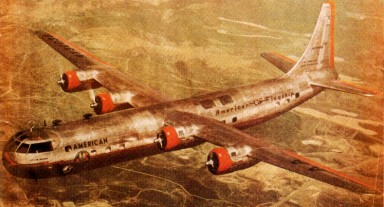
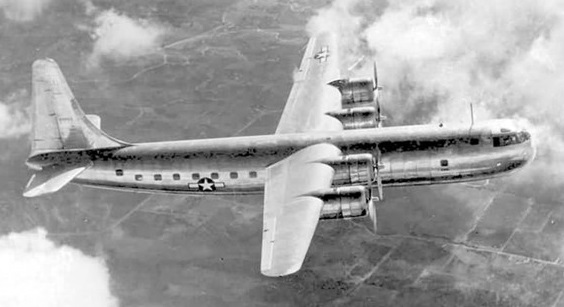
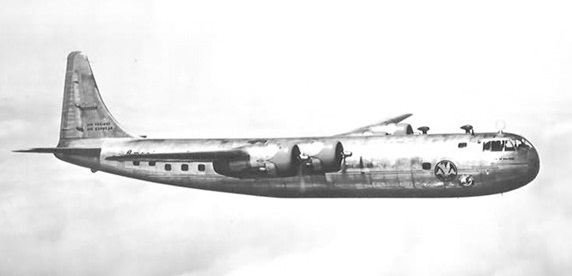
The Model 39 Liberator Liner was derived from the B-24 Liberator bomber via the PB4Y-2 Privateer patrol bomber and RY-3 Liberator Express transport. The design Model 39 started in early 1943.It retained the basic wing, landing gear, empennage, and engine nacelles of the Privateer; however, the fuselage was completely redesigned to carry 48 passengers in a day-time configuration or 24 at night. Like the Privateer, the Liberator Liner had four 1,350hp (1,000kW) Pratt & Whitney R-1830-94 Twin Wasp engines.
After the merger of Consolidated and Vultee the type was continued as the Convair Model 104. Convair was the trade name of Consolidated Vultee after the 1943 merger.
The US Navy became interested and signed a letter of intent for 253 aircraft in March 1944. The first prototype NX30039 (c/n 1) was flown for the first time on 15 April 1944 piloted by Phil Prophett and his crew. Due to design deficiencies the Navy cancelled its order but Convair received permission to purchase and complete the second prototype in Navy colours. Thus the second aircraft was completed as the Convair 104 XR2Y-1 and fitted with R-1830-65 engines NX3939 (c/n 2) and made it first flight on 29 September 1944. Eventually this aircraft was given the US Navy registration 09803.
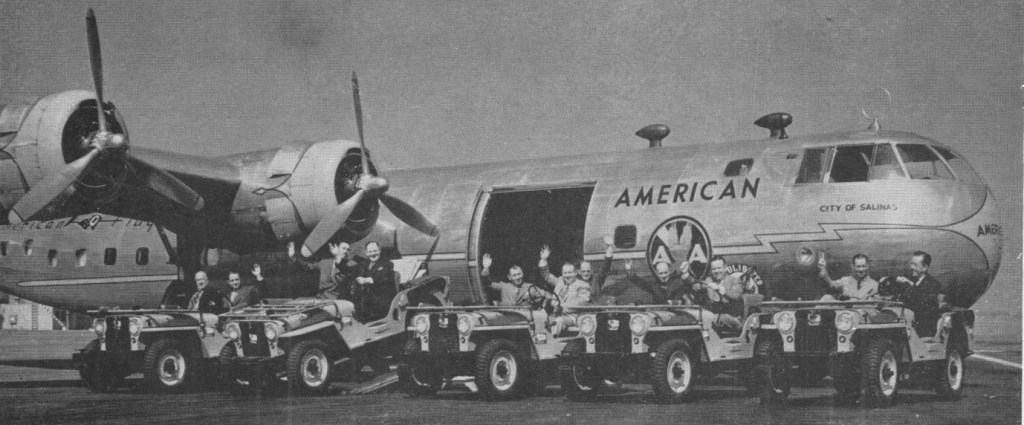
In a demonstration five jeeps were flown from Detroit to Los Angeles in 10 hours. A full cargo of fruit and vegetables made up the return load.
American Airlines operated the first aircraft, named City of Salinas (top), with the support of Convair for three months transporting fresh fruits between Salinas and El Centro, California and cities in the east like Boston and New York. A cargo of 18,500 lb (8,392 kg) could be loaded straight from flat trucks into the aircraft through large fuselage doors.
The Liberator Liner never really had a chance because of the many Douglas C-54s that were about to be released for civilian use. Both were scrapped late in 1945 after it became obvious that the design had no potential.
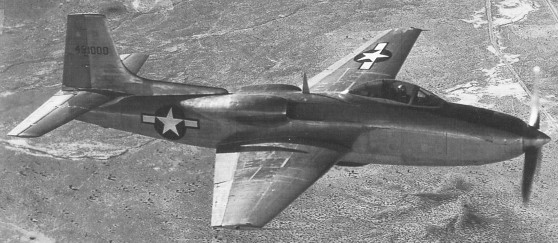
The Consolidated Vultee XP-81 (its newly-merged builder soon to be better known as Convair) was the first American aircraft powered by a turboprop engine. Ordered by the USAAF on 11 February 1944, the XP-81 was intended as a long-range escort fighter using compound power, with one 1230kW General Electric TG-100 turbo-prop and one 1701kg thrust Allison I-40 jet engine, eventually designated J33-A-5. When delays with the turboprop powerplant were encountered, the prototype XP-81 was flown on 11 February 1945 with a Packard V-1650-7 Merlin installed temporarily in the nose. The first flight with the intended turboprop engine followed on 21 December 1945 and the turboprop provided no advantage in performance over the Merlin. A second XP-81 flew in early 1946 to join the first machine in testing, but war’s end, the disappointing results with the TG-100, and the superiority of pure jet designs resulted in cancellation of an order for 13 YP-81 service-test aircraft. Both XF-81 airframes have survived derelict on a test range at Edwards AFB, California.
Wingspan: 15.39 m / 50 ft 6 in Length: 13.67 m / 44 ft 10 in Height: 4.27 m / 14 ft 0 in Wing area: 139.48 sq.m / 1501.35 sq ft Max take-off weight: 12700 kg / 27999 lb Empty weight: 5785 kg / 12754 lb Max. speed: 815 km/h / 506 mph Cruise speed: 442 km/h / 275 mph Ceiling: 10800 m / 35450 ft Range: 4000 km / 2486 miles Armament: 6 x 12.7mm guns or 6 x 20mm cannon planned, 1450kg underwing bombs
 All Aero