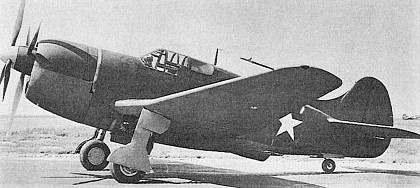
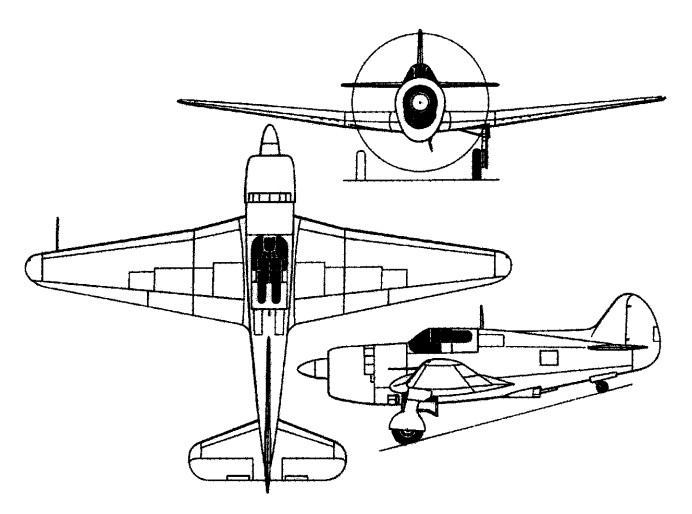
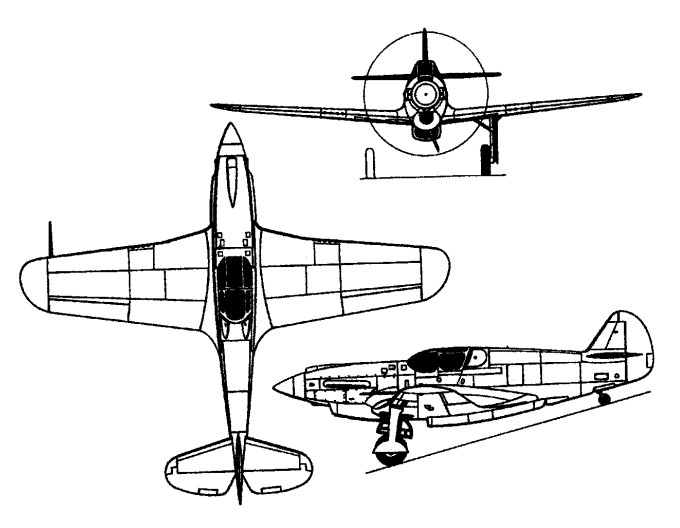
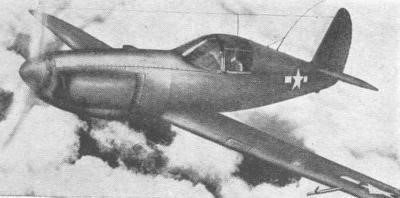
The Curtiss XP-62 was the final propeller-driven fighter built by Curtiss and its dimensions were exceeded only by the Boeing XF8B naval fighter. The XP-62 was ordered by the USAAF on 27 June 1941 with the 1715kW Wright R-3350 radial engine.
Curtiss XP-62 Article
Initial plans called for delivery of one XP-62 and one XP-62A and later for 100 production P-62 fighters, but it was clear almost from the beginning that the design was overweight, underpowered, and an uneconomical alternative to continued Curtiss production of the P-47G Thunderbolt.
Because it would be an effective testbed for dual-rotation propellers and a pressurized cabin, it was decided on 18 July 1942 to proceed with a sole airframe, the remaining machines on order being cancelled. Development of the XP-62’s cabin pressurisation system was delayed and the aircraft did not fly until early 1944. By then even the XP-62’s value as a test ship was marginal and the programme was terminated after a few hours’ flying time.
Engine: 1715kW Wright R-3350 radial Max take-off weight: 6640 kg / 14639 lb Empty weight: 5340 kg / 11773 lb Wingspan: 16.36 m / 53 ft 8 in Length: 12.04 m / 39 ft 6 in Height: 4.95 m / 16 ft 3 in Wing area: 39.02 sq.m / 420.01 sq ft Max. speed: 720 km/h / 447 mph Ceiling: 10800 m / 35450 ft Range: 1140 km / 708 miles
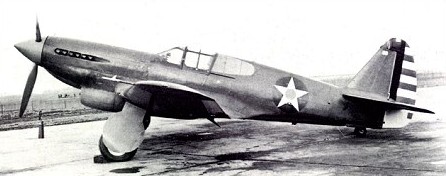
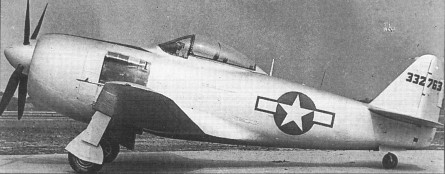
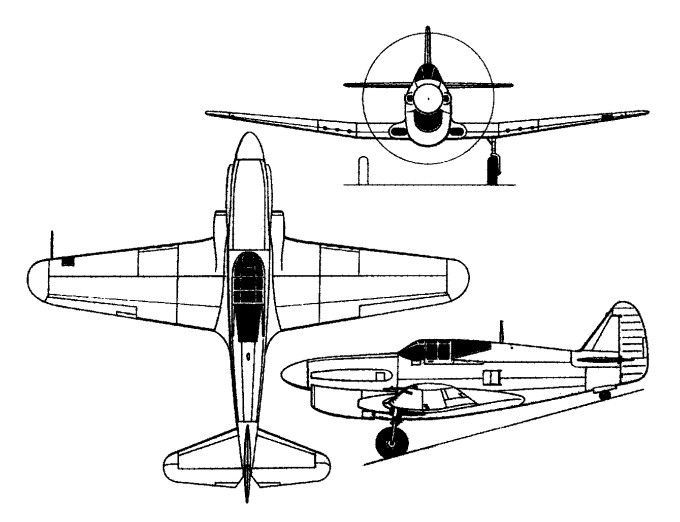
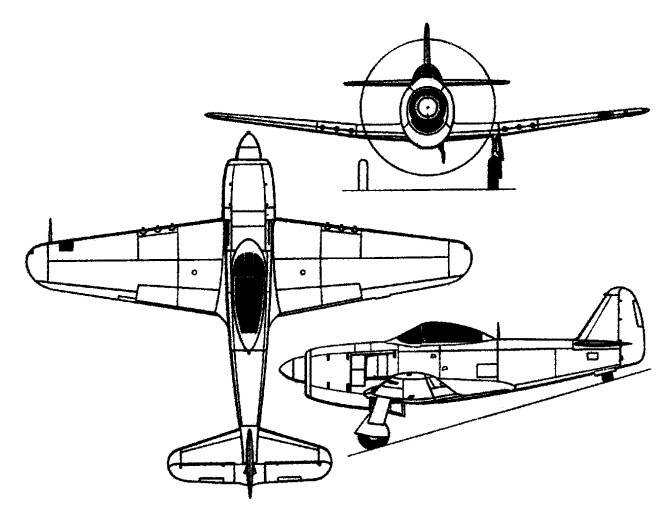
The P-60 designation applies to a family of widely different Curtiss fighters, each reflecting the urgency of the builder’s unsuccessful effort to develop a P-40 replacement. Though only four airframes carried out the P-60 programme, no fewer than nine designations were involved: XP-60, XP-60A, YP-60A, P-60A, XP-60B, XP-60C, XP-60D, XP-60E and YP-60E. The programme ran from early 1941 to December 1944 and was Curtiss’s last gasp in the propeller-driven fighter field, an effort which involved several engines, propellers, and canopy configurations. Four XP-60 prototypes were flown with various engines, and designations.
The XP-60 was a low-wing, conventional-gear fighter developed from the uncompleted XP-53 but powered by a 969kW Packard V-1560-1 licence-built Merlin, determined by the USAAF to be the best engine available in 1941. This airframe flew on 18 September 1941. With all Merlin-related resources soon committed to the P-51 Mustang programme, the USAAF then decided to employ the 1062kW Allison V-1710-75 in planned production-model P-60s. On 31 October 1941, 1,950 such fighters were ordered. Soon, however, it became evident that Curtiss’ Buffalo, New York, plant could be more usefully employed building P-47G Thunderbolts and the contract was cancelled. Three XP-60A airframes were tested with the Allison powerplant before being re-engined. The proposed YP-60A, which would have had a 1491kW Pratt & Whitney R-2800-10 radial, was another variation which did not result in a finished airframe. The XP-60B was to have been the original machine with a shift from Merlin to Allison power but apparently this change was never made.
YP-60E
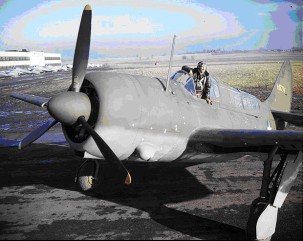
The XP-60C, converted in 1943 from one of the three Allison test ships, employed the R-2800 radial. This was the sole example tested with Curtiss Electric contra-rotating propellers. The XP-60D was the original machine retaining its Merlin but with enlarged tail surfaces and other minor changes. The XP-60E was another R-2800 radial-powered variant. Last in the series was the YP-60E, another conversion, again R-2800 radial-powered but now uncamouflaged and with bubble canopy, the result being formidable competition to the Curtiss P-40Q for the claim of most beautiful fighter ever built. In November 1942, the US Army ordered 500 Pratt & Whitney-powered P-60 fighters but the production contract was soon set aside in favour of other priorities. The P-60 programme ended by mid-1944, the last airframe being scrapped on 22 December 1944. In May 1944, Curtiss indicated to the AAF that it wished to abandon further work on the P-60 series fighters because of the disappointing results achieved with the XP-60C and XP-60E. Earlier, the P-60 had been eliminated from the production schedules, the number of aircraft on contract having been reduced to two. However, the AAF insisted on completion of one of the two aircraft still on order. These, originally ordered as YP-60As, had been redesignated as YP-60Es because the design modifications incorporated were most directly descended from the XP-60E. The YP-60E differed principally in having a 2,100hp R-2800-18 engine, a deeper cowling incorporating the ventral cooler intake, a cut-down rear fuselage and a bubble-type cockpit canopy. The sole YP-60E completed was flown on 13 July 1944, but only one further flight was made before the aircraft was transferred to Wright Field where it was eventually disposed of without further testing. Armament comprised six wing-mounted 12.7mm machine guns.
XP-60C Engine: Pratt & Whitney R2800. Prop: Curtiss Electric contra-rotating. Take-off weight: 4770 kg / 10516 lb Empty weight: 3945 kg / 8697 lb Wingspan: 12.60 m / 41 ft 4 in Length: 10.39 m / 34 ft 1 in Height: 4.57 m / 14 ft 12 in Wing area: 25.55 sq.m / 275.02 sq ft Max. speed: 621 km/h / 386 mph Ceiling: 10900 m / 35750 ft Range: 990 km / 615 miles
XP-60D Engine: Packard Merlin V-1560-1, 969kW
XP-60E Engine: Pratt & Whitney R2800. Take-off weight: 4658 kg Empty weight: 3758 kg Wingspan: 12.60 m / 41 ft 4 in Length: 10.34 m / 33 ft 11 in Height: 3.81 m / 12 ft 6 in Wing area: 22.55 sq.m / 242.73 sq ft Max. speed: 652 km/h / 405 mph
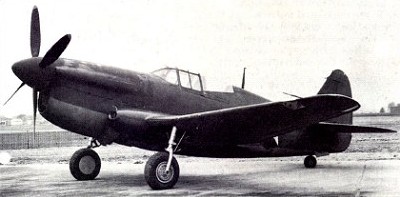
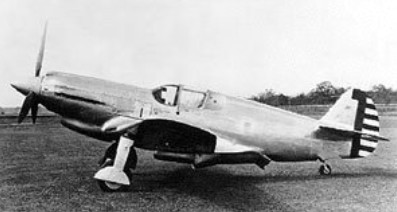
The smallish XP-46 was to be the answer for the deficiencies encountered in the P-40 Warhawk. With production of the P-40 Warhawk in full swing, designers at Curtiss had sold the idea of a more powerful successor to the US Army Air Corps, to which two prototypes were ordered on 29 September 1939. The design was to be powered by an Allison liquid-cooled engine of 1,150 horsepower fitted into a small frame. Armament – proposed but never fitted to either prototype – was consist of eight 0.30 caliber machine guns mounted in the wings with an additional two 0.50 caliber systems in the nose. The US Army ordered one XP-46 and one XP-46A, the XP-46A without armament to expedite the testing programme. Both were powered by the 857kW Allison V-1710-39 inline engine. The XP-46A flew first on 15 February 1941 and both machines were being tested by the time of Pearl Harbor. The XP-46 and XP-46A had moderately good performance except for their limited range of 523km. They were heavier and costlier than the P-40D, however, and seemed to lack ‘stretching’ potential for further development. The two airframes were markedly different from each other in detail, especially in cockpit layout, the XP-46 being viewed by pilots as cramped and uncomfortable, a ‘sweatbox’.
By the time the second prototype had flown as the XP-46A, the aircraft was already showing clear signs of never matching even the P-40. The XP-46 proved to be slow-responding for a fighter and the 400mph speed was never close to being reached. The samples were later scrapped. The Curtiss XP 46 produced data which was made available to North American in the design of the P 51 Mustang.
XP-46 Engine: 1 x Allison V-1710-39, 1,150hp / 857kW Length: 30.18ft (9.2m) Wingspan: 34.45ft (10.50m) Height: 12.99ft (3.96m) Maximum Speed: 355mph (571kmh; 308kts) Maximum Range: 325miles (523km) Rate-of-Climb: 2,000ft/min (610m/min) Service Ceiling: 27,999ft (8,534m) Crew: 1 Hardpoints: 0 Empty Weight: 5,624lbs (2,551kg) Maximum Take-Off Weight: 7,663lbs (3,476kg)
XP-46A Engine: 1 x Allison V-1710-39, 1,150hp / 857kW Take-off weight: 3320 kg / 7319 lb Empty weight: 2550 kg / 5622 lb Wingspan: 10.46 m / 34 ft 4 in Length: 9.19 m / 30 ft 2 in Height: 3.96 m / 12 ft 12 in Wing area: 19.32 sq.m / 207.96 sq ft Max. speed: 571 km/h / 355 mph Ceiling: 8990 m / 29500 ft Range: 523 km / 325 miles
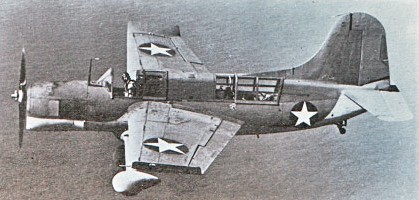
In response to a US Navy (USN) pro¬posal for a new dive bomber, Curtiss came up with its Model 84. From half a dozen designs submitted, those of Brewster and Curtiss were considered most suitable, both incorporating the new 1700 hp Wright R 2600 Cyclone 14 cylinder two row radial, conforming adequately with the Navy Bureau of Aeronautics specifica¬tion. Work on the design that would become the SB2C started in late 1938 and the US Navy Bureau of Aeronautics ordered a prototype, the XSB2C, on May 15,1939, and of the XSB2A1 (Brewster). However, before the prototype flew, the US Bureau of Aeronautics ordered 370 production models, designated SB2C 1. Named Helldiver, the aircraft turned out to be possibly the most complex single engined aircraft developed for the USN at the time. Its Wright R 2600 engine was reliable and proven, but the overall design was beset by design and systems problems.
The Helldiver was conceived as a mostly all-metal, low-monoplane wing design fielding a crew of two seated in tandem within a long cockpit – the pilot in the forward area and the tail gunner in the aft. The fuselage sported straight wings with a tapered trailing edge and rounded tips. The US Navy Helldiver was produced with a reinforced and retractable undercarriage as well as an arrestor hook for carrier operations. Ordnance could be held in the internal bomb bay (including a single torpedo) as well as along two underwing hardpoints. Standard armament included a pair of fixed forward-firing 20mm cannons (4 x 12.7mm heavy machine guns in earlier production models) in the wings and a pair of 7.62mm M1919 Browning air-cooled machine guns in the rear cockpit.
Curtiss and the Helldiver became the focus of several Congressional investigations, one being led by Harry Truman. Recommendations were made that production of the aircraft should be stopped or drastically curtailed because of seemingly insurmountable problems. Another major problem was that Curtiss did not have the production facilities to build its new aeroplane in quantity, so the USN erected a new factory at Columbus, Ohio, for that pur¬pose. As each problem was resolved, another appeared, but this did not deter the US Army from ordering the aircraft as the A 25. This contract was a direct result of the effectiveness of the Luftwaffe’s Junkers Ju 87 Stuka, and the army’s machines were to be constructed at the Curtiss plant in St Louis. However, as orders poured in for a range of variants, licensed pro¬duction was set up at the Canadian Car & Foundry and the Canadian Fairchild factories. Problems aside, the various factories would eventually deliver a total of 5,516 Helldivers, the last rolling off the production line in October 1945. The Curtiss design followed that of such predecessors as the P 40 Hawk and SBC Helldiver series, but had a short, stubby fuselage to comply with the stowage require¬ment. First flight of the prototype XSB2C-1 was made on December 18, 1940. During subsequent tests, excessive weight and positioning of the rear gun instal¬lations posed problems; the wing area had to be increased by nearly 10%, to 39.2 sq m (422 sq ft), to give adequate maximum lift; and the dive brakes were modified to reduce the excessive dive speed experienced during experimental flight tests. The prototype, powered by a Wright R 2600 8 of 1,700 hp, was plagued with problems. The prototype XSB2C 1 was badly damaged in a crash on February 9,1941, rebuilt and flying again by May 6 that year with numerous changes, and then completely destroyed in another crash on December 21 the same year. Production aircraft incorporated more than 800 changes including larger, self sealing fuel tanks, increased armour and a larger tail. Armament for the first 200 aircraft consisted of four 0.5in wing guns (later models had one 20mm cannon in each wing panel) and two 0.3in guns for the observer. The bomb bay could house a 1,00 lb bomb to be dropped in a steep dive slowed by the massive perforated wing flaps. Underwing pylons could carry depth charges or auxiliary fuel tanks. A production order for 370 SB2C 1s had been issued by the US Navy in November 1940, calling for deliveries to begin in December 1942, and from then onwards at a rate of 85 aircraft per month. By January 1941 the order had been increased to 578 machines; but matters were not improved when the prototype again crashed in December 1941, a fortnight after Pearl Har¬bor, due to wing and tail failure during a dive. This left the production team without a flight ¬test aircraft, but trials continued on mock¬ups and components, with improvements being made on the production design to include two 0.50 in (12.7 mm) guns (instead of one) in each wing, leakproof wing fuel tanks, plus cockpit and rear gun position armour plating. It seemed evident during 1941 that the initial delivery date would not be met, but the attack on Pearl Harbor in December 1941 provided the impetus to give the building programme top priority. Production flight testing began on June 30,1942 some six months behind schedule. The first four pro¬duction SB2C 1s were ‘hand built’ for further testing, with subcontractors being used to help accomplish the task in hand. New radar, IFF and radio installations were tested and approved, and in May 1942 1000 Helldivers were ordered from the Canadian Car and Foundry Company of Fort William, Ontario, Canada, 450 of which were ear¬marked for the Royal Navy in the UK. Armour, self-sealing tanks, protected fuel and oil lines, increased armament, a lengthened fuselage and a completely new tail unit with greatly enlarged fixed and moveable surfaces were incorporated in the production SB2C-1. The SB2C-1 (A-25) production version, 978 of which were built by Curtiss, was powered by a 1,267kW Wright R-2600-8 engine driving a three-bladed Curtiss Electric constant-speed propeller.
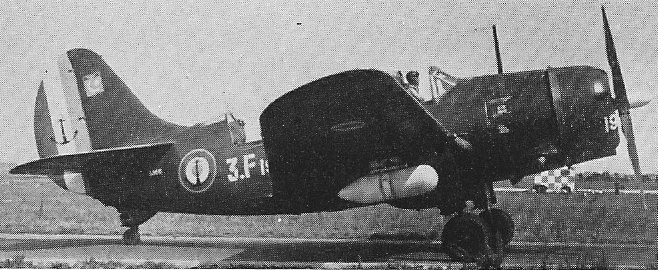
Between June 30, 1942 (the first flight of the first production SB2C 1) and December 1942, when the first aircraft were delivered to VS 9 Squadron, more testing for structural stabil¬ity and safe diving techniques had been carried out. Basic armament on initial pro¬duction SB2C-1s comprised two fixed, for¬ward firing 20 mm (0.79 in) cannon in the wings, a 0.50 in (12.7 mm) gun on a power-¬operated mounting in the rear cockpit, and a maximum internal bombload of 454 kg (1000 lb); powerplant was the 1700 hp Wright R-2600 8 radial. In December 1942, the first squadrons went aboard the new Essex class carriers but the aircraft were so deficient that they were declared non operational. Truman’s committee found the Helldiver “hopelessly behind schedule and that [by April 1943] Curtiss had not succeeded in producing a single SB2C usable as a combat airplane despite expensive self praise in advertising”. Curtiss lobbyists managed to secure further contracts and Curtiss engineers made constant redesigns. Two hundred Helldivers were built to this standard, but were still prone to arrester gear troubles, tailwheel collapse and other structural problems. After further stages in the modification programme, production of a further 778 aircraft took place under the designation SB2C-1C, with two 0.30 in (7.62¬mm) guns (on an improved mounting) in the rear cockpit, hydraulically operated wing flaps, and most of the earlier problems over¬come. This batch were fitted with non-retractable tailwheels and self sealing fuel tanks. On October 21, 1943, Squadron VB 17 aboard the USS Bunker Hill finally took the Helldiver into action when this carrier sailed to join the Essex and Independence in action against the Japanese at Rabaul harbour, New Guinea. Here, on November 11, with the loss of very few Helldivers, a considerable amount of damage was inflicted upon the enemy’s land based Zero squadrons and on shipping in the harbour. Up to November 1943, (when the Helldiver first went into action in the Pacific theatre of war) more than 880 design changes were made. Some were part of the Army-Navy standardisation programme to permit the production of an Army version of the Helldiver as the A-25, which later served with the Marine Corps. By the end of 1944 every large American carrier was equipped with a Helldiver bombing squadron. By the end of March 1944 the factory at Columbus, Ohio, had built 978 SB2C-1/-1Cs, and this included the XSB2C 2 which was fitted with huge Edo floats and intended for the Marines, delivered in 1943. The USAAF did not want the aircraft, and used them only as target tugs and for other mundane tasks. The next production version was the SB2C 3, of which 1112 were built with an uprated 1,416kW / 1900 hp R 2600 20 Cyclone engine and four blade propeller, deliveries starting in January 1944, and 1,112 examples of the SB2C-3 were produced This was followed by the SB2C-4, with the same powerplant, but capable of carrying eight 5 in (127 mm) rockets or another 454 kg (1000 lb) bombload under the wings. Some were equipped with radar and designated SB2C-4E, and a total of 2045 of the -4/4E versions were built. The subsequent 970 SB2C-5s had increased fuel capacity and were basically a long range variant of the -4E. During production, Curtiss and the USN strove to eliminate problems and improve the design. The ultimate production variant was the SB2C 5 (970 delivered, US Navy Bureau Numbers 83128 83751, 89120 89465), which had greatly improved combat effectiveness and APS 4 radar. Wing racks could carry an additional 1,000 lb of bombs or eight 5in high velocity aerial rockets. Handling characteristics were massively improved by perforating the dive brakes, while increased fuel capacity extended the type’s range.
SB2C-5
Nine hundred Helldivers built by Curtiss were purchased by the USAAF and given the Army designation A 25A Shrike. They were, however, used only for second line duties such as training and target towing, and 410 of them were transferred to the US Marine Corps in 1943 as SB2C 1As. Ten others were supplied to the Royal Australian Air Force.
A-25A Shrike
Canadian Car and Foundry was awarded a contract for 1,000 Curtiss SB2C Helldivers, designed to replace the Douglas SBD Dauntless. Iinitial development of this, the third Curtiss design to bear the name Helldiver, had begun in the US in 1939 and it was claimed that it would be capable of carrying a bigger bomb load, faster and farther than any other single engined dive bomber, but the aircraft was plagued by stability and structural problems. Both the prototype and the first production model suffered in flight structural failure and the first machines to go into service encountered so many problems that at least three major modification programmes were required before the type became acceptable. At Fort William one aircraft was destroyed and one damaged beyond repair during test flights. The first of the CanCar Helldivers, designated SBW, flew in July 1943 to be followed in August of that year by the first flight from an order of 300 Helldivers, designated SBF, which had been placed with Fairchild Aircraft in Quebec. The SBW was identical to those produced by Curtiss in the US being a single engined, two seat, monoplane dive bomber, capable of delivering a 1,0001b bomb load (the ‘dash numbers’ signifying similarity to the SB2C 1, 3, 4 and 5). It mounted two cannon in the wings and .50 machine gun in the aft cockpit. Apart from the fabric covered control surfaces, it was of all metal construction, with folding wings for aircraft carrier stowage and with dimensions designed to allow it to fit the standard carrier deck lifts. The SBW 1 was powered by a Wright R 2800 8 engine, but later variants were fitted with the R 2800 20 and had wing racks installed to bring the bomb load up to 2,0001b. The wings were also fitted with jettisonable fuel tanks and from the SBW 4 onwards had improved wing flaps and dive brakes installed. By the end of the war, when production was cancelled, CanCar had produced 833 of the original 1,000 ordered. This compares with a total of over 5,000 Helldivers produced in the United States. Almost all of the SBWs were delivered to the US Navy, but of the 450 original earmarked for the UK, 26 SBW 1s actually reached the Fleet Air Arm under Lend Lease in 1944, and these were never used operationally. There is some doubt as to whether these were actually taken into service, however. In addition to complete aircraft, CCF also provided a large number of components such as oleo legs and propeller blades for the Curtiss company. The Canadian Fairchild Company produced 300 SBF 1, 3 and 4 Helldivers (also corresponding to Curtiss built 1, 3 and 4 models), bringing the total production of the SB2C series to 7200 aircraft. The Helldiver’s main theatres of operation were the Philippines and the Pacific, where they replaced the SBD Dauntless as the standard USN scout/bomber during the second half of the war. They served in many naval air actions during the remainder of the Second World War and, in the case of the later models, for a while after. Two experi¬mental versions were the XSB2C 2 (an SB2C-1 (fitted with twin floats) and the XSB2C 6 (with a 2100 hp Wright R 2600 22 engine installed), but neither was considered suitable for series production. The RAAF enjoyed considerable success with the Vultee A 35 Vengeance in the dive bombing role against the Japanese. Wanting to enlarge its air force, Australia placed an order for 150 A 25A Shrikes. However, Gen George Kennedy was strongly critical of the A 35 mission despite excellent results, and stated that the Australians did not have enough pilots to fly the Shrikes, even though the RAAF denied this. Kennedy got his way and the A 35 Wing was withdrawn from New Guinea. In order to replace their Dauntlesses, worn out from combat in Indo China, France obtained an initial batch of SB2C 5s in 1950. They saw heavy action against communist forces and introduced napalm to the field of combat, operating from the carrier Arromanches and land bases and the final Helldivers were withdrawn from Aeronavale service in 1955. In view of the communist threat to Greece 42 SB2C 5s were delivered, starting in 1949, which formed a training unit and the 336th Light Bombing Squadron at Larisa, replacing the Supermarine Spitfire. The Helldivers saw considerable action in the civil war, attacking communist forces backed by the Soviets and Yugoslavs. The type was effectively retired in 1954, replaced by F 84s. Worried about communist threat, the USA supplied 25 SB2C 5s to Italy. However, the 1943 surrender agreement specified that Italy could not operate bombers so, in a bureaucratic move, the designation was changed to S2C 5. Some examples were used for anti submarine patrols and participated in NATO exercises. Further Helldivers were supplied to the Italian Air Force and two were gifted to the Italian Navy in the USA where a couple of Italian Navy pilots were trained on them, the only Italian S2C5 fitted with tailhooks. In 1953 the USA supplied the Italian Navy with 46 examples; they were never used, and by the early 1960s these aircraft were scrapped. The USA supplied Portugal with 24 SB2C 55 in 1950; they were operated by the Navy until 1952, then transferred to the Air Force. All were out of service by 1956. The Royal Thai Air Force received six SB2C 5s during 1951, and these aircraft were flown on combat missions against communist forces until 1957. In all, 5105 Helldivers were built at Columbus, 900 A 25As at St Louis, Missouri, 300 SBFs a Fairchild Canada and 834 SBWs at Canadian Car and Foundry. The last Helldivers soldiered on until June 1949. Production: a total of 5516 of all variants.
Model 84 SB2C Engine: 1700 hp Wright R 2600 Cyclone 14 cylinder two row radial
XSB2C-1 Engine: Wright R 2600 8, 1,700 hp Wing area: up to 39.2 sq m (422 sq ft)
SB2C-1 / SBF-1 Engine: 1700 hp Wright R¬2600 8 radial. Armament first 200 aircraft: 4 x 0.5in wing guns, 2 x 0.3in guns for the observer Armament: 2 x 20 mm (0.79 in) cannon, 1 x 0.50 in (12.7 mm) gun Internal bombload: 454 kg (1000 lb)
A 25A Shrike / SB2C 1A Engine: 1,267kW Wright R-2600-8 Propeller: three-bladed Curtiss Electric constant-speed
SB2C 1C Helldiver Engine: Wright R 2600 Span: 15.15 m (49 ft 8.5 in) Length: 11.18 m (36ft 8 in) Gross weight: 7533 kg (16607 lb) Maximum speed: 452 km/h (281 mph) Armament: 4 x 12.7mm heavy machine guns, 2 x 7.62mm M1919 Browning machine guns
XSB2C 2 Undecarriage: Edo floats
XSB2C 2 Engine: Wright R 2600 Span: 15.15 m (49 ft 8.5 in) Length: 11.18 m (36ft 8 in) Armament: 4 x 12.7mm heavy machine guns, 2 x 7.62mm M1919 Browning machine guns Undercarriage: twin float
SB2C 3 / SBF-3 Engine: 1,416kW / 1900 hp R 2600 20 Cyclone engine Propeller: four blade Span: 15.15 m (49 ft 8.5 in) Length: 11.18 m (36 ft 8 in) Gross weight: 7471 kg (16471 lb) Maximum speed: 473 km/h (294 mph)
SB2C-4 / SBF-4 Engine: 1,416kW / 1900 hp R 2600 20 Cyclone engine Propeller: four blade Armament: eight 5 in (127 mm) rockets or 454 kg (1000 lb) bombload
SB2C-4E Engine: 1,416kW / 1900 hp R 2600 20 Cyclone engine Propeller: four blade Radar equipped
SB2C 5 Engine: 1 x Wright Cyclone R 2600 20, 1,900 hp (1417 kW) at 2,1300 rpm at sea level. Wing span: 49 ft 8 5/8 in. (15.15m) Length: 36ft 8in. (11.17m) Height: 13ft 1.5 in. Wing area: 422 sq.ft. Empty Weight: 10,580lbs (4,799kg) Maximum Take-Off Weight: 16,288lbs (7,388kg) Cruising speed: 148 mph. Maximum speed: 260 mph (418kmh; 226kts) at 16,100ft. Maximum Range: 1,165miles (1,875km) Climb to 10,000 ft: 8.9min. Service Ceiling: 26,401ft (8,047m) Armament: 2 x 20mm cannons in the wings 2 x 7.62mm Browning M1919 machine guns on a flexible mount in the rear cockpit. Up to 2,000lbs of ordnance in the internal bomb bay including 1 x Mark 13-2 torpedo. Up to 500lbs of ordnance across two underwing hardpoints. Crew: 2 Hardpoints: 2 Radar: APS 4
XSB2C 6 Engine: 2100 hp Wright R 2600 22
CanCar SBW-1 Helldiver Engine: Wright R 2800 8, later R 2800 20 Armament: 2 x cannon and 1 x .50 machine gun Bomb load: 1,0001b, later 2,0001b
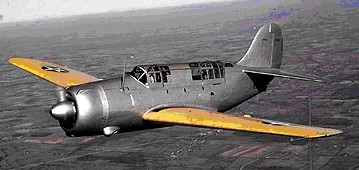
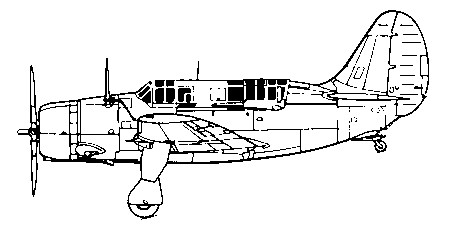
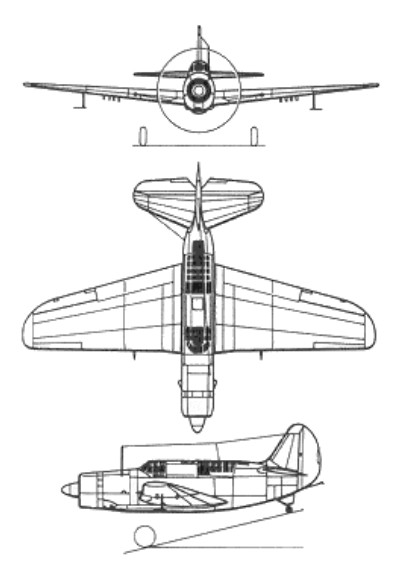
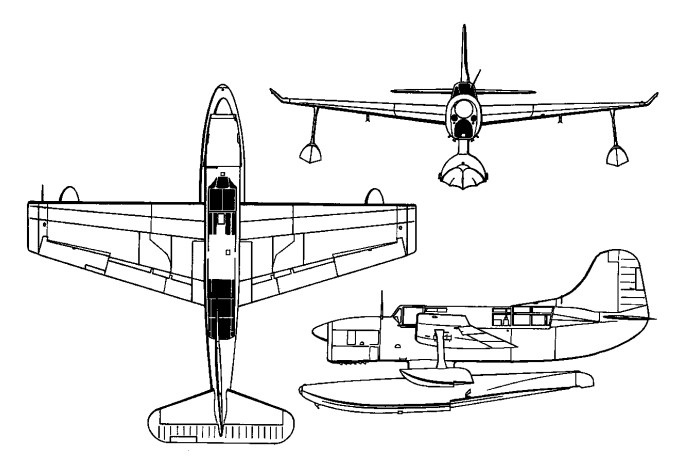
In 1937 the United States Navy was looking for a replacement aircraft for its Curtiss SOC Seagull series of biplane floatplane aircraft. The USN wanted a more modern, monoplane that could fulfill the same floatplane reconnaissance role but also include better performance and could operate from both land and water bases as needed. The undercarriage wasmrequired to be interchangeable. Curtiss and Vought were invited to produce prototypes through a May 1938 contract. The Curtiss prototype designated XSO3C-1 and the Vought XSO2U-1. The XSO3C-1 first flew on October 6th, 1939 and Curtiss receiced an order for production after some design revisions were ordered by the USN (including larger tail surfaces and upturned wingtips to aid in stability). The revised Curtiss Model 82A became the USN SO3C-1 for production under the early nickname of “Seagull”. The chosen powerplant became the 388kW Ranger V-770-6 series engine.
SOC3
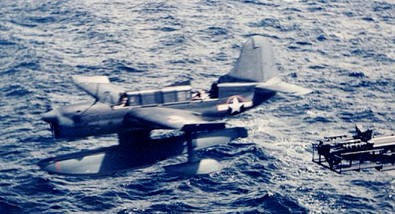
The SO3C fuselage sat atop a large centralized float running nearly the length of the aircraft while each wing underside was supported by smaller stabilizing floats fitted to struts. The pilot sat immediately behind the engine and the second crewmember, the designated observer (seated facing forward), was in a separate cockpit towards the rear of the aircraft, his position at the base of the vertical tail fin. Wings were mid-mounted and straight along the leading edge and tapered at the trailing edge, clipped at their tips (with a noticeable upturn to each tip end, needed to counter some initial instability problems in the prototype design). The empennage was dominated by a large vertical tail fin curved to provide the SO3C a most identifiable appearance. Horizontal stabilizers were fitted to either side of the vertical tail fin base. Construction was of all-metal, with the exception being the fabric-covered control surfaces. Power was a Ranger XV-770-8 inverted V12 engine of 600 horsepower. The engine provided a listed top speed of 172 miles per hour though cruising was limited to around 123 miles per hour. Range was roughly 1,150 miles (or about eight hours of flight time) and the service ceiling was limited to 15,800 feet. The SO3C held an empty weight of 4,284lbs with a maximum take-off weight equal to 5,729lbs.
The SO3C carried a single 0.30 caliber fixed, forward-firing M1919 Browning machine gun (operated by the pilot) and a 0.50 caliber Browning M2 heavy machine gun in the rear cockpit (operated by the observer). The SO3C could make use of a pair of 100lb general purpose bombs or 325lb depth charges, held externally underwing or on a central bomb rack. If fitted, the central bomb rack could field a single 500lb general purpose bomb.
The SO3C first flew in 1939 and was officially introduced for service in 1942. Users were limited to the United States Navy and the British Royal Navy (RN) Fleet Air Arm (FAA). The first SO3C-1 “Seagull” production models were received by the USN in July of 1942 and served aboard the USS Cleveland with their V-770-6 series engines. The performance of these was never truly up to the expected USN performance standards and the type was subsequently generally converted to radio-controlled target drones under the designation SO3C-1K. All SO3C-1s were removed as front-line service, by the USN, by the time the SO3C-2C production models became available.
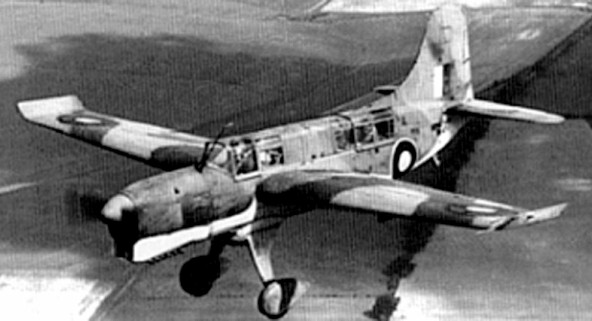
The SO3C-2 was based on the Curtiss Model 82B and was perceived as a more “navalized” form complete with arrestor gear and an under fuselage bomb rack on the landplane version to mount a 227kg bomb. 456 SO3C-2s were ultimately produced though 250 of these were sent to the UK under Lend-Lease under the designation of SO3C-1B (Curtiss Model 82C), although British records would seem to suggest that only 100 were received. However, these were ultimately delivered as SO3C-2C models featuring an uprated powerplant, hydraulic brakes for aircraft with wheeled landing gear and other improvements. The Royal Navy Fleet Air Arm utilized the SO3C as the Seamew Mk.I. When the newer SO3C-2C versions came online with the Royal Navy, these were simply designated as the “Seamew 1”. All of the British Seamews were relegated to general training elements and specific air gunnery/radio training groups. First Seamews were delivered to the Royal Navy in March of 1943. The first squadron fielding the Seamew became training 755 Squadron at Worthy Down (FN459), Hampshire, UK, in August of 1943. This squadron operated up until 1945. Two other training squadrons existed as the 744 and the 745 Squadrons based out of Nova Scotia, Canada. In all, 250 Seamew aircraft were received by the British. Later deliveries were cancelled after the availability of the American Vought OS2U “Kingfisher” floatplanes increased by January of 1944. Once the Kingfisher gained more ground, the Seamew quickly disappeared from the Royal Navy by the beginning of 1945. The “Queen Seamew” was the FAA designation for the SO3C-1K target drone production variant of the SO3C series. Thirty such examples were ordered under Lend-Lease but the order was cancelled before delivery.
Curtiss attempted to revive the aircraft by introducing the SO3C-3 (Curtiss Model 82C). The SO3C-3 boasted a lighter operating weight with a more powerful engine in the form of the SGV-770-8 series. While promising, only 39 examples were completed before production ended in January 1944. Any existing orders were cancelled outright. Plans to introduce an SO3C-3 variant with arrester gear, and production by the Ryan Aeronautical Corporation of SO3C-1s under the designation SOR-1, were cancelled. Some 795 SO3C were ultimately produced. The SO3C was deemed more-or-less obsolete by 1944 and retired completely from service by 1945.
Curtiss SO3C-2 Seamew Engine: 1 x Ranger VX-770-8 inverted V12, 600 hp Length: 36.84ft (11.23m) Wingspan: 37.99ft (11.58m) Wing area: 289.982 sq.ft / 26.94 sq.m Wing loading: 19.68 lb/sq.ft / 96.0 kg/sq.m Height: 14.99ft (4.57m) Maximum Speed: 172mph (277kmh; 150kts) Cruising speed : 109 kt / 201 km/h Maximum Range: 1,150miles (1,851km) Service Ceiling: 15,797ft (4,815m) Armament: 1 x 0.30 (7.62mm) caliber M1919 Browning machine gun in fixed, forward-firing position. 1 x 0.50 (12.7mm) caliber M2 Browning heavy machine gun in rear cockpit position. 2 x 100lb bombs OR 2 x 325lb depth charges underwing. 1 x 500lb on centerline bomb rack (land-based Seamews). Accommodation: 2 Hardpoints: 2 Empty Weight: 4,284lbs (1,943kg) Maximum Take-Off Weight: 5,730lbs (2,599kg)
Curtiss SO3C-2C Engine: 1 x 447kW Ranger SGV-770-8 inline Take-off weight: 2599 kg / 5730 lb Empty weight: 1943 kg / 4284 lb Wingspan: 11.58 m / 37 ft 12 in Length: 11.23 m / 36 ft 10 in Height: 4.57 m / 14 ft 12 in Wing area: 26.94 sq.m / 289.98 sq ft Max. speed: 277 km/h / 172 mph Cruise speed: 201 km/h / 125 mph Ceiling: 4815 m / 15800 ft Range: 1851 km / 1150 miles Armament: 1 x 7.62mm + 1 x 12.7mm machine-guns, 2 x 45kg bombs
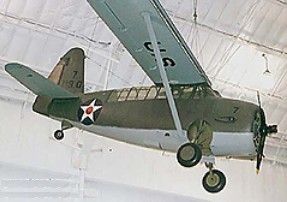
The 1938 Owl was designed as an observation aircraft. First flown in 1940 the US Army Air Corp ordered 203 but performance was lacking and they were redesignated as coastal sub hunter and liaison aircraft.
The 1938 Owl was designed as an observation aircraft. First flown in 1941 the US Army Air Corp ordered 203 but performance was lacking and they were redesignated as coastal sub hunter and liaison aircraft.
Of all-metal construction, slots extend over the full span of the wing, and when the slots are opened flaps are automatically lowered.
Engine: Pratt & Whitney R 1340-51 Wasp, 592 hp Length: 26.345 ft / 8.03 m Height: 9.285 ft / 2.83 m Wingspan: 40.781 ft / 12.43 m Wing area: 210.436 sq.ft / 19.55 sq.m Max take off weight: 5364.8 lb / 2433.0 kg Weight empty: 4231.4 lb / 1919.0 kg Max. speed: 191 kts / 354 km/h Cruising speed: 167 kts / 309 km/h Service ceiling: 20997 ft / 6400 m Wing load: 25.42 lb/sq.ft / 124.0 kg/sq.m Range: 609 nm / 1127 km Crew: 2 Armament: 2x cal.30 MG (7,62mm)
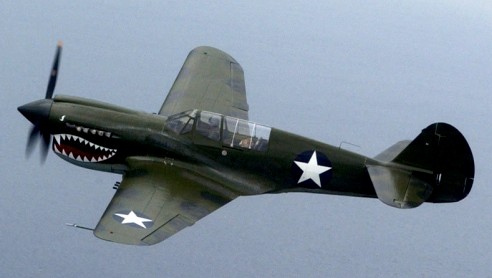
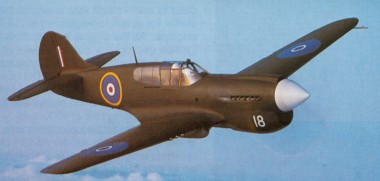
The XP 40, flown for the first time on October 14, 1938, and evaluated by the USAAC in the spring of 1939, brought Curtiss a $13 million contract for 524 produc¬tion aircraft, fitted with 1040 hp Allison V-1710 33 engines, in April of that year. The first three of these were used as prototypes, the first flight by a production P 40 (Curtiss Model 81 A) being made on April 4, 1940.
In April 1939 the US Army Air Corps awarded what was at that time the service’s largest ever fighter contract, covering 524 examples of the P-40. Deliveries of the P 40 order, which had meanwhile been reduced to 200, began in May 1940. Two 0.30 in (7.62 mm) guns were installed above the nose, in the upper engine cowling. The USAAC (or USAAF, as it became in June 1941) gave the name Warhawk to all variants of the P 40.
France, already a major customer for the radial engined Hawk 75A, ordered 140 Model 81 Als (similar to the P 40), but France had fallen before these could be delivered. They went instead to the RAF, operational with No 2 Squadron in August 1941. These aircraft were given the RAF name of Tomahawk I/IA/IB, equipped with four 0.303 in (7.7mm) Browning machine guns (two in the cowling, one in each wing), and used for low-level tactical reconnaissance. The next US production version was the P 40B, of which 131 were built for the USAAF, having the same powerplant as the P 40 but with an additional 0.30 in (7.62 mm) gun in each wing, the calibre of the two nose guns increased to 0.3 in (12.7 mm), and armour protection for the pilot. The RAF received the 110 similar Model 81 A2s of this type intended for France, naming them Tomahawk IIAs. Variant P 40C followed, being similar to the P 40B but with a further 0.30 in (7.62 mm) gun in each wing and improved self sealing fuel tanks. The first flight took place on April 10, 1941, and 193 were built for the USAAF. Again an order intended for France, for 635 similar Model 81 A3s, went instead to the RAF, these becoming the Tomahawk IIB. A further 295 of this version, supplied to the RAF, were passed on to China (100) and the USSR (195) under the Lend Lease programme.
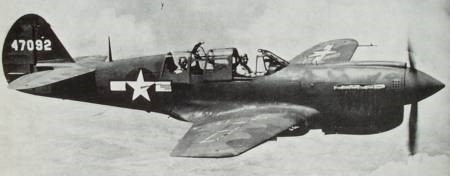
In 1941 Curtiss introduced major design changes which earned the Warhawk the new Curtiss Model number 87. The new model was powered by an 1150 hp Allison V 1710-39 engine, equipped with a modified propeller reduction gear which permitted the fuselage, to be shortened by 152 mm (6 in). The undercarriage main wheel legs were also shortened; the rear fuselage was redesigned, and a deeper nose radiator was fitted. Provision was made for carrying one 227 kg (500 lb) bomb or a 197 litre (43 Imp gal) drop tank under the fuselage, and smaller bombs could be carried under the wings. Armament was reduced to two 0.5 in (12.7 mm) machine guns in each wing, the over nose guns being removed. Most examples of this new fighter-bomber version went to the RAF, which received 560 Model 87 Als as the Kittyhawk 1. Twenty three similar Model 87 A2s were built for the USAAF as the P 40D, and two were retained by Curtiss for further development. An increase in armament to six 0.5in (12.7 mm) wing guns led to the Model 87 A3, of which the RAF allocation was 1500 as Kittyhawk 1As, under Lend Lease, while 820 were delivered to the USAAF as the P 40E.
Meanwhile, one of the two P 40Ds retained by Curtiss became the XP 40F (or Model 87D) with the installation of a Rolls Royce Merlin 28 V type engine; this made its first flight on June 30, 1941. The Rolls engine offered a far better performance at altitude than the Allison, as a result of which a total of 1311 Merlin engined P 40Fs were built for the USAAF. Approximately the first 260 of these had the old style P 40 fuselage, but later models had a 53 cm (20 in) longer, redesigned rear fuselage, which improved low speed stability. They had the American (Packard) built version of the Merlin engine, designated V 1650 1 and developing 1300 hp; the air intakes were removed from the top of the engine cowling. These Warhawks were able to carry a 644 litre (142 Imp gal) drop-tank under the fuselage. A consignment of 250 aircraft for the RAF, to have been called Kittyhawk II, were not delivered. US designations continued with the P40G, allocated to 60 of the original P 40s brought up to six wing gun standard in late 1940. The P 40H and J were experimental projects, which never left the drawing board the latter was to have utilized a turbocharged Allison powerplant, but was deemed unnecessary after the Merlin engined version appeared. The next Warhawk to go into production, and the heaviest, was the P 40K. Built in parallel with the P 40F, it had a 1325hp Allison V 1710 73 engine, the longer fuselage of the later F models, and a small dorsal fin. With an all up weight of 4540 kg (10000 lb), it was nevertheless capable of 579 km/h (360 mph). Twenty one were delivered to the RAF as Kittyhawk IIIs, and the USAAF received a total of 1279. The K series P-40s were produced by the Curtiss plant at Buffalo to a total of 1300 units during the latter part of 1942.
P-40K
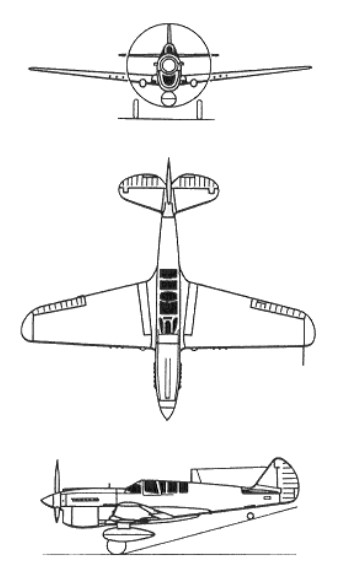
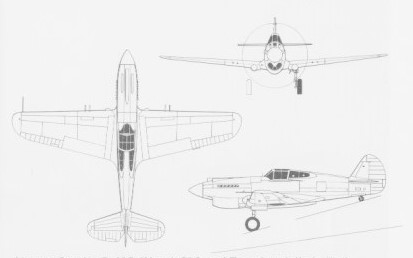
The first sub type, the K 1, appeared in August 1942 and replaced the “E” model on the production line. However the Merlin engined “F” series was also in full production by this time so the “F” and “K” continued until they were supplanted by the “L” and ‘V’ models respectively in late 1942. Early “F” and “K” examples had the original “short” fuselage of all previous P 40 models but, from the P-40F 5 onwards and the K 10 onwards a new one foot eight inch section was introduced aft of the existing fuselage. This additional section supported the fin and rudder but the tailplane and tailwheel were left in their original positions. The “K’s” were very similar to the preceeding “E’s” (and succeeding M’s” for that matter) with the primary difference being the engine; the V 1710 73 (or V-1710 F4R to use the GM Allison designation) of preceeding P 40E. The main external differences from the P 40E were the addition to the P 40K-1 and K 5s of a curved dorsal fin (some late “E’s” had this) and the introduction of flared or “fishtail” exhaust ports (round on E, F and L). On the P 40K 10 and K-15s the differences were the lengthened rear fuselage with fin and rudder moved aft of tail plane, a strenthened windscreen assembly with extra bracing strut incorporated in port side only of curved side panel, and a radio mast introduced aft of the cockpit. This version was followed by the P 40L, a lighter weight, ‘stripped’ development of the P 40F, often known for that reason as the ‘Gipsy Rose Lee’. It had two fewer wing guns, a lower fuel capacity, and no armour protection, but this resulted in only about 113 kg (250 lb) of weight being saved, and production was therefore limited to the 700 delivered to the USAAF. These were a mixture of long and short fuselage models, all powered by V¬1650 1 Packard Merlins. Similar to the K, but with the 1200 hp Allison V 1710 81 engine, the P 40M went in the main to the RAF (595 aircraft, also known as Kittyhawk IIIs), only five being delivered to the USAAF. Other major external changes which followed were the revised cockpit canopy on P 40N 5 and subsequent models and the fitting of smaller diameter mainwheels (from 30 inch down to 27 inch) except on the P 40N 40 CU. On the “N” model also, the old “ring and bead” type gunsight atop the fuselage nose gave way to a single “bead” just aft of the engine; undercarriage position pins (introduced on the P 40M) protruded above the wing just aft of the undercarriage housing billets when the undercarriage was down; and the large external rear view mirror fitted to most P 40E, F, K, L and M on the support port edge of the windscreen rim was replaced by a smaller interior mirror centrally placed.
Numerically, the major production version in the Warhawk series, and the last, was the P 40N of 1943 after an extensive programme of structural weight saving to provide a higher performance. The USAAF received 4634 of this variant, and the RAF 586 as the Kittyhawk IV. They were powered mainly by the 1200 hp Allison V 1710 81 or 99 engine, but the final 220 of the batch had a 1360 hp V¬1710 115 powerplant. Armament comprised four 0.5 in (12.7 mm) wing guns on early models, and six of the same calibre on the later ones, which were also equipped to carry a 680 kg (1500 lb) bombload. The aircraft also featured a lengthened fuselage and redesigned canopy. Thirty P 40Ns were converted to two seat advanced train¬ers; two Ks and one N were converted (two of them with ‘bubble’ canopies) to XP 40Q to test engine cooling equipment, wing radiators and a four blade propeller.
Three hundred P¬40Fs and Ls were redesignated P 40R1 and R2 respectively when they were refitted with V 1710 81 engines.
Curtiss TP-40N-30CU two-place trainer.
Prior to the final termination of P-40 development, some effort was expended in combining aerodynamic refinement with increased power to produce a higher-performance model. A P-40K airframe was fitted with an Allison V-1710-121 engine rated at 1,425hp for take-off and 1,100hp at 7620m. Semi-flush low-drag radiators were incorporated in the wing centre section and a four-bladed propeller was fitted, the designation XP-40Q being assigned. A second, similarly re-engined P-40K for the P-40Q programme reintroduced the nose radiator scoop, but featured an all-round vision bubble-type canopy (previously tested on a P-40N). The definitive XP-40Q (converted from a P-40N-25 airframe) had clipped wing tips, the cut-down aft fuselage with bubble canopy and coolant radiators faired into the wing leading edges. Four 12.7mm guns were carried but proposed production models were to have carried, either six 12.7mm or four 20mm weapons. No production was undertaken.
P-40Q
When Warhawk production ended in November 1944, Curtiss had built, in addition to the XP 40, a total of 1704 Model 81s and 12 034 Model 87s; annual output being at its highest in 1942 (4453 built) and 1943 (4258), with the greatest number in any one month occurring in August 1943, when 463 were delivered. In addition to widespread use by the USAAF in Europe, North Africa and the Pacific theatres of war, aircraft from the Lend Lease and ex French allocations to the RAF (1180 Tomahawks and 3262 Kittyhawks) were also employed by the Royal Canadian, South African, Australian and New Zealand Air Forces; these too served in the Far East, the Western Desert and Italy as well as in the European theatre. China and the USSR also received P 40s under Lend Lease, the USSR receiving a total of 2097 aircraft. Their chief role was as close support low level attack aircraft.
The principal versions were P-40 and, in British service, Tomahawk Mk 1(339 aircraft with the 1,160-hp/865-kW V-1710-19 engine), P-40B and Tomahawk Mk IIA (241 aircraft with heavier armament), P-40C and Tomahawk Mk IIB (1,123 aircraft with a revised fuel system), P-40D and Kittyhawk Mk 1(582 aircraft of a P-40C version with 1,150-hp/857-kW V-1710-39, shorter fuselage and shorter landing gear legs), and P-40E and Kittyhawk Mk IA (3,820 aircraft with two additional wing guns).
A total of 301 P-40 were allocated to the RNZAF. Thirteen squadrons covered the Pacific region. The P-40 was the only fighter used by the RNZAF in air-to-air combat, claiming 99 victories.
A total of 13,783 were built, making it the third most numerous American fighter of the war. The final delivery, P-40N-40 and P-40R, was in December 1944.
XP 40 / Model 75P Engine: 1160 hp supercharged Allison V 1710 19
P 40 Warhawk / Model 81 A Engine: 1040 hp Allison V¬1710 33 Armament: Two 0.30 in (7.62 mm) guns
Model 81 Al / Tomahawk I/IA/IB Engine: 1,160-hp/865-kW V-1710-19 Armament: four 0.303 in (7.7¬mm) Browning machine guns
P 40B / Model 81 A2 / Tomahawk IIA Engine: 1040 hp Allison V¬1710 33 Armament: 4 x 0.30 in (7.62 mm) guns
P40C / Model 81 A3 / Tomahawk IIB Engine: Allison V-1710-33, 1040 hp Wingspan: 37 ft 3.5 in / 11.36 m Length: 31 ft 8.5 in / 9.7 m Height: 12 ft 4 in / 3.75 m Empty weight: 5812 lb / 2636 kg Loaded weight: 7459 lb / 3393 kg Max speed: 345 mph / 555 kph ROC: 2650 fpm / 807 m/min Service ceiling: 30,000 ft Range int.fuel: 730 mi / 1175 km Armament: 6 x 0.303in Bombload: nil Seats: 1
Model 87 / P-40D Engine: 1150 hp/857-kW Allison V 1710-¬39 External load: one 227 kg (500 lb) bomb or 197 litre (43 Imp gal) drop tank + small bombs Hardpoints: 3 Armament: 4 x 0.5 in (12.7 mm) machine¬guns
Model 87 Al / Kittyhawk 1 Engine: 1150 hp/857-kW Allison V 1710-¬39 External load: one 227 kg (500 lb) bomb or 197 litre (43 Imp gal) drop tank + small bombs Hardpoints: 3 Armament: 4 x 0.5 in (12.7 mm) machine¬guns
Model 87 A2 / P 40D Engine: 1150 hp Allison V 1710¬39 External load: one 227 kg (500 lb) bomb or 197 litre (43 Imp gal) drop tank + small bombs Hardpoints: 3 Armament: 4 x 0.5 in (12.7 mm) machine¬guns
Model 87 A3 / Kittyhawk 1A / P-40E Warhawk Engine: one Allison V-1710-39, 1,150-hp (857-kW). Maximum speed 335 mph (539 kp h) at 5,000 ft (1,525 m) Climb to 10,000 ft (3,050 m) in 4 minutes 48 seconds Service ceiling 29,000 ft (8,840 m) Range 850 miles (1,368 km). Empty weight: 6,350 lb (2,880 kg) Maximum take-off weight: 9,200 lb (4,173 kg). Wing span 37 ft 4 in (11.38 m) Length 31 ft 2 in (9.50 m) Height 10 ft 7 in (3.22 m) Wing area: 236.0 sq ft (21.92 sq.m). Armament: six 0.5-in (12.7-mm) machine guns, up to 700 lb (318 kg) of bombs.
Model 87D / XP 40F Engine: Rolls Royce Merlin 28 V type
Hawk 87D / P 40F Warhawk / Kittyhawk II Engine: Packard V-1650-1 Merlin, 1300 hp Wingspan: 37 ft 3.5 in / 11.36 m Length: 31 ft 2 in / 9.55 m or 33 ft 4 in / 10.14 m Height: 12 ft 4 in / 3.75 m Empty weight: 6550 lb / 2974 kg Loaded weight: 8720 lb / 3960 kg Max speed: 364 mph / 582 kph ROC: 2400 fpm / 732 m/min Service ceiling: 30,000 ft Range int.fuel: 610 mi / 976 km Drop-tank capacity: 644 litre (142 Imp gal) Armament: 6 x 0.50in, 281 rds each Bombload: 1000 lb Seats: 1
P40G Warhawk Armament: six wing gun
P 40K / Kittyhawk III Engine: 1325¬hp Allison V 1710-73 / V-1710 F4R All up weight: 4540 kg (10000 lb) Max speed: 579 km/h (360 mph) Vne: 478 mph (415 kt)
P 40K-1 Engine: 1325¬hp Allison V 1710-73 / V-1710 F4R
P 40K-10 Engine: 1325¬hp Allison V 1710-73 / V-1710 F4R
P 40L Engine: V¬1650 1 Packard Merlins
P 40M / Kittyhawk III Engine: 1200 hp Allison V 1710 81
Hawk 87M / Curtiss P-40N / Kittyhawk IV Engine: 1 x Allison V-1710-81 or –99, 1,360hp / or 1360 hp V¬1710 115 Length: 33 ft 4 in (10.2m) Wingspan: 37 ft 4 i n (11.42m) Wing area: 235.947 sq.ft / 21.92 sq.m Height: 12.37ft (3.77m) Empty Weight: 6,005lbs (2,724kg) Maximum Take-Off Weight: 8,858lbs (4,018kg) Wing load: 37.52 lb/sq.ft / 183.0 kg/sq.m Maximum Speed: 378mph (609kmh; 329kts) at 3210m Range: 240miles (386km) Maximum range: 938 nm / 1738 km Rate-of-Climb: 2,143ft/min (653m/min) Service Ceiling: 38,156ft (11,630m) Armament: 6 x 12.7mm M2 Browning air-cooled machine guns 2,000lbs of external ordnance Accommodation: 1 Hardpoints: 3 (centre fuselage and two underwing)
P 40N-1-15 Engine: 1200 hp Allison V1710 81. Span: 37 ft 4in (11.42m). Length: 33 ft 4in (10.2m). Max wt: 8850 lbs (4018 kg). Max speed: 378mph (609 kph).
P-40N-20-35 Engine: Allison V-1710-99 Wingspan: 37 ft 4 in Length: 33 ft 4 in Height: 12 ft 2 in Empty weight: 6550 lb Loaded weight: 8850 lb Max speed: 375 mph Cruise: 300 mph Normal range: 610 mi
P-40N-40 Engine: Allison V-1710-115, 1200 hp
XP-40Q Engine: Allison V-1710-121, 1,425hp take-off /1,100hp at 7620m Propeller: four-bladed Armament: Four 12.7mm guns
P-40Q Wingspan: 10.75 m / 35 ft 3 in Length: 10.16 m / 33 ft 4 in Max. speed: 679 km/h / 422 mph
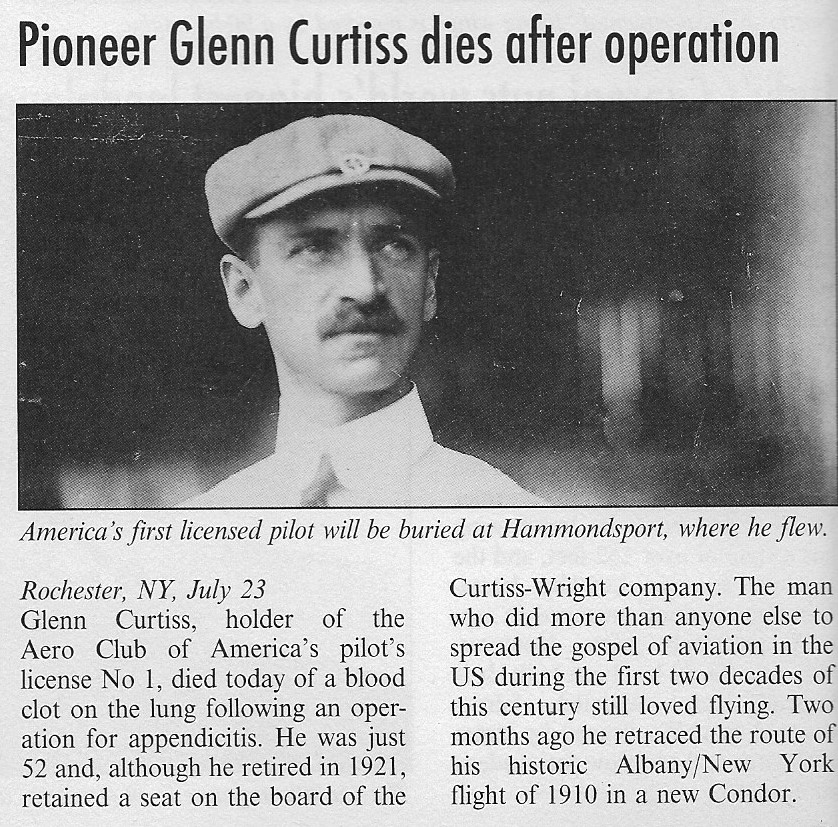
Curtiss, who was a motorcycle fiend and engine genius, had actually asked the Wright Brothers if they wanted one of his 50 hp engines when he went to discuss some aviation data, but they said no, unaware that Curtiss and the AEA would soon be a major competitor.
As a member of Alexander Graham Bell’s Aerial Experiment Association (AEA), Glenn Curtiss built the engines for the Red Wing and the White Wing early in 1908, piloted his first plane, and built and flew the June Bug that June.
The AEA disbanded in 1909, and Curtiss formed the Herring-Curtiss Company on 20 March 1909 with Augustus Herring. Its first customer was the Aeronautic Society of New York. Curtiss delivered his first plane to them, the Curtiss No. 1, built to their specifications, on May 29, 1909.
When the Herring partnership split up, Curtiss founded the Curtiss Exhibition Company, the Curtiss Aeroplane Company in December 1911 in Hammondsport, New York, and the Curtiss Motor Company.
As business expanded, the Hammondsport factory became unable to fill all the orders. Curtiss extended its operation to Buffalo, where it rented the site of the company that had supplied Curtiss with his first bicycle engine years before. Curtiss also opened a new plant in Toronto. The quarters in Buffalo quickly became inadequate, and a new 120,000-square-foot (1,115-square-meter) building was constructed that became the company headquarters. Soon after, a new plant that sprawled over 72 more acres was added.
1909-early 1911 – While A, B, and C models are known (or thought) to have existed during this historically important period for Curtiss, where they were applied is not. Numerical assignments, as well, were guesses—Model 2 has appeared for both Rheims Racer and Charles Willard’s Banshee Express but not verified (Willard unjustifiably claimed authorship of that design). By 1910, Model D had been established, in some references tied to Curtiss-Herring, which was actually built after the partners’ dissolution. But there were at least 9 aircraft known to have been produced in this period, the “official” Model D, in one of its many forms, formally appeared in the first company catalog on mid-1911 along with its companion Model E. Production of concurrent Curtiss-Aero Society Model Ds unknown but the design quickly evolved into the Curtiss D (Standard). A Herring-Curtiss, for which plans were published for home-builders of the time, differed from Curtiss D with its ailerons on the front wing struts instead of the rear wing struts. Herring’s contribution, besides that as a temporary partner, was his alleged invention of a gyroscopic stabilization device (claimed, but unsubstantiated, 1909 US patent #12,256), which would circumvent the Wright’s aileron patents, but which was never used on any Curtiss machine.
Curtiss designed and built the following planes during 1908 – 4, 1909 – 2, 1910 – 4, 1911 – 5, 1912 – 3, 1913 – 3, total – 21.
In 1916, the Curtiss Aeroplane & Motor Company, Ltd. went public with Curtiss as president. By that time Curtiss had become the world’s largest aviation company, employing as many as 18,000 at Buffalo and 3,000 at Hammondsport.
The Curtiss Aeroplane and Motor Company was created 13 January 1916 from the Curtiss Aeroplane Company of Hammondsport, New York and Curtiss Motor Company of Bath, New York. Burgess Company of Marblehead, Massachusetts, became a subsidiary in February 1916. In 1916 the company moved its headquarters and most manufacturing activities to Buffalo, New York, where there was far greater access to transportation, manpower, manufacturing, and much needed capital. It became the largest aircraft manufacturer in the world during World War I, employing 18,000 in Buffalo and 3,000 in Hammondsport, New York. Curtiss produced 10,000 aircraft during that war, and more than 100 in a single week. A third factory (Garden City, Long Island, NY) became boat hull department for flying-boat production. Burgess Company of Marblehead, Massachusetts, became a subsidiary in February 1916. Aircraft built during First World War included A and AH biplanes for USN, Models D and E for U.S. Army, Model F flying-boats for USN, H-4 Small Americas, H-12 Large Americas and H-16 Large Americas (plus 150 by Naval Aircraft Factory). Best-known were JN-4/JN-6 “Jenny” trainers (5,000 built, plus 1,200 by Canadian Curtiss), HS flying-boats, MF flying-boats, N-9 floatplanes, British S.E.5a fighters, Orenco D fighters, and 5L flying-boats. Total wartime was 4,014 aircraft and 750 aero engines.
After the war, Curtiss, fell on hard times. In August 1920, the company was forced into receivership. Clement Keys, a Canadian financier, obtained funds to manage the company’s debt and led it again to sound financial status. The Buffalo facility became the major facility, and the company remained the largest U.S. aircraft company through the 1920s.
Postwar production, mostly in 1920s, included NC- 1/2/3/4 transatlantic flying-boats (four only); Oriole, Eagle, and Seagull civil types (little success achieved with the few built). Followed by a series of Army (R-6/R-8 etc.) and Navy (CR/R2C/R3C etc.) racers. Twelve B-2 Condor biplane bombers were followed by PW-8 biplane fighters, P-1/P- 6 U.S. Army Hawks, F6C U.S. Navy Hawks, and O-1/11/39 and A-3 Falcons for U.S. Army. The few Carrier Pigeons and Larks were followed by one Tanager biplane, which won 1929 Guggenheim Safe Airplane Competition. Subsequently produced N2C Fledgling, F8C/OC Falcon, and F8C/02C Helldivers for USN.
Foundation of Curtiss-Robertson division in 1928 was followed by, on July 5, 1929, Curtiss Aeroplane and Motor Company became part of Curtiss-Wright Corporation, together with 11 other Wright and Curtiss affiliated companies. In 1929, shortly before Curtiss died, the Curtiss Aeroplane & Motor Company, Ltd., merged with the Wright Aeronautical Corporation to form the Curtiss-Wright Corporation.
1930
Neither Curtiss or Wright successfully made the transition to the jet age and substantially all aircraft assets were sold to McDonnell and North American by 1950.
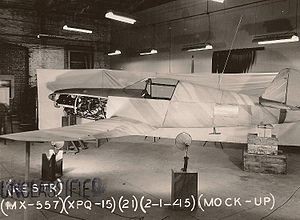
The Culver XPQ-15, also known as the XTD3C-1, was an American target drone developed by the Culver Aircraft Company late in World War II. The XPQ-15 was a low-wing monoplane of conventional design. It was powered by a Franklin O-405 opposed piston engine. Design work began in 1943.
Four examples of the XPQ-15 were built for evaulation by the United States Army Air Forces in 1945; two additional aircraft were tested by the United States Navy as the XTD3C-1. No production contract was placed.
Variants:
XPQ-15 USAAF variant; four produced.
XTD3C-1 USN variant; two produced, BuNos 29665-29666.
XPQ-15 Engine: 1 × Franklin O-405, 200 hp (150 kW) Maximum speed: 220 mph (354 km/h; 191 kn)





 All Aero