Curtiss-Wright CW-25 / AT-9 Fledgling / Jeep

With the introduction of new high-performance twin-engine aircraft at the U.S. Army Air Corps at the start of the Second World War in Europe it was evident that new aircraft types would be needed for advanced training of future pilots. The gap between the T-6 and types like the B-25 and B-26 bombers had to be closed with a flying course on a twin-engine trainer. Also for the new Lockheed P-38 twin-engine fighter an advanced training course on a twin-engine type was considered as necessary. Beech and Cessna already had their AT-11 Kansas and AT-17 Bobcat twin-engine trainers, but these were more suitable for crew training.

At Curtiss the design and development was started on a twin-engine advanced trainer strictly for pilot training with two-seat capacity for instructor and pilot student which had the take-off and landing characteristics of a light bomber aircraft.

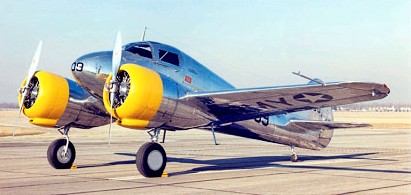
Owing much of its low-wing cantilever monoplane design to the earlier CW-19 trainer, the AT-9 was a relatively small twin-engine low-wing monoplane fitted with two radial air-cooled engines. It only had capacity for two seats; entrance was on both sides with a car-type door. The main wheels retracted partially backwards into the engine nacelles and the tail wheel was non-retractable. The CW-25 was powered by two Lycoming R-680-9 radial engines.

The single CW-25 prototype acquired for evaluation was built with a welded steel-tube fuselage covered with fabric. Also wing and tail planes were fabric covered. The production AT-6 was planned to be manufactured from aluminum with a modern monocoque construction and stressed-skin wings.
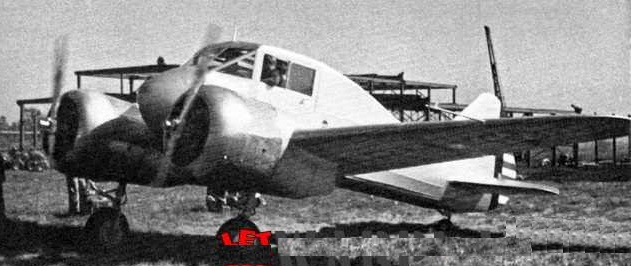
Prototype

The prototype AT-9 first flew in 1941 and evaluation proving satisfactory, the type was ordered into production under the designation AT-9, officially named the Fledgling, the AT-9 was almost universally known as the Jeep. The production examples differing from the prototype by being of all-metal construction.

A total of 491 AT-9s was produced and these were followed into service by 300 generally similar AT-9A aircraft. They remained in use for a comparatively short time, for the USA’s involvement in World War II in late 1941 resulted in the early development of far more effective training aircraft.

Designated at Curtiss-Wright as CW-25, the new advanced trainer received the military type designation AT-9. Initially it was named the ‘Fledgling’ but it became much more known by its later name the ‘Jeep’. The flight characteristics of the new trainer were purposely made more demanding for the student pilot. Basically it was the intention that future P-38 pilots would made their first solo flight on this fighter after a 70 hours transition training on the AT-9.

When the test flying of the CW-25 was successfully completed in 1941 the Army Air Corps ordered in total 492 AT-9 production models.
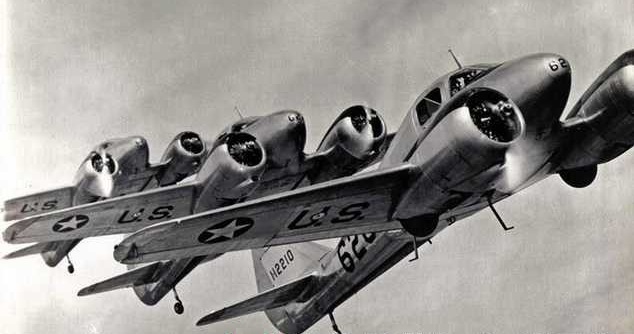
Later a final order was placed for 300 additional slightly improved AT-9A models. Main difference was a later model Lycoming R-680-13 engine with slightly more power output (300 hp), and the undercarriage retraction hydraulics were revised and improved.

The AT-9 and AT-9A was produced at Curtiss between 1941 and 1943; production of the last AT-9A was completed in February 1943. The unit costs of the AT-6 model was U.S. $44,965. The unit costs of the AT-6A dropped to U.S. $ 40,286.

Production totals:
CW-25 prototype:
1

AT-9:
41-5754 to 41-5894 (150)
41-11931 to 41-12271 (341)

AT-9A: 42-56853 to 42-57152 (300)

Total: 792 including prototype

The AT-9 and the later AT-9A was assigned from 1942 on to various military flying schools. Although it was quite demanding to fly, it was fully aerobatic and much more maneuverable that the other twin-engine advanced trainers like the AT-11 and AT-17. In spite of this, there were continuous maintenance problems and because of its more difficult flying properties it had a quite high accident rate.
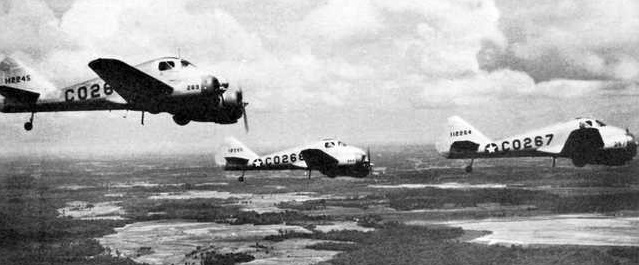
Formation of AT-9 coded ‘CO’ coded based at the Advanced Twin Engine Flying School at Columbus Mississippi. This flying school had some forty AT-9’s on its inventory

Since the AT-9 could not be used for crew training its operational use was in most cases restricted to P-38 training. By the end of 1943 most AT-9’s were removed from flying status.

Since it was only a two-seater it was hardly used as a civil plane after the war when many aircraft were offered as surplus. Some were used after the war as instructional airframes at technical schools.
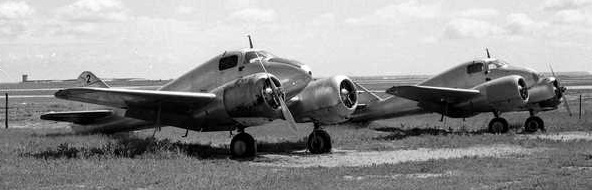
AT-9’s at Tulsa, Oklahoma, 18 May 1953.

The U.S.A.F. Museum at Dayton Ohio has an AT-9 on display carrying the serial number 41-12150 and field registration ‘909’. It was completely restored for static display inside the museum. The Pima Air & Space Museum in Arizona has a recovered and incomplete AT-9A wreckage (serial no. 42-56882) for future restoration.

Gallery

Curtiss AT 9 Fledgling
Engine: 2 x Lycoming R-680-9 radial, 295 hp (220 kW)
Wingspan: 12.29 m / 40 ft 4 in
Length: 9.65 m / 31 ft 8 in
Height: 3.00 m / 9 ft 10 in
Wing area: 21.65 sq.m / 233.04 sq ft
Wing loading: 25.83 lb/sq.ft / 126.0 kg/sq.m
Max take-off weight: 2722 kg / 6001 lb
Empty weight: 2087 kg / 4601 lb
Max. speed: 171 kts / 317 km/h / 197 mph
Cruise speed: 152 kts / 282 km/h / 175 mph
Range: 652 nm / 1207 km / 750 miles
Service ceiling: 5,791 m / 19,000 ft
Climb to 3,050 m (10,000 ft): 8.6 min
Crew: 2
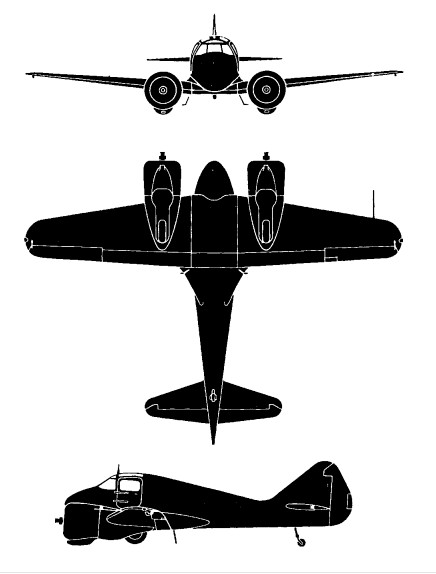
Curtiss-Wright CW-22 / SNC-1 Falcon

SNC

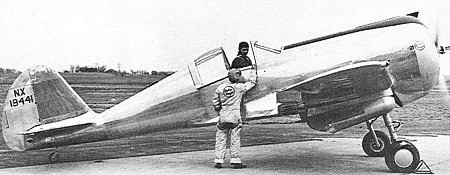
Two CW-19 company demonstrators were built, c/n 19R-10 (N16417) in January 1937 and A19R-14 (NC16421) also in 1937. N16417 was later converted to CW-22 specifications and sold in May 1940.
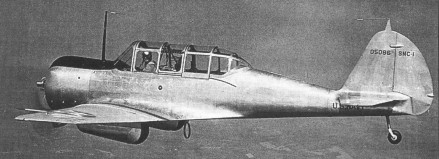
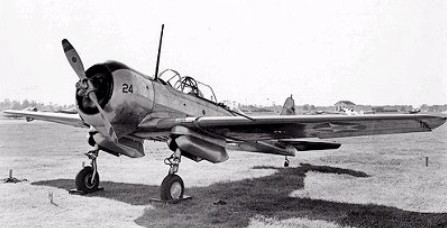
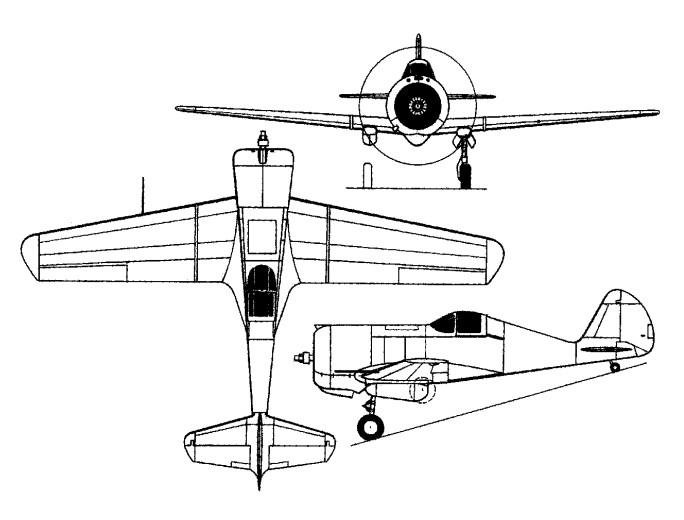
This aeroplane was developed within the context of the US Navy’s enormous increase in pilot training during 1940, and an advanced combat trainer evolved from the CW-19 light fighter and trainer project with features such as retractable landing gear from the CW-21 Demon export fighter. The CW-22 prototype resembled the CW-21 with a longer, two-seat fuselage but considerably lower power in the form of the 313-kW (420-hp) Wright R-975 Whirlwind radial.

The landing gear had main units retracting rearward into underwing fairings as on the CW-21 single-seat interceptor. Powered by a 313kW Wright R-975 Whirlwind radial, 36 CW-22s were exported to the Netherlands East Indies, but due to the Japanese advance in that region were delivered to the Dutch in northern Australia during March 1942.

A developed CW-22B version was sold to Turkey (50); the Netherlands East Indies (25); and various Latin American countries (totalling about 25). Several Dutch aircraft were later captured and flown by the Japanese. Both the CW-22 and CW-22B were armed with two machine-guns, one fixed and the other flexibly mounted.
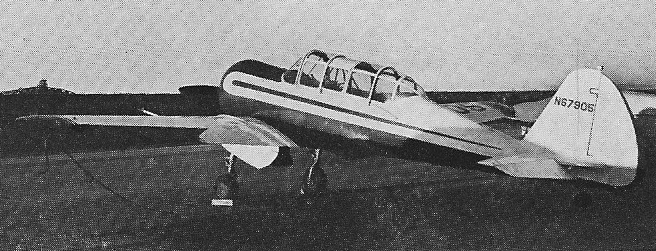
After a demonstrator had been tested by the US Navy, a CW-22N advanced training version went into production. The US Navy applied the designation SNC-1 Falcon to the type, a total of 455 being purchased in three batches of 150, 150 and 155 respectively; the aircraft of the third batch had a modified, higher cockpit canopy. The initial order for 150 aircraft was later bolstered by five impressed aircraft. Many SNC-1s were sold to private owners in the USA after World War II.

CW-22

Some 136 CW-22s were exported.

CW-22 / SNC-1
Engine: one Wright R-975-28 Whirlwind radial, 420 hp (313 kW)
Wingspan: 10.67 m / 35 ft 0 in
Length: 8.23 m / 27 ft 0 in
Height: 3.02 m / 9 ft 11 in
Wing area: 16.14 sq.m / 173.73 sq ft
Max take-off weight: 1718 kg / 3788 lb
Loaded weight: 1241 kg / 2736 lb
Max. speed: 319 km/h / 198 mph at SL
Cruise: 195 mph at 2500 ft
Service ceiling: 6645 m / 21800 ft
Operational range: 1255 km / 780 miles
Armament: 2 x 7.62mm machine-guns
Crew: 2
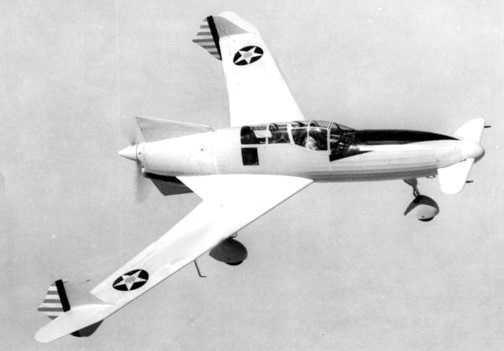
Curtiss-Wright CW-21 Demon

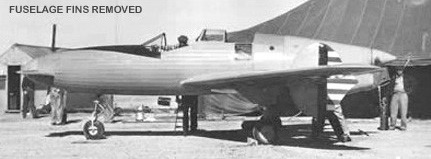
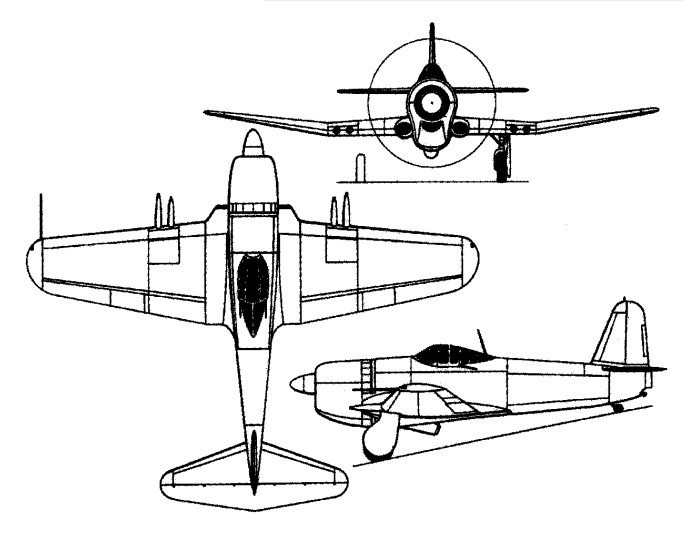
In 1938, chief engineer Willis Wells of the St Louis Airplane Division of the Curtiss-Wright Corporation began the development of a single-seat fighter based on the A-19R tandem two-seat military basic trainer. Designated CW-21, it had a Wright R-1820-G5 Cyclone nine-cylinder radial engine rated of 1,000hp for take-off and 850hp at 1830m, and an all-metal stressed-skin structure with a semi-monocoque fuselage. The mainwheels retracted into clamshell-type underwing fairings and armament was two synchronised 12.7mm machine guns.
The prototype CW-21 was flown on 22 September 1938, and shipped to China for demonstration. The prototype was purchased by the Chinese government and a contract placed for three production aircraft and 27 sets of components for assembly by CAMCO. The first production CW-21 was flown on 20 March 1940, and provision was made to increase the armament with a pair of 7.62mm weapons. All three CW-21s built by the parent company were lost as a result of engine failures after taking-off from Lashio while being ferried to Kunming. Assembly of CW-21s by CAMCO at Loi-wing had reached an advanced stage when it was decided to evacuate and, on 1 May 1942, burn the factory to avoid its capture by Japanese forces, the partly-assembled fighters also being destroyed.
In April 1939, Curtiss-Wright’s St Louis Airplane Division flew the prototype of the CW-23 basic combat trainer which was essentially a tandem two-seat, lower-powered derivative of the CW-21 single-seat fighter. It introduced inward-retracting, fully-enclosed main undercarriage members and hydraulically-actuated rather than manually-operated flaps, and these features were adopted for a new version of the single-seat fighter, the CW-21B. On 17 April 1940, the Dutch government signed a contract for 24 CW-21B fighters (of which there was no prototype) and the first of these was flown the following mid-September. The CW-21B retained the R-1820-G5 Cyclone of the earlier CW-21 and armament comprised two 7.62mm Colt machine guns mounted in the forward fuselage. The CW-21B fighters were shipped to Java during October-December 1940, entering service with the MLKNIL. Their light structure and lack of fuel tank protection was to render them particularly vulnerable when committed to operations against Japanese forces in the early months of 1942, the last combat mission being flown by a CW-21B on 5 March.

Curtiss-Wright CW 21 Demon
Engine: Wright R 1820-G5, 986 hp
Length: 27.165 ft / 8.28 m
Height: 8.924 ft / 2.72 m
Wingspan: 35 ft 0 in / 10.67 m
Wing area: 174.269 sqft / 16.19 sq.m
Max take off weight: 4500.4 lb / 2041.0 kg
Weight empty: 3382.5 lb / 1534.0 kg
Max. speed: 274 kts / 507 km/h
Cruising speed: 245 kts / 454 km/h
Service ceiling: 34301 ft / 10455 m
Wing load: 25.83 lb/sq.ft / 126.0 kg/sq.m
Range: 548 nm / 1014 km
Crew: 1
Armament: 2x cal.30 MG (7,62mm), 2x cal.50 MG (12,7mm)

Curtiss-Wright CW-20 / C-46 Commando / C-55 / C-113 / R5C

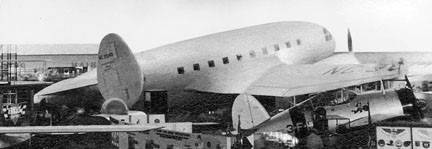
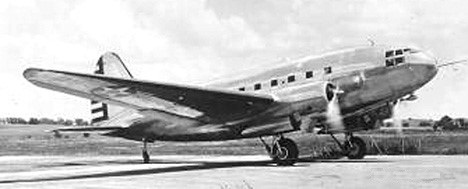
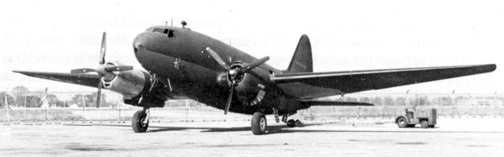
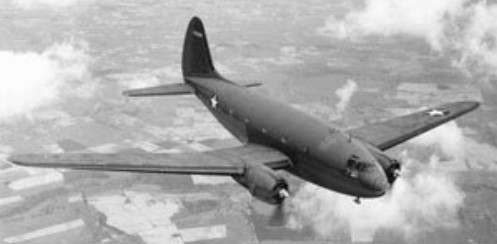
The 1937 design specifications called for the Commando to feature a pressurized cabin for up to 36 combat-ready troops, longer range than anything available to the USAAF and an above average cruising speed. Design headed by George Page the CW-20 first appeared in prototype form on 26 March of 1940 as the twin-rudder CW-20T.

Curtiss-Wright CW-20 Mock-up of twin-tail prototype at 1939 NYC World’s Fair

Because the US Army was impressed with its possibilities, authorisation was obtained for the purchase of a large number as cargo transports. In the meantime the prototype was bought, modified and given the Army designation C-55. It was later re-converted for civil use and sold to the British government.

The 1941 C-55 (Model CW-20A) was a single-tail prototype Curtiss-Wright CW-20T for evaluation as a USAAF transport, rejected in favour of the C-46. A projected name of Skytruck was not officially assigned. Costing $363,600, the one built 41-21041, later went as Lend-Lease to England and BOAC as G-AGDI.

Curtiss C-55 (41-21041)

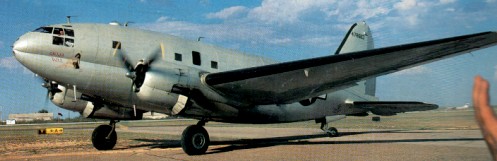
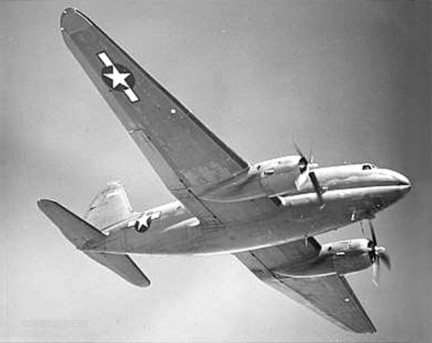
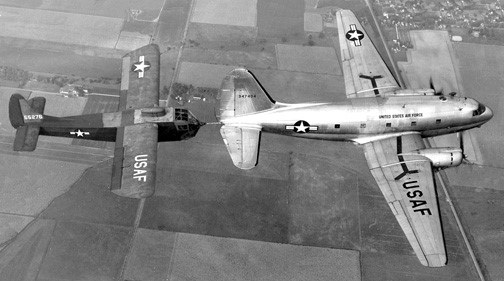
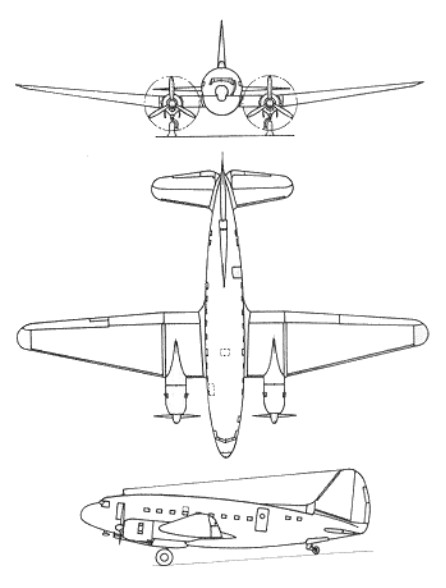
The CW-20T prototype later evolved into the CW-20A that featured a revised tail in the form of the more recognizable single rudder assembly. Later development focused in on the requirements as put forth by the United States Army Air Corps which put the CW-20A under trials and consequently ordered a production version of the model designated CW-20B. The main compartment of the C-46 could accommodate (in addition to general cargo) 40 fully equipped troops, up to 33 stretchers, five Wright R-3350 engines or their equivalent weight of other goods.

Curtiss C-46A 41-5159

The 1942 Army production model of the CW-20B, designated C-46A, was a redesign not only to suit it to the duties of a military cargo or task-force aircraft but to allow easy large-scale production. It was produced in three large manufacturing plants and was put into widespread use by the US Army Air Transport Command, Air Service Command and Troop Carrier Command, and by the US Naval Air Transport Command and Marine Corps. Two were built by Higgins Industries (boat manufacturer), New Orleans LA. Final trial models were provisioned to fit up to 45 combat-ready troops and fitted with two Pratt & Whitney R-2800-51 radial engines, a large cargo door and folding wall seats. The C-46 entered service with the plain designation of simply C-46 in the Pacific Theatre – and used almost exclusively there up until about March of 1945, to which the Commando would be seen across the European Theatre as well.

The United States Navy utilized a designation of R5C-1 for their own Commando version, transferred from USAAF inventory, with 120 models of the R5C-1 (39492-39611) going to the United States Marine Corps. Ten of these went to the USCG with long-range fuselage fuel tanks used as cargo and personnel haulers until 1950.

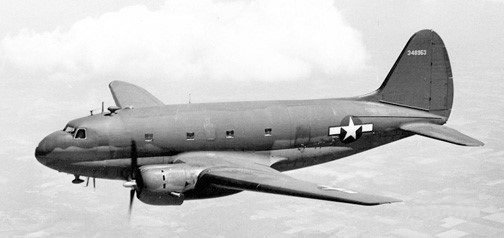
Curtiss XC-46B 43-46963

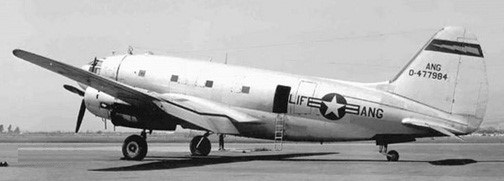
The 1944 C-46D, TC-46D (Model CW-20B-2) troop transport had a revised nose and double loading doors. An unknown number were modified as TC-46D trainers.

Curtiss C-46D with single door 44-77984

The 1944 C-46E (Model CW-20B-3) were C-46A airframes with stepped windshield and single cargo door. Seventeen were built (43-47403/47419).

Curtiss C-46E
Curtiss C-46E Glider tug (43-47404)

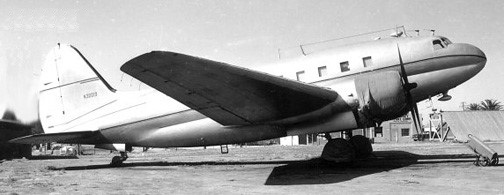
In 1944 Curtiss prepared designs and a mock-up of a commercial version of the aircraft for immediate post-war production. Curtiss-Wright hoped to market it as a 36 passenger civil version of the C-46E, with two 2500hp (1860 kW) Wright C18-B2 engines. Although a total of 26 were on order at one time the CW-20E never really had a chance as a new-production post-war airliner.

Curtiss C-46E Post-war civil (N30019)

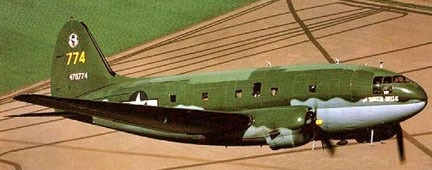
The 1945 C-46F (Model CW-20B-4) had engine modifications, squared wingtips, and cargo doors on both sides. 234 were built (44-78545/78778).

Curtiss C-46F (44-78774)

To give the C-46s added performance, some C 46Fs were fitted with two Turbomeca Palas turbojets in underwing pods to operate in Brazil (from 1953). Other aircraft were fitted with more powerful engines as ‘Super C 46s’.

The 1945 C-46G (Model CW-20B-5) was powered by two 2100hp R-2800-34W and featured a stepped windshield. The one built was originally scheduled as a C-46C (44-78945), and later converted to XC-113.

Built in 1945, the sole C-113 (Model CW-20G) 44-78945 was a C-46G with a four-blade General Electric TG-100 turboprop installed in the right nacelle for tests, retaining its original three-blade Wright R-2800-34W on the left. This proved to be an unmanageable arrangement and the ship was damaged in ground runs and never flew.

Curtiss XC-113 44-78945

Planned modifications for double tailwheels and R-3350-BD engines, the C-46H, XC-46K (Model CW-20E-2) was cancelled by the Armistice, although a few other post-war C-46 mods were labelled as C-46H.

The three 1945 XC-46L (Model CW-20H) conversions were test-beds for 2500hp Wright R-3350-BD Double Cyclones.

In October 1954, Terneo Aircraft Corp. announced a contract to overhaul 87 of’ them. The U.S.A.F. still had some of these veteran wartime passenger-freighter in 1955.

In total, US forces accepted 3144, and the C-46 was officially retired from service in 1968, replaced by the C-130 series of transports.

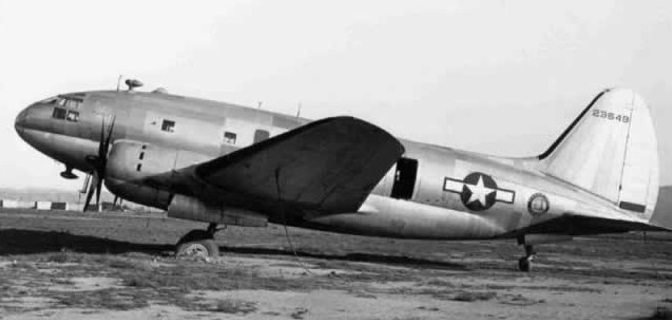
Curtiss C-46A Commando, S/N 42-3649, for sale at Cal-Aero Field, California, post-WWII

Riddle Airlines produced a modification kit in the mid-1950s which added 40mph (64kmh) to cruising speed and 2,204 lb (1,000 kg) to the payload. The improved model was designated C-46R, and Riddle subsequently converted its own fleet of 32 to have 2,100 hp Pratt & Whitney engines.

Curtiss-Wright CW-20T Article

Gallery

C-46 Commando / CW-20B / R5C
1941
Engines: 2 x P&W R-2800-43, 2000hp
Wingspan: 108 ft 1 in
Length: 76 ft 4 in
Useful load: 23,600 lb
Max speed: 269 mpg
Cruise speed: 183 mph
Range: 1200 mi
Ceiling: 27,600 ft
Number built: 25 (41-5159/5183)
Capacity: 50 troop
Cost: $341,831

CW-20B / C-46A Commando
1942
Engines: 2 x Pratt & Whitney R-2800-51 Double Wasp, 2,000hp
Length: 76.44ft (23.3m)
Wing span: 78.54ft (23.94m)
Height: 21.75ft (6.63m)
Empty Weight: 30,001lbs (13,608kg)
Maximum Take-Off Weight: 55,997lbs (25,400kg)
Maximum Speed: 269mph (433kmh; 234kts)
Maximum Range: 1,199miles (1,930km)
Service Ceiling: 27,559ft (8,400m)
Crew: 4
Number built: 1,491 (41-5184/5204, -12280/12433, -24640/24775, 42-3564/3683, -60942/61091, -96529/96707, -96708/96828, -101036/101235, -107280/107399, 43-43339/43340, -46953/47402, 44-77444, -77446)
Cost: $314,700 (>$354,714), $259,268 (>$271,127) in 1943

CW-20B-1 / XC-46B
1944
Stepped windshield.
Engines: 2 x R-2800-34W, 2100hp
Number built: 1 modified from C-46A (43-46963)

C-46C
Prototype built as C-46G instead.

CW-20B-2 / C-46D Commando / TC-46D
1944
Engine: 2 x Pratt & Whitney R-2800-51 Double Wasp, 1973 hp, 1495kW
Wingspan: 32.9 m / 107 ft 11 in
Length: 23.3 m / 76 ft 5 in
Height: 6.6 m / 21 ft 8 in
Wing area: 1359.924 sqft / 126.340 sq.m
Max take off weight: 56009.2 lb / 25401.0 kg
Weight empty: 32404.7 lb / 14696.0 kg
Max. speed: 234 kts / 433 km/h
Cruising speed: 159 kts / 295 km/h
Service ceiling: 27592 ft / 8410 m
Wing load: 41.21 lb/sq.ft / 201.0 kg/sq.m
Range: 1043 nm / 1931 km
Range w/max.fuel: 2770 km / 1721 miles
Crew: 3
Payload: 54pax
Cost: $233,377
Number built: 1,410 (44-77295/77443, -77445, -77447/78544)

CW-20B-3 / C-46E
1944
Number built: 17 (43-47403/47419)

CW-20B-4 / C-46F
1945
Cost: $221,550
Number built: 234 (44-78545/78778)

CW-20B-5 / C-46G
1945
Engines: 2 x R-2800-34W, 2100hp
Number built: 1 originally scheduled as C-46C (44-78945), converted to XC-113.

CW-20E-2 / C-46H / XC-46K
Planned modifications for double tailwheels and R-3350-BD engines cancelled by the Armistice, although a few other post-war C-46 mods were labelled as C-46H.

C-47J
Designation not used.

CW-20H / XC-46L
1945
Engine test-bed
Engines: Wright R-3350-BD Double Cyclone, 2500hp
3 conversions.

CW-20A / CW-20T / C-55
1941
Cost: $363,600
1 built 41-21041 / G-AGDI

CW-20G / C-113
1945
Engines: 1 x General Electric TG-100 turboprop & four-blade prop, 1 x Wright R-2800-34W & three-blade prop.
1 as XC-113 (44-78945)

Curtiss-Wright

Formed from merger on August 9,1929 between Curtiss Aeroplane and Motor Co Inc. and Wright Aeronautical Corporation. Subsequent production mainly by Curtiss Airplane Division of Curtiss-Wright (aircraft still being “Curtiss” types rather than “Curtiss-Wright,” except for those with “CW” designations. In August 1929, stock changed hands, and the Curtiss Wright Corporation be¬came the controlling power in Travel Air. Travel Air’s production had been one ¬tenth of the total U. S. output of commercial airplanes.
In 1936 complete reorganisation dissolved all main subsidiaries except Wright Aeronautical Division. From 1930 onwards main products included F9C Sparrowhawk fighter, carried on board USN airships; F11C/BFC Goshawk for USN and export versions Hawk I/ II/ III/ IV; SBC Helldivers for USN; SOC Seagull for USN; BT-32/ CT-32/ T-32 Condor bomber and civil/military transport; A-8/10/12 Shrike for USAAC; P-36 for USAAC and export Hawk 75s; one CW-20 prototype (later used by BOAC); C-46 Commando (USAAF) and R5C (USN) transport developments of CW-20; CW-21 Demon fighters; SNC trainers for USN, developed from CW-21; P-40 Warhawk/Tomahawk/Kittyhawk fighters for USAAF and other Allied services, of which 13,738 built during Second World War; C-76 Caravan transports for USAAF; O-52 Owl observation biplanes for USAAF/USN; SO3C Seamew for USN and Fleet Air Arm; SB2C Helldiver; AT-9 Jeep twin-engined trainers for USAAF; SC Seahawk scout seaplanes for USN; Republic P-47 Thunderbolt fighters for USAAF. Total wartime production (1940-1945) was 26,755 aircraft and 223,036 aero engines.
After the war many Curtiss factories closed and most aircraft construction discontinued. Some Boeing B-29 modification undertaken until end of 1945, but Curtiss- Wright basically then undertook overhaul and repair of aircraft and manufacture of components, subassemblies and spare parts. By 1952 was concerned exclusively with production of aero engines and propellers. At the end of the 1950s Curtiss-Wright made a brief return to aircraft production with Skydart rocket-propelled target drone and prototype VZ-7AP VTOL “Flying Jeep” for Army trials. Last type produced by the company was the X-19A, a six-seat convertiplane with twin engines driving tandem pairs of tilting propeller/rotors; first flight June 26,1964, but development discontinued 1966. By 1970s main activities of the corporation included nuclear research, data transmission, and research into new advanced engine designs for USAF and NASA, although still made components for Boeing 747 airliners.
The Aerophysics Development Corporation was absorbed by Curtiss Wright Corporation and became its Santa Barbara Division.

Curtiss K-6 / Kirkham-6

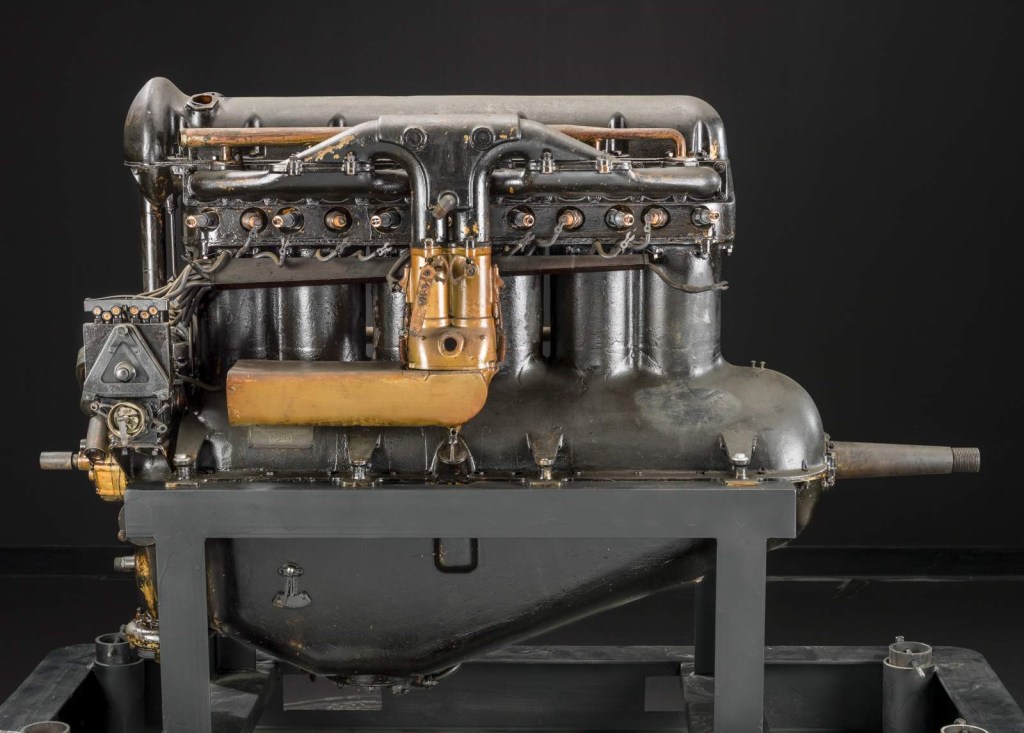
During 1917 and 1918, the water-cooled Curtiss K-6 (Kirkham-6) was designed under the direction of Charles B. Kirkham, an associate of Curtiss for a number of years who became the company’s Chief Engineer.

Following the K-12, a Curtiss competitor for the highly successful Hispano-Suiza engine, the K-6 was introduced as a six-cylinder vertical direct-drive engine using the same cylinder block and the same crankshaft dimensions. Closely following the design of the K-12, the K-6 used K-12 parts wherever possible. Three K-6 engines powered the 1919 tri-motor Curtiss Eagle II airliner.

Power rating: 112 kW (150 hp) at 1,700 rpm
Displacement: 9.38 L (572.54 cu in)
Bore and Stroke: 114 mm (4.5 in.) x 152 mm (6 in.)
Weight: 189.1 kg (417 lb)
Height 119.4 cm (47 in.)
Width 81.3 cm (32 in.)
Depth 168.9 cm (66.5 in.)

Curtiss 97 / SC Seahawk

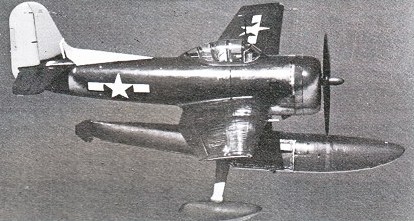
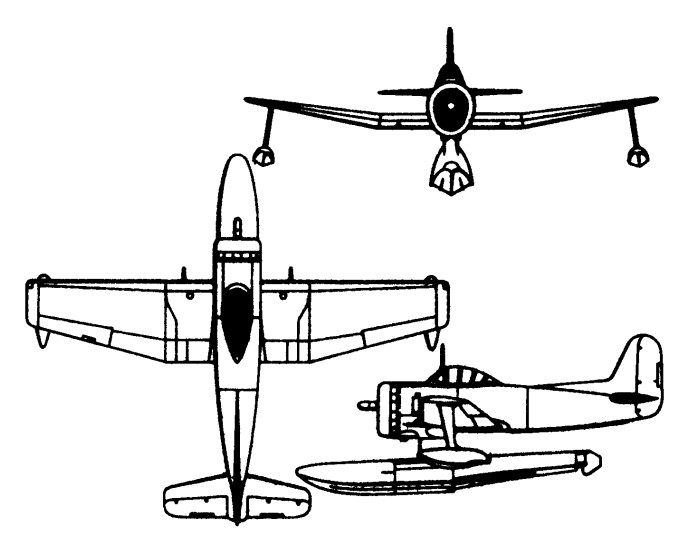
Development of the Curtiss SC Seahawk began in June 1942, when the US Navy requested the company to submit proposals for an advanced wheel/float scout aircraft. An easily convertible landing gear configuration was required so that the aircraft could be operated from aircraft carriers and land bases, or be catapulted from battleships. The type was required to replace the rather similar Curtiss Seamew and Vought Kingfisher which stemmed from a 1937 role. The Curtiss Model 97 design proposal was submitted on 1 August 1942 but it was not until 31 March 1943 that a contract for two XSC-1 (Model 97A) prototypes was issued.
An all-metal cantilever low-wing monoplane, the SC Seahawk had folding wings with considerable dihedral on their outer panels and strut-mounted wingtip stabiliser floats. The central float, which could also accommodate some auxiliary fuel, and the main wheeled landing gear units shared common attachment points. Power was a Wright R-1820-62 Cyclone 9 radial engine.
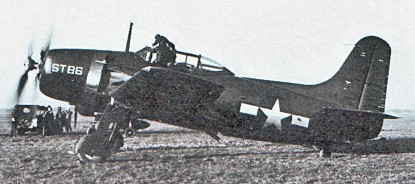
The first prototype made its maiden flight on 16 February 1944, and was followed by 500 production SC-1 (Model 97B) aircraft which had been contracted from June 1943. All were delivered as land-planes, the stabiliser floats and Edo central float being purchased separately and installed as and when required by the US Navy. Delivery of production aircraft began in October 1944, the first equipping units aboard the USS Guam. A second batch of 450 SC-1s was contracted, but of these only 66 had been delivered before contract cancellation at VJ-Day.
An improved version was developed, changes including the installation of a 1063kW R-1820-76 engine, a clear blown canopy, and a jump seat behind the pilot. The modified prototype, at first designated XSC-1A and then XSC-2 (Model 97C), led to a contract for similar production SC-2 (Model 97D), but only 10 had been delivered by the war’s end.

XSC-1 – Prototype Designation; two examples produced.

SC-1 – Initial Produciton Model Designation; 566 examples produced; introduced in 1944.

SC-2 – Improved two-seat SC-1; nine examples produced; appearing in 1946.

Curtiss SC-1 Seahawk
Engine: 1 x Wright R-1820-62 Cyclone radial, 1,350 hp / 1007kW
Wingspan: 12.50 m / 41 ft 0 in
Length: 11.09 m / 36 ft 5 in
Height: 3.89 m / 12 ft 9 in
Wing area: 26.01 sq.m / 279.97 sq ft
Wing load: 32.19 lb/sq.ft / 157.0 kg/sq.m
Max. speed: 272 kt / 504 km/h / 313 mph
Cruise speed: 201 km/h / 125 mph
Maximum Range: 631miles (1,016km)
Rate-of-Climb: 2,500ft/min (762m/min)
Service Ceiling: 37,303ft (11,370m)
Armament:
2 x 0.50 cal (12.7mm) fixed, forward-firing heavy machine guns.
2 x 100- or 250lb general purpose bombs held underwing.
Crew: 1
Hardpoints: 2
Empty Weight: 6,321lbs (2,867kg)
Maximum Take-Off Weight: 8,999lbs (4,082kg)

Curtiss 96 XBTC / 98 XBT2C

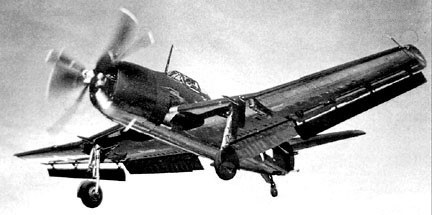
In late 1943 Curtiss received a US Navy order for two single-seat torpedo-bomber aircraft Model 96 prototypes under the designation XBTC-1 931401/314020. A low-wing monoplane with considerable dihedral on the outer wing panels, retractable tailwheel landing gear and a 2237kW Pratt & Whitney R-4360-14 Wasp Major engine and three-blade contrarotating prop, but before the first flew, a slightly different version of XR-4360-8A engine was installed in each aircraft, bringing the redesignation XBTC-2. Armament was four 20mm wing cannon. However, Curtiss was now in competition with Douglas, Fleetwings and Martin for this requirement, losing out to Douglas and Martin whose contenders were produced as the AD-1 Skyraider and AM Mauler respectively.

Curtiss XBTC-2

In March 1945 Curtiss gained a contract for 10 of the generally similar XBT2C-1. This Model 98 differed by having a lower-powered Wright R-3350-24 engine, reduced armament, accommodation for a crew of two and a search radar pod mounted beneath the starboard wing. Only nine of the 10 were built, and these were the last Curtiss-built aircraft for the US Navy.

96 / XBTC
Engine: 2237kW Pratt & Whitney R-4360-14 Wasp Major
Wingspan: 14.02 m / 45 ft 12 in
Length: 11.51 m / 37 ft 9 in
Height: 3.76 m / 12 ft 4 in
Wing area: 34.84 sq.m / 375.01 sq ft
Empty weight: 4 800 kg
Useful load: 3963 lb
Max. speed: 611 km/h / 380 mph
Cruise speed: 180 mph
Stall: 85 mph
Ceiling: 28,000 ft
Range: 2180 km / 1355 miles
Seats: 1

98 / XBT2C-1
Engine: 1 x 1864kW Wright R-3350-24 radial
Take-off weight: 8618 kg / 19000 lb
Empty weight: 5565 kg / 12269 lb
Wingspan: 14.50 m / 47 ft 7 in
Length: 11.94 m / 39 ft 2 in
Height: 3.68 m / 12 ft 1 in
Wing area: 38.65 sq.m / 416.02 sq ft
Max. Speed: 531 km/h / 330 mph
Ceiling: 8015 m / 26300 ft
Range: 2108 km / 1310 miles
Armament: 2 x 20mm cannon, 907kg of bombs
Seats: 1

Cutiss 94 / XF14C-2         

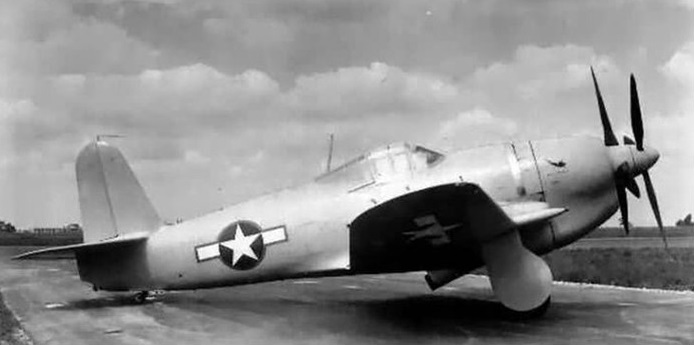
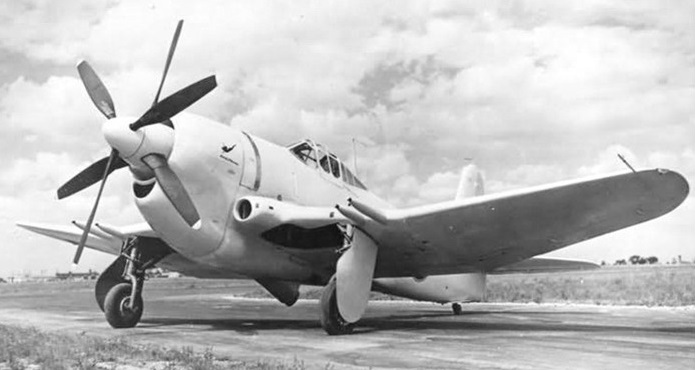
On 30 June 1941, Curtiss received a prototype development contract for the XF14C-1 single-seat shipboard fighter designed around the 2,200hp Lycoming XH-2470-4 liquid-cooled engine.

At a relatively early stage in the programme, the unsatisfactory state of development of the Lycoming engine led to the redesign of the fighter to accept an 18-cylinder two-row Wright R-3350 as the XF14C-2, this engine driving a six-blade contraprop.

Powered by an XR-3350-16 rated at 2,300hp, and carrying an armament of four 20mm cannon, the XF14C-2 was flown for the first time in September 1943, but not delivered to the US Navy until July 1944.

Performance proved to be substantially below that specified and the prototype suffered excessive vibration. In consequence, further development of the XF14C-2 was abandoned.