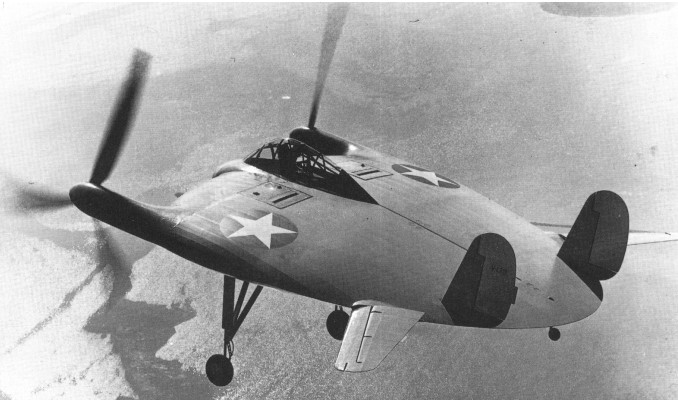
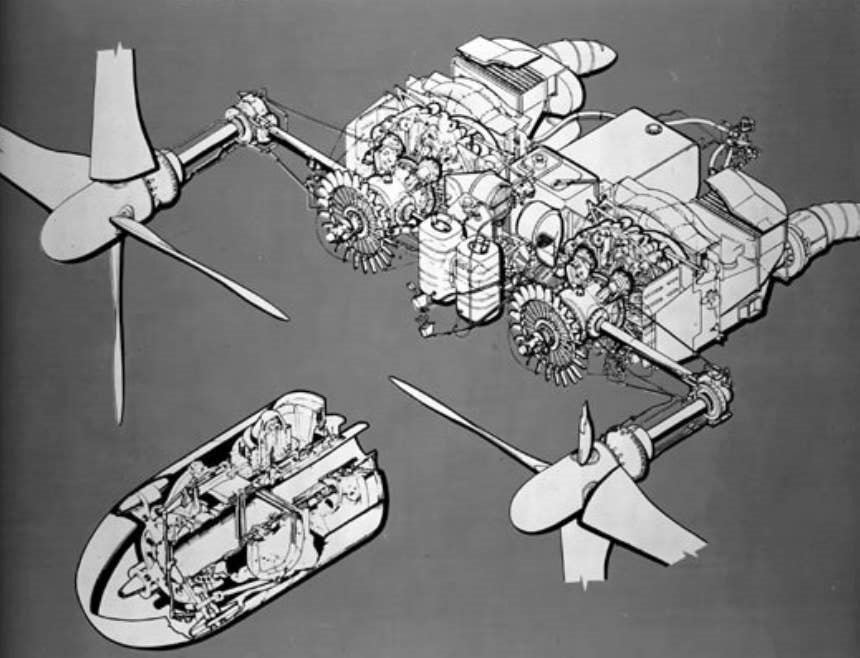
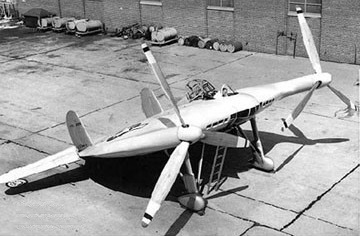
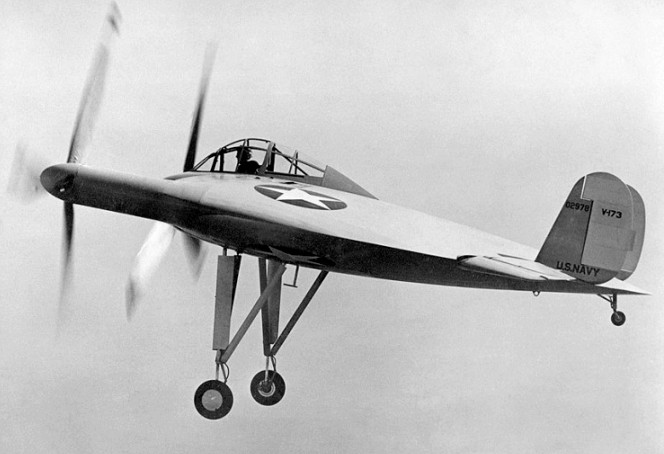
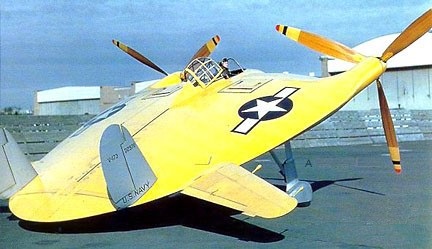
Navy chiefs ordered a full-size flying model to be built to evaluate the flying characteristics of the proposed fighter, and this aircraft, the Vought V 173 designed by Charles H Zimmerman, made its first flight on 23 November 1942 piloted by Boone T Guyton. The V 173 (unofficially dubbed Flying Pancake or Flying Flapjack) was constructed of wood with fabric covering, and had two wingtip-mounted 80 hp Continental engines driving a pair of 5.03 m (16 ft) three-blade, laminated-wood propellers.
Compared to a typical taildragger’s resting deck angle of around 5 degrees, the V-173 sat at an extreme 22 degrees. This would eliminate all forward vision if not for the addition of windows on the underside of the nose by the pilot’s feet. When on the ground, the pilot simply looked downward, past his feet, and could see the path ahead.
To further reduce takeoff and landing distances, two enormous propellers bathed the entire airframe in propwash, generating lift even at a standstill. The result was a landing speed of only 22 mph and the capability of taking off nearly vertically with typical wind over a ship’s deck.
The V-173 prototype would ultimately weigh just over 3,000 pounds fully loaded, with a massive 427 square feet of wing area. The V-173’s wing loading was just over 5 pounds per square foot.
With such ample lift, only modest power would be required. Zimmerman chose two small and light 4-cylinder Continental A80 piston engines. Their small size enabled them to be buried within the saucer-like fuselage.
Zimmerman had US patent #2,431,293 of 18 November 1947.
The engines of the V 173 were barely adequate, but the Flying Pancake took off in 15 m (50 ft), or much less with a steady wind, and could cruise at 222 kph (138 mph) despite its low power. Guyton and other pilots who flew the aircraft (including Charles Lindbergh) found it impossible to stall or spin, and full control could be maintained even at a 45 degree angle of attack.
The V-173 confirmed that the type offered viceless handling characteristics as well as an exceptional speed range between 20 mph (32 km/h) and 460 mph (740 km/h). The Vought XF5U was based on the V-173.
The Vought V-173 on its maiden flight in 1942
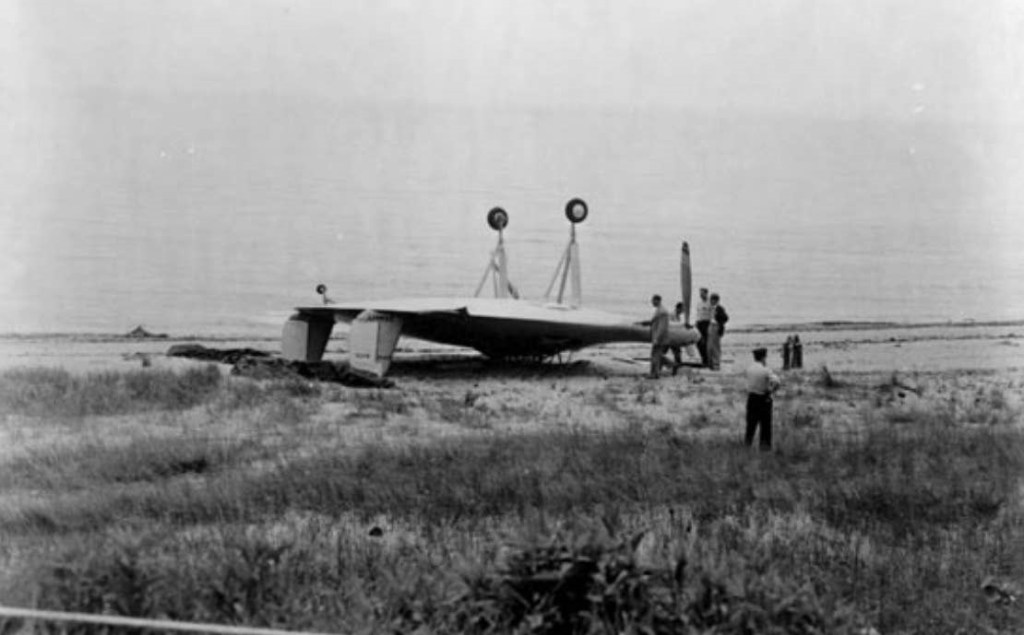
At one point, a vapor lock resulted in a forced landing on a beach. While the airplane flipped over onto its back, neither the airplane nor test pilot were significantly harmed.
The one V-173 built, 02978 in 1942, completed 171 flights for 131.8 hours flight time.
The V-173 placed into long-term storage. Charles Zimmerman went on to become a division chief for Project Mercury at NASA.
In 2003, the Vought Aircraft Heritage Foundation began a nearly 10-year-long restoration of the aircraft, stripping it down to its wooden airframe and replacing the fabric entirely. Today, the resplendent V-173 stands proudly on display at the Frontiers of Flight Museum in Dallas.
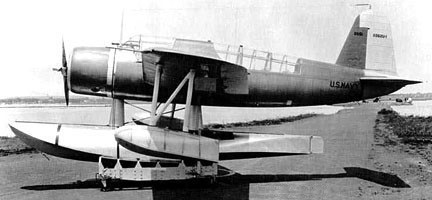
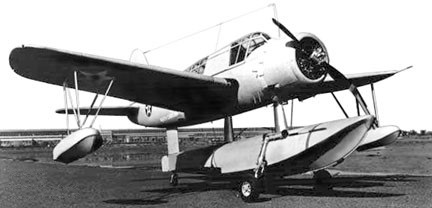
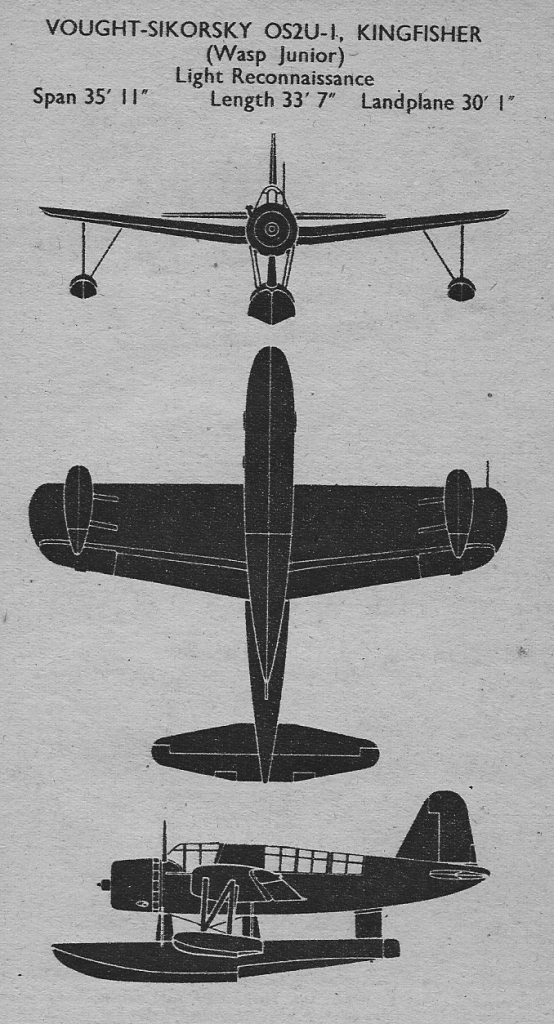
Built in 1938, the first of two Vought XOS2U-1 (0951 and 1440), the first converted from an O3U-6, were prototypes of the two-place OS2 Kingfisher scouting aircraft. The first to fly was on 1 March 1938, powered by a 450hp P&W R-985-4 engine.
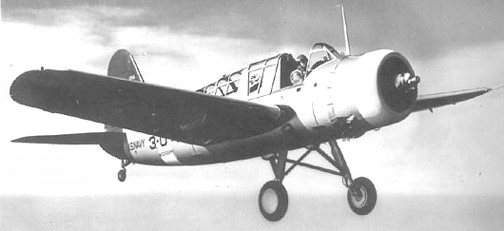
Fifty-four OS2U-1 were built in 1940; 1681-1734, powered by a 450hp P&W R-985-48 engine.
Vought OS2U-1
The OS2U-2 of 1941 had armour and self-sealing fuel tanks One hundred and fifty-eight were built, 2189-2288 and 3073-3130, of which 45 were floatplanes. They were powered by P&W R-985-50 engines.
Vought OS2U-2
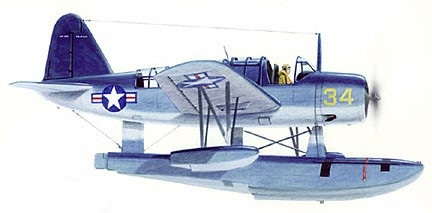
In 1941 1006 OS2U-3 were built for the USN and USCG, 5284-5989 and 09393/09692, with 300 additional production by Naval Aircraft Factory as OS2N.
Vought OS2U-3
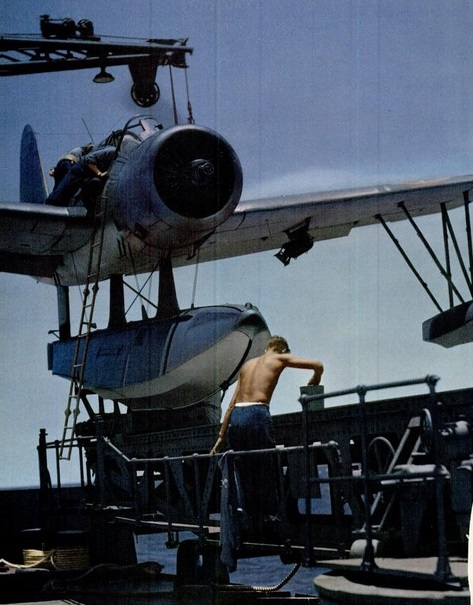
Despite its role in scouting and rescue missions, OS2U did have its moments. Two of them dive-bombed Japanese troops in the Aleutians and helped sink an enemy submarine there on 15 July 1942, and one was credited with shooting down an attacking Zero over Iwo Jima.
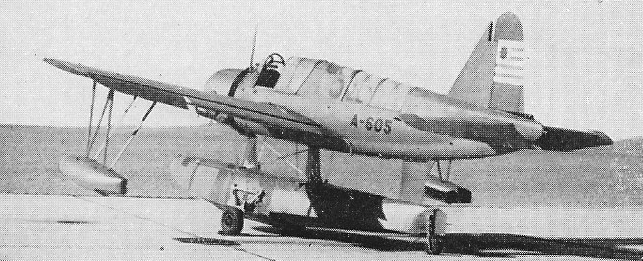
Uruguayan Naval Air Service OS2U-3
One OS2U-2, 3074, was converted to an XOS2U-4 with wings of narrow chord and high aspect ratio.
The Vought designation for export models was VS-310.
OS2U-3 Engine: P&W R-985-AN-2 Wingspan: 35 ft 10.75 in Length: 33 ft 7.5 in Height: 14 ft 8 in Wing area: 261.9 sq.ft Empty weight: 3335 lb Loaded weight: 4980 lb Useful load: 1890 lb Max speed: 171 mph at 5000 ft Cruise: 152 mph Service ceiling: 18,200 ft Range: 908 mi
Volvo Aero Nohab Flygmotorfabriker AB Svenska Flygmotor AB
Nohab Flygmotorfabriker AB was founded in Trollhättan, Sweden, in 1930 to produce aircraft engines for the Swedish Board of Aviation. As the name of the company indicates it was a subsidiary to NOHAB. In 1937 it became a part of the newly founded SAAB but already in 1941 Volvo acquired a majority of the stock and the name was changed to Svenska Flygmotor AB (SFA), and later on Volvo Flygmotor.
Since the 1950s the company have been the major engine supplier to the Swedish Air Force. The Volvo Aero Group has 3,600 employees and in 2003 had total sales of 0.9 billion euros. Today Volvo Aero is a partner in more than ten commercial engine programmes. Components from Volvo Aero are installed in more than 90% of all large commercial aircraft engines sold.
On 6 July 2012 Volvo Aero was acquired by the British aerospace manufacturer GKN in a SEK 6.9 billion deal.
Volvo Aero was a supplier of single-engine systems for military aircraft. These have largely been in partnership with other engine manufacturers, such as the RM1 (de Havilland Goblin) for the Saab 21R, RM2 (de Havilland Ghost) for the Saab J29, RM5 and RM6 (Rolls-Royce Avon) for the Saab 32 Lansen, the RM6B for the Saab 35 Draken, and the RM8 (Pratt & Whitney JT8D) for the Saab 37 Viggen. The Saab JAS 39 Gripen’s RM12 engine is a derivative of the General Electric F404.
Svenska Flygmotor also designed the B42, horizontally-opposed four-cylinder engine, intended for the SAAB Safir. However, SAAB decided on using engines from de Havilland and Lycoming for the Safir. In the end the B42 came to power the Infanterikanonvagn 103 assault gun. A follow-up called B44 powered the Pansarbandvagn 301 armoured personnel carrier.
Volvo Aero delivered engine components, mainly complex engine structures like turbine exhaust casings, turbine mid frames, LPT cases, compressor housings, LPT shafts, vanes, and large rotating parts.
Volvo Aero also had a facility in Trollhättan where they did maintenance on aircraft engines and stationary gas turbines. The aircraft engines are Pratt & Whitney Canada PW100 and TFE-731 engines. The Stationary gas turbines is General Electric LM1600 engine, and the DR990, which Volvo bought the OEM responsibility from Dresser Rand.
Volvo Aero manufactured combustion chambers, nozzles and turbines for commercial launch vehicles.
The company have produced the F-series hydraulic motors under the Volvo Flygmotor and VOAC brands.
Volvo Aero subsidiaries were located in the United States and Norway, in addition to Volvo’s home country, Sweden. The Norwegian plant, in Kongsberg, is the former Norsk Jetmotor, itself formerly a part of Kongsberg Våpenfabrikk.
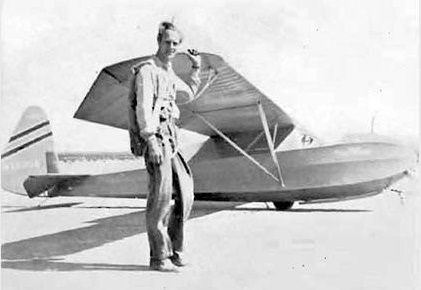
The VJ-10 high-performance sailplane, the first two-place, side-by-side sailplane, was purchased by the military for the assault glider training program as the TG-29 42-65553.
It was designed and built by Volmer Jensen while at Bowlus, in 1939.
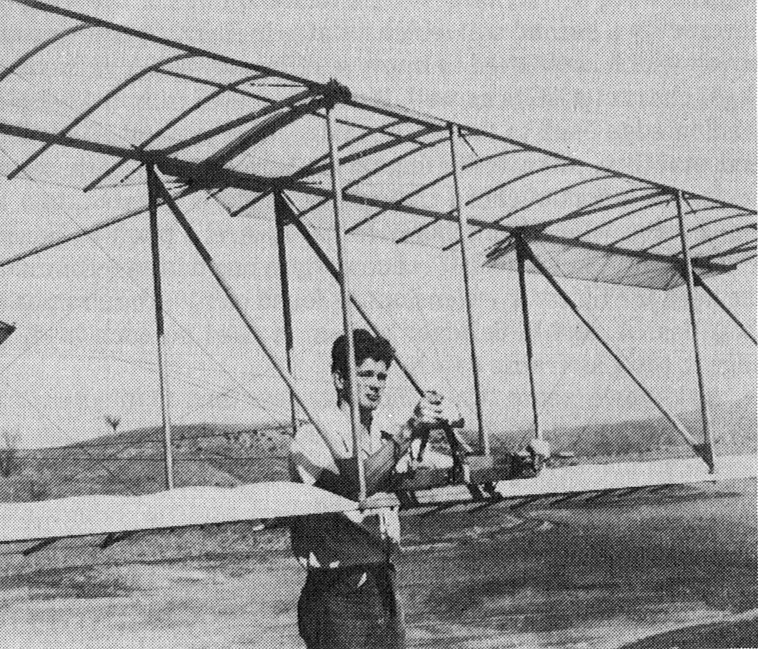
Construction of the VJ-11 was commenced in 1940 and completed in 6 weeks spare time and test flown the following week end. During the war they were not permitted to fly any aircraft within 150 miles from the coast and the hang glider was only going to slide down the hill.
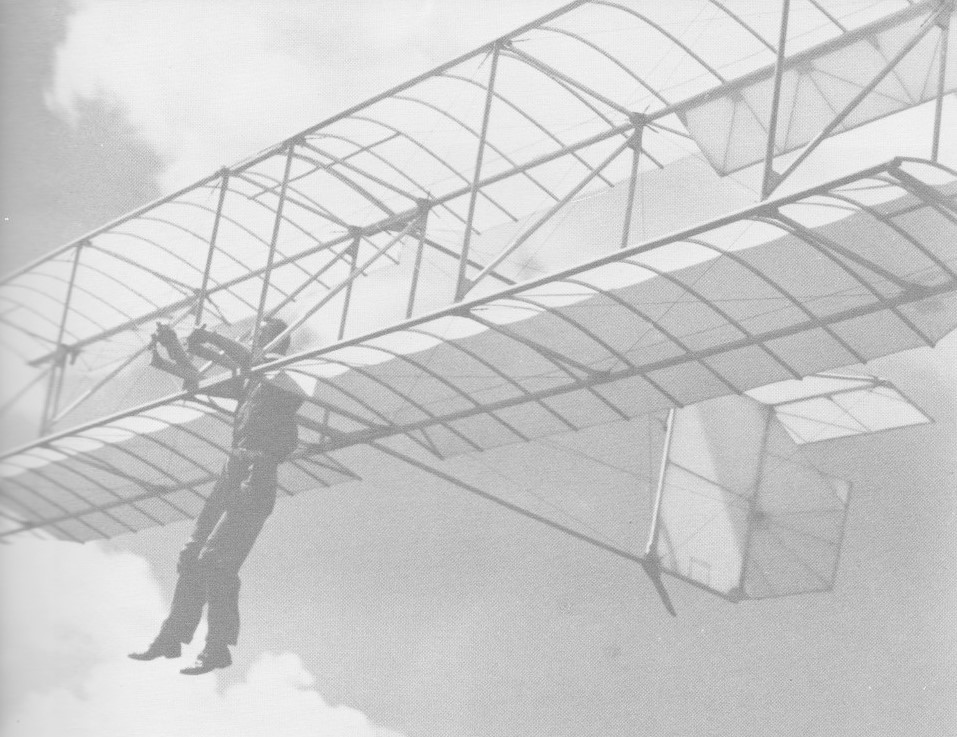
A Chanute type glider, the VJ-11 had three-dimensional controls on it. Jensen installed elevators and ailerons, controlled by the right hand with a device shaped like a + sign and a rudder by the left hand, using a short rudder bar.
Many glider pilots tried it including John Robinson, National Soaring Champion for 3 years, and Irv Culver, Lockheed aerodynamicist who helped on the stress analysis, and even fellows with no previous flying experience.
It could take off in 3 steps down the hill and sometimes land by just bending knees. On some flights it even gained altitude.
Complete set of blueprints — 8 photographs and full scale rib layout were made available with the cost of materials approximately $400.00. Kits or materials were never supplied.
Wing span: 28 ft Wing area: 225 sq.ft Aspect ratio: 6.97 Length: 15 ft 5 in Height: 5 ft Dihedral: 0 degrees Wing: single surface, uncambered Tail Airfoil: flat Empty weight: 100 lb Max flying weight: 280 mph Useful load: 180 lb Best L/D: 6-1 at 20 mph Min sink: 300 fpm Stall: 15 mph Cruise: 20 mph
Originated 1942 at Malton, Ontario, under Canadian Ministry of Munitions and Supply, to take over and manage Malton aircraft factory of National Steel Car Corporation to speed production of Avro Lancaster bombers. First Victory- built Lancaster delivered to RAF in August 1943. Total production 430, including seven unarmed mailplanes for transatlantic government service operated by Trans- Canada Air Lines; these were forerunners of the Lancastrian post-war transport version of the Lancaster. One Avro Lincoln Mk XV bomber built 1945. Company acquired from Canadian government in July 1945 by Hawker Siddeley Aircraft Company Ltd, becoming A. V. Roe (Canada) and subsequently designing first Canadian jet fighter.
The final attempt by Vickers to develop a fighter for the RAF began in 1939 with a design for a twin-engined heavy fighter featuring an armament of a 40mm Vickers cannon in a dorsal turret. As the Type 414, this corresponded with the requirements of Specification F.22/39 for a 400 mph (644 km/h) two-seat fighter. The aircraft was to carry four 20-mm cannons, with the possibility of later mounting two 40-mm cannons.
Under a design team led by Rex Pierson, Vickers-Armstrongs Ltd. (Vickers) had been working on a fighter with a single flexibly-mounted 40-mm cannon installed in the aircraft’s nose. The twin-engine aircraft was powered by Rolls-Royce Griffon engines and met the requirements of F.6/39, aside from its armament. Vickers met with the Air Ministry in April 1939 to discuss the aircraft’s potential. The Air Ministry was sufficiently impressed and issued Specification F.22/39 that covered the Vickers fighter, which carried the internal designation Type 414. Specification F.6/39 was subsequently cancelled in November 1939.
Turret development began in a Wellington test-bed but, in the course of 1940, the requirement was changed via Specification F.16/40, to emphasise high-altitude performance, as there were growing fears that the Luftwaffe would be able to launch operations over Britain at altitudes beyond the capabilities of existing RAF fighters. A more conventional armament of 20mm cannon was adopted in the revised Vickers 420 design to the new specification, but further changes were called for in Specification F.7/41, including a pressure cabin.
Two Type 414 prototypes were ordered on 30 August 1939, and they were assigned serial numbers R2436 and R2437. After inspection of the Type 414 mockup in early February, the Air Ministry inquired about the possibility of installing several 20-mm cannons in place of the single 40-mm cannon. Vickers responded with aircraft proposals incorporating eight 20-mm cannons or two 40-mm cannons.
Vickers designated the fighter with 20-mm cannons as the Type 420. Two cannons were positioned in the aircraft’s nose, and three were on each side of the cockpit. Vickers and the Air Ministry discussed the Type 420 in June 1940, and Specification F.16/40 was issued for the aircraft’s development. The Type 420 was given a high priority, and an order for two prototypes was expected. The order for two Type 414 prototypes was still in place. However, the Type 420 took precedence, and work on the Type 414 slowed substantially.
In early January 1941, the Air Ministry requested a design change to reduce the number of 20-mm cannons to six. At the same time, Vickers had designed a high-altitude fighter that used many components from the Type 420. The high-altitude aircraft was armed with four 20-mm cannons and powered by two Rolls-Royce Merlin engines. The Air Ministry was interested in Vickers’ proposal, as they felt there was an urgent need for a heavily armed, high-altitude fighter aircraft to intercept high-altitude German bombers that were expected in the skies over Britain. However, high-altitude German bombing raids were never undertaken en masse and did not present a significant threat to Britain during World War II.
In March 1941, work on the Type 414 was stopped completely, and discussions with Rolls Royce commenced regarding the acquisition of Merlin engines. In May 1941, Vickers detailed the specifics of the high-altitude aircraft, which it had designated as Type 432. The Vickers response to this final requirement was Type 432, completely re-stressed and with an armament of six 20mm cannon in a ventral blister. The original contract for the Type 414/420s was cancelled in 1941 and a new one substituted for two Type 432s. Design work on the Type 432 continued, resulting in the switch to a single-seat cockpit placed in the nose of the aircraft and six 20-mm cannons installed in a ventral fairing. Each cannon had 120 rounds of ammunition. The Air Ministry ordered two Type 432 prototypes on 9 September 1941, and the aircraft would be built to the new Specification F.7/41. The two Type 432 prototypes were issued serial numbers DZ217 and DZ223.
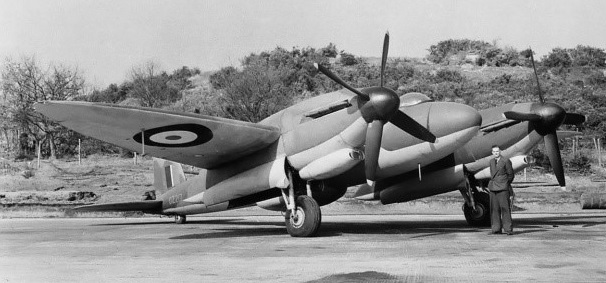
As finally built, the Type 432 was the first Vickers aircraft of wholly stressed-skin construction of stressed-skin aluminum panels that were flush-riveted to the closely-spaced circular structures that made up the airframe, and it made use of a so-called “lobster-claw” design for the wing torsion box, in which heavy-gauge skin had a thickened section to house the span wise spar booms, giving a profile shaped like a lobster claw so that conventional wing spars and ribs were omitted. Fabric covered the aft section of the wings and the aircraft’s control surfaces. The fuselage was a streamlined tube and the coolant radiators for the engines were buried within the wing. The pilot was accommodated in a relatively small, self-contained pressure cabin, his head being enclosed by a small, double-glazed dome, or “bubble”, which hinged to one side for access and egress.
The Type 432 mockup was inspected in late December 1941, and the first prototype, DZ217, was built throughout 1942. The aircraft was built at Foxwarren, a special Vickers dispersal site for experimental work near Brooklands in Surrey, England. The site did not have an airfield, so the Type 432 was disassembled and transported to Royal Aircraft Establishment Farnborough for its first flight.
The Vickers Type 432 prototype DZ217 appears shortly after its completion at Foxwarren.
Powered by two Rolls-Royce Merlin 61 12-cylinder Vee-type engines rated at 1520hp (1,178 kW) at 23,500 ft (7,163 m), the first prototype Type 432 was flown on 24 December 1942, piloted by Tommy Lucke, initial trials revealing serious handling difficulties on the ground, the aircraft snaking while taxying and necessitating 3 in (76 mm) aft movement of the mainwheels to correct the bad tracking. The impossibility of making a three-point landing was only rectified by replacement of the Irving-type ailerons with surfaces of Westland type and alteration of tail settings. The competitive Westland Welkin was ordered into production and the second prototype of the Vickers fighter, the Type 446, was cancelled on 1 May 1943 before completion. This decision was not made official until 1 May 1943.
The first prototype was retained by Vickers for test purposes until the end of 1944. The estimated maximum speed of 700km/h at 8535m was never attained as the Merlin 61 engines did not run satisfactorily above 7010m.
The sole Type 432 aircraft continued to fly occasionally until November 1944. Some efforts were made throughout the aircraft’s existence to improve its handling and flight qualities, as the Type 432 was noted as having heavy controls. Only 28 flights were made, and the aircraft was never submitted for official trials or tested to its maximum performance. Additionally, the 20-mm armament and the pressurized cabin were never installed. Although the Type 432 exceeded 400 mph (644 km/h) in a slight dive, the highest speed obtained in level flight was 380 mph (612 km/h), recorded on 14 May 1943. One of the factors that limited flight testing was that the Merlin engines installed in the Type 432 did not run well above 23,000 ft (7,010 m). Since the Type 432 had no future as a production aircraft, the performance issues of its Merlins were never fully investigated.
The entire Type 432 program was cancelled at the end of 1943.
Aircraft observers were a regular fixture during World War II, keeping an eye out for any enemy action in the skies over Britain. The rarely-seen and oddly-shaped Type 432 was only listed as “AP1480” in the recognition handbooks. This non-descript designation led the spotters to dub the Type 432 as the “Tin Mossie” on account of the aircraft’s resemblance to the wooden de Haviland Mosquito.
Engines: Rolls-Royce Merlin 61, 1520hp Wingspan: 17.34 m / 56 ft 10 in Length: 12.38 m / 40 ft 7 in Height: 4.19 m / 13 ft 9 in Wing area: 40.97 sq.m / 441.00 sq ft Fuel capacity: 506 USG / 421 Imp gal / 1,914 lt Max take-off weight: 9148 kg / 20168 lb Empty weight: 7427 kg / 16374 lb Top speed est: 320 mph (515 km/h) at sea level Top speed est: 435 mph (700 km/h) at 28,000 ft (8,534 m) Top speed est: 400 mph (644 km/h) at 40,000 ft (12,192 m) Cruise speed est: 400 mph (644 km/h) at 29,500 mph (8,992 m) Service ceiling: 43,500 ft (13,259 m) Initial climb rate: 2,750 fpm (14.0 m/s Range: 2400 km / 1491 miles
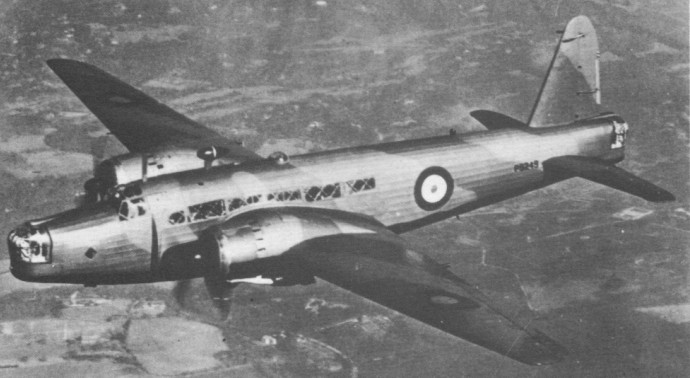
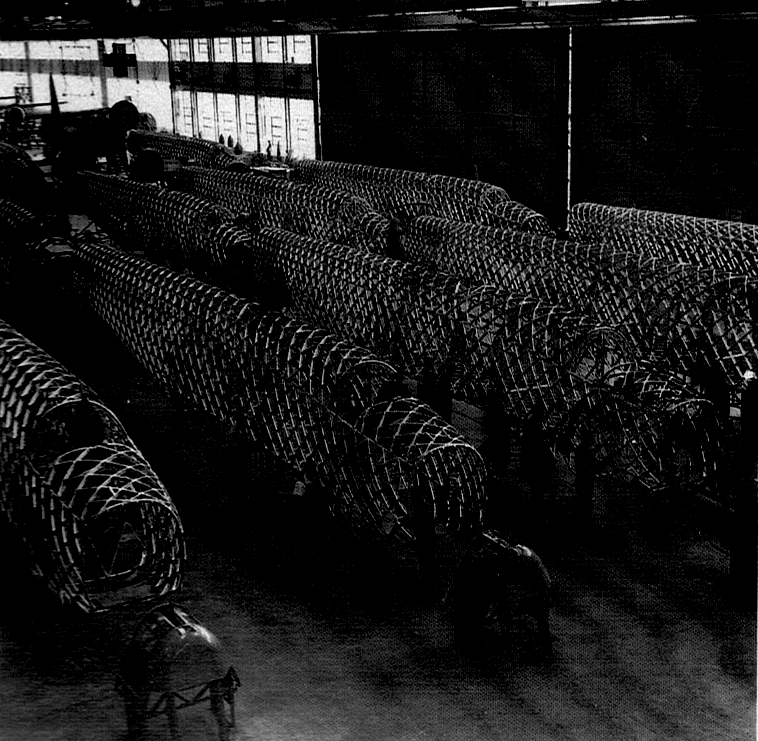
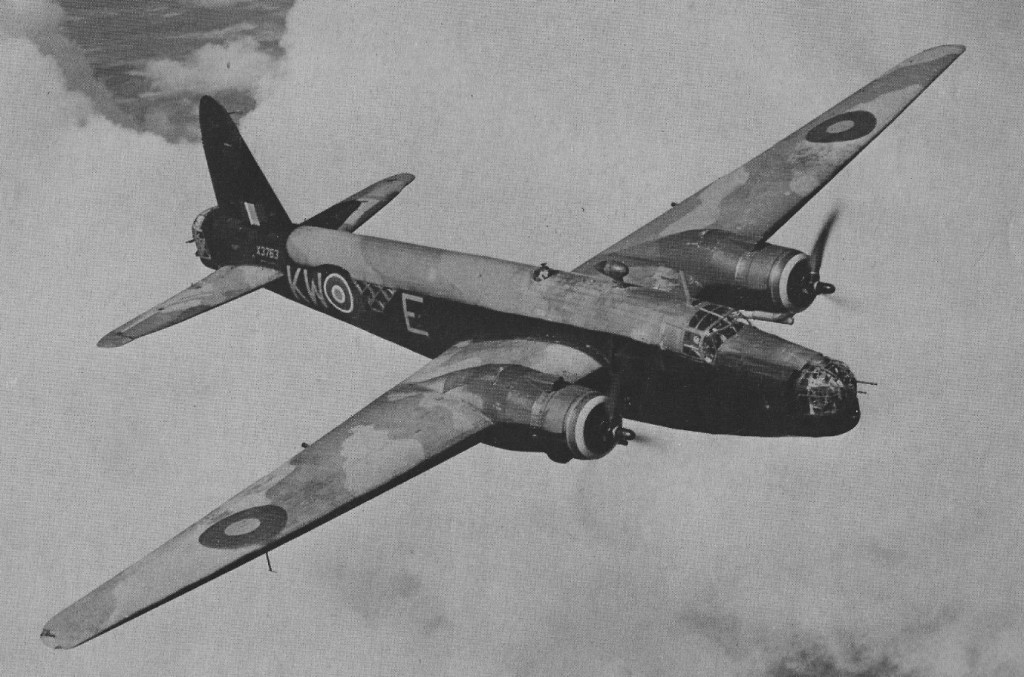
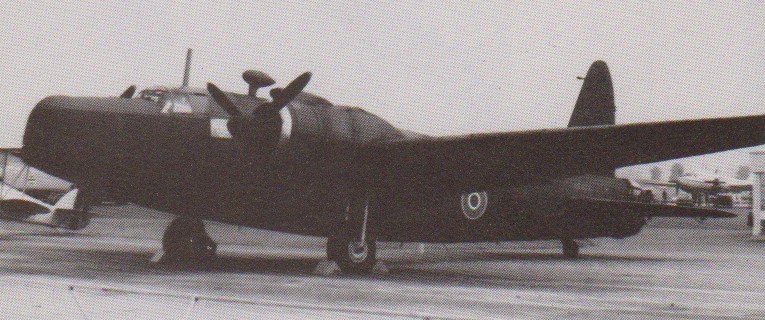
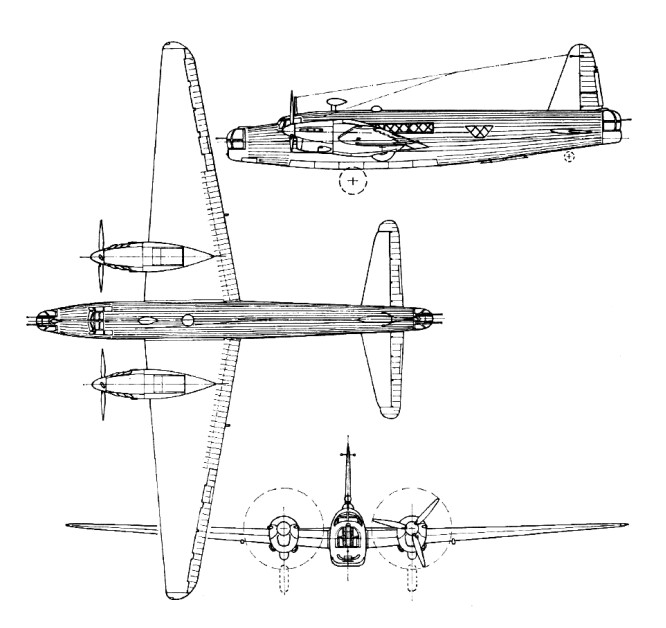
The Wellington was designed to meet an Air Ministry requirement for a long-range medium bomber under Specification B.9/32 and evolved as a mid-wing monoplane with a fuselage of oval cross-section. Both of these major structures were of the geodetic construction which Barnes Wallis had introduced in the Wellesley. But experience with the latter and development of the geodetic concept made it possible for the individual components (which were built up into the ‘basket-weave’ structure) to be smaller and lighter in weight without any loss of structural integrity by comparison with the Wellesley. Wings, fuselage and tail unit were fabric-covered; power plant comprised two wing-mounted engines; and the tailwheel-type landing-gear units were hydraulically retractable.
‘Heavy’ defensive armament – comprising five machine-guns in nose and tail turrets and a ventral dustbin – would, it was believed, enable a flight of these aircraft to put up such a curtain of fire that fighter escort would be superfluous. Those who held such beliefs (as for the Boeing B-17 Fortress developed in America) were to discover their error very quickly.
Though it had been planned to fit Rolls-Royce Goshawk inlines or Bristol Mercury radials the engine selected was the Pegasus. The prototype Wellington made its first flight on 15 June 1936, but it was not until October 1938 that production aircraft began to enter RAF service. The variant that entered service with No. 99 Squadron in October 1938 was the Wellington Mk I, of which 181 were built with Pegasus XX radials. By the outbreak of war Bomber Command had six operational Wellington squadrons.
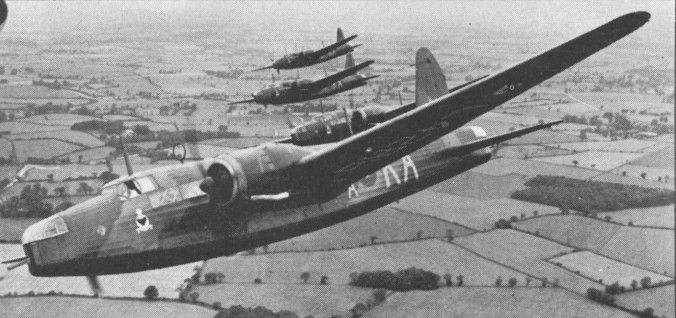
Less than one year later (on 4 September 1939) Wellingtons were in action against targets in Germany. Wellingtons and Blenheims shared the honour of being the first Royal Air Force aircraft to attack Germany when they bombed ships at Brunsbüttel on 4 September 1939. Early deployment on daylight raids showed that these and other British bomber aircraft were extremely vulnerable to fighter attack. Following the loss of ten Wellingtons from a force of 24 despatched on an armed reconnaissance of Wilhelmshaven on 18 December 1939, the type was withdrawn from daylight operations. As a night bomber, however, the Wellington proved an invaluable weapon during the early years of Bomber Command’s offensive against Germany.
Wellington production was to total 11,461 aircraft and embraced many versions. These included Mk I bombers (782kW Bristol Pegasus XVIIIs) and the DWI with degaussing ring to trigger magnetic mines. Other variants developed before the war were the Mk IA with a Nash and Thompson turret, the Mk IC with the ventral turret replaced by beam guns.
Differing engines distinguished the 853kW Rolls-Royce Merlin X-powered Mk II; 1,021kW Bristol Hercules XI Mk III; and Pratt & Whitney Twin Wasp Mk IV.
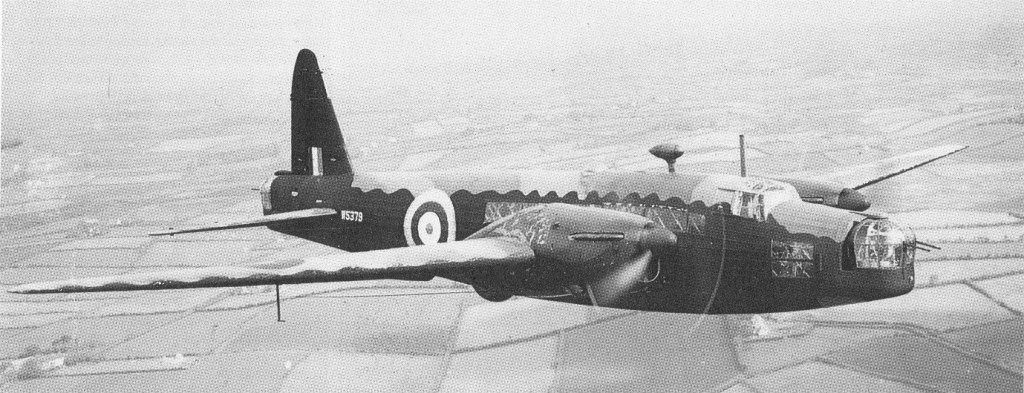
Wellington Mk.II
The Merlin engined Mk.II entered service in 1941.
Vickers Wellington III
The Wellington Mk V was a high-altitude aircraft with pressurised cabin, no nose turret and increased wing span, followed by the high-altitude Mk VI with 1,192kW Rolls-Royce Merlin 60 or 62 R6SM engines. Mk VII was designated an experimental model and Mk VIII was the first of many reconnaissance versions. Mk IX aircraft were Mk Is modified as troop carriers. The Mk X with Hercules VI or XVI engines was the last bomber. Wellingtons Mk XI, XII and XIII were ASV radar-equipped aircraft for Coastal Command. The Mk XIV with Hercules XVII engines was the final reconnaissance version. In addition to these specific versions there were many variants, and Wellingtons were also used for training and transport.
The last Wellingtons produced, Mk X RP590 being delivered from Squires Gate on October 13, 1945.
The Vickers Wellington bomber provided the mainstay of Bomber Command’s night attacks on Germany in the early stages of the Second World War. To the extent that at one period it equipped no fewer than 21 squadrons, and when the first 1,000 bomber raid was mounted against Cologne, in May 1942, more than half of the aircraft involved were Wellingtons.
Wellingtons dropped 42,440 tons of bombs on sorties from Britain, including the first 4,000 lb (900 kg) block busters.
Designed as a bomber, it became an effective torpedo carrier and submarine killer in Coastal Command before going on to Transport and Training Commands.
On 3 December 1942, Dr. R.V. Jones, chief of the scientific branch of the secret service in the British Air Ministry, obtained Churchill’s permission to send a Wellington bomber full of measuring instruments to Frankfort am Main. The plane, DV819, was to be used as a decoy in the hope that the crew could find out at least the megahertz frequency of new German target-locator system radar. The plane was shot down a short distance from the coast of Britain, but the crew were saved at the last minute and reported: ‘It was 490 megahertz’.
The Wellington Mk.XVI transport were conversions of the early IC model.
Mk.1A Engines: 2 x Bristol Pegasus, 1050 hp Wingspan: 86 ft Length: 61 ft 3 in Height: 17 ft 6 in MAUW: 31,500 lb
Mk IC Type: five/six-seat long-range medium night bomber Engines: 2 x Bristol Pegasus XVIII, 746kW (1,000 hp) Span: 26.26m (86ft 2in) Length: 19.68m (64ft 7in) Armament: 6 x 7.7-mm 0.303-in) machine-guns Bombload: 2041 kg (4,500 lb) internally MTOW: 12928 kg (28,500 lb) Max speed: 235 mph at 15,500ft Operational range: 2,550 miles
406 Mk II Engines: 2 x Rolls-Royce Merlin X, 853-kW (1,145-hp)
Mk III Engines: 2 x Bristol Hercules III, 1025-kW (1,375-hp) Length: 64.6 ft. (19.7 m) Wing span: 86.1 ft. (26.2 m.) Weight empty: 15,887 lb. (7,233 kg.) Crew: 6 Armament: 8 mg Max. bomb load: 4,500 lb. (2,000 kg.) Max. Speed: 255 m.p.h. (410 km.p.h.) Ceiling: 22,000 ft. (6,700 m.) fully loaded Range: 1,470 miles (2,365 km.)
B Mk.III Engines: 2 x Bristol Hercules XI, 1535 hp
Wellington Mk X Engines: 2 x Bristol Hercules XI, 1119kW Max take-off weight: 13381 kg / 29500 lb Empty weight: 8417 kg / 18556 lb Wingspan: 26.26 m / 86 ft 2 in Length: 18.54 m / 61 ft 10 in Height: 5.31 m / 17 ft 5 in Wing area: 70.0 sq.m / 753.47 sq ft Max. speed: 410 km/h / 255 mph Ceiling: 5790 m / 19000 ft Range w/max.payload: 2478 km / 1540 miles Crew: 4 Armament: 8 x 7.7mm machine-guns Bombload: 2041kg






 All Aero