
This was J Lester Garbrick’s 90-lb mini-biplane, built in 1941 for and flown by his teen-age son, according to the Oct 1949 Flying.
Engine: Indian Chief motorcycle engine
Cruise speed: 50 mph
Stall: 30 mph
Seats: 1
This was J Lester Garbrick’s 90-lb mini-biplane, built in 1941 for and flown by his teen-age son, according to the Oct 1949 Flying.
Engine: Indian Chief motorcycle engine
Cruise speed: 50 mph
Stall: 30 mph
Seats: 1
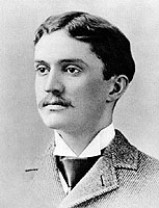
Edson Gallaudet was a grandson of Thomas Hopkins Gallaudet, specialist in education of the deaf and co-founder of what evolved into Gallaudet University in Washintgon, D.C. He earned a Ph.D. in electrical engineering in 1896 and was a physics instructor at Yale from 1897 to 1900.
The Gallaudet Kite of 1898 was built by Edson Fessenden Gallaudet, an engineer (PhD) and then working as a physics instructor at Yale, this hydro-bike kite was built to test wing-warping controlled by a system of gears and rods. Its wingspan was 11 and ½ feet, its length just over eight feet.
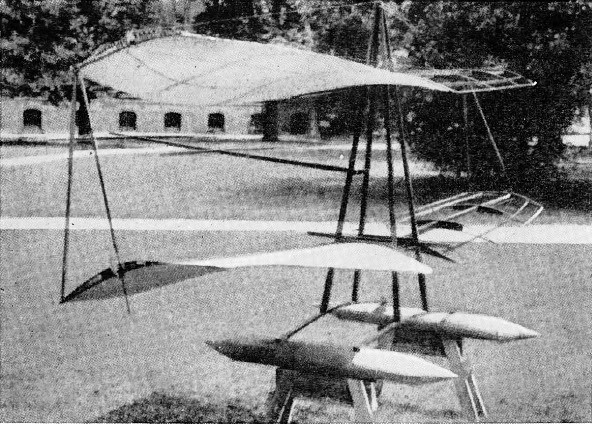
The original is currently on display at the Early Flight Gallery in the National Air and Space Museum.
Gallaudet worked for several engineering firms from 1900 until 1908. Then he founded Gallaudet Engineering Company in Norwich, Connecticut, and evidently wasted no time. His first airplane came a year later, with others to follow.
1908: (Edson) Gallaudet Engr Co Inc, Norwich CT., USA
His 1912 A-1 Bullet was a sleek monoplane of pusher layout. The motor, a 100-hp Gnome rotary, was enclosed in the fuselage and drove its three-blade rear-mounted prop through a lengthy driveshaft.
In 1916, Gallaudet’s D-1 floatplane optimized ship-catapult launching with its uniquely positioned propulsion. Dual Duesenberg 125-hp 4-cylinder engines were side by side amidships in the D-1’s fuselage. A four-blade propeller was in the middle as well, driven by a 6:5 spur gear and seemingly splitting the fuselage in two.
The U.S. Army bought four of its D-2 variants. A pair of D-4s followed, with the observer given the forward cockpit for a better view. The D-4 swapped dual Duesenbergs for single Liberty power. A prototype crashed in flight testing; the second one was accepted by the U.S. Navy for observation duties.
Gallaudet then turned his company’s attention to constructing Curtiss HS-2L flying boats, many serving in anti-submarine patrols during World War I.
Following delivery of the D-1 in January 1917, the firm reorganized as Gallaudet Aircraft Corporation, and moved to Greenwich, Rhode Island. Later built 5-seat biplane tourer, the Liberty Tourist, and rebuilt 25 DH-4s for U.S. Army.
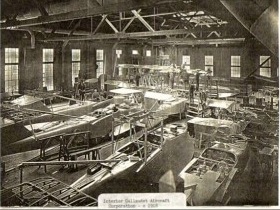
A 1919 catalog for the Gallaudet Aircraft Corporation lists the Chummy Flyabout. This was a two-place land-based monoplane, again with Gallaudet-unique propulsion. Two Indian motorcycle engines, each producing from 18 to 20 hp, were mounted in the nose and drove a pair of pusher props.
Later, in 1923, Gallaudet designed and built an aircraft of all-metal construction.
Gallaudet retired in 1924, keeping scientific memberships and a low profile until his death at age 74 in 1945. His company evolved into Consolidated Aircraft, renowned for the B-24 Liberator heavy bomber and PBY Catalina flying boat.
G&A Aircraft had previously built six examples of the XO-61 two-seat gyroplane for the U.S. Army from 1942.
Engine: Jacobs R-915-3, 300 hp.
Gross wt: 3038 lbs.
Rotor dia: 48 ft.
No of blades: 3.
Seats: 2
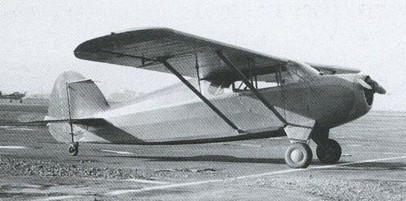
The first plane or Funk model ‘A’ was powered by and inverted and converted flat head four cylinder ingine.
The Funk Model B was a 1930s American two-seat cabin monoplane designed by Howard and Joe Funk. Originally built by the Akron Aircraft Company later renamed Funk Aircraft Company.
The Model B was the first powered aircraft designed by brothers Howard and Joe Funk, whose previous experience was in homebuilt gliders and sailplanes. Similar in appearance to a Piper Cub, their Model B was a strut-braced high-wing monoplane with a conventional tail unit and fixed tailwheel landing gear. The design uses mixed construction with fabric covered wooden wings and a welded steel-tube fuselage. The aircraft was powered by the brothers’ own Model E engine developed from a Ford “B” motor-car engine. The prototype first flew in late 1933.
When the test flights proved to be successful the brothers formed the Akron Aircraft Company in 1939 to build the Funk B. After production began, the engine was changed to a 75hp (56 kW) Lycoming GO-145-C2 horizontally-opposed four-cylinder engine and was re-designated the Model B-75-L.
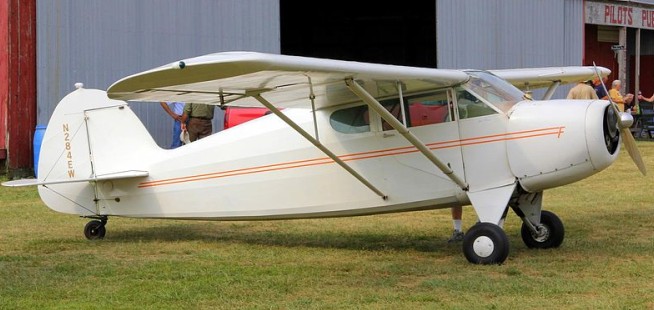
In 1941 the company moved from Akron to Kansas and the company was renamed the Funk Aircraft Company. Production was stopped during the Second World War and one aircraft was impressed into service in 1942 with the United States Army Air Corps as the UC-92.
After the war in 1946 production was resumed using a Continental C85-12 engine and the aircraft was redesignated the Model B-85-C and named the Bee. It did not sell well and production was halted in 1948. 380 aircraft of all variants had been built.
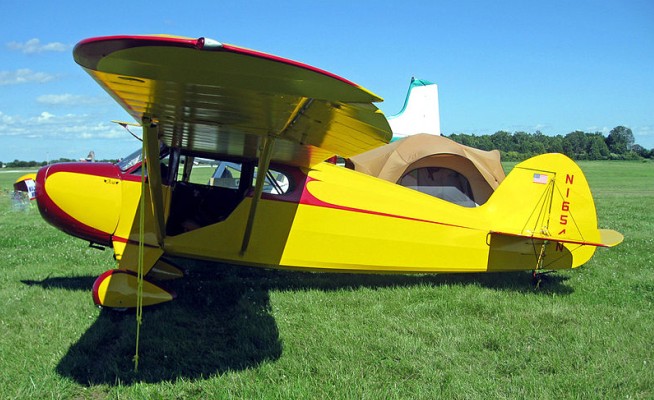
Variants:
Model B
Prototype and initial production aircraft with Funk E engine.
Model B-75-L
Pre-war production aircraft with a 75hp (56 kW) Lycoming GO-145-C2 piston engine.
Model B-85-C Bee
Post-war production aircraft with a Continental C85-12 engine.
UC-92
Army designation for one impressed Model B-75-L (s/n 42-79548).
Specifications:
B-85-C
Engine: 1 × Continental C85-12, 85 hp (63 kW)
Propeller: 2-bladed Lewis fixed pitch
Wingspan: 35 ft 0 in (10.67 m)
Length: 20 ft 1 in (6.12 m)
Height: 6 ft 1 in (1.85 m)
Wing area: 169 sq ft (15.7 sq.m)
Airfoil: NACA 4412
Empty weight: 890 lb (404 kg)
Gross weight: 1,350 lb (612 kg)
Fuel capacity: 20 US gal (76 l; 17 imp gal)
Maximum speed: 115 mph (185 km/h; 100 kn) at sea level
Cruise speed: 100 mph (87 kn; 161 km/h)
Range: 350 mi (304 nmi; 563 km) with 30 minutes reserve
Service ceiling: 15,000 ft (4,572 m)
Rate of climb: 800 ft/min (4.1 m/s)
Take-off run: 348 ft (107 m)
Crew: 2
Formed 1941 at Coffeyville, Kansas, successor to Akron Aircraft Inc., to market Funk Bros. Model B two-seat monoplane. Production resumed after Second World War, aircraft redesignated B-85-C Bee, with Continental C-85 engine. Manufacturing rights acquired in 1962 by Thomas H. McLish of Sharon, Pennsylvania.
Designed by Stanley Corcoran, the two-place tandem Cinema II was developed in 1940 from the single-place Cinema I. The Cinema has wood/fabric wings and tail, steel-tube/fabric fuselage, and I-strut braced wings. Original versions had small, all-moving tails but the military TG-1A’s had conventional tails. The few civilian models, also known as Cinema B’s, became TG-1B’s, C’s, or D’s, largely dependent on when they were acquired.
Sixty-two were built.
One TG-1A was donated to the Smithsonian Air & Space Museum. The Vintage Sailplane Association has copies of the military manuals, drawings of the military paint scheme and colour chips available.
Cinema II
Wing span: 14.1m / 46.27ft
Wing area: 18.05sq.m / 194.3sq.ft
Empty Weight: 227kg / 500lb
Payload: 190kg / 420lb
Gross Weight: 417kg / 920lb
Wing Load: 23.1kg/sq.m / 4.7lb/sq.ft
Water Ballast: 0
Airfoil: Go 549
Aspect ratio: 10.7
L/DMax: 20
MinSink: 0.97 m/s / 3.2 fps / 1.90 kt
Seats: 2
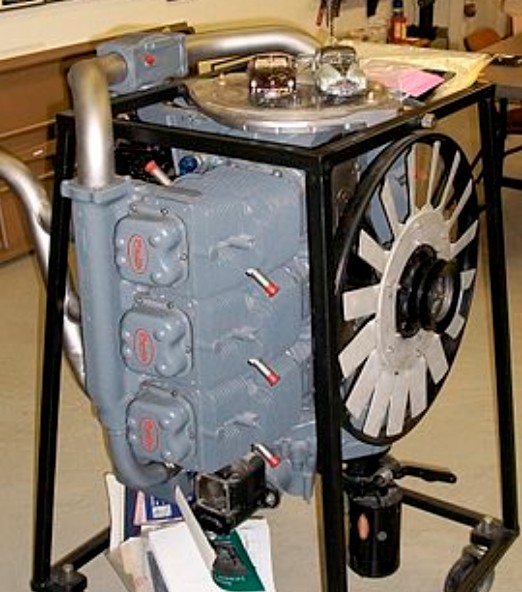
The Franklin O-335 (Company designations variations on 6A4) was a series of air-cooled aircraft engines of flat-six configuration.
These engines were commonly vertically mounted and used to power many early helicopters in the United States. They were closely related to the 2A4 and 4A4 2- and 4-cylinder engines. In various subtypes, the 6A4 remained in continuous production from 1945 to the time Franklin’s United States operations ceased in 1975, with versions continuing in Polish production into the 1990s. 6AC ATC 222, 225
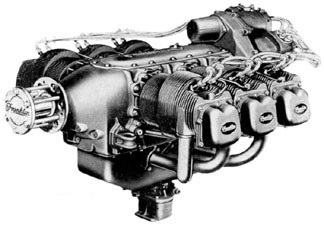
In 1947 this engine was modified into a water-cooled version by the Tucker Car Corporation for use in the 1948 Tucker Sedan. Tucker liked the engine so much that he purchased the Aircooled Motors/Franklin Engine Company and it remained under the ownership of the Tucker family until 1961.
Variants:
O-335
Military designation
6A4-124
6 cyl
334ci
6A4-130
6 cyl
334ci
6A4-135
6 cyl
334ci
6A4-140
6 cyl
334ci
6A4-145
6 cyl
334ci
6A4-150
6 cyl
334ci
6A4-165
6 cyl
334ci
6A4-178
6 cyl
334ci
6A4-1854
6 cyl
334ci
6A4-200
6 cyl
334ci
6A4-300
6 cyl
334ci
O-335
6 cyl
334ci
6A-335
180 hp (134.2 kW) at 2,800rpm, 200 hp@3100 rpm
1963-1976
6A-350
205 hp@2800rpm-235 hp@3200 rpm
1965-2002
352.8ci
6AL-335
150 hp (111.9 kW) at 2,600 rpm
6A4-125
125 hp (93.2 kW) at 2,200rpm
1945-1949
6A4-130
130 hp (96.9 kW) at 2,200rpm
1945-1949
6A4-135
135 hp (100.7 kW) at 2,450rpm
1945-1949
6A4-140
140 hp (104.4 kW) at 2,375rpm
1945-1949
6A4-145
145 hp (108.1 kW) at 2,600rpm
1945-1949
6A4-150
150 hp (111.9 kW) at 2,600rpm
1945-1975
6A4-165
165 hp (123.0 kW) at 2,800rpm
1947-1975
6A4-200
200 hp (149.1 kW) at 3,100rpm
1952-1953
6A8-215 / O-500
215hp at 2500rpm
1945-1951
6-cyl
500.7ci
6AC-264 / O-265
110hp at 2600rpm-120hp at 2600 rpm
6-cyl
263.9ci
6AC-298 / O-300
130hp at 2600rpm -155 hp at 2930 rpm
1941-1945
6-cyl
6ACG-264
138 hp at 3100rpm
6AC-425
Military designation O-425
6AG-335
220 hp (164.1 kW) at 3,400rpm
6AC-403 / O-405
200 hp at 2750rpm
1942-1946
6-cyl
403.2ci
6ACG-298-P5
160 hp at 3200rpm
1941-1945
6ACGSA-403
250 hp at 3200rpm
1942-1946
6ACGSA-403
250 hp at 3200rpm
1942-1946
6ACSA-403
220 hp at 2750rpm
1942-1946
6ACT-298
150 hp at 3000rpm
1941-1945
6ACTS-298-K4 / O-300-5
O-300-7
175 hp at 3000 rpm
6ACTS-298
160 hp at 3200rpm
1941-1945
6ACV-245
245 hp at 3275rpm
1944-1958
6ACV-298 / O-300
160 hp at 3250rpm
1944-1946
6-cyl
297.9ci
6ACV-403 / O-405
235 hp at 3275rpm
1942-1946
6-cyl
403.2ci
6ACV-405
Military designation O-405
6-cyl
Vertical fan-cooled helicopter engine
6AG-335
220 hp at 3400rpm
1963-1976
6AG4-185
185 hp (138.0 kW) at 3,100rpm
1947-1950
6AG6-245
240 hp at 3200rpm, 245@3300 (TO)
6AGS-335
260 hp (193.9 kW) at 3,400rpm
1963-1976
6AGS6-245
250 hp at 3200rpm
1944-1948
6AL-315
175hp
6-cyl
1944-1945
ATC 234
315.7ci
6ALG-315
175 hp
1944-1945
6AS-335
240 hp (179.0 kW) at 3,200rpm
1964-1976
6AS-350
235 hp at 2800rpm
1968-1996
6V-335-A
210 hp at 3100rpm
1956-1964
6V-335-A1A
200 hp (149.1 kW) at 3,100rpm
1959-1964
6V-335-A1B
200 hp (149.1 kW) at 3,100rpm
1959-1964
6V-335-B
210 hp (156.6 kW) at 3,100rpm
1956-1964
6V-350
235 hp at 3200rpm
1964-1996
352.8ci
6V4-165
165 hp (123.0 kW)
1947-1950
6V4-178
178 hp (132.7 kW) at 3,000rpm
1946-1960
6V4-200
200 hp (149.1 kW) at 3,100rpm
1946-1970
6V6-245-B16F
245 hp at 3275rpm
1944-1958
6-cyl
425.3ci
6V6-300-D16FT
285 hp at 3275rpm, 300 hp at 3275 rpm + Boost (TO)
1955-1960
6-cyl
425.3ci
6VS-335
225 hp (167.8 kW) at 3,200rpm
1959-1964
Applications:
Aero-Flight Streak-165
Aeronca 15AC Sedan
Bartlett Zephyr
Bartlett LC-13A
Bell 47
Bell HTL
Bell H-13 Sioux
Bellanca Cruisair
Bellanca 14-13
Brantly B-1
Bunyard BAX-3 Sportsman
Cessna 170
Cessna 172
Cessna 175
C.L.A.S.S. BushCaddy L 164
Convair 106 Skycoach
Convair L-13
Culver XPQ-15
Culver XTD3C-1
Doman LZ-1A
Doman LZ-2A Pelican
Fairchild XUC-86B
Fleetwings XBQ-1
Goodyear GA-1 Duck
Goodyear GA-2B Duck
H-23 Raven
Hiller 360
Hiller H-23 Raven
Hiller HTE
Hiller UH-12B
Hirth Acrostar
Jovair 4E Sedan
Kaiser Magic
Kellett XR-8
Maule M-4
Maule M-5-220C Lunar Rocket
McCulloch HUM-1
McCulloch MC-4C
McCulloch YH-30
McKinnie 165
Omega BS-1
Piaggio P.136-L
Procair F.15D Picchio
PZL-Mielic M-20 Mewa
PZL M-26 Iskierka
Republic RC-3 Seabee
Republic RC-1 Thunderbolt
Republic YOA-15
Seibel S-4
SIAI-Marchetti S.205
Sikorsky HO5S
Sikorsky R-7
Sikorsky S-52
Sikorsky XR-6
Sikorsky YH-18
Sikorsky S-52
Socata MS.894 Rallye Minerva
Socata MS 894 Commodore 220
Socata Rallye 220GT
Socata Silvercraft SH-4
Southern Aerocar
Stinson Voyager
Taylorcraft 15
Temco TE-1B
Tucker (automobile)
Temco YT-35 Buckaroo
Van’s RV-8
Waco Minerva 220
Waco Model W Aristocraft
Wagner Sky-Trac 1
Wagner Sky-Trac 3
Wagner Sky-Trac 4 Aerocar
Wittman Big X
Zenith CH-801
Specifications:
6ACV-403
Type: 6-cylinder air-cooled horizontally opposed vertically mounted helicopter piston engine
Bore: 4.625 in (117.5 mm)
Stroke: 4 in (101.6 mm)
Displacement: 403 cu in (6.60 l)
Width: 33.7 in (856.0 mm)
Height: 43.4 in (1,102.4 mm)
Dry weight: 458 lb (207.7 kg)
Valvetrain: OHV, 1x inlet valve, 1x exhaust valve operated by pushrods
Fuel system: 2x Bendix-Stromberg PS-5C pressure updraught carburettors
Fuel type: 80 Octane gasoline
Oil system: 120 S.U. secs (25.1 cs) grade pressure fed at 55 psi (379,212 Pa), dry sump
Cooling system: Air-cooled
Delco-Remy 108567-541 vertical geared electric starter motor
Power output: 245 hp (182.7 kW) at 3,275 rpm for take-off
Specific power: 0.61 hp/in³ (27.758 kW/l)
Compression ratio: 7:1
Specific fuel consumption: 0.5 lb/hp/hr (0.304 kg/kW/hr, 225 US.gal/hp/hr) cruising
Oil consumption: 0.015 lb/hp/hr (0.09 kg/kW/hr, 7 US.gal/hp/hr) cruising
Power-to-weight ratio: 0.357 hp/lb (0.587kW/kg)
6AL-335 / 6A4-150-B3
Type: 6-cylinder air-cooled horizontally opposed direct drive supercharged aircraft piston engine
Bore: 4.5 in (114.3 mm)
Stroke: 3.5 in (88.9 mm)
Displacement: 335 cu in (5.49 l)
Length: 37.4 in (950.0 mm)
Width: 30.8 in (782.3 mm)
Height: 21.6 in (548.6 mm)
Dry weight: 307 lb (139.3 kg)
Valvetrain: OHV, 1x inlet valve, 1x exhaust valve operated by pushrods
Supercharger: mechanically driven supercharger
Fuel system: 1x Marvel-Schebler MA-3SPA updraught carburettor
Fuel type: 80 Octane gasoline
Oil system: 80 S.U. secs (15.6 cs) grade pressure fed at 40 psi (275,790 Pa), wet sump
Cooling system: Air-cooled
Delco-Remy direct cranking electric starter motor
Power output:
(Take-off): 150 hp (111.9 kW) at 2,600 rpm for take-off
(Normal): 150 hp (111.9 kW) at 2,600 rpm at sea level
(Cruising): 112 hp (83.5 kW) at 2,350 rpm at sea level
Specific power: 0.45 hp/in³ (20.35 kW/l)
Compression ratio: 7:1
Specific fuel consumption: 0.51 lb/hp/hr (0.311 kg/kW/hr, 229.5 US.gal/hp/hr) cruising
Oil consumption: 0.01 lb/hp/hr (0.006 kg/kW/hr, 4.5 US.gal/hp/hr) cruising
Power-to-weight ratio: 0.488hp/lb (0.8kW/kg)
B.m.e.p.: 137 psi (945 kPa)
1936: Doman-Marks Engine Co Inc
Syracuse NY.
USA
1937: Aircooled Motors Div, Franklin Engine Co.
c.1942: F W Woolworth Co.
c.1945: Republic Aviation.
1961: Allied Aero Industries
Pottstown PA.
USA
Franklin Engine Corp
p: Nathan Abbott)
1975: PZL-Franklin, Rzeszow Poland.
Fouga et Cie
Air Fouga
Potez Air Fouga
Fouga’s aircraft department formed 1936, subsequently building designs of M. Pierre Mauboussin who, with M. Castello, developed Castel-Mauboussin gliders and sailplanes. Operated postwar as Etablissements Fouga et Cie, becoming Air Fouga September 1956 when company was taken over, in equal shares, by Breguet, Dassault, Morane-Saulnier, Sud Est and Ouest Aviation.
Acquired by Henry Potez May 1958, renamed Potez Air Fouga. Early activities included production of Mauboussin 123 trainer, Castel C.25S, C.30S, and C.300S gliders. Castel- Mauboussin CM.10 transport glider built for French military forces, also CM.100 powered version with two Renault engines. In the latter CM-101R Renault engines augmented by two Turbomeca Pimene turbojets. Experience with CM.8-R.9 Cyclipe and with the Gemeaux led to development of the CM.170R Magister jet trainer, first flown 23 July 1952 and subsequently built in quantity for French Air Force and overseas customers.
The company operated as Potez Air Fouga until September 23,1961, when it was completely absorbed into Etablissements Henry Potez SARL. Continued development of CM.170 Magister and CM.175 Zephyr naval version, which were first flown as production aircraft on May 30,1959.
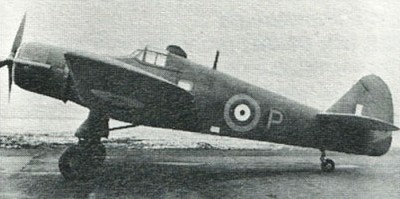
After the foundation of Folland Aircraft Ltd a series of projects beginning with Fo.101 remained paper designs only, and the firm’s first real aircraft was the Folland Fo.108, designed to meet Specification 43/37 for an engine testbed. Percival and General Aircraft also tendered, but Folland won the contract for a batch of 12 (P1774-85).
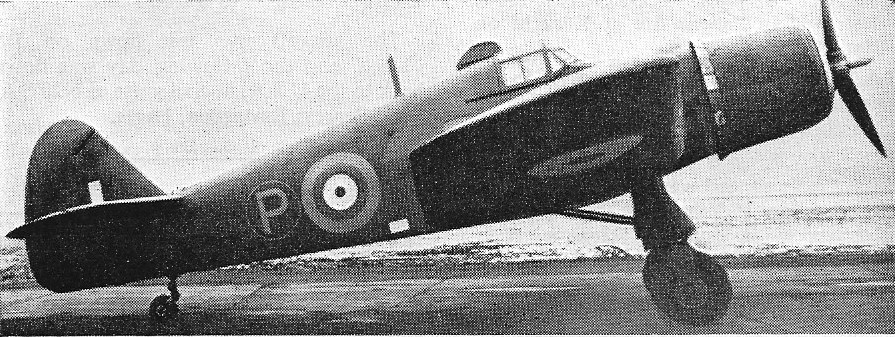
A large, single-engined, low-wing monoplane with fixed landing gear, the Folland 43/37 accommodated a pilot and two observers in a large cabin with complete instrumentation for monitoring engine performance in flight. Construction was mixed, the semi-monocoque fuselage of light alloy while the wings and tail were plywood-covered. Split trailing-edge flaps and automatic wingtip slots were fitted.
The first was delivered in 1940, and the first recorded loss was on 28 April 1944 when the eighth aircraft crashed on take-off from Heston during Bristol Centaurus IV tests. Centaurus Is and IVs rapidly disposed of three more Folland 43/37s in only three weeks, the third, first and second aircraft being lost on 28 August and 14 and 18 September 1944 respectively. The sixth aircraft was also lost on 14 September while fitted with a Sabre I. The only other recorded fates are two struck off charge in 1945: the eleventh on 5 March after testing the Hercules XI and the fifth on 27 March after Rolls-Royce Griffon tests.
The testbed aircraft engine installations included differing versions of the Napier Sabre, Bristol Hercules and Centaurus, and Rolls-Royce Griffon. The fifth aircraft was used later by de Havilland for propeller tests.
43/37
Engine: 1 x Centaurus
Max take-off weight: 6800 kg / 14992 lb
Wingspan: 17.68 m / 58 ft 0 in
Length: 13.21 m / 43 ft 4 in
Height: 4.95 m / 16 ft 3 in
Wing area: 54.63 sq.m / 588.03 sq ft
Max. speed: 470 km/h / 292 mph
Cruise speed: 430 km/h / 267 mph
 All Aero