General Aircraft General Aircraft GAL.55

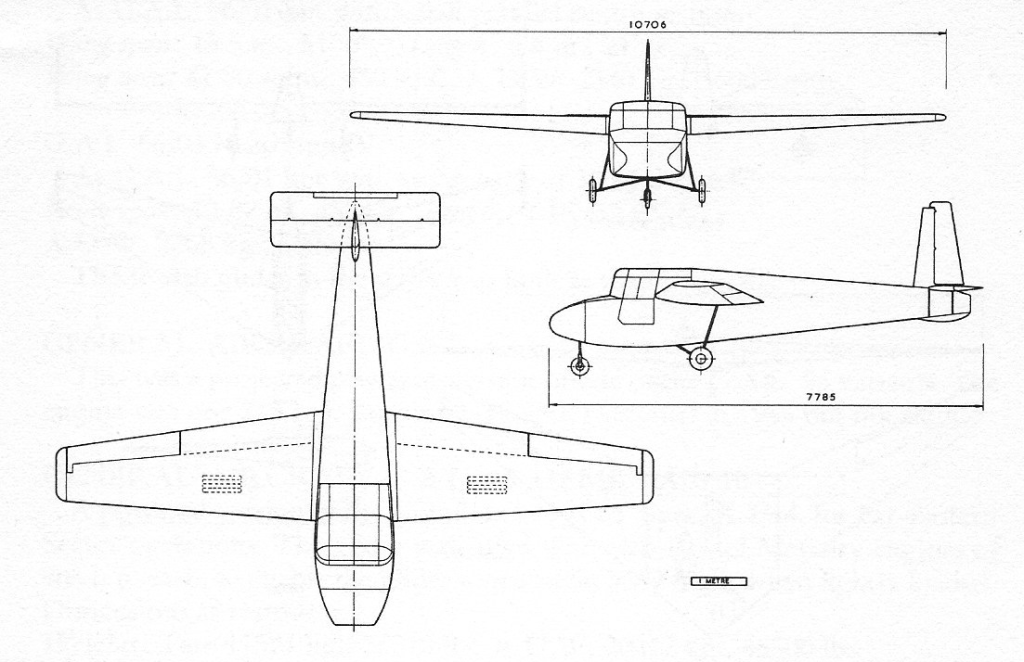
The General Aircraft GAL.55 was a two-seat training glider designed and built by General Aircraft Ltd to AM Spec TX.3/43 to train transport glider pilots.

Wings were built from spruce and plywood, the fuselage being made out of steel tubes faired with wooden formers and fabric covered.

Side-by-side seating with amber panels for daytime night flying.

The undercarriage was tricycle, of fixed centres, plus tail bumper. Dive brakes were fitted, plus bellows-operated split tailing edge flaps.

The first flights wee around the end of 1943, a Westland Lysander being used for towing.

Wingspan: 10.71 m / 35 ft 1.5 in
Length: 7.79 m / 25 ft 6.5 in
Wing area: 16.74 sq.m / 182 sq.ft
Aspect ratio: 6.8
Empty weight: 747.4 kg / 1650 lb
AUW: 1066 kg / 2350 lb
Max speed: 362 kph / 225 mph
Max tow speed: 282 kph / 175 mph
Stall: 100 kph / 62 mph flaps up / 87 kph / 54 mph flaps down

General Aircraft GAL 49 Hamilcar

Prototype under construction

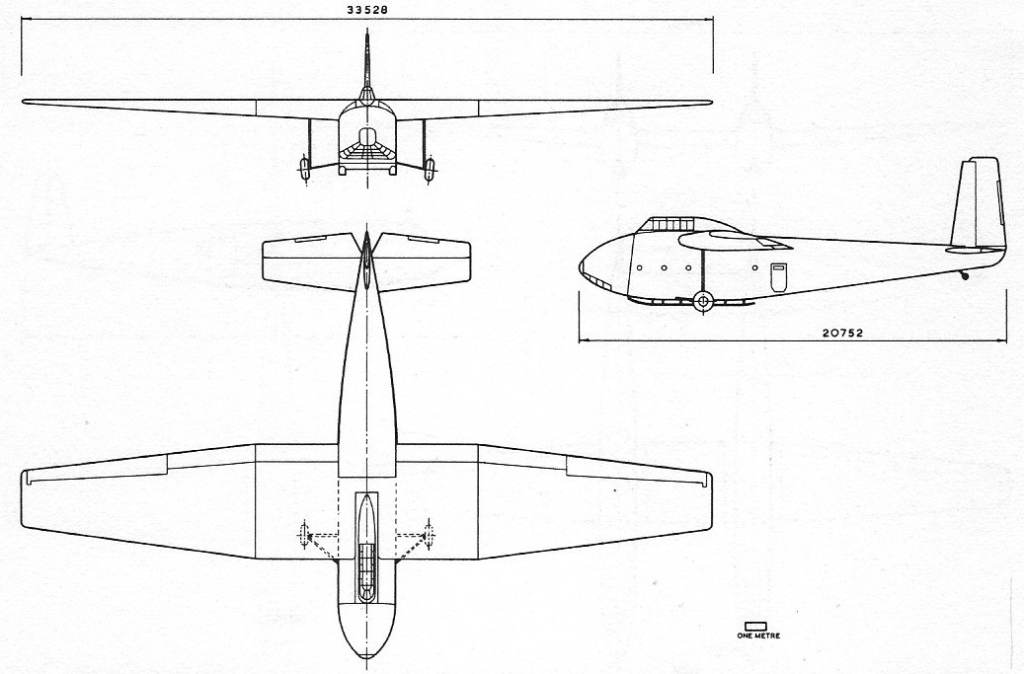
The General Aircraft GAL 49 Hamilcar 1 was a large transport glider of wooden construction, designed to A.M. Spec. X.27/40 to carry a crew of two and either 60 troops or a flight 7-ton tank.

A hinged nose section was fitted for loading. The undercarriage was jettisonable mainwheels and two steel sprung main skids. Trailing edge flaps were fitted.

They were built by General Aircraft Ltd and various sub-contractors. The first flight of the prototype was on 27 Mach 1942.

Variation
General Aircraft GAL.58 Hamilcar

Wing span: 110.007 ft / 33.53 m
Wing area: 1657.441 sq.ft / 153.980 sq.m
Length: 68.012 ft / 20.73 m
Height: 20.243 ft / 6.17 m
Max take off weight: 36005.4 lb / 16329.0 kg
Weight empty: 18402.9 lb / 8346.0 kg
Aspect ratio: 7.3
Wing section: RAF 34 modified
Max. speed: 130 kts / 241 kph
Max tow speed: 241 kph / 150 mph
Stall: 104 kph / 65 mph
Landing speed: 57 kts / 105 kph
Wing load: 21.73 lb/sq.ft / 106.0 kg/sq.m
Crew: 1

General Aircraft GAL.48 Hotspur / GAL.48B Twin Hotspur

The General Aircraft GAL 48 Hotspur I was an eight-seat troop carrying glider of all wood construction designed to Air Ministry Specification X.10/40 and built by General Aircraft and Slingsby Sailplanes in 1941.

The prototype first flew in 1941.

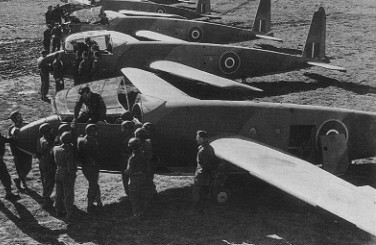
The General Aircraft Hotspur 8 seat assault training glider was first intended to be released at 20,000ft for long gliding missions, but 16ft was lopped off the span and it was used for training as the Hotspur 2.

The GAL.48 Hotspur 2 were built by Harris Lebus and other sub-contractors, in 1941.

The GAL.48 Hotspur 3 were Hotspur 2 fitted with dual controls.

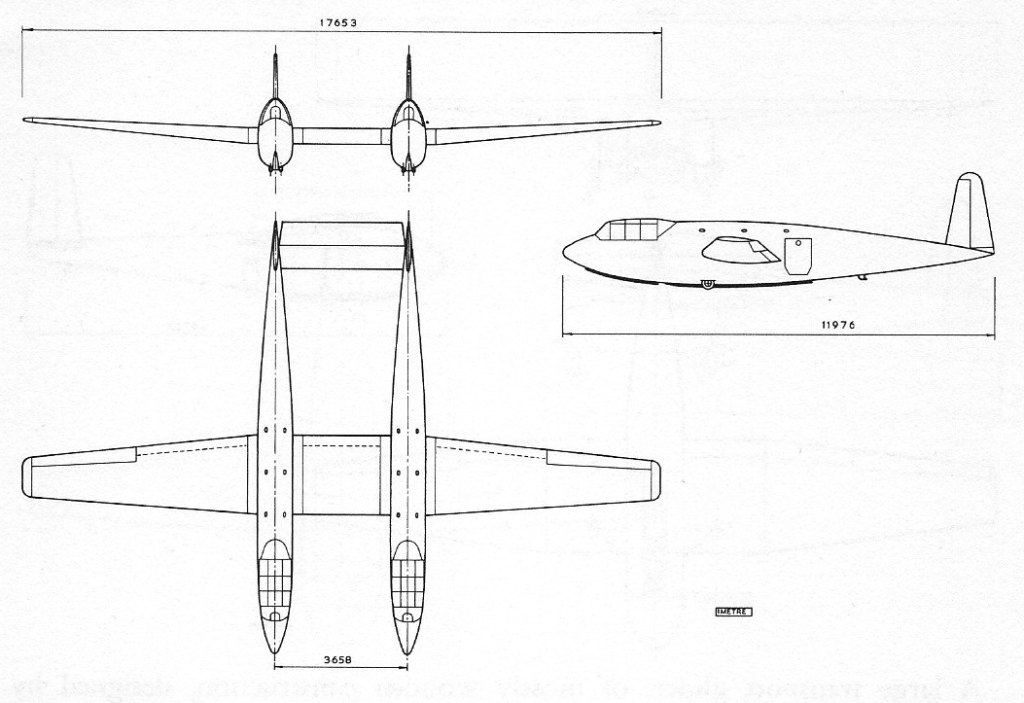
The GAL.48B Twin Hotspur was a sixteen-seat troop transport glider built by General Aircraft Ltd in 1942. It was two Hotspur 2 fuselages joined together with a short centre wing. The first flight of the prototype was in August 1942. It was flown from the port fuselage, there being no controls in the starboard cockpit.

General Aircraft GAL 48 Hotspur
Training glider, United Kingdom, 1940
Length: 39.304 ft / 11.98 m
Height: 10.827 ft / 3.3 m
Wing span: 61.909 ft / 18.87 m
Wing area: 272.006 sq.ft / 25.27 sq.m
Max take off weight: 3598.6 lb / 1632.0 kg
Weight empty: 1660.4 lb / 753.0 kg
Max. speed: 113 kts / 209 kph
Landing speed: 49 kts / 90 kph
Cruising speed: 78 kts / 145 kph
Cruising altitude: 20013 ft / 6100 m
Wing loading: 13.33 lb/sq.ft / 65.0 kg/sq.m
Range: 72 nm / 134 km
Crew: 8

GAL 48 Hotspur 2
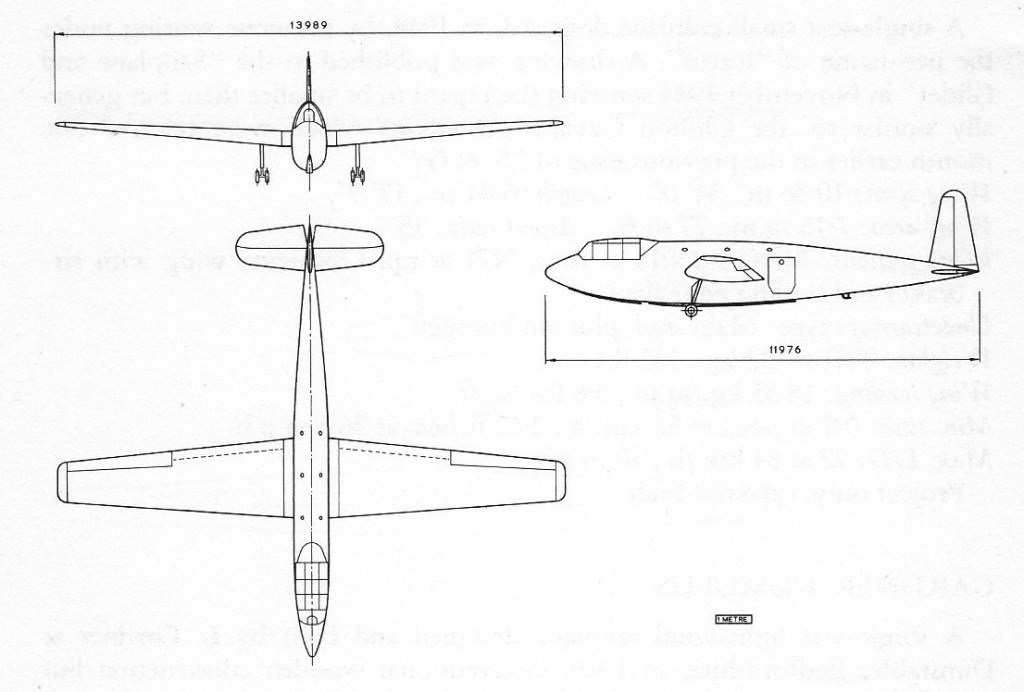
Wing span: 13.99 m / 45 ft 10.75 in
Length: 11.98 m / 39 ft 3.5 in
Wing area: 25.04 sq.m / 272 sq.ft
Aspect ratio: 7.7
Empty weight: 753.4 kg / 1661 lb
AUW: 1632 kg / 3598 lb
Wing loading: 71.77 kg/sq.m / 14.7 lb/sq.ft
Max speed: 273 kph / 170 mph
Normal glide: 129 kph / 80 mph

GAL.48B Twin Hotspur
Wingspan: 17.65 m / 57 ft 11 in
Length: 11.98 m / 39 ft 3.5 in
Wing area: 33.9 sq.m / 365 sq.ft
Aspect ratio: 9.25
Empty weight: 1456 kg / 3210 lb
AUW: 2925.7 kg / 6450 lb
Max speed: 249 kph / 155 mph
Stall: 105 kph / 65 mph

Hotspur 2
GAL.48B Twin Hotspur

General Aircraft GAL.38

In 1937 the British Admiralty issued a requirement for a novel type of aircraft to shadow enemy fleets, especially by night. The Air Ministry issued Specification S.22/37 calling for an aircraft compatible with aircraft carriers which would provide comfortable accommodation for a pilot, observer and radio operator, outstanding all round view and the ability to cruise at 40 knots for 11 hours. Two prototypes were built, the Airspeed A.S.39 (serial N1323) and the General Aircraft G.A.L.38 (P1758). These flew after the out break of the Second World War. Both were high wing aircraft with extensive slats, flaps and drooping ailerons all in the slipstream of four 130 hp Pobjoy Niagara V radials driving fixed pitch propellers. The G.A. aircraft was all wood, but the Airspeed Fleet Shadower, had a metal fuselage; the former had a nose¬ wheel and tall single fin, while the Airspeed had a tail wheel and three small fins. Each seated the observer in a panoramic nose, the pilot high and behind and the radio operator further aft. Both aircraft met the requirement but the Admiralty changed their minds about the desirability of such an air¬ craft and scrapped this programme in 1940.

Span: 17.02m (55ft 10in)
Length: 11 m (36 ft 1 in)
Gross weight: 3897 kg (8590 lb)
Maximum speed: 185 km/h (115 mph).

General Airbourne Transport Co / Bowlus MC-1 / XCG-16

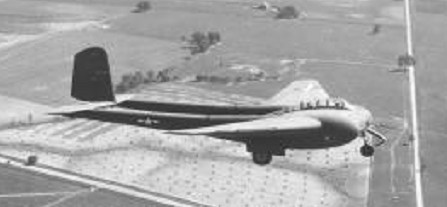
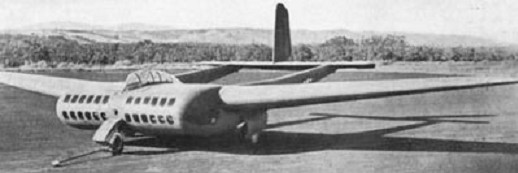
William Hawley Bowlus, a sailplane and glider manufacturer, designed a flying wing glider, the MC-1 in February 1942. Its design was a departure from single fuselage designs and incorporated a twin boom design. The MC-1 was an all-wood twin boom military transport glider of 91ft 10in span, featuring an aerofoil-sectioned lifting fuselage between the booms in which either cargo or troops could be carried in two 16ft x 7ft compartments. The load could be four tons of cargo or 48 armed troops. The front of the wing opened upwards and downwards like a pair of jaws, the bottom doors doubling as a loading ramp. A mock-up of the troop accommodation shows that the compartment tapered towards the trailing edge, allowing little headroom for those unfortunates at the back. The crew of two sat in tandem beneath a continuous canopy atop the centre section.

A single fin and rudder was mounted on the tailplane between the booms. The tricycle landing gear was retractable, and flaps were fitted to the outer wing panels and the fuselage centre section. The MC-1 was constructed mainly of plywood, although all flying surfaces and flaps were fabric-covered.
Early test flights of a full scale model proved disastrous when unsecured weighted bags shifted causing it to become unbalanced and killing the pilot and several passengers.
Hawley’s General Airbourne Transport Company received a contract in November 1943 to build the glider. The first glider was delivered six months late at three times the cost in the summer of 1943.
The MC-1 was test flown by the company and Richard duPont was the instigator of a demonstration for the military on September 11, 1943 from March Field.
The pilot of the glider was Col P. E. Gable, deputy director of the Army Air Corps assault glider program. The copilot was Howard Morrison, a long time associate of Bowlus and a test pilot.
Several VIPs set off on the flight. They included Richard Dupont, special assistant to Gen Arnold; Col Ernest Gabel, another glider specialist on the staff of the Chief of Staff of the Air Force, and C. C. Chandler, thrice soaring champion. In order to bring the glider up to more-or-less full load, bags of sand and lead shot were loaded aboard but apparently were in securely lashed some reports say they were not lashed to the glider at all. The glider was towed off from March Field by a Lockheed C-60. During turbulence the bags shifted aft and set up a porpoising moment. The tow release did not release at first pull but released on the third porpoise of the MC-1. It released from the glider. The glider entered a flat spin from which it failed to recover. Three managed to take to their parachutes but the other occupants, including Dupont, perished. Only one survived the jump.
One report says that Gable had less than 6 hours total time on gliders and allowed the XCG-16 to fly into the wake of the C-60, causing the glidcr to pitch violently and breaking the cable. The ballast shifted aft, and the glider entered the flat spin.

Despite this tragic occurrence the company persevered with a further XCG-16, albeit six months late and costing three times the estimate. It was tested at Clinton Army Air Field and at Orlando, Florida. This is probably the aircraft tested by GAT test pilot Paul E. Tuntland and Northrop test pilot J. Meyers together with army officers from the glider branch at Dayton Ohio. Total flying time for the tests was 34 hours, including 50 landings made under Service operating conditions.
Once the factory flight tests on the XCG-16 were completed, glider pilots at CCAAF flew the XCG-16 on over 70 flights in October of 1944 before the glider was rejected.
In his pilot’s test report summary, Tuntland had this to say about the handling of the XCG-16: “In my opinion the XCG-16 has excellent handling qualities. During the flight tests I had the impression of flying a large sail plane. It is laterally stable in that it has a tendency to over-bank in steep spirals. I always had good lateral control at the slower airspeeds and higher angles of attack. Longitudinal control was normal with high elevator forces noted at increased airspeeds. “Directional control was good throughout the normal speed range. There was sufficient vertical area in the tail group to maintain good directional control throughout the approach and landing roll, even in moderate crosswinds. There was no tendency to yaw before or during the landing roll except in a crosswind, where normal correction was satisfactory. The subject aircraft is very maneuverable, being capable of rolling from one vertical turn to another in a minimum of time. On one occasion I was able to soar the aircraft in moderate lift conditions. Stalling characteristics are excellent. The first stall warning is indicated about 15 m.p.h. above actual stalling speed. This aircraft made normal landings at between 40 and 75 m.p.h. with the average about 48 m.p.h. A minimum of longitudinal trimming control was necessary in a c.g. shift from 24 per cent MAC to 36 per cent MAC. Normal landings were made with the flaps retracted at approximately 70 m.p.h.
“The copilot’s lateral vision is rather poor from the rear cockpit. The pilot’s front cockpit vision is excellent forward, and good towards the sides.
“The ground cushioning effect is very noticeable and is a desirable feature of the type, assisting soft ground contact from a rough approach.
“Any glider of either tricycle or conventional landing gear that has sufficient vertical tail surfaces for directional stability will tend to turn into the wind during crosswind landings at high or low angles of attack. In this respect the XCG-16 glider has absolutely no objectionable qualities compared to any other aircraft with which I have had experience. The tendency to turn could be readily corrected by the action of the rudder and of the brakes at slow speeds.”
The report is dated October 31, 1944. Despite the favorable flying qualities of the XCG-16 there were a number of operational snags; rather too many, as it turned out. These included: inadequate protection in the event of a crash; insufficient exits for crew in the event of an emergency; unsatisfactory loading ramps; poor location of flight equipment, and critical lateral loading. After tests by the AAF Board at Clinton Army Air Field and at Orlando, the contract for the XCG-16 was cancelled on November 30, 1944.

Span: 91 ft 10 in.
Length: 48 ft 4 in
Height: 18 ft 4 in.
Aspect ratio:7.4:1
All up weight: 19,580 lb.
Empty weight: 9,500 lb
Cargo: 10,080 lb.
Max speed: 220 mph
Stall speed flaps down: 58 mph
Stall speed flaps up: 62 mph

General Airbourne Transport Co / Bowlus Proof of Concept

Around 1942 Bowlus began work on a twin boom flying-wing glider for military transport work. In order to test his design he began work on a half-scale proof-of-concept flying model, forming the Airborne Transport Company in Los Angeles, California for the purpose.
Construction of the test model was carried out in his tiny shop, a former dry cleaning shop where there was just sufficient room to build the two-seat open-cockpit prototype. On completion, the glider was flown at Muroc Dry Lake, now the sight of Edwards AFB. The glider flew well and Bowlus and partner Albert Criz set about designing, building and marketing the full-size glider, the XCG-16.

General Airbourne Transport Co / Bowlus XCG-7 / XCG-8

Early in 1942 Bowlus was awarded a contract by the USAAF for two troop gliders – the eight-place XCG-7 and the 15-place XCG-8. The smaller glider was structurally unsound and failed official tests. The larger XCG-8 was really too large for Bowlus to handle and Douglas Aircraft came to the rescue. But this glider, too, failed to come up to scratch structurally; and both projects came to nothing.

Gazda Helicospeeder

During a general conversation, Harold E. “Hal” Lemont told Gazda of his work with Igor Sikorsky; Gazda asked if Lemont would like to design and build a helicopter for him. They
agreed that Lemont would lay out a design for a two-pJace helicopter, and thus the Gazda Model 100 was begun.

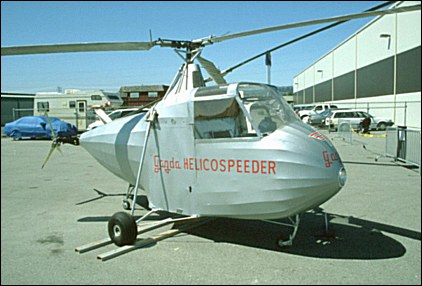
The Gazda Model 100 Helicospeeder NX69154 was designed and developed in 1943, 1944, and 1945 by Antoine Gazda of Wakefield, Rhode Island. It was a single motor and torque aircraft with unique concepts which had the following features:
A swing tail for forward flight was designed to permit flight as a gyrodyne (V. Isaoco, J. Bennett) at higher than manual helicopter speeds with the rotor axis vertical.
To control blade inplane motion to prevent ground resonance a rotor azimuthal blade positioning system was included.
A wheel/stick installation was used so that positioning of the aircraft was achieved by one appropriate motion of the pilot control.
An internal swash plate below the main rotor gearbox actuated push rods going up to the rotor head which controlled blade collective and cyclic pitch as a low drag solution.
Belt drives were used between its engine, the cooling fan, and the main rotor gearbox. A drive shaft from the gearbox to the swinging tail rotor was also included with a torseinal damper as part of this shaft.

An all-aluminum single-seat helicopter, it was powered by a Continental A-75 engine.

Two assistants for detail designs were hired from previously known engineers who had attended RISC – Mr. S. Fitzpatrick in 1944 who was later replaced by Mr. H. Sadler in 1945.

The Helicospeeder was manufactured by Helicopter Engineering & Construction Co. and designed in accordance with general practice at that time. The fuselage was welded steel aircraft tub­ing. Main rotor blades were steel tubular spars, wooden leading edge wire cable training edge and airplane fabric covering. Cast aluminum gear cases and industrial/automotive gears, bearings, belts, and pulleys were used. The wheels came from a Piper Cub. Considering the limited pool of knowledge and experience in helicopter design, and Mr. Lemont’s earlier background with the Sikorsky VS-300, it is natural that there would be considerable similarity between these two machines.

Its Cierva-type rotor hub, with hydraulic-interconnect links between blades, made ground resonance impossible.

Initially, attempts were made to use a jet of air from the tail to counter torque. However, due to difficulties, a tail rotor was used that could be turned 90 degrees by the pilot, and thus serve as a push propeller for added thrust.

The Model 100 was constructed in the Rhode Island area during World War II, incorporating some surplus aircraft items. Powered by a 75 hp (56 kW) Continental A-75 engine, it was specified to carry one person and publicity releases claimed an ultimate goal of a 300 mph (483 km/h) maximum airspeed. Flight testing was done by Mr. Gazda himself, whose limited experience at the controls of a rotorcraft may have been detrimental to success of these tests. The designer/constructor carried out test flights and a more modest actual speed of 100 mph (161 km/h) was reached.

Production examples were expected to sell for 5,000 U.S. dollars, but no firm sales were made. As Gazda came to understand the difficulty in learning to fly the aircraft, plus the cost of further development, he decided to discontinue further work on this aircraft, and only one example of the initial version was completed.

The Helicospeeder was sold at auction after Mr. Gazda passed away, and was purchased by HAl Past-Chairman Vincent Colicci, who eventually sold it to Dr. Voss. After some years at AgRotors in Pennsylvania, Stanley Hiller took it on loan for his aviation museum in San Carlos, California, and had it restored to its original condition (it would appear that the Model 100 was also placed on public display at some point in time in the Owls Head Transportation Museum at Knox County Regional Airport—located two miles south of Rockland, Maine.)

Helicospeeder
Engine: 1 x Gazda, 130hp
Rotor diameter: 7.62m
Length: 5.79m
Height: 2.54m
Gross weight: 544kg
Cruising speed: 224km/h

Garrett AiResearch / AiResearch

Aircraft Tool and Supply Company
Garrett Supply Company
AiResearch Manufacturing Company
AiResearch
PW-je-tp

John Clifford “Cliff” Garrett founded a company in Los Angeles in 1936 which came to be known as Garrett AiResearch or simply AiResearch. Already operating his Garrett Supply and Airsupply businesses, in 1939 Cliff Garrett established a small research laboratory to conduct “air research” on the development of pressurized flight for passenger aircraft. “[AiResearch’s] first ‘lab’ was a small store building on Melrose Avenue in Los Angeles”.

In 1939 Garrett incorporated the “Garrett Corporation” and the three operating companies became divisions: Airsupply Division, Garrett Supply Division, and AiResearch Manufacturing Division. Needing additional space, they built their own manufacturing facility in Glendale, California, and thereby established the name AiResearch Manufacturing Company.

By 1941, AiResearch needed new space, and on April 28, 1941 moved from Glendale to what until then had been a beanfield on Sepulveda Boulevard, at the corner of Century Boulevard near Mines Field, which later became Los Angeles Airport. In 1942, the Army Air Force concluded that vital cabin pressurization manufacturing facilities should be relocated inland from the coast, and AiResearch set up the AiResearch Phoenix Division in Phoenix, Arizona. For this purpose, AiResearch Manufacturing Company of Arizona was established as a wholly owned subsidiary.

The Company’s first major product was an oil cooler for military aircraft. Garrett designed and produced oil coolers for the Douglas DB-7. Boeing’s B-17 bombers were outfitted with Garrett intercoolers, as was the B-25. The Company developed and produced the cabin pressure system for the B-29 bomber, the first production bomber pressurized for high altitude flying. By the end of World War II, AiResearch engineers had developed air expansion cooling turbines for America’s first jet aircraft, the Lockheed P-80 Shooting Star. In all during World War II, Garrett AiResearch sold $112 million in military equipment and had as many as 5,000 employees at peak.

Having to scale back its workforce to just 600 employees at the end of the war stimulated Garrett to look for new income sources. “He found them in the small turbines which patient Engineer [Walter] Ramsaur had been perfecting since 1943. So that jet pilots could endure the heat generated by air friction at supersonic speeds, a way had to be found to cool their cockpits. Ramsaur’s turbine provided the answer; by putting an engine’s heat to work turning the turbine, it cooled the air by expanding it, shot the air into the cockpit. As rearmament got under way, Garrett began turning out a total of 700 accessory products. With the Navy order for an on-board engine self-starter, by 1951 Garrett Corp. had a $120 million backlog, enough to keep 5,500 workers on three shifts busy for at least the next three years”.

By the end of the 1940s, Garrett Corporation was listed on the New York Stock Exchange. “In the late 1940s and early 1950s, Garrett was heavily committed to the design of small gas turbine engines from 20 – 90 horse power (15 – 67 kW). The engineers had developed a good background in the metallurgy of housings, high speed seals, radial inflow turbines, and centrifugal compressors”.

By 1949, the Sepulveda Blvd. property was increasingly constrained by the demand for development of commercial space near the fast-growing Los Angeles International Airport (LAX). At that time, 2000 people worked at the facility “and Garrett was ranked one of the top three aircraft accessory manufacturers in the world”. In 1959 ground was broken for construction of an additional facility at 190th Street and Crenshaw Boulevard in Torrance, California. Part of that facility was occupied a year later. “By 1962, 1000 employees were working at the Torrance location and by 1972, 3000 employees were based there”. After a gradual series of moves, the Sepulveda facility was closed in 1990.
During the 1950s AiResearch initiated activities in the field of aircraft electronics, “first with an angle-of-attack computer to eliminate gunfire error and then with its first delivery of a complete centralized air data system”. In the 1950s and 1960s Garrett diversified and expanded. Garrett AiResearch designed and produced a wide range of military and industrial products for aerospace and general industry. It focused on fluid controls and hydraulics, avionics, turbochargers, aircraft engines, and environmental control systems for aircraft and spacecraft. “By 1960 Garrett gas turbines, cabin pressurization systems, air conditioners, and flight control systems were aboard the Convair 880, Lockheed Super Constellation, Vickers Viscount, Sud Aviation Caravelle, Douglas DC-8, and Boeing 707. The company had also developed the first inflatable airliner evacuation slides”.
In the 1950s and 1960s Garrett pioneered the development of foil bearings, which were first installed as original equipment on the McDonnell-Douglas DC-10 in 1969 and then became standard equipment on all U.S. military aircraft. In the 1960s, AiResearch Environmental Control Systems provided the life supporting atmosphere for American astronauts in the projects Mercury, Gemini, Apollo, and Skylab.
Garrett AiResearch is credited with inventing one of the first complete microprocessors, when it developed the Central Air Data Computer for the US Navy’s F-14 Tomcat fighter in 1968-1970.

In the 1970s Garrett’s expanding industrial and other non-military applications had changed the basic sources of income. “At the start of the decade sales to the military accounted for 70 percent of the company’s business. At the end of the ten years, largely because of turbochargers and general aviation products, the situation was reversed. Commercial sales made up 70 percent; military had dropped to 30 percent”. Also by the end of the decade “sales had reached $1.3 billion; backlog was $1.9 billion”.

To avoid a hostile takeover of Garrett’s assets by Curtiss-Wright following Cliff Garrett’s death in 1963, Garrett Corporation merged with Signal Oil and Gas Company in 1964. In 1968, the combined company adopted The Signal Companies as its corporate name. In 1985, Signal merged with Allied Corp., becoming Allied-Signal. The company acquired Honeywell Aerospace in 1999. Although AlliedSignal was much larger than Honeywell, it was decided to adopt the Honeywell name because of its greater public recognition.

Part of the original Garrett AiResearch became known as the Garrett Turbine Engine Company from 1979, and became the Garrett Engine Division of AlliedSignal in 1985. In 1994, AlliedSignal acquired the Lycoming Turbine Engine Division of Textron, merging it with Garrett Engine to become the AlliedSignal Engines Division of AlliedSignal Aerospace Company.

The Garrett Aviation Division (“Garrett Aviation”), which mainly services aircraft, was sold to General Electric in 1997 and later renamed Landmark Aviation after a 2004 merger. It became StandardAero after a further merger in 2007 and it was owned by Dubai Aerospace Enterprise, but subsequently purchased by another owner.