Established in 1929 at Cleveland, Ohio. Built aircraft for U.S. Army and Navy, plus a series of single and two-seat biplanes, beginning with the 2T-1A single-seater and including also the TG-1 Torpedo bomber. Company reappeared in mid-1960s to build scaled-down kit version of Great Lakes Sport Trainer known as Baby Great Lakes.
World War 2
Grand Rapids Industries Inc
Furniture manufacturer which built wooden parts for aircraft and gliders in Second World War. Acquired manufacturing rights of Skyfarer two-seat light cabin monoplane from General Aircraft Corporation in 1943. Aircraft had simplified control system and was the second aircraft to be certificated by the U.S. Civil Aeronautics Board as characteristically incapable of spinning. Design was shelved because of war; license transferred to Le Mars Manufacturing Company in 1944.
Government Aircraft Factories / GAF
Department of Aircraft Production / DAP renamed GAF.
Aircraft production at Australian Government-owned factories began during Second World War with Bristol Beauforts and Beaufighters, and later included Lancasters and Lincolns (see Department of Aircraft production). Designed and produced Jindivik target aircraft, flown in 1952, after a piloted version, Pika, had flown in 1950. Built Mirage fighters and trainers for the RAAF in 1960s-1970s. Produced Nomad twin-engine STOL transport, first flown in July 1971
Aerospace Technologies of Australia Pty Ltd (ASTA) was founded 1987 to replace former Government Aircraft Factories (GAF) and Aircraft Technologies of Australia. Undertook aircraft maintenance, repair, and modification, including Airbus and Boeing airliners. Sold 1994 as part of Government privatization program, with Rockwell Australia Ltd. buying Commonwealth’s shareholding of ASTA Components, Defence and Engineering divisions; currently ASTA Components division of Boeing Australia Ltd. with new programs including work on an AEW&C aircraft under Project WedgetaiI.
Gotha Ka 430
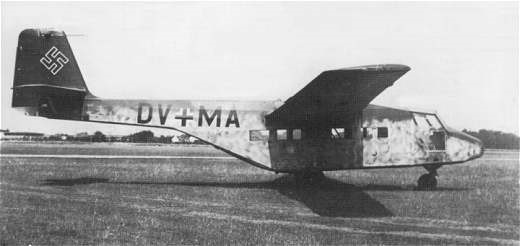
The Gotha Ka 430 was a military transport glider, first built in 1944. The glider was designed by Albert Kalkert. Twelve had been produced by the end of World War II, but none of them was used operationally.
The glider could carry twelve men, and tests were being conducted towards the end of the war to see if it could carry a cargo of 1,400 kg (3,100 lb). A single 13 mm (.51 in) MG 131 machine gun was fitted for self defence.
Gotha Go 345
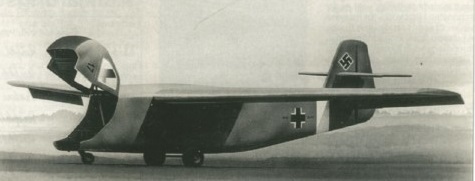
The Gotha Go 345 was a prototype German Military transport glider of the Second World War. A single example was tested in 1944.
Gotha Go 244
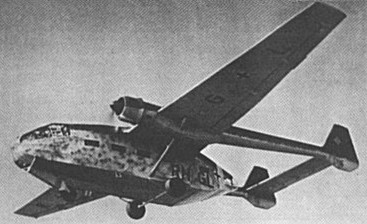
After the fall of France the French Gnome-Rhone 14M radial engine became available to the Germans in large numbers, and the Go 242 was modified to serve as the Go 244 twin-engined transport, each of the twin booms being extended forward of the leading edge of the wing to mount one of these engines. At the same time fixed tricycle landing gear was installed.
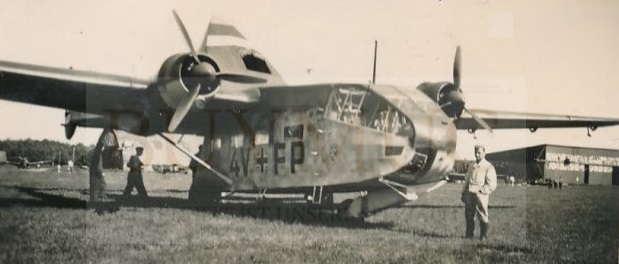
A total of 133 conversions was made from the five Go 242B variants and these were designated correspondingly Go 244B-1 to B-5. First deliveries were made in March 1942 to the Greek-based KGrzbV 104 and to KGrzbV 106 in Crete, but they proved to be relatively easy targets for Allied fighter aircraft and had been withdrawn by November 1942. Some Go 244s had 492kW BMW 132Z or captured Russian Shvetsov M-25As each of 559kW.
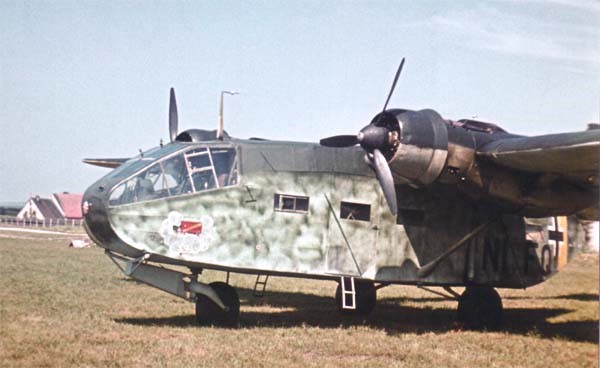
Go-244B-2
Engine: 2 x Gnome-Rhone 14M, 522kW
Max take-off weight: 7800 kg / 17196 lb
Empty weight: 5100 kg / 11244 lb
Wingspan: 24.5 m / 80 ft 5 in
Length: 15.80 m / 51 ft 10 in
Height: 4.70 m / 15 ft 5 in
Wing area: 64.4 sq.m / 693.20 sq ft
Max. speed: 290 km/h / 180 mph
Ceiling: 7500 m / 24600 ft
Range: 600 km / 373 miles
Armament: 4 x 7.9mm machine-guns
Gotha Go 242
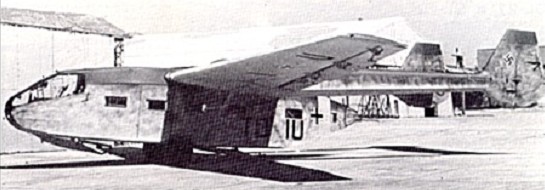
The work of Dipl. Ing Albert Kalkert, the Gotha Go 242 assault glider was developed with the approval of the Reichs-luftfahrtministerium since it offered almost three times the troop-carrying capacity of the DFS 230 then in use.
The fuselage pod was of steel tubular construction with fabric covering, and carried jettisonable landing gear and two retractable skids. The wings were made of wood with fabric and plywood covering.
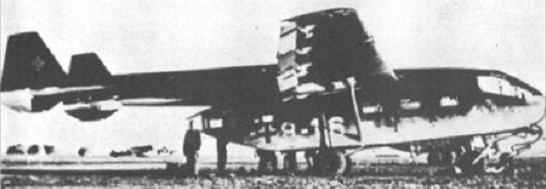
The aircraft could carry 21 fully-equipped troops, or equivalent weight in military loads, such as a Kubelwagen utility vehicle, loaded through the hinged rear fuselage.
Two prototypes were flown in 1941 and production followed permitting entry into service in 1942.
The type’s operational debut was made in the Mediterranean and Aegean theatres, Go 242 units being based in Greece, Sicily and North Africa. Heinkel He 111 tugs were usually employed and rocket-assisted take-off equipment could be fitted, the variety of propulsion units including four 500kg Rheinmetall-Borsig RI-502 solid fuel rockets. Production totalled 1,528 aircraft.
133 were modified into Go-244.
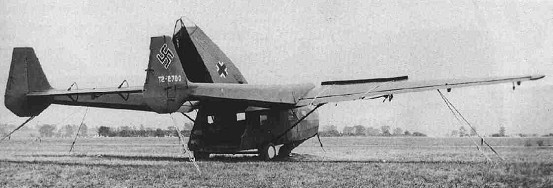
Go-242
Max take-off weight: 6800-7300 kg / 14992 – 16094 lb
Empty weight: 3200 kg / 7055 lb
Wingspan: 24.5 m / 80 ft 5 in
Length: 15.8 m / 51 ft 10 in
Height: 4.25 m / 13 ft 11 in
Wing area: 62.4 sq.m / 671.67 sq ft
Armament: 4 x 7.9mm machine-guns
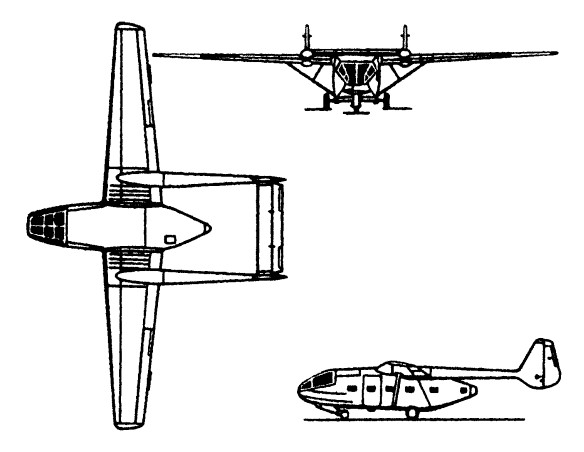
Gotha (Gothaer Waggonfabrik Ag)
Operated aircraft works and flying school at Gotha and seaplane school at Warnemunde in First World War. Manufactured large quantities of aircraft during the war, including seaplanes and twin-engine bombers. Closed by Versailles Peace Treaty. Reopened in mid-1930s with two-seat training biplane, Go 145. In Second World War built Bf 109 fighter and Do 17Z bomber, also Go 242 glider and a powered version designated Go 244.
Goodyear ‘M’ Class
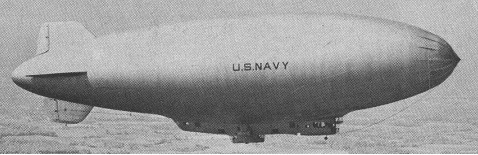
In order to improve range, endurance, and war load still further, Goodyear designed the M Class, the last of the wartime designs to be built. Of 625,000 cu.ft. capacity and powered by two Pratt & Whitney Wasps of 600 h.p., twenty two were originally ordered. First flight of M 1 was on 27 October, 1943, but with the improving anti¬submarine situation after 1944 only three more were completed (M 2 to 4). They were used after the war on airship research and development work and XM 2 was flown with a retractable tricycle landing gear which was used on later naval airships.
M-1
Volume: 625,000 cu ft.
GZ 5
Volume: 647,000 cu ft.
Length: 310ft.
Max Dia: 73ft.
Engines: 2 x 600 h.p. Pratt & Whitney R 1340 AN 2 Wasp.
Goodyear Tyre & Rubber Co.
Airship work started at the Akron, Ohio, plant of the company in 1910, when engineer P. W. Litchfield began developing the specialised techniques required for the manufacture of rubberised fabric. After visiting Europe to see the latest airships flying at the time, he returned to America to start the construction of the company’s first envelope, which was completed in July 1911. With a total capacity of 375,000 cu ft, it was made for Melvin Vaniman’s ill fated airship “Akron” which attempted to fly across the Atlantic in July 1912.
As a result of negotiations, which began in 1922 between Goodyear and Luftschiffbau Zeppelin, the Goodyear-Zeppelin Corporation was formed on December 14, 1923. From then on, Goodyear’s major effort was directed towards the design of rigid airships for naval and commercial use, but it was to be several years before an airship of this type was laid down by the, new company.
“GZ” stands for Goodyear-Zeppelin, stemming from the partnership Goodyear had with the German company when both were building airships together. However these models came many years after this partnership had dissolved during the start of World War II. The GZ-1 was the USS Akron (ZRS-4), the U.S. Navy’s fourth rigid airship used for several tests including as a flying “aircraft carrier”.
Total airship production by the company up to 1923 was 37, of which 26 were for the U.S. Navy, 7 for the U.S. Army, and 4 commercial.
On December 5, 1939, to reflect the company’s growing interest in other fields of aeronautical work, the corporate name was changed again, this time to the Goodyear Air¬craft Corporation. With America’s entry into WW II, a great expansion began of the U.S. Navy’s airship service, with 200 airships being authorised in June, 1942. Between September, 1941 and April, 1944, Goodyear delivered 130 K Class, 10 L Class, 7 G Class, and 4 M Class airships to the Navy. These joined 4 K, 3 L, 1 G, and two ex Army ships already in service, plus five Goodyear fleet ships, to make the largest airship fleet ever assembled by any nation. They were used extensively along the eastern and western seaboards of the United States, in Central and South American waters, and from 1944 in the Mediterranean area. The ZP squadrons, the first being commissioned at Lakehurst on January 2, 1942, (ZP 12), were organised into Fleet Airship Wings, of which there were five.
As recently as 1967, Goodyear carried out an evaluation programme for the U.S. Naval Air Development Center in which a series of rigid and non rigid designs were examined for operational cost and performance potential. Amongst the designs considered were 45 million cubic feet rigids operating at speeds up to 210 m.p.h., which were found to be totally practical from a technical point of view.
As a further reflection of Goodyear’s expanding interest in aeronautics and space research, the company name was changed once more on July 1, 1963, to become the Goodyear Aerospace Corporation. With this change, airship operations were transferred to Goodyear Tire & Rubber public relations, with Aerospace being responsible for engineering, maintenance and development of the fleet. During this period the company were operating two airships, namely, the Type GZ 19As “Mayflower”, based at Miami, Florida, and “Columbia” at Los Angeles, California, during the winter months, both airships going on nationwide tour each summer. These ships were of 147,000 cu.ft. capacity and powered by two 175 h.p. Continental engines.
 All Aero