Air Ministry Specification F.18/37 was concerned with the design and development of two advanced interceptor fighters with one of two 24-cylinder engines in the 2,000 h.p. class then under development –the Napier Sabre “H” type and the Rolls-Royce Vulture “X” type: one with a Rolls-Royce Vulture engine was identified initially as the R (Rolls-Royce) type fighter; the second, with a Napier Sabre engine, was known as the N (Napier) type. Sydney Camm had commenced investigating the possibilities of just such a fighter in March 1937, and had already roughed out a design built around the Napier Sabre engine and housing twelve 0.303-in. Browning guns with 400 r.p.g. in its 40-foot wings. At the proposal of the Air Ministry, Camm also prepared studies for an alternative version of his fighter powered by the Rolls-Royce Vulture engine, and increased the ammunition capacity of both machines to 500 r.p.g.
Further discussions over military loads and equipment followed, and revised tenders were submitted to the Air Ministry at the beginning of 1938 for both the Type ” N ” and the Type ” R “, as the alternative Sabre and Vulture powered fighters had become known. These tenders were formally accepted on April 22, 1938, and four months later, on August 30, two prototypes of each fighter were ordered. Structurally both types were similar: the wings were all-metal, the front fuselage was of steel tubing, and the aft section consisted of a stressed-skin, flush-riveted monocoque – the first Hawker designs to employ this form of construction. Uniformity between the two fighters was, in fact, achieved to a remarkable degree, but the designs did differ in the Vulture powered fighter made use of a ventral radiator while the Sabre driven machine had one of “chin” type.
Construction of the two fighters proceeded in parallel, and work progressed simultaneously on the preparation of production drawings. As a result of the slightly more advanced development status of the Vulture engine which had been designed along more conventional lines than the Sabre, the Type “R” was the first of the two fighters into the air, flying on 24 February 1940.
The initial flight trials of the prototype were promising, and a production order for 1,000 Tornados was placed at the beginning of November, it being proposed that the new fighter should be built both by Hawker and by A. V. Roe at Woodford. However, the flight test program soon began to run into trouble. Compressibility effects, about which little was known at that time, began to manifest themselves, and it was decided that the ventral radiator bath was unsuitable for the speeds approaching 400 m.p.h. that were being achieved for the first time. The radiator was, therefore, moved forward to the nose, a position already selected for that of the Type “N”, by now dubbed Typhoon; but the first prototype Tornado (P5219) only flew long enough to indicate the beneficial results of the change before it was totally destroyed.
On December 30, 1939, the first Napier Sabre engine had been delivered to Hawker Aircraft, and the first prototype Typhoon (P5212) emerged from the experimental shop to fly on February 24, 1940. It too became the subject of a quantity production order which, it was planned, should become the responsibility of Gloster Aircraft, whose assembly lines were emptying of Gladiator biplanes and whose design office was already immersed in the development of the Gloster Meteor, the first British turbojet-driven aircraft. Although, like those of the Tornado, the first flights of the Typhoon prototype indicated a promising fighter, the machine proving relatively easy to fly at high speeds, its low speed qualities left much to be desired, and it had a marked tendency to swing to starboard during take-off. The “X” form of the Tornado’s Vulture engine had not permitted installation above the front spar as was the Typhoon’s Sabre and, in consequence, the overall length of the former was 32 ft. 6 in. as compared with the 31 ft. 10 in. of the latter. Owing to the size and weight of the Sabre and the need to preserve c.g. balance, the Typhoon’s engine was fitted so close to the leading edge of the wing that severe vibration was experienced as the slipstream buffeted the thick wing roots. On an early test flight the stressed-skin covering began to tear away from its rivets, and the Typhoon’s pilot, Philip G. Lucas, only just succeeded in bringing the prototype in to a landing.
Apart from structural teething troubles, the Sabre engine, although a compact and exquisite power plant, called for a considerable amount of development, and it was perhaps fortunate for the future of the Typhoon that, in May 1940, the war situation led to the cancellation of all priority for Typhoon and Tornado development in order to allow every effort to be put into the production of sorely needed Hurricanes. Design development was allowed to continue, and development on the Typhoon included the design of a modified wing containing two 20-mm. Hispano cannon in place of the six 0.303-in. Brownings, the construction of an experimental set of wings containing a total of six cannon, and the initiation of a design study of a Typhoon variant with thinner wings of reduced area and lower profile drag. This latter study was later to arouse interest at the Air Ministry and eventually result in the Tempest. By October 1940 enthusiasm had been revived and production of the Tornado and Typhoon reinstated, production deliveries of both being scheduled for the following year.
The first production Typhoon IA (R7082) with the 2,200 h.p. Sabre IIA engine was completed by Gloster and flown on May 26, 1941. Production of this version, with its twelve Browning guns, was in limited quantity, and those built were used principally for the development of operational techniques. Typhoon IA production aircraft began to enter RAF service in September 1941, and went into action in the summer of 1942. Initial usage proved a great disappointment, with unsatisfactory high-altitude performance, inferior rate of climb and frequent engine breakdowns. When structural failure of the tail unit caused a number of fatal accidents it was suggested that the Typhoon should be withdrawn from service. Fast action was taken to overcome the shortcomings, and introduction of the Sabre II engine brought improved reliability. Typhoon I A were armed with 12 x 7.7mm Browning machine-guns.
The cannon-armed Typhoon IB was following the Mark IA, and the Air Ministry was pressing for its rapid service introduction to counter the new Focke-Wulf Fw 190. Nos. 56 and 609 Squadrons based at Duxford began to receive their Typhoons in September 1941, before the fighter was fully developed, and these squadrons were forced to take on part of unearthing the new machine’s numerous faults. In the first nine months of its service life far more Typhoons were lost through structural or engine troubles than were lost in combat, and between July and September 1942 it was estimated that at least one Typhoon failed to return from each sortie owing to one or other of its defects. Trouble was experienced in power dives – a structural failure in the tail assembly sometimes resulted in this component parting company with the rest of the airframe. During the Dieppe operations in August 1942, when the first official mention of the Typhoon was made, fighters of this type bounced a formation of Fw 190s south of Le Treport, diving out of the sun and damaging three of the German fighters, but two of the Typhoons did not pull out of their dive owing to structural failures in their tail assemblies.
Despite this start to its service career, operations continued and the accident rate declined as the engine teething troubles were eradicated, although the tail failures took longer to solve, despite immediate strengthening and stiffening as soon as the trouble manifested itself. In November 1942 No. 609 Squadron, led by Wing Commander Roland Beamont, was moved to Manston in an attempt to combat the near-daily tip-and-run raids which were being made by Fw 190s and could rarely be intercepted by Spitfires. The Typhoon enjoyed almost immediate success. The first two Messerschmitt Me 210 fighter bombers to be destroyed over the British Isles fell to the guns of Typhoons, and during the last daylight raid by the Luftwaffe on London, on January 20, 1943, five Fw 190s were destroyed by Typhoons.
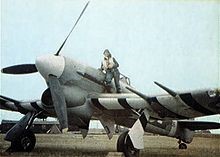
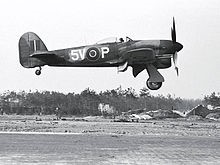
On November 17, 1942, Wing-Commander Beaumont had flown a Typhoon on its first night intrusion over Occupied France and, subsequently, the fighter was employed increasingly for offensive duties, strafing enemy airfields, ships and railway transport. The success of the Typhoon in the ground-attack role led to trials with two 250-lb. or two 500-lb. bombs which were carried on underwing racks. This load was later increased to two l,000-lb. bombs, but the Typhoon was not to find its true element until it was adapted to carry airborne rocket projectiles – four under each wing. By D-Day, in June 1944, the R.A.F. had twenty-six operational squadrons of Typhoon IBs. Without its underwing load the Typhoon IB weighed 11,300 Ib.; and with two 500-lb. bombs and the necessary racks, 12,400 lb. Maximum speed was 398 m.p.h. at 8,500 feet and 417 m.p.h. at 20,500 feet, and an altitude of 20,000 feet could be attained in 7.6 minutes. Between the prototype and production stages several design changes had been made. These included the re-design of the fin and rudder, the redisposition of the wheel fairings and the introduction of a clear-view fairing behind the cockpit. On the first few Typhoon IAs the solid rear fairing was retained; later a transparent fairing was fitted, but this was abandoned in favor of the first sliding ” bubble ” hood to be used by an operational fighter.
The Typhoon IB, by now affectionately known as the “Tiffy”, distinguished itself particularly in the Battle of Normandy, where it decimated a large concentration of armor ahead of Avranches, disposing of no fewer than 137 tanks, and opening the way for the liberation of France and Belgium. For use in the tactical reconnaissance role, the Typhoon F.R.IB was developed early in 1945. In this version the two inboard cannon were removed and three F.24 cameras were carried in their place. One Typhoon was also converted as a prototype night fighter, with A.I. equipment, special night-flying cockpit and other modifications. Production of the Typhoon, which was entirely the responsibility of Gloster Aircraft, totaled 3,330 machines.
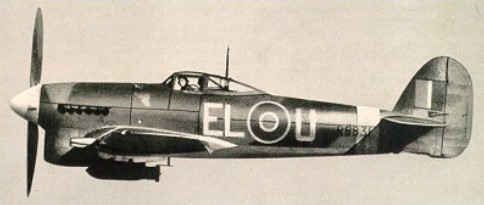
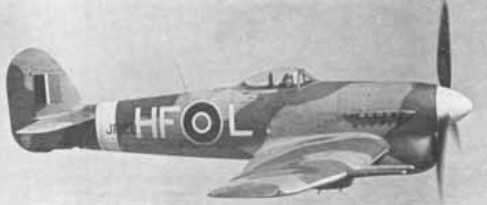
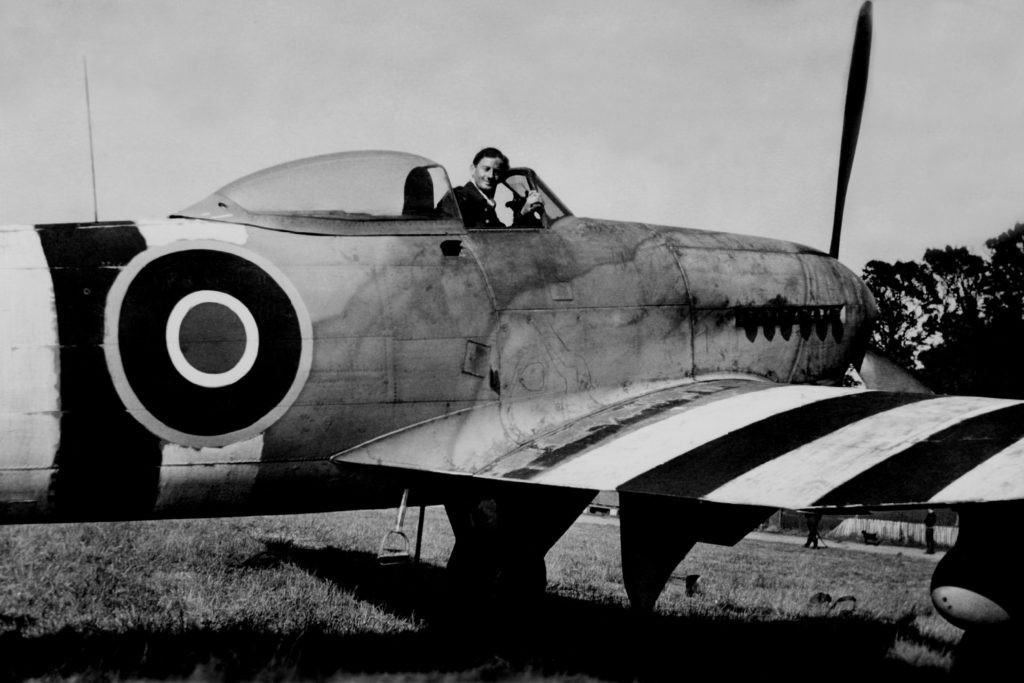
Hawker Typhoon JP843
Typhoons were operated by 32 RAF squadrons, and used by the RCAF and Free French squadrons within the RAF.
Work had been going on in the Hawker design office since 1940 on the development of a new thin wing section. It had already been established that the N.A.C.A.22-series wing section employed by the Typhoon was entirely satisfactory at speeds in the vicinity of 400 m.p.h. but encountered compressibility effects at higher speeds. In dives approaching 500 m.p.h. a very sudden and sharp increase in drag was experienced, accompanied by a change in the aerodynamic characteristics of the fighter, which affected the pitching moment and rendered the machine nose heavy. No actual design work on the new wing was begun until September 1941, and the wing section eventually adopted for development had its point of maximum thickness at 37.5% of the chord. The thickness/cord ratio was 14.5% at the root and 10% at the tip, giving a wing five inches thinner at the root than that of the Typhoon.
This thin wing could not contain a comparable quantity of fuel to that housed by the Typhoon’s wing, so a large fuselage tank had to be adopted. This necessitated the introduction of an additional fuselage bay, increasing the overall length by twenty-one inches forward of the c.g. This added length found its inevitable compensation after initial prototype trials in a larger fin and tailplane. The wing area was also increased, and an elliptical planform was adopted, presenting a chord sufficient to permit the four 20-mm. Hispano cannon to be almost completely buried in the wing. All these modifications added up to a radically changed Typhoon, but it was as the Typhoon II that two prototypes were ordered in November 1941. However, in the middle of the following year the name Tempest was adopted.
By the end of 1945, none remained in front-line service.
As part of their engine development program, Napier’s designed an annular cowling for the Sabre to replace the familiar chin-type radiator bath. The first such installation was on a Typhoon IB (R8694), but most of the development was undertaken with a Tempest V (NV768) which flew with several different types of annular radiator and hollow spinner.
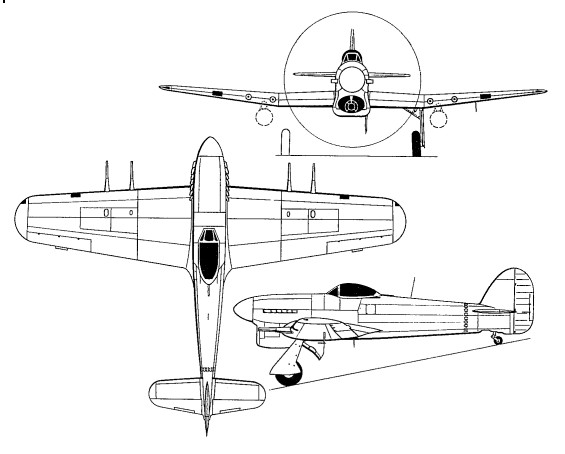
Typhoon Mk. IB Crew: 1 Engine: 1 x Napier “Sabre IIA”, 1605kW / 2150 hp Max take-off weight: 5170 kg-6,010 kg / 11398 lb-13,250 lb Empty weight: 3992 kg / 8801 lb Wing loading: 40.8 lb/sq.ft / 199.0 kg/sq.m Wingspan: 12. 67 m / 41 ft 8 in Length: 9.74 m / 31 ft 10 in Height: 4. 67 m / 15 ft 5 in Wing area: 25.9 sq.m / 278.79 sq ft Max. speed: 673 km/h / 418 mph Cruise speed: 530 km/h / 329 mph Service ceiling: 10360 m / 34000 ft Initial climb rate: 3,000 ft/min / 914 m/min Range w/max.fuel: 1530 km / 951 miles Range w/max.payload: 980 km / 609 miles Armament: 4 x 20mm cannon, 900kg of weapons / 8x rockets
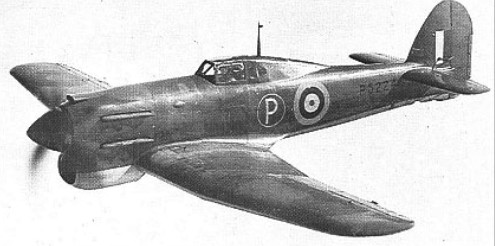
Sydney Camm and his team responded to Specification F.18/37 that called for a single-seat interceptor, with two tenders. One was referred to as the “R-type” and the other as the “N-type”. These were to use fundamentally similar airframes and differ essentially in the type of engine installed. The “R-type”, which was to be named Tornado, initially appeared the most promising and was powered by a 24-cylinder X-type Rolls-Royce Vulture – basically two 12-cylinder Peregrine V engines driving a common crankshaft. The first of two prototypes was flown on 6 October 1939 with a 1760hp Vulture II, provision being made for an armament of 12 7.7mm machine guns. The similarly-powered second prototype, flown on 5 December 1940, had provision for a four 20mm cannon armament. In May 1940, the war situation led to the cancellation of all priority for Typhoon and Tornado development in order to allow every effort to be put into the production of sorely needed Hurricanes. Design development was allowed to continue, however, and during 1940 three alternative engine installations were proposed for the Tornado–the Fairey Monarch, the Wright Duplex Cyclone, and the Bristol Centaurus – and experimental drawings for the Centaurus installation were completed. By October 1940 enthusiasm had been revived and production of the Tornado and Typhoon reinstated, production deliveries of both being scheduled for the following year. A Tornado assembly line was laid down by Avro, the production model being intended to receive the Vulture V of 1980hp, with which both prototypes were reengined. The Vulture, meanwhile, was suffering various problems, such as connecting rod bolt failures, and as the Merlin possessed absolute priority, Rolls-Royce was forced to abandon the production of this X-type engine. This led to cancellation of the initial production batch of 201 Tornados, only one production example being completed and flown on 29 August 1941. But this was fated to be the only production Tornado, for difficulties with the Vulture resulted in the decision to remove this power plant from the aero-engine development program, this decision also canceling production of the Tornado. The Tornado weighed 8,200 lb. empty and 10,580 lb. loaded. Its maximum speed was 425 m.p.h. at 23,000 feet. However, in February 1941, Hawker’s received a contract to convert a Tornado to take a 2210hp Bristol Centaurus CE.4S 18-cylinder air-cooled radial engine. Among the modifications required were a new center fuselage and engine mounting. The new prototype (HG641) was assembled from Tornado production components and flown for the first time on October 23, 1941. The first Centaurus installation had an exhaust collector ring forward of the engine from which a single external exhaust stack pipe led back under the root of the port wing. This arrangement soon proved unsatisfactory, so the oil-cooler duct was enlarged and led forward to the nose, while twin exhaust pipes led back from the front collector ring through this fairing to eject under the belly of the fuselage. A level speed of 421 m.p.h. was attained with the Centaurus-Tornado, and this was slightly higher than that attainable by the Sabre-powered Typhoon, but the Typhoon airframe could not be adapted to take the radial engine. When a captured Focke-Wulf Fw 190A was examined late in 1941, numerous alterations to the British radial engine installation were made by Bristol, with considerable benefit to the test bed’s performance. The second prototype Tornado (P5224) had, in the meantime, been completed, and the sole production Tornado (R7936) later played a useful role as a test-bed for deHavilland and Rotol contraprops. The Centaurus Tornado continued flying in 1942 and it was the encouraging results that led to the Tempest II.
Hawker Tornado Engine: Rolls Royce Vulture V, 1953 hp Length: 32 ft 10 in / 10.01 m Height: 14 ft 8 in / 4.47 m Wingspan: 41 ft 11 in / 12.78 m Wing area: 282.986 sq.ft / 26.29 sq.m Max take off weight: 10670.0 lb / 4839.0 kg Weight empty: 8379.0 lb / 3800.0 kg Max. speed: 346 kt / 641 km/h / 398 mph Service ceiling: 34908 ft / 10640 m Wing loading: 37.72 lb/sq.ft / 184.0 kg/sq.m Crew: 1
The family tree of the Hurricane can be traced back to a ‘Fury monoplane’ proposal of 1933, then to be powered by the Rolls-Royce Goshawk evaporative-cooled power plant. Instead it was decided in early 1934 to adapt this design to incorporate the new PV.12 engine which Rolls-Royce had developed – and which was the direct forbear of the famous Merlin. From that time the airframe/engine combination bore so little relation to the Fury that it then became identified as the ‘Interceptor Monoplane’.
In 1933, Hawker‘s chief designer Sir Sidney Camm realised that something even better than the Fury was needed and the Hawker Fury monoplane was the result – a cantilever monoplane with fixed under-carriage and 660 h.p. Rolls Royce Goshawk engine. At this time 4 machine guns were considered adequate; but higher speeds reduced the time an enemy could be held in the pilot‘s gun sights and eventually plans were amended to accommodate 8 machine guns all mounted in the wings. The new Rolls Royce Merlin I was fitted and the aeroplane outstripped the original conception – it was no longer the Fury monoplane – the name Hurricane was chosen.
This finalised design was submitted to the Air Ministry in 1934, and in the following year a prototype was ordered to Specification F.36/34, and the Air Ministry asked for an armament of no less than eight machine-guns.
In 1934, the monoplane layout was still very new for combat aircraft and thick airfoils for monoplanes were much in vogue for structural rea-sons, if nothing else. Hurricane designer Sir Sydney Camm seemed to have had misgivings from the start. “When its design had gone beyond the point of no return,” he once admitted, “I had a sudden foreboding that it would be no good. Strength had to be an important factor in this ship, but I always wished that the wing had been thinner. If we had had more time, the Hurricane would have been the greatest aircraft of all time.” But if Hawker hadn’t frozen the design and gone ahead with mass production when it did, even without an official order. It was Hawker’s gamble in laying down a production line of 1,000 Hurricanes before the Air Ministry ordered such a vast quantity was available the Battle of Britain.
The Hawker engineer Frank Murdoch was responsible for getting the Hurricane into production in sufficient numbers before the outbreak of the war, after an eye-opening visit to the MAN diesel plant in Augsburg in 1936.
The prototype Hurricane K5083 flew on November 6, 1935 at Brooklands, piloted by Hawker’s chief test pilot, Flt.-Lt. “George” Bulman and powered by a 767kW Merlin ‘C’ engine. On landing he reported that it handled perfectly and was free from vices. Even at this date the retractable undercarriage was considered by many an extravagant novelty.
Hurricane prototype K5083 in early 1936
Advanced features such as an enclosed cockpit and retractable undercarriage were combined with traditional methods of construction using a tubular metal structure and fabric covering, meant that the Hurricane could be easily and rapidly produced in existing facilities.
In February 1936, the prototype Hurricane (as yet un-named), powered by an early Merlin C producing 990 hp and driving a Watts fixed-pitch two-bladed wooden propeller, was tested at the Aircraft and Armament Experimental Establishment at Martlesham Heath, giving service pilots their first opportunity to experience the performance.
Convinced that the RAF would buy the new fighter the Hawker company decided, in March 1936, to proceed with the production drawings and to make plans for large scale production. Three months later the Air Ministry confirmed that 600 Hurricanes were to be included in its expansion Plan F (which also provided for 300 Spitfires) to be delivered by March 1939. The target was missed by six months. There had been a succession of relatively minor but time-consuming problems with prototype development, especially related to the Merlin, and the early intention to fit the Merlin F (Mk.1) in the production Hurricane was changed to make use of the improved Merlin G (Mk.II), which required a redesign of the installation and the front fuselage profile before production could begin. The cockpit canopy also produced problems with five failures recorded on the prototype before a satisfactory design was evolved.
Convinced that the RAF would buy the new fighter the Hawker company decided, in March 1936, to proceed with the production drawings and to make plans for large scale production. Three months later the Air Ministry confirmed that 600 Hurricanes were to be included in its expansion Plan F (which also provided for 300 Spitfires) to be delivered by March 1939. The target was missed by six months. There had been a succession of relatively minor but time-consuming problems with prototype development, especially related to the Merlin, and the early intention to fit the Merlin F (Mk.1) in the production Hurricane was changed to make use of the improved Merlin G (Mk.II), which required a redesign of the installation and the front fuselage profile before production could begin. The cockpit canopy also produced problems with five failures recorded on the prototype before a satisfactory design was evolved.
The first production Hurricane I, LIS47, flew at Brooklands on October 12, 1937, fitted with an early example of the Merlin II and at a weight of 5459 lb (2476 kg), a contract for 600 having been placed in June 1936. This was increased to 1000 in November 1938.
The second aircraft was in the air on 18 October, and production deliveries then built up rapidly. Meanwhile, during 1936, the prototype had been fitted with the planned armament of eight Browning machine guns and first firing trials had been made. Design of a metal-covered wings was in hand, but to avoid production delays the Hurricane I retained the fabric-covered wing, in which the guns were grouped in two quartets, positioned to fire just outside the propeller disc and requiring no synchronisation gear. Each gun was provided with 300 rounds, and the two batteries were harmonised to converge at 650 yards (594m), although with experience this distance was to be reduced eventually to 200 yards (183m).
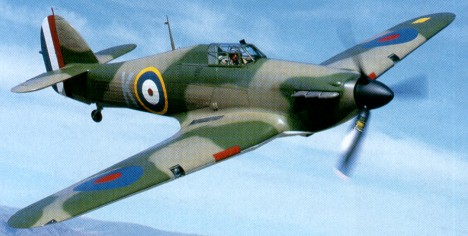
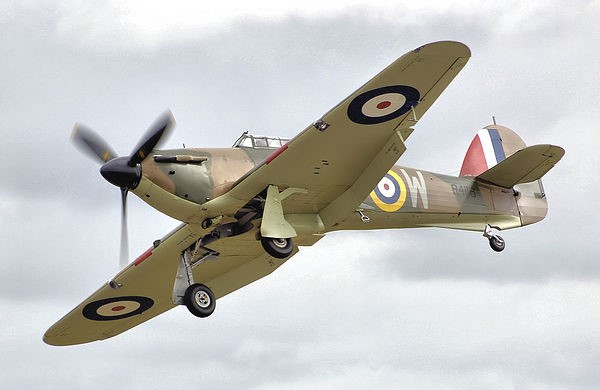
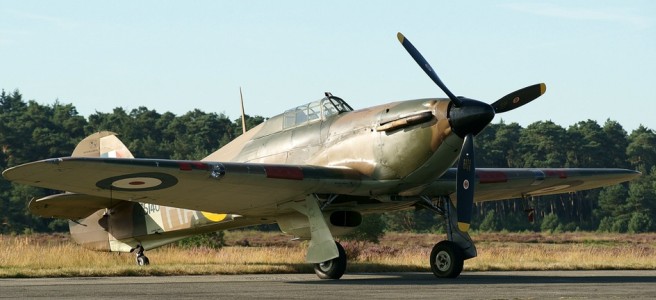
Hawker Hurricane Mk 1
Although of cantilever monoplane configuration, its construction was typical of the Fury from which it stemmed, and even its wings were fabric-covered in early Mk Is, with a metal leading edge and trailing-edge flaps. The tailwheel-type landing gear had hydraulically retractable main units of wide track. Armament of production Mk Is comprised four 7.7mm Browning machine-guns in each wing, making this the RAF’s first eight-gun fighter. Designated the Hurricane I, it was outfitted with a Rolls-Royce Merlin II or III engine, fabric-covered wings, and a wooden prop. It lacked armor and selfsealing fuel tanks.
In Yugoslav, Ikarus and Zmaj shared the order for the production of Hurricane MK1.
A second major version of the Hurricane made its first flight on 11 June 1940 and, as the Hurricane IIA powered by a Merlin XX, would begin to reach the Squadrons on 4 September 1940. Improvements included wing alterations for increased armament, redesigned engine mount, strengthened fuselage, and tanks protected with self-sealing rubber.
The Hurricane I was improved with an armoured bulkhead introduced forward of the cockpit and, when Hawker Aircraft’s second production batch began leaving the assembly line in September 1939, a bullet-proof windscreen had been standardised. This batch also adopted the Merlin III which features a shaft capable of taking either Rotol or de Havilland three-bladed constant speed propeller. While some Hurricanes were produced during 1939 with the DH two-position propeller, a major conversion programme was started on 24 June 1940 to fit the Rotol constant speed unit which allowed the pilot to select optimum power for the various stage of flight. Significantly improving the Hurricane I’s climb performance, Rotol propellers had been fitted to all Hurricanes by mid-August 1940. With the 81th Hurricane of the second batch, the fabric covered wing gave place to an all metal stressed skin wing and, on 2 February 1940 the first Hurricane with rear armour protection for the pilot was flown.
By the end of 1939, the RAF had received more than 600 Hurricane Is and production was at a rate of 100 a month. Gloster began Hurricane production flying its first Hurricane I at Hucclecote on 20 October 1939.
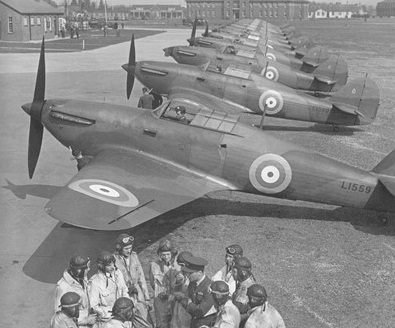
No.111 Sqn RAF August 1938
By December 1937 No. 111 Squadron at Northolt was beginning to re-equip with the type, and were fully equipped by February 1938. Early in the new year made front page news when S/Ldr. J. W. Gillan, Officer Commanding lll Sqn., flew from Edinburgh to Northolt (assisted by a tail wind) at an average speed of 408 m.p.h.
By July 1939, twelve regular squadrons were flying the Hurricane I, to be followed by six Auxiliary Air Force squadrons. By the outbreak of war in 1939, 500 Hurricanes had been delivered and by August 7, 1940, when the Battle or Britain started, there were 32 Hurricane squadrons as against 19 Spitfire squadrons. By that time, the Hurricane had already been in action in France, Norway and Malta. At the outbreak of war in September, 1939, the Royal Air Force returned to France equipped with Hurricanes. Before this, Hurricanes of No. 46 Sqn. took part in the fighting in Norway, brought into action by the aircraft carrier “Glorious”. When the order came to evacuate, the Squadron flew all its Hurricanes on to the “Glorious” without arrestor gear rather than resort to destroying them, but this effort was in vain when the carrier was subsequently sunk. Similarly, Hurricanes flown from H.M.S. Argus reinforced the Gladiators in the Battle of Malta. In the Battle of Britain, the Hurricane bore the brunt of the fighting.
Hurricanes downed more enemy aircraft than did the Spits in the Battle, and the highest-scoring RAF pilot in the Battle, a Polish sergeant named Josef Frantitek (with a score of 17, all in a single month) flew Hurricanes.
One of the significant statistics of the Hurricane’s contribution to this hard-fought battle was the fact that these aircraft destroyed more enemy aircraft than the combined total of all other defence systems, air or ground. Even that factor must be equated with the information that at the beginning of the battle (on 8 August 1940) approximately 65% more Hurricanes than Spitfires (2,309 to 1,400) had been delivered to the RAF’s Fighter Command.
After the Russian invasion of Finland in 1940, slowly reinforcements began to arrive for the Finnish air force. The first to come were 5 Gloster Gladiators, 12 Hurricanes, 17 Lysanders and 24 Blenheims, all from Britain. After that, 76 Morane-Saulnier and Koolhoven F.K. fighters arrived from France. Italy sent 17 Fiat fighters, Sweden 12 Gloster Gladiators, and the USA 44 Brewster Buffalo, of which however only 5 reached Finland in time. Even the Union of South Africa sent 25 Gloster Gladiators. Pilots and ground personnel from a number of countries also volunteered to assist them.
After 1940, Hurricanes served largely in the Middle East and North Africa, with a distinctive sand filter under the nose to protect the Merlin’s innards. They were tried as night fighters over Britain after the Luftwaffe switched to night raids, but the night-fighting Hurricanes had generally poor success.
The aeroplane had now changed slightly from the early production mark, among other modifications, a 3-blade controllable pitch airscrew was fitted. A ventral fin faired the fixed tail wheel to improve handling qualities and metal had replaced fabric covering on the wings. Subsequent Hurricane versions included the Mk IIA with Merlin XX and eight guns; Mk IIB with 12 guns; and Mk IIC with four 20mm cannon. Mk IID with two 40mm Vickers ‘S’ guns and two 7.7mm guns (plus additional armour for low attack) were used extensively in the Western Desert. The final production version was the Mk IV with a wing able to accept armament comprising two Browning machine-guns plus two 40mm guns, or eight rocket projectiles, or two 110kg or 225kg bombs, or long-range fuel tanks. The Hurricane V (only two built) was powered by a Merlin 27 or 32 engine.
The Hurricane Mark II first flew on June 11th, 1940 with Merlin XX two-stage supercharged engine. A special set of mainplanes were made to accommodate the various armament. The Mk. IIA retained the eight Brownings. On the Mk. IIB these were increased to no less than 12 guns. Four 20 mm. Hispano cannons replaced the rifle-calibre guns on the IIC, and on the Mk. IID two 40 mm. Vickers cannon with two Brownings firing tracer ammunition for sighting. To increase the range, 90 gallon drop tanks were suspended below the wings on the IIC and armed with 4×20 mm. cannon the Hurricane a familiar sight with its Vokes sand filter during the North African campaign.
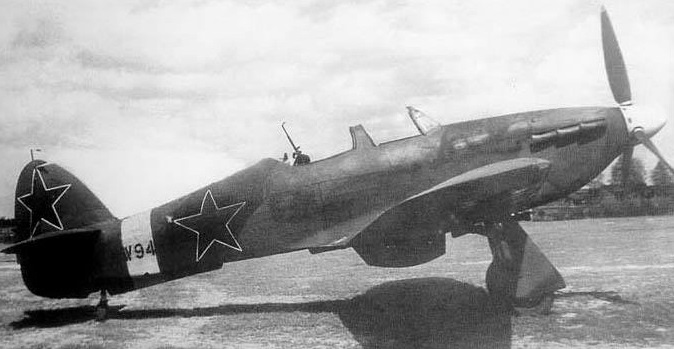
In August 1941 Great Britain decided to lend fighter plane support to Russia. British 151st Wing was set up in Leconfield near York, to train Soviet aircrews in the assembly, maintenance and operation of the fighters. Then Nos 81 and 134 Squadrons, comprising 39 Hurricane Mk.IIB, were shipped to the Soviet Union along with their pilots and ground personnel. The old British aircraft carrier Argus transported 24 of the Hurricanes, and the other 15 were packed and sent along on other vessels as deck cargo. The convey put to sea from Iceland on 21 August 1941 and docked at Murmansk on August 28. Here the 24 Hurricanes took off from Argus and landed at Viange airport about 15 miles away, which served 151st Wing as their main airbase during their stay in the Soviet Union.
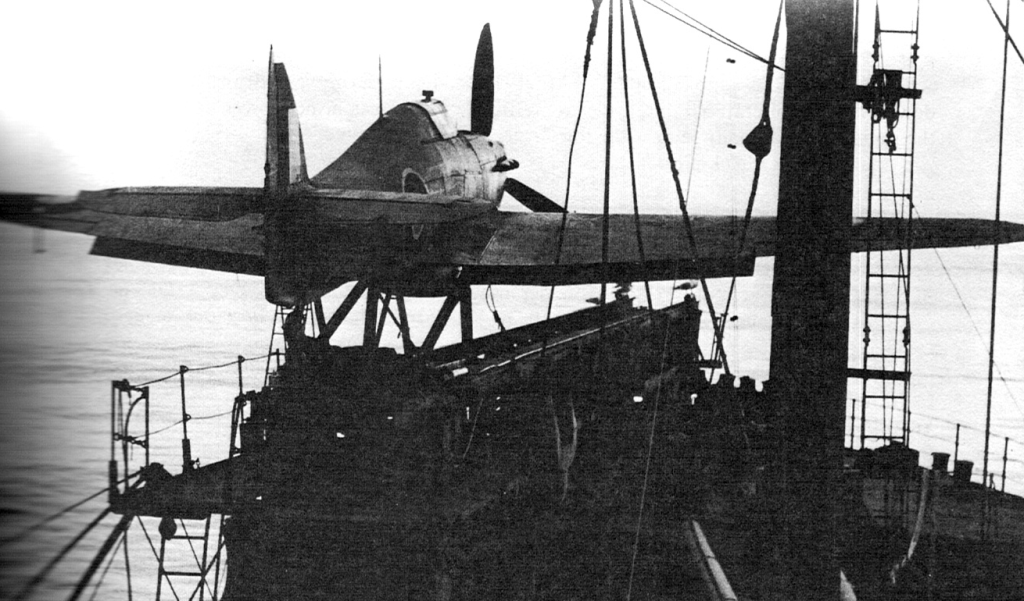
On Sunday 3 August 1941, the first aerial victory won by a British Hurricane catapulted from a CAM ship took place when Lt. Robert Everet of 804 Sqn, based on the steamer Maplin, shot down a Focke-Wulf Fw 200C Condor of German 40 Sqn, 1st Bomber Wing in the North Atlantic. Instead of making a sea landing near his mother ship, the pilot decided to fly the 300 miles to Scotland, and landed there at Loch Earn.
CAM freighter carrying a Sea Hurricane
By 1942, most Hurricanes had been switched to ground attack, with a powerful variety of weapons: 12 Brownings; or four 20mm cannon that slowed you down by 30 mph when you fired them; or a pair of Brownings plus two 40mm cannon with just 20 armor-piercing rounds. Another variant was the “Hurribomber”, with racks for two 250-pounders, or even two 500-pounders, sometimes delivered by skip-bombing. Rocket rails were also commonly fitted. In the Far East, Burma and India, the Hurricane remained the principal British fighter opposing the Japanese right up to the war’s end. Some 3,000 Hurricanes (one in five of all built) were given to the Soviet Union, most shipped by convoy around the North Cape to Murmansk.
Hawker Hurricane MkII converted by the Soviets with a back seat and machine gun position.
After early experience of deck landing Hurricanes, an arrestor hook was fitted and in this form was known as the Sea Hurricane Mk. IB. Sea Hurricanes joined the Royal Navy in January 1941 and became the first carrier-based British single-seat monoplane fighter when taken to sea by HMS Furious in July 1941. Under the ‘Catfighter’ scheme, Sea Hurricane IA were equipped for catapult launch from the decks of CAM merchant ships (catapult-equipped merchantmen) to counter the threat posed by Germany’s Focke-Wulf Fw 200 Condors, introduced in the spring in 1941. Only the Mk IA was specially built. The approximate figure of 800 Sea Hurricanes which entered service included 50 Mk IA and about 750 conversions of Mk II and Canadian-built aircraft.
These were 35 ordinary merchant ships that had been modified to carry a Hurricane on a rocket launch rig on the bow. These CAM ships, carrying ordinary cargo as well, accompanied the great convoys sailing from Britain to Russia and the Mediterranean, and from Canada to Britain. The Hurricats were assigned to convoy defense against the Luftwaffe’s Focke-Wulf Condor long-range, four-engine reconnaissance bombers, which were not only attacking convoys, but tracking them for U boats and other bomber units. If a Hurricat pilot was lucky, he could make it back to shore after launch and combat if not, he had to ditch (not recommended, since the Hurri-cane invariably turned over and sank) or else bail out over the convoy.
Apart from its role as a purely fighter aeroplane, the Hurricane served as a fighter bomber with two 250 lb. and later two 500 lb bombs below the wings. The aeroplane was also used for night fighting and pioneered the use of rocket projectiles until the advent of the Typhoon. In this guise it was known as the Mk. IV.
Mention must be made of at least one interesting experiment. A supplementary wing of identical shape and area was fitted to a standard Mk. I Hurricane to enable it to take off with a much greater load. This wing was released in flight. A long series of tests were conducted but the project did not proceed beyond the experimental stage. Another version of the Hurricane was equipped with floats.
During the Second World War Gloster built 2,750 Hurricanes and 3,330 Typhoons,
The Hurricane was eventually replaced on Hawker’s production lines by the Typhoon, the Tempest, the Fury and the Sea Fury.
Hurricane evolution effectively stopped at the Mark IV.
In November 1938, the Canadian Car and Foundry Company was awarded a contract to produce Hawker Hurricanes for the RAF at its Fort William plant. The initial order was for forty aircraft (P5170 to P5209) to Mk 1 specification with British made Rolls Royce Merlin III engines and eight .303 Browning machine guns. These models depended almost entirely on British materials such as steel tubing, aluminium sheeting and metal castings which were formed, pressed and machined at Fort William, since the Canadian aircraft industry did not at that time have the capability to produce these items from scratch.
With the outbreak of war, shipping delays and losses created problems with such a system and as late as 1941 shortages of imported British materials reduced production considerably. Mr G C Kemp, a foreman at that time, recollects that at one point a delay in the arrival of Merlin engines was overcome by flying as many as thirty Fairey Battles into Fort William, where the engines were removed and fitted into the Hurricanes. In time, with new Canadian sources of supply and the introduction of the Packard Merlin engine from the US, production rose to reach a peak of 700 aircraft in 1942. In all, between January 1940, when the prototype (P5170) flew, and June 1943, when the last Hurricane left the plant at Fort William, 1,451 aircraft of various marks were built, representing some 10% of all Hurricanes produced and almost half of Can Car’s total production during the war years.
The Hurricane 1 was in many ways a transitional design between the wood, metal and fabric biplanes of the 1920s and 1930s and the metal skinned monoplane fighters of the 1940s. It incorporated a metal frame with a combination of wooden fairing and fabric over the fuselage and fabric covering the wings. All of the CCF built Hurricanes however had aluminium covered wings and indeed, when Mr A D Norton, head of the Tool Design Section at Can Car, visited the Hawker works in England in 1939, he found the development of the metal skinned wings less advanced than at Fort William. Apart from that, the basic structure of the Hurricane changed little in its lifetime. Some were fitted to carry bombs, some had catapult fittings, others had arrester gear, some were tropicalised and at least two were fitted with skis by the RCAF. The normal elements used to differentiate the variants, however, were powerplant and armaments.
The initial order for forty machines was renewed and in total 160 Mk 1 aircraft were built in five different batches. Most of these seem to have been sent directly to Britain, where they were distributed as the need arose rather than being assigned by batch to any one squadron, this being made possible by the inter-changeability of components among British and Canadian-built aircraft. Twenty were delivered before the Battle of Britain and some of these participated in the fierce aerial fighting of August and September 1940.
The majority of the Hurricanes built by CCF at Fort William were Mk X or Mk XII variants, equivalent to the British built 1 and IIB, and amounting to 900 aircraft or 62% of the total. Both were equipped with Packard engines, the Merlin 28 in the case of the Mk X and the Merlin 29 in the Mk XII, while the latter carried twelve Brownings compared to the eight of the Mk X. Most of the Hurricane Xs were initially sent to Britain, but some were later tropicalised and used in India. After many requests, about thirty of these aircraft were also released for use by the RCAF in Canada.
Those sent to Britain seem to have been modified quite regularly as the Hurricane evolved into its intruder and ground attack role. Many with serial numbers between AM270 and AM369, for example, built as Mk Xs were later designated IIB or IIC, presumably because of changes in armaments and the addition of external bomb racks or fuel tanks rather than the wholesale replacement of the Packard Merlin with its Rolls Royce equivalent, although, of course, the latter may have applied in some cases also. With some, multiple conversions took place. Hurricane AM280, for example, started life as a Mk X but appears in late 1941 or early 1942 on the books of 1 Squadron as a Mk X converted to IIB configuration. Later in 1942 and 1943 it is referred to variously as a Mk X/11C with 534 Squadron and a “Mk X, modified with four cannon wings with 3 Squadron.
Unlike the Mk Xs, the Hurricane XII’s (RCAF 5376 to 5775) with their Merlin 29 engines and twelve Browning guns armament remained in Canada with the RCAF, flying defensive patrols along the east and west coasts, but without becoming involved in combat. This applies also to a batch of fifty Hurricane XIIAs, built as Sea Hurricanes for the Fleet Air Arm, but subsequently released for service with the RCAF. These aircraft were similar to the Mk XII in that they had Merlin 29 engines, but were fitted with eight gun Mk 1 or Mk X wings. The situation with the Mk XII variants is complicated by the fact that some of the later aircraft shipped to Britain without engines, instruments or armament were fitted with Merlin XX engines and either twelve Browning or four cannon wings and designated Mk 1IB/XII or IIC/XII although during construction in Canada they were nominally IIB or IIC. This applied to aircraft of the JS219 to JS468 batch which began to appear in Britian in 1942 to be used in intruder activities or as night fighters with the Turbinlite squadrons. Others of this group served with various squadrons in the Middle East and India.
The final four batches of Hurricanes (PJ660 to P.1695, PJ711 to PJ758, PJ779 to PJ813 and PJ842 to PJ872), built to Mk IIC specifications, were also intended for shipping to Britain for the fitting of engines, instruments and armament. Although some doubt has been expressed as to whether or not these were actually constructed, aircraft with serials from the second, third and fourth groups are recorded as serving in India in 1943 and 1944, flying escort to bombing raids or involved in low level fighter bomber activity over Burma.
Hurricane production continued until 1944. In all, Hawker produced 10,030, supplemented by 2750 from Gloster, and 1451 from Canada.
More than 4,000 Hurricanes were supplied to other air forces, including Belgium, Canada, Egypt, Eire, Finland, India, Persia, Poland, Portugal, Romania, South Africa, the Soviet Union, Turkey, and Yugoslavia.
Prototype Engine: 767kW Merlin ‘C’ Weight: 5672 lb / 2572 kg Speed: 315 mph / 506 kph at 16,200 ft / 4957 m with 6 lb/sq.in boost TO run: 800 ft / 245 m T/O speed: 81 mph / 130 kph Time to 15,000 ft / 4570 m: 5.7 min Time to 20,000 ft / 6100 m: 8.4 min Service ceiling: 34,500 ft / 10,515 m Est absolute ceiling: 35,400 ft / 10,800 m
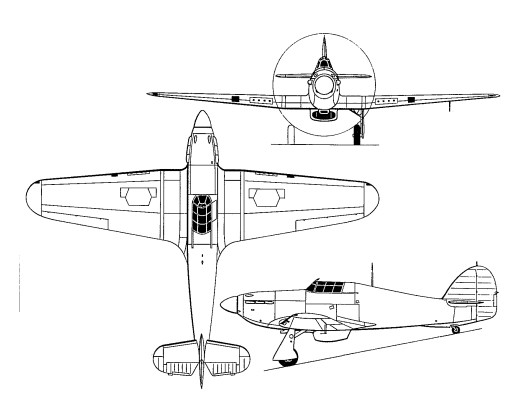
Mk I Engine: Rolls-Royce Merlin II or III, 990-1030 hp Prop: Rotol 3 blade wood Length: 31.4 ft. (9.55 m) Height: 13 ft. 11 in Wing span: 40 ft. (12.2 m) Wing area: 257.5 sq. ft MAUW: 6600 lb Weight empty: 4,670 lb. (2,118 kg) Max speed 325 mph @ 20,000 ft Service ceiling 36000 feet. Initial climb rate 2,950 fpm Range: 460 miles (740 km) Armament: 8 x 7.7mm / 0.303in Browning machine-guns Bomb load: 1,000 lb. (450 kg) Crew: 1
Hurricane I Engine: Rolls-Royce Merlin II, 990hp Prop: 2 blade wood fixed pitch Wing span: 40 ft. (12.2 m) Wing area: 257.5 sq. ft Length: 31.4 ft. (9.55 m) Height: 13 ft. 11 in Weight empty: 4,732 lb. / 2,146 kg Normal loaded weight: 6056 lb / 2747 kg MTOW: 6202 lb / 2813 kg Fuel capacity: 97 ImpGal / 441 lt Range: 680 miles / 1094 km at 275 mph / 442 kph at 15,000 ft / 4575 m Endurance: 4.2 hr at econ cruise Econ cruise: 162 mph / 261 kph Max speed 312 mph / 502 kph @ 20,000 ft Time to 15,000 ft / 4575m: 7 min Service ceiling 33,000 ft / 10,058m TO to 50 ft / 15.2m norm wt: 1800 ft / 549 m TO to 50 ft / 15.2m max wt: 1890 ft / 576 m Armament: 8 x 7.7mm / 0.303in Browning machine-guns Crew: 1
Hurricane II Engine: One Rolls-Royce Merlin XX, 1,030 hp at sea level, 1,460 hp at 6,250ft in M gear and 1,435hp at 11,000ft in S gear. Propeller: Rotol three-bladed constant speed 11 ft 3 in diameter. Span, 12.2 m / 40 ft 0 in Length, 9.8 m / 32 ft 3 in Overall height, tail down, one blade vertical, 13 ft 3 in Wing area, 24.0 sq.m / 258.33 sq ft Weight empty: 4,670 lb. (2,118 kg). Max take-off weight: 3540 kg / 7804 lb Fuel capacity, 69 Imp gal in two wing tanks, 28 Imp gal in res fuselage tank, total 97 Imp gal. Optional fuel: two 45 Imp gal drop or 90 Imp gal fixed ferry tanks under wings. Max speed: 316 mph. (508 kph) Ceiling: 10850 m / 35600 ft Range w/max.fuel: 740 km / 460 miles Undercarriage track, 7 ft 10 in Aspect ratio, 62:1 Dihedral, 35 deg on outer wing panels Crew: 1. Armament: 4 x 20mm cannon. Bomb load: 1,000 lb. (450 kg)
Hurricane IIA Engine: Rolls-Royce Merlin XX, 1260 hp Time to 20,000 ft / 6095 m: 8.2 min Max speed: 342 mph / 550 kph at 22,000 ft / 6705 m Armament: 12 mg or 4 cannon
Mk IIB Engine: RR Merlin 25, 1280 hp. Wing Span: 40 ft Length: 32 ft 3 in Height: 13 ft 1 ft Tare weight, 5,467 lb Empty equipped weight, 6,266 lb Normal loaded weight, full armament and internal fuel, 7,233 lb. Max speed, 328 mph at 18,000 ft clean, 310mph with tropical filter Initial rate of climb, 2,950 ft/min clean, 2,800 ft/min with tropical filter Time to 15.000 ft, 55 min. to 25,000 ft, 95 min Service ceiling, 36,000 ft Range, 465 mls at 177 mph clean, 935 mls with two 45 Imp gal drop tanks, 436 mls clean with tropical filter. Armament: Twelve BSA-built Browning machine guns of 0.303-in calibre with a total of 3,988 rounds in 12 magazines (5,238 rounds in some aircraft). Provision for two 250-lb or 500-lb bombs.
Mk IIC Max speed, 327 mph at 18,000 ft clean, 301 mph with tropical filter Initial rate of climb, 2,750 ft/min clean, 2,400 ft/min with tropical filter Time to 15,000 ft, 6 min, to 25,000 ft, 10 min Service ceiling, 35,600 ft Range, 460 mls at 178mph clean, 920 mls with two 45 Imp gal drop tanks, 426 mls clean with tropical filter. Tare weight, 5,658 lb Empty equipped weight, 6,577 lb Normal loaded weight, full armament and internal fuel, 7,544 lb Max overload weight with drop tanks, 8,044 lb Armament: Four Hispano Mk I or Mk II cannon of 20-mm capacity with 90 rpg. Provision for two 250-lb or 500-lb bombs under wings.
Mk IID Armament: two 40mm Vickers ‘S’ guns and two 7.7mm guns
Mk IV Armament: two Browning machine-guns plus two 40mm guns, or eight rocket projectiles, or two 110kg or 225kg bombs, or long-range fuel tanks.
Hurricane V Engine: Merlin 27 or 32 engine. No built: 2
Sea Hurricane IA
Sea Hurricane Mk II C Engine: Rolls Royce Merlin XX, 1262 hp Length : 32.251 ft / 9.83 m Height: 13.091 ft / 3.99 m Wingspan: 39.993 ft / 12.19 m Wing area: 257.475 sq.ft / 23.92 sq.m Max take off weight: 8101.2 lb / 3674.0 kg Weight empty: 5880.7 lb / 2667.0 kg Max. speed: 297 kt / 550 km/h Cruising speed: 184 kt / 341 km/h Service ceiling: 35597 ft / 10850 m Cruising altitude: 20013 ft / 6100 m Wing load: 31.57 lb/sq.ft / 154.0 kg/sq.m Maximum range: 843 nm / 1561 km Range: 400 nm / 740 km Crew: 1 Armament: 4x 20mm MG
Canadian Car and Foundry Co Hurricane Mk 1 Engine: British made Rolls Royce Merlin III Armament: eight .303 Browning machine guns.
Canadian Car and Foundry Co Hurricane Mk X (British built Mk 1) Packard Merlin 28 Armament: 8 x Brownings
Canadian Car and Foundry Co Hurricane Mk XII ( British built Mk. IIB) Packard Merlin 29 Armament: 12 x Brownings
Canadian Car and Foundry Co Sea Hurricane XIIA Engine: Merlin 29 Armament: eight gun
Sopwith started World War 1 building aircraft in a shed at Brooklands in Kingston and ended with an output of 90 ships a week at Kingston alone. Overnight it ended, so the busi¬ness had to liquidate and the Sopwith Company ended. Sopwith wanted to stay in aviation and couldn’t start a company with the same name. So he called the new company the Hawker Company, with a capital of 20,000 pounds.
In 1921 former Sopwith test pilot Harry Hawker took over the premises of the former Sopwith Aviation Company. Although he died that same year in a crash, the reestablished company began building a series of military aircraft, beginning with a single Duiker monoplane, followed by the Woodcock fighter.
Harry George Hawker, an Australian pioneer in aviation, won fame as a pilot and aircraft engineer during World War I. he founded the Hawker Engineering company, which became part of the Hawker Siddeley group; a leading British aircraft manufacturing company.
Hawker was born at South Brighton (near Moorabbin), in Victoria, Australia. He learned to fly in Britain in 1912, and soon became a leading test pilot. He was killed in an aeroplane crash near London in 1921.
Under the design leadership of Sydney Camm (later Sir), produced such aircraft as the Tomtit trainer biplane and the Horsley bomber/torpedo- bomber, Mk 1 versions of which were the last allwooden aircraft built by the company. Best known of all H. G. Hawker products were the Hart/Demon/Audax/Osprey two-seaters and the Fury single-seat fighter; all had entered production before the company reorganized and the name was changed to Hawker Aircraft Ltd. in 1933. Following 1933, the concentrated on fighters, and the first production Hurricane, a monoplane development of the Fury, first entered service in late 1937. The Typhoon, initially none too successful, proved effective as a fighter-bomber and saw the peak of its development in the Tempest, Fury and Sea Fury which served with RAF and Fleet Air Arm during late 1940s and early 1950s, and with foreign air arms well into the 1960s. In early postwar period Hawker developed the Sea Hawk shipboard fighter, progressing to the Hunter, the single Mk 3 version of which, produced by modification of the original prototype, gained the world speed record at 1,170.96km/h in 1953. Such was the success of the Hunter that refurbished aircraft were later exported. Hawker’s greatest innovation was in the field of VTOL fighters, first with the experimental P.1127 Kestrel, which led to the Hawker Siddeley Harrier.
Scottish Aviation, British Aircraft Corp, and Hawker Siddeley Aviation joined British Aerospace in 1978.
In 1941, a two-seat training version of the PJC-2 was produced under the designation of PC-5A. It differed mainly by having a narrower fuselage and a 165-hp Warner Super Scarab engine. PC-5A production lasted until 1942.
Formed 1938 to develop the Harlow PJC-2 four-seat allmetal cabin monoplane, which remained in production until December 1941. Four were delivered to the USAAF as UC-80s. A PC-5A two-seat trainer version was developed in 1939 and assembled under license 1941-1942 by Hindustan Aeronautics Ltd. After America’s entry into Second World War, Harlow Engineering undertook military contract work.
The H.230.01, service serial H.790, flew for the first time in June 1937. It was an advanced two-seat trainer which had a general resemblance to the H.220 but was of much lighter construction. Power was provided by two 127kW Salmson 6AF-00 engines and its configuration included a short crew canopy faired into the upper decking of the rear fuselage and a conventional . strut-braced tail unit, and the fixed main landing gear units incorporated spatted wheel fairings. During further tests it was decided to introduce considerable dihedral at the wingtips to improve stability, but the H.231.01 which followed in May 1938 had dihedral increased over the whole wing span, and the unusual wingtip arrangement of the modified H.230 was eliminated. Twin fins and rudders were introduced and power increased with 172kW Salmson 6AF engines. The Hanriot H.232.01 reverted to a single fin and rudder and had 164kW Renault 6 Q-o engines plus retractable landing gear. The H.232.02, first flown in August 1938, introduced a redesigned cockpit; it was tested officially between October 1938 and May 1939. The type was then given a twin fin and rudder tail assembly and was flown in this new configuration in December 1939, then redesignated H.232/2.01.
An order for 40 aircraft had already been received from the French air ministry, and this was increased to 57 examples shortly afterwards. By then known as the NC.232/2, they incorporated minor improvements including redesigned rudders and engine cowlings. Full navigational equipment was installed. Three reached Finland. Two were from Germany, and these were not taken into service until the Winter War 1939-40 with the Soviet Union was over. Deliveries to the Armee de I’Air started in February 1940, 35 being taken on charge up to the June 1940 Armistice. The NC.232/2s were,used by the training sections attached to the 51th and 54th Escadres, which were equipped with Breguet 691and 693 attack bombers. Twenty aircraft found on airfields when the German forces occupied Vichy, France, in 1942 were reduced to scrap.
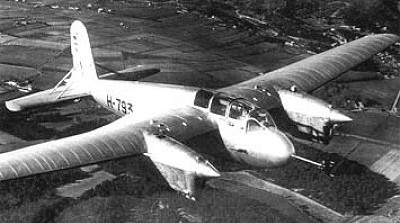
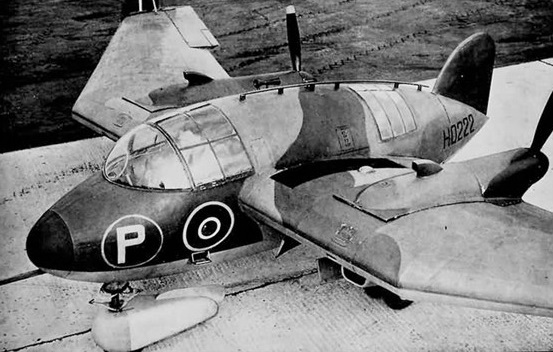
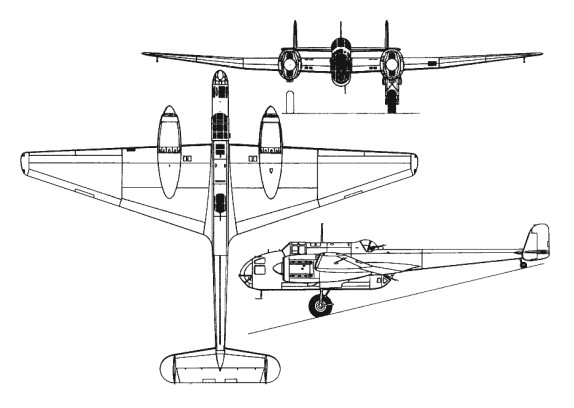
From 1936 Dr. Gustav Victor Lachmann concentrated on research with tailless aircraft, starting with the development of the H.P.75 Manx. This was completed in 1939, but Lachmann was interned for the duration of the war, and its development was completed by Godfrey Lee.
The airframe was built by Dart Aircraft of Dunstable, England; the aircraft was finished at Radlett, England. During taxi trials on 12 September 1942, the aircraft flew unintentionally at a height of 12 ft (3.66 m) and was subsequently damaged while landing.
Marked with the ‘Class B’ markings H-0222, the aircraft flew for the first time on 25 June 1943. Handley Page chief test pilot Fit Lt James Talbot flew the small H.P.75 for the first time at the company’s airfield at Radlett in Hertfordshire. Talbot reported that the H.P.75 flew well but had high drag owing to its fixed undercarriage. In 1945 it was designated H.P.75 for the first time.
After modification it flew again, but interest waned and it last flew on April 3, 1946. A total of 31 flights were made till 3 April 1946 (total flight time 17 hr 43 min) when the aircraft was stored and subsequently scrapped in 1952.
Engines: 2 x Gipsy Major Max take-off weight: 1800 kg / 3968 lb Wingspan: 12.2 m / 40 ft 0 in Length: 5.6 m / 18 ft 4 in Wing area: 23 sq.m / 247.57 sq ft Max. speed: 235 km/h / 146 mph
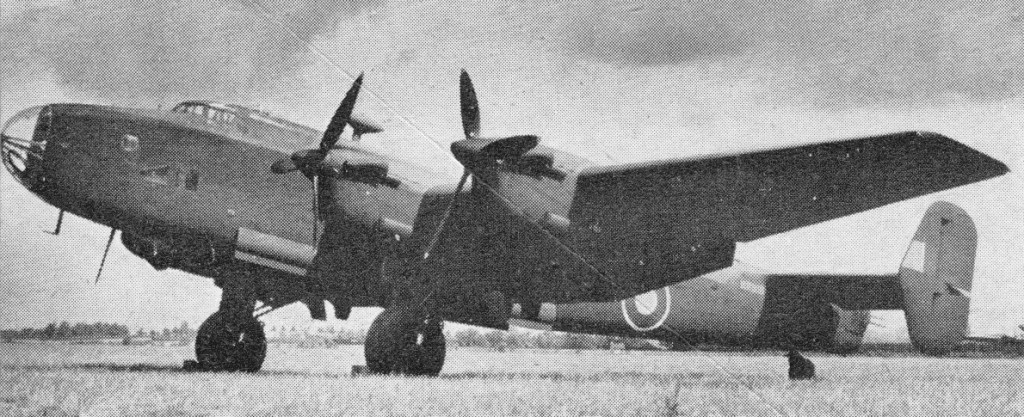
The four engined bombers, the Halifax, Stirling and Lancaster, all originated from a pre war Air Ministry specification. The Handley Page Halifax was first flown on 25 October 1939 from RAF Bicester with four “Merlin X” engines.
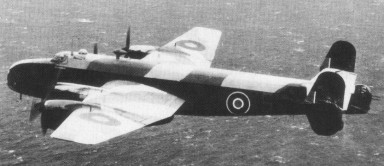
Originally designed for two Rolls-Royce Vulture engines, the Halifax eventually flew with four Roll-Royce Merlins.
Prototype with four Merlin 10 engines and no dorsal turret
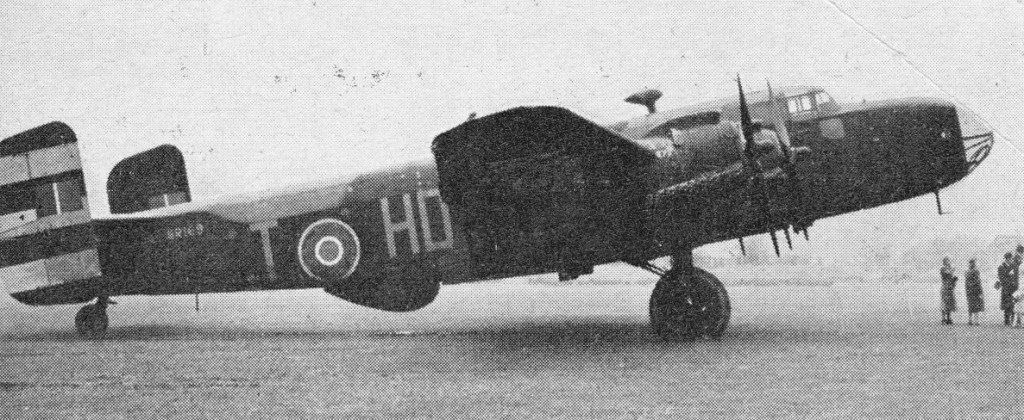
Entering production in 1939, it was the second British four-engined bomber to enter service in the Second World War, with 35 Squadron on 13 November 1940. The first Halifax raid by the squadron was against le Havre, France, on 10 March 1941. The Halifax was the first to bomb Germany when one took part in a raid on Hamburg on the night of 12-13 March 1941.
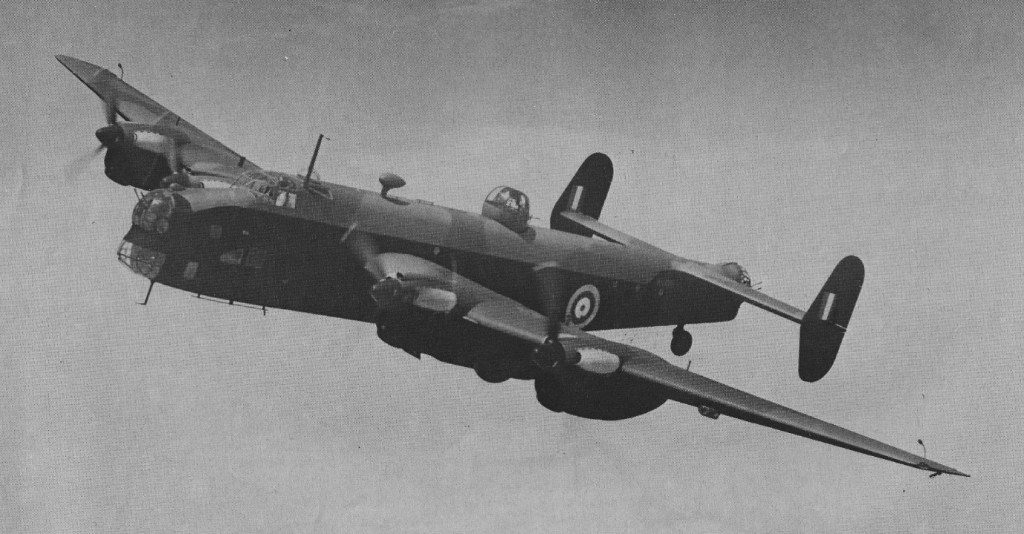
The Halifax shared with the Lancaster the major burden of Bomber Command’s night bombing campaign against Nazi Germany but the Halifax was used extensively on other duties including glider-tug, agent dropping transport and general reconnaissance aircraft in Coastal Command.
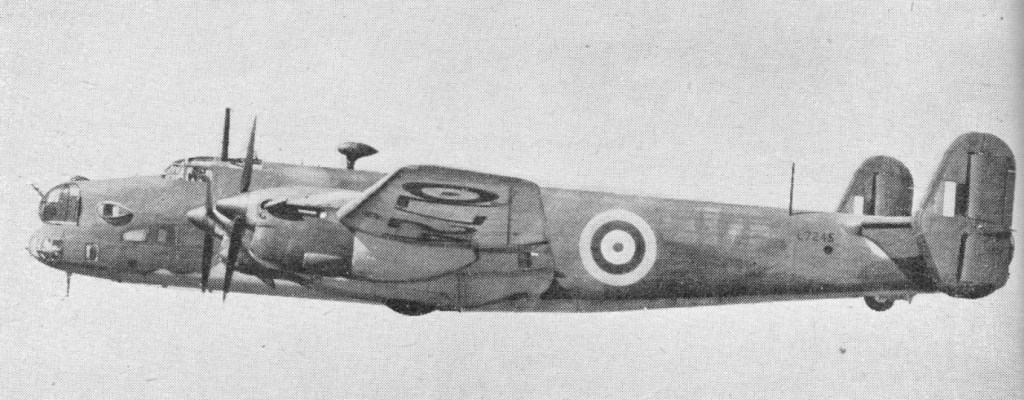
Halifax B.2 Srs.1A
The Halifax B.2 was powered by Merlin 20 and fitted with a Hudson dorsal turret, and the B.2 Srs.1A with a nose turret.
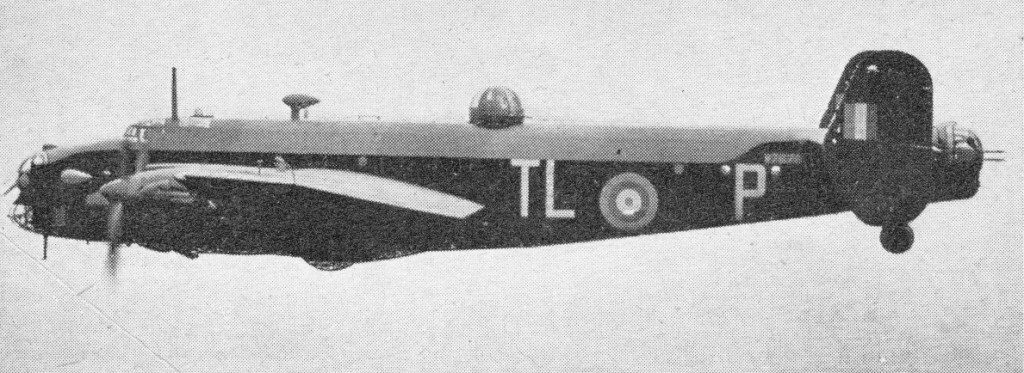
Halifax B.2 Srs.1A
The B.2 Srs.1A had the nose turret deleted and was fitted with a Defiant dorsal turret.
HP.66 Halifax M.6
The Halifax Mk.6 was powered by Hercules 100 engines, had squared fins, H2S radar and increased span.
However, between 1941 and 1945 the Halifax made 75,532 bombing sorties and dropped 227610 tons (231300 tonnes) of bombs; more than a quarter of all bombs dropped on Germany by the Royal Air Force.
Handley Page Halifax II(III)
The Halifax I and II aircraft were powered by Rolls-Royce Merlin engines and the Halifax III was powered by Bristol Hercules engines. Apart from the role as a heavy bomber, the Halifax III and later versions also served in Coastal Command and in paratrooping and glider towing roles with the Airborne Forces.
Halifax II
Due to mounting losses on Bomber Command operations over Germany Halifax bombers were restricted to less hazardous targets from September 1943.
The Halifax was in the process of being replaced as a front line bomber in 1945 but it continued in service with Coastal and Transport Commands after the war. The last operational flight was made by a Coastal Command Halifax in March 1952 while operating from Gibraltar.
Halifax production totalled 6,178, including 4751 bombers.
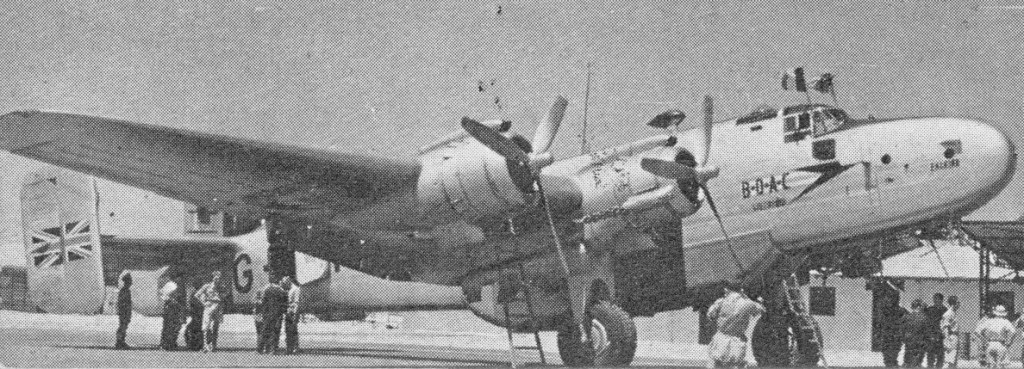
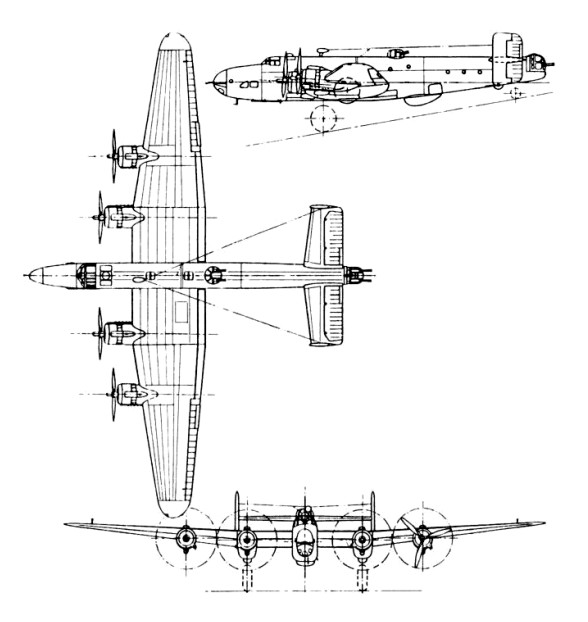
During 1946-48 more than 90 Halifax were converted to civil transport Halton variants. The HP.70 Halton were derived from the Halifax C.8 for BOAC immediately after WW2.
Mk.II Engines: 4 x RR Merlin XX. Max speed: 282 mph Range: 1030 miles Crew: 7 Armament: 9 x .303 Browning mg Bomb load: 13,000 lb
Handley Page HP 57 Halifax B Mk III Engines: 4 x Bristol Hercules XVI, 1615 hp Length: 70.079 ft / 21.36 m Height: 20.735 ft / 6.32 m Wingspan: 98 ft 10 in , later 104 ft 2 in / 31.75 m Wing area: 1274.996 sq.ft / 118.45 sq.m Max take off weight: 65012.2 lb / 29484.0 kg Weight empty: 38245.7 lb / 17345.0 kg Max. speed: 245 kts / 454 kph Cruising speed: 187 kts / 346 kph Service ceiling: 23999 ft / 7315 m Cruising altitude: 20013 ft / 6100 m Wing loading: 51.05 lb/sq.ft / 249.0 kg/sq.m Range (max. weight): 895 nm / 1658 km Crew: 7 Armament: 9x cal.303 MG (7,7mm), 5897kg Bomb.
Engines: 4 x Bristol Hercules 100, 1325kW Max take-off weight: 24980-30845 kg / 55072 – 68002 lb Empty weight: 17500 kg / 38581 lb Wingspan: 31.8 m / 104 ft 4 in Length: 21.4 m / 70 ft 3 in Height: 6.3 m / 20 ft 8 in Wing area: 118.5 sq.m / 1275.52 sq ft Max. speed: 502 km/h / 312 mph Ceiling: 7310 m / 24000 ft Range w/max.fuel: 3540 km / 2200 miles Range w/max.payload: 2030 km / 1261 miles Armament: 9 x 7.7mm machine-guns, 6550kg of bombs Crew: 7
Gustav Lachmann took on the technical development of modern methods of aerodynamics and metal construction. His ideas were also incorporated into the H.P.52 Hampden.
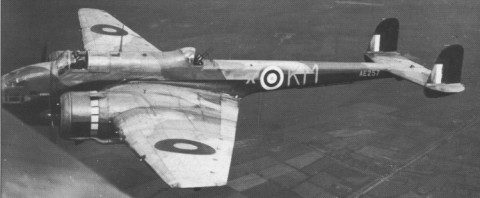
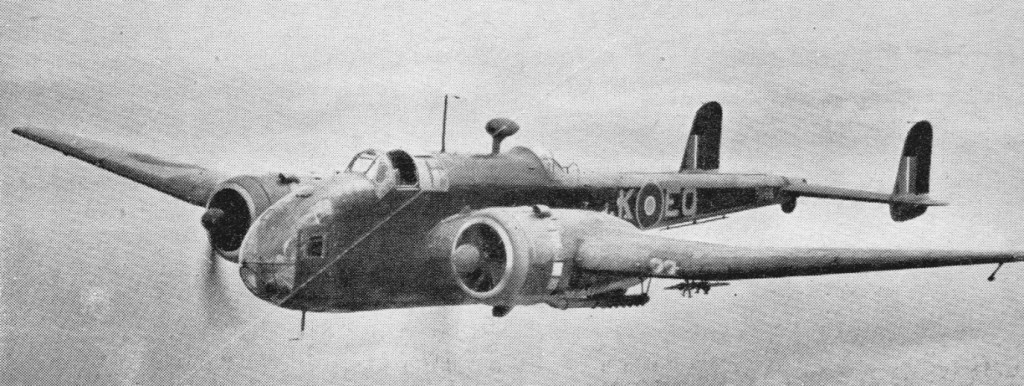
Built initially to Air Ministry Specification B.9/32, the Handley Page HP52 prototype, K4240, made its first flight on June 21, 1936.
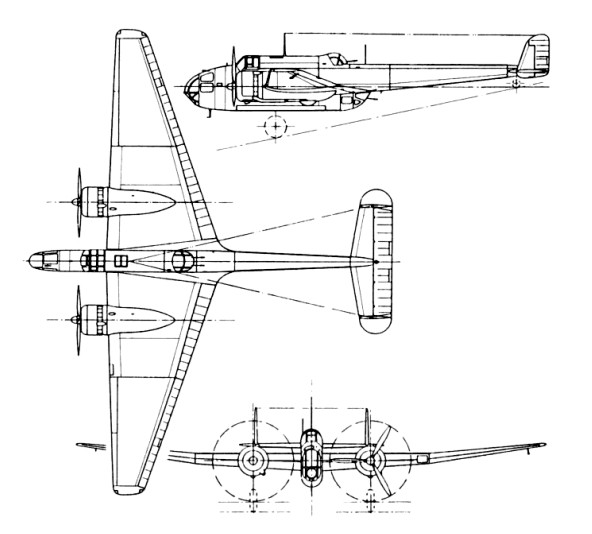
Of conventional all-metal stressed-skin construction, the Hampden’s thick-section mid-set monoplane wings tapered both in chord and thickness. Handley Page slots on the leading edge of the wing outer panels, plus trailing-edge flaps, made possible a low landing speed. Accommodation was provided for a crew of four. Accommodation was provided for a crew of four. The fuselage was on 36in wide at its widest point.
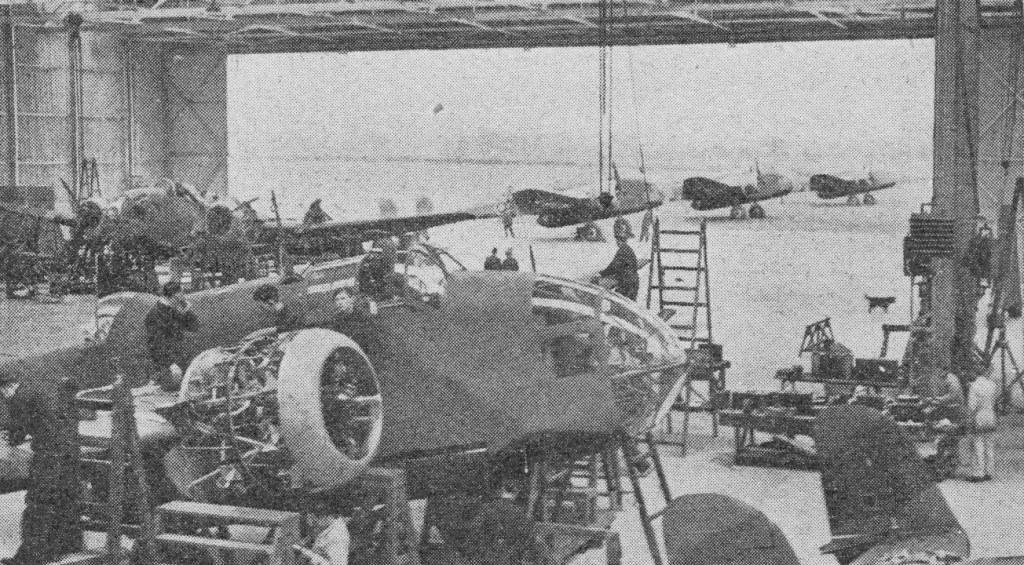
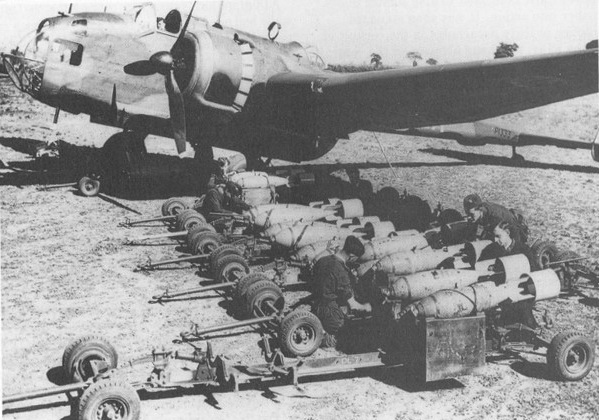
Seven weeks after the first flight, the design was put into production, and the first examples entered RAF service in the autumn of 1938, 49 Squadron being the first unit to fully reequip with the type. By September 3, 1939, the RAF possessed a total of 212 Hampdens (ten squadrons, including reserves) which represented almost 25% of Bomber Command’s offensive first-line bomber strength. Hampdens flew on operational sorties from the first day of the war, and during the first few months suffered high casualties in unescorted daylight bombing attacks against naval targets along the German coastline.
During operations, the Hampden proved to have serious deficiencies, particularly in its defensive armament, which consisted of five 0.303 inch machine guns. The fixed forward firing gun proved almost useless and the single guns in the nose, dorsal and ventral positions had limited transverse, leaving a number of blind spots. In addition, the cramped conditions led to crew fatigue on long flights, and it was almost impossible for crew members to gain access to each others cockpit in an emergency. Losses during early daylight raids were very heavy.
To improve the defensive armament, the dorsal and ventral positions were each fitted with twin Vickers K machine-guns. In addition, armor plate was installed and flame-damping exhaust pipes were fitted for night flying. Thus modified, the Hampden did useful work in Bomber Command’s night offensive from 1940 to 1942, taking part in the RAF’s first raid on Berlin and in the 1,000-bomber raid on Cologne.
Switching mainly to night bombing by early 1940, Hampdens became the chief exponent of ‘gardening’ sorties-sowing sea mines in enemy waters but continued to participate in Bomber Command’s nightly assault on Germany. In 1940 two Hampden crew members, Flight Lieutenant R A B Learoyd of 49 Squadron, and Sergeant John Harmah of 83 Squadron, were each awarded a Victoria Cross for valour during bombing operations.
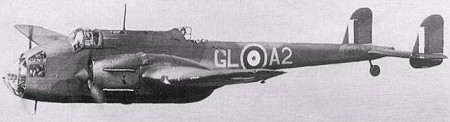
No.49 Sqn Hampden
Though obsolescent for its intended role as a medium day bomber, and poorly armed for self defence against more modern enemy fighters, the Hampden continued in first line operational service with RAF Bomber Command until September 1942. In three years of operations as a pure bomber, Hampdens flew a grand total of 16541 individual sorties, dropping almost 10000 tons of bombs on German targets. In the same period, however, 413 Hampdens and their crews were lost in action. On February 1, 1942, a total of eight Hampden squadrons, all in No 5 Group, Bomber Command, were operational, though by the end of the year they had all converted to Avro Manchesters or Avro Lancasters. Retired as a bomber, the Hampden saw a further year’s first line service as a torpedo bomber with Coastal Command, equipping at least four squadrons before finally being withdrawn from operational roles in December 1943.
A total of 1584 Hampdens and its stablemate, the Hereford, was built and delivered to the RAF, equipping a total of 21 squadrons at some period of the war. A further 160 were built in Canada.
Hampdens were produced by The English Electric Co.
Nicknamed variously as ‘Hambone’, ‘Flying Suitcase’ and ‘Ferocious Frying Pan’, the Hampden was nevertheless popular with its pilots, due to its near fighter manoeuvrability and excellent all round vision field from the high forward cockpit. Internally, its very restricted space created no little discomfort for other crew members, while its poor defensive armament, comprising a single hand held machine gun in the nose and single or twin machine guns in ventral and dorsal positions, belied the original description of the design in 1936 as a ‘fighting bomber’. Nevertheless, the Hampden and its contemporaries, the Bristol Blenheim, Vickers Wellington and Armstrong Whitworth Whitley, all outdated for modern warfare by 1940, had to soldier on as Bomber Command’s only weapons during the first three years of the 1939 45 war, until heavier, four engined replacements became available in ample quantities in late 1943.
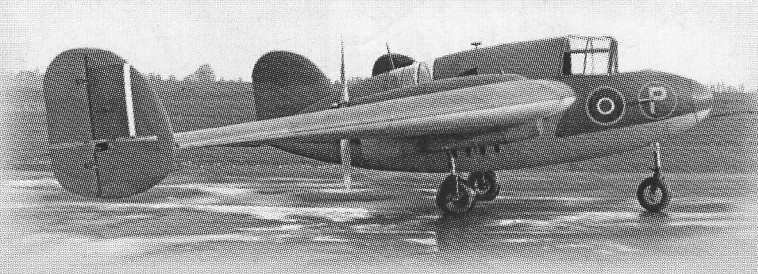
HP.53 Hereford
The Hereford bomber was a Napier Dagger-engined version of the Hampden, ordered as a back-up at the same time as the first Hampden production contracts. The noisy new inline engines overheated on the ground and cooled too quickly and seized in the air. Even routine maintenance was more complicated than that required for the Hampden’s Pegasus radials. There were no performance advantages from the new engines. Only a very small number of Herefords saw action (in Hampden squadrons). The rest were relegated to training units, soon followed by the marginally better Hampen.
The Hereford was distinguishable from the Hampden by its longer engine cowlings and greater dihedral on the outer wings.
The Hereford and Hampden had a single-pilot cockpit with a sliding canopy, which was sometimes left open in flight for the ‘wind-in-the-hair’ feel.
A total of 1,432 Hampdens were built, 502 of them by Handley Page, 770 by English Electric and 160 in Canada by the Victory Aircraft consortium. Of the 160 built, 84 were shipped by sea to Britain, while the remainder came to Patricia Bay (Victoria Airport) B.C., to set up No.32 OTU (RAF). Due to heavy attrition from accidents, a number of “war weary” Hampdens were later flown from the U.K. to Pat Bay as replacements.
Victory Aircraft Hampden Engines: Two 1000 hp Bristol Pegasus XVIII engines Maximum speed: 254 mph (409 km/h) Empty weight: 11,780 lb (5,345 kg) Loaded weight: 18,756 lb (8,505 kg) Span: 69 ft 2 in (21.1 m) Length: 53 ft 7 in (16.3 m) Height: 14 ft 11 in (4.5 m) Wing area: 668 sq ft (62.1 sq m)
HP 52 Hampden Engines: 2 x Bristol Pegasus XVII, 746kW / 1000 hp Wingspan: 21.1 m / 69 ft 3 in Length: 17.0 m / 55 ft 9 in Height: 4.6 m / 15 ft 1 in Wing area: 62.0 sq.m / 667.36 sq ft Max take-off weight: 8510 kg / 18761 lb Empty weight: 5340 kg / 11773 lb Max. speed: 408 km/h / 254 mph Cruise speed: 350 km/h / 217 mph Ceiling: 6900 m / 22650 ft Range w/max.fuel: 3200 km / 1988 miles Range w/max.payload: 1400 km / 870 miles Armament: 4 x 7.7mm / 0.303 in machine-guns, 1800kg of bombs Crew: 4
Hampden B.Mk I Span: 21.08 m (69 ft 2 in) Length: 16.33 m (53 ft 7 in) Gross weight: 8508 kg (18760 lb) Maximum speed: 426 km/h (265 mph)
Hampden TB.1
Handley Page HP 53 Hereford Engines: 2 x Napier Dagger VIII, 986 hp / 746kW Length: 53 ft 7 in / 16.33 m Height: 14 ft 11 in / 4.55 m Wing span: 69 ft 2 in / 21.08 m Wing area: 668.014 sq.ft / 62.06 sq.m Max take off weight: 17803.2 lb / 8074.0 kg Weight empty: 11701.9 lb / 5307.0 kg Max. speed : 230 kts / 426 kph / 265 mph Cruising speed: 150 kts / 277 kph / 172 mph Service ceiling : 19,000 ft / 5790 m Wing load : 26.65 lb/sq.ft / 130.0 kg/sq.m Range w/max.payload: 1043 nm / 1931 km Crew : 4 Armament : 6x cal.303 MG (7,7mm), 1814kg Bomb.





 All Aero